We just sent you a verification email. Please verify your account to gain access to
CDOIQ Symposium 2024. If you don’t think you received an email check your
spam folder.
In order to sign in, enter the email address you used to registered for the event. Once completed, you will receive an email with a verification link. Open this link to automatically sign into the site.
Register For CDOIQ Symposium 2024
Please fill out the information below. You will recieve an email with a verification link confirming your registration. Click the link to automatically sign into the site.
You’re almost there!
We just sent you a verification email. Please click the verification button in the email. Once your email address is verified, you will have full access to all event content for CDOIQ Symposium 2024.
I want my badge and interests to be visible to all attendees.
Checking this box will display your presense on the attendees list, view your profile and allow other attendees to contact you via 1-1 chat. Read the Privacy Policy. At any time, you can choose to disable this preference.
Select your Interests!
add
Upload your photo
Uploading..
OR
Connect via Twitter
Connect via Linkedin
EDIT PASSWORD
Share
Forgot Password
Almost there!
We just sent you a verification email. Please verify your account to gain access to
CDOIQ Symposium 2024. If you don’t think you received an email check your
spam folder.
In order to sign in, enter the email address you used to registered for the event. Once completed, you will receive an email with a verification link. Open this link to automatically sign into the site.
Sign in to gain access to CDOIQ Symposium 2024
Please sign in with LinkedIn to continue to CDOIQ Symposium 2024. Signing in with LinkedIn ensures a professional environment.
The 18th annual CDOIQ event in Cambridge, Massachusetts, is the premier event for chief data officers. Rich Wang, founder of the event, began in 1988, adding a D to TQM to create TDQM. The event has grown substantially, with over 730 people on-site and more than 2,000 attending virtually. Data quality has become crucial in the age of gen AI. The roles of CDOs have evolved, with a focus on governance and generating revenue. The relationship between CDOs, chief AI officers, CIOs, and CEOs varies by organization. Federated models are emerging, and the importance...Read more
exploreKeep Exploring
What was the origin of TDQM and how did it evolve in the 1990s and early 2000s?add
What has been the evolution of data quality initiatives and the role of the Chief Data Officer post the original conference?add
What are the different roles and responsibilities of a Chief Data Officer (CDO) and a Chief AI Officer within organizations, and how are they related or potentially overlapping?add
What are the necessary skills and background for a Chief Digital Officer (CDO)?add
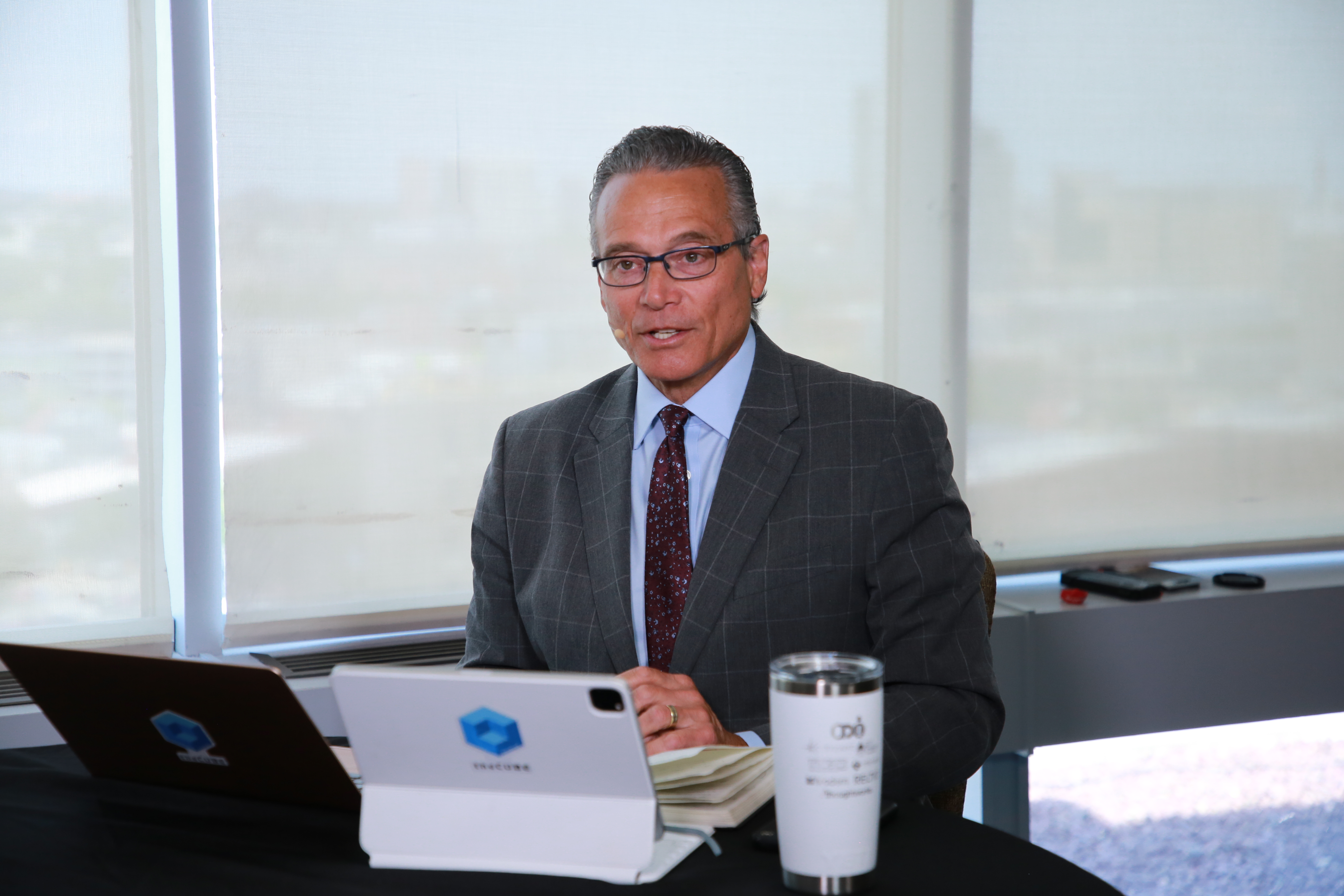
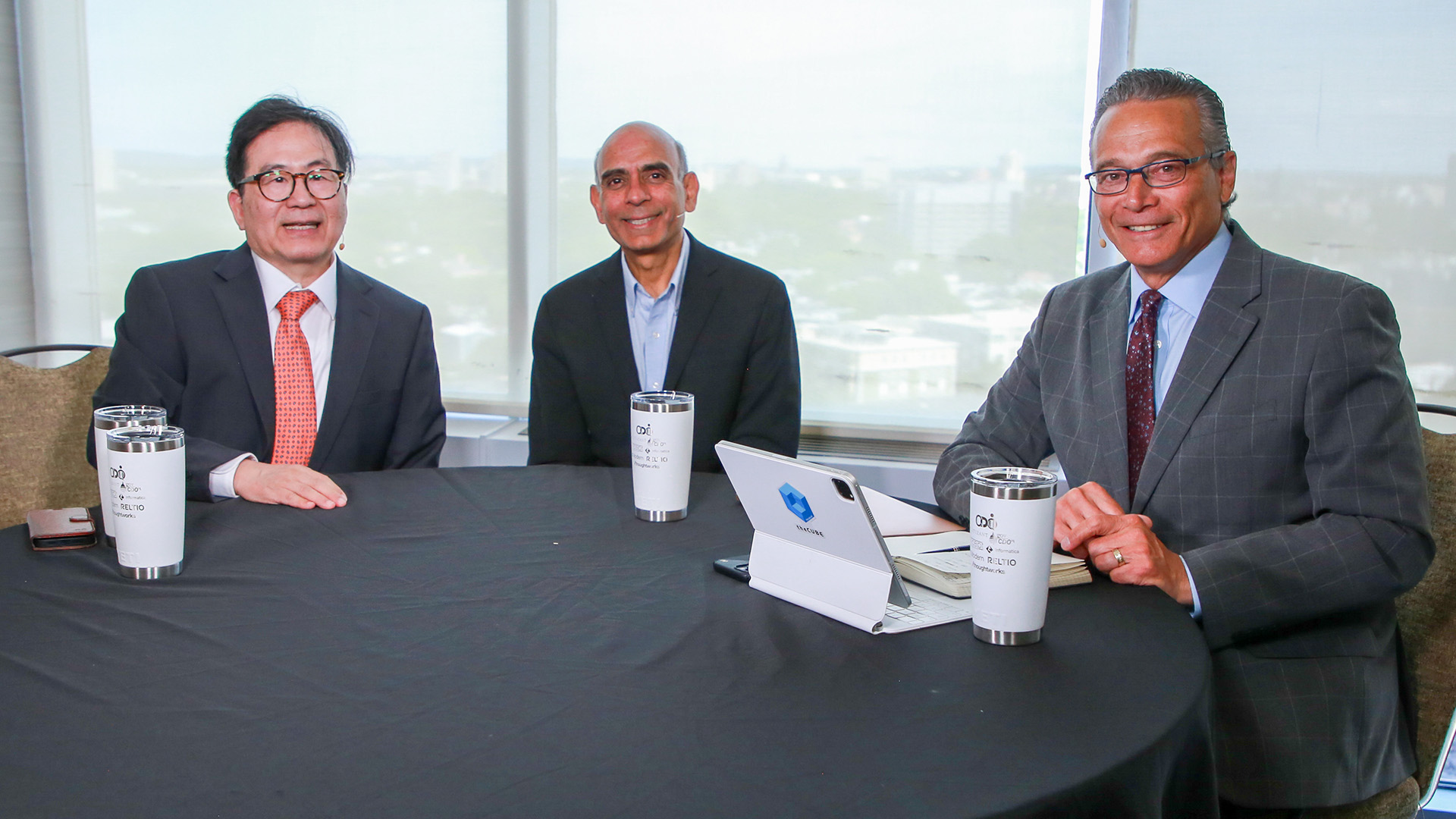
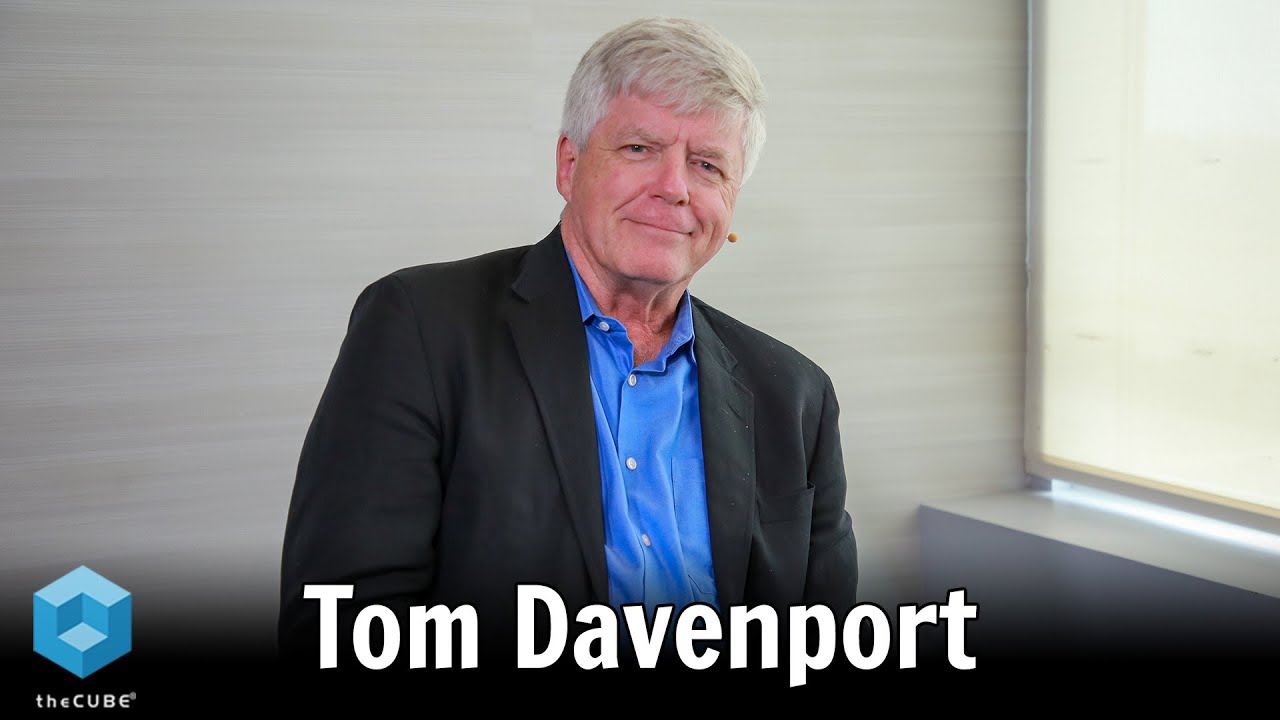
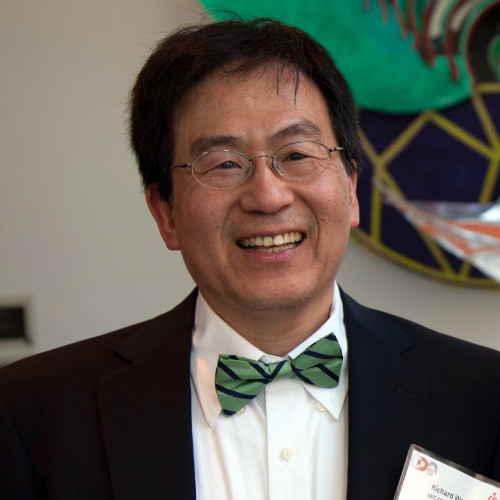
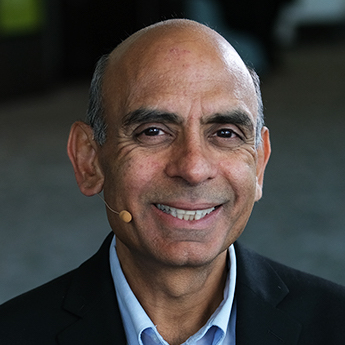
>> Hi, everybody. Welcome to Cambridge, Massachusetts. My name is Dave Vellante. We're here at the 18th annual CDOIQ event, the premier event in the world for chief data officers. This is theCUBE's eighth time participating in this event. We're here in Cambridge, Massachusetts at the Hyatt Regency, overlooking the Charles River. I'm really excited to welcome two guests, Rich Wang, who is the founder of this event, a former MIT professor and somebody who's been very active in this community for a number of years, the better part of two decades. Rich, great to see you again. Thanks so much for having theCUBE back at this event.>> Thank you for->> And Sanjeev Mohan. Sanj Mo, member of theCUBE Collective, friend of theCUBE, and somebody who's going to be co-hosting with me this week. I just want to set up, so this is the 18th annual event.>> Yes.>> Tell us how it got started.>> It started from 1988 when I was a young professor at MIT Sloan School of Management from TQM, Total Quality Management. We thought that data is a product, so I added a D into it, to TDQM. And Professor Manning and I started. And so in the 1990s, we had the entire data quality industry and IQ industry 2000, it became mature merger and acquisition. I myself have heard a lot of war stories that the data quality managers, they don't get budget. So it was constant problem until I went to Pentagon. And in Pentagon in August, you see people say, "Who wants $2 million?" and then, "Who wants $1 million to go hide our money?" And I realized, it dawned on me, that that's where the money is. So I had the first MIT and Army CDO Forum in Crystal City. For those people who know Washington, that's where all the work is done. And only 28 to 35 people came, but among them, one guy from IBM, one from Gartner group, and many of general. And those people went back. IBM started a business. Gartner started a business. And then they helped to expand this. And we were persistent and a lot of energy goes into it. So before we realized it, it's 2024.>> So we first came, theCUBE first came, to CDOIQ in 2013 when it was at the Tang Center in MIT. And it was growing beyond the 30 people that were there in 1988. And it's grown substantially since then. And now you have basically taken over this hotel. How many people are here this year? How many do you expect?>> It's surprise. I ordered 600 of this, as well as 600 bags. And I was expecting 500. Don't tell Hyatt. I think they have five coats 550 people. We logged 730 people as of last night on-site. On-site.>> Wow. Wow. Congratulations, and->> And now counting...>> Virtual.>> Virtual across the world, so it's more than 2,000 people attending. And it's very important each and every person who either on-site or around the world, them themselves are like Sanjeev, is a data leader. So in here, you bump into Sanjeev, over here, Doug Lennie, over there, Tom Davenport. It's an intensity and things, so...>> It's an... Yeah.>> So Sanjeev, I wonder if we could talk about the journey of the data quality initiatives and the roles of the CDO, which emerged post the original conference. It was a back office. Data quality was a back office function, like Rich said. Nobody could get any money for it, but of course it was crucial then. It's even more crucial now, but... And then the big data era ascended and then we saw the rise of the chief data officer. But as we've talked about, the technical wonks took over and governance was an afterthought. It was bolted on. And that's not the case today with AI. How do you see that journey of data quality and the CDO?>> Yeah. So I want to share two very interesting factoids on both CDO and data quality, but I just want to go back to, so you started at Tang Center. I never went to that. I started attending when you were in inside MIT's campus at the CCL building, the computer science->> CCL, design. Yeah.>> Computer science and AI lab, which is the birthplace of many of the AI technologies. So very iconic building. And that's where we used to be a couple of years ago, so... yeah. So now here we are in Hyatt. Okay. So a bunch of things are happening. Why is data quality all of a sudden so important is because now we have come to a realization if we are going to get any benefit out of gen AI, because gen AI is not like any other project. It's a very capital-intensive project. So when you're going to make that much investment, you better get good results. So data quality has bubbled up to be the blocker in this space, but it's not just data quality of yesteryears. It is data quality on unstructured data as well. And what is that data quality? How do you define what is a data quality of a document? So this is a reason why data quality has become a complex topic now, because in structured data, we can say is it duplicate data, is it missing data, is a format correct, all of that metrics, but for unstructured, the metrics are undefined.>> Yeah. So data quality from a data warehouse standpoint might be you want a consistent definition of some metric.>> Correct.>> And now as you say, it's how do you interpret all this unstructured data? I want to share some of the guests that we've had, just... So the audience. Rich, you touched on this. You'd bump into Sanjeev. You'd bump into Tom Davenport, Mario Faria. This is the CDOs, the top CDOs in the world. As I say, this is our eighth year. We have done 130 videos. We've had over 150 guests. We have 1,000 short videos, little clips that we've made from those guests. Mario Faria, who's coming on again this week. Tom Davenport's been on. We should try to get him again. We have had famous people like Michael Stonebraker. Sandy Pentland came on. He was talking about early days of crypto. He was educating the audience on cryptography and cryptocurrency and how that all worked. Bill Inmon, the father of the data warehouse. Now just so you know, we had many women on too. Micheline Casey from the Federal Reserve. Jeanne Ross who was a research scientist at MIT. She shared some amazing research. You mentioned IBM, Bob Picciano. I don't know if you remember Bob keynoted one year. Stuart Madnick. You mentioned of course Stuart's been super supportive. Derek Strauss from TD Ameritrade who was one of the early chief data officers. Just to name a very, very small selection of the quality of the type of people are here. Rich, now this year you have... And you may have done this in previous years. You've got a public sector section that's exclusive.>> Yeah. Exclusive.>> And then downstairs you've got the commercial sector. Can you explain that?>> Well, the first reason is because Tang is small, have no space. And I found this space. So I said comes over here. And public sector is important. We got more than 120 people signed up. And we have all the agencies thanks to the SAIC to invite the speakers. So when you see the signs on the opening remark, those are speakers, okay, from all the important government agencies. So that's the first reason in terms of distribution upstairs and downstairs. And it's a little bit separate, so to speak. And second reason is for special public sector this year is because last year the rumor went that there's a lot of money that's going to be distributed to the public sector in... I don't know. I make it up. Homeland Security, IRS and... There's a lot of demand now they recognize data is important. They put in a lot of money. So several sponsors came to me and said, "Can we have one track?" And so SAIC took the lead and they did a fantastic job. Without them, we wouldn't be able to have this. So that's->> So the role of the CDO first came to fore in the highly regulated industries. It was public sector. It was healthcare. It was financial services. And then it spread to more commercial industries. Now, Sanjeev, you're hearing the chief AI officer. So you've got the CIO. You've got the CDO. You've got the chief AI officer. How do you see the relationship between those roles? Does the CDO become the de facto chief AI officer? Is it a new role that emerges? I know it'll be different in different organizations, but what are you seeing?>> So earlier on when I said there are two factoid, actually I want to talk about CDO, because I find the CDO role is still a bit problematic. I don't know how you see it. And the reason I'm saying this is because let's say an organization has a CFO and for some reason that job goes away, M&A happens or the company just, for some reason, the CFO can now go look for other CFO openings and apply and hopefully he or she can get hired. But the CDO cannot because no two CDOs are doing the same job. So when you say is CDO going to chief AI officer, it depends. Some companies, CDOs are completely focused on risk and governance. They're not going to AI role, because their focus is completely different. They're more into security and governance and data access. But some CDOs are more focused on analytics. Yes, they can move to the AI role. So this is the irony about the CDO role that there's no clear definition.>> If I could build on that. And that's why I started a CDO certification program with a very rigorous program for 15 months. And it's like a labor camp for all the people. And I have all the subject matter experts for the multiple. And the key here is we have now come... They come to the common understanding that whether it's called CDO or CAO or CDAO or CDTO or CDTAIO, we broadly define all of them to be chief data officer. Okay. In one sense. And the other sense that people have come to understanding is there are actually two sides of CDO function. One is called defensive side, produce high-quality data. There's another offensive side because generate revenues. The moment you start to create some good data, the CEO would ask you to generate revenue. 30% of company revenue could be on the shoulder of a CDO. So it requires different kinds of CDOs with different kind of skill sets. I joke that the CDO of this era is pretty much like CIO in the 1980s. If you remember the CIO, what does CIO was stand for?>> Career is over.>> Career is over. They get... 18 months they're gone. And that's because it's ill-defined. So one of my current mission is to try to narrow down and say, "Here is a certified CDO. They all go through this training," and we then branch out to say this... Go ahead.>> So I want to ask you a question. So I'm very happy to hear that you are defining, you're putting some boundaries around the CDO role, but then if you look beyond the CDO role, who does the CDO report to? See, that's also a bit confusion. Some report to CFO. Some report to CIO. Some report to CEO. Is that part of your remit to give some guidance as to where->> No.>> I see.>> Once again, I am a firm believer of we will mark invisible hand. So there are some companies, CDO reports to CIO. And fortunately and unfortunately, they still report to CIO because of the easiest place. Some smart companies, CDO reports to CEO. But automatically this was sort out over time. Time is the best author. It would define a good story. So in the end, I see it's a pendulum was starting from like CIO go to centralization to decentralization and then come back to recentralization. Similar here for CDO.>> And we get a lot of questions. Should we have a chief AI officer? And to your point, it depends. So your governance... We've talked about this. Some companies, like AWS for example, puts governance really in data management, not in AI. Other companies put governance directly associated with AI. So if you're the latter of those two, it might make sense to make the CDO the de facto chief data and AI officer, almost like Databricks, their conference. So I can see it working both ways. But your point, Rich, is it really does depend. The organization has to make that decision. You're not prescribing a particular organizational strategy. You have to peel the onion a little bit deeper to understand what fits best within your organization, within your industry, your growth plans, et cetera. Is that right?>> Yes. That's correct. So I always say that go with the flow. If a company, a CEO says, "I need an AI officer," please create AI officer. And then the AI officer all of a sudden realize that the garbage in, garbage out. And then they would go back and say, "I need someone to create high quality data." So it goes that direction. There are other companies, like GSK, that will establish foundation for data management already. So they would've CDOs that come out and say, "We need to do AI," and say, "Okay. Fine. We'll have a branch for AI."
And for AI data analytics, I have a standard answer as well, which is let's start a center of excellence, data management enterprise-wide, and AI, you don't have every department. You will not care for major companies, especially CFO and CMO. They have budget. It will end up a CAI office in each department, which is not good. So a center of excellence may be the way to go in the end. And maybe on top the head, it's either the AI office or the data office. I don't care. And that would be a way to make them more coherent.>> And you see federated models emerging as well. You certainly saw that inside of IBM where they had chief data officers. Inderpal Bhandari for example was the chief data officer. And then they had others within the divisions.>> Correct.>> You're seeing that emerge some of those models as federated models with AI as well.>> Correct.>> And then the other question we get a lot is should we bring somebody on who's technical in that role or should we bring somebody on who's more curious? I lean toward the latter really. I don't necessarily->> I lean toward the former.>> You do? Excellent. Okay. I love it.>> No. No. And I respect your point of view, but this is what I'm going to say.>> Please. Yeah.>> Why is Frank Slootman running Snowflake? Why did Samsung change the head of their engineering for chips to be an engineer? Because they're losing out to Nvidia. So I just feel like head of Databricks, just all the heads now are technical. And if you're not technical, then your era is over, in my opinion. I could be wrong.>> And I also have a standard answer to that, which is it's business and technology, both are required. In the early days, most of people who become CDO already have IBM technical background. So it's easy for them to get into business side. And the business people, they pick up some technical side. So business and technology goes hand by hand with hand.>> Yes. Completely. So->> But above all that, there's something even more important for a CDO. People skill.>> Yeah. At the end of the day, the CDO's job is to shepherd various organizations towards a common goal. It's a very political job to some extent. I think very important. So yes, people skills are probably the most important. But what has really bothered me, over the years... This is not new. I actually haven't thought about this in years. I used to be amazed how the CDO role would be filled up by some career executive. So you were a CRO. Now you're not enjoying that role, "Okay. I've become CDO." You would never do that to CFO. CFO had to be trained in finance, but the CIO and... You could just... They were fungible roles.>> Kind of like the CEO though, right? The CEO, sometimes they're salespeople.>> Yes. Correct. Correct.>> Sometimes they're finance people. So it depends on the role. I think culture is the most important.>> Correct.>> And so you've got to build a data culture, one that is focused on quality.>> In the context of each company. Yeah.>> Yeah. Right. All right, guys. We got to wrap. Rich, I'll give you the final word. What do you hope to achieve at this year's CDOIQ? What's the outcome that would delight you?>> I tell people I'm a tourist now because now they are all the investors. They all want to shed light on the data field. And this year's data and AI together and we have thousands of people around the world. What, again, I would like to see down the road this year and as well down the road, that CDO is broadly defined in every organization. It's super critical as we come into AIH.>> Well, congratulations on what you've built and I really appreciate it. Sanjeev, we'll see you all the rest of this week.>> Thank you. Yeah. Thank you.>> We get some great guests. Keep it right here. You're watching theCUBE from CDOIQ in Cambridge, Massachusetts. Be right back.