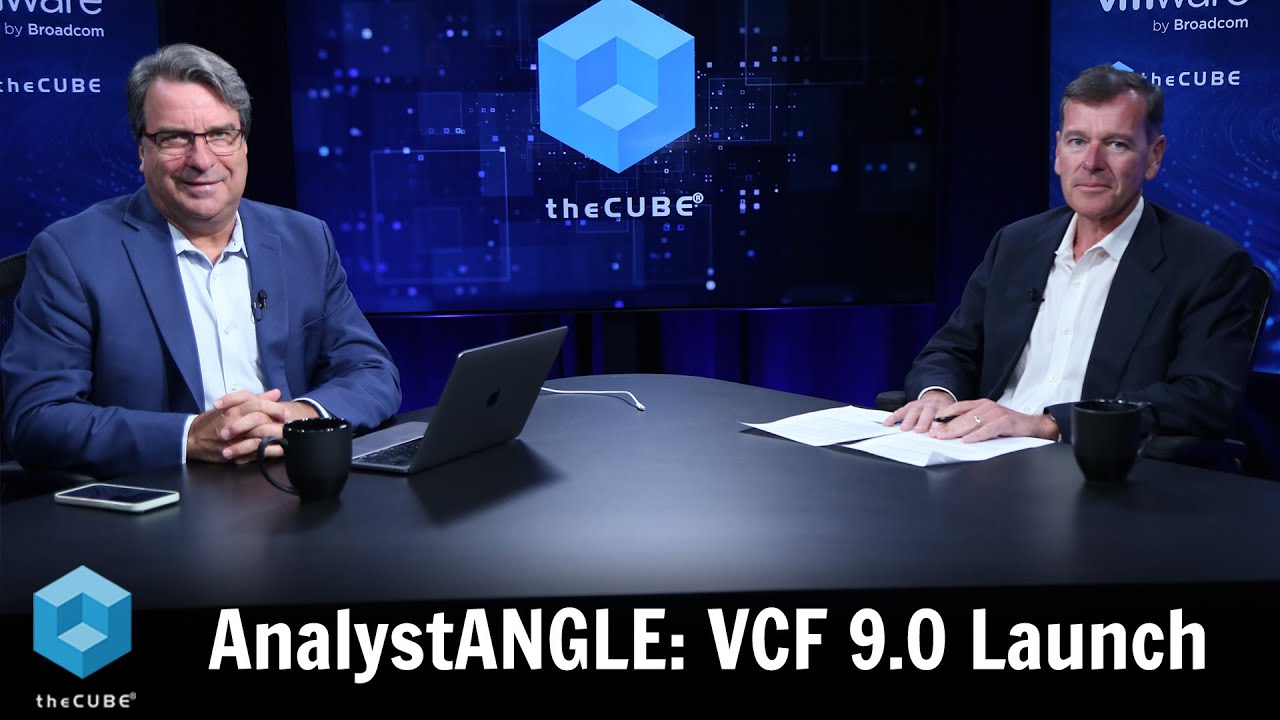
Simon Chang, chief information officer of Taipei Fubon Commercial Bank Co. Ltd., joins theCUBE’s Christophe Bertrand at the “Broadcom Delivers the Modern Private Cloud” event to discuss how the bank is modernizing its infrastructure to meet evolving regulatory and operational demands. Their conversation explores Taipei Fubon’s transition to a virtualized environment and its strategic embrace of private cloud technology.
Chang shares how the bank balances innovation with compliance, navigating tight controls while driving digital transformation. The segment also highlights key priorities, including AI integration, efficiency at scale and long-term cloud flexibility.
This discussion provides a global perspective on private cloud implementation in financial services, with insights from one of Taiwan’s leading digital banking executives. It’s a sharp look at how enterprises are adapting cloud strategies for both resilience and growth.
Forgot Password
Almost there!
We just sent you a verification email. Please verify your account to gain access to
Broadcom Delivers the Modern Private Cloud, NA/EMEA. If you don’t think you received an email check your
spam folder.
Sign in to Broadcom Delivers the Modern Private Cloud, NA/EMEA.
In order to sign in, enter the email address you used to registered for the event. Once completed, you will receive an email with a verification link. Open this link to automatically sign into the site.
Register For Broadcom Delivers the Modern Private Cloud, NA/EMEA
Please fill out the information below. You will recieve an email with a verification link confirming your registration. Click the link to automatically sign into the site.
You’re almost there!
We just sent you a verification email. Please click the verification button in the email. Once your email address is verified, you will have full access to all event content for Broadcom Delivers the Modern Private Cloud, NA/EMEA.
I want my badge and interests to be visible to all attendees.
Checking this box will display your presense on the attendees list, view your profile and allow other attendees to contact you via 1-1 chat. Read the Privacy Policy. At any time, you can choose to disable this preference.
Select your Interests!
add
Upload your photo
Uploading..
OR
Connect via Twitter
Connect via Linkedin
EDIT PASSWORD
Share
Forgot Password
Almost there!
We just sent you a verification email. Please verify your account to gain access to
Broadcom Delivers the Modern Private Cloud, NA/EMEA. If you don’t think you received an email check your
spam folder.
Sign in to Broadcom Delivers the Modern Private Cloud, NA/EMEA.
In order to sign in, enter the email address you used to registered for the event. Once completed, you will receive an email with a verification link. Open this link to automatically sign into the site.
Sign in to gain access to Broadcom Delivers the Modern Private Cloud, NA/EMEA
Please sign in with LinkedIn to continue to Broadcom Delivers the Modern Private Cloud, NA/EMEA. Signing in with LinkedIn ensures a professional environment.
Are you sure you want to remove access rights for this user?
Details
Manage Access
email address
Community Invitation
Interactive Delivers the Modern Private Cloud
Krish Prasad, senior vice president and general manager of the VMware Cloud Foundation Division at Broadcom, and Prashanth Shenoy, chief marketing officer and vice president of marketing, VMware Cloud Foundation Division, at Broadcom, join theCUBE’s John Furrier at the “Broadcom Delivers the Modern Private Cloud” event for a deep dive into VMware Cloud Foundation 9. Their discussion unpacks Broadcom’s strategy to deliver public cloud agility with the performance and control of on-premises infrastructure.
Prasad shares the long-term vision behind Broadcom’s private cloud roadmap, while Shenoy highlights key market research indicating a shift toward cloud repatriation and cost predictability. Together, they explore how VCF 9 addresses digital sovereignty, container support and AI-ready scalability.
The conversation also features analyst insights into Broadcom’s evolving role in infrastructure resilience and hybrid cloud innovation. The discussion provides a timely perspective on why private cloud is becoming a strategic cornerstone for enterprise IT.
General Manager, Private Cloud ServicesInteractive
John Koutsodontis, general manager of private cloud services and architecture services at Interactive Technology Corp. Ltd., joins theCUBE’s John Furrier at the “Broadcom Delivers the Modern Private Cloud” event to explore the role of strategic partnerships in advancing cloud infrastructure. The conversation centers on how Interactive supports digital transformation through tailored private cloud services across Australia and New Zealand.
Koutsodontis shares insights into cloud rebalancing, cost visibility and the need for hybrid strategies that priori...Read more
exploreKeep Exploring
What is the significance of the launch of VCF 9 by Broadcom VMware in the context of modern private cloud and customer success?add
What is cloud rebalancing, and how does it relate to the private cloud in terms of its role, outlook, and integration into IT strategies?add
What factors are driving the adoption of private cloud solutions and how do they compare to public cloud services?add
What are the benefits and roles of private clouds in processing AI workloads for organizations?add
>> Hello, welcome to theCUBE's special presentation here in our Palo Alto Studios going a road all the way across the other side of the world for the special Broadcom VMware, delivering the modern private cloud with the launch of VCF 9. John Koutsodontis is here, GM of Interactive. John, thanks for coming on theCUBE all the way across to Palo Alto from down under out in Asia Pacific, APJ. Thanks for coming on.
John Koutsodontis
>> You're welcome. Nice to be here.>> Great. Good morning to you. Good evening to us. Look at the momentum Broadcom is seeing for VMware's Cloud Foundation, VCF has been great. They said they were going to do some innovation. We're starting to see that with this launch, a lot of strong customer support and momentum in helping just accelerate the journey to get to this modern private cloud as everyone's rebuilding and their platforms for AI, customer success really depends on unlocking the value from the platform. This is where you play. It's where the partners play a more important, significant role in moving this forward with customers, cloud service providers, hyperscalers, GSIs, all excited to be part of this revolution. We're here to talk about it today. Take a minute to explain what your company does first, set the table, what your role is.
John Koutsodontis
>> Thank you, John. Firstly, John Koutsodontis is my name. I'm the general manager for our managed services capability within Interactive. For those that don't know, Interactive is one of Australia's largest IT services companies. We're supporting 2000 businesses across Australia and New Zealand. We are one of our Broadcom's pinnacle partners and a leading cloud service provider. We help businesses navigate their full cloud journey, whether it be data center and or co-location services to private cloud, private and or public cloud solutions, all forms of consulting as it relates to IT modernization, transformation, the whole lot. Our focus is on delivering strategic solutions that help businesses harness the full potential of the cloud.>> You guys are talking a lot about with customers, about cloud rebalancing taking place in the markets consistent with Broadcom VMware's private cloud research, their outlook they put out. What is cloud rebalancing and where does that fit into the private cloud modern era look, outlook, and how does it fit into folks' IT strategies?
John Koutsodontis
>> Sure, John. So look, cloud rebalancing is all about making sure your cloud setup actually works for you, and it's not just where you put your workloads, but how efficiently they're running. Businesses are realizing that moving everything to public cloud without a game plan can lead to either rising costs, security headaches, and or wasted resources. The reality is some workloads just aren't best long-term fit for public cloud whether it's due to compliance concerns, performance demands, cost efficiency or legacy system compatibility. Private clouds can offer the control and the reliability businesses need for mission-critical applications. So the key is finding that right balance, leveraging public clouds where it makes sense. Absolutely. Whilst keeping possibly sensitive or high performance workloads in a more secure and or predictable environment as a private cloud and coupled with a partner that you can trust such as Interactive, where the required level of knowledge and expertise is across our customers' environments.>> Yeah, we're seeing a lot of drivers in the growth of IT transformation, now we've got business model transformation with the role of data. In the private cloud, you're seeing these three areas. IT modernization, cost optimization, security and sovereignty. Huge issues. Are you guys seeing the same thing and is that aligning with what you're seeing with private cloud adoption from your perspective?
John Koutsodontis
>> Yeah, definitely John. So we're seeing IT modernization, cost optimization, security, even sovereignty driving private cloud adoptions. And in some cases these factors are even leading businesses to drive to bring workloads back from public clouds. Businesses need infrastructure that works for them, not against them, and private clouds are playing a significant role in making that happen. Whether... Or what we're seeing is that public cloud costs can get out of hand fast. Hidden fees, unpredictable pricing, resource sprawl all tend to add up. Private clouds coupled with a strong MSP offers clear sort of predictable costs and a smarter resource use, thus avoiding unnecessary spending. I think it's fair to say both locally and globally that there are growing compliance that demands businesses need full control over their data especially in regulated industries like finance, healthcare, government. Private cloud environments can give businesses complete control over security policies, compliance frameworks, and workload placements, ensuring data stays local, protected, and compliant. And I suppose when it comes to IT modernization, it isn't just about upgrading the old systems, it's about keeping up with the explosion of data, the massive compute demands of AI. Businesses are generating and collecting more data than ever, and AI only works when it has access to that data. So the catch, well most data data still lives on-prem, meaning organizations need to bring AI to the data, not necessarily the other way around. Private clouds play a huge role in that shift, offering the performance, scalability, security needed to process those AI workloads efficiently whilst maintaining control over the critical data assets. Interactive is definitely helping businesses stay more resilient and with a continued investment in our private cloud, obviously built and powered by VCF. VCF for us is an enabler for automation, security, workload flexibility, and an AI stack, ensuring that businesses can scale efficiently whilst maintaining performance. With the integrated DR and streamlined management, it ultimately simplifies operations and keeps critical workloads protected and all this delivery and managed via a trusted sort of managed provider like Interactive.>> Yeah, you guys have great synergies with what they're doing and all the services that go there. I want to specifically break out security in a second, but I want to focus on cost visibility and sovereignty. Sovereign cloud, obviously international. You mentioned data, data costs money, moving data around, we know what that means. So cost visibility and sovereignty are two drivers right now that are hot. What's your perspective? Can you share a sentiment of what it's like, what your experiences are around the cost visibility? I mean, budgets aren't going up as fast as the data acquisitions are going up. Sovereignty is now a pressing need with the data. Distributed computing is the standard right? So those two seem to jump off the page a bit. Can you share your thoughts on the cost and the sovereignty side of it?
John Koutsodontis
>> Yeah, definitely. Look, cost is a real issue as is data sovereignty, and I think there's real complexity associated with the adoption of cloud whether it be public and or private. I think the key is relying on a provider that you can really trust, a provider that can help you navigate the complexity, can help you understand the cost, can link you back from the application back to the infrastructure and ultimately your expenses. So irrespective of all of the other elements that seem to be impacting organizations, again, security, data sovereignty, costs and all that. I think the ultimate success for organizations is finding that right provider who can declutter and take the complexity away from organizations to help them make those decisions.>> That's awesome. How are you guys at Interactive helping customers be more resilient through private cloud built on VCF? I mean in resilience, cyber resilience, the old school definition, I guess it's still kind of current, is recovery. With VCF, we're seeing workloads with non-disruptive characteristics, huge factor around what resilience means. How are you guys helping customers be more resilient through private cloud built on VCF?
John Koutsodontis
>> Well, we've obviously, John, made that investment on private cloud. We've leveraged the full capability of VCF. So it's all about that sort of trusting one, the investment and the platform that we've made, and two, the benefits that brings, whether that be predictability in cost, predictability in availability, a level of comfort around security. It's all based on the investment that we've made within that private cloud offering obviously powered by Broadcom VCF.>> IT modernization, cost optimization, security, all the three pillars that brings the general question up about cloud repatriation, not necessarily one, maybe all three of those are a factor. What are you seeing as it relates to repatriation of workloads from the private cloud back to private clouds? Are there common traits you see in the customer workloads being repatriated? Is there a pattern here or is there a trend?
John Koutsodontis
>> Yeah, definitely. I think what we're seeing is more businesses reconsider their public cloud strategies and repatriating some workloads back to private cloud especially for workloads where again, cost, security, and control are sort of top priorities. Businesses are realizing that certain workloads are far more expensive to run in the public cloud on the longer term, particularly storage-heavy applications or workloads with frequent data access or data sort of transfers, sorry. Equally, organizations are running latency-sensitive workloads such as AI models or real-time analytics often find that the private cloud can deliver better performance and control. It's especially true for critical infrastructure industries like utilities where even milliseconds of delay can impact their operations. When uptime is non-negotiable, private clouds ensures that predictable performance, that control, the failover strategies, and capability all are key essentials to services running 24/7. So it's not so much that they are abandoning cloud altogether, but more so that they're optimizing their setup by keeping mission-critical workloads in private cloud whilst using public cloud where it makes sense. At Interactive, we sort of specialize in bridging these cloud environments for our customers via our managed services capability, which provides that added level of comfort and trust.>> I got to talk about gen AI. It's everyone's favorite topic these days. You can't get enough AI. It's like magic. Things is just happening, and that's people's general reactions. So the reality is there's some great practical AI going on, and if you're in the infrastructure game, you're in private cloud, you're in cloud, you've got to make the AI work, and there's certainly headroom. I mean, great upside potential with AI, no doubt about it. So I have to ask you, what are you seeing with customers as it relates to AI adoption? What are some of the barriers? How are you helping customers overcome them and implement the benefits of AI with Broadcom and VMware software?
John Koutsodontis
>> Sure. Lots in there. So look, there's no doubt that AI adoption is sort of moving fast right? But what we're seeing is many businesses are still somewhat unsure as to how to take that next step. At Interactive, we see AI more than just the hype right? It's a powerful tool that requires the right infrastructure, the right security, the right strategy to truly deliver that value. That's why we're focusing on bridging the gap between where businesses are today and where they need to be, guiding them through AI readiness, security readiness, and disaster recovery readiness. In terms of some of the barriers that you spoke about, there are obvious infrastructure sort of challenges. Many businesses don't have the compute power or an ability to scale the environments needed to support AI workloads. Security and compliance we've already spoken about and the challenges there. AI relies on massive amounts of data, but businesses need to ensure that the data remains secure and compliant. And there's also a bit of uncertainty around strategically how to move forward with AI. Companies know that they need AI but aren't sure how to either integrate into their existing operations or exactly what that next step is. To unlock its full potential, AI needs to be tied to tangible business outcomes, whether it's improving efficiency, productivity, enhancing the customer experience, or even driving that business growth. So we feel that our partnership with Broadcom will be able to provide that AI-ready infrastructure that can scale, that can achieve the performance levels, and that can be tailored and fine-tuned to our customer's needs, definitely provide that robust security to protect AI-driven workloads and sensitive data, drive that scalability in terms of solutions that help customers adopt AI without all of the unnecessary complexity and all manage that and provide it again, as I said before, by Interactive managed services at a predictable and cost-effective price.>> Yeah, I mean the scalability of the data, the security, all in the private clouds where the action is. I have to ask you, John, can you share some customer examples, love stories, stories drive movement, stories affect change? Share a customer success story for us.
John Koutsodontis
>> Well, look, there's lots of different customer experiences out there. I think there's a lot of the decision-making process really does boil down to the application and the business need, and that's what's driving the infrastructure decisions. And we've seen many examples where customers have chosen the path of public cloud and have determined that it's actually not the right fit and have returned back. We've seen examples where customers have enjoyed the predictability and the benefit of private cloud and have remained there and are steadfast in that decision and are actually enjoying and reaping the benefits. So there's lots of many different examples where customers have made one move or another depending on what that critical application driver is.>> Well, congratulations on the award, got top level partnership. Excited to have you here talking about your experience with your customers, the market opportunities ahead for you guys. Congratulations and thanks for taking the time to come from down under all the way out to Palo Alto.
John Koutsodontis
>> Thank you very much, John. It was a pleasure. And we look forward to our continued success with Broadcom.>> Broadcom VMware. We're delivering the modern private cloud, the launch of VCF special presentation here in theCUBE. I'm John Furrier, host of theCUBE. Thanks for watching.