TheCUBE Research’s Dave Vellante sits down with Duncan Angove, chief executive officer of Blue Yonder, and Nunzio Esposito, chief design officer of Blue Yonder, to discuss how AI agents and agentic architectures are changing supply chain operations, platform strategy and operator experiences.
Angove and Esposito explain how adaptive orchestration, command-based design, open-weight models and telemetry-driven trust can move autonomous supply chains into production. They also address operator-agent collaboration, Nvidia integrations, sovereign AI, governance and the change management required to build trust and drive adoption.
Almost there!
We just sent you a verification email. Please verify your account to gain access to
AI and the Autonomous Supply Chain. If you don’t think you received an email check your
spam folder.
In order to sign in, enter the email address you used to registered for the event. Once completed, you will receive an email with a verification link. Open this link to automatically sign into the site.
Register For AI and the Autonomous Supply Chain
Please fill out the information below. You will recieve an email with a verification link confirming your registration. Click the link to automatically sign into the site.
You’re almost there!
We just sent you a verification email. Please click the verification button in the email. Once your email address is verified, you will have full access to all event content for AI and the Autonomous Supply Chain.
I want my badge and interests to be visible to all attendees.
Checking this box will display your presense on the attendees list, view your profile and allow other attendees to contact you via 1-1 chat. Read the Privacy Policy. At any time, you can choose to disable this preference.
Are you sure you want to remove access rights for this user?
Details
Manage Access
email address
Community Invitation
Duncan Angove & Nunzio Esposito | AI & the Autonomous Supply Chain
This interview on theCUBE Research, hosted by Dave Vellante, brings together Duncan Angove of Blue Yonder and Nunzio Esposito of Blue Yonder to examine how artificial intelligence, agents and agentic architectures reshape supply chain operations. The discussion covers platform strategy, design principles for operator-agent interaction and practical deployment factors to consider such as collaboration with NVIDIA, sovereign AI initiatives and change management.
Angove outlines Blue Yonder's platform strategy and argues that supply chains require a new operating architecture that continuously adapts and orchestrates resources in real time. They identify agentic migrations and telemetry-driven trust as practical steps toward autonomous supply chains and highlight pragmatic open-weight models for phased adoption.
Esposito emphasizes design that treats operators and agents as first-class participants and prioritizes commands over clicks. They describe operator-agent interaction patterns and design principles that improve usability adoption and governance for AI-driven automation.
This conversation provides actionable guidance for supply chain leaders and technology practitioners seeking to implement AI agents, open-weight models and agentic architectures to achieve greater autonomy, efficiency and resilience. It addresses governance, deployment and change management considerations for production environments.
-R1
Duncan Angove & Nunzio Esposito | AI & the Autonomous Supply Chain
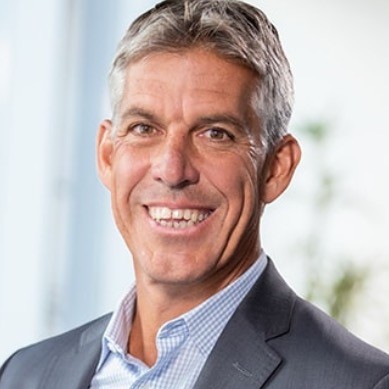
Duncan Angove
CEOBlue Yonder
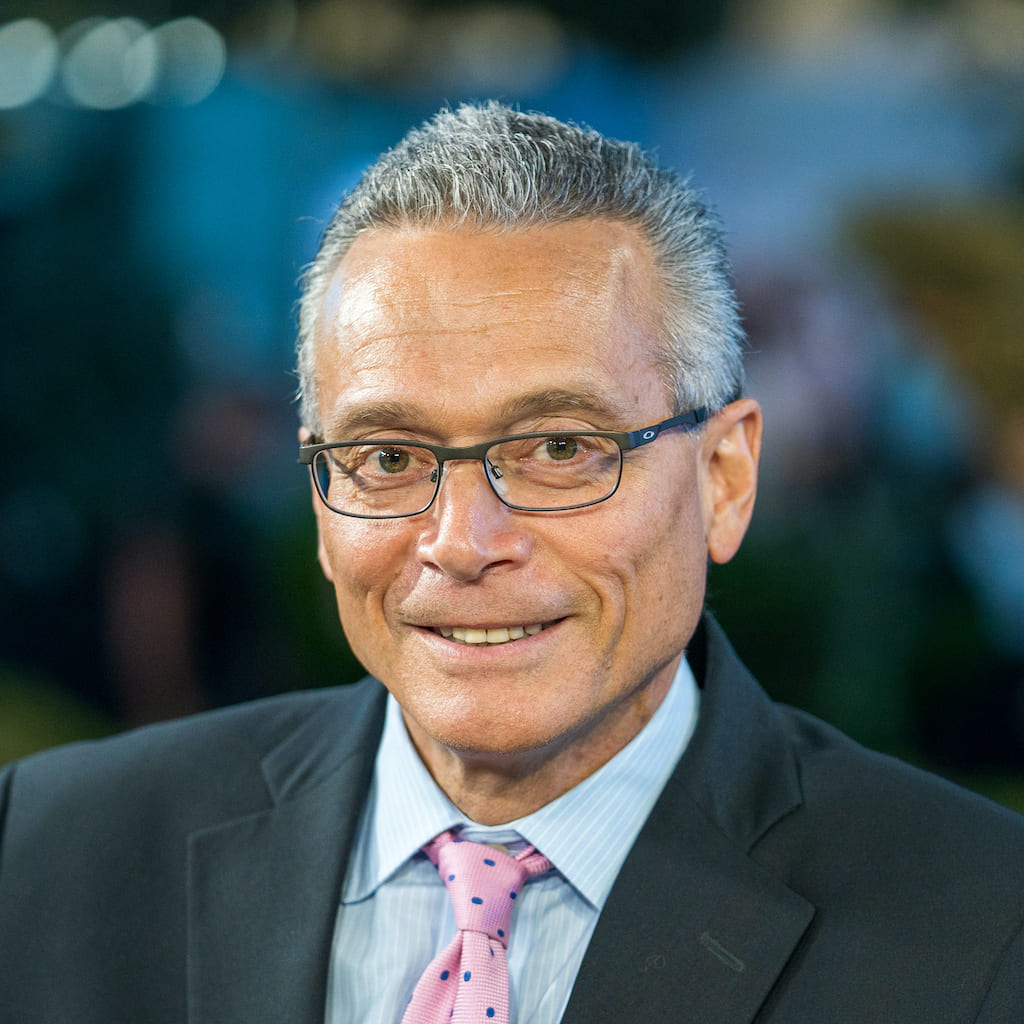
Nunzio Esposito
Chief Design OfficerBlue Yonder
In this interview from Blue Yonder AI and the Autonomous Supply Chain, Duncan Angove, chief executive officer of Blue Yonder, joins Nunzio Esposito, chief design officer of Blue Yonder, to talk with theCUBE's Dave Vellante about the new operating architecture required as supply chains face permanent disruption. Angove explains why forecasting-and-orchestrating models built for stable demand no longer work amid tariffs, geopolitics and volatile consumer behavior, arguing for continuously adapting systems powered by the Blue Yonder Network. Esposito details how...Read more
exploreKeep Exploring
Is AI the answer to fragmented workflows and the need for a new operating architecture where humans supervise outcomes and software responses at machine speeds?add
How should supply chains evolve to cope with continuous disruption (geopolitics, tariffs, climate change, labor shortages, volatile demand), and what role can AI and real‑time networked architectures play in enabling that change?add
How is AI reshaping the role of firms, the way work gets done, and the operation of supply chains?add
How are you designing and implementing an agentic (AI-assisted) user experience that goes beyond chat to change operator workflows, support decision-making, and address the change-management challenges?add
How should agentic architectures be designed so that agents become the apps (with applications as tools), the unit of transformation is the entire operational system rather than just the end user, and the system continuously learns from exceptions?add
How are you capturing user input and feedback and building trust — including handling operational change management and role mapping — when deploying agentic capabilities (for example, on the Blue Yonder platform)?add
How can AI be applied to automate software implementation, migration, and deployment (e.g., what is “Frictionless Outcomes”) and what benefits does this deliver?add
How will AI and robotics impact supply chains—especially in addressing labor shortages and moving from siloed systems to integrated, real‑time orchestration?add
Duncan Angove & Nunzio Esposito | AI & the Autonomous Supply Chain
search
(INTRO)
Dave Vellante
>> Thank you. The answer, rather a new operating architecture is required. One where AI agents replace fragmented workflows and humans supervise outcomes and software response at machine speeds. Joining me to explore that shift are Duncan Angove, who's the CEO of Blue Yonder and Nunzio Esposito, Blue Yonder's chief design officer. Gents, welcome, good to see you again.
Duncan Angove
>> Hey Dave, great to see you as well. Thanks for having us.
Dave Vellante
>> Yeah, I'm excited to dive in with you guys and go deep into supply chain. The state of supply chains is kind of worth noting right now. Obviously, we've got tariff volatility. It's like daily. You've got this sort of reshoring pressure. Obviously, we hear every day in the papers of geopolitical disruption at this massive scale. But it's also making supply chains sort of hit the boardroom as a topic. It's like right there with security these days, especially as it relates to profitability and other ways to sort of allocate capital. So Duncan, set this up. What does this mean for supply chain leaders? What's your message to them?
Duncan Angove
>> Yeah, unfortunately, what we're living through is now business as usual, if you're a supply chain professional, right? So you're in a permanent state of disruption. like you said, whether it's geopolitics, tariff, climate change, labor shortages, volatile, unpredictable consumer demand, all the stuff we're seeing in the food supply chain here with beef and all of that, right? It's just business as usual. And the old supply chains were built around forecasting demand and then orchestrating an entire value chain around that. And that just doesn't work in today's world, right? You need a new operating architecture that is continuously adapting and orchestrating all the resources in a value chain in real time. And the emergence of AI and what we've got at Blue Yonder with the Blue Yonder Network enable a fundamentally different kind of fabric that allows companies to do that.
Dave Vellante
>> Thank you. And Nunzio, you sit on the design side. I'm interested in what that means to you and how the changes that we're seeing in the market, you're seeing completely new client surfaces, whether you're a developer or you're a business user, where it really affects who's actually looking at the screen. You know, it used to be maybe somebody was doing planning they're getting into the systems the CFO now wants visibility on this. What's my exposure? So take us through your role and how you're approaching this design problem.
Nunzio Esposito
>> Yeah, sure. So we've done it. We've done design a little unorthodox here at Blue Yonder. And I think it's a testament to supporting the new operating model and the infrastructure that needs to be in place. Design doesn't just serve what we call consistency or continuity of the total solution. It actually is thinking broader. Our thesis around being the only end -to -end supply chain provider for the world means that the experience needs to account for edge -to -edge type interactions. It needs to be able to embrace the speeds and the feeds of how roles evolve and change day to day. And it needs to keep the business abreast of what those changes are and then synthesizing all those different data inputs into reasonable business decisions. So what our team oversees is actually a big piece of our platform shared services. Our portfolio obviously leverages those shared services, but it's way bigger than just componentry. We really are here to serve our customer and its constituents, which we call operators. And those operators need to be able to feel not just supported in their day -to -day functions, but more importantly, empowered for what's ahead. So we're a cross -functional group of product managers, designers, and engineers. And I think through the profound effects of AI and how it's changing our SDLC, we actually just call everybody on our team an engineer.
Dave Vellante
>> Right. It's just completely changing the way in which we interact with technology. At your user conference this year, it's called ICON. Duncan, you had a great line. You said, the agent is the app. That's sort of interesting and intriguing. The user now has a whole new way to engage with a whole new system, and that system is intelligent. It's infinitely patient. You have this room full of supply chain peeps who have spent their careers living inside these sort of really detailed dashboards, and they had this sort of unique expertise. So how does that change the dynamic? What's replacing it? You're widening the aperture of folks who can interact with the system. What does that all mean?
Duncan Angove
>> Gosh, you're going to spend a lot of time answering that one, Dave. The most interesting thing that's happening now, and it's not just in supply chain, it's in the role of the firm, how work gets done, how expertise travels through an organization. All these things are going to reshape really the world. When you graduate university, you go to work, that's kind of what you do for most of your life until you retire. It's a central tenet of society around which humanity is built and lives, right? And AI is changing all of that. And so when we say the agent is the app, apps have traditionally been the tools that these people use to run supply chains, whether it's a warehouse management system, it's a transportation system, or it's a forecasting and replenishment system, right? These are the tools that these users have used. First of all, the thing I will say is, and this is something Nunzio and I believe passionately in, we hate the word user. I was in the bookshop in London this weekend, and there's a new book out that's called Users, and it's basically about the internet economy and how we were both users and an input to it. We gave them our preferences, our clicks, our intent, and then they monetized it, and all the value accrued to those platforms, right? And that's where users come from. It's almost like being a drug user. So we use the term operators. There's this amazing machine called the supply chain that runs the world, and it's underappreciated. And we stand with the operators that perform magic every single day. And that's what Nunzio, he wakes up every day trying to figure out how we can make things more magical for the operators that run the world for us. Okay.
Dave Vellante
>> And these operators, okay, you've got operators, but Nunzio, you also have agents you're designing for. It's just this whole new class of things. So Duncan's narrative there was pretty bold and sort of rethinking how we think about just interacting with systems. But you have to sort of create that interface, that new experience. So how are you thinking about that differently? How do you build an interface when it's not just people, it's also agents and people interacting with agents and supervising agents? What does that mean? need?
Nunzio Esposito
>> Yeah, obviously, based on what Duncan is saying and how we're supporting it, we don't believe an agentic experience is just chat. It's not messages to messages. It really needs to help to provide the assistance and the augmentation that the operator really needs. So the way that we're looking at it is ensuring that it is infused into the fabric of the experience. It's not a sidecar or bolt -on. We are, as a forcing function, and I know that might sound negative in its context, but it's actually not, we're changing the way in which a user navigates, the way a user, i .e. an operator, makes a decision. And what we're doing is holding ourselves accountable to our manifesto of commands over clicks. And based on the type of feedback loop that we get from our operators through our telematics and our insights program, we are really starting to do the thing that's really hard, which is ruthless aggregation and simplification, which basically means if it doesn't really need to be there, why does it exist? If the system is so intelligent and it doesn't necessarily need confirmation information, or the operator has to physically interact with the solution, is there a quicker way to be able to, accept and move on? So it's less about menus, toolbars, and information architecture. I'm not saying that that is not important. It still exists. But it's more around how do you take the human to human type of dynamics in the way in which decisions are made, information is learned, knowledge is obtained. And how do you build an infrastructure that supports it? And that's essentially what we've been setting out to do. And I would tell you probably the latest solution that we have that really starts to encapsulate a big piece of that paradigm shift was led through our new Space Planning and Category Management experience. And through there, we learned a lot around the readiness of an operator and the willingness to be able to do the thing that is the hardest barrier of entry for any type of enterprise technology, which is the change management itself. How do I go from this that I've learned and done for X amount of years, and now I have to have a new behavior. And changing that behavior is actually the hurdle that needs to be addressed.
Dave Vellante
>> And I want to ask you guys about, there's a lot of talk and fear around agents replacing people and robots and the like. But before we get there, George Gilbert has done quite a bit of work, and he and I have sort of studied this interaction between the front end, the client, the new surface, and the back end. Because a lot of times humans are going to be involved, there's going to be exceptions, and the system has to learn from the reasoning traces of the human, that sort of tacit knowledge. We talk about that all the time. And so it's not just a user interface. It's not just a pretty front end. It's actually got intelligence that has to interact with what I call the back end, or what we call sometimes a system of intelligence. Alex calls it the ontology. All the buzzwords are there, but basically that closed -loop system where that entire system is learning constantly. Can you address that? Is that fundamental to your architecture?
Duncan Angove
>> Yeah, it is. So, we boil it down to sort of think of it as four design tenets, right? So, first of all, you have to design for two participants. One is the agent, and the other is what we could call the augmented operator. So the agent using these tools, whether it's a WMS, it's a picking thing, it's a planning engine, right? You need to make sure that it's built for agents so you don't feel like you're having a DDoS attack every time an agent hits your apps, right? So it has to be performant, it has to be headless, it has to be secure. It has to have machine speed access, right? So that's one. And then the other is the augmented operator, like Nunzio was talking about. They're no longer clicking, right? They're actually expressing intent, guardrails, objectives. They're managing agents, right? So that's when we talk about the agent becomes the app and the applications become its tools, right? That's sort of one. The second, though, is that the unit of transformation shouldn't just be the end user, right? It should actually be the entire operational system. So also design for that. And then to your point about learning is you want to scale expertise and perspective. And every exception you encounter should be hill climbing the underlying engine and model. So Jean Piaget, who was the Swiss psychologist, basically said that intelligence isn't what you know. It's what you do when you don't know. And it's very, very profound. you think about software, it's deterministic. It's if-then statements. You've encoded what you know in rules. And what happens when something's wrong, like you've built a wave plan in a warehouse and there's a short order allocation problem, the software can't solve it. That's where humans are in the loop and they have their institutional knowledge. They're a super user. Oh, this is what you do. Now you have agents that can actually reason through that problem, right? It's a new type of thing, and that's what you want to hill climb so that next time that knowledge is in the agentic architecture and the system itself is learning continuously.
Dave Vellante
>> Okay, and there's a big gap between sort of the data-oriented tasks that we're doing today and what AI can do and just being able to absorb that tacit knowledge of the enterprise and act on it, there's a big gap there. So it feels like we need humans for a while. In fact, you've been pretty vocal that people who talk about, agents replacing people is the wrong question. Although, look, there is an economic incentive out there to replace headcounts, and public policy basically rewards us. You can write off a capital expense in one year now. So there is that economic incentive. But we'll put the public policy debate aside. But what is sort of the right way to think about this? What does success look like? How do people's jobs change? What do they actually become?
Duncan Angove
>> So it was interesting. I was actually on with, I'm a graduate of UCL in London in economics, and I was on with them earlier today. And if you look at it, the number of graduate job openings this year was down 85 % from a peak in 2017. So companies are no longer hiring early talent, Right. And the challenge is that you don't just hire those people to do lower skilled kind of things that don't require years of institutional knowledge. You hire them because that's how you build expertise in the company. Right. And there's almost 200000 new students going to university for the first time this year. And it's sort of like, what do they do? What do you tell them? Right. So it's a profound issue for society. Again, back to economics, there was a guy called Ronald Coase, and he wrote the theory of the firm. Why does the firm exist? And it exists because it reduces transaction costs. If a firm didn't exist, you'd have to go out for every task. You'd have to go out and hire someone, get a contract, monitor performance, all of that. So it was cheaper to insource all of that in your own hierarchy, and that's why the firm exists. And then agents come along and they actually compress those transaction costs, right? They can do all of this. They can find talent. They can negotiate something. They can do all of it. So it starts to challenge why a firm exists to begin with. And then you could even go further and you could say you have this arbitrary thing called an income statement. But all that does is it categorizes spending according to where people sit. I've got people in development, people in sales, people in services. It literally reflects the firm and people. Well, if an agent one day can be coding and the next it can be doing customer service, and then it can be generating demand, where does it sit in the income statement? So there's all these tenets we have as a society around why a firm exists, what is an income statement, how does expertise climb in an organization, that all of this technology is going to fundamentally challenge.
Dave Vellante
>> Yeah. And you're alluding to what I've said is you're going to see all these fragmented departments dissolve. we talk about determinism. It's sort of a myth. We have determinism in the finance department. We have determinism maybe in the logistics department. And maybe there's some determinism in the analytics group. But you put everybody in the room, and they're arguing about what the actual truth is, which gets me to trust. And so how do we trust these agentic experiences? Because the more autonomous these agents get, you have this black box problem. The humans really don't know how the decision was made. So how do you ensure that transparency that a supervisor or planner needs?
Nunzio Esposito
>> Yeah. So, a lot of the frontier labs, how they are capturing input and feedback, we're doing very similar things from our telematics. So, we definitely do nudges, ask for feedback. It's very fluid. It's non-intrusive. We are also monitoring what is said and the results of what's being said to help create that feedback loop that's back in there. But outside of the actual interaction or engagement at hand, trust really comes back down to what Duncan was saying around the operational change management and the willingness to do something different. And that's what we've been actually learning as we are deploying our agentic capabilities and obviously our newer solutions on the Blue Yonder platform. What we're seeing is there is a barrier to entry around role mapping. It's the things that, at least for those that are in design that might be listening to this, academia kind of classifies it as service design. And it's essentially like the jobs I do today to the jobs I need to do tomorrow. And what's hard about it is the tomorrow is unknown. And in order to get from point A to point B, you have to throw something out there. And that's the reason why design is so positioned well to be able to facilitate and find those answers. it's no more the limitation of what is it going to take to make it it's more around what is it what if and what should it be so we ask those questions with our customers to help them through this transformation in this change management approach um and it's things like i'll give you a use case example um to create trust and confidence um it's a little bit about okay you have x warehouse managers and a warehouse manager covers a shift and they cover one warehouse. Okay, so what if there was one warehouse manager that covered 10 warehouses and they needed to do it at X different types of shifts? And how do we ensure that there's well-being there? How do we ensure that we can synthesize and create the kind of coverage that is needed, the blocking and tackling and et cetera? And if that's where the customer wants to be, then the technology needs to be able to obviously support that. And we need to be there to solve for how an operator can welcome that. And the success criteria that we put out there, and Duncan and I actually talk about this a lot, is, okay, how do we ensure that they don't go over in their shift so that they can get home in time and they can see their daughter or their son at intramural sports? I know that sounds crazy, but if the supply chain rules the world and the operators are part of it, those are things we actually need to think about. Yeah.
Duncan Angove
>> Yeah. Dave, it sounds really trivial, but one of the biggest opportunities we've seen is actually in good old change management. And I talked about how expertise travels through an organization. There's a reason all these frontier firms have created deployment companies, because it's really, really hard at the frontier to actually figure out how to implement AI. And what we're seeing is, just take a warehouse again, wave planning or order planning is really hard to do. It's the heart and soul of the operation. And you can train someone in a classroom, but as soon as something goes wrong, they don't actually know what to do. So they would have a super user that has all this institutional knowledge encoded in their head, and then they teach people. That can all be done agentically now. Now, that agent can start to understand all of this and actually help the operator execute and operate like they're a super user. And it hill climbs and learns the whole time. It also does things like it brings collective decision making into it. Ironically, it enables cross-functional collaboration. So let's just say you're running a warehouse and you're 14 % behind plan and you say, I'm going to add a second shift. Well, now the agent can bring HR's perspective to it. You can do that, but that means you might have absenteeism and attrition next week. You can bring the safety officer into it. You're going to have a higher incident rate. You can start to get this kind of agentic decision -making. And again, you're making the operator basically execute at a fundamentally different level.
Dave Vellante
>> Thank you for that. That brings me to another interesting topic. I'm glad you mentioned this sort of deploy co. It's a hot trend right now. You're definitely seeing these software -heavy portfolios at PE firms. They're bringing in these forward deployed AI engineers to AI -ify their SaaS so they can survive the SaaS -pocalypse. But there's also a big conversation going on right now about open versus closed models, the whole US versus China competition and all that. You guys recently shared some news with NVIDIA, which is now they're leading the charge with Nemotron. You saw Jensen's first X -Post, he had like a million followers his first day, I think. So it's open source, it's open weights. I'm interested in the work that Blue Yonder and NVIDIA are doing. And I'd love your take on the importance of open weight models, why people should care, what it means to, we could go forever, what it means to the closed models, because this stuff's not easy. And I actually think the Anthropic and the OpenAI of the world have a great opportunity to simplify this. But what's your take on all that? And take us through the NVIDIA announcement.
Duncan Angove
>> Yes. Yeah. First of all, I can't let the FDE comment go without commenting on it. So let's just understand what FDE is. And by the way, unfortunately, it's a way to rebrand consulting across the entire industry, right? Just because you rename a consultant FDE, that's not actually what it is. And let's understand why it existed. You had to put an engineer in because the platform wasn't self -service. It was so complex that it required someone in engineering to actually come in and configure it and make it work. The second thing is we had to put an engineer in because we don't understand your industry and we need to learn it so that we can actually build something that's relevant for you right so i think those two things are actually the opposite of what you want to do when you build a platform you want a platform that doesn't require an engineer it's agentic and inference is bigger than configuration inference actually does your configuration the agent does it for you and the second thing is it's built purpose built for supply chain and the people that built it understand your industry inside out and don't need to learn on your dime. Okay. There's my FDE rant over. Right. Just to your point on open versus closed. we announced this back in May and actually I think we did it before anyone else in the industry was really grabbing onto it before that big open letter came out. And we talked a lot about the importance of open. So we're big believers in it. we announced a partnership with NVIDIA back in May around training open weight specialized models for supply chain that would be dramatically cheaper than general frontier models. There's always going to be a use for those, but for some use cases, they're not. Again, in a warehouse, you want something that has zero latency, is super fast as a result, and is dramatically cheaper and is trained for this particular purpose. So that's what we set out to do with NVIDIA back in May. We've made tons of progress. We continue to benchmark it against other models. It's dramatically more accurate, faster, and cheaper. So we're a big, big believer in that. We also believe in the recent discussions around sovereign AI. There's something else we talked about, and this ladders back to the internet economy, let's monetize the user model, this idea that you should be giving some frontier model your intelligence and they rent it back to you. We also don't believe in that, right? So the way we built our open weight models is that they're trained on synthetic customer data, not our customers' data, and then they are encapsulated at that customer, and only they hill climb it. So we were pretty early in making both of those statements.
Dave Vellante
>> Yeah, the sovereign's a hot topic. I actually want to come back to that. But so the NVIDIA relationship, it relates to Nemotron, correct? And so you guys are doing stuff with NVIDIA and Nemotron. John, do you use closed models selectively, or have you sort of eliminated those? Where do you stand on that?
Duncan Angove
>> Yeah, so in our harness, we have a model routing algorithm. So there are cases where a bigger, broader frontier model will actually make sense. You have to make the token economics work as well. But in a lot of cases, I would say at least 80 % of them, you don't need that, right? The open weight model gives you a better answer, particularly if it's trained on a specialized supply chain domain like ours are.
Dave Vellante
>> Yeah. And the serving is interesting. We're digging into that with our research team here. And it's not just about token costs, right? It's about the outcome and the value that you get. And I know you understand this. And so I want to ask you about, you're building some very sophisticated agents for supply chain and that's clearly the future, but there's a lot of legacy systems out there. You know that, you've been in the software business for a long, long time, and customers need help migrating from those and implementing agentic systems. So what capabilities or tooling or other functions are you building to help customers with those issues?
Duncan Angove
>> Yeah, I think it's no surprise that the area where AI has sort of proven itself is in coding, right? that's obviously the place that it's been. And if you look at the revenues of a lot of these companies, that's where a lot of it's coming from. So we took that mindset and we applied it to the technical deployment of software, whether it's a migration, an upgrade, or a new deployment. And we said, here is a traditional, I hate the word statement of work. It just sounds like it's ancient from the industrial era. But what are all the activities involved, right? configuration, data management, integration, testing, all of these types of things. And how much of that can we automate agentically? And we went after it aggressively. We called it Frictionless Outcomes and how you can basically automate agentically the implementation or migration of software. And we did it. Again, creative destruction is 20 % of our revenue. And we went after it because we think it's the right thing for customers and the right thing for the market. So we can migrate customers in 24 hours, whether it's a planning system or it's a warehouse management system. And they go from either an on -prem legacy system, or they're running a hosted single tenant version of the cloud, which is most of the planning solutions out there today. And we automate moving them to a cloud native AI first agentic cognitive solution.
Dave Vellante
>> So Nunzio, you've got these agents, in new places, in and out of the organization, learning the tribal knowledge. How are you able to track that, get telemetry, make sure they're behaving properly, secure them?
Nunzio Esposito
>> Yeah. So to add to what Duncan is saying, as far as creative deconstruction, we're also looking at ways to ensure that there is on day one, there's a one -to -one mapping of where you're coming from to what it means now in this new solution, this new arena and ways to ease the friction points, which is, Hey, it's one -to -one, I work in this workbench, which was called a workbench. And we ensure that the new view is called a workbench. But at the same time, we're also educating the operator that there are also many ways to be able to get that job done. And how do you nudge and support and educate so that it removes friction and really isn't a forcing function for the operator. It's more around their own appetite, willingness to try something new. And through that telemetry, we are capturing that at a role by role level. You could say a knowledge graph, context graph. They work together. Not to get into any kind of marketing jargon, but we are cataloging it. And through that data and through those interactions, it helps to inform the next best step or the next piece of content or the next pop -up or nudge. So there are different mechanics, numerous ways to handle the way in which the system helps to coach the operator from point A to point B, and it activates different modalities, different touch points, and it meets the operator where they are. and that's really important because trying to create sops and do all this onboarding and then our customer in the it department has to set up another SharePoint site and i think we all know that there's like 7,000 of those at a site it just gets lost in translation and what we don't want to see is the value that our solution is providing is not actually getting the adoption that it needs to have, because it's been designed for them to operate better, for them to make the decisions that they need. And the better decisions that they make, then the smarter the system gets. So those kind of hooks are extremely important. And the bigger barrier there that I just want to communicate, as Duncan is talking about FTE, I would basically tell you that from what I have seen and where we are, a friction point is the willingness for an IT department, especially at our customers' sites, to allow for a user to decide how they want to work. And that has been very hard and a challenge that our group is undertaking now. And what I mean by that is turning something on and allowing the user to go, they can get that done this way, or they can go get it done that way. And you need our customer to be okay with that. That's how this system gets better.
Duncan Angove
>> And we get better cataloging. Right. Just on that, Nunz. So just one thing that's again, change management is the huge obstacle here, right? All these people are used to doing things this way and AI changes fundamentally how you did it in the past and going forward. And I say to Nunz, we want our software to be trainingless. You don't need training to use it because it comes with an operator coach that, by the way, represents you. They want you to be the human that wins in the organization. They share accountability with you, just like a tennis pro has a coach. And so they onboard you, they train you, they teach you how to use it, but then they stay behind. And as you're making decisions, they're working with you to make sure that you're exceptional. So let's just say you do an override and it reduces availability. They come back the next day and say, hey, that was on us. Here's what we should have done. I noticed that you ponder over these decisions. I noticed that Bill in the next cube is better than you at this. And they're constantly working with you to make you better. And in that regard, Nunz and me take huge exception to the phrase UAT. At the end of a deployment, you have this thing that's called user acceptance testing. Well, first of all, we don't like user. We've said that. But think about the word acceptance. Dave, if you cooked a meal and then someone, your guest said, you asked your guest, how was it? And they said it's acceptable.
Dave Vellante
>> How would you feel?
Duncan Angove
>> That's our hurdle. These poor operators that we inflict this stuff on. And we're done with that. We've completely reimagined UAT as operator endorsement. If an operator is going to endorse it, that my people are going to use this and I endorse it, it's a completely different hurdle.
Dave Vellante
>> Well, and that endorsement is a strong signal to the intelligence engine, which then knows how to act. And to Nunzio, what you were talking about earlier, it seems to me the better your data, the better your analytics, the better the decision making, the better the acceptance rate it goes to an endorsement. And that just creates better outcomes. you guys are really tackling some hard problems. And I want to end on predictions and people. When I ask people to look out a few years, they say, oh, forget it. Things change so fast. I actually think, Duncan, it's easier to forecast out four or five years from now or maybe even five to 10 years from now than it is two quarters from now. I can't predict what open source model or what China's going to do with the geopolitics. But when you think about the potential, I go back to the internet days and we saw the potential. And the same with the cloud. We, I think, generally accurately forecasted what the end state typically was going to look like. But how it got there, it was kind of messy. What do you think, if you look out in supply chain five years from now, middle of next decade, late next decade, What do you think is going to fundamentally change that is going to make us forget the old way or look back and say, can you believe we used to do that? What does it look like?
Duncan Angove
>> I think a few things. First of all, we have a labor shortage in supply chain, right? So it's not like robots.We haven't even talked about physical robots. I don't know if you've been watching the robot games in China. Amazing. I mean, that's going to be something else. And they're sort of compounding. This is sort of the brain and then you have the physical robot and they're going to compound in terms of what they're capable of doing. So it's not like we're going to see people, we have a labor shortage. So actually robotics and AI will help solve some of that. And I think that one thing for sure is that people will start to think about supply chain software or even the supply chain you run more as one organic adaptive system versus today, it's all siloed by different departments, different companies, and software has grown up to support each of these different things. So I think, and we're seeing this already, all those silos will go away inside a company departmentally, and there'll be much better orchestration across companies as well. So that's obviously what we spent the last five years building. And the agentic capability just enables so much more of that sort of real -time orchestration. So I think that's one thing that we'll see. And hopefully this will solve for the labor shortage as well.
Dave Vellante
>> Yeah. And Usain Bolt now is eclipsed by a robot. But humans, we can make things go fast, so big Bolt fan. But as well, it brings me back to the policy, public policy discussion where there is a huge economic incentive to automate and bring in machines. And I think that you'll see over time tax policy will change and support the human condition because, as you pointed out in this interview, that continues to be vital. Guys, thanks so much and congratulations. It's amazing the progress that you guys have made from putting together a lot of so -called legacy software to really reinventing yourselves and what has become Blue Yonder. So congratulations, super excited to keep in touch with you and monitor the progress. Thanks for your time. Thank you, Dave. Thank you for having us. Thank you. All right, and thank you for watching. This is Dave Vellante for theCUBE and we'll see you next time. Thank you.





 Dave Vellante