We just sent you a verification email. Please verify your account to gain access to
AWS re:Invent 2025. If you don’t think you received an email check your
spam folder.
In order to sign in, enter the email address you used to registered for the event. Once completed, you will receive an email with a verification link. Open the link to automatically sign into the site.
Register for AWS re:Invent 2025
Please fill out the information below. You will receive an email with a verification link confirming your registration. Click the link to automatically sign into the site.
You’re almost there!
We just sent you a verification email. Please click the verification button in the email. Once your email address is verified, you will have full access to all event content for AWS re:Invent 2025.
I want my badge and interests to be visible to all attendees.
Checking this box will display your presense on the attendees list, view your profile and allow other attendees to contact you via 1-1 chat. Read the Privacy Policy. At any time, you can choose to disable this preference.
Select your Interests!
add
Upload your photo
Uploading..
OR
Connect via Twitter
Connect via Linkedin
EDIT PASSWORD
Share
Forgot Password
Almost there!
We just sent you a verification email. Please verify your account to gain access to
AWS re:Invent 2025. If you don’t think you received an email check your
spam folder.
In order to sign in, enter the email address you used to registered for the event. Once completed, you will receive an email with a verification link. Open the link to automatically sign into the site.
Sign in to gain access to AWS re:Invent 2025
Please sign in with LinkedIn to continue to AWS re:Invent 2025. Signing in with LinkedIn ensures a professional environment.
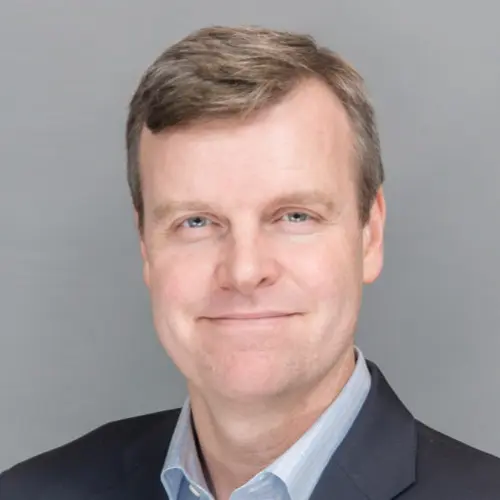
In this broadcast from AWS re:Invent 2025, Tom Eggemeier, chief executive officer of Zendesk, joins theCUBE’s John Furrier and Paul Nashawaty to discuss the company’s deepened strategic alliance with AWS. Eggemeier details a "three-legged stool" partnership that includes running infrastructure on AWS, integrating Amazon Connect for voice, and leveraging Amazon Bedrock and Nova models to power multimodal experiences. The conversation highlights the industry shift from abstracting infrastructure to abstracting work through AI agents, emphasizing how Zendesk uti...Read more
exploreKeep Exploring
What event is being covered in the text, and who are the key individuals involved?add
What is the relationship between the company and AWS, and how are they using AWS in their technology roadmap?add
What factors do organizations consider regarding their maturity and readiness for AI and automation in relation to their strategic goals?add
>> Welcome back, everyone, to theCUBE's live coverage of AWS re:Invent 2025. I'm John Furrier, host of theCUBE with Paul Nashawaty, our industry analyst with theCUBE Research. Our 13th year covering AWS re:Invent. It's been an interesting ride to see all these different inflection points. We're seeing cloud abstracting away infrastructure and now agent infrastructure or the new cloud is abstracting way work. And a lot of value is going to be extracted as people start getting visibility on how to apply that AI technology. Tom Eggemeier's here. The CEO of Zendesk, leading company in service and support and experience working strategic deal with AWS. Perfect company to highlight because they have a lot of data. Tom, thanks for coming on theCUBE. Appreciate you spending the time.
Tom Eggemeier
>> Thanks, John. I appreciate it.
John Furrier
>> The data is the key, obviously. And you guys, well-known brand, great history. But now with the agent era, like Amazon, there's a whole inflection point.
Tom Eggemeier
>> Totally.
John Furrier
>> I mean, Amazon abstracted away infrastructure. I mean, there's a lot of things under the covers there, but now agents, a similar patterns emerging with these apps. Talk about your relationship with AWS and what you guys are doing with the data and how you're looking at the technology roadmap.
Tom Eggemeier
>> Sure. We have a three-legged stool relationship with AWS. Number one, we are a customer of theirs and we have all of our infrastructure on AWS. We've had it for 10 plus years and it's just been a great relationship. The second thing is we announced this strategic relationship today where we are leveraging Amazon Connect, the voice platform to integrate with our suite of products and go to market with them. And we're really excited about this because this really gives us an end-to-end platform story. And the third thing is that we're working with Amazon, both of their Nova models, Bedrock overall, where they're getting all the large language models, because AI is becoming an increasingly important part of our business.
John Furrier
>> Yeah. And you guys were also named AWS Customer Experience Partner of the Year in Technology.
Tom Eggemeier
>> Yes.
John Furrier
>> Talk about the use cases because the Nova models that they are announcing this year are taking on a little bit different twist. They're really leaning into the fact that people have their own data. And we've seen the enterprise market, I won't say stall, maybe I'll say stall, but stalled with a lot of POCs, some going into production. On the other side, the cloud-native world, you look at what Kubernetes and that whole DevSecOps that Paul covers is matured up. It's kind of like the foundation. Now you have this whole technology wave coming in with agents. We're expecting to see really custom models, custom use cases. And also, there are multimodal, so now you have voice, image, text. How is that impacting you guys?
Tom Eggemeier
>> Yeah, we really love the Nova models, the fact that you can using voice, imaging and text, because we think people experience with companies on a multimodal basis. I know I was trying to figure out a plumbing issue the other day at my house, took a picture of it and was able to go figure out what to do. My grandfather was a plumber would have been proud because I lost the gene somewhere along the way, but you're able to do things like that and I think that's one of the great things about Nova. The other great thing is, as you mentioned, John, you're able to use our data. We have 18 billion interactions, data points, where customers rate it thumbs ups or thumbs down. And we really see the promise with Nova to be able to use that data to make sure that we're training the models in even in a better way.
Paul Nashawaty
>> Tom, I've been really excited about Zendesk for some time. I've been following you, what you do. It's really impressive the way you work with your clients. One of the things I really like about your approach is you meet your clients where they're in their own journey. So like where they are in their maturity and how they're working towards their own strategic goals. One of the things that came out of re:Invent that I thought was a kind of nice synergy here is the way you can blend the AI and automation pieces and allow for bridging the gap between heritage ways of doing things to the new way of doing things. Can you touch a little bit on that from the Zendesk perspective? Because I think that is something that you drive towards, right?
Tom Eggemeier
>> Sure. So, it's interesting. We will finish the year with about 20 customers using our... 20,000 customers, not 20. 20,000 customers using our AI. And it really runs the gamut between customers who are just putting their toes in, to other customers who've done RPA and other automation technologies and they've already changed their workflows. They've done change management with their people. And so, you're right, we try to meet people where they're at and we try to go move them forward. So, we go in with a strategic opportunity assessment, we say, and we try to assess them, where they are on that maturity curve? How ready are they to really kind of upend their business? And we go hand-in-hand with them to try to go get them to their automation goals and their customer site goals.
Paul Nashawaty
>> Yeah, the two things that I run into quite frequently of objections from organizations is complexity and skill gap issues, so the two main things. And what I see with Zendesk is you provide this frictionless way of moving up that stack. Is that something that you kind of drive towards with that automation play and how does Amazon kind of play into that?
Tom Eggemeier
>> Yeah. So, a lot of customers have something called a knowledge base. They put all their policies, procedures, guidelines... So, in the old world, you would go type in, "How do I go return my shoes?" You get 10 blue links. We think a really easy way to do that right now is you type it in, you use generative search and you get the exact answer on how you return. So, that's an example of the frictionless point with knowledge. And we think people can get about 30% automation by just doing the knowledge piece. We then go analyze the data, their tickets, and that does create some friction. You got to go look at the tickets, you got to go do change management, and that can go get another 20% or 30%. The final thing, which is the most customization is really look at task procedures, do the change management that you're talking about. And then, guide them through changing workflows, changing how they do business. And when we do that, there's a fundamental shift in how people are looking at their... We had a phone ringing, I think it was my phone. I'm sorry. I thought I turned it off. That was distracting me, but that's probably the most frictionless, but it's the most value add because you're connecting to other systems and fully automating things. The way Amazon plays for us is they run their underlying infrastructure, number one. And number two, we're using a lot of their models to go do that. And so, it's fantastic the relationship we have with Amazon.
Paul Nashawaty
>> Synergy's great.
John Furrier
>> Yeah. Matt Garman had a quote when I interviewed him and he said, "In three to six months, these agents will behave part of your team." He also said, "Customers buy when ROI shows up in the P&L." I have to ask you from a productivity standpoint, what's some of the data look like to you from an operations standpoint? And finally, his other comment was, "Agents stop being toys, they become teammates," again, on the same theme. As agents become part of the operational workflow, can you share your thoughts on the business model transformation, the business transformation and the impact?
Tom Eggemeier
>> It's huge. And I think people are underestimating, I think you both brought it up, the change management component of this, because employees are worried, "Am I going to lose my job here? Why should I go help the AI?" And so, we are big on change management and we see a couple things. Number one, we have a view that 80% of customer service interactions will be fully automated within five years. 100% will use AI because that remaining 20%, the human agents will be using AI. What we're seeing right now is some of our top customers actually are already at 80% automation. And so they've gotten there. It's possible. It is not hype. It's really something you can go do right now.
John Furrier
>> It's funny, people talk about overclocking the GPUs, but when you get into automation, that undifferentiated heavy lifting as Amazon calls it, I'll just call it toil and grunt work or whatever, the human in the loop, as they say, is key. Share your thoughts on that because this comes up a lot when people think AI is not safe. I mean, this is a pedestrian view, but my point is that there's real value there. I mean, we saw this debate with big data 15 years ago. "Oh my God, it's going to kill jobs," when there's more jobs now, it just shifts, but what's your thought on this one?
Tom Eggemeier
>> Yeah, it's a shift. We think what's happening is a lot of the easy repetitive tasks are going away and even some of the mid-level complexity. We're seeing more and more when people get their AI teammates involved, the humans are going to higher-value task and what we call a service dividend. People are doing things they've always wanted to go address to go increase their customer loyalty, that they just haven't had the resources to do it. So, I'd say there's a shift in what work current employees are doing that are on a repetitive low or mid-value task. And second, it's freeing up resources to go hopefully have more customer intimacy.
John Furrier
>> Talk more about the solutions and services used from Amazon. You mentioned Connect on the voice side, that's key. What other areas of Amazon are you working on and where is your core competency being built?
Tom Eggemeier
>> Yeah, we are working with them, like I mentioned on their models. I think it's really important. We're really looking every day and Bedrock is just fantastic because you have Nova, you have Anthropic, you have other models that you can go constantly test on price versus performance. We're really big on taking our own data. And it's not just an off-the-shelf model that can go solve a customer's problem. You really need to go make the right prompts, the right architecture, make sure you get the right data in. So, I'd say the Amazon Bedrock models is a big thing for us.
Paul Nashawaty
>> Yeah, I'll say that one of the other big things that's interesting about the Zendesk model that you're doing is you have an open and flexible architecture, right? And that is kind of the key message that we're seeing at re:Invent is just having this open source, open, flexible architecture, allowing for customer choice, allowing for using the datasets that you already have. I mean, we see in our own research at theCUBE Research, we see that 68% of organizations want to use open source projects and want to work with vendors that sponsor open source initiatives, but they don't want to go at it alone. They want to make sure they have enterprise-level support. And that's where I think that there's a big factor here, but your open flexible architecture really kind of provides that kind of key.
Tom Eggemeier
>> Yeah, one of the things the stats always use this year, our customers will do 800 billion API requests and we think we'll hit over a trillion. And so, it's that open architecture plugging into other systems. As you mentioned earlier, John, we got to do it securely and that's a big focus for us because I think once you expand your perimeter, unfortunately with cybersecurity, particularly with using models now, it opens companies up for attack. And so, we're big on OAuth to make sure that we're securing those integrations, but integrations, third parties, open architectures like core to Zendesk, and I think it's going to be a differentiator for companies who embrace that in the AI world.
John Furrier
>> Tom, talk about the scope and scale of Zendesk for the folks watching. Some people might not know the volume. You mentioned some of the stats. Give us some of the data. I mean, you have a lot of data, you have a lot of data points from customers. You have API calls. Just give a scope of your business scalewise.
Tom Eggemeier
>> Yeah, we have about 6,000 fantastic employees around the world that are focused on customer service. We do about $2 billion a year of ARR, annual recurring revenue, and we've gone from $0 to $200 million of AI. And again, new products the last couple years. I said the 800 billion API requests. We processed this past year, and one of you mentioned operating model, 5 billion automated resolutions. That is a AI agent actually solving the problem. We don't get paid on consumption basis. We only get paid if the AI agent solves the problem. So, 5 billion of those a year right now and exponentially growing.
John Furrier
>> Final question for you on my side is, what are you optimizing for this year on the technology side and on the business side? What's your focus?
Tom Eggemeier
>> Our focus is we think we're going through a revolution that might be overhyped in the short term, but it's probably under-hyped in the medium to long-term. And while we have re:Invented ourselves as an AI-first company, and we have a kind of point of view that SaaS companies that don't re:Invent themselves as an AI company are going to be in trouble in 5 to 10 years. We want to be one of the disruptors and that's our focus.
John Furrier
>> Yeah, there's no second place in this game.
Tom Eggemeier
>> No.
John Furrier
>> The fast-follower strategy we talk about in theCUBE pod all the time, you can't really be a fast-follower because the game's going so fast. It's hard to catch up.
Tom Eggemeier
>> It's amazing. I get a briefing of what's happened the last week on AI and it is amazing how quickly... And so, exactly. On things like this automated resolution, operating model. On technology, we actually want to be the disruptor, not a fast follower.
John Furrier
>> And to your point about Bedrock, the trend on AI-native with cloud-native kind of merging in is model choice at any given time because you see the leapfrogging one day a model comes in, but also, the small models that have domain expertise with the new Nova actually could plug right in. Reddit had great success. You guys are having success with some of the early customers we're seeing.
Tom Eggemeier
>> Yeah. And we think that's great about Nova is because we do think open source models and very industry-specific, I should say, are going to be more and more powerful and more and more important.
John Furrier
>> Well, we really appreciate this time. And of course, your linguistics and going to go into theCUBE model. Hopefully, will be Nova-enabled. Tom, thanks for coming on. Appreciate it.
Tom Eggemeier
>> Thanks for having me. I appreciate it.
John Furrier
>> I'm John Furrier, host of theCUBE, with Paul Nashawaty here at re:Invent for our live coverage, three days. Stay with us for our next interview after this short break.