We just sent you a verification email. Please verify your account to gain access to
AWS re:Invent 2025. If you don’t think you received an email check your
spam folder.
In order to sign in, enter the email address you used to registered for the event. Once completed, you will receive an email with a verification link. Open the link to automatically sign into the site.
Register for AWS re:Invent 2025
Please fill out the information below. You will receive an email with a verification link confirming your registration. Click the link to automatically sign into the site.
You’re almost there!
We just sent you a verification email. Please click the verification button in the email. Once your email address is verified, you will have full access to all event content for AWS re:Invent 2025.
I want my badge and interests to be visible to all attendees.
Checking this box will display your presense on the attendees list, view your profile and allow other attendees to contact you via 1-1 chat. Read the Privacy Policy. At any time, you can choose to disable this preference.
Select your Interests!
add
Upload your photo
Uploading..
OR
Connect via Twitter
Connect via Linkedin
EDIT PASSWORD
Share
Forgot Password
Almost there!
We just sent you a verification email. Please verify your account to gain access to
AWS re:Invent 2025. If you don’t think you received an email check your
spam folder.
In order to sign in, enter the email address you used to registered for the event. Once completed, you will receive an email with a verification link. Open the link to automatically sign into the site.
Sign in to gain access to AWS re:Invent 2025
Please sign in with LinkedIn to continue to AWS re:Invent 2025. Signing in with LinkedIn ensures a professional environment.
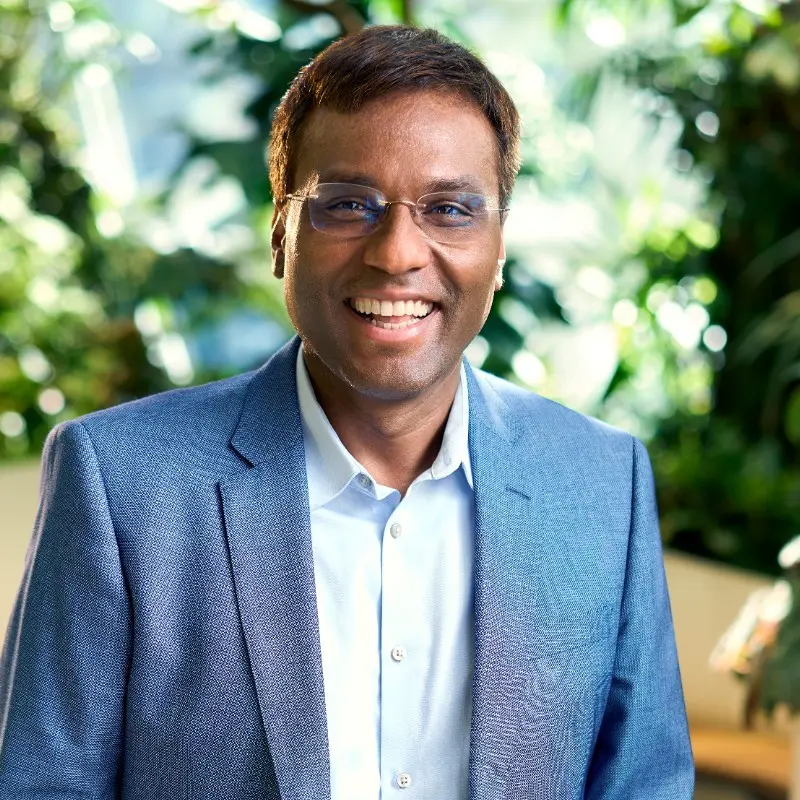
In this interview from AWS re:Invent 2025, Rohit Prasad, senior vice president and head scientist of artificial general intelligence at Amazon, joins theCUBE’s John Furrier to discuss the evolution of generative AI from abstract infrastructure to intelligent agents. The conversation centers on the unveiling of Nova Forge, a groundbreaking capability that addresses the limitations of generic frontier models by allowing enterprises to deeply customize models with their own proprietary data. Prasad explains how Nova Forge solves the "production reality" challeng...Read more
exploreKeep Exploring
What is the purpose of the event being covered and who is a notable participant mentioned?add
What is the purpose and functionality of Nova Forge in relation to model training and customization?add
What are the key features and functionalities of SageMaker AI and its integration with Bedrock models?add
What is the distinction between generally intelligent and general intelligence in the context of AGI?add
What is the future outlook on applications with native AI and the concept of internet of agents?add
>> Welcome back everyone to theCUBE's live coverage here at AWS re:Invent 2025. I'm John Furrier, host of theCUBE. This is our 13th re:Invent. I got my little pin here. The only number they had was 10, technically 14, but one short of the consecutive record. It's been interesting to see Amazon Web Services really evolve over those years from abstracting way infrastructure with cloud computing and now with the abstracting way of agents and technology. They're abstracting work away. So again, agents will be a big part of the next infrastructure.
Rohit Prasad is here, SVP and Head Scientist of AGI at Amazon involved in a lot of the work around Nova and the models, Alexa and all the things, the wake words that everyone knows. Thanks for coming on theCUBE. Appreciate you spending the time.
Rohit Prasad
>> Thank you for having me here.
John Furrier
>> I had a little circle around your name, because I was really looking forward to digging into what I think is one of the most compelling announcements was the Nova Forge with this open training and also the frontier agents really kind of jumped off the page of also loving AI factories. So that was kind of fun too. But those two really kind of hit the mark because it speaks to kind of what we've been seeing in the market around how people are looking at models as a way to augment some of the coding and some of the apps that are being developed in the AI native world, so thanks for doing that. Appreciate it.
Rohit Prasad
>> Great.
John Furrier
>> First question is, why this direction? There's multiple announcements involved in Nova. There's the one that everyone is talking about, which is the Forge, which is here's kind of a half-baked model, some checkpoints, make it your own, bring your data in and run that as a frontier model without paying the frontier costs.
Rohit Prasad
>> Yeah.
John Furrier
>> It seems to be the big one.
Rohit Prasad
>> Yep. You captured it very well. The way to think about this is what was happening in the industry. There's a persistent challenge. A frontier model comes out. Public benchmarks look great. Internal and external customers, that was happening to us internally as well. People try it. And then the production reality sets in that when you try to build your applications, your workflows, it doesn't meet your expectations quite a few times. And there's a fundamental reason for that is because the knowledge you have of your domain, your use cases is not in the frontier model. Which means everyone is now yearning for a model that is an expert in your domain, your organization's expertise. Until now, there were three imperfect solutions. You can start with a closed model and fine tune it on the edges by using lightweight supervised fine-tuning, or RL, or reinforcement learning. Or you could start with an open-weight model. You get a little further along, but once you start fusing your domain data without having access to the data that was trained to the frontier open-weights model, then you run into this phenomena called catastrophic forgetting. And suddenly, the model doesn't know the core knowledge and properties it was great at. You don't want that. The third is you go with a very expensive route, which you touched on, which you build your own, but that requires deep expertise, massive computing, massive amount of data collection. All of that is prohibitive for most enterprises. This is why we challenged the team and said, "Go invent this." You and I talked about the working backwards for it. And we said, "Let's work back from that customer problem." And then we came up with Nova Forge, which is the deepest way to make the model your own by building your optimized variance on top of Nova. And the way we are making it happen is because we are giving multiple checkpoints, the pre-trained checkpoint, the mid-train checkpoints, the post-train checkpoints. At which of each of these model training stages, you can add your frontier data, your proprietary data with one unique thing, which is we are giving you access to Amazon curated data to blend in. And then when you do that, the model maintains its general intelligence and becomes an expert in your domain. And the great thing is that while we were working on it, we got customers and partners to work with us. We had Reddit to work on it where they were trying to build this very complex set of models that really deeply understands their content moderation task, for instance. And they found that they used to use six bespoke models or many of them, and then they got access to Forge and were able to build it.
John Furrier
>> Yeah. I love this. I really like this announcement because, one, it's a little vindication for me personally because I've been saying it's going to be a power law of models. You're going to have the head of the power law is going to be the big ones and they're going to have a thin neck and then a long tail, but then the torso will kind of move out and get more of the specialized models. But also because it's just, who can afford to build them? And it's like arms race, leapfrogging in performance. So the developers were like honing in on a model and then it's not as good. Then they got to shift gears versus the approach that you guys take with Bedrock. Hey, use whatever model you want to use. So I think that's cool. But the thing that I've been seeing and saying, and I like your approach, is that the domain expertise is critical. Matt Garman told me, "Generic tokens are useless unless they know your business," which is what you just said. And then also he talked about Reddit, he said this. When Reddit bought their own domain data into the pre-training process with Forge, without any additional fine-tuning the model developed social intuition. You don't get that from generic systems. It reads context, not just text, cuts false positives, catches real threats, scales to millions of communities without scaling engineering complexity. That's the Reddit example you mentioned. How does someone get that today? Take me through the process. I want this tomorrow. What's the steps?
Rohit Prasad
>> Yeah. First, it starts with having a great base model. And we introduce four great models in Bedrock today with Nova 2 Lite, which is completely forgeable.
John Furrier
>> Forgeable, I like that.
Rohit Prasad
>> Let's take that example. So you start with that. And the way you do it is you come to SageMaker AI. It is available to you in different paths. If you want to use just a graphical user interface, simple UI, you have that available. If you want to go very deep all the way to the pre-training stages, then you have a command line interface with all the tools that SageMaker AI provides. The way you get that is there's a bunch of Nova recipes for each of these stages that I talked about, pre-training, mid-training, post-training. And then you bring your data and you have the knobs to mix weight your data by X percent and the Amazon curated data by different knobs for each types of data. So this gives you the right controls to forge your models by using the right set of data sets with right evaluation paradigms. And the beauty is that we have really democratized and lowered the barrier to build your models because you can start in the post-training stages, bring your reward functions, your customer interactions that you've had so that you know what is valuable in your application for your customers. So that is where the reward functions come in. And there's also a capability where you can just do reinforcement learning in your environment through an API. So the way to think about is easy to use recipes that are seamless. All you have to do is bring your data into this environment, build on AWS SageMaker AI.
John Furrier
>> Does the data need to be in a certain format, vector embeds or all? What's the data?
Rohit Prasad
>> No, we can start with the raw, we can run our tokenizers on it. So all of it happens through very well managed services here with the recipes that it's all abstracted away for you.
John Furrier
>> So this should unlock the enterprise.
Rohit Prasad
>> This should unlock the enterprise.
John Furrier
>> This is an enterprise dream scenario, because one of the things we saw this year in our research was a lot of POCs kind of like stuck in backlog. The mechanisms for getting into production were high bar and no one wanted to use external models. They were nervous. In some cases, there was some compliance.
Rohit Prasad
>> Yeah. The way to think about is intelligence is not a monolithic thing and bringing intelligence into your environment actually requires stitching together many different components. And the best way to stitch it together is by the model being competent in your environment. It's like either you hired a consultant to do the work or you have your best employer team member working on the problem, right? Which one would you rather have? So with Nova Forge, you can build that essentially where you train your workflows in, you train your data, which encodes your knowledge is built into the model.
John Furrier
>> So what about folks might say, "Hey, what about Nova? Does this mean they're stopping development on it? If I use Nova with my data, how do I get the upgrades for Nova?" Take me through how that works.
Rohit Prasad
>> So we already showed how with the ... Remember, I said there are four models. So two of the models, which is Nova 2 Pro, which is a more competent model which is all reasoning based, but just more powerful outputs text, but it is for more complex workloads. That is available for Forge customers while the same time we are making it available for our internal customers, because now you can plan ahead and say, "How can I build my applications on top of it? If I'm working on forging Nova 2 Lite, how would it apply to this more powerful model that's coming?" I think of giving-
John Furrier
>> So you use what you have. So if next year a new Nova model comes out, do I retrain? Do I review the checkpoints?
Rohit Prasad
>> The good news is like a lot of things you do in pre-training and mid-training because that's where the token prediction properties are. Those are easily transferable with your data. Even supervised fine-tuning is where you give it some abilities to do task is also very easily transmittal. One unique challenge is on reinforcement learning where you've been using your customer feedback. That is a slightly harder scientific challenge to be solved, but I have teams working on it for looking into how would we solve that challenge so that the next version that comes in, that model is called what is called off policy. So how do you do off policy learning? It's still a scientific challenge, but the good news is that at least three out of the four stages are directly transferable.
John Furrier
>> AGI is in the eye ... Beauty is in the eye of the beholder, as they say. So let's talk about AGI in this context, because if someone has their data, their domain, that's their crown jewels, that's their moat, they forge it with Nova. Now, they have essentially a more intelligent engines because it's a frontier model. So it reasons in multi-step and does longer tasks, things like that. So what's the intelligence bar, not from an AGI perspective, but from a functionality standpoint, can you scope the deliverables that you might see or value? I bring my data to the table. Right now, there's a lot of blind spots because I don't have the big model frontier. But with the frontier forged in, what will people see? What would some of the output be?
Rohit Prasad
>> Yeah. First, let's demystify AGI a bit. I wish people were thinking more about what makes AGI useful and focus more on the generally intelligent, not the general intelligence. And there's a slight distinction. Think about the frontier model that is Nova that we are providing as the base model for you to forge your applications, the models that you need. The base model is a generally intelligent model. Just like you and I went to high school, went to undergrad, grad school, we became generally intelligent and then we specialized in our domain. That specialization could only happen efficiently because we became generally intelligent to learn to use the tools and build new tools. That's what Nova Forge does for you. To me, it's bridging the barrier from AGI, the scientific pursuit to actual production value.
John Furrier
>> So high school basically is where everyone is and then college and grad school gets more specialized in that paradigm. Because you're saying you got to be general first.
Rohit Prasad
>> Yeah.
John Furrier
>> You got to know your ABCs and 123s, and then you move on.
Rohit Prasad
>> I would say you get most specialized when you work, right? So when you start doing economically valuable activities, that's where you get maximum specialization. Until grad school, I would still argue you're still learning in general.
John Furrier
>> When you're done, you're just reinforcing what you've learned.
Rohit Prasad
>> That's right. But this is why very important that you always want to bring the learning to the earliest stages, and with Nova Forge, you can do that.
John Furrier
>> I love those metaphors. I was talking to a CEO of Databricks, Ali Ghodsi, a couple weeks ago, and we were talking about AGI, and he's in California, so he's in the AGI scene, I guess. And he was pretty pragmatic. Go and get your reaction to this. He said, "If you showed me ChatGPT today, Claude, Gemini, you showed me these, if you showed me this today five, six years ago, I would have called this AGI." Because what he was saying was it's pretty miraculous kind of where we're at from a progress standpoint. So the whole AGI seems to be a moving goalpost. What's your reaction to that? Because I think there's a little bit of a fantasy vibe there with AGI.
Rohit Prasad
>> So there's a practical definition for AGI, which is technically grounded. AGI is what you and I can do with computers at an expert level. Now, you multiply it with like, you can do it in many different expertise, domains. That's what one form of AGI is. It's not very measurable and that's okay in my mind. I think the measure is really what can you do in real world. Does it make my life better? Does it make my company more profitable if you're running an organization, you started a small business? I think we're going to live in this digital utopia where everyone who's dreaming of an application is able to bring that to field much faster. And I think that's what I think is the real unlock in the digital world. And over time, it will come to transcend to the physical world as well with robotics and so forth, but we are still early in that.
John Furrier
>> Yeah. You guys do a lot of working back to some customers. You mentioned that earlier and you did that for this project. One of your customers that's been clear from at least Matt Garman's day one when I interviewed him as CEO was the developer and the builder, developer/builder kind of two personas. Of course, there's paying customers like large enterprises, which I think is going to be awesome for this product. But for the developer or from the dorm room to the boardroom, you have people out there inventing things. How does this impact the 16-year-old, the 20-something-year-old, the 55-year-old or the 60-year-old developer? I mean, it's ageless opportunities. They're started from a clean sheet of paper, so they will build an AI company. And this is not like will one company be a unicorn? I'm talking about like you don't have to have a whole team of people. You now have capabilities with AGI levels to do things better.
Rohit Prasad
>> I totally agree with that. I think success to me would be that 16-year-old getting on Nova Forge and being able to build this next magical application. I think that will happen. We are getting into that stages where the barrier to build has become lower and lower. And I think that will keep happening, and I think the way to think about a success criteria of AGI is how easy it is for everyone to build their dreams.
John Furrier
>> Yeah. I mean, AI can scale intellect just as much as the data is in our head.
Rohit Prasad
>> That's right.
John Furrier
>> The creativity. On the roadmap that you guys have, what are some of the things that you're working on? You mentioned reinforced learning. Obviously, this is probably going to be a hot product. You said it's available. When's it going to be available for the public?
Rohit Prasad
>> Which one, Forge?
John Furrier
>> Forge. Yeah.
Rohit Prasad
>> So available today. And all the models are available today. I mean, some are accessible by only Forge customers today, but Nova 2 Lite and Nova 2 Sonic, which is our speech to speech model is available to everyone now.
John Furrier
>> On the roadmap, priorities for you, what are you focused on now?
Rohit Prasad
>> Yeah, I would touch on first, the third thing which we didn't discuss yet is we live in the era of agents and one of the things very proud of the team that built Nova Act for us, which is essentially about browser agents. The way to think about browser agents is what you and I do with browsers a lot. We do a lot of our work on the browser. So the user interfaces we work with, what's the best way for workflows that we can automate? And Nova Act is another capability that has been built on Nova, which is an end-to-end service that you can use to build and manage a fleet of agents that do user interface automations. And that ranges from testing automations to form filling applications. Everything you can think of like that, no one enjoys doing and you can make it happen I think.
John Furrier
>> So is that a browser client, or is that a browser kind of like-
Rohit Prasad
>> It's an end-to-end service to build a feature.
John Furrier
>> I can build my own browser?
Rohit Prasad
>> Build your own agent. That works in any browser. So think about it can open a browser, invoke actions on it. What's commonly referred to as computer user as well nowadays, but I think it's still-
John Furrier
>> We just call them plugins back in the day and Chrome extensions, you see things like that. You see Perplexity has a browser. There's almost a browser war going on. Remember the Netscape browser against Internet Explorer. How do you see these kinds of applications, because they're going to have native AI built in?
Rohit Prasad
>> I think the way to think about it is now building to the browser agents. One is that we are going to live in an internet of agents. You started seeing some of that in Matt's presentation today. And in the internet of agents, these would be autonomous agents that should work on our behalf and then they have to communicate with other agents to get things done. I think of in the consumer setting, Alexa+ is already a super agent. Today, you heard a few more and tomorrow you'll hear a lot more on these agents that do a lot for you, and it'll take time. And this is where you'll see many different agents being built, but the road to these agents goes through the pursuit of AGI in a practical way. And the pursuit of AGI in that practical way is, again, going back to the definition of what you and I can do with a computer, which is two great properties. What are the tools that we can use that you and I use on a daily basis? We get very good at finding a tool, doing a task. Also, we get to create new tools. That's our power. So that's what you want AI to be able to do along.
John Furrier
>> And then the collection of agents can work as one system. Eventually, that's going to be an AGI computer collective intelligence.
Rohit Prasad
>> Yes.
John Furrier
>> What's your vision on that? Because that's something that's very interesting to me.
Rohit Prasad
>> It's very interesting. At the same time, I think it will be the personal AI that works on your behalf is the key, and that's where it will all get together. Yeah.
John Furrier
>> The papers I've been reading around transformer technology are speculating that there's kind of a diminishing return on transformer and that there's other AI technology can take for the reasoning to another level. What's your view on that? Because some people will say there's a diminishing return or drift. You got to steer it back. Strands has been very popular. We're seeing some of these frameworks kind of manage these things. What's your take on transformer? Is there a new thing?
Rohit Prasad
>> So transformers have been great for this era of scaling, where you're scaling the recipe, the data, the compute, and you're getting magical amount of capabilities out of it. Scaling still has a lot of utility. I think the scaling will continue to give gains. At the same time, it's time to think in terms of what are the limitations of the LLM based technology that is built on transformers. And the limitations are, how does it use memory? How does it do long context? How does it do self-learning? So that it can get better on its own with limited input from you and I as users of the technology. So there's a huge unlock that's going to happen. Do we hit a wall over time? Maybe, but we know that every time the AI community has hit a wall, we have found a different way. So I'm very optimistic about that.
John Furrier
>> And then there's this language version, this video, you got multimodal, all different kind of formats.
Rohit Prasad
>> This is where we're very excited about our Nova 2 Omni, which is a multimodal input and multimodal output model, which means it can reason on input modalities and also generate multiple modalities. It's now natively generating image and text. So think about if you're building an advertising creative or a marketing content or trying to work with your own summarization tasks in your enterprise, now you can do it with one model and not requiring multiple models to be orchestrated.
John Furrier
>> Rohit, how hard was it to unify the multimodal?
Rohit Prasad
>> Very hard.
John Furrier
>> Just scope it for me because it seems super difficult.
Rohit Prasad
>> It's super difficult because you have to manage many different modalities on the input type, especially speech, image and video all have very different characteristics. Speech and video have this temporal attribute, which means how do you manage the encoding of those attributes and then how do you merge and then get a coherent output in the form of image and text. So incredibly hard challenge. Very proud of the team.
John Furrier
>> So you got a great job. You got the head scientist of AGI, so you're like living the good life right now. It's a lot of technical problems to solve.
Rohit Prasad
>> Yes. I don't think we'll be ever bored in AI.
John Furrier
>> Well, I love the news. I get this question. I'll ask you while I got you because you're one of our mixture of experts in theCUBE.
Rohit Prasad
>> Mixture of experts.
John Furrier
>> We're trying to find our AGI wheelhouse. I get this question a lot. What is the science behind AI? I mean, there's different views on this. Some say math, some say computer science. Physical AI is hot right now. I'm starting to see the physical, digital world come together. How would you describe the science? If I was going to go to school or pick up the books or build agents, what's the science behind it?
Rohit Prasad
>> So foundational science is math and probability. If you're trying to learn about AI, the basic skill, the best course you'll ever take is statistics and probability. I tell that to my kids, you should tell it to everyone. And that is a basic ... Once you know how to estimate and how to think about probability in real world, I think that just endows you with so much in this space. I would say then looking at AI, if you want to be the builder of AI, I think the most powerful thing in AI is learning to learn. That's what we are great at. And once we inject that into the AI where it is able to learn to learn, definitely the one to-
John Furrier
>> Yeah. Adopt it, use it, get comfortable with it, how to drive the AI.
Rohit Prasad
>> Yeah. AI is not a new thing. Somehow we have made it feel like it's a new thing happening in terms of what ... This is a new era of AI, but the basics of the dream of the AI is still true from 1960s. So the way to think about this is this era of AI. Think of the era of computing when personal computer came to you. You should be learning to use the personal computer same way with AI.
John Furrier
>> I got my computer science degree in the '80s and we've been hibernating waiting for this moment because the AI theory has been around for the most part.
Rohit Prasad
>> Yes.
John Furrier
>> Now the AI infrastructure is available to unlock that and robotics is super hot right now. You're seeing the physical AI, essentially software.
Rohit Prasad
>> I think it's amazing how much data and infrastructure has unlocked with good science in between. But as you said, you and I won't be getting bored with AI anytime soon.
John Furrier
>> It's got to reduce aging. We'll be good. Final question, what are you optimizing for next year as you come out of re:Invent? Super busy time. I know you've got a lot of time. Appreciate your time with us. What are you optimizing for next year? What's the focus?
Rohit Prasad
>> Change the world, make customers successful. I think that's what Amazon is built on and I'm looking for continuing to do that.
John Furrier
>> All right. Well, appreciate you spending the time. I'm John Furrier with theCUBE here. The AI story is really evolving superfast. Again, as the infrastructure and cloud infrastructure continues to grow, the agents are a big part of the AGI story. Of course, there's a lot of science behind it. And again, the outcomes in the real world and also for personal benefit will be the real test. We'll be back with more after this short break.