We just sent you a verification email. Please verify your account to gain access to
AWS re:Invent 2022. If you don’t think you received an email check your
spam folder.
In order to sign in, enter the email address you used to registered for the event. Once completed, you will receive an email with a verification link. Open this link to automatically sign into the site.
Register For AWS re:Invent 2022
Please fill out the information below. You will recieve an email with a verification link confirming your registration. Click the link to automatically sign into the site.
You’re almost there!
We just sent you a verification email. Please click the verification button in the email. Once your email address is verified, you will have full access to all event content for AWS re:Invent 2022.
I want my badge and interests to be visible to all attendees.
Checking this box will display your presense on the attendees list, view your profile and allow other attendees to contact you via 1-1 chat. Read the Privacy Policy. At any time, you can choose to disable this preference.
Select your Interests!
add
Upload your photo
Uploading..
OR
Connect via Twitter
Connect via Linkedin
EDIT PASSWORD
Share
Forgot Password
Almost there!
We just sent you a verification email. Please verify your account to gain access to
AWS re:Invent 2022. If you don’t think you received an email check your
spam folder.
In order to sign in, enter the email address you used to registered for the event. Once completed, you will receive an email with a verification link. Open this link to automatically sign into the site.
Sign in to gain access to AWS re:Invent 2022
Please sign in with LinkedIn to continue to AWS re:Invent 2022. Signing in with LinkedIn ensures a professional environment.
(electronic music) (graphics whoosh) (graphics tinkle) >> Welcome to Las Vegas! It's theCUBE live at AWS re:Invent '22. Lisa Martin here with Dave Vellante. Dave, it is not only great to be back, but this re:Invent seems to be bigger than
last year for sure. >> Oh, definitely. I'd say it's double last year. I'd say it's comparable to 2019. Maybe even a little bigger, I've heard it's the
largest re:Invent ever. And we're going to talk data,

one of our favorite topics. >> We're going to talk data products. We have some great guests. One of them is an alumni
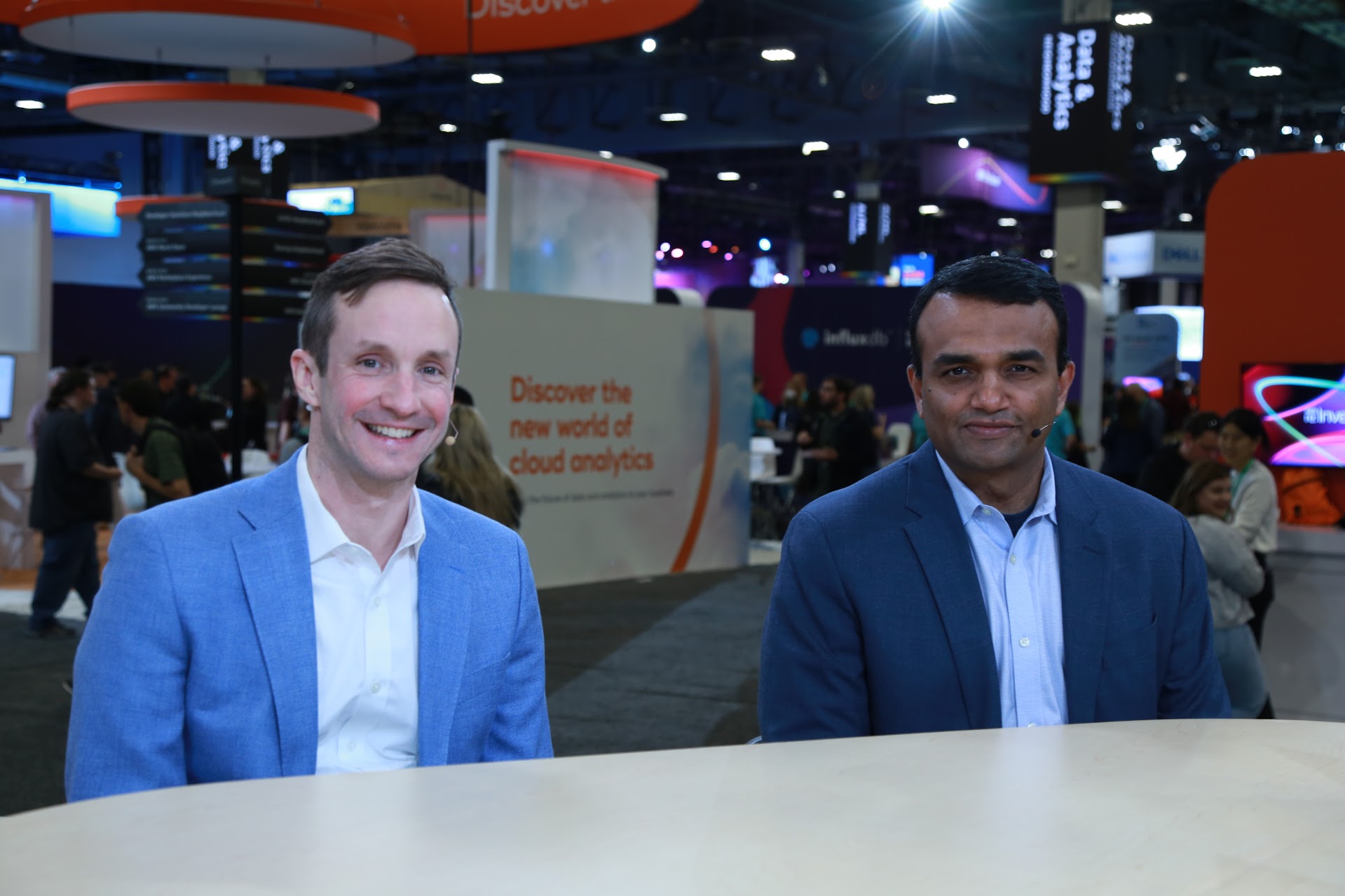
who's back with us. Justin Borgman, the CEO of Starburst, and Ashwin Patil also joins us, Principal AI and Data
Engineering at Deloitte. Guys, welcome to the program. >> Thank you. >> Together: Thank you. >> Justin, define data products. Give us the scoop, what's
goin' on with Starburst. But define data products and the value in it for
organizations of productizing data. >> Mm-hmm. So, data products are curated data sets that are able to span
across multiple data sets. And I think that's what's
makes it particularly unique, is you can span across
multiple data sources to create federated data products
that allow you to really bring together the business
value that you're seeking. And I think ultimately,
what's driving the interest in data products is a desire to ultimately facilitate self-service
consumption within the enterprise. I think that's the holy grail that we've all been building towards. And data products represents a framework for sort of how you would do that. >> So, monetization is not
necessarily a criterion? >> Not necessarily.
(Dave's voice drowns) >> But it could be. >> It could be. It can be internal data products
or external data products. And in either case, it's
really intended to facilitate easier discovery and consumption of data. >> Ashwin, bringing you
into the conversation, talk about some of the revenue
drivers that data products can help organizations to unlock. >> Sure. Like Justin said, there are internal and external revenue drivers. So internally, a lot of clients
are focused around, hey, how do I make the most out
of my modernization platform? So, a lot of them are
thinking about what AI, what analytics, what can they
run to drive consumption? And when you think about consumption, consumption typically requires data from across the enterprise, right? And data from the enterprise
is sometimes fragmented in pieces, in places. So, we've gone from being data
in too many places to now, data products, helping
bring all of that together, and really aid, drive
business decisions faster with more data and more accuracy, right? Externally, a lot of that has got to do with how the ecosystems are
evolving for data products that use not only company data, but also the ecosystem data
that includes customers, that include suppliers and vendors. >> I mean, conceptually, data products, you could say have been
around a long time. When I think of financial services, I think that's always been
a data product in a sense. But suddenly, there's a lot
more conversation about it. There's data mesh, there's data fabric, we could talk about that too, but why do you think now it's
coming to the fore again? >> Yeah, I mean, I think
it's because historically, there's always been this
disconnect between the people that understand data
infrastructure, and the people who know the right questions
to ask of the data. Generally, these have been
two very distinct groups. And so, the interest in data mesh as you mentioned, and data products as a foundational element of
it, is really centered around how do we bring these groups together? How do we get the people
who know the data the best to participate in the
process of creating data to be consumed? Ultimately, again, trying
to facilitate greater self-service consumption. And I think that's the
real beauty behind it. And I think increasingly,
in today's world, people are realizing the data will always be decentralized
to some degree. That notion of bringing
everything together into one single database has never really been
successfully achieved, and is probably even
further from the truth at this point in time,
given you've got data on-prem and multiple clouds,
and multiple different systems. And so, data products and
data mesh represents, again, a framework for you to
sort of think about data that lives everywhere. >> We did a session this summer
with (chuckles) Justin and I, and some others on the data lies. And that was one of the
good ol' lies, right? There's a single source of truth. >> Justin: Right. >> And all that is, we've
probably never been further from the single source of truth. But actually, you're
suggesting that there's maybe multiple truths that the
same data can support. Is that a right way to think about it? >> Yeah, exactly. And I think ultimately, you want a single point of access that
gives you, at your fingertips, everything that your organization knows about its business today. And that's really what
data products aims to do, is sort of curate that for you, and provide high quality data sets that you can trust, that
you can now self-service to answer your business question. >> One of the things that, oh, go ahead. >> No, no, I was just going to
say, I mean, if you pivot it from the way the usage of
data has changed, right? Traditionally, IT has been in
the business of providing data to the business users. Today, with more
self-service being driven, we want business users to be the drivers of consumption, right? So if you take that backwards one step, it's basically saying, what
data do I need to support my business needs, such
that IT doesn't always have to get involved
in providing that data, or providing the reports
on top of that data? So, the data products
concept, I think supports that thinking of business-led
technology-enabled, or IT-enabled really well. >> Business led. One of the things that Adam Zelinsky talked with John Furrier
about just a week or so ago in their pre re:Invent
interview, was talking about the role of the data analyst going away. That everybody in an organization,
regardless of function, will be able to eventually
be a data analyst, and need to evaluate and
analyze data for their roles. Talk about data products as a facilitator of that democratization. >> Yeah. We are seeing more and more the concept of citizen data scientists. We are seeing more and more citizens AI. What we are seeing is a general trend, as we move towards self-service, there is going to be a need for
business users to be able to access data when they want, how they want, and merge data across the enterprise in ways that they haven't
done before, right? Technology today, through
products like data products, right, provides you the access to do that. And that's why we are going to see this movement of people of seeing
people become more and more self-service oriented, where
you're going to democratize the use of AI and analytics
into the business users. >> Do you think, when you talk
to a data analyst, by the way, about that, he or she
will be like, yeah, mm, maybe, good luck with that. So, do ya think maybe there's
a sort of an interim step? Because we've had these highly, ZeMac lays this out very well. We've had these highly-centralized,
highly-specialized teams. The premise being, oh,
that's less expensive. Perhaps data analysts, like functions, get put
into the line of business. Do you see that as a
bridge or a stepping stone? Because it feels like
it's quite a distance between what a data analyst does today, and this nirvana that we talk about. What are your thoughts on that? >> Yeah, I mean, I think
there's possibly a new role around a data product manager. Much the way you have product managers in the products you
actually build to sell, you might need data product
managers to help facilitate and curate the high quality data products that others can consume. And I think that becomes an interesting and important, a skill set. Much the way that data scientist was
created as a occupation, if you will, maybe 10 years ago, when previously, those were statisticians, or other names. >> Right. A big risk that many clients are seeing around data products is,
how do you drive governance? And to that, to the point
that Justin's making, we are going to see that
role evolve where governance in the world, where data
products are getting democratized is going to become increasingly important in terms of how are data
products being generated, how is the propensity of data products towards a more governed
environment being managed? And that's going to continue
to play an important role as data products evolve. >> Okay, so how do you guys
fit, because you take ZeMac's four principles, domain ownership, data as product. And that creates two problems. Governance. (chuckles) Right? How do you automate, and
self-service, infrastructure and automated governance. >> Yep. >> Tell us what role
Starburst plays in solving all of those, but the
latter two in particular. >> Yeah. Well, we're working on all
four of those dimensions to some degree, but I think ultimately, what we're focused today
is the governance piece, providing fine-grained access controls, which is so important, if you're going to have
a single point of access, you better have a way of
controlling who has access to what. But secondly, data products
allows you to really abstract away or decouple
where the data is stored from the business meaning of the data. And I think that's what's so key here is, if we're going to
ultimately democratize data as we've talked about, we need
to change the conversation from a very storage-centric world, like, oh, that table lives in
this system or that system, or that system. And make it much more about the data, and the value that it represents. And I think that's what
data products aims to do. >> What about data fabric? I have to say, I'm
confused by data fabric. I read this, I feel like
Gartner just threw it in there to muck it up. And say, no, no, we get
to make up the terms, but I've read data mesh
versus data fabric, is data fabric just more sort of the physical infrastructure? And data mesh is more of an
organizational construct, or how do you see it? >> Yeah, I'm happy to take that or. So, I mean, to me, it's a little bit of potato potato. I think there are some subtle differences. Data fabric is a little bit
more about data movement. Whereas, I think data
mesh is a little bit more about accessing the data where it lies. But they're both trying to
solve the similar problem, which is that we have data in a wide variety of different data sets. And for us to actually analyze it, we need to have a single view. >> Because Gartner hype
cycle says data mesh is DOA-
>> Justin: I know. >> Which I think is complete
BS, I think is real. You talk to customers that are doing it, they're doing it on AWS, they're trying to extend it across clouds,
I mean, it's a real trend. I mean, anyway, that's how I see it. >> Yeah. I feel the word data fabric
many a times gets misused. Because when you think about the digitization
movement that happened, started almost a decade ago, many companies tried to digitize or create digital twins of their systems
into the data world, right? So, everything has an
underlying data fabric that replicates what's
happening transactionally, or otherwise in the real world. What data mesh does is creates structure that works complimentary
to the data fabric, that then lends itself
to data products, right? So to me, data products becomes a medium, which drives the connection
between data mesh and data fabric into the real world for usage and consumption. >> You should write for Gartner. (all laugh) That's the best explanation I've heard. That made sense! >> That really did. That was excellent. So, when we think about any
company these days has to be a data company, whether
it's your grocery store, a gas station, a car dealer, what can companies do to
start productizing their data, so that they can actually
unlock new revenue streams, new routes to market? What are some steps and
recommendations that you have? Justin, we'll start with you. >> Sure. I would say the first thing is find data that is ultimately
valuable to the consumers within your business, and
create a product of it. And the way you do that
at Starburst is allow you to essentially create a view of your data that can span multiple data sources. So again, we're decoupling
where the data lives. That might be a table that lives in a traditional data warehouse, a table that lives in an
operational system like Mongo, a table that lives in a data lake. And you can actually join those together, and represent it as a view, and now make it easily consumable. And so, the end user doesn't need to know, did that live in a data warehouse,
an operational database, or a data lake? I'm just accessing that. And I think that's a
great, easy way to start in your journey. Because I think if you absorb all the elements of data mesh at once, it can feel overwhelming. And I think that's a great way to start. >> Irrespective of physical location. >> Yes. >> Right? >> Precisely. Yep, multicloud, hybrid
cloud, you name it. >> And when you think about the broader landscape, right? For the traditionally, companies that only looked at internal data as a way of driving business decisions. More and more, as things evolve into industry,
clouds, or ecosystem data, and companies start going
beyond their four walls in terms of the data that they manage or the data that they
use to make decisions, I think data products are
going to play more and more an important part in that
construct where you don't govern all the data that our entities within that ecosystem will
govern parts of their data, but that data lives together
in the form of data products that are governed somewhat centrally. I mean, kind of like a blockchain
system, but not really. >> Justin, for our folks here, as we kind of wrap the segment here, what's the bumper sticker for Starburst, and how you're helping
organizations to really be able to build data products that add
value to their organization? >> I would say analytics anywhere. Our core ethos is, we want to give you the ability to access
data wherever it lives, and understand your business holistically. And our query engine allows you to do that from a query perspective,
and data products allows you to bring that up a level
and make it consumable. >> Make it consumable. Ashwin, last question
for you, here we are, day one of re:Invent,
loads of people behind us. Tomorrow all the great keynotes kick up. What are you hoping to take
away from re:Invent '22? >> Well, I'm hoping to
understand how all of these different entities that
are represented here connect with each other, right? And to me, Starburst
is an important player in terms of how do you drive connectivity. And to me, as we help plans
from a Deloitte perspective, drive that business
value, connectivity across all of the technology players
is extremely important part. So, integration across those
technology players is what I'm trying to get from re:Invent here. >> And so, you guys do,
you're dot connectors. (Ashwin chuckles) >> Exactly, excellent. Guys, thank you so much
for joining David and me on the program tonight. We appreciate your insights, your time, and probably the best
explanation of data fabric versus data mesh.
(Justin chuckles) And data products that we've
maybe ever had on the show! We appreciate your time, thank you. >> Together: Thank you-
>> Thanks, guys. >> All right. For our guests and Dave
Vellante, I'm Lisa Martin, you're watching theCUBE,
the leader in enterprise and emerging tech coverage. (electronic music)
(electronic music) (graphics whoosh) (graphics tinkle) >> Welcome to Las Vegas! It's theCUBE live at AWS re:Invent '22. Lisa Martin here with Dave Vellante. Dave, it is not only great to be back, but this re:Invent seems to be bigger than
last year for sure. >> Oh, definitely. I'd say it's double last year. I'd say it's comparable to 2019. Maybe even a little bigger, I've heard it's the
largest re:Invent ever. And we're going to talk data,
one of our favorite topics. >> We're going to talk data products. We have some great guests. One of them is an alumni
who's back with us. Justin Borgman, the CEO of Starburst, and Ashwin Patil also joins us, Principal AI and Data
Engineering at Deloitte. Guys, welcome to the program. >> Thank you. >> Together: Thank you. >> Justin, define data products. Give us the scoop, what's
goin' on with Starburst. But define data products and the value in it for
organizations of productizing data. >> Mm-hmm. So, data products are curated data sets that are able to span
across multiple data sets. And I think that's what's
makes it particularly unique, is you can span across
multiple data sources to create federated data products
that allow you to really bring together the business
value that you're seeking. And I think ultimately,
what's driving the interest in data products is a desire to ultimately facilitate self-service
consumption within the enterprise. I think that's the holy grail that we've all been building towards. And data products represents a framework for sort of how you would do that. >> So, monetization is not
necessarily a criterion? >> Not necessarily.
(Dave's voice drowns) >> But it could be. >> It could be. It can be internal data products
or external data products. And in either case, it's
really intended to facilitate easier discovery and consumption of data. >> Ashwin, bringing you
into the conversation, talk about some of the revenue
drivers that data products can help organizations to unlock. >> Sure. Like Justin said, there are internal and external revenue drivers. So internally, a lot of clients
are focused around, hey, how do I make the most out
of my modernization platform? So, a lot of them are
thinking about what AI, what analytics, what can they
run to drive consumption? And when you think about consumption, consumption typically requires data from across the enterprise, right? And data from the enterprise
is sometimes fragmented in pieces, in places. So, we've gone from being data
in too many places to now, data products, helping
bring all of that together, and really aid, drive
business decisions faster with more data and more accuracy, right? Externally, a lot of that has got to do with how the ecosystems are
evolving for data products that use not only company data, but also the ecosystem data
that includes customers, that include suppliers and vendors. >> I mean, conceptually, data products, you could say have been
around a long time. When I think of financial services, I think that's always been
a data product in a sense. But suddenly, there's a lot
more conversation about it. There's data mesh, there's data fabric, we could talk about that too, but why do you think now it's
coming to the fore again? >> Yeah, I mean, I think
it's because historically, there's always been this
disconnect between the people that understand data
infrastructure, and the people who know the right questions
to ask of the data. Generally, these have been
two very distinct groups. And so, the interest in data mesh as you mentioned, and data products as a foundational element of
it, is really centered around how do we bring these groups together? How do we get the people
who know the data the best to participate in the
process of creating data to be consumed? Ultimately, again, trying
to facilitate greater self-service consumption. And I think that's the
real beauty behind it. And I think increasingly,
in today's world, people are realizing the data will always be decentralized
to some degree. That notion of bringing
everything together into one single database has never really been
successfully achieved, and is probably even
further from the truth at this point in time,
given you've got data on-prem and multiple clouds,
and multiple different systems. And so, data products and
data mesh represents, again, a framework for you to
sort of think about data that lives everywhere. >> We did a session this summer
with (chuckles) Justin and I, and some others on the data lies. And that was one of the
good ol' lies, right? There's a single source of truth. >> Justin: Right. >> And all that is, we've
probably never been further from the single source of truth. But actually, you're
suggesting that there's maybe multiple truths that the
same data can support. Is that a right way to think about it? >> Yeah, exactly. And I think ultimately, you want a single point of access that
gives you, at your fingertips, everything that your organization knows about its business today. And that's really what
data products aims to do, is sort of curate that for you, and provide high quality data sets that you can trust, that
you can now self-service to answer your business question. >> One of the things that, oh, go ahead. >> No, no, I was just going to
say, I mean, if you pivot it from the way the usage of
data has changed, right? Traditionally, IT has been in
the business of providing data to the business users. Today, with more
self-service being driven, we want business users to be the drivers of consumption, right? So if you take that backwards one step, it's basically saying, what
data do I need to support my business needs, such
that IT doesn't always have to get involved
in providing that data, or providing the reports
on top of that data? So, the data products
concept, I think supports that thinking of business-led
technology-enabled, or IT-enabled really well. >> Business led. One of the things that Adam Zelinsky talked with John Furrier
about just a week or so ago in their pre re:Invent
interview, was talking about the role of the data analyst going away. That everybody in an organization,
regardless of function, will be able to eventually
be a data analyst, and need to evaluate and
analyze data for their roles. Talk about data products as a facilitator of that democratization. >> Yeah. We are seeing more and more the concept of citizen data scientists. We are seeing more and more citizens AI. What we are seeing is a general trend, as we move towards self-service, there is going to be a need for
business users to be able to access data when they want, how they want, and merge data across the enterprise in ways that they haven't
done before, right? Technology today, through
products like data products, right, provides you the access to do that. And that's why we are going to see this movement of people of seeing
people become more and more self-service oriented, where
you're going to democratize the use of AI and analytics
into the business users. >> Do you think, when you talk
to a data analyst, by the way, about that, he or she
will be like, yeah, mm, maybe, good luck with that. So, do ya think maybe there's
a sort of an interim step? Because we've had these highly, ZeMac lays this out very well. We've had these highly-centralized,
highly-specialized teams. The premise being, oh,
that's less expensive. Perhaps data analysts, like functions, get put
into the line of business. Do you see that as a
bridge or a stepping stone? Because it feels like
it's quite a distance between what a data analyst does today, and this nirvana that we talk about. What are your thoughts on that? >> Yeah, I mean, I think
there's possibly a new role around a data product manager. Much the way you have product managers in the products you
actually build to sell, you might need data product
managers to help facilitate and curate the high quality data products that others can consume. And I think that becomes an interesting and important, a skill set. Much the way that data scientist was
created as a occupation, if you will, maybe 10 years ago, when previously, those were statisticians, or other names. >> Right. A big risk that many clients are seeing around data products is,
how do you drive governance? And to that, to the point
that Justin's making, we are going to see that
role evolve where governance in the world, where data
products are getting democratized is going to become increasingly important in terms of how are data
products being generated, how is the propensity of data products towards a more governed
environment being managed? And that's going to continue
to play an important role as data products evolve. >> Okay, so how do you guys
fit, because you take ZeMac's four principles, domain ownership, data as product. And that creates two problems. Governance. (chuckles) Right? How do you automate, and
self-service, infrastructure and automated governance. >> Yep. >> Tell us what role
Starburst plays in solving all of those, but the
latter two in particular. >> Yeah. Well, we're working on all
four of those dimensions to some degree, but I think ultimately, what we're focused today
is the governance piece, providing fine-grained access controls, which is so important, if you're going to have
a single point of access, you better have a way of
controlling who has access to what. But secondly, data products
allows you to really abstract away or decouple
where the data is stored from the business meaning of the data. And I think that's what's so key here is, if we're going to
ultimately democratize data as we've talked about, we need
to change the conversation from a very storage-centric world, like, oh, that table lives in
this system or that system, or that system. And make it much more about the data, and the value that it represents. And I think that's what
data products aims to do. >> What about data fabric? I have to say, I'm
confused by data fabric. I read this, I feel like
Gartner just threw it in there to muck it up. And say, no, no, we get
to make up the terms, but I've read data mesh
versus data fabric, is data fabric just more sort of the physical infrastructure? And data mesh is more of an
organizational construct, or how do you see it? >> Yeah, I'm happy to take that or. So, I mean, to me, it's a little bit of potato potato. I think there are some subtle differences. Data fabric is a little bit
more about data movement. Whereas, I think data
mesh is a little bit more about accessing the data where it lies. But they're both trying to
solve the similar problem, which is that we have data in a wide variety of different data sets. And for us to actually analyze it, we need to have a single view. >> Because Gartner hype
cycle says data mesh is DOA-
>> Justin: I know. >> Which I think is complete
BS, I think is real. You talk to customers that are doing it, they're doing it on AWS, they're trying to extend it across clouds,
I mean, it's a real trend. I mean, anyway, that's how I see it. >> Yeah. I feel the word data fabric
many a times gets misused. Because when you think about the digitization
movement that happened, started almost a decade ago, many companies tried to digitize or create digital twins of their systems
into the data world, right? So, everything has an
underlying data fabric that replicates what's
happening transactionally, or otherwise in the real world. What data mesh does is creates structure that works complimentary
to the data fabric, that then lends itself
to data products, right? So to me, data products becomes a medium, which drives the connection
between data mesh and data fabric into the real world for usage and consumption. >> You should write for Gartner. (all laugh) That's the best explanation I've heard. That made sense! >> That really did. That was excellent. So, when we think about any
company these days has to be a data company, whether
it's your grocery store, a gas station, a car dealer, what can companies do to
start productizing their data, so that they can actually
unlock new revenue streams, new routes to market? What are some steps and
recommendations that you have? Justin, we'll start with you. >> Sure. I would say the first thing is find data that is ultimately
valuable to the consumers within your business, and
create a product of it. And the way you do that
at Starburst is allow you to essentially create a view of your data that can span multiple data sources. So again, we're decoupling
where the data lives. That might be a table that lives in a traditional data warehouse, a table that lives in an
operational system like Mongo, a table that lives in a data lake. And you can actually join those together, and represent it as a view, and now make it easily consumable. And so, the end user doesn't need to know, did that live in a data warehouse,
an operational database, or a data lake? I'm just accessing that. And I think that's a
great, easy way to start in your journey. Because I think if you absorb all the elements of data mesh at once, it can feel overwhelming. And I think that's a great way to start. >> Irrespective of physical location. >> Yes. >> Right? >> Precisely. Yep, multicloud, hybrid
cloud, you name it. >> And when you think about the broader landscape, right? For the traditionally, companies that only looked at internal data as a way of driving business decisions. More and more, as things evolve into industry,
clouds, or ecosystem data, and companies start going
beyond their four walls in terms of the data that they manage or the data that they
use to make decisions, I think data products are
going to play more and more an important part in that
construct where you don't govern all the data that our entities within that ecosystem will
govern parts of their data, but that data lives together
in the form of data products that are governed somewhat centrally. I mean, kind of like a blockchain
system, but not really. >> Justin, for our folks here, as we kind of wrap the segment here, what's the bumper sticker for Starburst, and how you're helping
organizations to really be able to build data products that add
value to their organization? >> I would say analytics anywhere. Our core ethos is, we want to give you the ability to access
data wherever it lives, and understand your business holistically. And our query engine allows you to do that from a query perspective,
and data products allows you to bring that up a level
and make it consumable. >> Make it consumable. Ashwin, last question
for you, here we are, day one of re:Invent,
loads of people behind us. Tomorrow all the great keynotes kick up. What are you hoping to take
away from re:Invent '22? >> Well, I'm hoping to
understand how all of these different entities that
are represented here connect with each other, right? And to me, Starburst
is an important player in terms of how do you drive connectivity. And to me, as we help plans
from a Deloitte perspective, drive that business
value, connectivity across all of the technology players
is extremely important part. So, integration across those
technology players is what I'm trying to get from re:Invent here. >> And so, you guys do,
you're dot connectors. (Ashwin chuckles) >> Exactly, excellent. Guys, thank you so much
for joining David and me on the program tonight. We appreciate your insights, your time, and probably the best
explanation of data fabric versus data mesh.
(Justin chuckles) And data products that we've
maybe ever had on the show! We appreciate your time, thank you. >> Together: Thank you-
>> Thanks, guys. >> All right. For our guests and Dave
Vellante, I'm Lisa Martin, you're watching theCUBE,
the leader in enterprise and emerging tech coverage. (electronic music)