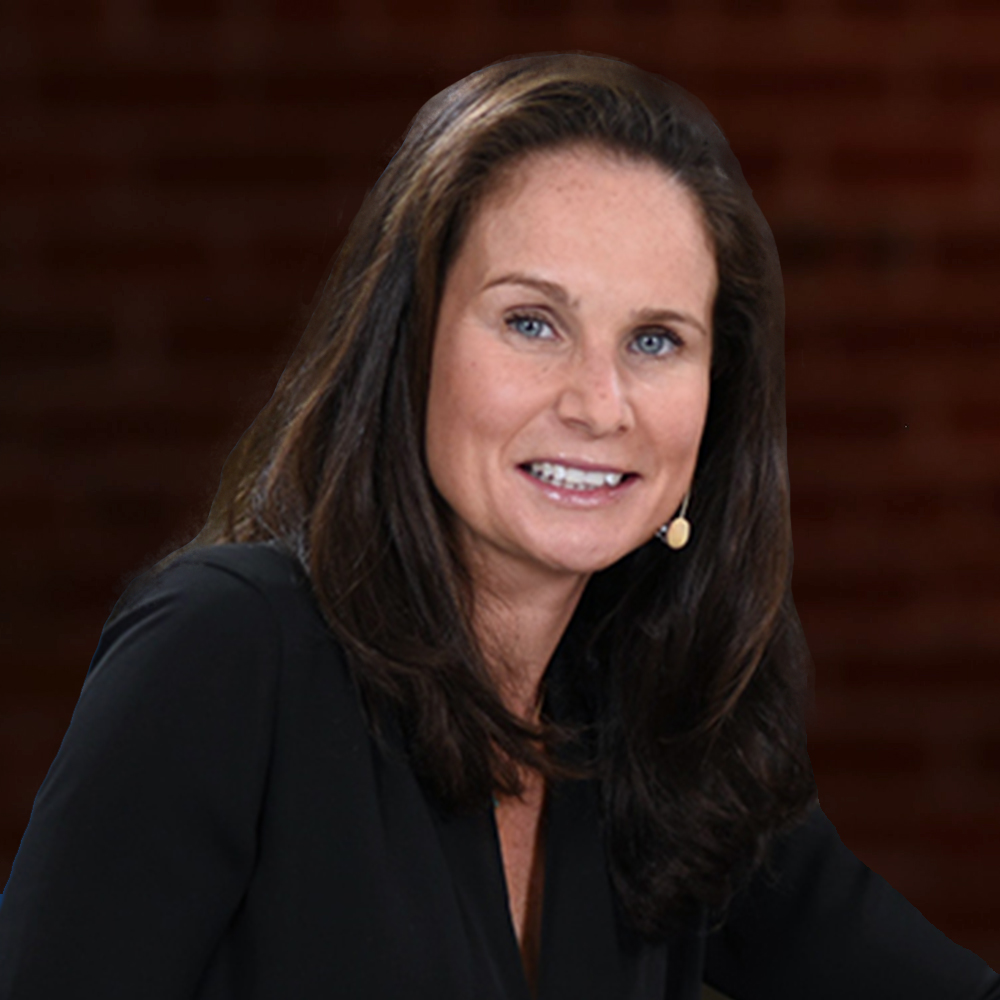
Scott Mullins of Amazon Web Services is managing director for financial services and speaks at the Amazon Web Services Financial Services Symposium 2026. Rebecca Knight of theCUBE hosts the interview with the theCUBE team.
Mullins brings their years of financial services cloud leadership to a wide-ranging discussion. They explore how artificial intelligence hereafter AI, including generative approaches and agentic tools such as Amazon Quick and Kiro, change business processes, expand access to technical capability and move initiatives from experimentation into production across banking, payments, capital markets and insurance.
Mullins emphasizes that AI adoption is not solely a technology challenge but a people and process transformation. They highlight governance, rapid experimentation and benchmarks to guide model selection and note that tools such as Amazon Quick unite disparate systems to boost productivity. Mullins and the theCUBE hosts recommend executive leadership and cross-organizational alignment to scale AI responsibly across institutions.
Watch this interview for practical insights on cloud computing, AI governance, model selection, production deployment and the future of financial services technology.
-R1
Forgot Password
Almost there!
We just sent you a verification email. Please verify your account to gain access to
AWS Financial Services Symposium 2026. If you don’t think you received an email check your
spam folder.
In order to sign in, enter the email address you used to registered for the event. Once completed, you will receive an email with a verification link. Open the link to automatically sign into the site.
Register for AWS Financial Services Symposium 2026
Please fill out the information below. You will receive an email with a verification link confirming your registration. Click the link to automatically sign into the site.
You’re almost there!
We just sent you a verification email. Please click the verification button in the email. Once your email address is verified, you will have full access to all event content for AWS Financial Services Symposium 2026.
I want my badge and interests to be visible to all attendees.
Checking this box will display your presense on the attendees list, view your profile and allow other attendees to contact you via 1-1 chat. Read the Privacy Policy. At any time, you can choose to disable this preference.
Select your Interests!
add
Upload your photo
Uploading..
OR
Connect via Twitter
Connect via Linkedin
EDIT PASSWORD
Share
Forgot Password
Almost there!
We just sent you a verification email. Please verify your account to gain access to
AWS Financial Services Symposium 2026. If you don’t think you received an email check your
spam folder.
In order to sign in, enter the email address you used to registered for the event. Once completed, you will receive an email with a verification link. Open the link to automatically sign into the site.
Sign in to gain access to AWS Financial Services Symposium 2026
Please sign in with LinkedIn to continue to AWS Financial Services Symposium 2026. Signing in with LinkedIn ensures a professional environment.
Are you sure you want to remove access rights for this user?
Details
Manage Access
email address
Community Invitation
Scott Mullins, AWS Worldwide Financial Services
Scott Mullins of Amazon Web Services is managing director for financial services and speaks at the Amazon Web Services Financial Services Symposium 2026. Rebecca Knight of theCUBE hosts the interview with the theCUBE team.
Mullins brings their years of financial services cloud leadership to a wide-ranging discussion. They explore how artificial intelligence hereafter AI, including generative approaches and agentic tools such as Amazon Quick and Kiro, change business processes, expand access to technical capability and move initiatives from experimentation into production across banking, payments, capital markets and insurance.
Mullins emphasizes that AI adoption is not solely a technology challenge but a people and process transformation. They highlight governance, rapid experimentation and benchmarks to guide model selection and note that tools such as Amazon Quick unite disparate systems to boost productivity. Mullins and the theCUBE hosts recommend executive leadership and cross-organizational alignment to scale AI responsibly across institutions.
Watch this interview for practical insights on cloud computing, AI governance, model selection, production deployment and the future of financial services technology.
-R1
In this interview from the AWS Financial Services Symposium, Scott Mullins, general manager of AWS Worldwide Financial Services at AWS, joins theCUBE's Rebecca Knight to discuss how financial institutions are moving beyond AI experimentation to fundamentally change the way work gets done. Mullins captures the palpable energy at the symposium, noting a decisive shift from a decade of replacing legacy components to actually reimagining business processes and workflows. He explains how the ability to rapidly experiment within established governance frameworks — ...Read more
exploreKeep Exploring
How will Kiro’s ability to let non-technical people build software affect the future of software development — will it lead to fewer software engineers or to a different kind of engineer?add
What is the biggest misconception that financial services executives currently have about their organization's AI readiness?add
>> Hello, everyone, and welcome to theCUBE's coverage of the AWS Financial Services Symposium here in New York City. I'm your host, Rebecca Knight. I would like to welcome our next guest to the show, Scott Mullins, GM, AWS Worldwide Financial Services. Thank you so much for coming on, Scott.
Scott Mullins
>> Rebecca, thanks for being here with us today and thanks for having me on the show.
Rebecca Knight
>> Well, fresh from the main stage, you did a terrific job in your keynote. I want to ask a little bit around the vibe of here at the show, but also just the vibe around AI and what you're seeing that tells you this is more than just hype.
Scott Mullins
>> Well, I think the vibe would be best described as probably electric. You've probably walked around the expo floor today. There's a lot of energy out there. There's a lot of conversation about what is really happening in the industry today. And I think we talked about it from the stage and you heard three amazing customers talk about it, but it's really just unlocking what's possible and rethinking every single part of the industry. And I think the most amazing part is that we're not just talking about replacing technology components. I've been doing this for a decade now, over a decade. A lot of that time was spent talking about, "Hey, take this old database out, take this legacy technology, like a mainframe, out and replace it with cloud services." We're not talking about that anymore. We're actually talking about the ability to change business process, to change the way that work works, and I think that's what people are really excited about.
Rebecca Knight
>> Changing the way that work works, rethinking things. In the financial services industry, they are typically staid organizations, typically more conservative, and also risk-averse. So what is change that's finally making them move from experimentation to production?
Scott Mullins
>> Well, I think I wouldn't say staid. I'd maybe say patterned. I'd say practiced. I would say habitual. There are specific patterns that every institution follows as really part of what we could just say is risk management and governance. And so I think what is enabling people to move much more confidently now are two things. Number one, you can spin this stuff up really quickly. You can experiment with it. You can show that it actually achieves the things that you want to achieve within specific policy guidelines and frameworks, and you can actually evaluate whether that governance is holding. So that is a freeing thing that lets organizations actually open the aperture on risk management, which helps everybody's shoulders come down a little bit, and understand that you're not actually taking a risk, you're experimenting with a new technology that can actually make work processes that much more effective and efficient.
Rebecca Knight
>> Kiro is supposed to let thinkers become builders, and you were talking on the main stage this morning about how it's providing access to skills that were previously out of reach. What does this mean for the future? Does it mean fewer software engineers or just different ones?
Scott Mullins
>> I don't think it means fewer developers. I think what it means is you're going to have different people that now have the capability to bring an idea to life. If you go back to my days as a product manager, I would write a business requirements document and I would put it into a Word document and I would hand that over to my colleagues who were on the software development side and they were software development engineers and they would look at it and they would then hand me back another Word document, which is probably very tough for them. That was the technical requirements document. And so then we would go back and forth and back and forth on what those things would end up becoming and what compromises we were going to make. That's not necessary anymore. And so now with the advent of IDEs like Kiro, someone who isn't necessarily deeply technical can take their idea, the thought that they have around what they want to build, and they can actually just communicate that straight to Kiro, and Kiro can get busy building on their idea.
Rebecca Knight
>> So people who aren't data scientists can become data scientists?
Scott Mullins
>> Well, people who aren't data scientists can get similar, if not the same, results that a trained data scientist could get. People who aren't trained computer scientists, who aren't people who are well-versed in computer languages don't actually have to go and learn computer languages. They can speak in their natural language and achieve similar outcomes.
Rebecca Knight
>> So what about Amazon Quick, which was just announced and positioned to set out to change the way we work? How do you see Quick changing the way financial services institutions work?
Scott Mullins
>> Well, I'll tell you, Quick has already changed the way that I work inside of AWS and inside of Amazon. And so you think about any work that any of us do, there's a lot of probably process that is given to us by our organization. There's probably process and habits and patterns that you've picked up and developed yourself. You've just kind of created the way that you work. And so one of the things that's amazing about Quick specifically for me is it connects immediately and very seamlessly to all the systems that we use, whether that's Outlook or to Slack or internal data systems at AWS, even to Salesforce. And so I've been able to actually automate tasks that I had either myself tasked to, a couple of hours to do, people on my team doing the same thing that are outputs, they're all now driven by an agentic workflow. And so it's been an amazing uplift in my own productivity to be able to actually use Quick actively in my own work. And now you take that to the industry where typically anybody who's in a job that requires some kind of analysis and some kind of reporting and some kind of decision-making, you may have one, you may have five, you may have 15 different systems that you're interacting with or different programs or applications. Quick can bring all of that action together in one location for somebody who's a knowledge worker. It's an amazing tool that's making things so much easier for people when it comes to work.
Rebecca Knight
>> With so many models available right now, how do you help financial institutions figure out which model for which task? And does the more choice just create more complexity?
Scott Mullins
>> We've faced this before at AWS. You think about the breadth and depth of our services. We have the widest breadth of services that you can find from a cloud service provider perspective. And then when you look at specifically each service, the depth of those services is pretty deep. Just look at EC2, for example. All the different configurations and the instance types of EC2 that we offer, it's the best in the industry. And so we can understand and relate to people when they say, "Oh my gosh, there's now so much model choice. Which one is the best one to choose?"
Luckily, there's a couple things that we can bring to bear. Number one, there are benchmarks for models. And so those benchmarks are consistently updated and they talk about benchmarking model performance against industry standards. So that's one way that we can help reduce some of the complexity or some of the "Where do I start?" choice. The second thing is we are working actively with industry participants across banking, payments, capital markets, insurance, and then deeply into even sub-segmentations of the industry such that we've already been working with these models and specific use cases. We can actually make recommendations on what's worked for other organizations.
Rebecca Knight
>> One of the things you said up on the main stage this morning is that in the era of AI, financial services as an industry is really at a crossroads. I'm curious to hear what is the biggest misconception that financial services executives have right now about AI readiness?
Scott Mullins
>> Oh, I think that the biggest misconception that anybody could have is that this is simply a technology issue or problem or something for the technology team to solve. If you go back and look at any of the modernization efforts that we've had in the industry over the last several decades, it's simply a, "Hey, we're going to throw that over to the tech team, to the CIO, to the CTO. They're going to figure that out. And then we're just going to keep, again, pulling out old components, putting in new components, and then we'll just keep all the workflows the same. A lot of the interfaces are going to be the same. The way that work works is basically the same. It's the same software. It's just running on different infrastructure and hardware. It's going to get more efficient. It's going to get more effective. Our costs are going to go down and then we're going to be able to have scalable infrastructure. It's going to be more resilient. All those great benefits, but it's still the same stuff."
That's not how this wave is going to work or how it's even working right now because what we're able to do is actually, again, change the way that work happens. And so when you think about that, we're actually solving a people problem and a process problem, and that's a very different set of people that need to bring leadership to bear. Our partner, Anthropic, had a event just this Tuesday here in New York. The very first person they brought on stage was the CEO of JPMorgan Chase, Jamie Dimon, and he was in conversation with Andrew Ross Sorkin and Dario Amodei, talking about the impact of artificial intelligence and agentic AI on their business. And so you've got the CEO talking about, "Hey, this is the impact that I'm seeing and what it's enabling us to do across the organization." This is the level of leadership that's required to actually go and change the way that human beings perform functions and work and what they rely on to do so.
Rebecca Knight
>> It starts at the top.
Scott Mullins
>> It does.
Rebecca Knight
>> Well, that's why we're rethinking everything.
Scott Mullins
>> Yes.
Rebecca Knight
>> Scott Mullins, thank you so much for coming on the show.
Scott Mullins
>> Rebecca, thanks for having us and thanks for being at the symposium this year.
Rebecca Knight
>> I'm Rebecca Knight. Stay tuned for more of theCUBE's coverage of the AWS Financial Services Symposium.










 Rebecca Knight