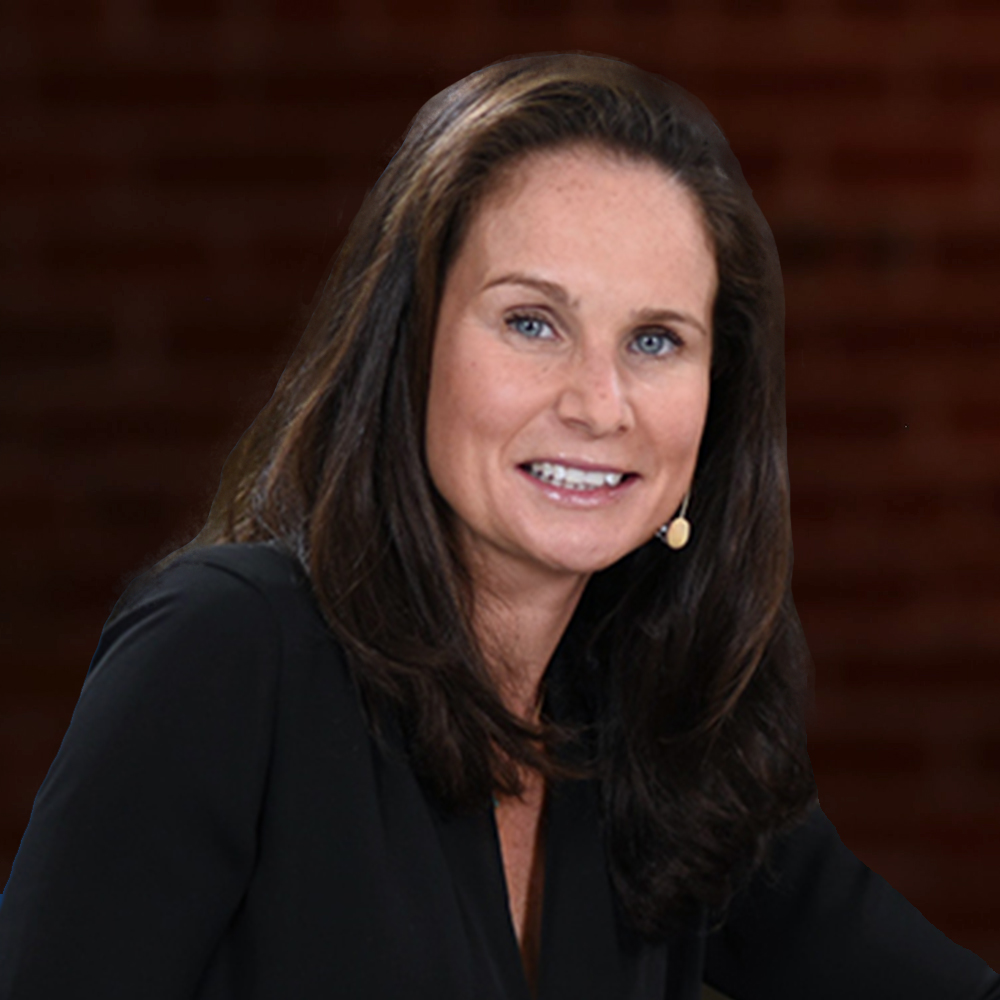
This interview at the AWS Financial Services Symposium 2026 examines AI-driven communications surveillance and compliance. Vincent David of Smarsh, vice president of artificial intelligence engineering, participates in the theCUBE Research interview with Rebecca Knight of theCUBE. David describes their experience building integrated data platforms, model development in collaboration with customers and practical deployments such as Intelligent Agent. The discussion focuses on communications surveillance, compliance and the application of artificial intelligence, abbreviated AI, in financial services.
David highlights Smarsh’s emphasis on "protecting the truth" and on centralized capture across more than 100 channels. They credit Intelligent Agent and investments in agentic AI with reducing reviewer toil and improving detection of subtle signals such as language shifts by bad actors. David emphasizes the strategic AWS collaboration as enabling global scale and as allowing Smarsh to concentrate on higher-level AI innovation rather than on infrastructure management. The conversation addresses key considerations for compliance teams including multi-channel capture, false positive reduction, data privacy and operationalizing models in production.
Forgot Password
Almost there!
We just sent you a verification email. Please verify your account to gain access to
AWS Financial Services Symposium 2026. If you don’t think you received an email check your
spam folder.
In order to sign in, enter the email address you used to registered for the event. Once completed, you will receive an email with a verification link. Open the link to automatically sign into the site.
Register for AWS Financial Services Symposium 2026
Please fill out the information below. You will receive an email with a verification link confirming your registration. Click the link to automatically sign into the site.
You’re almost there!
We just sent you a verification email. Please click the verification button in the email. Once your email address is verified, you will have full access to all event content for AWS Financial Services Symposium 2026.
I want my badge and interests to be visible to all attendees.
Checking this box will display your presense on the attendees list, view your profile and allow other attendees to contact you via 1-1 chat. Read the Privacy Policy. At any time, you can choose to disable this preference.
Select your Interests!
add
Upload your photo
Uploading..
OR
Connect via Twitter
Connect via Linkedin
EDIT PASSWORD
Share
Forgot Password
Almost there!
We just sent you a verification email. Please verify your account to gain access to
AWS Financial Services Symposium 2026. If you don’t think you received an email check your
spam folder.
In order to sign in, enter the email address you used to registered for the event. Once completed, you will receive an email with a verification link. Open the link to automatically sign into the site.
Sign in to gain access to AWS Financial Services Symposium 2026
Please sign in with LinkedIn to continue to AWS Financial Services Symposium 2026. Signing in with LinkedIn ensures a professional environment.
Are you sure you want to remove access rights for this user?
Details
Manage Access
email address
Community Invitation
Vincent David, Smarsh
This interview at the AWS Financial Services Symposium 2026 examines AI-driven communications surveillance and compliance. Vincent David of Smarsh, vice president of artificial intelligence engineering, participates in the theCUBE Research interview with Rebecca Knight of theCUBE. David describes their experience building integrated data platforms, model development in collaboration with customers and practical deployments such as Intelligent Agent. The discussion focuses on communications surveillance, compliance and the application of artificial intelligence, abbreviated AI, in financial services.
David highlights Smarsh’s emphasis on "protecting the truth" and on centralized capture across more than 100 channels. They credit Intelligent Agent and investments in agentic AI with reducing reviewer toil and improving detection of subtle signals such as language shifts by bad actors. David emphasizes the strategic AWS collaboration as enabling global scale and as allowing Smarsh to concentrate on higher-level AI innovation rather than on infrastructure management. The conversation addresses key considerations for compliance teams including multi-channel capture, false positive reduction, data privacy and operationalizing models in production.
>> Hello everyone, and welcome back to theCUBE's coverage of the AWS Financial Services Symposium here in New York City. I'm your host, Rebecca Knight. I would like to welcome Vincent David, VP of AI Engineering at Smarsh to the show. Welcome, Vincent.>> Hi, Rebecca.
Rebecca Knight
>> Compliance and financial services has always been exceedingly complex, but of course AI has taken it to the next level. Give us a big picture of what Smarsh does, and the problem that you exist to solve.>> Yeah. The thing that we always start with saying is that we protect the truth. It's about really supporting compliance teams at these financial institutions to make sure that they can run their compliance programs in a efficient and targeted way. The way that we describe this is, we help these companies capture critical communications information, data. We help them archive it, and then we analyze and surveil on top of it.
Rebecca Knight
>> When we're thinking about those critical communications, the channels, email, chat, voice, socials, how does Smarsh help firms stay on top of that volume while actually getting ahead of problems before they become regulatory issues?>> Yeah. One of the key differentiators at Smarsh is that we capture data over a broad spectrum of over 100 different channels, so you have an opportunity here to bring all your data into an integrated data platform, where you do not just... Which otherwise can become a very challenging situation. Often companies face challenges where their data capture systems will be fragmented, and they'll have to then deal with multiple different solutions side by side.
Rebecca Knight
>> Let's bring this to life a little bit. You worked with a top global investment bank on its compliance program. Walk us through what happened.>> One of the key things if you want to get really to the core of communications intelligence is you need to really understand where the signal lies. One of the biggest challenges that you'll face with these compliance use cases when you're trying to find signal and communications is that you have to work with production data. A typical example in our industry where you will have publicly available data is the Enron data set. That is a long time ago and language has changed significantly. If you want to get really sharp in identifying that signal, having a key partner, that you can work with to really analyze their data is a key aspect of that. Now, we take data privacy very serious. We will never use a customer's data, but we partner with them then and research, and then we build models based off of the findings in collaboration, and that's then what we ship into production, and what we then use for these types of supervision and surveillance programs.
Rebecca Knight
>> Then what happened with this global investment bank in terms of working with Smarsh, and what were their results?>> The outcome for them is that they have now... We partnered with them on this capability called Intelligent Agent. That is a capability that allows you to filter the noise in this vast communications data where you're analyzing millions of communications per day. You detect then your alerts that are relevant for compliance program. One of the paradoxical issues that you face there often is that while you are looking at a huge number of false positives, your signal is often somewhere else. For instance, oftentimes a bad actor might switch languages and use a different language when they have something to say that they don't want to have on the record. That is the type of capability where advanced detection capabilities is really key. Then finally, you get to the review stage where like an analyst is then looking at these alerts and is trying to determine if it's a false positive or if there's truly a signal there. Enabling that analyst to really do their job in an effective way, eliminating rote repetitive work is a key aspect of what we do.
Rebecca Knight
>> Because they're paying more attention because they're not so burdened by the toil. You have just announced a strategic collaboration agreement with AWS. Tell us more a little bit about that.>> Yeah. AWS is a key partner for us. We built our core capabilities on AWS, and in order to scale our capabilities and really innovate in this space, having a partner like AWS is key. It allows us to deploy our capabilities worldwide across without needing to manage the data center footprint that would go with it. It allows us to use managed capabilities, and really focus on the top end of the tech stack. That is where the value is. If I can get out of the engine room and not have to optimize and configure my infrastructure, if I can focus on agentic artificial intelligence and where the value is, that's a differentiator you get out of such a collaboration.
Rebecca Knight
>> Final question. Talk a little bit about your investments in Agentic AI.>> Yeah. I'll go back to this example with enabling that reviewer. Imagine a reviewer that is going through thousands of rote alerts and is trying to find that one signal in a large volume of alerts. Imagine you use Agentic AI as a solution to work with that level one analyst, and automating a key part of that life cycle. That's a great example where Agentic AI can help. You have to have semantic understanding of what an alert is really indicating, and you need to be able to bring multiple complex factors together. That's where Agentic AI can really help.
Rebecca Knight
>> Vincent, thanks so much for coming on the show.>> It's my pleasure. Thank you.
Rebecca Knight
>> I'm Rebecca Knight. Stay tuned for more of theCUBE's coverage of the AWS Financial Services Symposium.
>> Hello everyone, and welcome back to theCUBE's coverage of the AWS Financial Services Symposium here in New York City. I'm your host, Rebecca Knight. I would like to welcome Vincent David, VP of AI Engineering at Smarsh to the show. Welcome, Vincent.>> Hi, Rebecca.
Rebecca Knight
>> Compliance and financial services has always been exceedingly complex, but of course AI has taken it to the next level. Give us a big picture of what Smarsh does, and the problem that you exist to solve.>> Yeah. The thing that we always start with saying is that we protect the truth. It's about really supporting compliance teams at these financial institutions to make sure that they can run their compliance programs in a efficient and targeted way. The way that we describe this is, we help these companies capture critical communications information, data. We help them archive it, and then we analyze and surveil on top of it.
Rebecca Knight
>> When we're thinking about those critical communications, the channels, email, chat, voice, socials, how does Smarsh help firms stay on top of that volume while actually getting ahead of problems before they become regulatory issues?>> Yeah. One of the key differentiators at Smarsh is that we capture data over a broad spectrum of over 100 different channels, so you have an opportunity here to bring all your data into an integrated data platform, where you do not just... Which otherwise can become a very challenging situation. Often companies face challenges where their data capture systems will be fragmented, and they'll have to then deal with multiple different solutions side by side.
Rebecca Knight
>> Let's bring this to life a little bit. You worked with a top global investment bank on its compliance program. Walk us through what happened.>> One of the key things if you want to get really to the core of communications intelligence is you need to really understand where the signal lies. One of the biggest challenges that you'll face with these compliance use cases when you're trying to find signal and communications is that you have to work with production data. A typical example in our industry where you will have publicly available data is the Enron data set. That is a long time ago and language has changed significantly. If you want to get really sharp in identifying that signal, having a key partner, that you can work with to really analyze their data is a key aspect of that. Now, we take data privacy very serious. We will never use a customer's data, but we partner with them then and research, and then we build models based off of the findings in collaboration, and that's then what we ship into production, and what we then use for these types of supervision and surveillance programs.
Rebecca Knight
>> Then what happened with this global investment bank in terms of working with Smarsh, and what were their results?>> The outcome for them is that they have now... We partnered with them on this capability called Intelligent Agent. That is a capability that allows you to filter the noise in this vast communications data where you're analyzing millions of communications per day. You detect then your alerts that are relevant for compliance program. One of the paradoxical issues that you face there often is that while you are looking at a huge number of false positives, your signal is often somewhere else. For instance, oftentimes a bad actor might switch languages and use a different language when they have something to say that they don't want to have on the record. That is the type of capability where advanced detection capabilities is really key. Then finally, you get to the review stage where like an analyst is then looking at these alerts and is trying to determine if it's a false positive or if there's truly a signal there. Enabling that analyst to really do their job in an effective way, eliminating rote repetitive work is a key aspect of what we do.
Rebecca Knight
>> Because they're paying more attention because they're not so burdened by the toil. You have just announced a strategic collaboration agreement with AWS. Tell us more a little bit about that.>> Yeah. AWS is a key partner for us. We built our core capabilities on AWS, and in order to scale our capabilities and really innovate in this space, having a partner like AWS is key. It allows us to deploy our capabilities worldwide across without needing to manage the data center footprint that would go with it. It allows us to use managed capabilities, and really focus on the top end of the tech stack. That is where the value is. If I can get out of the engine room and not have to optimize and configure my infrastructure, if I can focus on agentic artificial intelligence and where the value is, that's a differentiator you get out of such a collaboration.
Rebecca Knight
>> Final question. Talk a little bit about your investments in Agentic AI.>> Yeah. I'll go back to this example with enabling that reviewer. Imagine a reviewer that is going through thousands of rote alerts and is trying to find that one signal in a large volume of alerts. Imagine you use Agentic AI as a solution to work with that level one analyst, and automating a key part of that life cycle. That's a great example where Agentic AI can help. You have to have semantic understanding of what an alert is really indicating, and you need to be able to bring multiple complex factors together. That's where Agentic AI can really help.
Rebecca Knight
>> Vincent, thanks so much for coming on the show.>> It's my pleasure. Thank you.
Rebecca Knight
>> I'm Rebecca Knight. Stay tuned for more of theCUBE's coverage of the AWS Financial Services Symposium.