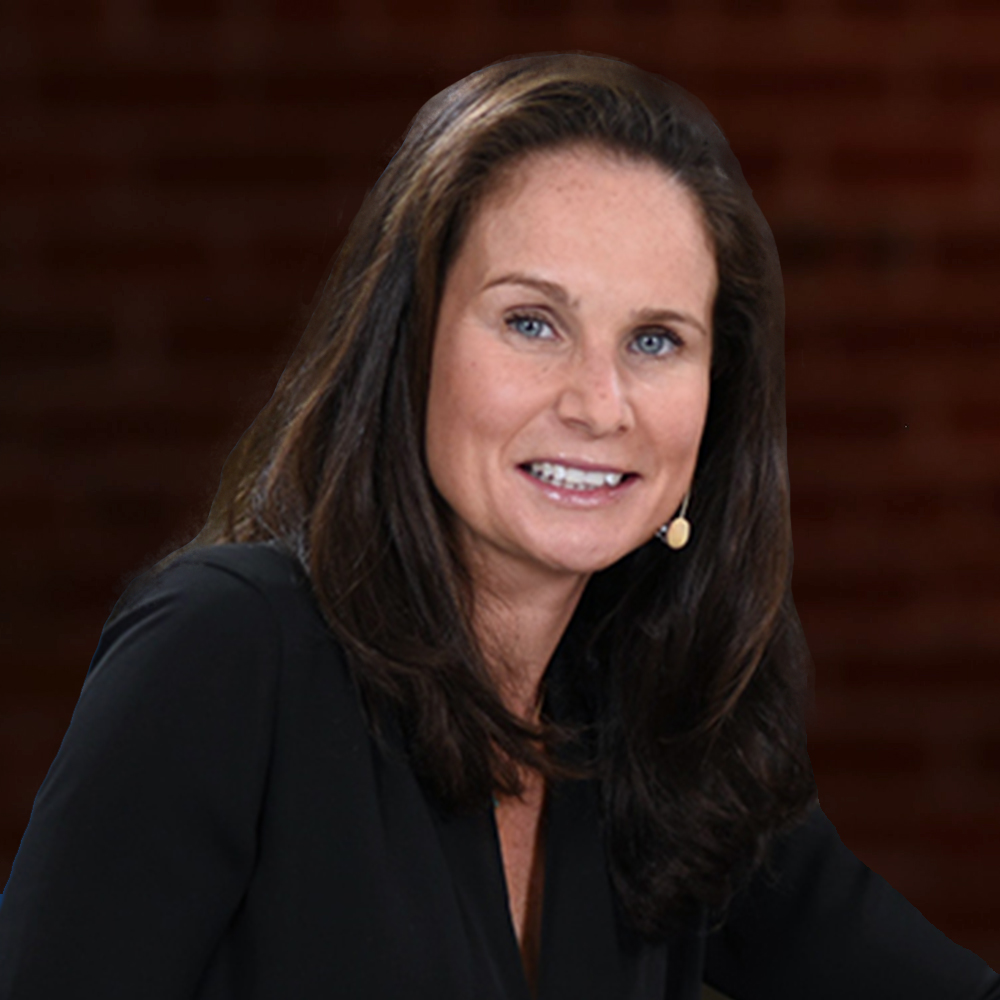
This conversation examines artificial intelligence-driven continuous delivery and governance for financial services. Alex Valentine of Harness appears at the Amazon Web Services Financial Services Symposium 2026 to discuss continuous delivery, governance and platform consolidation.
Valentine appears on theCUBE Research with Rebecca Knight of theCUBE Research to explain Harness's role as the AI platform for everything after code. They outline how the platform automates build, test, security, deployment and continuous verification and discuss challenges unique to financial services such as high auditability standards, cloud migration patterns and reducing engineering toil while maintaining reliability.
Valentine describes a real-world automation of a 150-page Citibank onboarding process into a workflow that runs in ten minutes, dramatically reducing deployment time. They cite Morningstar’s consolidation from 36,000 Jenkins pipelines to 50 reusable templates and emphasize continuous verification and the need for engineering leaders to refactor processes rather than replicate legacy patterns.
Forgot Password
Almost there!
We just sent you a verification email. Please verify your account to gain access to
AWS Financial Services Symposium 2026. If you don’t think you received an email check your
spam folder.
In order to sign in, enter the email address you used to registered for the event. Once completed, you will receive an email with a verification link. Open the link to automatically sign into the site.
Register for AWS Financial Services Symposium 2026
Please fill out the information below. You will receive an email with a verification link confirming your registration. Click the link to automatically sign into the site.
You’re almost there!
We just sent you a verification email. Please click the verification button in the email. Once your email address is verified, you will have full access to all event content for AWS Financial Services Symposium 2026.
I want my badge and interests to be visible to all attendees.
Checking this box will display your presense on the attendees list, view your profile and allow other attendees to contact you via 1-1 chat. Read the Privacy Policy. At any time, you can choose to disable this preference.
Select your Interests!
add
Upload your photo
Uploading..
OR
Connect via Twitter
Connect via Linkedin
EDIT PASSWORD
Share
Forgot Password
Almost there!
We just sent you a verification email. Please verify your account to gain access to
AWS Financial Services Symposium 2026. If you don’t think you received an email check your
spam folder.
In order to sign in, enter the email address you used to registered for the event. Once completed, you will receive an email with a verification link. Open the link to automatically sign into the site.
Sign in to gain access to AWS Financial Services Symposium 2026
Please sign in with LinkedIn to continue to AWS Financial Services Symposium 2026. Signing in with LinkedIn ensures a professional environment.
Are you sure you want to remove access rights for this user?
Details
Manage Access
email address
Community Invitation
Alex Valentine, Harness
This conversation examines artificial intelligence-driven continuous delivery and governance for financial services. Alex Valentine of Harness appears at the Amazon Web Services Financial Services Symposium 2026 to discuss continuous delivery, governance and platform consolidation.
Valentine appears on theCUBE Research with Rebecca Knight of theCUBE Research to explain Harness's role as the AI platform for everything after code. They outline how the platform automates build, test, security, deployment and continuous verification and discuss challenges unique to financial services such as high auditability standards, cloud migration patterns and reducing engineering toil while maintaining reliability.
Valentine describes a real-world automation of a 150-page Citibank onboarding process into a workflow that runs in ten minutes, dramatically reducing deployment time. They cite Morningstar’s consolidation from 36,000 Jenkins pipelines to 50 reusable templates and emphasize continuous verification and the need for engineering leaders to refactor processes rather than replicate legacy patterns.
>> Hello, everyone and welcome back to theCUBE's coverage of the AWS Financial Services Symposium here in New York City. I'm your host, Rebecca Knight. I'd like to introduce our next guest for this segment. He is Alex Valentine, SVP of Solutions Engineering at Harness. Welcome, Alex.>> Great to be here.
Rebecca Knight
>> So I want you to start by giving our viewers a sense of what Harness does and the core problem that Harness exists to solve.>> So Harness is the AI platform for everything after code. So if you think of the SDLC, you have the interloop, which is more coding and planning. And then you have everything after coding, right? So building, verifying, testing, securing and deploying. And then after that code is deployed, making sure efficiency is there, both efficiency from a cloud cost perspective, but then also from an engineering resource perspective as well.
Rebecca Knight
>> Alex, the bar on governance and audibility in the financial services industry is extraordinarily high. How does Harness meet that bar while still helping teams move fast?>> So the expectations in financial services is changing drastically. If you think even just five, 10 years ago, it was okay to have monthly or quarterly deployments where now the expectation is high velocity and AI is doing a lot to change those expectations and raise them because the barrier for code entry is a lot less. And so Harness allows organizations to put all the compliance checks, governance checks in an automated fashion. So historically, a lot of large banks, like for example, Citibank, which is a Harness customer, before Harness, they had basically 150-page document to onboard a new service to the cloud. That's fully automated in a workflow that takes 10 minutes to run. And so deployment times have gone from weeks down to seven minutes.
Rebecca Knight
>> Wow. And you mentioned Citibank, there's other customers that you work with too. Want to talk a little bit more about other engagements?>> Sure. So a couple other examples of our banking and financial services customers. A good example is Morningstar. So historically pre-Harness, a lot of times financial services organizations would have thousands and thousands of pipelines running in their environments. Each service would have its own pipeline. And so Morningstar with Jenkins, their previous solution for software delivery, had 36,000 pipelines running in production. And with Harness, we're able to consolidate that down to 50 reusable templates. And then you have AI-based verification, which essentially takes all the toil out of making sure you're deploying to production with confidence and avoiding any outages as well.
Rebecca Knight
>> AI is generating more code than ever, but more code written doesn't automatically mean more code in production. So how does Harness help with everything that happens after the code is written?>> So if you think about the process of getting code to customer, there's a lot involved there. And historically before AI, developers would be very intimate with their code. They would know every line, every library, every class, where now people are vibe coding. You don't need to be a developer anymore. And so what that means is you have to have a lot more automation in place for quality, for governance, and also for things like the libraries you're utilizing, because a lot of times AI coding assistants, what they do is they pull in many open source libraries, which could have vulnerabilities and lead to a supply chain attack. So what Harness does is automate a lot of the testing and quality gates, and then use AI to verify that the customer experience of the application change you're making will not impact negatively after you're making that change. And so that's very important as well. So that's a concept we call continuous verification.
Rebecca Knight
>> For a financial services organization that is thinking about this kind of platform consolidation, what does the journey typically look like, from that first conversation to when they start to see impact?>> So the first conversation, usually you want to get to know kind of their entire SCLC and what kind of pain points they have. Sometimes it can be slow builds. Sometimes it could be compliance or governance considerations, but a lot of times where it starts is getting services out to the cloud with excellence and with speed. And so continuous delivery tends to be a common starting point for a lot of our customers. And a lot of times what we see with AWS in particular, we have a great partnership there to make it easy to get workloads from on premise out to the cloud quickly. And then also making sure we're not just repeating legacy patterns when moving to cloud-based delivery. So it's very important that you look to optimize that as well when you're migrating to the cloud.
Rebecca Knight
>> Final question, what advice would you have? What would you say to engineering leaders in financial services who are contemplating this kind of move?>> I would say don't let your legacy kind of processes and legacy restrictions dictate where you go in the future. I see too many times where prospects or partners tend to want to replicate how they did something in a legacy fashion with AI and with cloud. It's very important to refactor how you're running workloads. And with AI today, a lot of the manual toil and manual steps are no longer necessary. So it's very important to modify things for the future rather than being stuck in the past, I would say.
Rebecca Knight
>> And some might say rethink everything.>> Yes, absolutely.
Rebecca Knight
>> Alex, thank you so much for coming on the show.>> Thank you. Happy to be here.
Rebecca Knight
>> I'm Rebecca Knight. Stay tuned for more of theCUBE's coverage of the AWS Financial Services Symposium.
>> Hello, everyone and welcome back to theCUBE's coverage of the AWS Financial Services Symposium here in New York City. I'm your host, Rebecca Knight. I'd like to introduce our next guest for this segment. He is Alex Valentine, SVP of Solutions Engineering at Harness. Welcome, Alex.>> Great to be here.
Rebecca Knight
>> So I want you to start by giving our viewers a sense of what Harness does and the core problem that Harness exists to solve.>> So Harness is the AI platform for everything after code. So if you think of the SDLC, you have the interloop, which is more coding and planning. And then you have everything after coding, right? So building, verifying, testing, securing and deploying. And then after that code is deployed, making sure efficiency is there, both efficiency from a cloud cost perspective, but then also from an engineering resource perspective as well.
Rebecca Knight
>> Alex, the bar on governance and audibility in the financial services industry is extraordinarily high. How does Harness meet that bar while still helping teams move fast?>> So the expectations in financial services is changing drastically. If you think even just five, 10 years ago, it was okay to have monthly or quarterly deployments where now the expectation is high velocity and AI is doing a lot to change those expectations and raise them because the barrier for code entry is a lot less. And so Harness allows organizations to put all the compliance checks, governance checks in an automated fashion. So historically, a lot of large banks, like for example, Citibank, which is a Harness customer, before Harness, they had basically 150-page document to onboard a new service to the cloud. That's fully automated in a workflow that takes 10 minutes to run. And so deployment times have gone from weeks down to seven minutes.
Rebecca Knight
>> Wow. And you mentioned Citibank, there's other customers that you work with too. Want to talk a little bit more about other engagements?>> Sure. So a couple other examples of our banking and financial services customers. A good example is Morningstar. So historically pre-Harness, a lot of times financial services organizations would have thousands and thousands of pipelines running in their environments. Each service would have its own pipeline. And so Morningstar with Jenkins, their previous solution for software delivery, had 36,000 pipelines running in production. And with Harness, we're able to consolidate that down to 50 reusable templates. And then you have AI-based verification, which essentially takes all the toil out of making sure you're deploying to production with confidence and avoiding any outages as well.
Rebecca Knight
>> AI is generating more code than ever, but more code written doesn't automatically mean more code in production. So how does Harness help with everything that happens after the code is written?>> So if you think about the process of getting code to customer, there's a lot involved there. And historically before AI, developers would be very intimate with their code. They would know every line, every library, every class, where now people are vibe coding. You don't need to be a developer anymore. And so what that means is you have to have a lot more automation in place for quality, for governance, and also for things like the libraries you're utilizing, because a lot of times AI coding assistants, what they do is they pull in many open source libraries, which could have vulnerabilities and lead to a supply chain attack. So what Harness does is automate a lot of the testing and quality gates, and then use AI to verify that the customer experience of the application change you're making will not impact negatively after you're making that change. And so that's very important as well. So that's a concept we call continuous verification.
Rebecca Knight
>> For a financial services organization that is thinking about this kind of platform consolidation, what does the journey typically look like, from that first conversation to when they start to see impact?>> So the first conversation, usually you want to get to know kind of their entire SCLC and what kind of pain points they have. Sometimes it can be slow builds. Sometimes it could be compliance or governance considerations, but a lot of times where it starts is getting services out to the cloud with excellence and with speed. And so continuous delivery tends to be a common starting point for a lot of our customers. And a lot of times what we see with AWS in particular, we have a great partnership there to make it easy to get workloads from on premise out to the cloud quickly. And then also making sure we're not just repeating legacy patterns when moving to cloud-based delivery. So it's very important that you look to optimize that as well when you're migrating to the cloud.
Rebecca Knight
>> Final question, what advice would you have? What would you say to engineering leaders in financial services who are contemplating this kind of move?>> I would say don't let your legacy kind of processes and legacy restrictions dictate where you go in the future. I see too many times where prospects or partners tend to want to replicate how they did something in a legacy fashion with AI and with cloud. It's very important to refactor how you're running workloads. And with AI today, a lot of the manual toil and manual steps are no longer necessary. So it's very important to modify things for the future rather than being stuck in the past, I would say.
Rebecca Knight
>> And some might say rethink everything.>> Yes, absolutely.
Rebecca Knight
>> Alex, thank you so much for coming on the show.>> Thank you. Happy to be here.
Rebecca Knight
>> I'm Rebecca Knight. Stay tuned for more of theCUBE's coverage of the AWS Financial Services Symposium.