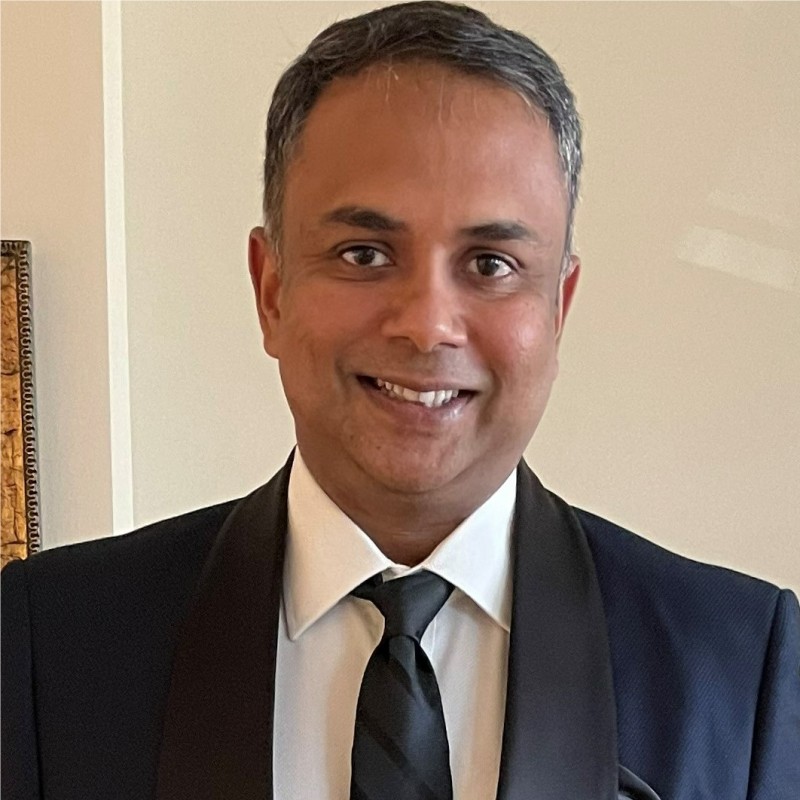
In this segment from the AWS Financial Services Symposium 2025, theCUBE Research host Scott Hebner sits down with Rohit Jarron, head of Banking & Financial Services, Mphasis, and Ish Naar, Mphasis partner, Consumer Banking, to decode how a “driverless business” ethos is reshaping core banking. The duo explains why Mphasis – born inside Citibank and now a $1.7 B engineering specialist – pairs AWS cloud-native services with knowledge-graph AI to modernize decades-old systems, slash costs and unlock hyper-personalized customer engagement.
Highlights you’ll hear in this segment:
Legacy to ‘empty-room’ data centers – encoding 50 years of COBOL and document-bound logic into semantic knowledge graphs cuts modernization spend by ~60 % and shrinks timelines from five years to < 24 months.
Deterministic digital workers – pre-trained, regulator-explainable AI agents automate sanctions screening, payment ops and KYC while delivering six-month payback.
Predictive self-healing stacks – merging legacy graphs with real-time infrastructure telemetry opens the path to “infinite-capacity” apps and ticket-free ops on AWS.
Trust as innovation currency – why explainability, data lineage and rigorous task-level scoping guard against hallucinations and bias in highly regulated markets.
Savings-led transformation – use AI-found efficiencies to fund further cloud moves, rather than waiting for blank-check budgets.
The guests close with pragmatic advice: start by mining institutional knowledge, embrace cloud economics that reward bursty batch workloads - and upskill teams so people who know AI uplift those who don’t.
Forgot Password
Almost there!
We just sent you a verification email. Please verify your account to gain access to
AWS Financial Services Symposium 2025. If you don’t think you received an email check your
spam folder.
In order to sign in, enter the email address you used to registered for the event. Once completed, you will receive an email with a verification link. Open this link to automatically sign into the site.
Register For AWS Financial Services Symposium 2025
Please fill out the information below. You will recieve an email with a verification link confirming your registration. Click the link to automatically sign into the site.
You’re almost there!
We just sent you a verification email. Please click the verification button in the email. Once your email address is verified, you will have full access to all event content for AWS Financial Services Symposium 2025.
I want my badge and interests to be visible to all attendees.
Checking this box will display your presense on the attendees list, view your profile and allow other attendees to contact you via 1-1 chat. Read the Privacy Policy. At any time, you can choose to disable this preference.
Select your Interests!
add
Upload your photo
Uploading..
OR
Connect via Twitter
Connect via Linkedin
EDIT PASSWORD
Share
Forgot Password
Almost there!
We just sent you a verification email. Please verify your account to gain access to
AWS Financial Services Symposium 2025. If you don’t think you received an email check your
spam folder.
In order to sign in, enter the email address you used to registered for the event. Once completed, you will receive an email with a verification link. Open this link to automatically sign into the site.
Sign in to gain access to AWS Financial Services Symposium 2025
Please sign in with LinkedIn to continue to AWS Financial Services Symposium 2025. Signing in with LinkedIn ensures a professional environment.
Are you sure you want to remove access rights for this user?
Details
Manage Access
email address
Community Invitation
Rohit Jayachandran & Suresh Nair, Mphasis
In this segment from the AWS Financial Services Symposium 2025, theCUBE Research host Scott Hebner sits down with Rohit Jarron, head of Banking & Financial Services, Mphasis, and Ish Naar, Mphasis partner, Consumer Banking, to decode how a “driverless business” ethos is reshaping core banking. The duo explains why Mphasis – born inside Citibank and now a $1.7 B engineering specialist – pairs AWS cloud-native services with knowledge-graph AI to modernize decades-old systems, slash costs and unlock hyper-personalized customer engagement.
Highlights you’ll hear in this segment:
Legacy to ‘empty-room’ data centers – encoding 50 years of COBOL and document-bound logic into semantic knowledge graphs cuts modernization spend by ~60 % and shrinks timelines from five years to < 24 months.
Deterministic digital workers – pre-trained, regulator-explainable AI agents automate sanctions screening, payment ops and KYC while delivering six-month payback.
Predictive self-healing stacks – merging legacy graphs with real-time infrastructure telemetry opens the path to “infinite-capacity” apps and ticket-free ops on AWS.
Trust as innovation currency – why explainability, data lineage and rigorous task-level scoping guard against hallucinations and bias in highly regulated markets.
Savings-led transformation – use AI-found efficiencies to fund further cloud moves, rather than waiting for blank-check budgets.
The guests close with pragmatic advice: start by mining institutional knowledge, embrace cloud economics that reward bursty batch workloads - and upskill teams so people who know AI uplift those who don’t.
Head of Banking and Financial Services, Member of Executive CouncilMphasis
At the AWS Financial Services Symposium, Scott Hebner of theCUBE Research interviews Rohit Jayachandran, head of banking and financial services at Mphasis, and Suresh Nair, partner of consumer banking at Mphasis, to explore how a “driverless business” approach is transforming core banking. They explain how pairing AWS cloud services with knowledge-graph AI helps modernize outdated systems, cut costs and elevate customer engagement.
Jayachandran and Nair break down how decades-old COBOL logic is restructured into semantic graphs — shrinking transformati...Read more
>> Hello and welcome back to the Cube's Continuing Coverage of the AWS Financial Services Symposium 2025 in New York City. I'm Scott Hebner and thank you for tuning in. Today we'll talk with Rohit Jarron, the head of Banking and Financial Services at Emphasis and ish Naar, the, the Emphasis partner for consumer banking. So guys, welcome to both of you. Thanks you for being here. >> Thanks, Scott. Nice to be with you here today as well. >> Yeah, I understand you've been enjoying the East Coast here in Connecticut, New York, and our great weather. >> We, we glad that it's not a hundred degrees on Memorial Day, so that way it's okay, but we could have, we've been happier with 85. >> Yeah, well, I'll take 85. I would rather have the heat than the cold, but we'll get there. So, so anyhow, for our audience, let's, let's just start with the big picture here. You know, for some of those that may not be familiar with Emphasis, tell us a little bit about your company and the partnership they have with AWS. >> So, emphasis is a specialist in financial services technology. We do technology services for most of the large US banks. We are born on the financial services. We were founded by Citi Bankers who, who, who founded Emphasis with the premise of taking banks to the internet. This is 25 years ago. Today we are Blackstone private equity owned, publicly listed, India, publicly listed entity, $1.7 billion in size and 35,000 people spread globally, but very focused on financial services. That's, that this is home ground or market for us and using technology to disrupt and, and help customers use technology to, to get into the next wave of delivering value to customers. >> Yeah, and you guys have a whole array of competencies across the whole digital spectrum, right? So from Next gen, you know, data to cybersecurity, to experience, to modernization, you know, I, I know you're doing stuff in, in the cognitive space, so you guys have a ton of different, you know, aspects of the full digital journey, right? >> Yeah. We, we, we are deep in engineering. So anything that requires an engineering mindset is, is is something that we do very well. Whether it's data, whether it's experience, whether it is modernization, we, we are seeing a lot of activity there is, as banks want to be more agile and, and want to respond to, to customers much faster modernization. Being a big team cloud and AI is fundamental to everything that we do. Hence, as a partnership with AWS is, is exciting for us as well. We do a lot of work together with AWS both on the cloud side and the AI side with, with them. >> Yeah. When I, when I was doing some, some, some reading, I, I saw a, a tagline. I think it, I think it was a tagline that basically said you guys are helping be the, the driver of the driverless business. Right? Which I thought was a clever way to kind of evolve into the world of AI and intelligence and Right. Is that's sort of what that's alluding to. >> Yeah. It's how do you use data to, to drive hyper-personalized experiences. We, we wrote a paper eight years ago, it said that the data center of the future is an empty role. We, we took a lot of, a lot of slack for that because everybody bangs a lot going to move data to the public cloud. And we all know where we are today with, with, with public cloud of being, being adopted in a massive way with, with all large enterprises. So everything that's deep, everything that requires engineering, everything that requires hyper-personalization data where experience is all that we do very well. Scott, >> So, so where, where does emphasis see AI reshaping the financial services industry? I mean, we've sort of gone through this phase of, you know, financial services, applying predictive models and then we got into generative AI over the last several months. You know, I think the future, I think we're just getting started, right? I think we, in our preamble, we definitely agree with that. So how do you see it reshaping financial services as we go through time here? >> Well, in our view, the last 12 months that have mostly calendar year 24, were all about POC pilots. Seeing what, what you could do with AI in 25. We are seeing a lot more mass adoption in a production environment. At at scale. If you look at, if you look at financial institutions, a lot of the institutions are very, are long tenured institutions. If not for decades, they've been, if not for centuries, they've been there for decades. A lot of the knowledge that's there is there in documents, is there in code, it's there in the business process, is there in documents, emails, different unstructured data. So one of the big focuses where, where we are seeing a lot of success with customers is how do you encode all of that in a knowledge graph. So the the first scope of work that, that we are seeing a lot of success at encoding institutional knowledge that is not otherwise available in a computer. Understandable knowledge as a knowledge graph, right? Being, once you do that, your legacy modernization becomes easy because the, the longest PO in, in legacy modernization is understanding what's there in legacy because if people have often retired out of the bank or, or all the institution, there's no documentation there. So you're seeing a lot of success with, with being, using AI to understand what's there in, in legacy systems. Once you understand and, and build the knowledge grab, we seeing a lot of value of that outside the modernization. When you look at forward engineering, we've seen a lot of our ability to, to do a lot more forward engineering is very high. Our, the velocity in which we're able to do it is high, the throughput's extremely high. And finally, from a technology perspective, you look at it, infrastructure and applications are moving to predictive self feeling application, right? That's, that's a view of the, of the world that we have using knowledge graphs in, in combination using this knowledge dub in combination with an ecosystem intelligence to build out predictive preventive application infrastructure. So that's on the technology side that we're saying how, how AI is impacting software development lifecycle in a financial insert. On the business side, we, we've adopted the concept of a digital worker. These are pre-trained models. These are not probabilistic models because with, with a bank, you want to have explainability, you wanna be, you want to be able to tell regulators what you've done. So these are not probabilistic models, they're deterministic models, pre-trained, pre-trained models that help with different parts of the value chain. If you look at risk and compliance, if you look at sanction screening, payment processing, we partnered or invested with multiple institutions to, to build out digital workers that can help with, with improving throughput and reducing cost of operations. The good thing the digital worker is a pre-trained model or models and they don't need to go to seek the, the worker in finite capacity if you want to. So your ability to impact costs on the, on the operations side itself. And finally with, with with partners like AWS and, and AWS Connect, we, we also doing a lot of work around contact center experience. How do you do hyper personnel experience with, with all the customers We are super excited about, about technology and where we are today and how AI is enabling disruption. And we, we like to call it disruption, but it's enabling superior value to all our customers. That's been a big focus for us. >> Yeah. eSSH, we, we were talking before we got into, into starting the interview here about, you know, you guys recognized that you had to move beyond, you know, statistical probabilities and correlation based, you know, traditional AI and compliment with these knowledge graphs. And this goes back some time, doesn't it? >> It it does actually. If you look at our history, we've been winning awards for the use of, of the applied use of ai. Even when we were still doing machine learning, deep learning kind of stuff. We've been part of initiatives where we've been encoding banking data into standard format. So for example, as part of the EDM council's work, where, where, where we were looking at creating a foundational definition model for data, right? So, so because of that, when we encode knowledge and data, it's done with rigor. It is, it's got the banking definitions baked into it. And, and going back to some of the topics that Rohith was talking about, when we look at using ai, we focus on tasks, we take individual tasks and we're able to precisely define what the purpose of a task is, what the outcome of the task is. And then when you apply ai, it's, it's much more as Toro's point, it's deterministic. You know exactly what it's going to do. You can defend it with the regulators and you don't have, you know, even with RAG where you're using current data to drive the way the AI engine behaves, you can still end up with hallucinations if your definition is too broad. So we've, we've got a lot of expertise in narrowing the scope of what the task is and what the data addresses so that it's perfectly applied to the situation at hand. >> Yeah. You know, all my, I spent decades at IBM in the software business there, and if there's anything I've learned is, and I've been making this point on several of these, is that what happens in financial services happens elsewhere. In other words, you know, when you're solving these really complex problems, fast moving, highly regulated, a lot of the innovation happens in solving tough problems. And I think you're right. What I've heard in financial services in particular, and it's true in life sciences and other highly regulated industries, is that correlation alone is an incubator for, you know, hallucinations and bias and things of that nature. So you've got to, if you wanna move into the world where AI's helping you make decisions, knows how to adapt to changing conditions and is explainable right? And you need explainability so that people can trust it. 'cause if people don't trust it, they're not gonna use it. Right? Right. Yeah. Right. Trust is the currency of in of innovation these days, and it all starts with explainability. So you guys have taken the generative AI and the predictive models complimented that with the knowledge graphs. Yep. And now are creating deterministic models, which I think you guys are referring to, AI agents and agent ai. Is that fair? >> So if you go one step further, right? One of the things that, I mean, just says Rohit said, you know, we had this prediction seven years ago that the future of the data center was an empty room. The same way we have this prediction that the application is the future would be assembled from task level capabilities. It's a very different way of looking at it from the way that we do it today. I'll a simple example, right? If you take know your customer, so today, if I build my customer data repository, I have a group of people sit with the bus with the business, figure out what the data means. But the regulators have said, if this is a service that you're offering, this is the kind of data you need to collect about your customers. What if we could dynamically create the KYC capability from that definition? So every time the regulation changed, what you gather would change. Right? Now, if you dynamically create a product, if you create a new product offering, let's say if you are providing a mortgage versus if you're providing a credit line versus if you're providing a student loan, there all credit lines, but the kind of information you need to gather is different. So if I went in and said, I've got this combination of a credit line and a checking deposit, the system would look at that and figure out what data I need and dynamically create the data repository for me. So now then you get agents that can do this in real time. Yeah. So today, if I, when I evolve products in a bank, I'm doing it. I've, it's, it's a two year cycle, right? From figuring out what the regulators want us to capture, converting that in requirements, building the solution, rolling it out tomorrow, this would happen in real time. Customer walks in, you create a custom offering for them, and it asks for exactly the kind of information that you need at that point in time. Yeah. And, and if there's public data that it can pull, you've got another agent that can go out, pull the data that you need, and that we think is the future. It's, it's real applied agent AI through the entire stack of what happened at a bank. >> Yeah. And you hit those three criteria, right? You're enhancing decision making that's more trustworthy. You're adapting to changing conditions, which is what financial markets are all about. Right? Right. And then you're providing the explainability so that people can trust and understand why they should do something. Exactly. And how, how it's operated. So not just what, but how and why, which I think is powerful. So what, what use cases do you guys envision that financial services will be able to do as we move in into the future that they can't really do well today when it comes to ai? >> Do you wanna go that go first? >> You wanna take that one? >> No, there is, there is so much. Right? And if you look at, one of the biggest things that we've been focused on is, is legacy modernization. It sounds like a very boring problem, but, but everybody has, has an issue that's, that's, that's sitting there because it's, that's driving the real reason behind agility or, or in, in a bank, right? If you have to move fast, if you want to release multiple products into production on a, on a daily basis, you need agility, you need agility in your environment, legacy modernization, there's still so much of legacy code that's sitting that needs to be modernized. We are seeing here and now we are seeing that's the biggest that, that we are seeing right now, which is to, to modernize infrastructure, technology infrastructure in a much faster, easier way. And, and more importantly, not make all this a high CapEx requirement as well. If you, if you look at what's happening, there is no board that's giving a free check and say, okay, AI has come, why don't you, here is a big check. Why don't you go deploy ai? I don't think any, any any board is giving that. So how do you use AI to, to find savings in an environment, look at an environment and use your AI agents to find saving and use that to invest in, in some of the hard, hard problems to solve for. Some of these are, are very near term problems that, that we are solving for the, for the big banks. If you go future, if you go to the future slightly further out, I think there's a big focus around delivering hyper personalized experience to customers who interacts with banks. Because we, we think banking's changing a lot. Every bank's becoming a travel company, you see the launches in the airport. So as they become much more consumer, as they become much more consumer oriented, which, which which needs a lot of hyper person experience, a lot of that's gonna be much more easily delivered and possible with because of ai. >> So what is the, >> Sorry can, just to add to what right was saying, I think banks today are very uncomfortable with data that doesn't belong to them. Right? If you look at what, why do we find a Google or, or a perplexity as a great place to start when you go to the web is they're able to find pieces of information that comes from outside of their ecosystem and then present it to you. Banks are very uncomfortable with that. And one of the biggest challenges for banks to adopt AI really well is going to be, is going to be being comfortable using that external data. So back to, you know, Roy's point about hyper-personalization, the bank knows a lot about you, but is able to generate insights only if it merges it with data that comes from outside of the bank. But past regulations have said you can't do that, right? Or don't do that if you, if you like, you can't take decisions based on data that the customer didn't explicitly give you. Striking that balance where we make data, make AI valuable, deliver valuable outcomes to customers, while not compromising the trust that bank that we have in a bank. Would I trust Google with my money? Would do I trust Citibank with my money? Yeah, it's, yeah, it's, it's different, right? So, but how do you build that into the AI ecosystem? That's, to me that's one of the most interesting challenges and it's gonna be very interesting to see how they navigate through that in the next couple of years. >> And I think you're pointing out that it all, the journey really starts with leveraging AI to modernize your core infrastructure and your core applications to create an environment where you can then move into these more advanced use cases, right? Is that sort of what, what you guys are seeing in response? How, >> How do you, if you look at the, the, to to, there's a point that Rohit had made earlier, right? These, the systems that banks use are 50 to 60 years old. There's 50 to 60 years of incremental knowledge that has gone into those systems. When we implement something today, you can't ignore those 50 years of experience that has to be the bedrock on which you build something. So we have to have mechanisms where we pull the knowledge out of those systems and then we apply it, right? And the other piece is when we move these workloads to the cloud, if it was a like for, like that's one thing, but then we are moving the, like going back to Roy's point about travel for example, right? Potentially the volume of transactions the bank has, we'll go up tenfold. So it's, you know, you're going to have to move the workloads to the cloud, but it's a completely new kind of workload. It has to have all of the business logic of your legacy system, but it also has to handle all of this new AI tooling and data integration that didn't exist before. So not you, you have to pull the knowledge outta the legacy system, but you have to be able to apply it to the latest architectures and the latest technologies. So I, and very silly example, but when we do batch processing in the legacy system, we, we take the system offline, you run it for a finite period of time and bring it back online again, that allows us to have the ecosystem in an inconsistent state. If you log in while the batch is running, your balances are there. You you, right? But if we're doing it, everything is real time in a distributor cloud environment, how do you handle the same thing? So in AWS we can buy spot pricing and you know, I can run my batch in minutes by buying a whole set of servers, finishing the batch really quickly and then getting out of it. But your legacy logic is not ready for that. So it's not just relearning what's there. The system has to, you know, in a sense we, we use the word grok, right? It has to fundamentally understand what that business logic is doing and be able to apply that into the new architecture. And I think that's, that's one of the areas where we've been, we've been spending a lot of effort on our side, you know, trying to pull out the meaning of that logic, not the, not the algorithm. And then figuring out what's the best way to land that into an AWS or, you know, an a W S's tooling. >> So what you're, what you're, what you're saying here, I think, and we try to translate that is that the, the importance of financial institutions modernizing their legacy infrastructure is not just a technology one. So that you can move into the future. You could be more agile, you know, you got the economics of more cloud capabilities and easier ability to apply ai. But you're saying in addition to that, and perhaps more importantly is you're able to capture the knowledge that has been built into those legacy systems over probably decades. And that's where the knowledge graphs come in, right? And it's semantic, it's not just just the how >> You need to understand the why. >> Interesting. >> So, and if you, you apply that for a production environment as well, Scott, once you have that knowledge, and if you, and if you're able to build a similar knowledge of your production environment, which is a ecosystem, your assets, your entire infrastructure there, if you plug both of this together, what you are essentially doing is a capability to become predictive self feeling, right? So once you do the knowledge graph of the legacy, that becomes an extremely core capability to move infrastructure and applications of predictive self saving. So what we, when we started this journey, we wanted to solve a legacy modernization problem. And what's coming off it is, is multiple work streams and benefits out of it. Which when we started, we didn't expect, but now we are seeing a lot of benefits because of that in forward engineering and infrastructure management and application management, we've seen a lot of that. So hence the reason that I told, we are super excited about knowledge craft and the ability that it's got to, to solve a lot of problems. >> Yeah, no, I'm, you know, I'm sold on that stuff, you know, that and it's great to hear some, some real live, you know, insights on the power of it. You know, it's not just a technology thing. What, what are some, you can give some examples of like more measurable ROI that's kind of hard to do today. But you would envision being able to measure from your investments and, and not just modernizing and creating the knowledge, the semantic knowledge web as you call it. But you know, just in the use cases. 'cause now you can make better decisions, you can evolve with changing conditions around, you can explain things. I would think that the ROI would become a little bit more clear than, you know, measuring ROI for generative AI is, you know, at an individual level is kind of a, the psych finding clouds on a cloudy day, right? You know, it's there, but it's kind of hard to shape it, right? >> So if you, if you go back to the themes that we, that we spoke about, right? Scott, if you, if you look at legacy modernization, right? We are able to bring the cost down of modernization to like 40% of what had otherwise been without ai, right? What's coming as one is cost benefit. The second is time to market as well. What would've otherwise taken five years is now getting done two years, right? So, so the time to market's become much better. Your ability to reduce cost and, and, and time to market is, is very, is is very promising from a legacy modernization perspective. On the infrastructure side, if you look at it on the application side, the world's been focused on managing tickets, right? That's how that world is orchestrated. So we, we, we move towards an idea where we could avoid tickets than manage tickets, right? We are able to reduce that in, in 12 months, we are able to eliminate tickets and, and hence NTTR becomes better. OTBF, which is our meantime to respond becomes better, mean time to business between failures also become, become much better. So on the infrastructure side, whether it is velocity, whether it is time to market, whether it is cost, we able to impact all of that. On the business side, if you look at it, we, for the first time, we are seeing payback period in six months, right? When you, when you make an investment of, of digital workers, it's in your payback. What's not like about it? So hence we, we, we are able to do what we call a savings led transformation, which is you, you bring us to an environment, you are able to deploy the best in tools, find the savings from an existing environment, use that savings to invest in new, new infrastructure, new investments and, and in AI to deploy what's needed in for the future. So commercially it's becoming a very interesting time from a technology perspective. It's become a very interesting time from a and from a customer perspective it's become a very interesting type. So there's never, there's never been a better time in technology as we are right now. Right? >> And I add to that, one of the other things that, you know, we, our CEO says all the time is that, you know, that there's AI is not really going to replace people, but you know, people who know how to use AI well will replace people who don't. Right? And, and I think one of the, one of the measures we're increasingly using is how is this enhancing the quality of life or the quality of the service for stakeholders, right? It could be employees, it could be the customers, it could be the, the, you know, the shareholders in the bank, but look at measure it in terms of value delivered to stakeholders, right? To, and we've been spending a lot of effort. So developer productivity we met, we go the other way and look at developer satisfaction with the kind of work that they're doing. So a lot of people focus on, can I get rid of developers? I use vibe programming and I don't need developers anymore, right? But it's more than that. We look at are we taking the boring work away and helping people do the valuable work? And I, I think that's become one of our big measures as well. >> Yeah, I like the, I like the phrase you said about it's it's workers that understand how to use ai, they're gonna replace workers that don't. And I, I'm with you on AI is gonna provide superpowers to people. It's, it's gonna allow you to do a hell of a lot more, be more creative, more innovative. It's gonna elevate everyone's value so you can do more, right? And if you're using it to save money, you know, you know, why are you doing that? Right? You should be empowering people. I think the other phrase that you guys hit on here too, that I like to use, which is there's no AI without an IA and IA being an information architecture, which in my terminology means the semantic understanding of how things really operate and that the unique knowledge that your business around your customers and your partners have, which is different in every business. Right? And I think you guys touched on both of those. I, so before we wrap, what would be, and I'm sure there's a lot of financial services firms that are listening into this. What would be your advice here on, you know, what to really be focused on now going forward, assuming that there's been some investment and some use across the business, generative ai. What, what, what's your advice to them? >> So from, from our perspective, this is an opportunity to solve the hard problem which have never been solved in the past. We are seeing a lot of tools, technologies, and, and commercial models that are available to, to solve that. I think. And these hard problems are prevented agility in enterprises and all of that can be sorted. And while there's agility and secondly also creates the right foundation for, for going forward as well. There's only so much you can move. Your core bank is not agile enough. So you, you have to solve for the hard problem. And now we've got the right tool sets that's, that's available to solve some of the hard problems right now. And that's why this is, this is exciting. >> Yeah, it's gonna be a fascinating time going forward. I mean, you know, we've been through a lot of technology transformations. This one's moving warp speed and much more meaningful. You know, we went through interconnecting everything to instrumenting everything to now all the intelligence. And I think the impact here is really to come, right? So, alright, well look, this is, this has been great. It's time for us to, to go here, but this has been really interesting and very meaningful actually conversation. So thanks so much to both of you for coming on the cube. It's been a pleasure talking with both of you. You're watching the Cube's coverage of the AWS Financial Services Symposium 2025. You can visit the cube.net and silicon angle.com to watch all the interviews that are part of the broadcast and we'll be right back after this short break. We are the leader in enterprise tech and analysis. We'll see you real soon. Thank you for being a part of the show guys. And thank you all for watching.