We just sent you a verification email. Please verify your account to gain access to
Cloud AWS re:Invent Coverage. If you don’t think you received an email check your
spam folder.
In order to sign in, enter the email address you used to registered for the event. Once completed, you will receive an email with a verification link. Open this link to automatically sign into the site.
Register For Cloud AWS re:Invent Coverage
Please fill out the information below. You will recieve an email with a verification link confirming your registration. Click the link to automatically sign into the site.
You’re almost there!
We just sent you a verification email. Please click the verification button in the email. Once your email address is verified, you will have full access to all event content for Cloud AWS re:Invent Coverage.
I want my badge and interests to be visible to all attendees.
Checking this box will display your presense on the attendees list, view your profile and allow other attendees to contact you via 1-1 chat. Read the Privacy Policy. At any time, you can choose to disable this preference.
Select your Interests!
add
Upload your photo
Uploading..
OR
Connect via Twitter
Connect via Linkedin
EDIT PASSWORD
Share
Forgot Password
Almost there!
We just sent you a verification email. Please verify your account to gain access to
Cloud AWS re:Invent Coverage. If you don’t think you received an email check your
spam folder.
In order to sign in, enter the email address you used to registered for the event. Once completed, you will receive an email with a verification link. Open this link to automatically sign into the site.
Sign in to gain access to Cloud AWS re:Invent Coverage
Please sign in with LinkedIn to continue to Cloud AWS re:Invent Coverage. Signing in with LinkedIn ensures a professional environment.
Rob Strechay discusses with Dmitry Panenkov the benefits of emma's centralized platform for governance and resilience in multi-cloud environments. Emma provides visibility, enforces policies, and offers financial tools to control costs. The platform streamlines workload distribution, automates deployment strategies, and ensures resilience while optimizing performance. It also provides AI tools for cost analysis, alerts, and recommendations to help organizations cut waste and reallocate resources efficiently. Emma's platform allows platform engineers to focus ...Read more
exploreKeep Exploring
What are some challenges faced by organizations regarding governance financial controls in multiple cloud environments that they have adopted unintentionally?add
What does emma allow customers to do with their workloads across multiple cloud service providers?add
What features does emma support in relation to resource provisioning for different AI workloads and hybrid deployments?add
What are some examples of cost savings and benefits that customers have experienced by using emma's platform and becoming cloud agnostic?add
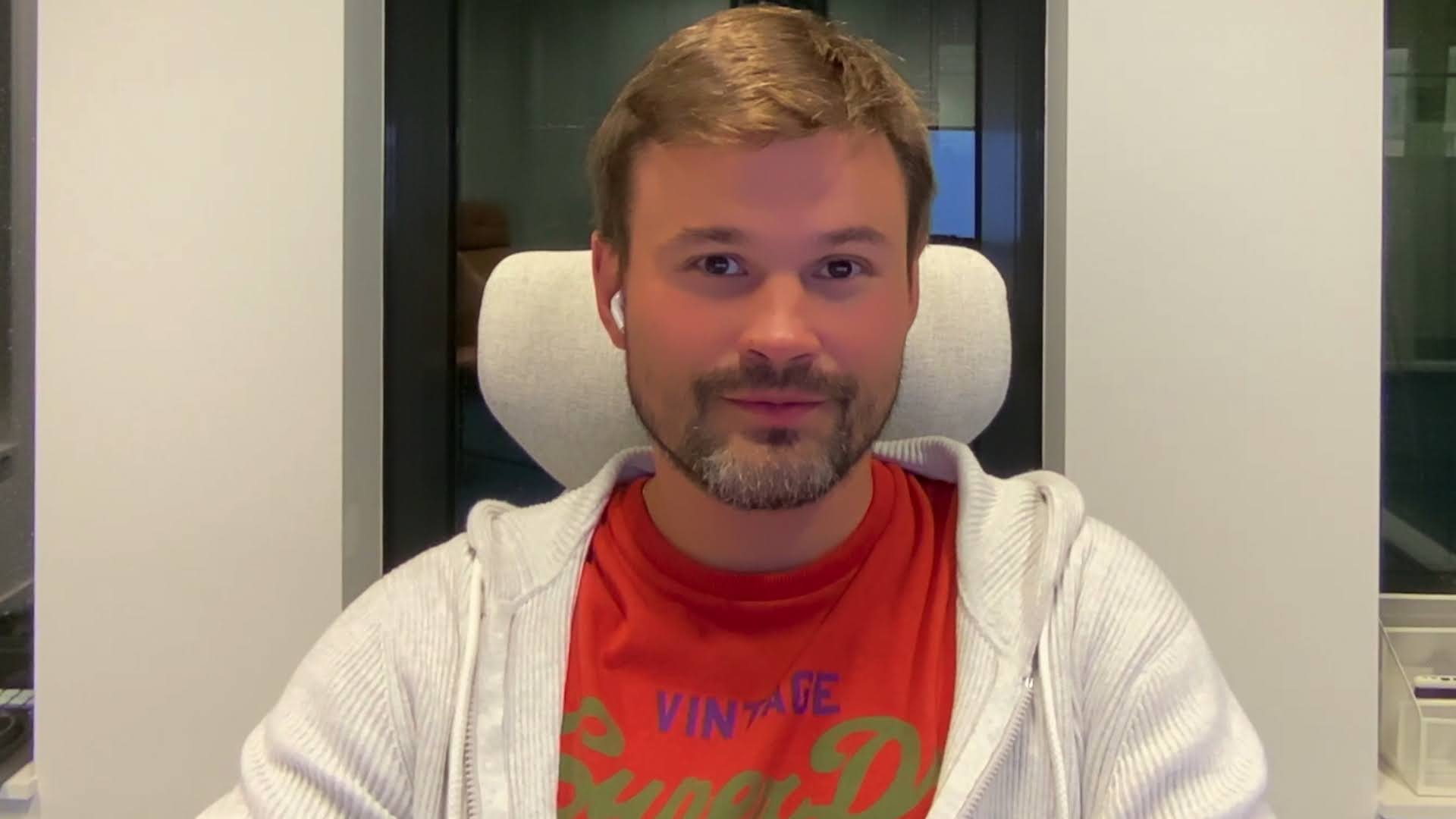
>> Hello and welcome to our Boston Studio for a special CUBE conversation, part of our exclusive CUBE coverage of AWS's re:Invent. I'm Rob Strechay, managing director with theCUBE Research, and in this session we will explore why a centralized platform approach to governance and resilience is essential to effectively managing, optimizing, gaining value from multi-cloud environments, especially when these disparate and distributed environments may have occurred by accident via acquisition, shadow IT, differences in your business units. Today, I'm joined by Dmitry Panenkov, who's the CEO and founder of emma. Welcome Dmitry.
Dmitry Panenkov
>> Hi Rob. Thanks for having me. Great opportunity.
Rob Strechay
>> Yeah, I love what you guys are doing. I think again, it really helps to take advantage of what is going on in multi-cloud. I think current environments really that we've been tracking are really multi-cloud and tracking to multi-cloud for this past several years. And many are transitioning to cloud and now to multi-cloud environments with organizations using these multi-cloud environments in more meaningful ways. Even though they may not have thought about that intentionally, a lot of it has to do around applications and how they are using particular clouds for differing applications. So let me welcome you back in here Dmitry, because I think you guys are doing some really interesting things here that's really relevant to folks at AWS that are in AWS. Maybe they're using one of the other hyperscalers, maybe they even have on-prem as well as in colo. And maybe people haven't really understood what's going on, but how does this align with what you're seeing and what you can really comment on how emma's platform enables governance financial controls across multiple cloud environments that organizations have adopted by accident. So they got into this situation and now they're like, "Okay, now what? How do we get it under control?" How do you see that and how have you seen that in the customers you've been working with?
Dmitry Panenkov
>> Great question. Thanks. So many organizations I have talked to say that sometimes this multi-cloud adoption fell from the sky. So they simply stuck in the multi-cloud environment. Sometimes they even do not realize that they're in a multi-cloud, so they just simply tell us, "Okay, we use AWS, but in the regions where we do not have AWS, there is another provider, and yet we actually also have an on-prem." And you're like, "Okay guys, you're in a multi-cloud." So basically our platform addresses a reality we see often organizations unintentionally adopt multi-cloud environments due to let's say, ad hoc decisions, and we enable with our centralized platform to provide them with the visibility across the variety of the clouds, enforce different policies and offer the financial tools to control their costs. So basically this approach turns the accident reality into a strategic advantage.
Rob Strechay
>> Yeah, I love that. I think, again, when people are looking at how do they get ROI and further ROI, they're looking for a platform that really provides them flexibility and they're really looking to also, I think part of it is that they're looking to really improve the resilience and reliability of applications by allowing their different business units and their customers of the IT organizations to deploy across multiple providers. How is emma really helping organizations from the resilience perspective and the reliability perspective?
Dmitry Panenkov
>> Yeah, one other great question. Thanks a lot. So we had a few conversations with you already, and you are very much aware that we have built our networking backbone that physically interconnects different cloud service providers. So because of this networking backbone, emma allows customers to seamlessly distribute their workloads across multiple cloud service providers to reduce the dependencies on a single cloud to minimize the downtime risks. So basically, our platform automates the deployment strategies and ensures the resilience while optimizing applications' performance across the environments.
Rob Strechay
>> Yeah, no, I think that what we're saying again is, and I think one of the reasons why I've really liked this solution is that it goes beyond just the network. And the network is really kind of the backbone in how things are connected together. But it goes to the point where it helps the configuration, the DevOps aspects, and really takes into account that multi-cloud is not really the easiest thing. But what other capabilities is emma's platform providing to help customers optimize the cloud costs and get their IT budget back compared to relying solely on the cloud providers tools? Because there are tools in all of these hyperscalers, kind of point tools if you want to say that for them. But emma goes beyond that and kind of help the organizations watching understand what that is.
Dmitry Panenkov
>> Yeah, so emma is a comprehensive platform, and indeed underneath of our platform there is a networking backbone. And on top of this networking backbone, we've built a set of services, managed services, applications that help our customers to deploy their workloads the way they really want or the way they really need. And on top of this services, we also have the powerful set of AI tools that provide our customers with a unified cost analysis, proactive alerts and automate the recommendations that go beyond the cloud native tools. And by consolidating these data across the different cloud service providers or from the different cloud service providers, our platform gives organizations actionable insights to cut waste and reallocate resources efficiently. So basically this is how we have our customers to get their IT budget back.
Rob Strechay
>> And I think it's such a key because again, when you look at how platform engineering is really changing and how organizations are reorganizing their entire teams, emma's really integrating in a platform approach across all of these different personas that are important. So when you look at emma's platform from your perspective and you're having these conversations with organizations, how do you understand or how do they understand that the platform engineering team is really enabled to focus on innovation rather just cloud management and infrastructure, like you were saying, kind of getting time back?
Dmitry Panenkov
>> So we understand that managing cloud environments is a boring thing. So everyone wants to talk AI or the other fancy stuff, and nobody really wants to deploy the VMs, for example. So with our platform, we can automate the repetitive infrastructure management tasks or deployment tasks, integrate the CI/CD pipelines and provide out of the box support for the variety of different environments. And basically this approach brings up platform engineers to focus on building really innovative features or solutions instead of managing the complex infrastructures. So this is how we support them. This is, I think, really important when we're talking about the platform engineering approach.
Rob Strechay
>> Yeah, no, you brought up the word, I didn't, but AI is really top of mind, and I know it's a big theme at know AWS re:Invent this week. And really it's one of these things that people are trying to figure out how to start their journey. How do you see emma helping organizations really accelerate their AI journey in the public cloud or on-premise? Because we still know that, funny enough, data actually feeds AI and that may not be in all in the cloud at this point in time.
Dmitry Panenkov
>> Yeah, so AI is a big thing today, and yes, indeed, emma supports the different approaches in AI. First of all, emma streamlines the resource provisioning for the different AI workloads. We also care whether this is a cloud environment or on premises. So if there are your local GPUs or the cloud GPUs, emma supports it all. On top of that, we optimize the compute and storage for different AI models and we ensure the compliance and we support, again, the hybrid deployments. On top of that, as I told you during the KubeCon in Paris, we are building the next big thing where we will be able to build a single logical GPU cluster where you can combine the hardware capabilities of the different cloud service providers. Basically, you can take four accelerators from Google, two accelerators from AWS, and another three from Azure, combine them into a single logical cluster and train your models. So we want to help customers to avoid this lack of resources that currently people experience.
Rob Strechay
>> Yeah, I think that, like you said, almost like a virtual GPU pool across that. And we were, like you said, talking at Paris, it was all the talk actually a couple weeks back at KubeCon in Salt Lake City as well as AI infrastructure really becomes, "Hey, how do I build all of this together?" Hey, you guys have some really interesting insight because you have been doing this, maybe people don't know, haven't heard of emma before, but you guys have been around for a while and really doing this across multiple providers, both in Europe and in the US. Talk about how some of the customers have come to you and how did they initially start off with emma?
Dmitry Panenkov
>> So the typical customer's journey with emma looks like, "Okay, so this is too good to be true. They promised me a cost reduction like 30% on average. So let's kick it off with a smaller, useless piece of the environment like test and environment and let's give it a try." And when they see that, okay, emma provides the real savings and the real value. They spend less time, they need less high-skilled professionals, they can shorten their time to market. They're like, "Okay, wow, we need to move all our workloads or more of our workloads into the platform so emma can provide us more value."
So this is a typical journey with our customers, and there are some crazy numbers I could share with you. So imagine there's a company that decided to go like 100% cloud agnostic. They were, let's say a single cloud service provider, and then they say, "Okay, we want to be independent." They reduced their cloud bill by 88% in a six month timeframe. It's crazy. I mean, ourselves, take ourselves as an example, we decided to become cloud agnostic like a year ago, and I shared this on my LinkedIn, the results. So we reduced our call bill by 70%, and we are 100% cloud agnostic. So I mean, that's crazy.
Rob Strechay
>> So help us understand again, how simple it is for customers to really get started with emma, because I think part of it is multi-cloud has been difficult for customers over the years and really getting started and the fact that you're SaaS and it's easy and you're bringing all these capabilities that maybe they had two or three different tools doing in the past.
Dmitry Panenkov
>> So for the customers, again, it's super easy. You go to our webpage, you click sign up button, and then you have it all. So you have all the cloud service providers available. You can integrate your existing environments, you can get connected and provision your on-premises environment. You can integrate your CI/CD pipelines, you can use your Terraform scripts, you can leverage our API gateway. So everything is there from the day one. You just simply need to sign up and that's it.
Rob Strechay
>> Yeah, I think that to me is the key. And I think again, that's what they want is the cloud operating model and cloud operating experience. So Last word, you guys are on the floor here exhibiting at re:Invent. What are you going to be showing off? What can people see?
Dmitry Panenkov
>> So this year we are gold sponsors at re:Invent. We have a pretty big booth and we are going to show our customers, prospects, partners, how emma can really benefit their businesses. So there are going to be a lot of interesting demos, office hours with our engineers. Our head of product is preparing an amazing demo, like life demo, how to move the workloads across the clouds within seconds and with a single word that you adjust and you are in your script. So this is amazing and you got to see this live.
Rob Strechay
>> Yeah, no, I am definitely stopping by in a little while. So I really hope to see you there pretty soon. And again, thank you Dmitry for coming on board today.
Dmitry Panenkov
>> Yeah, thanks, Rob, for having me. It was amazing conversation. Thanks a lot.
Rob Strechay
>> And thank you for watching this special Cube conversation from our Boston studio, soon to be live in Las Vegas, as well as part of our exclusive Cube coverage of AWS's annual conference called re:Invent, in case you didn't know what it was called. Stay tuned for more on theCube, the leader in tech news and analysis.