We just sent you a verification email. Please verify your account to gain access to
Cloud AWS re:Invent Coverage. If you don’t think you received an email check your
spam folder.
In order to sign in, enter the email address you used to registered for the event. Once completed, you will receive an email with a verification link. Open this link to automatically sign into the site.
Register For Cloud AWS re:Invent Coverage
Please fill out the information below. You will recieve an email with a verification link confirming your registration. Click the link to automatically sign into the site.
You’re almost there!
We just sent you a verification email. Please click the verification button in the email. Once your email address is verified, you will have full access to all event content for Cloud AWS re:Invent Coverage.
I want my badge and interests to be visible to all attendees.
Checking this box will display your presense on the attendees list, view your profile and allow other attendees to contact you via 1-1 chat. Read the Privacy Policy. At any time, you can choose to disable this preference.
Select your Interests!
add
Upload your photo
Uploading..
OR
Connect via Twitter
Connect via Linkedin
EDIT PASSWORD
Share
Forgot Password
Almost there!
We just sent you a verification email. Please verify your account to gain access to
Cloud AWS re:Invent Coverage. If you don’t think you received an email check your
spam folder.
In order to sign in, enter the email address you used to registered for the event. Once completed, you will receive an email with a verification link. Open this link to automatically sign into the site.
Sign in to gain access to Cloud AWS re:Invent Coverage
Please sign in with LinkedIn to continue to Cloud AWS re:Invent Coverage. Signing in with LinkedIn ensures a professional environment.
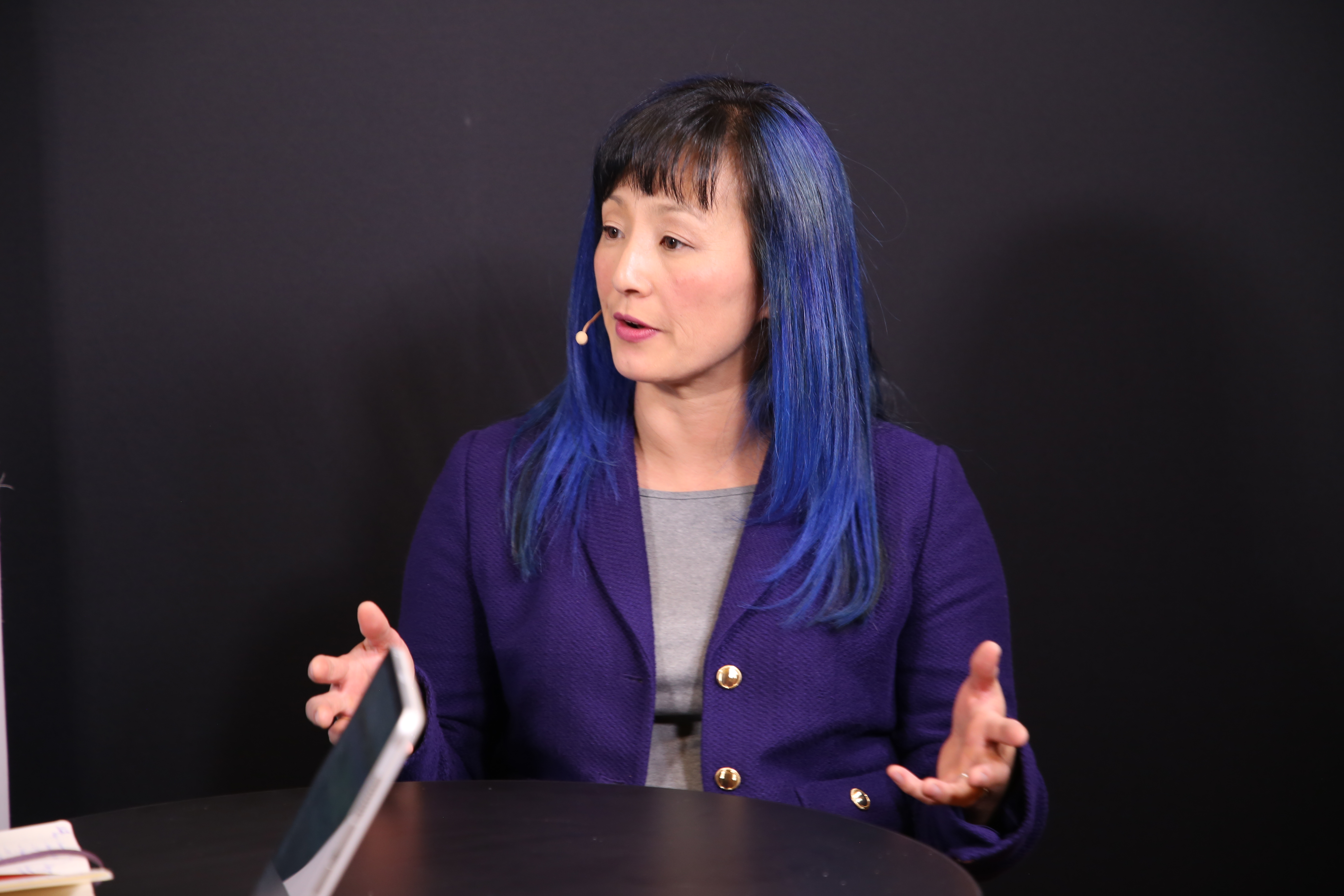
Dave Vellante and John Furrier are at re:Invent 2024 in Las Vegas discussing the new platform from Heroku with Betty Junod. Heroku, founded in 2007 and acquired by Salesforce in 2011, offers more customization and complexity in apps. The conversation touches on low-code development, automation, and AI impact. Heroku has re-platformed to utilize new technologies like Graviton and Inferentia. They anticipate a future where AI is seamlessly integrated into all aspects of business.
exploreKeep Exploring
What is the history and relationship between Salesforce, Heroku, and AWS in terms of providing support for developers building apps for the cloud?add
What improvements and benefits are expected from the recent re-platforming efforts?add
What is the significance of having a good data estate when considering investments in GPUs and AI technology?add
>> Everybody, welcome back to Las Vegas. This is Dave Vellante with John Furrier, who's in the house. This is our coverage of re:Invent 2024. We're up in the third floor of The Venetian. Super excited to be here. Betty Junod, friend of theCUBE, CMO and SVP at Heroku.
Betty Junod
>> Hello.
Dave Vellante
>> Salesforce. Great to see you.
Betty Junod
>> Great to see you.
Dave Vellante
>> Looking awesome as usual.
Betty Junod
>> Thank you.
Dave Vellante
>> What a week. I see you guys everywhere.
Betty Junod
>> Yes, purple everywhere.
Dave Vellante
>> Like you guys look supercharged, Heroku. How's it going?
Betty Junod
>> It's been a big week for us. I've been at Heroku for a few months now, and this is our big launch week. So new version of the platform, next generation. We're bringing in a whole bunch of great AWS services and putting the amazing and beautiful developer experience that people have come to expect from Heroku.
Dave Vellante
>> Can we kind of go for the audience, just help people understand sort of the genesis of the Heroku Salesforce? I remember when the acquisition, I was going, "This is brilliant because now we're going to be building apps, more apps on top of this platform," which has taken the world by storm. So it went from sort of product to platform, and Heroku was a key part of that, and then it's evolved, and now you've got this GenAI wave and you're putting this company into a new trajectory. Explain that.
Betty Junod
>> Yeah, so for a little bit of context, Salesforce was one of the first big successful SaaS platforms out there, and then Heroku started in about 2007, early days of AWS, and we were a company that was really about helping people build their own apps for the cloud, because no one knew how to do it, EC2 was new. So we've been with AWS since the beginning of the journey, building all the experiences around it so that it's easy for developers to build, deploy, and scale their apps without having to muck around with all the stuff in cloud infrastructure. So we're taking care of like some of the reliability, scaling all of those things for you. And then about 2011, I believe, Salesforce acquired Heroku, and we've been part of the family for a long time, and so we've always still been serving the individual developer that wants to just get going quickly. The interesting that's happened over that time is Salesforce has many different clouds, Marketing Cloud, Sales Cloud, CPQ, all of those things. There's a lot that we bring to the table for the business user, low-code and no-code. "I'm going to build custom workflows, workflows that help automate my business," right? Get work done. The addition of Heroku allows for like, "Hey, I want to do more custom things. I want to do parallelized compute processes. I want some specialized developers to do complex calculations on my price books, I have complicated price books, and bring that into my CRM workflow." Heroku becomes a great place to do that and then we seamlessly integrated into the Salesforce experience for the business analyst. And then the last part is just the pure pass play, you know? Like CIOs, CTOs standardizing on their platforms internally to enable all their lines of businesses to build custom products that they deliver to customers. So, yeah.
Dave Vellante
>> I mean, Salesforce really was the OG of SaaS Cloud. I mean, it predated... I was listening to Frank Slootman the other day on a... I don't know if you saw that. He was on some podcast, and he was talking about when he went to ServiceNow and they were building the cloud, they were like, "Well, Salesforce did it. They're sort of the gold standard." And then, of course, as you know, they sort of had to build their own cloud, and it was sort of a mess at first, but of course they took a page out of Salesforce and really improved it and, obviously, a great company today. But that example that you gave about the price books, how is that changing? Because is it largely unautomated? Is it a quasi-digitized? And how is it changing today? Take us through that, if you...
Betty Junod
>> Do you mean like the customer example in those things?
Dave Vellante
>> Yes, yes.
Betty Junod
>> Well, what happens is it's one of our customers and they're using Salesforce for their CRM, they're using CPQ, and it is really like based on how they're creating the opportunity and wanting to quote a scenario for their customers on their workforce tool. So I'm just going to try to guess who the customer might be. But as calculations get more complicated, what this allows is the salesperson can still go through the process of building that quote and doing whatever, but then all that computation for like the number of seats, the configurations, the functionality they want, that is all being run in an engine, on an app that's on Heroku, and then it spits back like the this is what you give to the customer.
Dave Vellante
>> Okay. And a lot of that used to be sort of either quasi-automated or run-automated, and now... And this is where it's so exciting, and of course, Marc's out talking about agents and agentic and Agentforce, and when you think about it, I was just talking to George about this, Erik Brynjolfsson put out this power law of automation, and he basically said, "Look, with SaaS and even commercial off-the-shelf software, we've only hit a slice of the market, and there's all this other un-automated stuff that humans are doing that we're going to attack," and that's really kind of Marc's vision, I think. That's where the 10x comes in. So Agentforce is like the big force behind the company, right?
Betty Junod
>> Yes. And I think the agentic layer and with natural language processing, and the natural language interactions, and the ability for these models to keep learning really brings an interesting lens to it because the thing you talk about, automation has only been, you know, we've only addressed a little bit. Like RPA, right? It's so rigid. It has to be well understood like I have all five steps identified. What we can do now with things like Agentforce is put together like, "Hey, here's the steps that it needs to complete based on the data that you have." The data that you're pulling from could be from CRM systems, and with things like Data Cloud that we have, it can be any other existing enterprise system. And then the work we have with MuleSoft can then allow to call into other third-party systems, and then as part of that, if there are very specific actions we want the agent to take that are very custom, hyper-personalized, hyper-customized, those can be written by the AI developers and running on Heroku. And all of that comes together through an Agentforce UI, Agentforce experience for your business analyst.
Dave Vellante
>> And the interesting thing about Salesforce is you've got the operational data, you've got the metadata, the technical metadata, the operational metadata.
Betty Junod
>> The customer data.
Dave Vellante
>> It's all there. And so then you can harmonize that data and then serve it up to the agency. Obviously, you got to govern that, you got to have access control. Explain the importance of low-code and how that affects the market, the TAM, if you-
Betty Junod
>> Yeah, yeah. So as you know that I've been in this developer tool space for like at least a decade, and we always look at the number of developers. So I'm going to start hearing that there's 28 million developers out there using all kinds of languages. When you look at the knowledge workers out there, we're talking about a billion people. They're not all developers. So how do you empower non-technical people to do the things that are like to build business process, automate those business processes? I think this is where Salesforce, with the entire portfolio that we have, is magic for businesses, because we have this great no-code or low-code like GUI-based workflow that anyone can use. And then so that you have a business analyst operational person that's point, click, drag, drop. I know that we, in order to do this finance thing in voice reconciliation, I know that we have to do these 15 things, check these fields and do that. Anyone can write that. And then I could say like, "We need to do something pretty complicated or specialized here." I can go to very specialized technical people and they can build those things. I think we have the opportunity to bring those 28 million and these other billion together.
Dave Vellante
>> So it's more than 10x-
Betty Junod
>> More than 10x....
Dave Vellante
>> opportunity. Okay, so that low-code is not necessarily an engineer. It could be a business analyst. Maybe they know how to write a little Python code, do some SQL queries. But the no-code is people like me. I can actually-
Betty Junod
>> Drag and drop.
Dave Vellante
>> I've got a workflow in my mind. I want to solve this problem, and can I eventually, am I going to be able to talk to the system and make that happen? Is that...
Betty Junod
>> Yes. So I mean, we've got a lot of these great Agentforce hackathons and demos, and when you look at it, it is like you're going into like the Salesforce UI, right? You've seen it, you've seen what the CRM UI stuff looks like.
Dave Vellante
>> Yeah, we use it every day.
Betty Junod
>> Yeah, and you go into this builder where you're like, "I want to do this." It's going to start by looking at maybe this data source, right? Go look at this data table, do these three things, and it's almost like you're pulling from a menu, menu list, right? Like a drop-down list of these types of actions. Then you pull those. There's even places where you can just type in like, "I want these things to happen," and it'll draft up what the agent logic is and then you can edit it from there. So it's kind of like this grade of like no, low to... We internally, we call it pro code on that spectrum, and everybody has their part to play to making that magic happen.
Dave Vellante
>> So given these new capabilities, what are you seeing in terms of some of the new and more interesting apps that are emerging?
Betty Junod
>> Well, really, I think fundamentally all apps, the interaction layer is changing with these agents, right? More than just a chatbot, it's like talking to another person in some ways. All of that is anchored on being able to better use that data, right? Because there's so much data out there. And I think when we think about a agentic layers, it's not just that there are AI apps, but there is AI type of capability in every type of application. It's like you have static websites and dynamic websites. Now it's not just apps that are just serving you things, you're interacting with them in a wholly different way. So I think that's where it starts to get really interesting.
Dave Vellante
>> So what's happening at re:Invent this year? You guys got a lot going on.
Betty Junod
>> We got a lot. Specifically I'll talk from a Heroku standpoint, is like this is our big launch. We re-platformed, but the best thing is the user experience is exactly that simple clean experience that people are used to, but they're getting things like Graviton performance, they're getting EKS, ECR, Global Accelerator. They're getting managed inference powered by Bedrock, but in the same simplified developer experience so that the developer is not dealing with, "Okay, how do I then go into the console and figure out which all tools that I'll use?" Same experience they love with just more horsepower and more tools around it.
Dave Vellante
>> So the re-platforming is to be able to take advantage of things like Graviton and Inferentia and the lower cost and maybe eventually the new models of the model garden that's out there?
Betty Junod
>> Mm-hmm.
Dave Vellante
>> What's entailed in a re-platforming? Sounds like a heavy lift. You're in the process of doing that?
Betty Junod
>> We just launched the pilot this week. So it's a heavy lift for us, it's a zero lift for the customer experiencing. It's the same experience. What they will see is better performance, more flexibility, and us moving to this model with Kubernetes and also OpenTelemetry opens up a new ecosystem. We've been watching the projects for the last like decade and the projects are at amazing point of maturity. The ecosystem, a lot of it is graduating, becoming graduated projects. When we integrate and put those together and automate some of the things around it, the configuration, the setup, the life cycle management, we're really here to help customers be able to consume and benefit from these technologies.
Dave Vellante
>> And that's lower cost per unit of output, which doesn't mean lower revenue, because what's going to happen is you lower the cost, people will do more stuff. That's what always happens in our business, right?
Betty Junod
>> Well, I want to lower the barrier of effort before they can build the app that's going to serve their business. Right now, everyone's spending all this time building platforms. Why don't they just build their business, which is all digital products?
Dave Vellante
>> You know, that's interesting because, right, we had this platform mindset, but not everybody's really good at building software and building platforms. People think it's easy to build software. It's actually not easy. It's really hard to build a platform and do platform engineering. That's what you do well. So basically we're entering an era where you're saying, "Here's the platform. Go build on top of that. You know your business better than we know your business. Here are the tools to do that," and it's actually, it's possible to predict exactly what's going to come out of that. You must be blown away by what you're seeing or hearing customers talk about.
Betty Junod
>> The response has been great. We've been a little quiet for the last few years, quietly supporting customers and growing our business, and this week we've been out in a very big way, a lot of purple everywhere, and the response has been very heartwarming. People who knew us then loved seeing us back. We've been making new introductions to folks. So it's been a really great week.
Dave Vellante
>> What's the brand promise that the audience should be aware of Heroku?
Betty Junod
>> The brand promise is to help customers, help organizations build, deploy, and scale their applications effortlessly. The whole idea is effortlessly. You do the part that differentiates you, and we're the empowerment engine to get you there.
Dave Vellante
>> It's exciting times, Betty. We've seen a lot of these waves, and this one... We've been saying for a while we're in the early innings, to use the baseball analogy, but we're actually getting into the game now, right? 2025. What's your outlook for 2025? This year and last year was kind of experimentation, "ROI. Are we getting the ROI?" What do you expect for 2025?
Betty Junod
>> I think 2025 is going to be more anchored around the ROI and business outcomes of having agentic layers and the realization that it's not something separate. We're not looking for this killer AI app, but it's really about that technology being part of everything, part of a platform, part of your apps, part of your business, and what does that mean for us.
Dave Vellante
>> And the reason why we're excited about Heroku and Salesforce generally is it's got to start with data. If you don't have a good data estate, you're kind of wasting money on GPUs and AI and so forth, but you actually have the data estate, it's pretty well harmonized and understood, and so we're not sitting around in a meeting arguing about where this data come out. Came out of Salesforce. And so we know what that is. It's our Tableau dashboards, it's what the business is running on, et cetera, et cetera. And so that puts you in an interesting position to really start to take advantage of this wave. You're on the S-curve. It's starting to get into the steep part, so we're excited.
Betty Junod
>> We're excited, too.
Dave Vellante
>> Thanks so much-
Betty Junod
>> Thank you for having me....
Dave Vellante
>> for coming back in theCUBE. Great to see you, and always a pleasure.
Betty Junod
>> Yeah.
Dave Vellante
>> All right. And thank you for watching. Keep it right there. John Furrier and Dave Vellante, we're in the house. We'll be back right after this short break. re:Invent 2024. You're watching theCUBE.