We just sent you a verification email. Please verify your account to gain access to
Cloud AWS re:Invent Coverage. If you don’t think you received an email check your
spam folder.
In order to sign in, enter the email address you used to registered for the event. Once completed, you will receive an email with a verification link. Open this link to automatically sign into the site.
Register For Cloud AWS re:Invent Coverage
Please fill out the information below. You will recieve an email with a verification link confirming your registration. Click the link to automatically sign into the site.
You’re almost there!
We just sent you a verification email. Please click the verification button in the email. Once your email address is verified, you will have full access to all event content for Cloud AWS re:Invent Coverage.
I want my badge and interests to be visible to all attendees.
Checking this box will display your presense on the attendees list, view your profile and allow other attendees to contact you via 1-1 chat. Read the Privacy Policy. At any time, you can choose to disable this preference.
Select your Interests!
add
Upload your photo
Uploading..
OR
Connect via Twitter
Connect via Linkedin
EDIT PASSWORD
Share
Forgot Password
Almost there!
We just sent you a verification email. Please verify your account to gain access to
Cloud AWS re:Invent Coverage. If you don’t think you received an email check your
spam folder.
In order to sign in, enter the email address you used to registered for the event. Once completed, you will receive an email with a verification link. Open this link to automatically sign into the site.
Sign in to gain access to Cloud AWS re:Invent Coverage
Please sign in with LinkedIn to continue to Cloud AWS re:Invent Coverage. Signing in with LinkedIn ensures a professional environment.
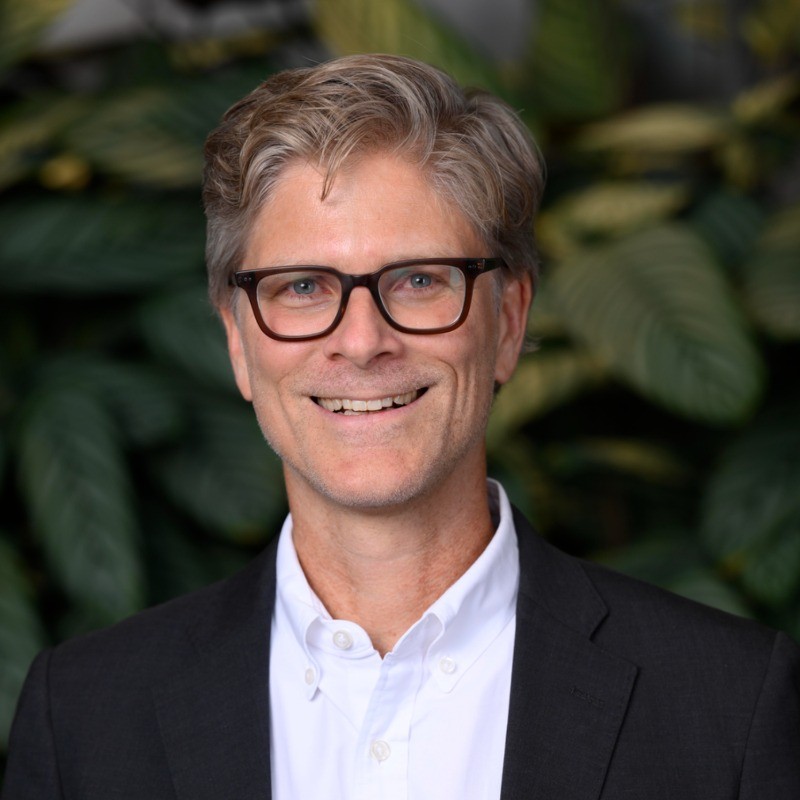
Global Lead, Consulting Partner Center of ExcellenceAWS
TheCube covers the event in Las Vegas, focusing on key announcements in the GenAI wave and infrastructure advancements. CEO Matt Garman and Andy Jassy are making significant announcements related to foundational models and intelligent technology. Companies are setting up centers of excellence to manage chaos and drive business transformation with AI. The shift towards practical AI and enterprise scale is emphasized, with a focus on the right infrastructure, security, and governance. Partner companies are building industry-centric GenAI applications to meet sp...Read more
exploreKeep Exploring
What are some of the big announcements made by Matt Garman and Andy Jassy at the AWS event regarding infrastructure advancements and GenAI technology?add
What are some examples of how companies are incorporating AI and machine learning into their business models and operations?add
What industry-centric and persona-centric GenAI applications were announced by AWS and Deloitte this summer?add
What are some examples of solutions or applications built on Bedrock by consulting partners?add
What are the steps to building a center of excellence to create a shared resource for a community?add
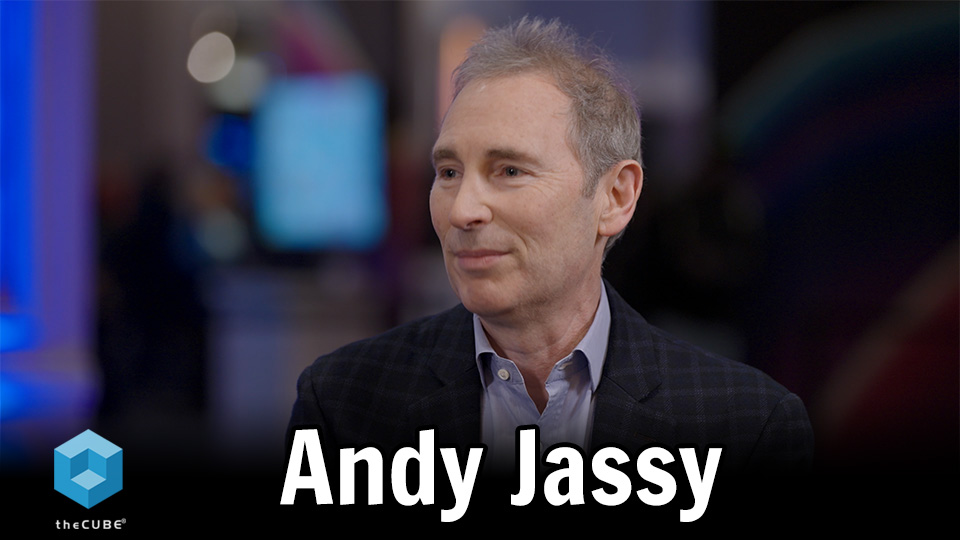
>> Welcome back everyone to theCube's coverage here in Las Vegas. I'm John Furrier, your host of theCube, and we're here four days of coverage. We're in day one where all the key announcements are happening. We're breaking down all the action. Again, big news obviously is the GenAI wave is hitting, but the infrastructure advancements. We're seeing Matt Garman, the CEO and Andy Jassy come back out of retirement, so to speak, as CEO of AWS back on stage, took all the big announcements, of course, the new foundational models and he's intelligent, but we're going to get into that here. Brian Bohan is the global lead Consulting Partner Center of Excellence with AWS, an area where, as we see in the show, experimentation has been the key topic for the past year. We expect 2025 to be a year of experimentation, practical applications hitting. Brian, great to see you again. Thanks for coming on.
Brian Bohan
>> Yeah, thanks for having me. Really excited to talk->> First of all, Andy's on stage takes the mantle away, but I think it was really more, it was very supportive and you can see that it wasn't so much him just getting back in, taking the microphone from Matt. Matt welcomed it because there was so much news. Matt Garman did do a great job of being the fire hose like Andy used to do at these events. But it's like you can see the Andy coming in. I think it was a statement of Andy saying in his way, "Look it, we've been doing AI all you naysayers out there throwing shade on that we're late to the game on AI." He was kind of a proud saying, "No, no, we've been doing this." And I think that seems to be the vibe of most companies, whether it's JP Morgan Chase was on stage. I know for a fact that they've been doing machine learning for a very long time at JP Morgan Chase, and even still, even the GenAI is still coming because they have so much other stuff they're working on and it's going to hit. But a lot of their big companies have been using AI. Now, it's like... I mean, machine learning, which is basically AI, pre-GenAI, but at the same data, it's the same data mindset. It's the same kind of engineering. Now they've got to put the new GenAI with the applications agent together where the real business transformation's happening. Digital transformation was more of an IT thing. Business transformation with AI is business models, risk management. You're seeing CFOs being pulled into conversations more. We're going to do a summit in our area in December, the first AI CFO summit where it's not about speeds and feeds on the balance sheet and income statement. It's more of how do I change my insurance policies for my cybersecurity if my data is more valuable or risk management for governance, how do I hedge my CapEx costs? I mean-
Brian Bohan
>> There's so much.... >> There's so much changing. Who's involved? You're involved in this, the wave that I think is a hot story right now is that companies are organizing the center of excellence to get reign in the chaos, so to speak, in a good way. And just try to understand how run experiments, how to run organizational structures, how to bring teams and empower them and skill them up or skill them sideways or get more horizontal. I mean all kinds of things. What's your take on this?
Brian Bohan
>> Absolutely. There's a lot, as you mentioned, and this is my 11th Reinvent and every time I watch the keynote, I get so excited and it was fantastic to see Andy come back today and talk about everything he talked about. And he mentioned something that to me was sort of the theme, and you hit on it as you were just talking about. And he said practical AI. And I think for the last 18 months, we've all experimented, we've done POCs, we've done pilots, and we've learned a ton. And really now is the time for practical AI. And it's about getting into enterprise scale. And he was talking about enterprise scale. You've got to have the right infrastructure for the right cost from performance that we talked about today, the right security, the right governance, and the right, as you were just talking about, organizational structure, right? We are definitely seeing with our big consulting partners a trend where their clients are looking to them to come in and help set up these centers of excellence around AI. For instance, good example, Slalom is really doing a great job of this. They're working with United Airlines where they did, they started really with an innovation workshop, so working backward with their executives of how can generative AI apply to their business to solve hard problems? And then establishing the structure and then creating a decision criteria for all the use cases that were lined up. Which ones are we going to prioritize based on high impact, value, feasibility? And now they and other partners as well as internally at UA are executing on that model. And we're seeing a very similar thing that Slalom did at TPI Cap setting up a similar center of excellence with a pipeline of use cases. And we're really seeing that as a bigger trend across a lot of our->> How far are they on their progression of the setup, Slalom and the other company mentioned? Take us through the process. Is there a playbook? Do they set some foundational services? Do they just get some space, bring some servers in? Is it more showpieces? Take us through where they are, what they're doing, and those who are watching them. Everyone I talked to wants to build this because they got us centralize the innovation strategy, let it coalesce, and then deploy and release everyone to the world and let them go build.
Brian Bohan
>> Yeah, absolutely. I think in both those cases I mentioned, and I'm seeing this elsewhere as well as I talked about, it really starts with the art of the possible, and you've mentioned it too, is the GenAI conversation is bringing in a set of business leaders into the conversation at the table where they hadn't been before because now they can really see how this technology applies to their business. It can change their business and change how they're interacting with their downstream customers. It opens up all kinds of possibilities. And so it really starts with a visioning exercise. And so whether it be Slalom or Accenture, Deloitte, they all have these great capabilities to work with their clients, work backward from what is the big possibility, the big problems you're trying to solve, the big opportunities and then narrow that down to get practical. And then what we've seen, again from the last 12 to 18 months, from all the experimentation we've done, we have a pretty good idea now, which of those projects are going to be most feasible and highest propensity for going into production, again, whether it's based on risk, data availability, cost, the impact to the business, and then they're setting up these decisioning trees to be able to prioritize the right use cases. And then what we're seeing is picking off a few and getting those early wins. For instance, at TPI Cap, one of the first ones out the door was a broker assistant to help with pricing. At United Airlines some of the first use cases were to help travelers as they're delayed or disrupted in their travel to come up with next best option. Do the process, set up the structure, get the governance in place, but then very quickly go out and get some real wins with practical application.>> I was talking to Matt Garman, he brought this up when I asked him about some of the business issues. He went in the weeds on inference and some cool stuff there, but he talked about how customers have to take a step back and look at the value that they're trying to achieve and the outcomes that they want, and to understand where AI could be impactful. And it was more of a holistic conversation though around more of the C-suite thinking because there's so much business model innovation going on, there's things that might not have been there. And we've talked about how Amazon has things that scale that other people don't see. There's a lot more available that may or may not be apparent to the naked eye, so to speak, as you observe your business. You look down on it and say, "Okay, this has been the key to AI is that it's been unlocking not just refactoring existing stuff. I got end-to-end workload. Yeah, infuse it with AI, no problem. Great, good stuff, everything's good. But there's also a net new, I didn't know I had all this data that could do something new completely." And that's where the value is. And then obviously he reinforced that later, but also today on stage, both he and Andy said the customer data is the intellectual property. Matt Garman actually said that quote on stage, which we've been saying on theCube, the IP is the data. And they don't want to just give that to say Open AI and just integrate it into a large language model. Like I said, language model is going to start working together. I can actually reign that in leverage some of the services and compute with Trainium2, it has Trainium3 intention. There's a lot of goodness going on in the cloud. This is where they go, "Okay, I don't know what I don't know. Maybe I use AI to figure out what I have for my data and then I got to start writing some software." This is where the progression starts to kick in at the C-suite level.
Brian Bohan
>> Absolutely.>> That's competitive in the strategy. That's how do we create a better customer experience at a lower price or more charge more whatever the value is. That's not a technical conversation.
Brian Bohan
>> No, no, no, you're right. And so the data, we're also seeing this right as we're moving from POCs and pilots into production for enterprise-scale, GenAI, where the data is matters. And I think Matt, I'm probably going to get the number wrong, but I think he said 400 trillion objects in S3. It's safe to say there's a lot of data running on AWS with our customers. And where is that data now with the metadata capability to better understand where that is, how it's going to factor into your GenAI projects. But you mentioned the C-suite, and this is also really exciting. And so when we work with our big consulting partners, they've been going to market around industry for years. AWS is oriented around industry as well. And then the next step when you're thinking industry is think persona. This summer with Deloitte, we did a big announcement around an AI innovation center, and it's all about building industry-centric, persona-centric GenAI applications using Bedrock. And so the first one out of the gate is their AI for CFO. It's the AI for C-suite, but the first persona is CFO because they're deep domain expertise in that area, and it's exactly as you say. Now this is a new business leader and a CFO would be looking at all these projects anyway through the lens of ROI. Now they're looking at them through how much value can I derive from this technology in my end-to-end workflow. We've turned the CFO from potentially someone who's looking at and discerning to a customer who's deriving benefit, and we're seeing the same thing now get applied to CMOs working with, again, Deloitte, PWC, Publicis Sapien, how do we apply GenAI into the end-to-end CMO workflow. Absolutely bringing a whole new set of decision makers to the table to get value out of this new technology.>> And I think these customer excellent centers are going to be... I mean, at first I was kind of not skeptical, that's a bad word. I was thinking it feels like just another briefing center. And then that was my first reaction. Then when I started talking to folks like Anand, who runs the customer excellent center at NYSC or the parent company, ICE, turns out that he's got a lot of technology in there, he's got data. And I learned that there's a combination of experimentation with actually hands-on, but also strategy. It's a confluence of, it's not just, Hey, give me some technical analysis on a product and then how we... There's the confluence of business strategy and execution of getting the hands-on going on because you can just integrate into the workloads. I mean, is that happening, one, and then how is that going to work out? How do you see that playing out because you're in the middle of it?
Brian Bohan
>> Yeah, no, I think two facets to that. It is happening. Going back to that Slalom example in the United Airlines, and they talk about, one, you want to encourage innovation. You want to encourage experimentation, but we need controls. We need guardrails. You can't open it up to everybody. And that's the MLOps piece. How do you put in MLOps layer so that you can control access, you can have guardrails, so it's appropriate use. The other really important thing here around these centers of excellence is responsible AI. A lot of customers can spend a lot of time taking their regulations, their compliance policies, thinking through, okay, what kind of guardrails do we want to put in place for AI? And it's difficult or traditionally has been difficult to take those from a paper-based discussion and actually instantiate it into applications. But with Bedrock guardrails, we're able to do that. And what we've seen from our partners, for instance, with Accenture, we did an announcement around responsible AI. They built a responsible AI platform on Bedrock. And what that allows you to do is you can take those policies, instantiate them in the Accenture platform, and then before you go to production, it'll run a series of checks and it'll tell you where you're in violation of those policies and give you remediation options. This is actually how you fix it. Fantastic. Everything is green now, push it to production. But we know things change, data changes, policies change, regulations change. It's an evergreen checking and monitoring that happens. And then if you fall out of compliance, it'll alert you and you can take it down and then remediate to put it back into compliance. This is also an absolutely incredibly important piece to these centers of excellence. If you want to do this at speed at scale, you've got to have these things built in and instantiated, not in paper.>> Brian, share some commentary around your observations around the participants involved. People are leaning in on multiple sides of the table. You got the companies, you got the participants probably from different departments, you got consultants, the big names, you mentioned Accenture, other big names. And I mean, it's kind of a magical opportunity to be a melting pot. What's come out of it? What have been some of the experiences? Can you share any anecdotes or data around just what the process has been like? Has it been magical in the sense or has it been frustrating or has it been more grinding? How would you describe the dynamic of all these people working together?
Brian Bohan
>> I think it's still forming and we're still learning a lot and always grinding. And the other piece to this too, and we talk about this a lot at Amazon, is culture. And so you can't say that one COE model is going to work, the same one at every company. You really have to be cognizant of the culture and how they do things. And also depending on where they're operating, is it a regulated industry that might dictate. But what we're seeing is certainly chief risk officers, we're seeing legal and compliance at the table. Certainly everybody mentioned the CFO. And in a shift really from just looking at cost to truly looking at ROI and trying to understand what is the value in relation to the investments, the CFO playing a really critical role. And then with Deloitte, obviously their solution, the CFO also being a benefactor of the technology, we're seeing line of business leaders, chief product officers having a big seat at the table as well, because they're trying to figure out how do I bake GenAI into my products? We're especially seeing this with our manufacturing customers who are taking their physical products. And then they've been digitizing these for years, and now they're baking GenAI into these physical products. So those stakeholders are at the table. To me... And of course the CIO and CDIO are there as well, and really trying to orchestrate all of this. I think it's a really healthy mix. There is certainly education and enablement that has to happen in terms of the potential versus the realities. That's all part of the conversation.>> And I think with Amazon Web Services, if I'm a customer, I love this direction. I think it's going to be at least another 10 years this will continue because I can get a subset of gear and stuff and work with Amazon Scale to run through what I call the garage shop testing out. Or someone once said, the lab for Iron Man, everyone wants to have that man cave with all the toys. But if you think about a company, I think this doesn't go away because there's benchmarking, there's workload testing. You don't have the single purpose server anymore. I mean, no one's making servers, the same old motherboard. It's now collection of systems. You're seeing that that business is changing. It's pretty much custom every time. That's a feature, not a bug. I'd imagine that these centers will be testing AI workloads. Every company will have a department that runs the battery of tests. And here's where we experiment. No one got hurt. Here's what happened. I mean, this doesn't go away. It's almost a function that is emerging in real time in front of our eyes here.
Brian Bohan
>> I think it's really exciting, and Matt mentioned it on stage today, and I think Andy reiterated as well as, and this has been true from the beginning of Amazon and AWS, is it's all about selection and choice. Because we're so early, because there's so many possibilities, you're not going to be able to dictate one path through. You have to have the choice of chipsets, whether it be Graviton, NVIDIA, you have to have the choice of models. And we have that through Bedrock. You have the choice of databases, vector databases. You have all this optionality, which is exciting, but there's choices which also for customers who are like, this is new, they need help. And this is again, where our consulting partners come in through the centers of Excellence that we talked about. And the other thing that they're doing, as I mentioned earlier, is building these solutions or applications on Bedrock, these platforms. Accenture's got the responsible AI one, GenWizard, Infosys has Topaz and Cobalt, which they've built on AWS. Wipro has Studio 360. All these partners have taken our underlying building blocks and using Bedrock and then taken their IP and built on top of that. And all in an effort to provide the optionality for customers, but do it in a prescriptive way. Understanding what those customers want to achieve, and then providing them the knobs to turn to make sure they can do it.>> I mean, it's basically technical pre-sales in a way. Because why wouldn't I want to run a battery of tests on say, Bedrock? And like Andy said, on stage, I would use different models. There's different with choice.
Brian Bohan
>> Yeah.>> I mean, why wouldn't I do that? I think this is an area. Okay, so let's just pretend that I'm sold on the fact that I want to do my own center of excellence. Say theCUBE wants to do theCube Center of Excellence in New York, whatever, hypothetical, what do I do? Do I call you up and say, you drop in a box, do I remote into the cloud? What do I have to do? Take me through of what has to happen for me to build a center of excellence to create a shared resource for my community? What do I do?
Brian Bohan
>> Well, there's options, just like you were talking about. There's even options for that. Even starting with AWS, we have our GenAI Innovation Center, which we work with customers to set up these. And we do that in conjunction with partners as well. That's the first thing is choose your partner. And you can do it with AWS, you can do it with AWS and a partner. You can do it directly with a consulting partner. And again, I think it has to start with that process before you set up the technology kit, before you start just dabbling. I really do believe it's got to start with what are our priorities? What do we want to get done? And again, this gets back to what something Matt said, I think is we're going to move away from GenAI projects and GenAI apps to applications and projects that are powered by. It's the same thing. We're working with a number of pharmaceutical companies and it's about how do we transform clinical trials? Not necessarily like I have GenAI. We're a hammer. Where are the nails? This is core to our business. It's billions of dollars at stake here that we can be addressing and we think we can do it through processes powered by GenAI. Start there and then say, "Okay, now we've got a good sense of the big opportunities and then that pipeline of use cases." And then based on that, that's what we talked about before. It's super easy with AWS to spin up an environment->> You're saying it's situational based upon the context of the customer. It could be a group of people sitting in a conference room, or it could be a part of the building with gear. It could be whatever-
Brian Bohan
>> A physical innovation sense->> It could be anything, right?
Brian Bohan
>> It could be any... In our New York office, we do have such an innovation center with physical things that you can come and touch, and that might be fine. It could be ephemeral in a virtual environment. I think it's more about getting stakeholders together to identify those opportunities, put a process around it where you can consistently prioritize the right use cases based on the criteria that you care about. It's about then having the technology platform, which again is super easy to do with AWS, working with a partner to make sure you can instantiate all of your guardrails and policies again in code so you can do it at scale. It's that end-to-end pipeline and then how do you manage.>> I see it as both R&D, whether it's ephemeral or a workroom with, okay, we're going to connect to the cloud that's going to run this Bedrock software. How's it work? Let's take this IP data, let's see how it goes. It doesn't really... You don't have any requirements other than get gravity around the concept and lean into the cloud through your service.
Brian Bohan
>> And I think you can go... The other thing is because now we have these business leaders at the table, so deeply involved is you can create that, create, pilot, UAT cycle so quickly and get value and start pushing things in their production.>> Brian, great to have you on. What's next? What's on the horizon for your program? What's your goals?
Brian Bohan
>> As I look to 2025, so first of all, super exciting running the Consulting Partner Center of Excellence. We've got 35 global strategic partners from our advisory partners, GSI's channel. And so we're just going to be continuing to invest in helping them build new solutions on AWS that are really super differentiated. And then it's just about execution, getting in the market, working with our account teams and our customers about landing those solutions, landing those projects and delivering value. Super excited->> And you guys bring a lot of scale, which I think came out of the keynote. And like other than Matt, you guys see things at scale and bring scale capabilities-
Brian Bohan
>> Absolutely.... >> To the AI world. Thanks for coming on. Appreciate it.
Brian Bohan
>> No, thanks for having me-... >> Okay, more action coming here. We're just continuing the coverage of AWS for our 12th year on, one year more than Brian's been at Reinvent. Well, we've got you by a year. 13 years total, great to hear that stat. Coverage here, all the newsmakers, keynotes, folks on stage. Try and get Andy Jassy to come on theCube. If you're watching, Andy, we're going to still text you until you answer. He's here, he's on stage. Big event, big keynote. Day one, kicking off and continuing. We'll be right back.