We just sent you a verification email. Please verify your account to gain access to
Cloud AWS re:Invent Coverage. If you don’t think you received an email check your
spam folder.
In order to sign in, enter the email address you used to registered for the event. Once completed, you will receive an email with a verification link. Open this link to automatically sign into the site.
Register For Cloud AWS re:Invent Coverage
Please fill out the information below. You will recieve an email with a verification link confirming your registration. Click the link to automatically sign into the site.
You’re almost there!
We just sent you a verification email. Please click the verification button in the email. Once your email address is verified, you will have full access to all event content for Cloud AWS re:Invent Coverage.
I want my badge and interests to be visible to all attendees.
Checking this box will display your presense on the attendees list, view your profile and allow other attendees to contact you via 1-1 chat. Read the Privacy Policy. At any time, you can choose to disable this preference.
Select your Interests!
add
Upload your photo
Uploading..
OR
Connect via Twitter
Connect via Linkedin
EDIT PASSWORD
Share
Forgot Password
Almost there!
We just sent you a verification email. Please verify your account to gain access to
Cloud AWS re:Invent Coverage. If you don’t think you received an email check your
spam folder.
In order to sign in, enter the email address you used to registered for the event. Once completed, you will receive an email with a verification link. Open this link to automatically sign into the site.
Sign in to gain access to Cloud AWS re:Invent Coverage
Please sign in with LinkedIn to continue to Cloud AWS re:Invent Coverage. Signing in with LinkedIn ensures a professional environment.
TheCube's coverage in Las Vegas showcases innovation with Brad Bebee of Amazon Neptune and Evan Kaplan of Influx Data. Neptune now supports GraphRAG, benefiting customers with graph usage. Time Stream for InfluxDB offers a managed AWS service. Time Series data is vital for industries like aerospace and IoT. The open source collaboration is evident with ongoing upgrades. High-resolution data improves models and autonomous systems. Time Stream enhances intelligence in operations. Observability leads to autonomy at scale. The roadmap includes Read Replicas and i...Read more
exploreKeep Exploring
What was Swami's announcement regarding Bedrock support for GraphRag with Amazon Neptune?add
What is the relationship between the speakers discussing their partnership with Amazon and Influx Data?add
What are some of the recent advancements and developments in open source technology, particularly in relation to database management and data componentization?add
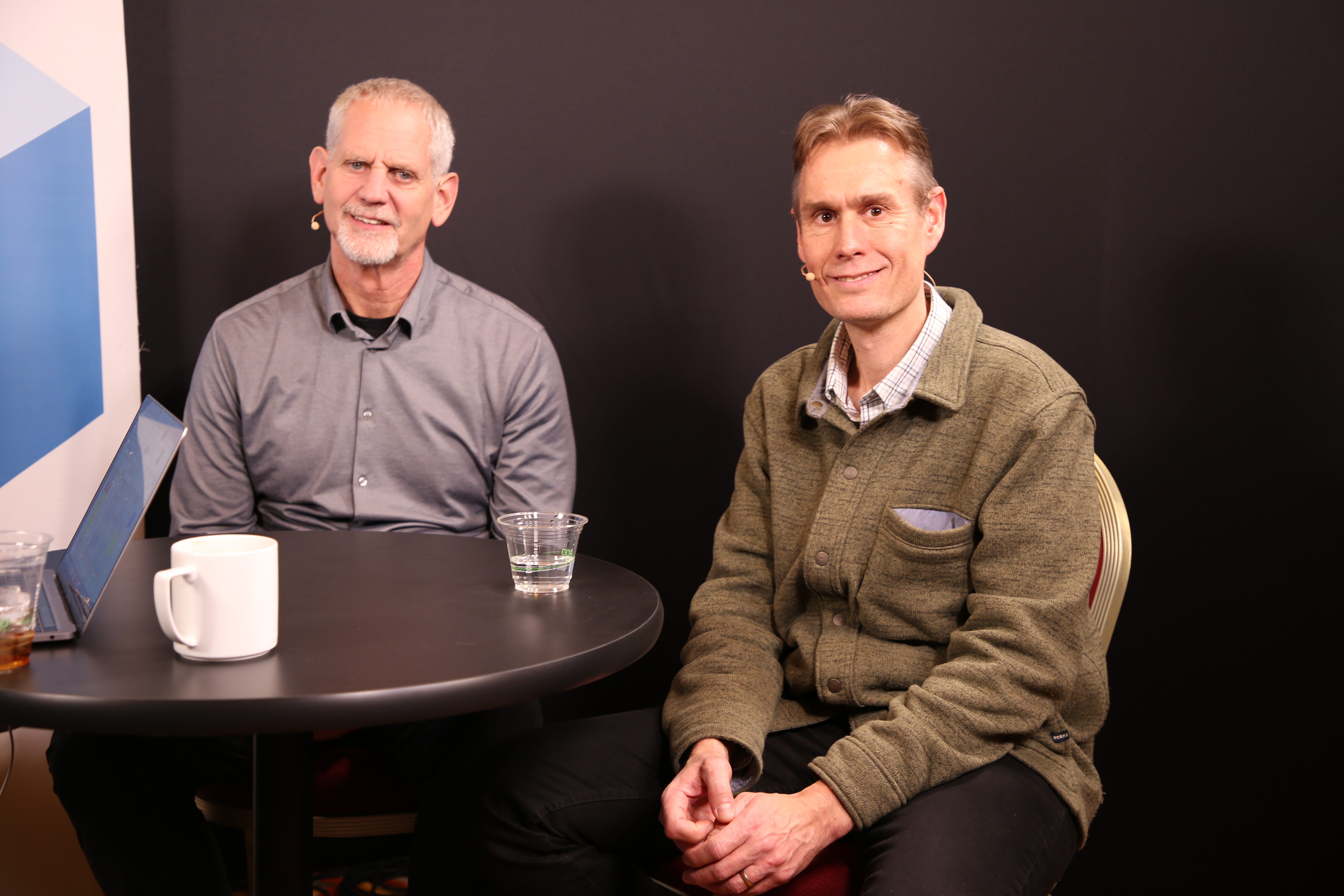
>> Welcome back everyone to theCube's coverage here in Las Vegas. I'm John Furrier, host of theCube. It's our 12th year covering re:Invents. Watching the progress has been like a documentary of innovation happening over time and it's been fun to watch. And now more than ever we're at a whole nother inflection point. We've got two great guests here breaking down all the key announcements around how datas may work. Brad Bebee is GM of Amazon Neptune and Time Stream, and Evan Kaplan, and CEO of Influx Data. Great to see you. Thanks for coming on theCube.
Brad Bebee
>> Thanks for having us.>> In the announcements today, Neptune mentioned Keen ... First of all, Swami did a great keynote. I love his app about finding the free food. I thought that was clever. But you saw how Agentics coming together. You're starting to see how all the underpinnings are happening. This has been a big part of seeing how the data's evolving. Give us a quick update on the news on Neptune real quick.
Brad Bebee
>> If you saw Swami's announcement, what he announced was Bedrock support for GraphRag with Amazon Neptune. And that's super important because it allows customers to get better and more accurate results and more comprehensive results for their Rag applications by using a graph underneath. And for me, I'm coming from the graph business. What's really exciting about it is now customers can benefit from a graph without having to learn how to use a graph database. And so we're super excited about it and it's in preview now and we're going to be iterating over it and learning from how customers use it and really when it works and the best use cases for it.>> For folks not up to speed on why the graph's so hot right now, what are the key areas why graph's important and how does that relate to say, the neural network format of gen AI?
Brad Bebee
>> Well, I think graph's really important because one of the things that graphs do well is they take different pieces of information and they allow you to relate them and then traverse those links and ask questions about it. And one, of course, the very hot topics now is how do I make my gen AI applications more reliable? How do I get them to where they're accurate enough to go into production and the graphs have the potential to be able to help with that.>> Now let's get into Time Stream and Influx house connecting. What's the relationship with you guys? Evan, tee it up.
Evan Kaplan
>> We were married. No, we're about a year into this relationship and it's a pretty great relationship. It's unique for Amazon. I'll let Brad talk to a little bit in that first open source database that they've ever done where they actually built a relationship with the open source provider and we built this really nice relationship and the business has gone well and Amazon's been a great partner.>> Tell about how that connects for you guys with Time Stream.
Brad Bebee
>> In March of this year, we launched Time Stream for InfluxDB, which is a company managed version of the open source InfluxDB. And that's been very popular with our customers and it was really important for us that we do that in partnership with Influx Data because we really wanted it to be a win-win type of proposition. We have some exciting things that we're going to be doing over the next couple of years I think that will deepen that partnership and make it really something that's a unique model for collaboration.>> And what's been the developer feedback, Evan, on this and the importance and the criticality of the Time series? Because we've talked about this in the past on theCUBE and with Inference, Matt Garmon basically said, Inference is now going to be a building block, a core building block. So that's the pinnacle of a lot of stuff under the covers. So this is going to be a lot of action for developers when they're facing into a lot of different data, data types, data series. What's the impact of developers that you're seeing with this?
Evan Kaplan
>> Even before the last couple of years of the rise in AI, there's obviously been a big boom driven by IoT and Time Series. Time Series, basically sensors Time Series, Time Series database collect that stuff at scale, processes it at scale. What's different now, and something Brad and I talk a lot about is the requirement for higher and higher resolution data to build smarter and smarter models is going through the roof. The more you know about the physical world, the more you know about the conditions, the sensor, the better, more effective models you can build. And I don't want to put words in your mouth, but to have those workloads run on Amazon, we run our service on Amazon too, but Brad runs a native service on Amazon too. That's a workload that's going to be really important to the future of AI.>> And how's that from a primitive standpoint as you integrate this in with Influx, as you said, integrating it in?
Brad Bebee
>> Customers really have loved the Time Stream for InfluxDB because they can get the open source APIs that they're really used to, but they can get it as a fully managed AWS service. That means they can take the benefit of some of the other aspects in terms of authentication and availability and other pieces. And so that's been really popular for us. And overall, I think the partnership has caused awareness of Time Series to grow across all of our different services.>> Putting Time Series in the hands of developers really is the key. What's been the impact? What use cases have you guys seen expand out? I've always been bullish on Time Series because people talk about real time all the time.Real time data, Time Series data has benefits.
Evan Kaplan
>> Well, you and I have long careers in the industry and people have been talking about what real time, and this is the manifestation of it, the kind of database technology it's available today, the way it operates, the way it operates in the cloud at scale, the amount of leverage is dramatically different. And so our big sectors are really big in aerospace, really big in energy, really big in consumer IoT, really big in industrial IoT. Siemens, Honeywell, PTC, companies like that. So really anybody who's dealing with the physical world and wants increasingly better telemetry and instrumentation is going to have significant Time Series workloads. If you did this when we started our careers, mine was probably before yours, people were doing this on Oracle databases and paying a lot of money for it. The difference now is the cost efficiency is so dramatic. Dramatically different.>> Well I'm 59 so I-
Evan Kaplan
>> You're a young man.>> I have a couple years on here.
Evan Kaplan
>> You're a young man.>> I remember I was joking earlier, I remember I was talking about how the old school, we used to program our networks on SNA and DECnet and pre-NASAs that were proprietary and then open source changed everything. And I think that open source revolution continues today and I think it's become one of the best checkpoints on the industry as almost a de facto standards body because the innovation is that check because it's constantly being worked on by more people. I think the commitment to open source has been great big time.
Evan Kaplan
>> One of the fascinating things just because you're bringing up the historical perspective is when you and I started our careers, there were two databases. It was Oracle and IBM DB 2 and maybe you had a flat file. But the first revolution was open source. But the second revolution, which I think has really benefited Amazon, which is basically the componentization of the data. You have Time Series, you have Graph, you have Search, you have Now. Well do you have Vector? I don't know.
Brad Bebee
>> We have Vector as the data type in our store.
Evan Kaplan
>> We have Wide Column.
Brad Bebee
>> In-memory caching.
Evan Kaplan
>> Your ability to really componentize that data plane is so dramatically different.>> And you bring up a good point and one of the things we've been focusing a lot of our editorial and research around is we've been unpacking a lot of end user customers like Uber for example, JP Morgan Chase and others.
Evan Kaplan
>> Never heard of those companies.>> They're operating at such scale, but they had to build their own stuff because they were first movers. And a lot of the problems that the engineers were talking about is that I had to have a Time Series on the column of store. I had to build my own data lake. And so that first generation of scar tissue, you guys are taking this to scale now. I'm curious about the app development environment you guys will see in AWS because I can see a future where if I'm a developer now I got in for all these tools, I can now create a mosaic of an application with the databases under the covers without even doing anything. I just need Time Series. The models are smart enough they plug in the Time Series here, I got the Column store for speed look up over there.
Brad Bebee
>> I think you saw a picture of that vision with the SageMaker Lakehouse announcement where you're bringing together the data lake information, your analytics, your data services, your cataloging information along with the policy controls that you need. I think if you project that forward and think about Time Series as a first class citizen and then Graph and many other different kinds of purpose built database techniques, I think that's where we're looking.>> You can connect the dots pretty quickly. That's going to pre-agentic set up requirements kicks in. Question on the open source real quick if you don't mind, what's the commitment on Amazon to support the open source? You guys are still working together on the open source stuff? Comment on the commitment to the source.To the
Evan Kaplan
>> The details are actually pretty clear. We delivered the open source to Amazon. They offered that as if we would offer it. They have Open Source available to the customers and then we build in console upgrades in Amazon's, in the console upgrades in order to monitor stuff like read replicas, that sort of stuff. Today we do it for our 2.0 platform. Early next year we'll do it for our 3L platform. And so this partnership was rehearsed over a long period of time. It's a five-year partnership. Think about this from the long term.>> And you guys are totally behind that. Okay.
Brad Bebee
>> Absolutely.>> All right, so that's checked. Check the box there. Cool. Real time information. You mentioned insights, that's been a buzzword. Real time insights, but Time Series is about instrumentation and one of the big things we've talked about in the past you got run, build, test, observe. These are like software principles. Observability is hot, so instrumentation is going to be probably more of a standard as you get to the edge of the network. You got self-driving cars, you mentioned IOT. How much do you guys see bringing that data in? Can you scope the order of magnitude of how much data is coming in that's going to be Time Series like that needs to be molded into or kind of funneled into either data pipelines or whatnot?
Brad Bebee
>> I couldn't put a number on it from a scope perspective, but I can tell you-
Evan Kaplan
>> It's always 11.
Brad Bebee
>> Yeah, it's eleven.>> Give me a solar system.
Brad Bebee
>> Turn it up to eleven. But we think it's a big opportunity because there's obviously a lot of Time Series data that's not captured and people can benefit from it. And I think to your other part of it, one of the things that we really like about Inflex data and Inflex DB is they have this ecosystem of ways that's very easy to get your data to the database. And really having that I think is a substantial value for companies.>> Yeah. And that helps gen AI too. That's going to feed low lanes, get the data faster-
Brad Bebee
>> They need data, you need data. And that's a great source of it.
Evan Kaplan
>> You can always answer that. The question you asked Brad, you can almost answer it with the intrinsics. Are we going to see more sensors in the physical world? Yes.>> Yes.
Evan Kaplan
>> Do we want those sensors to collect more data, more high-resolution data? Yes. So this data category will go through the roof and as will the price performance go through the roof. As it gets more better and need better chipsets and better services.>> And there's a whole nother opportunity on synthetic data too, as you get that data in, the feedback loops that are coming in to generate high-quality synthetic data. We heard from Poolside today. What they're doing is pretty impressive. And so you see, this AI categories, you got data AI providers, AI consumers and data suppliers. Data supply is going to be a huge deal. Your reaction to that? What do you think about that?
Evan Kaplan
>> I think we all live in the AI ecosystem in the way we would've described ourselves living in the software ecosystem four years ago. It's like everything is about how do these systems get more intelligent? How do they get more autonomous? All systems, all human-designed systems. And my point of view, and I sell Time Series stuff, so take it with a grain of salt.>> You're biased. Bias.
Evan Kaplan
>> Is it all starts with telemetry, all starts with telemetry. You don't know anything about a system until you instrument it at scale.>> Well also, you don't have to be a rocket scientist to figure out that it's from the edge, which is the user tone or device to the core and everything in between. That's the instrument. That's the data coming out.
Evan Kaplan
>> But it's easy to get a little lost now because so much is about LLMs, which can feel like these are just about words and letters and documents and corpuses. But what's really interesting to me is the real world. Instrumentation of things that are happening in the real world, not the digital world.>> And I think the impact on inference is going to have a huge factor too because the fidelity of the Time Series is so strong, the inference angle is going to even get more powerful. Comments on that, thoughts, connect the dots, share some roadmap information?
Evan Kaplan
>> New social security number.
Brad Bebee
>> Careful here. No, but I think that absolutely the supply of data is going to drive a lot of it, but I think it's only part of the story. I think as you supply inferencing, inferencing is going to get better, it's going to get faster. But it's really people who can think systematically and architecturally about all of this data. What is it telling me? How do I use it to improve my system? And that's really I think what's going to differentiate people who really win in this space versus people who don't.>> Great. Brad, while we got you here, do the folks a favor, explain what Neptune is so we can get on the record? What's Neptune about? Obviously a big part of the announcement and Time Stream. Start with Neptune first.
Brad Bebee
>> Neptune is AWS's fully managed graph database service. It provides the most choice of different open source graph APIs and graph query languages. So we support three, we support OpenCypher, we support Apache TinkerPop Gremlin, and we support the W-III-C recommendations of RDF and Sparkle. What makes graphs great is people can use the relationships in their data to innovate. And the announcement that we had today, GraphRAG, we talked about earlier, it lets customers get more accurate results from their generative AI RAG applications by using a graph without having to know how to use a graph database.>> . Love graphs, nodes, and arcs.
Brad Bebee
>> There you go.>> You can do a lot of things with that. Again, neural network format, it's graph all the way.
Brad Bebee
>> It's all graphs. But the fun part of course is-
Evan Kaplan
>> Wait, I thought it was all-
Brad Bebee
>> And time series.>> Time Stream, the graph.
Brad Bebee
>> Yeah, the performance is often data dependent and that's part of the challenge with graphs and Amazon Time Stream is our managed Time Series database service. We have our open source engine, which is Inflex DB, and then we have a service called Live Analytics, which is a fully serverless multi-tenant Time Series service.>> All joking aside Evan, though, but the Time Series works with graphs because what's interesting is that graph has a use case, but time series has a unique value. This is where people get caught up into, remember the old argument of which database do I use? No, they each have their own great thing. I think this is where I think you guys are onto something huge with Time Series because they do a really great thing for a great process of instrumentation.
Brad Bebee
>> 100%.>> And that's huge. It's like what's going to power what I call next generation observability because telemetry is everything now. Great things happen.
Evan Kaplan
>> And there's not, but the terms not observability. Observability, that's just the first. Collecting the telemetry, it's all about autonomy. It's all about intelligence. It's all about the manufacture of intelligence at scale to drive smarter, more autonomous systems. And so the telemetry is just the first part.>> It's a very small piece of it.
Evan Kaplan
>> Being observed system, your images is these people sitting in front of dashboards, that age is going to end.>> And what comes in behind it, what's the ?
Evan Kaplan
>> It becomes is you put these things in. You put all this intelligence, all this high-resolution data into these smart models and maybe you combine it with graph and all those APIs that you mentioned, which I do none of. And you put them together and now you've got a system that's really freaking smart that the inferences can be acted on in real time. You can ingest the data at high speed, and now you've got this continuous evolution and that's how you get to the self-driving car or the rocket ship that goes to Mars or maybe even the department of global efficiency.>> That capture the spaceship. I think the smart model word is going to come up many times on this event. And also, Andy Jassy talked about practical AI. Practical AI was a nice .
Evan Kaplan
>> That's a good one.>> Love the smart model concept because they should be smart. They shouldn't be dumb, they shouldn't be hallucinating. They shouldn't lag and they shouldn't drift. But it's a good topic.
All right, what's next for the relationship with you guys? Next version coming? Give us a-
Brad Bebee
>> The next thing is I'm going to learn all of those APIs that he just mentioned, what he talks about so the next time we talk I'm going to be able to say those.>> You're going to home and do a graph database right now, I guarantee you. You're going to go back to your room and you're going to say, "I'm going to learn graph database."
Brad Bebee
>> We have a pretty hefty roadmap in front of us. Early next year we'll roll out Read Replicas for the existing system and then we'll roll out our new three-dot-oh stuff built around, which will integrate really well with Redshift and the other Amazon services and take advantage of that componentized architecture.>> How has been your conversations here in the hallways, meetings, customers? What's been the conversations for you, Evan, here at re:Invent?
Evan Kaplan
>> It's a lot about this issue of talking to customers or talking to other vendors about the way things are developing and how fast. I think we're all ogling at how accelerant this whole thing. And you really feel it when you're here at re:Invent because there's so much of this ecosystem just right here. You feel it, it's intense actually.>> It's the 12th year. It's always the holiday season, all the goodness comes in. You got to go through the packages, unpack it.
Brad Bebee
>> I just wish it wasn't the day after the week after Thanksgiving.>> I'm just going to shift it. Time Shift, Time Series, Time Stream. I time shift my holidays around re:Invent,
Brad Bebee
>> We do the same.
Evan Kaplan
>> Yeah, we were just talking about that.>> Guys, I know you got a hard stop. Thank you for time, coming in, Evan, Brad. Great to see you. Thanks for coming on. Always a pleasure unpacking all the data here in theCUBE. I'm John Furrier, thanks for watching.