We just sent you a verification email. Please verify your account to gain access to
Cloud AWS re:Invent Coverage. If you don’t think you received an email check your
spam folder.
In order to sign in, enter the email address you used to registered for the event. Once completed, you will receive an email with a verification link. Open this link to automatically sign into the site.
Register For Cloud AWS re:Invent Coverage
Please fill out the information below. You will recieve an email with a verification link confirming your registration. Click the link to automatically sign into the site.
You’re almost there!
We just sent you a verification email. Please click the verification button in the email. Once your email address is verified, you will have full access to all event content for Cloud AWS re:Invent Coverage.
I want my badge and interests to be visible to all attendees.
Checking this box will display your presense on the attendees list, view your profile and allow other attendees to contact you via 1-1 chat. Read the Privacy Policy. At any time, you can choose to disable this preference.
Select your Interests!
add
Upload your photo
Uploading..
OR
Connect via Twitter
Connect via Linkedin
EDIT PASSWORD
Share
Forgot Password
Almost there!
We just sent you a verification email. Please verify your account to gain access to
Cloud AWS re:Invent Coverage. If you don’t think you received an email check your
spam folder.
In order to sign in, enter the email address you used to registered for the event. Once completed, you will receive an email with a verification link. Open this link to automatically sign into the site.
Sign in to gain access to Cloud AWS re:Invent Coverage
Please sign in with LinkedIn to continue to Cloud AWS re:Invent Coverage. Signing in with LinkedIn ensures a professional environment.
Elastic CEO Ash discussed updates from AWS re:Invent, highlighting the serverless offering's availability and their recent AWS partner award for Gen AI and data. Elastic focuses on AI, especially in the enterprise sector, where customers use their technology for semantic search, RAG workflows, and automation of business processes involving unstructured data. They are working on making their vector database more efficient and cost-effective. Resilience, guardrails, and trust are vital for industries prioritizing brand integrity and data security. Elastic's AI ...Read more
exploreKeep Exploring
What are some recent exciting developments in the serverless offering and partnerships with AWS in the area of vector databases and embeddings?add
What are the steps customers are taking in their maturity journey towards utilizing large language models for data extraction and automation?add
What concept is being discussed in relation to search technology that eliminates the need for creating ontologies?add
What is the company's vision on guardrails, trust, and resilience in the future of AI as their product evolves?add
What functionality did the company create in the security domain using concepts from their vector database?add
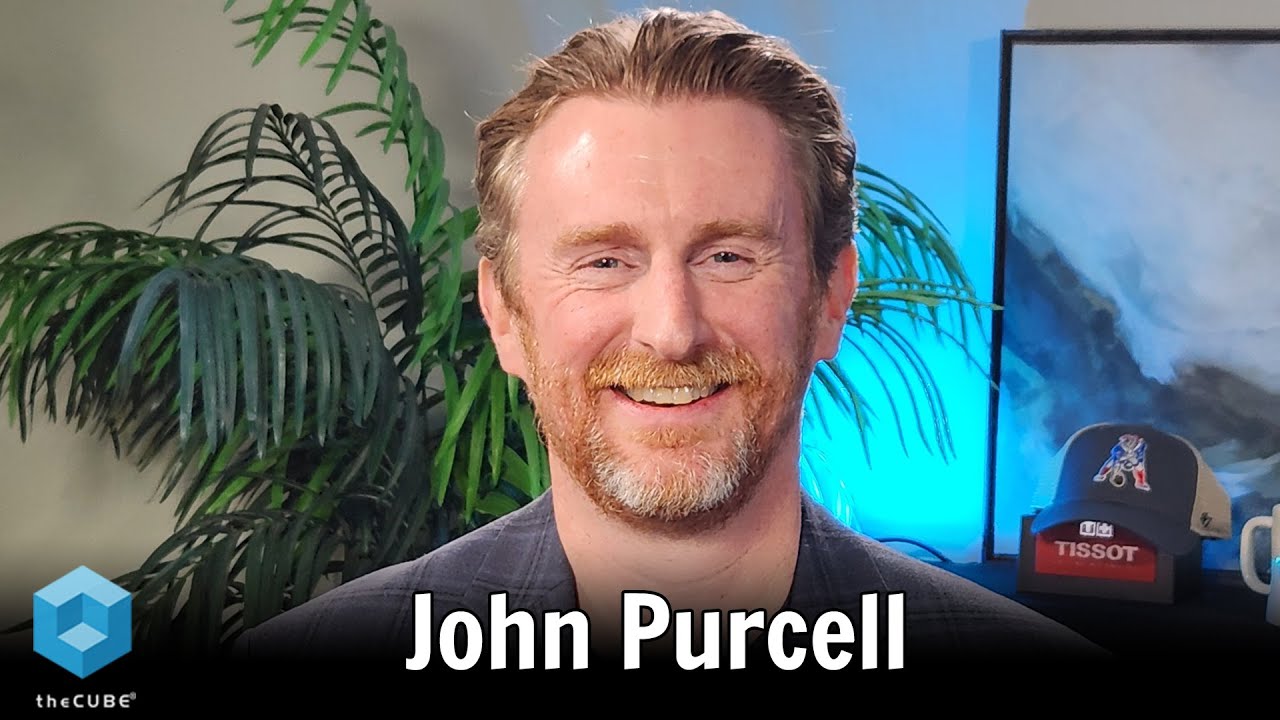
>> Welcome back everyone. We're here in the AWS re:Invent. We're in Vegas for the conference, 12th year. Hey, I'm John Furrier, host of theCUBE. Ash is back, he's the CEO of Elastic. Back in theCUBE in 2015, CUBE alumni, almost an OG. We were at AWS 2013. Great to see you. Thanks for coming on.>> It's been a while. Thank you for having me.>> Yeah, we've had you on a couple of special editions. Elastic has used a showcase on theCUBE. We've led the company multiple times, doing extremely well in these marketplaces, so congratulations on that.>> Thank you.>> Let's get into it. So re:Invent is here, you guys are in the ecosystem, big partner. Give us the update.>> One of the most exciting things this week has been the general availability of our serverless offering. So I'm really excited about that, because effectively for the first time now you've got a completely serverless vector database that's out there in the market. Billions of rows in terms of what we can do in terms of scale and performance, all available on AWS. And the way, because of the serverless architecture, it's able to scale in a fashion that's incredibly efficient and we are seeing a lot of customer interest in that. So that's one big thing. The second thing that happened this week, yesterday we got the AWS partner award for Gen AI and data. So that was pretty exciting because of the work that we've been doing in the area of vector databases and embeddings, like we were talking about earlier, and how we are enabling semantic search and we have deep integrations with Amazon Bedrock. And so, all of that led to the joint wins that we've had with AWS. We won the partner award, so really excited about that. But the company is experiencing some real momentum because of what's happening with AI and we are a big player in it, so...>> It's fun. Yeah, I mean the DNA of your company goes into data. That's where it all came from. Very strong opensource presence early on. But now as the conversation is about practical results, you're seeing kind of the low hanging fruit use cases that drive value. Unlike the.com bubble, which we would say on theCUBE, Dave and I had this debate all the time, "It's like the.com bubble. No, Dave, the.com bubble actually popped, but then happened.">> That's right.>> AI is not going to pop because it's kind of happening.>> Yeah.>> Unless the hype will go down, but there's real use cases right now. And certainly in the enterprises, usually the consumer would lead first. Yeah, we see some consumer action, but the enterprise is where the action is, because that's where the data is and that's where the data value is. So our premise is that you can get enough wins now with value creation from pre-existing stuff. That's search. So I won't say it's trivial, but it takes some work to get things vector in bed. But you can get that up and running and then scale it. Take us through that, because this is where people think vector embeds RAG, retrieval augmentation, it's a low end. No, no, it's real. At scale, it's different than doing a prototype. Small step of data.>> So a few stats for you that I think would be incredibly useful for your viewers. So I talked about this in our last earnings call that happened just a week and a half ago. So we now have over 1,550 customers that are using us on Elastic Cloud, which is a fully managed cloud offering for GenAI use cases. These are all paid customers. The second data point that was of interest to investors was, in Q2, which is the quarter that we disclosed, we had our customer commitments from GenAI use cases doubled as compared to Q1. And three of those deals that we won in Q2 were all a million dollar plus deals. So these are significant commitments that customers are making. These are real projects that they're seeing a lot of ROI from, which is why they're funding them. And the journey, the maturity journey that we are seeing customers go through is, like you said, it starts with their data, because historically there's been so much value in all the unstructured data, documents, logs, and everything that exists in an organization, but is really difficult to get insights and value out of. Large language models are enabling that value extraction. So we are seeing customers go from traditional search, which was textual, lexical search, to semantic search. That's the first step, right? And we were talking about this earlier, if I can have a more natural human interface to ask the questions and now get better responses, hey, voila, that's like an easy button. That's the first step. And then people are going from there to now saying, "Now that I can ask these questions, can I turn this into a conversational application so I can automate some of these queries and so on?" So this is the business version of ChatGPT, right? And that's where you talk about retrieval augmented generation and search is a core part of that. Do you have all these modern techniques like vector search and hybrid search, which basically Elastic powers? And then the next step, which is now just starting to become real, is this notion of agentic workflows. So I'm not just going to do retrieval augmented generation for one conversation, but I'm going to take that paradigm and use it to power successive steps in a workflow for an entire business process. So now I can automate things that in the past involved human beings reading through documents and forwarding the analysis onto the next person in the chain, now you can automate so much of that. And that journey is happening today and I expect that people are going to go through that curve, going from search, to semantic, to RAG, to then agentic workflows. But there is going to be a time in the not too distant future, to the point that you were making, where every business process that involves unstructured information is going to be a prime candidate for automation.>> And you mentioned some of those use cases, the progression you laid out, that's driven by the demand for GenAI applications.>> That's clearly what's driving GenAI. Absolutely.>> And so, you just storyboarded the momentum progression. Vector embeds get that neural network format going, that enables some search. Then the semantic search is now more other stuff coming together, that's a systematic play.>> Yeah, it's a lot.>> Then agentic scales.>> That's right. The semantic search, the great part about it, is in the past when you searched for information, you had to be precise in your questions, otherwise you wouldn't get matches. Now you can search for the concept, you can search contextually and you can get amazing answers. And that's how human beings respond. If you ask me a question, I don't just think about the words that you are using, but I think about, "What are you trying to get at, John?" And I use that. That's effectively semantic search. Now the machine can do that, which is so powerful. But bottom line is, just like BI made automation possible for all the structured data in your organization, and that happened many, many decades ago, these large language models, what you're seeing with GenAI, it's allowing the automation of all business processes that relied on unstructured data.>> Talk about the real-world impact of agents. Because I think if I look at your business, and by the way, your stock is climbing back up to kind of its all-time highs. You're seeing the nice trajectory, congratulations on the momentum.>> Thank you.>> The agents clearly is going to be where everything will be popping. New software is being written. And you heard Matt Garman on his keynote kind of tease, will pile on. It's not just an agent, it's agents, plural, multiple agents. To do that, you have to have a search discovery, naming, or some sort of way to rationalize that AKA search. The machines need to search each other. So this isn't just retrieval, you've got that check. That's the format. But when you start to get into semantic search, there's all kinds of data strategies and harmonization that you can do under the covers now. Can you share your vision on this? Because I think this is where we see people starting to connect the dots saying, "Okay, I get it. I get my data ingested in with Elastic. Thank you very much." Now, they're trying to figure out, "Okay, what do I do next? What happens next?">> Exactly. And the age-old question has been, what data is appropriate for responding to what question and how do I use that in the most sensible way possible? And I'll give you some simple examples, but if a call center agent is trying to respond to caller's question related to some product issues, that person needs to look at various systems. They need to look at the entitlements that they have, they need to look at the product catalog based on product defects that might be known issues and so on. They might need to look at past history of what kinds of questions that person has asked and issues they have faced. So you have data sitting in all of these different silos. And as a call center agent, I now need to figure out which is the right, most relevant information to use in what context? That's a hard problem. It's always been a hard problem and people have tried to deal with it by creating things like dictionaries and taxonomies and so on.>> First we have to call the technical people to tell them the problem they have. Then they have to build the taxonomies, the anthologies, the seeds, and then grow the...>> And then this is the age-old problem of, I need to now bring all of this data in one place. And God forbid, how am I going to deal with policy and security and privacy and all of that stuff? But the model that industries is gravitating towards is this idea of a data fabric or a data lake, right? When it comes to unstructured data, though, you can't use some of the traditional lake techniques that have been used, because one, this data does not have a proper schema. A lot of this information that we are talking about here does not conform to the niceness and the prettiness of a database. So you have to be able to infer things. You have to think in terms of relevance. What is relevant? So what we talk about is this notion of a search lake. We call it our search AI lake, but the concept is very simple. I want to be able to bring data in and then use the same techniques that we've used in search to understand what might be relevant to respond to what question. And if you're able to do that, then the effort that you have to put into creating ontologies and so on, need not exist. You can say, "Hey, for this particular type of question, prioritize the information that you're getting from the entitlement system as opposed to something that you might be getting from your CRM system." And that is much easier to do in this notion of->> I'm smiling, because I've said on theCUBE in the past year, I don't know how many times I said it, search is the killer app again, because at the end of the day, you want to try to find something that you're looking for. And that's not just a page, it's anything. I'm looking for an answer. I'm looking for some insights, I'm looking for whatever. And you mentioned earlier the point about the person wanting to make a change and then have to stack up all this technical work. The lag between, "I need this, I'm looking for this. Now I've got to go get someone to build it for me, or use tools to make what we currently have. Get me the answer. Cause to the problem." And I think what is a game changer that makes the breakthrough happen that you're getting at with Elastic, is it's the convergence of the data and the AI. And so you're democratizing the access to a non-technical user.>> That's exactly right.>> And you're like, "Okay, so I'm the non-technical user, just it happens.">> You don't need to learn SQL, you don't need to figure out how to folder an index and store all your data in the perfect way. Let the system figure it out for you. And that's the beauty. And I always tell people that the reason why... And I go back to the days when I first discovered Gmail, and this is a weird thing, but I'll give you this small diversion. When I first played with Gmail, I was so excited about it, because prior to that, you had to folder everything, all your emails, and you had this notion in your head of, what is the taxonomy that you were using to do all the foldering? And God forbid you got something wrong, you would never be able to find that email again. Gmail changed all of it, because the machine figured out how to index things and you let the machine get you the right, relevant information.>> Or then you start using Gmail and start forwarding stuff to yourself, knowing the search is better on Gmail than the desktop search.>> And that's exactly what we are doing for the enterprise. We are allowing you to get the maximum value without you having to do all the really tedious, difficult manual processes involved.>> Well, the beautiful thing about Elastic, we've been following the company for a long time, obviously we've been using the opensource version of Elastic since 2010, and is that sometimes the world just spins in your direction and lands on your doorstep. And I think AI for you guys is perfect because you've done all the hard work. In search, the stuff that you were doing, especially in the enterprise, it's hard not to crack in the enterprise, because you've got policies, you've got access to databases. So when that stuff can be learned very quickly, it opens up, again, the simplicity of getting the answer I want or finding what I'm looking for. So congratulations. And again, I think search is the killer app and productivity at the end today is the outcome. So I have to ask you about, okay, how you guys view things like guardrails, trust? As the future of AI emerges, resilience comes into play. What's your vision there? Because you're checking all the boxes with the product, where are you at in some of those things? I know resilience is emerging, it's not fully baked out, but has got to be there.>> It's incredibly important. It's incredibly important. So I gave you some stats earlier in the number of customers that we have, many of them are in financial services organizations, they're in government, they're in organizations that take their brand incredibly seriously. They don't want to have anything that's generated on their properties and so on that they don't feel speaks to their brand appropriately. And so, we, in our product, right in the core of our technology, have capabilities like rule-based access control, very fine-grained document-level permissions. So if you and I both ask the exact same question to a RAG application that's been built using Elasticsearch as the vector database, we will get different answers depending upon the access to data that you have and the access to data that I have. Because legitimately, you might have access to more information than I do, because you have wider privileges and that needs to be taken into account. So privacy, security, we can obfuscate the information that we send to a large language model, so you don't let data inadvertently leak out of your organization, because this is your crown jewel. Guardrailing is becoming another really, really important area. LLM security is becoming a very important area, as well as LLM observability. So we created an LLM playground that allows people to test the end-to-end usage of the system and say, "Am I getting the right kinds of responses?" And then it automatically allows them to create code, generate code to sort of productionize the whole system. My belief is that for AI to truly accomplish its full potential, a few things are going to have to continue to happen. It's already there happening, but it needs to continue. One, the cost needs to keep coming down. Even today, the cost of inferencing is pretty high. And so, it's not just the chip makers, the LLM makers, but even us, we are constantly making our vector database more and more efficient. Last two weeks ago we released a capability called better binary quantization, that represents an entire vector embedding in a single bit without compromising on the accuracy of the results that you can get. It's a very advanced algorithm. We are the first in the industry to be out with it. It brings down the memory requirement by 32X. 32 times, right? And if you don't have that kind of innovation, people aren't going to green light all the projects that they can. So price is a big thing. The second thing that's going to need to happen, is you're going to need a continued and growing focus on governance. Because if we don't have that governance that includes guardrailing, privacy, security and so on, people will be worried about the kinds of things that they green light. To me, the third thing that's going to continue is the development of smaller and smaller models, because there are going to be domain-specific models that are going to be really, really better than general purpose ones. We are following this because->> And your vision there is to connect them together in real time->> Openness.>> And make sure they can fuse together?>> Yeah, have an open system where you can do things like, okay, for this question, it's a complex question, I'm going to send the query to maybe Anthropic running on Bedrock. And maybe this other query is a simpler query. Maybe I'm going to send it to Mistral running on Bedrock. You see what I mean?>> LLM routing.>> Yeah, exactly. LLM routing.>> There you go.>> Orchestration for RAG workflows.>> It's not an operating system to me, it sounds like a search problem.>> That's right.>> As you guys have a great position, looking back at the year, what are you most proud of? What are some of the accomplishments? Saw the Elastic AI ecosystem play, that's a nice way to bring people together. I mean, search is a team sport, internally and externally.>> It is a team sport and there's so much innovation happening right now. We've always taken this approach that open is good. We've always had this opensource ethos in the company. All our source code is in a public repo, anybody can go and take a look at it. Yeah, I'm really proud of, not just the work that we've done on AI in creating our vector database, making it, it is arguably the most downloaded and used vector database on the planet right now, but I'm super proud of how we've taken that and applied it to the other domains that we play in observability and security. So in security, we applied those same concepts to create a functionality called Attack Discovery, and that basically gives a SOC analyst, instead of just dealing with alerts, it turns all of those alerts, correlates them, and shows you the actual attacks that are going on in their environment. This is stuff that takes decades for analysts to learn and understand. You are replicating human learning in a way through the power of these LLMs, that allows an analyst who's been at the job for maybe a year to become as good as what it would normally take them a decade to do. That's powerful, because it's an asymmetric sport. It's life changing.>> It's productivity, more time to do other things.>> And the bad folks are just as busy as the good folks. So if AI can give the good folks a leg up, you want to take that.>> Yeah, I think AI is going to help the good guys. I've been asking people this question all year, and it started off as, no, the bad guys... And actually, what I'm learning is, no, the good guys are leveling up too. So it does maybe help level the playing field, because it does help when the government takes out a few of these gangs.>> I can tell you, I've been in the security area for a decade now, and the fact remains that one of the biggest challenges in the security industry is the insufficiency of skilled cybersecurity professionals. And every CSO I talk to, this is literally the number one or number two problem that they're dealing with. They are hard to train. Once you get them trained, you tend to see them move from company to company. So you tend to have a constant challenge in terms of finding, retaining, hiring, training, et cetera. And if you can use AI to mitigate that impact and help your new developers get better at it quickly, that is massive, John.>> Well, great to have you guys on theCUBE. Great to hear about the success. And again, I'm a big fan of search as the killer app, because it's a simple concept.>> I like it.>> It's democratized for non-technical users as an interface with the code assistant stuff. I think we're going to see another level of just creativity apps that you'd have to program by hiring someone, or...>> I can tell you I've always believed that, that's what brought me to Elastic. I was a user of Elasticsearch before I came to Elastic. I always felt that search is the killer app. I am super excited that I didn't have to say it, you said it for me, so thank you.>> It's also, that is it on the user side, never mind it's a data efficiency and data is in cyber, resilience is in there. Again, so the data gravity of what this impacts is not just a category.>> That's right.>> And search assistant->> It's pervasive.>> It's pervasive. It's horizontal and vertical. Ash, thanks. Appreciate all your support and commentary. CUBE coverage here, just again, just more wall-to-wall coverage here in Las Vegas for re:Invent. I'm John Furrier, host of theCUBE. Thank you.