We just sent you a verification email. Please verify your account to gain access to
Cloud AWS re:Invent Coverage. If you don’t think you received an email check your
spam folder.
In order to sign in, enter the email address you used to registered for the event. Once completed, you will receive an email with a verification link. Open this link to automatically sign into the site.
Register For Cloud AWS re:Invent Coverage
Please fill out the information below. You will recieve an email with a verification link confirming your registration. Click the link to automatically sign into the site.
You’re almost there!
We just sent you a verification email. Please click the verification button in the email. Once your email address is verified, you will have full access to all event content for Cloud AWS re:Invent Coverage.
I want my badge and interests to be visible to all attendees.
Checking this box will display your presense on the attendees list, view your profile and allow other attendees to contact you via 1-1 chat. Read the Privacy Policy. At any time, you can choose to disable this preference.
Select your Interests!
add
Upload your photo
Uploading..
OR
Connect via Twitter
Connect via Linkedin
EDIT PASSWORD
Share
Forgot Password
Almost there!
We just sent you a verification email. Please verify your account to gain access to
Cloud AWS re:Invent Coverage. If you don’t think you received an email check your
spam folder.
In order to sign in, enter the email address you used to registered for the event. Once completed, you will receive an email with a verification link. Open this link to automatically sign into the site.
Sign in to gain access to Cloud AWS re:Invent Coverage
Please sign in with LinkedIn to continue to Cloud AWS re:Invent Coverage. Signing in with LinkedIn ensures a professional environment.
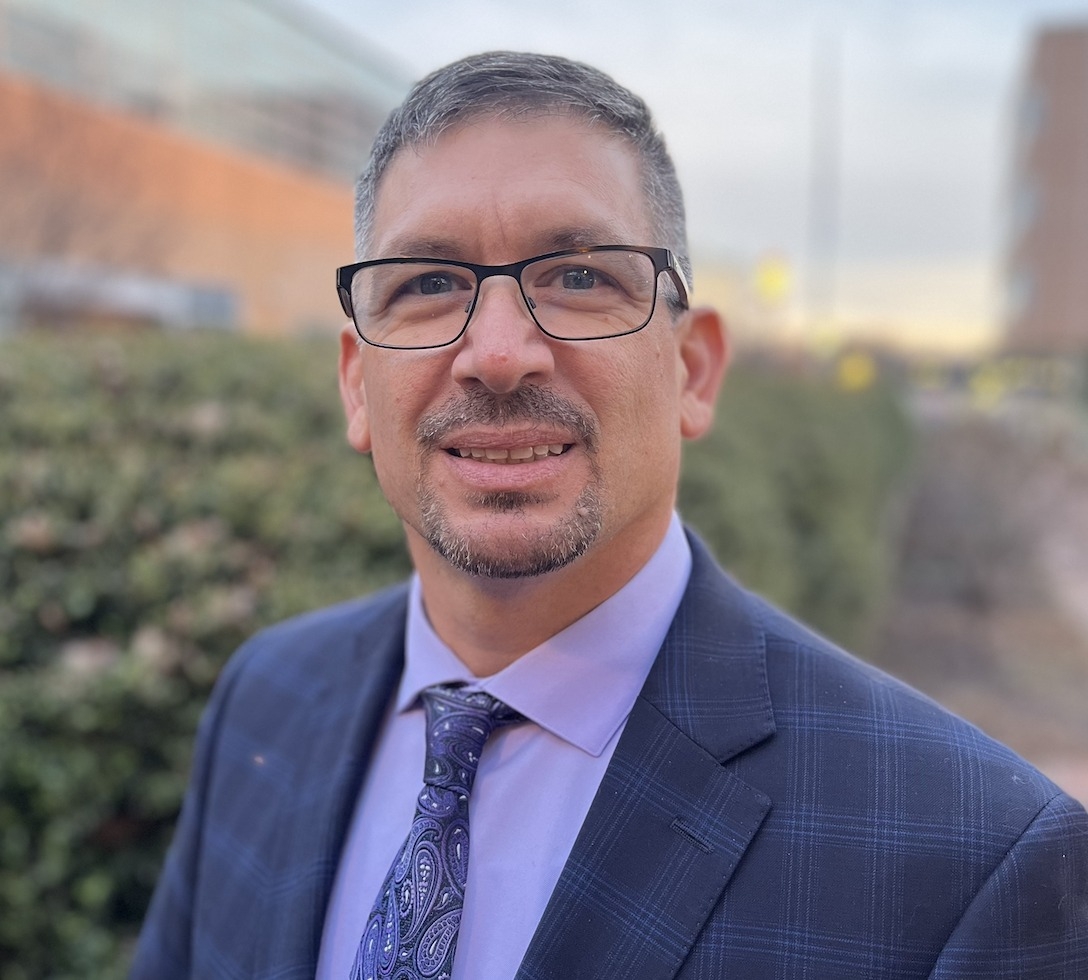
Practice Lead and Principal AnalysttheCUBE Research
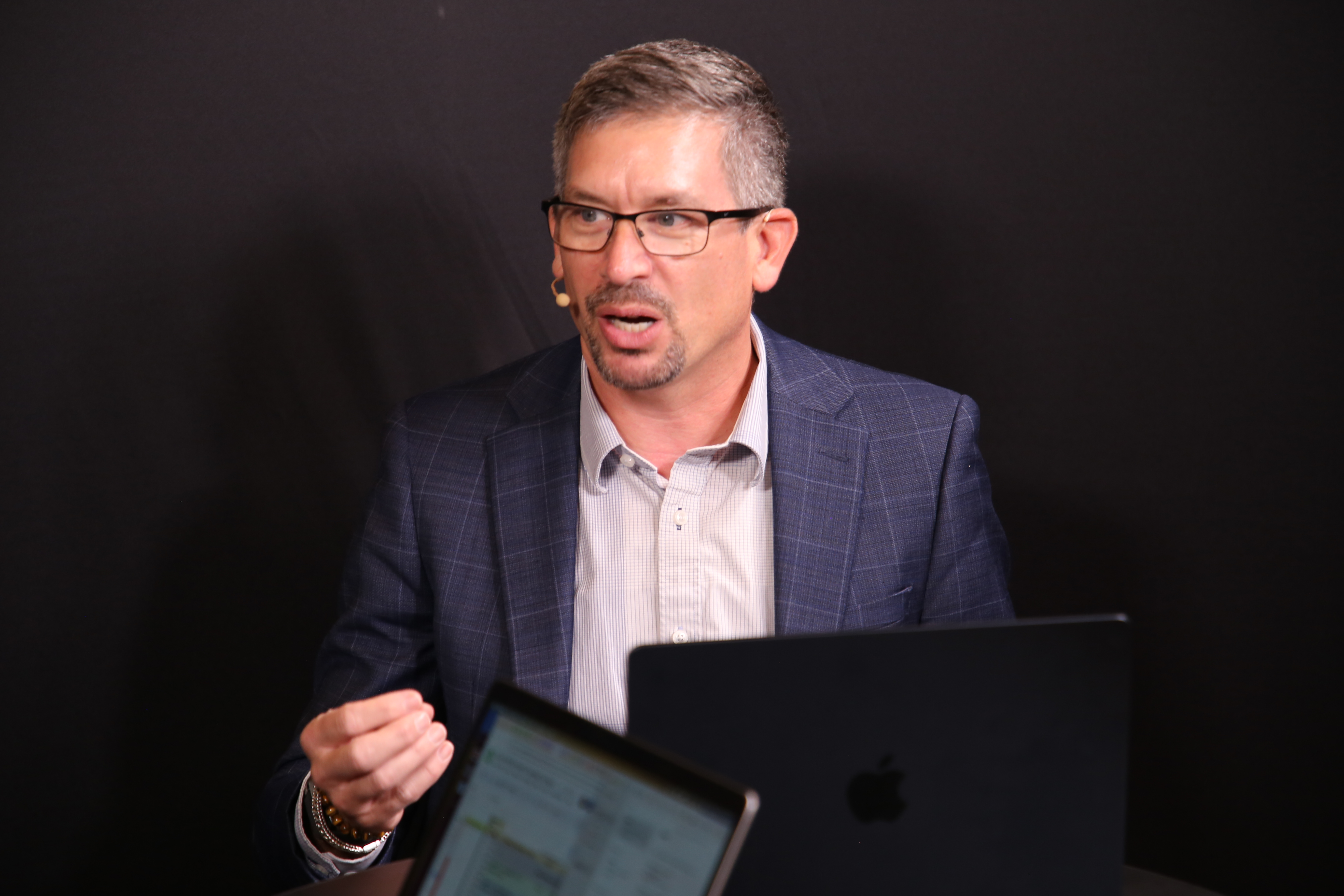
Paul Nashawaty, a CUBE analyst covering app dev for theCUBEResearch, is seen at re:Invent, discussing various announcements made by Amazon, including instances, AI, and compute power. The focus is on reducing complexity and skill gap issues for organizations trying to modernize. The conversation touches on the evolution of cloud platforms like OpenStack and the importance of cloud native and multi-cloud environments. The challenges of releasing code on an hourly basis and the need for simplifying tech stacks are also highlighted. The importance of AI in incre...Read more
exploreKeep Exploring
What topic have you noticed consistent buzz about over the past couple of years regarding Amazon's initiatives?add
What are some of the challenges organizations are facing when it comes to integrating existing data sets and new systems of record, and what trends are emerging in terms of hiring generalists over specialists in response to these challenges?add
What percentage of organizations use two or more clouds, and how many use four or more clouds?add
What insights did the speaker provide regarding the focus on developers over business value messaging at the event?add
What are some potential consequences for companies that do not utilize AI tools and technology in their operations?add
>> Welcome back everyone, to theCUBE's coverage here in Las Vegas. I'm John Furrier, host of theCUBE, with Paul Nashawaty who is here, CUBE analyst, covering the app dev category for theCUBEResearch. Paul, great to see you. Thanks for coming on theCUBE here at re:Invent even, buzzing in the hallways. Man, you had so many meetings. I saw you sitting down with some big time players here at AWS. Great to see you digging in. And they're digging into you because obviously, what you're covering right now is in their wheelhouse. I talked to Deepak Singh, one of his VPs, I know you just met with. You're in the hallways. I saw you having multiple conversations with folks. This is a target-rich environment for you. This is app dev, the Super Bowl of app dev. This is one of that major sporting events for the app dev world-
Paul Nashawaty
>> Sure.... >> that you're covering. How are you feeling?
Paul Nashawaty
>> Oh, no, I feel great, John. Thanks for having me on. This is an amazing event. It really is. I think it's a win for customers and prospects that are trying to modernize and trying to figure out what they're looking to do with their initiatives. Right? I've been covering Amazon for years and one of the things I've been noticing is the growth of building these platforms and having these tech stacks to help with these modernization efforts. The buzz on the hallway and it is consistent over the last couple of years, is reduced complexity, reduce that skill gap issue, reduce the challenges that organizations run into. And Amazon is delivering. They're delivering. They're putting together these unified packages that don't offer this bag of bits anymore and they're offering a single way of delivering how to deliver this tech stack. So it makes these initiatives easier.>> This year in the hallway conversation, what specifically have you heard? What jumps out at you? Obviously, the announcements. We saw the P6 instance with Nvidia, the GA of Trainium2, Trainium2 UltraClusters with their NeuronLink. And then they're saying they have more compute than any cloud. So clearly doing the homework and doing their job at the infrastructure layer, knew more S3 cable buckets, Metadata, DSQL. I mean, you're starting to see the model distillation in Bedrock. I mean, a slew of announcements. It makes Microsoft Ignite look like a picnic. Right? They had co-pilot upgrades and Amazon is just dropping. Then Andy Jassy comes on stage and drops the mega bomb, which is the Nova suite of their models. So Amazon is delivering. And then obviously with the inference, the story I did with Matt Garman, he said, "Inference will change how software is written." And if you hear what they're saying, they're basically saying, "We're going back to basics. We're going to take care of the infrastructure and make it super great in enabling, but we care about the developer building stuff."
Paul Nashawaty
>> Yeah.>> And that is the developer, that is the app dev category. Your category is core to their strategy because they're going to create the middleware on my word, not theirs, but the middle of the stack, to bridge the high performance infrastructure with the agility and the ease of use for the developer. This is what the cloud native world like in Kubernetes. Dave Brown even said to me, "Yeah, Kubernetes is boring, which is we want it to be like Linux."
Paul Nashawaty
>> Yeah.>> So it's all coming together.
Paul Nashawaty
>> Absolutely.>> What's your reaction to that?
Paul Nashawaty
>> John, you can be any more correct on this. It's not just all coming together. It's the narrative of the app dev world, which is the past, present, future, and bridging the gap between all of it. Right? And basically taking the ability of all the texts that you just mentioned, whether they're looking at Apache Iceberg support or integration of analytics across the environment, but it is that bridge in the old with the new. Right? And having that seamless integration of your existing data sets, the data lakes that exist and have that working with the new systems of record or system engagements that you're building is really an important path forward. But what we're finding, in our research, we see that 67% of organizations are hiring generalists over specialists, which is they're pushing back to organizations like Amazon to say, "Reduce complexity so we can have a generalist do this work." And that's what they're delivering on, is having a generalist do the work. Abstracting the layer, making it simpler for the platform engineering teams to deliver and produce results. We also see in the same study that over 800 person in respondent study, that we see that 24% of organizations want to release code on an hourly basis, yet only 8% can do so. And that's because they're dealt with all these challenges and this complexity and skill gap issues. So, Amazon is coming together with everything you just mentioned. We could speak for hours on. Right?>> I want to get your thoughts on something that I've been observing. I haven't really talked publicly about it, but I want to riff with you on this.
Paul Nashawaty
>> Yes.>> I remember back when we started theCUBE 15 years ago, OpenStack was the rage. Okay. OpenStack was pre, what I call mainstream cloud.
Paul Nashawaty
>> Yeah.>> So Amazon, I think kicked into gear... re:Invent was 2012, their first ever, but let's just pick 2013, the year theCUBE started covering re:Invent. So between 2013 to say, 2020, the pandemic, it was just massive growth. They ran the table. They ran away from the field. Before that, Amazon was criticized as a specialty thing. Some called it the junkyard of piece your own pieces together. Because at that time, it was mostly in favor with startups who were resource constrained and didn't want to buy servers, and the classic story, swipe the credit card. OpenStack was the promise. Okay? OpenStack is going to save the world. And OpenStack ended up becoming a Matelco thing, but there was so much infighting in storage protocols. There's a lot of, it was open source, it was cool. We loved it, OpenStack, and then Amazon just actually did everything. Okay? So, that's great. Now, why am I bringing this up? With the CNCF and KubeCon, we've seen the platform engineering community. A lot of that, DNA is a little bit OpenStack and cloud, so it's cloud native. Open source contributors from the Lyfts of the world and Netflix. You're seeing all these great open source projects. So I think the CNCF has done amazing work to essentially start building the community for cloud native. It's now very commercial and that's rolling right into cloud. So the question is, does cloud native... I will say capitulate, but do they actually recognize that maybe Amazon and the hyperscales might run away with it and will they become OpenStack? And so my riff is, okay, I personally don't see it that way, but I'm seeing the same signs, dogmatic arguments about this, that and the other thing. No, what's the bottom line? Let's scale up the infrastructure.
Paul Nashawaty
>> Sure.>> If you look at Amazon's announcement, you can go to cloud native and say, "Hey, get your act together guys and gals, get stable." Kubernetes is doing its job. Cloud native has to pace up, level up. What's your reaction to that? And I know you covered this deeply. Am I off base? Am I all wet on this one or my... So, other similarities?
Paul Nashawaty
>> No. John, I think you're spot on. I think that when we look at the evolution of Amazon and the hyperscale as in general, if you remember, everybody was saying, "Oh, everything's going to the cloud, everything will be in the cloud." And that's not the case. Right? And what we actually find in our research and what we're seeing, and I'm seeing more and more at these events that we go to and Amazon is definitely showing it here, is 94% of organizations use two or more clouds. 65% use four or more clouds. Right? And if they're using these multi-cloud or distributed cloud environments, that means that there needs to be a way to use that tech stack across these different cloud environments. So the CNCF and the projects that are being put in place, all that's doing is amplifying that ability to use that scale up architecture, but making the cloud underneath it invisible. Right? And basically, if you make things cloud-native, we also see that portability, 20% of respondents indicated that it's critical for their applications to be portable. So having that multi-cloud is .>> So you think CNCF is aligned with this current velocity trend?
Paul Nashawaty
>> I do, I do. I think there's an alignment there. I think it's becoming more abstracted, the cloud, as long as you're building the applications that are rapid. And this is also businesses are trying to... As I've mentioned, they want to release code on an hourly basis. Right? 8% are doing it. And now the business->> 8% are doing. People want to release software on an hourly basis, but only 8% can do it.
Paul Nashawaty
>> Only 8%. That's right.>> Okay. So that means there's a huge gap.
Paul Nashawaty
>> Yeah. And that same survey, 24% said they want to and 8% can do it. And so it's because the complexity of the underlying architecture really is preventing the case.>> So what are you seeing as challenges to overcome that? Are there blockers? Is it just inertia? What are some of the challenges that are preventing them and what can they do?
Paul Nashawaty
>> Yeah. Well, take SageMaker, for example, the announcement Amazon SageMaker came out, right? SageMaker allowed for these four individual pillars that were four different parts of this tech stack that previously in previous years, were all available. Right? But that tech stack that was available before cobbled together your own bits to make it all work. And what SageMaker did was made it easier for deployments. And that's what's going on, and that's the enabler for allowing for that invisible cloud architecture and allowing for that portability across these different environments.>> Got it. I know you've done a lot of analysis on cloud native and app dev because it intersects. Re:Invent so far, your takeaway from the show here, keynotes, conversations. How would you boil up the summary if you had to summarize what the vibe is, what the focus is, what it means to customers?
Paul Nashawaty
>> Yeah. This is the conversation I've had with the Amazon execs as well. I feel that there's very much a developer-centric view here, the practitioner view here. I think that they're missing a lot of that business value messaging. They really need to up-level some of these. I know they have tracks for business value and such, but they have to up-level that conversation and say, why this matters. Because when I sit with CIOs and I talk to CIOs around what they're running in, and they say, "Modernization is our challenge," but yet, they're not aware of some of the tech data that's available here. That's a big takeaway. I think Amazon can really help drive that message forward, instead of being so focused on the developer. But with that said, the developer is my passion, so I don't want to give that up.>> They're obviously exclusive. People stand in line because the sessions are damn good on developers and the platform folks because they're enabling everything. But we just heard from Lori Beer, who is the CIO of JPMorgan Chase, her narrative is all about modernization, to your point. So you got to thread the needle on that piece.
Paul Nashawaty
>> Yeah.>> And it's almost tough for Amazon because again, they're running so fast. The pace of play, again, to compare Microsoft's event that they just had compared to re:Invent, it's almost night and day between the tsunami of announcements that are more meaty on AWS. Microsoft had some kind of co-pilot message and upgrades. Okay, but they didn't really have a lot of meat on the bone that I saw there compared to here. They dropped mega announcements here at re:Invent. So I just see more progress on scale, reliability. Again, I think Amazon is not listening to the skeptics. I think they're going back to their roots where there is, always play to your strengths. Right?
Paul Nashawaty
>> Yeah.>> And I wrote a quote on one of the things, a famous quote from a University of Texas coach that said, "Dance with the ones who brung you." And really, it's by loyalty to the players and the team. And what you're seeing Amazon doing and saying, they're going back to their roots, not only for their core competency that's their bread and butter, but their customers. You're seeing Garman saying, "Develop." He led with community heroes.
Paul Nashawaty
>> Community. Yeah.>> He led the kino with community. He led the kino with, "I love developers."
Paul Nashawaty
>> Right.>> If that's not a tell...
Paul Nashawaty
>> Yeah, yeah. And not only them, but the third party integration. The ecosystem is there. And that's what makes it... I think you're right. Amazon is going to customer choice. They're going back to the customer. And if the customer chooses to go whichever direction like we were talking about, they're across these multi hyperscalers and there's a lot of going on there, there needs to be a way to working it. And I think the days of old of saying, "You're going to come to our cloud, you're going to use our tech stack," those days are gone.>> Yeah. And to your point, complexity, I think is huge. Because we had Emma on, they're a startup. Emma does multi-cloud unification. I'm oversimplifying it, but they manage the complexity between the multiple environments. And multi-cloud just means multiple clouds. Also, different environments like Edge and on-prem obviously. Having that unification because you have different tech stacks in different environment, that's got to change.
Paul Nashawaty
>> It does. And again, harmonization across that, we find that... Again, I'm an analyst, I go to research, that's what I know. Right?>> What's the research tell you?
Paul Nashawaty
>> Well, latest studies shows that 75% of respondents in this 800 plus person research surveys indicated that they're using six to 15 different tools to collect observability data. And that's just on observability data. Nevermind the platform. So those actionable insights on day two, feeding it back into the CI/CD pipeline, it makes it super complex when you have all these different tools.>> Yeah. And your point about the business messaging and the CIO you talked to, and the tech tracks they have here, have to intersect because what Lori Beer said here on theCUBE from JPMorgan Chase, their critical infrastructure, she said, and their scale, and she wants to help people learn more. So she's sharing. And she said, they have asked the resilience question, which is a trick question because there's no answer for it. And she was the first one who actually gave an answer. Because they're so disciplined given their business model, they have a resilience framework. Okay? Now, that's not being talked about here. So if you're going to let builders run wild, which Amazon's strategy clearly is, go build.
Paul Nashawaty
>> Yeah, yeah, yeah. They're pushing to this.>> They got a lot of building going on. And you rein it in. Andy Gross said, "Let chaos rein, rein in the chaos." Okay, I want to let people build. I got to have some standards around things like benchmark qualifications, risk management, resilience. This is like business model.
Paul Nashawaty
>> Yeah. Well, right. Compliance and regulations are key. Especially when you start getting into global instantiations of applications in GDPR and data sovereignty issues, that's a big challenge for a lot of applications.>> Yeah. Well, I think this has been one of the best re:Invents, at least for me personally. I had five interviews on the front end. We had Dave Brown who now runs Compute. He was an OG. He worked on EC2 in South Africa with the core team there. Obviously, Matt Garman ran EC2.
Paul Nashawaty
>> Right.>> Yeah. I don't know if you've heard Matt Garman's comment on stage like, "I have a lot of products, I don't want to pick any favorites, but I love EC2." He picked the favorite right there, kind of tongue in cheek. He's got that dry humor, but what he's saying is it's a core building block. Dave Brown was talking about the Trainium and the UltraServers. Don't count out Amazon on the infrastructure as a service.
Paul Nashawaty
>> Right.>> I'm expecting them to dominate.
Paul Nashawaty
>> Yeah, yeah. And there's also, of course, I can't believe we went this far in the conversation and didn't mention AI because AI has to be mentioned in every conversation. But GPU utilization and processor utilization, that is something that I'm seeing a lot of buzz in the hallway as well, but not so much in the context of just having it, but having it as a service. And having it available, so you can pick and choose how much. I think that's incredibly interesting as well.>> Matt Garman didn't want to steal the thunder from Swami. I got a preview from Swami. I did publish the video. It's out on SiliconANGLE as a story as well. But if you look at what he's going to talk about, he's going to really talk about the productivity revolution.
Paul Nashawaty
>> Yep.>> I think AI is the killer app with productivity, the real world impact, the rise of agents. Matt Garman briefly talked about multiple agents, systems of agents, that's agentic systems, again, the research we're doing. And then you're going to see democratizing data be a huge empowering the non-technical user. You mentioned it earlier. And then converging data and AI as a game changer. These are the themes tomorrow we're going to hear from Swami and his session. So I think Matt left a lot of meat in the bone for Swami to chew at tomorrow.
Paul Nashawaty
>> Yeah. We see again, we see production applications just accelerating using AI. Right? Nine months ago, just nine months ago, we saw only 18% of production applications using AI. Compared to today, we see 54% of production applications use the AI, and that's just growing. Right? So if you're not on that bandwagon of using AI to enhance your productivity, I think you can be left behind. And it's a competitive advantage.>> Well, Paul, we're super psyched that you're heading up on the app dev piece. I know you've got a big survey. You're doing a lot more research.
Paul Nashawaty
>> I do. Yep.>> You've got a Q2. We're going to do a digital twin event in Palo Alto and New York City at the New York Stock Exchange.
Paul Nashawaty
>> Yep.>> I'm going to be doing a ton of editorial. I'm going to partner with you on that. So if anyone has got any use cases on the editorial side, love customer stories, I'll be digging those into. You'll be doing the research.
Paul Nashawaty
>> Absolutely.>> What's the focus of this first half of the year for you? And what are you going to be looking at? What are you going to be unpacking? What are going to be digging into and what could you use for help-
Paul Nashawaty
>> For sure.... >> with folks watching. They could be companies. They could be end users. We're open for business on all contents, of course. Send it our way. What are you looking for?
Paul Nashawaty
>> Yeah, that's a great question. From a research perspective, my research calendar is really targeting day zero build, day one release. And I have the day two data ready to go in my DevSecOps research. So that's going to be the first start of the year. That's going to lead in what we're going to do in this app dev summit. Right? And this app dev summit is really going to help promote this research. We're going to go through that information. We're starting to socialize those questions today. I actually walked through the halls and had a couple of conversations. And people are loving it. They're loving where we're going with the information and I'm actually soliciting that information. That's why I could use help, if this does resonate or not. So, I'd love to just connect with people about like, "Hey, this is where I'm going." And I believe in a give to get model. If somebody helps me with it, I'm more than happy to provide a readout of the information.>> Well, we got a lot of customers. I feel a lot of CUBE alumni and fans out there who love theCUBE. We'd love your input. If you got any help on the app dev side, you have input. And by the way, we want to hear from you because we're trying to put the puzzle pieces together. Certainly, GenAI is poised to become the defining technology for this next level. Agents are coming. The cloud native infrastructure is emerging so fast and stabilizing so fast. That is going to set the foundation for what the enablement is going to be. It's going to be disruptive, but it's going to be a disruptive enablement. And again, if you're on the wrong side of this, Paul, I see a potentially extinction moment for companies. Because you can't get this wrong. Watch the winds, zoom out, watch the trees, don't get it to the bark of the tree. Look at the forest, look at the whole thing.
Paul Nashawaty
>> Yeah.>> You've got to get this right. How do people get it right?
Paul Nashawaty
>> Well, they get it right by using the tools that are available to them, if you're using these AI tools as a productivity enabler to help generate your code. I'm not saying, replace everybody with AI. That's not it at all. Right? And then developers will have a job. Don't worry about that. We still need a human in the loop. That's just how it's going to work. But I do believe that if you're not utilizing the tech stack and the tools, operation or operational efficiencies, if you're not doing that, you're going to be competitively at a disadvantage. And your company, to your point, it's an extinction event. Right? Your company may go out of business because your competitors are going to use it.>> Yeah. Oh, I love these analyst angle sessions. I learn a lot. And it's really about getting the data. And appreciate you bringing that analyst notebook content to theCUBE here, and we'll see you on theCUBE insight segments later on. Thanks .
Paul Nashawaty
>> Absolutely. Yeah. Thanks for having me.>> All right. CUBE coverage here. We're bringing down the whole CUBE team is here. SiliconANGLE team, team coverage. Rob Hof is here. Mark Albertson and the entire team back at the ranch working on the stories, thecube.net. We're here with theCUBE. Our entire team is here, our production team, our team running the show in Palo Alto. And of course, we've got our NYSC facility down there. And of course, theCUBEResearch, we're up to 12 analysts now, 15. I don't know the number. It's growing really fast. The industry analysts are getting the data, the puzzle pieces to help solve the puzzle for the future and they're doing their job. They're here as well. You see a lot more. That analyst summit is going to flow through here. We'll get that data to you. And of course, 12th year of re:Invent, getting all the data, steering it all to you here on theCUBE. Thanks for watching.