We just sent you a verification email. Please verify your account to gain access to
Cloud AWS re:Invent Coverage. If you don’t think you received an email check your
spam folder.
In order to sign in, enter the email address you used to registered for the event. Once completed, you will receive an email with a verification link. Open this link to automatically sign into the site.
Register For Cloud AWS re:Invent Coverage
Please fill out the information below. You will recieve an email with a verification link confirming your registration. Click the link to automatically sign into the site.
You’re almost there!
We just sent you a verification email. Please click the verification button in the email. Once your email address is verified, you will have full access to all event content for Cloud AWS re:Invent Coverage.
I want my badge and interests to be visible to all attendees.
Checking this box will display your presense on the attendees list, view your profile and allow other attendees to contact you via 1-1 chat. Read the Privacy Policy. At any time, you can choose to disable this preference.
Select your Interests!
add
Upload your photo
Uploading..
OR
Connect via Twitter
Connect via Linkedin
EDIT PASSWORD
Share
Forgot Password
Almost there!
We just sent you a verification email. Please verify your account to gain access to
Cloud AWS re:Invent Coverage. If you don’t think you received an email check your
spam folder.
In order to sign in, enter the email address you used to registered for the event. Once completed, you will receive an email with a verification link. Open this link to automatically sign into the site.
Sign in to gain access to Cloud AWS re:Invent Coverage
Please sign in with LinkedIn to continue to Cloud AWS re:Invent Coverage. Signing in with LinkedIn ensures a professional environment.
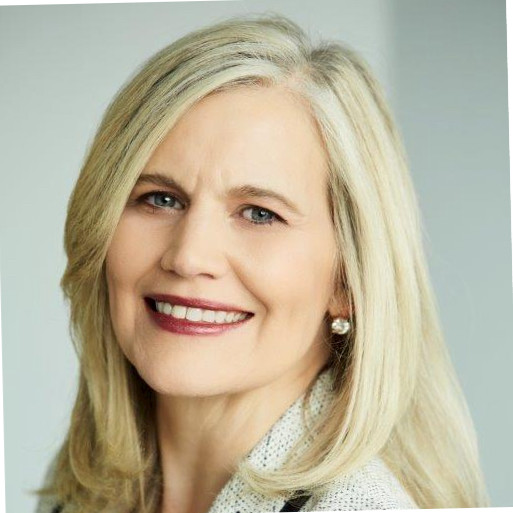
TheCUBE is covering the event in Las Vegas, with Lori Beer, CIO at JPMorgan Chase, discussing their tech investments in AI and cloud. JPMorgan Chase is focusing on delivering products and services for customers, with a hybrid approach to cloud. They are continuously modernizing and strengthening resiliency and security. The next phase is scaling AI and exploring opportunities for GenAI. The conversation also touches on the importance of data, data governance, and data protection in leveraging large volumes of data for insights. The discussion expands to the i...Read more
exploreKeep Exploring
What is the main focus of the investments made in technology by the speaker?add
What areas have you been focusing on strengthening in the cloud, particularly in terms of AI scale?add
What are some ways in which a globally important bank like us can leverage data to manage risk and derive insights effectively?add
What considerations are important for a bank when implementing AI use cases and specifically GenAI, in terms of threat patterns, vectors, and risk mitigation?add
>> Welcome back, everyone, to theCUBE's coverage here in Las Vegas. I'm John Furrier, host of theCUBE, our 12th year covering re:Invent. Every year, we're here talking to the newsmakers, keynote stage players. All the top tech athletes come on theCUBE to share their knowledge. Lori Beer is here. She's a CIO at JPMorgan Chase, JPMC, also known as . Lori, great to see you. Thank you for coming on theCUBE. You're a celebrity today.
Lori Beer
>> Thanks for having me. It's great to be here.>> You're always a celebrity with a $17 billion IT budget.
Lori Beer
>> It's a large budget, but we look at it as an investment.>> Great stuff. So you were on stage, which I thought was awesome because it was a critical moment for AWS as they tell the world, "Look, we got AI chops and we got infrastructure chops. We've got chops in the cloud." Obviously, they created the category and the goodness of the, I call it, gen one. Matt doesn't use that word, but I call gen one cloud. AWS was great. Building blocks helps people business stuff and then enterprises come in. We're kind of a gen two phase where, okay, it's kind of like next level stuff is happening. You guys do a lot of investments. When you were on stage about four years ago and during the pandemic, talking about your journey. As a customer of Amazon, you're looking at the 20-mile stair for JPMorgan Chase. You got a lot of things going on there, regulated a lot of customers, but also as a technology provider, you got great people. You got alumni are out in the field investing in companies that work at JPMorgan Chase, so a lot of pedigree in tech. So you're like a tech player. So what's your 20-mile stair right now because as you look to the future, as you modernize the company, the pace of play's faster.
Lori Beer
>> Right.>> Change is happening. You got change management. You've got technology transformation, business model transformation all happening at the same time.
Lori Beer
>> Right. So for us, a lot of the investments we make in tech is around delivering products and services for our customers and clients. And I will start there as a foundation because that's why it's important whether we're serving Chase customers, JPMorgan customers across the board. And so when you think about that, we break it down. We have been in the cloud. We definitely saw that. We have a hybrid approach, so we run massive scale inside our data centers. We're critical infrastructure, but we also leverage the innovation happening in the public cloud. So our continued prioritization is around continuously modernizing. We're never done, right? Technology's changing more rapidly. So as we look forward, we're really excited to build on the foundation that we have where we've moved data to the cloud. We're running applications in the cloud. As I mentioned earlier, we have about 1,000 applications in the cloud running in production and supporting all of our lines of business. We've been working really hard on continuing to strengthen resiliency in the cloud, security in the cloud and again, through our great partnership with AWS. The next phase is really, really making AI scale. We've been doing AI for a long time. We do a combination, lots of continued work around traditional AI but also GenAI and continuing to look at those opportunities as we look forward.>> As you look at your investments and in this next wave, the big focus this year has been okay, the hype is kind dying off, the gen AI wave. We're seeing reality kicking in and then I won't say it's grinded to a halt. It's been more of a lull in the next, I call, kick up of trajectory of value creation where everyone's realized I need speeds and feeds, like I got to get some horsepower. I need to have full understanding of capabilities at the root level of infrastructure down to the silicon level. I got to understand how to provision systems, clustered systems we call on theCUBE, and understand that full equation of price performance down to the level of that can be programmed. It's classic infrastructure as code at another level and then start preparing a data layer model to manage multiple new data management schemes or technologies or methods. And then from that, I hope, and then what might happen is some agentic system might emerge and probably would if you connect the dots. But again, a little bit further out, it's one of those lily pads that's we hop to maybe down the road, but right now, infrastructure data seems to be the sweet spot.
Lori Beer
>> Yeah. I think for us, the way we think about data infrastructure, excuse me, we used to just had a team that ran infrastructure. Now the engineers need to understand infrastructure. Price performance, to your point, is becoming a big issue. Our engineers need to understand whether it's an application or a model they're deploying. We need to understand what's the cost and what's the performance and it creates a more complex solution that we got to think about. And so for us, we run hybrid as a globally, systemically important bank. We run hybrid on-premise and in the public cloud, which means we have to plan for the future and what does our capacity look like and what are the right workloads to run in the cloud, run on-prem, and then when you get to the high-performance compute, it's even a more complex equation that we have to think about and how we do that. And so we're also, at the same time, thinking about what's that next generation of FinOps tools and insights that our engineers need and how do you build a platform around that to really scale into the future and really take advantage. But we talk a lot more about chips these days than we used to as I grew up as a software engineer in my career. And so it's really interesting how it's really come down to silicon.>> It's funny, I was talking to some of the guys for developers, which is code assistant. Everyone's been talking about that. Okay. Oh, the human in the loop. It's been an AI conversation, but when you talk about engineers, engineers are going to lose their job. No, and they're not going to... software engineering's not going away. You might have more of a business programmable layer, maybe code assistant voice activated, but you start to see some of the alpha software engineers getting down into the kernel, into the machine. Assembler, I've heard assembler conversations in the past year in the decade. I never had to talk about Assembler or C. You start to see real advances squeezing kind of kernel-level, system-level advances. Kind of reminds me of the '90s back when you had to do memory management like swap into RAM. And so all these new software techniques are emerging because of the scale and some of the constraints around squeezing more horsepower to get as much real-time speed out of these systems. Are you seeing that same thing? What's your reaction?
Lori Beer
>> So I think a lot of this is when you think about the systems we run, we move $10 trillion a day in our markets business. Fractions of seconds are important to us in terms of speed. So we operate in a business not just of incredible scale, but where speed really matters. And when we start thinking about the future, genentech architectures and doing inferencing and then doing that at the speed we're already operating to think about some of those businesses, it is a complex engineering equation to really think about how you put all those pieces together. And it's making us reflect and think about how do we continue to educate our engineers on some of those pieces. It's funny you mentioned assembler. I mean, I remember writing programs at assembler as I started out as a software engineer.>> There's core dump reads, oh my god.
Lori Beer
>> But understanding a little bit more of the full stack and how you tune and work the knobs and it's interesting. And so I definitely think there's going to be some layers in there, some knowledge that's required, but also layers and platforms that'll be built to help manage it.>> Interesting. You're on the financial side. Obviously, our new studio in the New York Stock Exchange supposed to be some of the New Yorkers, some of the lingo, and as I talk about AI, people will make the comparison to high frequency trading back in the day when you get closer to the trade, maximize the speed of light and you get that extra fraction second trade advantage, make more money, demonstrable, quantifiable value money.
Lori Beer
>> Right, right.>> So high frequency insights is becoming something we're seeing a lot of people talk about, whether it's getting value out of the data is the similar paradigm. What's your reaction to that because this seems to be the game we're in right now.
Lori Beer
>> Yeah, it's interesting. We talk a lot about and we talk about you always have the speed of light. So we talk about where do we put, physically put things that are close to the exchanges, et cetera, when you're in talking about those environments. We've talked a lot more about some of the use cases you see early on are different than what you need in a real time mode. And so when we start talking about these agentic architectures, we have to be thoughtful about where's our data physically located. Where are those platforms based? And making sure that the massive... I talked earlier that we have almost an exabyte of data. We have massive amounts of data and so depending on the problem we're trying to solve, what data we need, the compute power we need, whether it's inferencing or otherwise, we really do have to think about the proximity of where our applications and data are located.>> We wrote a post, one of our research posts on SiliconANGLE and we kind of created a salacious type, not our thing. We don't usually go for the clickbait, but Dave Vellante, my co-founder and co-CEO, wrote it. He wanted to kind of get some attention. He said, you'll laugh at this, "Why Jamie Dimon is Sam Altman's new competitor," okay? Can Sam Altman... we have JP... it's okay, little bit of a salacious kind of link bait. But the premise was all the work that they did in OpenAI to train and build their large language their foundation model was expensive. It's well documented how expensive that is when, in reality, what he did from a petabyte perspective was less than what you guys have. And with the narrative now where intellectual property is the data, you protect that data. You have to have that data. You have to have your own OpenAI in a way. So I imagine, I'm sure on the drawing board in the meeting says, "Okay, what's our strategy here?" You have to have these systems built because that's competitive advantage. You .
Lori Beer
>> I think the thing to keep in mind for us is we have a lot of data. So it's consumer data, client data, wholesale data. We have a lot of restrictions around data use and how we protect the privacy and all of the other things. So the other thing is when you think about data, we had to make sure we're continuing to enforce data governance and from a regulatory perspective, client perspective, making sure we're adhering to all the rules and policies around all of that. But in addition to that, we do think data. We have an incredible amount of data. It's one of our most critical assets. So how do we continue to take advantage of that? And so yes, while these large foundational models are great at certain things, summarization, Q&A, we're continuing to see value if we leverage reg or fine-tune. But it's really starting to get into when we really start applying, whether it's a large foundational model or smaller models, the use of our data to bring the intelligence to solve the real business problems that we're trying to solve and that's part of what we think we'll see in the future.>> Yeah, it's a great observation. I would say you other comment about real-time mode, understanding where data is also could be applied to models at any given time. One model might be good for another. You're starting to see policy-based routing kinds of theory come into levels of the stack that isn't pure networking. But I've read a paper last month on LLM routing. I mean, talk about my life, how boring it is. That's exciting. I'm like, "Okay, this is essentially routing." So knowing which cost and which LLM to use, I might have no latency concerns, but I don't want to pay out the nose for it. Okay, I'll go this way.
Lori Beer
>> One may cost more, but the->> Benefit is higher. Let's go there. Again, policy....
Lori Beer
>> or it costs more and the benefit isn't that much more, so that whole price performance, again, the complexity of how we think about this next world of cost and how we leverage our infrastructure to... again, it's going to continue to innovate around that.>> You have a fascinating job mainly because one, you're investing a lot and also the stakes are high and you got a lot of knobs and buttons to manage around your business model. Obviously, you mentioned that some of the things there. When you look at the role of data and scale, do you look at it from a perspective of, okay, risk management or innovation, value creation, the balance between the risk management because we're seeing CFOs get pulled into things like cybersecurity insurance policies. This data should be less expensive than this one versus just weird kind of new business model, CFO-like conversations that were normally a CIO simple conversation. "Oh yeah, we've got a data warehouse. Highly secure. We've got a perimeter." Well, there's no perimeter anymore. So you're starting to see the blending, the confluence of C-suite activity been. What's your perspective on this because this seems to be a challenge. More CFOs are getting involved, COOs, operations, finance.
Lori Beer
>> Yeah. I think for us, given the nature of our business, we run a globally, systemically important bank. We have to manage liquidity. The amount of risk calculations and things we run on a regular basis consume lots of data where we're having to bring that data together across the firm. And so I think there's lots of great examples that we do today, whether we're managing credit risk or managing liquidity risk across the firm where we're bringing large volumes of data together. And so I think that the key is what are the new ways we can leverage that information or with the data we have, what are the new ways to derive insights? And I think that's where over time, GenAI will start to show our ability. We have examples right now where we're using anomaly detection and networking to help proactively identify a switch that may potentially fail. Now you can put GenAI on top of that and start asking questions about the dynamics and the patterns of what's happening in your data. It's just an extension of the use case. So I think that's just a simple example, but illustrates that we use large volumes of data today to manage risk. When you think of cybersecurity, the amount of signals we use, the amount to protect the bank is one of the most important things my team does along with the business, right? And so the investments in the data that we have around cybersecurity in terms of how we use that data and how we understand threat vectors and patterns, et cetera is also another critical way that we'll continue to grow and use our data.>> It's interesting. You're starting to see the synergy between cybersecurity and user experience, value creation extraction because it's all data is involved in that now with GenAI. So when I hear you mentioned earlier resilience, it's been well documented what resilience means in IT. But now when you come into GenAI with this data, there's no observability, there's no... so kind of the Wild West. Like a horse that's running wild, you got to kind of rein it in. How do you define, as you think about the organization, resilience because it's not just recovery and security. You got data. What if the data was trained wrong? How do you roll that back? Do you use GP? So there's all kinds of new resilience questions that are being solved in real time as it unfolds. What's your view on how to take the best of the resilience and apply it to the new GenAI space?
Lori Beer
>> Look, we have, again, being critical infrastructure, we have a resiliency framework that we base around our essential services moving $10 trillion a day, right? We have a lot of resiliency around those processes. And so when we started looking at AI use cases more broadly and then GenAI specifically, there's definitely different threat patterns and vectors that you have to think about. A lot of it is embedded into our core technology controls. The cloud controls we put in place is one example, building upon that, and then understanding what are the new vectors of risk and then how do we bake that into our existing processes to make sure. We've always, being a bank, we have to have models that go through governance. Now we have models built on AI is a different way. There's different problems that you have to solve, but it's still embedded in a core governance process. And so that's kind of the way we've thought about it. Some of these are naturally ingrained for us and things we can build upon because they're core fundamentals. We're in a business of trust.>> As I say, why'd you rob the bank? That's where the money is. You can't have a bad day. You're got to be 100% on all the time, right? So you guys are critical infrastructure. Love how you position it that way. Final question for you to wrap up is as you look at the scale of JPMorgan Chase that you're at, one of the things that's coming out of our reports that we're sharing with the audience is you're seeing companies like AWS, like the NVIDIAs trying to build god box, box server on-prem and others. And like yourself, you're operating at scale and you're seeing things that scale that not anyone else would see. When you start to get into the operating leverage in the economies of scale of the investments with a lot more coming, you see things that some people might not see. What are some of those things you're seeing at scale that you watch every day that you're relearning back in to the company that's notable or new? Because now, scale is now a competitive advantage as well. It's also a good thing.
Lori Beer
>> I think usually whenever we work with smaller companies, security and scale are the two problems that are always important to be solved. And so when we talk about scale, what does that mean in terms of data? What does that mean in terms of what is the response time I need? Even if I'm making a call-out to an LLM, for example, and what is the resiliency you need to put around that? And I think those are some of the early things that are, again, just new dimensions of how we always think about resiliency and protecting our most critical, essential services across the bank. And so we always continue to work with our partners, including AWS, around what are our resiliency requirements, how do we do that, resiliency requirements even with anybody that's a SaaS provider for us and so->> You get signals too. You can see things....
Lori Beer
>> we can see things at scale. Many times, we break things nobody else breaks because of the volume and scale. It's not just the volume, but it's the speed. So you put together the volume, the speed, the complexity that some of our products and service deliver. Many times, we can find those scaling and resiliency issues.>> Boy, you got a fun job. I would love to be in the day in life of your job, understand the behemoth that is JPMorgan Chase and Innovation Engine. Final question in the last minute we have left. I'm a Amazon product manager, okay, and I say Lori, we work backwards from the customer. So tell me what to work on. What would you say to that?
Lori Beer
>> I think the pieces we're working on with them now is, and we saw a lot of it today, how do we really... we have a great foundation that we're building upon. AI is continuing to evolve, GenAI in particular. And how do we just make sure as we continue to work on those new products and services we can integrate them and leverage the amazing investments in partnership we already have.>> Well, congratulations on a great success and continued success and we'll keep checking in with the team over there.
Lori Beer
>> Thank you.>> Spending the time on theCUBE at re:Invent.
Lori Beer
>> Thank you.>> My name is John Furrier, the host of theCUBE. We are here on the ground for 12th year covering AWS, watching that journey from the startup days to the enterprise. Now gen two cloud is here. Next level activity data, hardcore infrastructure, and agents coming right around the corner. More coverage right after this short break.