We just sent you a verification email. Please verify your account to gain access to
Cloud AWS re:Invent Coverage. If you don’t think you received an email check your
spam folder.
In order to sign in, enter the email address you used to registered for the event. Once completed, you will receive an email with a verification link. Open this link to automatically sign into the site.
Register For Cloud AWS re:Invent Coverage
Please fill out the information below. You will recieve an email with a verification link confirming your registration. Click the link to automatically sign into the site.
You’re almost there!
We just sent you a verification email. Please click the verification button in the email. Once your email address is verified, you will have full access to all event content for Cloud AWS re:Invent Coverage.
I want my badge and interests to be visible to all attendees.
Checking this box will display your presense on the attendees list, view your profile and allow other attendees to contact you via 1-1 chat. Read the Privacy Policy. At any time, you can choose to disable this preference.
Select your Interests!
add
Upload your photo
Uploading..
OR
Connect via Twitter
Connect via Linkedin
EDIT PASSWORD
Share
Forgot Password
Almost there!
We just sent you a verification email. Please verify your account to gain access to
Cloud AWS re:Invent Coverage. If you don’t think you received an email check your
spam folder.
In order to sign in, enter the email address you used to registered for the event. Once completed, you will receive an email with a verification link. Open this link to automatically sign into the site.
Sign in to gain access to Cloud AWS re:Invent Coverage
Please sign in with LinkedIn to continue to Cloud AWS re:Invent Coverage. Signing in with LinkedIn ensures a professional environment.
At AWS re:Invent in the Venetian, new announcements and innovations in infrastructure were showcased, with SageMaker now playing a key role in Amazon's stack. SageMaker AI has evolved to simplify the process of building, training, and deploying AI models for different users within organizations, handling tasks like provisioning infrastructure and orchestrating jobs. The new HyperPod feature allows users to set up GPU or Trainium clusters for training generative AI models, with flexible training plans and pre-optimized model architectures available. Customers ...Read more
exploreKeep Exploring
What is the evolution and role of Amazon SageMaker AI within the AWS ecosystem?add
What tools can be used to build a generative AI application artifact when deploying models with Bedrock and SageMaker integration?add
What solution was announced at the last re:Invent conference for challenges in scaling and fault tolerance in generative AI model development?add
What is the flexible training plan capability in HyperPod and how does it work in terms of specifying training needs and optimizing job execution through SageMaker?add
What new feature has been added to SageMaker to address the feedback from customers who wanted to use third-party tools alongside SageMaker without the hassle of integrating them and keeping their data centralized?add
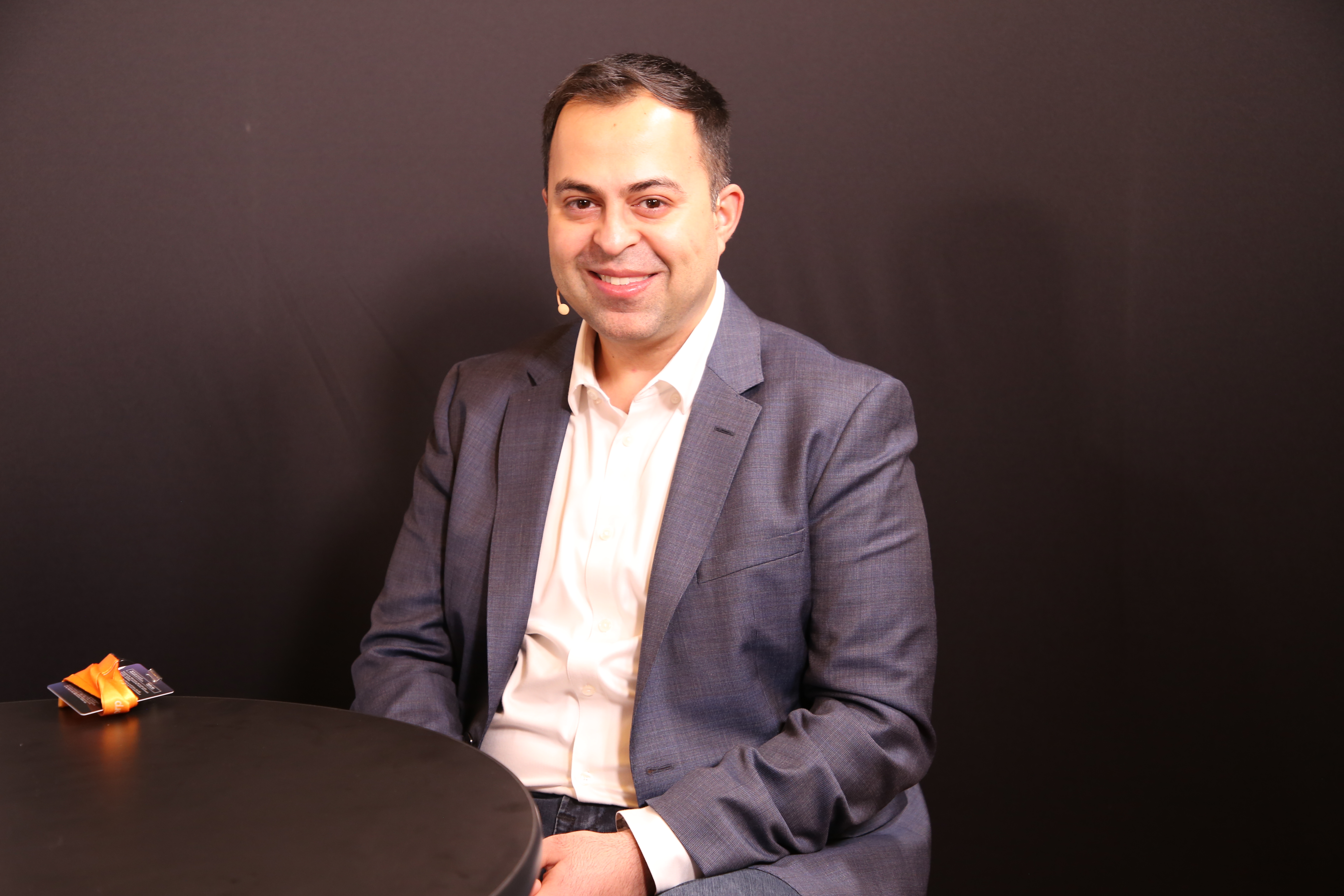
>> Welcome back everyone to theCUBE's coverage here at AWS re:Invent. We're here in the Venetian on the floor here in the action, bringing all the news, the thought leadership, and explaining all the new announcements. It's been like a holiday season. All the gifts from re:Invent keep coming. We're going to unpack it. We're going to unpack SageMaker. Ankur is here, director GM of Amazon SageMaker AI. Ankur, great to see you. Thanks for coming back on theCUBE. Appreciate you spending some time with us.
Ankur Mehrotra
>> Thanks for having me. I'm excited to be.>> What a great event. The keynotes were great. Peter's Monday night was enough content to keep you full for six months. A lot of innovation on the infrastructure side. Just advancements. Just looking at all the performance that's happening, all the innovation at scale. Amazing stuff. Obviously, the keynote, Matt and Andy Jassy came on stage. Then Swami's keynote. You can start to see where the AI is going end to end. We start to see things like zero ETL. Now it's just standard, zero ETL and S3. Table buckets. Come on. Amazing work across the board for the team. One of the things that came out of this event is that Bedrock clearly is that middle layer for models, the model selection, and dealing with that for developers. Inference is a building block. But SageMaker was one of the stars of the show, and it's now clearly understood or defined within Amazon's stack where it sits to run and help provision and manage all the underlying greatness of what's now Trainium two. You got the UltraServers, all kinds of advancements. You got the Nvidia relationship expanding. A lot of great hardware and advancements. Again, that's good for the business. SageMaker becomes now integral part of the system. You got this, I called it the shim layer. Dave Brown and I were riffing on this, but it's really there to help. Now it's called SageMaker AI, because it's expanded. Let's get down and dirty on the SageMaker AI. It's the same SageMaker with more stuff, basically. Explain the positioning of SageMaker, where it sits, its role, what's its goal, how are people using it, how will people be using it as more models get trained, fine tuned, and as developers start tapping into the inference building block? Go ahead.
Ankur Mehrotra
>> Thank you, John. Let me give you a little bit of a background on how SageMaker has evolved. We launched SageMaker back in 2017, and it's been a service for building, training, and deploying machine learning models. Today it's used by hundreds of thousands of AWS customers. A few years ago, machine learning was mostly a data scientist pursuit, and data scientists were taking data within organizations and building machine learning models. Then over the years we saw more personas getting involved. We saw MLOps engineers getting involved to actually put those models in production. Then we saw data engineers get involved to help data scientists prepare data to build these models. Then we saw business stakeholders get involved in the decision-making process, et cetera. Then what we did over the years was at AWS to work backwards from each persona and think about what tool can we build for them to make their lives easier, but also build these tools in an integrated way. That's the role SageMaker has played until now, and it has become a very popular service for build, train, deploy machine learning models. What has happened in the past, what we've seen in the past year or so is that a lot of customers told us that they are seeing that oftentimes they want to analyze their data and manage their data and build, train, deploy AI models together. They wanted to see our services and tools that do solve these problems to work together, which is why at this re:Invent, we launched something called Amazon SageMaker Unified Studio, which now provides single pane of glass, a unified interface for customers for both data and AI model building. That's what we launched, and as part of that, what we've done is what was known as SageMaker before is now known as SageMaker AI. It's the same service but with more capabilities, but SageMaker is now the center, is a platform for all of data and AI. Go ahead, please.>> It understands the underlying role of the job you're trying to do.
Ankur Mehrotra
>> Exactly.>> If I'm running stuff on EC2 the old way, well, the way people do it, SageMaker has knowledge about things. For example, if you're running Kubernetes on EKS, for instance, and you want nodes or got to spin up some nodes, all this stuff has to happen. SageMaker does that. SageMaker does things like that, right?
Ankur Mehrotra
>> Yes. SageMaker manages those tasks on your behalf, and that's why it's a managed service. For example, if you were to build a model or you were to deploy a model, then SageMaker or SageMaker AI now would actually provision the infrastructure and set up the tools and take your data and run the job to do that task.>> It has knowledge about the job you're trying to run.
Ankur Mehrotra
>> Right. It has the context, it has the knowledge about what you're trying to do, and then it can orchestrate that. It can provision the infrastructure and it can orchestrate that task for you.>> On the cloud-native world and Kubernetes world, as Kubernetes gets boring and more like Linux, which we all love, there's a lot of things that have to go on to get set up for the job. That's like blocking and tackling. You got to get that done. Chopping wood, carrying wood, whatever the metaphor you want to use.
Ankur Mehrotra
>> That's the meme. One does not just deploy Kubernetes. You've all seen this.>> Yeah. But again, that's just one instance, because you have to do all this work to set up the infrastructure for the large language model, whether you're training or fine tuning.
Ankur Mehrotra
>> That's right.>> That's a lot of heavy lifting that you got to do.
Ankur Mehrotra
>> That's right.>> That's where SageMaker -
Ankur Mehrotra
>> SageMaker does that. Yeah.>> In the past it was like spin up some EC2, do some stuff, build some stuff around it. Now SageMaker now-
Ankur Mehrotra
>> Exactly. That involved a lot of undifferentiated heavy lifting and that customers have to spend time and resources doing that, and now they don't have to.
Dave Vellante
>> SageMaker AI, what was formerly SageMaker, was some of this primitive, if I could, but the umbrella has now expanded. You described that, but backing up just a little bit, the way it was positioned in the keynote is we see analytics and AI using the same data, and so we see those worlds coming together. It really is data, analytics, and AI coming together.
Ankur Mehrotra
>> Coming together.
Dave Vellante
>> Which makes a lot of sense. It was interesting. I think there was a comment. Not a lot of people are thinking that way. Maybe some of your competitors, but certainly we think that way. Bring it all together. That's what we want so we can serve up these agents someday. Maybe you could describe that and describe that umbrella.
Ankur Mehrotra
>> Yeah. Essentially, the umbrella until a few days ago included only tools for building, deploying, training, and deploying AI models, and now it also includes data tools. For unified access to all your data and organizing that data and then finally using it to build, train, and deploy models. In addition to that, we've also made Bedrock IDE, which provides an interface for you to build generative AI applications using Bedrock. That is also now available through the SageMaker Unified Studio. Then SageMaker Unified Studio, which becomes the single pane of glass or the unified interface for this umbrella, also provides centralized governance across all your data that you're using for your data and management and AI workloads.>> Here's the way I think about it. Now, correct me if I'm wrong, Ankur. I'm going to try to simplify, because it's very nuanced, but it's important. Bedrock is for the speed option. I want to do some RAG, do some vector embeds. I'd use Bedrock. A lot of enterprises might use that and it runs. SageMaker is when I want to do stuff like build stuff myself, tap into EC2 a little bit, do more customization. It's crafting it. Is that right?
Ankur Mehrotra
>> When you want to take data and augment data and then build or train or fine tune a model, then you use SageMaker. Now, you can deploy those models on SageMaker as well, but then with Bedrock, what you do is you have models there ready, and you focus on building a generative AI application artifact using generative AI building tools in Bedrock such as guardrails, agents, RAG, et cetera. We also have created an integration between SageMaker and Bedrock. If you have for example, fine tuned a large language model in SageMaker, you can import its model weights as we say into Bedrock and then use Bedrock to access that model in a serverless way.>> Yeah. Bedrock is just an easy interface. SageMaker does all the work, sets things up like the old days. Spin ups from servers, run your application on it. I'm oversimplifying, but that's how the old SaaS model was. SageMaker is the key layer, SageMaker AI, for getting up and running basically with AI.
Dave Vellante
>> I think it was Matt said this is not just a bunch of tools that we've cobbled together. What's interesting is Amazon always has not gone away from its primitives and its ability to get fine-grained services, but you're simplifying the experience. I don't know if it's a solution or not, but is that the right way to think about all this umbrella?
Ankur Mehrotra
>> That's correct. We work backwards from our customers and their needs while designing and building these tools. Each of these tools solve a particular problem and may also cater to different personas. For example, we have managed notebook environments, which data scientists use to write their code and execute and experiment. But then we also have other tools for building automated pipelines where models can go from trained models to then testing and then deployment and model monitoring, and that's actually used by MLOps engineers. We have different tools, but we've built this experience in a way where the handoff is seamless from one persona to another, and it's an integrated environment. It has access to the same context, the same data, the same models.
Dave Vellante
>> The services of the umbrella, the lake house, governance, et cetera, are all there as well.
Ankur Mehrotra
>> All integrated.>> The thing about Trainium two, one of the things that came out of the show was the new enhancements. You've got the UltraServers, the neural lake. If I want to run, say some capacity blocks, I use SageMaker. This is where it starts to get really into the crafting and orchestration of what I'm trying to do. Why would I get capacity blocks? I want ultra high performance.
Ankur Mehrotra
>> That's right. John, we launched that capability actually yesterday where now you can, with SageMaker, you can spin up capacity blocks and build models over those.>> Talk about that, because I think this is a nuance. Again, this is all under the hood kind of stuff. This is what people want. I want to run a GPU cluster. I want high performance. You got to get in and configure. Not to oversimplify, remember the old days, put your credit card down, stand up some EC2, run a web app. Really cool back in the old days. Hate to use the word old. Andy would hate that, but cloud one, that was easy. That's Amazon. Here I can set up a supercomputer, basically. -
Ankur Mehrotra
>> Yeah. Let me tell you how we solve this problem. In the last couple of years as customers transition from just doing predictive model building to generative AI model development, both training, fine tuning, deployment, we saw some new challenges emerge, because these generative AI models require, as you mentioned, a GPU or a Trainium cluster or accelerated compute cluster to do your work on in a distributed way. We saw new challenges emerge in terms of setting up and scaling your jobs across a large number of GPUs or Trainium instances. Given the nature of the work, even if there was one infrastructure fault, even if one GPU Fails, then your entire cluster is down. We realized that at this scale fault tolerance is really important. Then we realized that how well your cluster resources are being utilized by a model training job is really important. Because of these new challenges, we thought that we needed to solve this in a different way, because of which last re:Invent we announced SageMaker HyperPod, which is a purpose-built capability for generative AI model development. In HyperPod, you can basically easily set up a GPU or a Trainium cluster and you can easily scale up your cluster and manage the cluster with familiar tools. Also, SageMaker takes care of automatically resolving any bode health issues within the cluster and provides a self-healing cluster environment and also improves the performance of your training, fine tuning jobs within that environment. We've launched some new capabilities in HyperPod that I'd love to tell you more.
Dave Vellante
>> Could you summarize the launches? What's in preview? What's in GA? Help us understand the map.
Ankur Mehrotra
>> Absolutely. Yeah. The first challenge that customers run into when they want to, let's say run a generative AI development job, whether it's training or fine-tuning, is, "Hey, how do I easily find a compute capacity and set up my infrastructure?" Sometimes the compute capacity, as you know, there's high demand for accelerated compute for GPUs, Trainium. Oftentimes customers don't find that capacity when they need it, where they need it, and also not in a continuous way. To make that easier, now we have a capability in HyperPod called flexible training plans where customers can specify that, "Hey, within the next, let's say two months, I want to train with a certain kind of compute for about 20 days." Then SageMaker goes and finds the most optimal plan to execute that job. It also finds chunks of capacity, which it secures through EC2 capacity blocks, and then creates a plan for you. The plan may look like, well, your training will start at this time and then pause at this time between capacity and unavailability, and then it'll start again when capacity is available. It creates an entire plan for you, and when you approve it, it sets up the infrastructure for you to execute that job and easily you can submit that job and it easily executes that job across.>> You can stand it up, you can pull it down. It's elastic. It's just the classic AWS value proposition.
Ankur Mehrotra
>> That's the first -
Dave Vellante
>> SageMaker is really highlighting the capacity blocks announcement last year. This brings it to life with Trainium two.
Ankur Mehrotra
>> This makes it much more easier, and Trainium two is part of this ,is a supporter that's part of capacity blocks.>> By the way, I was talking to the Poolside guys yesterday and they loved the performance. They were in the early access to that and they said they saw 40%, or the number that was quoted, but without even touching anything. Instant.
Ankur Mehrotra
>> We're very excited about new innovations customers will drive with Trainium two.>> You guys crushed it this year on the infrastructure stuff.
Ankur Mehrotra
>> Thank you.>> Got to say.
Dave Vellante
>> Were there other pieces?
Ankur Mehrotra
>> Yeah. That's the first part.
Dave Vellante
>> That's available today?
Ankur Mehrotra
>> Generally available as of yesterday. That's the first problem, which is about finding compute capacity and setting up the infrastructure. The second challenge customers run into is, "Okay. Well, I've got my infrastructure set up now. Now I want to train or fine tune a model."
That requires weeks of experimentation, tweaking different parameters, and optimization, applying different optimization techniques to actually get to the most optimal performance. Many a times customers are using publicly known model architectures such as the Llama architecture, Mistral architecture, Mixtral architecture, et cetera. We thought, "Well, why is every customer doing the same work? We know our infrastructure. We know what these model architectures look like. Why don't we just do that optimization and let every customer use it?" Which is why yesterday we announced HyperPod recipes as being generally available. These are pre optimized and benchmark recipes, which customers can just get started with. They can pick the model architecture that they want to train or fine tune with, and these take care of applying the most optimal parameters for your training or fine tuning job. They also make other decisions on your behalf such as selecting the appropriate check pointing frequency so that your work is being optimally saved as your job executes. Really it helps you get started with training or fine tuning generative AI models in minutes.
Dave Vellante
>> That's available today?
Ankur Mehrotra
>> That's generally available.
Dave Vellante
>> Okay. Great.
Ankur Mehrotra
>> Yeah. Okay. Once you've gotten up and running, our customers told us that over a period of time, the number of generative AI model development projects within their organization increase.
Dave Vellante
>> AI sprawl.
Ankur Mehrotra
>> Yeah. They have a larger backlog of ideas to try than they have the capacity and the resources to execute on them. What happened was, and I actually tell you a story from Amazon here, the same thing happened at Amazon where a lot of teams were executing and trying out different ideas in parallel, and they each had their own compute cluster that they were operating on. As a result of that, what happened was some teams left their compute clusters underutilized while some teams couldn't get enough compute capacity. We said, "Okay. We need to solve this problem, because this is slowing us down." Internally, we built a service that combined all the compute capacity together in a single pool and built a governance layer on top to let all teams execute their jobs on that one cluster in a way where jobs were prioritized and capacity was managed appropriately. We said, "Okay. Well, our AWS customers also face the same problem, so why don't we externalize the solution?" That's what we launched as HyperPod task governance yesterday. The way it works is you can create a HyperPod cluster. This is a cluster of GPU or Trainium instances. As an administrator, you can go to a console and say, "Hey, I'm going to have team ABCD run on the shared cluster. I'm going to define compute budgets or limits for each of these teams." Let's say team A gets these many X number of GPUs and team B gets Y number of GPUs, and so on and so forth."
I can define priorities across different types of tasks, whether it's training, fine tuning, inference, et cetera. I can define preemption rules. For example, I can say that, "Hey, if a higher priority job comes along, the system should pause the lower priority job to make space for the higher priority job."
Also, set up rules that can say that, "Okay. If team A is under utilizing their compute capacity, then Team B's jobs should automatically run on that idle capacity to utilize it." Then you can ask all your teams to run all their jobs on one shared cluster, and then HyperPod goes and dynamically allocates capacity to all the tasks adhering to the prioritization rules.>> It sounds like an operating system to me. It feels like an operating system. This is incredible to me, because the power that you guys are bringing to the market, that's super computing. You're bringing AI clusters, just standing them up, again like servers, but it's not. They're systems. These are engineered systems that are being managed by the SageMaker layer. It's almost custom building.
Ankur Mehrotra
>> That's true. These clusters are not easy to manage and they require a lot of time and effort, and that takes time and resources away from doing actually actual value added work.
Dave Vellante
>> That's where recipes come in.
Ankur Mehrotra
>> That's where recipes come in, that's where flexible training plans comes in, and that's also where this new task ->> Andy was just telling us. We had an exclusive video with Andy, and Dave asked him some pointed questions around how you see the future. He went to his, I won't say canned response, but it was pretty much the Amazonian way, which is, "We're just trying to get the cost down, because the big pressure now is costs."
Because if you don't configure something properly, one, you're not optimized. Two, you will just spend too much, because it's still expensive as a resource. Squeezing as much price performance, and this is again back to price performance. You want price performance. You don't want just price. Price performance, this is a key part of tuning the price performance equation.
Dave Vellante
>> That was your internal motivation here, and now you've pointed it externally, as you ->> Exactly.
Dave Vellante
>> You built the governance on top so it's not bolted on after the fact.
Ankur Mehrotra
>> Exactly. We're seeing customers reduce their costs up to 40% with just this task governance capability, because it lets you get more work done within a finite amount of resource.>> This is GA as well?
Ankur Mehrotra
>> This is also generally available.>> Give us some examples of more customers. Give us some use cases. Who's using it? What are you seeing? What are some of the early things from a configuration standpoint, from a recipe standpoint? How are people using the pods? Give us some use cases? Which customers? I know Poolside was mentioning a little bit of work, but they didn't go into great detail. I know Intuit is leaning into this. They're one of your big customers. They have personalized systems. I think that's what I've heard. Share.
Ankur Mehrotra
>> Yeah. A lot of the new generative AI models that are being built or fine tuned on AWS today are now being trained or fine tuned on SageMaker HyperPod. For example, yesterday you saw Luma AI present in Swami's keynote, and they talked about how they've built new Ray models. Those have been built on SageMaker HyperPod. The latest versions of Stable Diffusion models, they've been built on HyperPod. Perplexity AI is another big customer of ours, and they've trained their models on HyperPod as well.>> We love Perplexity, by the way. Shout out to Perplexity team.
Ankur Mehrotra
>> We love ->> -
Dave Vellante
>> We don't mind.>> Realtime information. We're real time. They're good. They're getting great data.
Ankur Mehrotra
>> That's right.>> I hear they're getting real low-level integrating in, but the trend is to get to the SageMaker piece from a developer standpoint. Others like Anthropic is close into the Trainium levels, too. This is a trend. People are getting down and dirty developer wise.
Ankur Mehrotra
>> Not just gen AI startups. It's also Salesforce, for example. They use SageMaker HyperPod for fine tuning models and they also were our beta customer for the recipes that we launched, so we were super excited to get ->> Okay. If you had to make a recommendation to your best friend who's sitting there scratching his head or her head saying, "I really want to turn up the action in my company. I got all this data. It's on-prem. I want to move it to the cloud, start taking advantage of some of the goodness here." What would you say? What would you be most excited to recommend? It's like the favorite dish at the restaurant. Go with this entree. What would you say to someone?
Ankur Mehrotra
>> I would say SageMaker is now the center for your data and AI. It's ready for you to bring your data in and you can manage your end-to-end data to an AI model running in production workflow through SageMaker.>> Tailor the performance levels to exactly what you need.
Ankur Mehrotra
>> Exactly. It has all the tools to optimize performance of your models and run them at scale, and of course, you get the security and privacy of->> In every wave, Dave and I also went, we're going to do our QPod after this, and we'll probably talk about this. But Dave, in every wave we talk about the price performance. We always compare the PC revolution when the chips were getting better, the next 86 comes out. It was always the price performance. Now it's back. price performance. We're in a similar cadence of the performance is getting better, but price is still high, but the performance is higher. Price performance is a super important benchmark. Tell us your view on this and how SageMaker is designed for me so I'm always maximizing and riding the best price performance wave. Because in those cycles, by the way, again, we talk about this all the time. The software guys just wrote fatter software. I say fatter software, but more software because it could run faster, so the apps got better. It'll be different in AI, but similar trajectory.
Ankur Mehrotra
>> Definitely. It's happening in many ways, not one. First of all, the underlying infrastructure itself are the accelerated compute instances that we offer to customers using SageMaker. From Trainium one to Trainium two, the price performance benefit improvements that we're driving as well as it's not just the instances, but as well as the software optimizations. We have various software optimizations that optimize how efficiently a training job runs or how efficiently an inference request is served, so that also those improvements, we continue to add new improvements over time. That is also continuing to improve the price performance aspect of running AI models. Then at the same time, the tools that our customers use, whether it's data scientists or MLOps engineers or data engineers now. They're also continuing to improve so that when the productivity or efficiency is improved, that also, I would say improves the price.>> My final question is you're the general manager, which means that you have a business you're running with SageMaker, which is consumption based. It's very clear now where it fits. What's the business goal? Get the product market fit, as we all know, but it's growing and expanding the portfolio. What's the business goals for SageMaker with the team? What are you guys trying to do? What's the focus?
Ankur Mehrotra
>> Well, the focus across AWS, and I would say across Amazon really, is we like to obsess over our customers and we work backwards from their needs. Part of our roadmap of what we build, our products is informed by just features that our customers ask us for, but a big part of our roadmap is also about understanding and anticipating the challenges and inventing on behalf of customers.>> What are those needs now? If I'm a customer, what am I saying? What's the hot feedback that you're working backwards from? What are they saying? "I need this. Go faster." Is it just the classic, "Give me more performance or more GPUs," or what's the main things you're working back from?
Ankur Mehrotra
>> Well, some of the feedback that we got around how customers wanted our data and AI tools to work together that we've addressed through the new SageMaker Unified Studio. Now, there are other things that we expect customers to always ask for improvements on, which is things like better performance.
Dave Vellante
>> Lower cost.
Ankur Mehrotra
>> Lower cost, better price performance. Those we know are things that are a constant, so we know that those are things that we always have to invest in, so we'll continue to have product investments in those dimensions for sure.
Dave Vellante
>> Did we get all the launches, or there are many, many more?
Ankur Mehrotra
>> Well, there's one more I'd like to talk to you about. Many of our customers, they told us that, "Hey, we love SageMaker, but we also like this other third-party tool which solves a specific problem, and we'd very much like to use it together with SageMaker. But today, in order to do that, we have to spend time integrating those tools with SageMaker, and also we don't want our data to be spread across other third-party tools."
We said, "Okay. Well, let's see how we can solve that problem for you." Like I said, we work backwards from our customers and we'd like to offer them choice. Yesterday we announced SageMaker partner AI apps. As part of that, we've announced four apps. One is Comet, which is popular for AI model experimentation. The second one is Fiddler AI, which is known for AI observability. Then Deepchecks for AI model evaluation. Then the fourth one is Lakera Guard, which is for AI model security. These four third-party apps are now available as managed applications within SageMaker, which means that customers can spin up and deploy these applications within SageMaker without managing any infrastructure. When they use these applications, their data stays within the SageMaker development environment and the data is never shared with any third party.
Dave Vellante
>> That's available?
Ankur Mehrotra
>> That's available. Generally available.
Dave Vellante
>> Everything GA . That's good.>> Ankur, great to have you on theCUBE. I'll end on one tweet. I thought it was humorous to wrap up. Matt Turk, a VC out of New York, had a tweet said, "2010, the problem for analytics is that our data is messy, siloed, and all over the place."
Dave Vellante
>> 2024.>> "Fast forward to 2016, the problem for BI and ML is that our data is messy and siloed and all over the place. 2024, the problem for AI is our data is siloed and siloed and all over the place." This points to some of the things we heard in the keynote. Get the horsepower, build some great integration like S3 Tables, for instance, which create a lot of interesting ways to get data out of their silos. Get horizontal view. Your reaction to that quote. Obviously, it's a clever quote. It's hyperbole, but it just goes that the data is the root of the problem.
Ankur Mehrotra
>> Well, also applying data to AI, because that's how customers now realize value from data. But I agree with you and that's the problem we are solving ->> I'll tell you, theCUBE data is not messy. It's not siloed. It's free. It's open. It's all over the place. It's out there. Ankur, thank you for coming on theCUBE.
Dave Vellante
>> Great to have you.>> We're wrapping up re:Invent. Thanks for coming on. Really appreciate your time, and congratulations on the SageMaker. I like the positioning of it. Looks like it's going to be a good product market fit, so congratulations.
Ankur Mehrotra
>> Thank you. Thank you for having me. Good talking to you.>> All right. I'm John Furrier, host of theCUBE with Dave Vellante, bringing all the action here at AWS re:Invent. Thanks for watching.