We just sent you a verification email. Please verify your account to gain access to
Cloud AWS re:Invent Coverage. If you don’t think you received an email check your
spam folder.
In order to sign in, enter the email address you used to registered for the event. Once completed, you will receive an email with a verification link. Open this link to automatically sign into the site.
Register For Cloud AWS re:Invent Coverage
Please fill out the information below. You will recieve an email with a verification link confirming your registration. Click the link to automatically sign into the site.
You’re almost there!
We just sent you a verification email. Please click the verification button in the email. Once your email address is verified, you will have full access to all event content for Cloud AWS re:Invent Coverage.
I want my badge and interests to be visible to all attendees.
Checking this box will display your presense on the attendees list, view your profile and allow other attendees to contact you via 1-1 chat. Read the Privacy Policy. At any time, you can choose to disable this preference.
Select your Interests!
add
Upload your photo
Uploading..
OR
Connect via Twitter
Connect via Linkedin
EDIT PASSWORD
Share
Forgot Password
Almost there!
We just sent you a verification email. Please verify your account to gain access to
Cloud AWS re:Invent Coverage. If you don’t think you received an email check your
spam folder.
In order to sign in, enter the email address you used to registered for the event. Once completed, you will receive an email with a verification link. Open this link to automatically sign into the site.
Sign in to gain access to Cloud AWS re:Invent Coverage
Please sign in with LinkedIn to continue to Cloud AWS re:Invent Coverage. Signing in with LinkedIn ensures a professional environment.
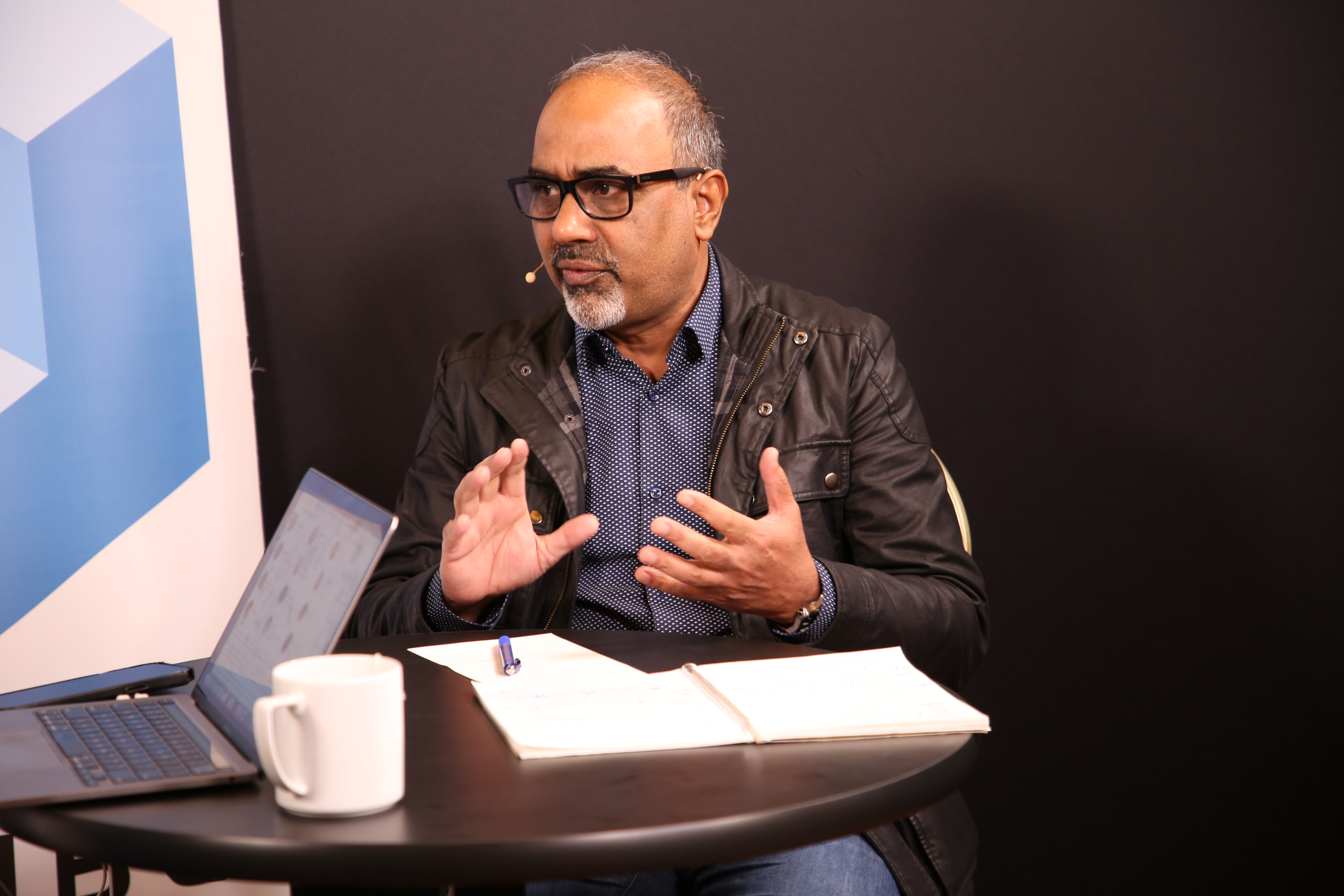
John Furrier, host of theCUBE, is doing interviews at AWS re:Invent 2024 in Las Vegas. Sarbjeet Johal, a technology analyst, discusses the keynotes and announcements. The event focused on hardware, AI, and developer tools like the Frontier models and Q for Developers. Amazon is making strides in gen AI and taking shots at competitors like Microsoft and IBM. They are enhancing their developer and business tools to support hybrid applications that combine old and new technologies. The overall takeaway is that Amazon is ahead in the game and helping developers n...Read more
exploreKeep Exploring
What are some of the key enhancements and features of VMware's latest updates and offerings?add
What are some key takeaways from Amazon's Frontier model in relation to their position in the AI industry and their approach to helping developers build the next generation of applications?add
What are some considerations for embracing and selecting vendors for the changing world of gen AI technology?add
What are some factors that will determine the pecking order of vendors in a world of heterogeneous systems combined with open source software and open systems?add
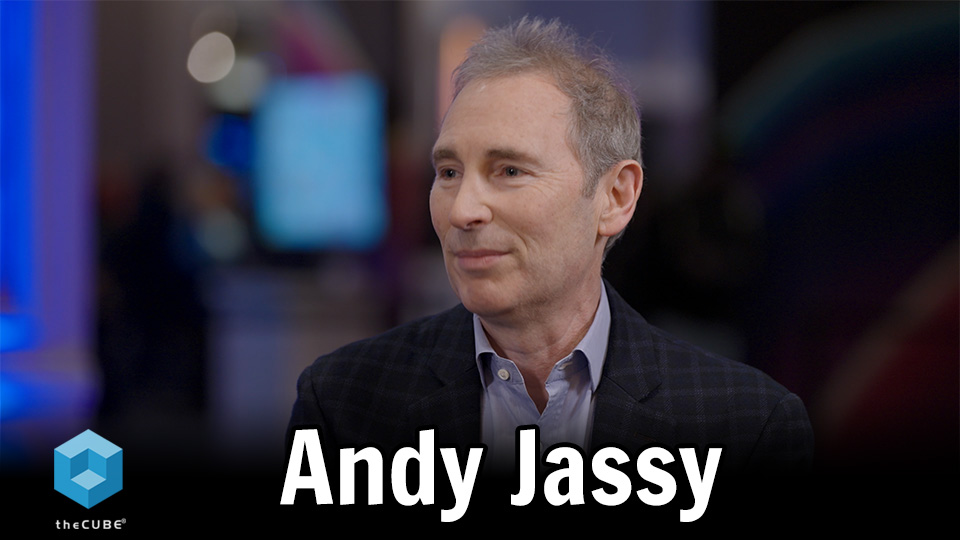
>> Welcome back everyone to theCUBE's coverage here in Las Vegas for AWS re:Invent 2024, 12th year. I'm John Furrier, your host of theCUBE. I'm here doing interviews all day, yesterday, today, Wednesday, Thursday, and the analysts at the Wynn. Dave Vellante and theCUBEResearch team is there. I'm holding down the fort here, doing the podcast, doing the interviews. Sarbjeet Johal's here, he's a technology analyst. Stack Plane->> StackPane.>> Stackpane.>> Pane, P-A-N-E.>> Pane, not plane, I think data plane, control plane, StackPane. Great to have you on here. You always do your analyst notebook segment. We had Paul Nishwati on earlier. You're in the sessions, you're talking to all the people, getting all the stories. What's in your notebook? What is the current re:Invent? Obviously the keynote is phenomenal. Jassy made the appearance. But starting to see now as we get the big ones coming. You get the late night one with Werner. What are you hearing?>> Yeah, we have two keynotes to go, but the two keynotes are done. Me and Dave were at last night's keynote. They have announced new chips, new server. So that's not a surprise. Nothing is surprising there from the hardware point of view. But today's keynote was, I think, great because it was orchestrated well. It was orchestrated the way you slated after the interview with Matt in Seattle. So they put the primitives forefront, actually the core components, compute, storage, and then network, so they put that in front. And in between they roll their announcements, that was, I think, smartly done. And after that they went into the AI and gen AI space. They covered some of that and then they brought in Andy Jassy and then they finished with theCUBE, two flavors of CUBE. So I think beautifully orchestrated and I mean->> Emotion packed. And they had every minute was curated. It was jammed.>> Announcement after announcement. And a couple of customers in their->> Well. They started out the keynote with Matt Garman's keynote first thing, community. Heroes were called out. That was awesome. I was talking with Drew Fermenti on LinkedIn, who's a LinkedIn friend. Loved the Matt Garman's interview, but he's talking about the Heroes. He must have known, we may not have known, but Heroes was called out. His second point after calling out the community saying the community is super important, developers.>> Yeah.>> Okay. So to me that was a game statement, by Garman. Community developers. My post was back to the basics, which was the theme. Of course, gen AI's got the hype and they will have something there. And then Jassy flexes muscle, "We've been doing AI since forever," and gave some use cases. So I think they're going to get past the skeptics and the pundits saying they don't have AI, they're going to just let their game do the talking. But community, developers and infrastructure performance, I mean this is their bed and bread and butter, clearly. And then obviously Deepak Singh with Q for Developers. And you got Dilip Kumar who heads up Q for Business. Clearly code support, democratizing non-technical access to develop. Again, driving the other engineers and developers down to the low level. I mean, this is what we talk about on theCUBE. You and I talked about this, what, five times in the past sessions you've been.>> Two years, yes.>> It's happening.>> It's happening. So actually we were just talking before we started recording here, guys, or going live, that there's no magic in computing. There's logic there. There are zeros and ones and they get flipped based upon what we tell computers to do. And in this case, large language models are telling them based upon our prompts. So I have had numerous discussions with IBM folks and with few Google folks, and here some of their experts here who are all these PhDs in gen AI and AI. And I qualified my thinking with them. And the fact is that when we view the next generation applications, they will be hybrid applications. We will use the old constructs, data coming from the actual databases where it sits there right now, and then also the gen AI agents will be called in. So workflow will use the old primitives as well as a new small language models as well as large language models through APIs. So that's how these applications will be written, because I have come up with this one-liner that our applications are the codification of laws of the land. So I live in Alameda County, my property tax rate is 1.08, whatever percent is that. You can ask LLM and it gives you 1.2% today and 1.5% tomorrow. You can't rely on these large->> There's hallucinations everywhere.>> Yes, exactly. So actual data will be actual data. They're regulations, there are laws and states->> You can't be wrong. As JPMorganChase said, "We can't have a bad day. We can't be wrong ever.">> Exactly, yes. So I think for that reason, we'll be hybrid for a long time to come, maybe forever. Maybe quantum computing will help alleviate some of these concerns. So that's there. But let's talk about developers, so we can go, there's so many announcements. Let's talk actually about the Frontier models. I think that was huge.>> That was a big news. That was the reveal.>> Yeah.>> Jassy got that one.>> That was the reveal. They kept a secret. We didn't know that. By the way, folks, we were told yesterday in a one-hour session that what the announcements will be made. But 80% announcements were there from that session.>> Did they talk about Nova or no?>> No. No, they didn't talk about that.>> They kept it.>> They kept that secret.>> Yes.>> That was top secret. So I was surprised when they announced their Frontier model in four flavors. And then they have the video model and the photos and graphics model.>> It's getting all the buzz in the press right now. The journalists, I would say, they don't know the nuance like we do. Hence, they go for the story that they can understand that is, "Oh, Apple was on stage." Yeah, okay. Really? That's the top story?>> Yeah, actually I think they couldn't dissect maybe. Most of the people who are reporting news at these news organizations, most, not all, they're not techie. They don't understand the nuances. So I think with the Frontier model, Amazon has joined the main league of gen AI as Google, including Anthropic, that's Facebook, that's OpenAI. So they compared on stage the performance of the newer model with those models. So that was huge. So it's not like a .>> What else do you have? What else do you have?>> So yeah, I think they took stab. Let's cover this next thing I want to cover, is that they took stab at few vendors. They took stab at Microsoft by saying that, "We want you to get out of Windows." And then how they want to do that is that they want to move all .NET applications from Windows to Linux. And the Q for developer will help in that. So Q for helper has a code agent->> Code migration.>> Yeah.>> Basically code modernization.>> Code modernization to get off the Windows. And there's another not code migration, in this case it's like ops migration, that they want people to move off of VMware into cloud native. So the way it was said yesterday in one hour session, a secret session for a few of us, that was said very bluntly. But here they mild it down a little bit from the main stage, but they want to give people option to get off VMware. And the main thing there is that they will give you the network topology mappings. So if you have VMware, they'll say, "We'll map the network to AWS network." So I think that's huge. So they also took a shot at, you can say IBM through the mainframe modernization. So that's another one. And they also enhanced the Q for developer for unit tests, for documentation and code reviews. So those were three enhancements. So they beefed up the Q for developer a lot, because it's a well-contained environment, they understand it all. For Q for business is still generic service, if you will. But in there they're doing a very clever or smart thing. They are giving you indexing mechanism where you can plug in the business-specific knowledge as an ISV or as a typical enterprise. So you can push your data, your domain-specific knowledge into Q for business through that mechanism. I think that's clever thing they're doing. So those are the things on the Q. What else? Another Q analytics actually, they spend a lot of time on the analytics and how they're merging, they're saying that the analytics world and the gen AI world will merge, and how data from relational databases or all different types of databases, relational, non-relational, can be brought into the model training. And they showed us quite a few slides during the analyst session.>> What's your big takeaway, Sarbjeet looking at all this? You got the notes. What's your big, when you zoom out, what's happening right now? What's really happening at this moment in time?>> Okay. My biggest takeaway is this, that Amazon with their Frontier model has got this illusion removed. People who know Amazon AWS, they knew that we have the subsets, that this vendor has subsets. But they removed this fictitious fear from mass's mind that, "Oh, they're behind.">> They're behind in AI.>> Yeah. That's gone. That's gone. So that's number one. The number two is, like all vendors, they're ahead of the game, but they're still trying to help the developers get their head around how we will build the next generation applications. So Bedrock, how the Bedrock will be used, that is still being worked on. And they are showing the examples of code and how you will weave in the old with new. So that's still work in progress like it is at IBM, like it is at Google. But they're ahead of the game because they're so close to the primitives. And the last thing I'll say from the main three takeaways is that we have talked about this many times, that AWS actually is at all strands of the platform and the infrastructure. You take any little strand, the three core pillars like compute, storage, and network, under that, there's so many pillars like wireless , on-prem, cloud, different flavors of network, different flavors of storage, different flavors of compute. Now there's GPUs and all that. So they are innovating at all levels. And that is the key actually. And if you are a vendor who wants to stay up-to-date or the cutting edge and you want to work with a vendor, I think they're one of them.>> Let me ask you a final question. If you're a company out there and you're trying to figure out what side of history I need to be on technically and business model-wise to survive and thrive, in which side of the street is the extinction event? How would you describe that? What's the line, what side of the street is the success side and which side of the street is the you're out of business side? How would you take a stab at that? It's a tough question, but I want to put it out there.>> Yeah, I think it is like age-old question. If you are afraid of change, then you will be hit by change. So you will be killed by change. So you have to embrace the change. And the change in our world these days is gen AI. You play with it, but you don't want to rely blindly on it. The use case selection is super critical, and the vendor selection is very critical as well. So those two.>> Because there's no expression beauty's in the eye of the beholder. And if you're an enterprise, your beauty is your deal, like your company, your business model. So there's no vendor version of you that's like, "Hey, I can help you be successful." I think we're seeing an era of hyper customization, where customization is a feature, not a bug. Because workloads are workloads. They operate the same application: human resources application or finance application or whatever application, customer application. It could be called the same in one company, called the same in the other company, but it could behave completely different. One might have VMware in it that they love. The VMware modernization, I mean, I'm bullish on VMware. I think they're going to survive because it's core plumbing in companies.>> Yeah. Talking about plumbing. Before I came here, our plumbing broke at home. I had to change my flight three times. So plumbing is so essential, especially if your home is old, 20 years old.>> If your plumbing breaks in the enterprise, you're missing more than a flight. It's disruptive.>> Nothing works except->> Disruption is not a good business model.>> Yes.>> Well, again, redundancies, resilience is going to be a big topic. I asked Lori Beer, JPMorganChase, she actually answered the question about resilience in gen AI. And she's the first executive leader that has critical infrastructure. I would call it JPMorganChase critical infrastructure. She actually said that. And I would agree with her. They operate at a similar scale of a hyperscaler because they're massive. Do you know their budget's 17 billion a year?>> They move clearly . Tens of trillions of dollars a day, they move around. Yeah.>> And so it's a significant thing. She actually said, "We have a resilient framework," that they're applying to gen AI like Matt Garman said, "It's just another application." So they're very pragmatic and I like that answer. It's pretty strong. I mean, that's a good answer. Now, what that means? Comes back down to the operations, how are you configuring things. So I think we're going to be living in a world where heterogeneous systems combined with open source software and open systems will determine the pecking order of the vendors. And you can't ignore the role of the hyperscaler, Amazon, Meta... Meta's stockpiling a bunch of GPUs, they're winning over the developers with their mojo.>> Yeah. So they're B2C vendor per se. But B2B companies have started to use their large-language model, and they are making that model smaller. There's a term for that, actually I'm missing right now. And then they condensed that model to make it a smaller model, and then they infused their own data into it. So to make a Small Language Model, SLM. SLM, the beauty of SLM is that during the inference stage is cheaper to operate and you pay a lot less bill.>> Well, Sarbjeet, great to have you on theCUBE again. As usual, congratulations for digging into the data. Thanks for coming in with all that knowledge from the Analyst Summit, bringing your analyst notebook here on theCUBE. Great to have you. Thanks fro coming on.>> Thank you. And we are looking forward to two more keynotes. And thanks to you and thanks to Dave and thanks to all CUBE team. And you guys are bringing actually the real stories out of this conference. This is the only real game where we get the real .>> We got all. We get blanket cover.>> Thanks to you, guys, all of you behind the scenes.>> He knows how to schmooze everyone behind the desk. They do a great job. The production team, they're awesome. And again, we're doing our part, whatever it takes to get the story. The flow on siliconangle.com is at an all-time high. Team coverage, blanket coverage of re:Invent. Our 12th year, we get theCUBEResearch team, theCUBE Collective of research friends. It's an open network, it's a trusted network of innovators and people contributing content. And loved your video coming in. And of course, we'd love collaborating with you out there. We'll be right back with more to wrap up today's segments right after this short break.