We just sent you a verification email. Please verify your account to gain access to
Cloud AWS re:Invent Coverage. If you don’t think you received an email check your
spam folder.
In order to sign in, enter the email address you used to registered for the event. Once completed, you will receive an email with a verification link. Open this link to automatically sign into the site.
Register For Cloud AWS re:Invent Coverage
Please fill out the information below. You will recieve an email with a verification link confirming your registration. Click the link to automatically sign into the site.
You’re almost there!
We just sent you a verification email. Please click the verification button in the email. Once your email address is verified, you will have full access to all event content for Cloud AWS re:Invent Coverage.
I want my badge and interests to be visible to all attendees.
Checking this box will display your presense on the attendees list, view your profile and allow other attendees to contact you via 1-1 chat. Read the Privacy Policy. At any time, you can choose to disable this preference.
Select your Interests!
add
Upload your photo
Uploading..
OR
Connect via Twitter
Connect via Linkedin
EDIT PASSWORD
Share
Forgot Password
Almost there!
We just sent you a verification email. Please verify your account to gain access to
Cloud AWS re:Invent Coverage. If you don’t think you received an email check your
spam folder.
In order to sign in, enter the email address you used to registered for the event. Once completed, you will receive an email with a verification link. Open this link to automatically sign into the site.
Sign in to gain access to Cloud AWS re:Invent Coverage
Please sign in with LinkedIn to continue to Cloud AWS re:Invent Coverage. Signing in with LinkedIn ensures a professional environment.
Chris Grusz, managing director of technology partnerships at AWS, discusses the benefits of moving ERP applications to the cloud and using Marketplace for transacting. He also talks about opportunities for generative AI applications and the launch of Marketplace Everywhere. The conversation focuses on providing index capabilities for data from various applications for generative AI. Chris mentions plans for internationalization and channel expansion in the Marketplace, as well as introducing Marketplace Everywhere APIs. The interview highlights the importance...Read more
exploreKeep Exploring
What are the primary pillars that the speaker's team is structured around when managing technology partners in the Amazon Partner Network?add
Why are many companies, including SAP, moving to the cloud?add
What are some of the areas that will be a big focus for Marketplace in terms of innovation and internationalization in the near future?add
What has been the biggest surprise for Chris this year?add
>> Everybody, welcome back to Las Vegas. This is Dave Vellante with John Furrier. This is day four of our wall-to-wall coverage at AWS re:Invent 2024 from Las Vegas. Chris Grusz is here, managing director of technology partnerships at AWS. Chris, welcome back to theCUBE. Good to see you.
Chris Grusz
>> Thanks for having me back. It's always fun to be here with you two.
Dave Vellante
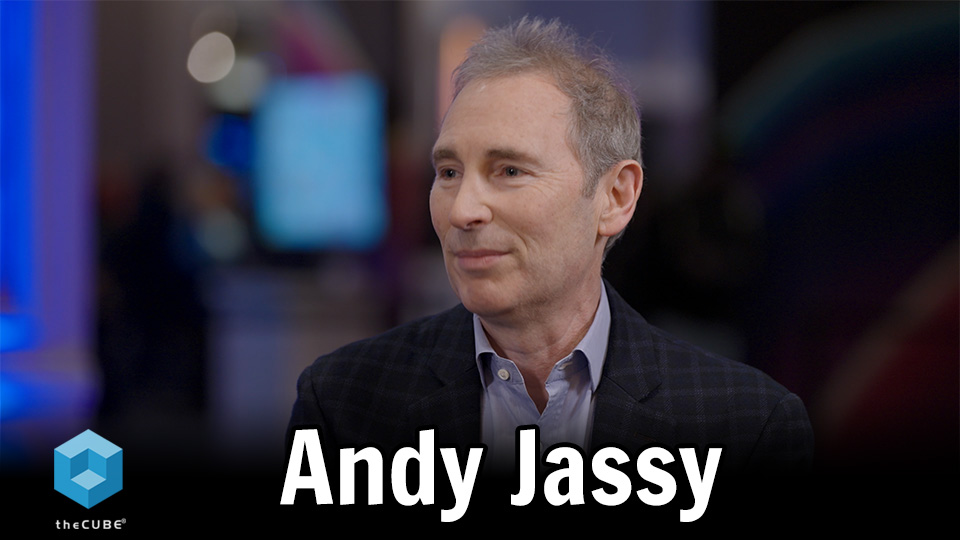
>> So we were just talking to Andy Jassy and he was saying, "People kind of misunderstand, they think when we announce something, oh, it's going to be competitive, it's going to kill the competition." He goes, "These markets are so big, there's so much action. It's not a zero-sum game." My words not his, but it's so true. I mean, the partner ecosystem is just exploded and it continues to grow is amazing.
Chris Grusz
>> Yeah, I mean, AWS doesn't look at these as winner-take-all markets by any means, and we've got a lot of examples. I've been with AWS for 10 years where we launched a service and a lot of times it's actually the opposite. It's kind of like a rising tide lifts all boats. When we launched QuickSight, when I first joined 10 years ago, we still have a very, very vibrant community around business intelligence tools. There's a long history of other services like that. I think a lot of our partners that have worked with us for a long time, sometimes with overlapping services, they recognize that. If anything, it helps us validate that space and actually provides momentum for everybody in that particular technology category.>> Chris, in your role, talk about your role now because you've done a lot of different things in the Marketplace. Technology partners, specifically, what's your focus?
Chris Grusz
>> Yeah, so my remit now is I manage all the technology partners that are in Amazon Partner Network. Now Marketplace is still a big charter for that because the tech partners obviously leverage Marketplace and it's our primary route to market. But my charters really work across all of our technology partner categories, and my team is really structured around three primary pillars. There's the infrastructure partners, so think about those are all the security and storage and networking partners that we've worked with for years. I have a second team that focuses on the horizontal business applications. This has really been the rocket ship part of my business where you think about the relationship that we've had that have really taken off with Salesforce, with ServiceNow. You heard this week, SAP GROW now being in AWS Marketplace. So I've got a team that focuses on those CRM, ERP, the productivity apps and so on. And then I got a third team that's really focused on these vertical industry specific ISVs. So if you think about Epic in Healthcare as an example, as a really good example, or Guidewire Financial Services. That is yet another team that we focus on. And then I've got a fourth team that focuses specifically on startups and we want to cultivate those startups and win those ISVs. And then those obviously feed into all three of those macro categories. And then, of course, the last thing I have is still that Marketplace business development layer because Marketplace at ISV, our tech partners, it just becomes, they're synonymous. You don't have the conversation with one without the other. So it's super exciting and they get to work with some of the coolest technology in the world, the biggest companies, the coolest startups. And so I get energized every day coming to work.
Dave Vellante
>> Cloud ERP is interesting. You mentioned SAP GROW. This is one of the harder applications to actually move to the cloud because there's so many processes involved, so that's kind of interesting and exciting. We're actually at that point now where customers are starting to move those applications. What's their motivation? What are they telling you? What are they getting at?
Chris Grusz
>> Well, I think there's a couple reasons why a lot of them, SAP included, are really moving to the cloud. So, one, it makes it a lot easier for the customers when you're running the cloud platform. Then they can really focus on the ERP technology versus like, "Okay, I've got to have a steady state of servers coming in and I've got an SI to support these." It really just makes it a lot easier for our customers to adopt those technologies. So that's the first piece. The second piece is Marketplace has just become a great way to transact and we've been buying all of our infrastructure products. They don't want to buy those applications, and so it's another big value add. And then the third piece that gets really excited is, when they're now on the cloud, now they can start to do generative AI applications, combining data in SAP and then using that with data in AWS in kind of a zero ETL format. And so this is just awesome for our joint customers because now they can pull that data together. It's no longer siloed in very disparate separate organizations. Instead, it's much easier to stitch that together. And so I think SAP, if you talk to them, they'll say that's the big benefit. It really helps our joint customers. It really brings SAP and AWS closer together and it's really exciting. We've been working with them over the last year, really that's moved to RISE. And so now getting GROW, which is very complimentary to their RISE product in the portfolio was great. We've obviously also been working with them with Signavio. That was the first product they actually launched in Marketplace, which is their BPM platform. And then they have their business technology platform, which is everything else. That's their app server and all the other things that really support RISE and GROW from an innovation perspective. So the relationship's really taken off.>> Yeah, Chris, we had Bhaskaran, the VP of ML Services for SageMaker, mainly infrastructure. He put up the horizontal play. You mentioned it was one of your rocket ship areas, and he was pointing out that the horizontal is really where the action is because that's where the silos are getting busted down. So you're seeing a slew of new categorical application players really nailing the horizontal layer. Explain that piece of the business, because I think this is the fascinating part where Gen.AI, and say, Bedrock and SageMaker is really going to shine.
Chris Grusz
>> No, absolutely. One of the things that we announced this week is basically Q for ISVs. It's an extension of Q for business. And what this effectively does, it provides an index that now all these kind of horizontal technologies. Think about Zoom as an example, it was one of our launch partners. They can actually index that data and have that available alongside Smartsheet, and then they can have that alongside AWS data. And so that's the really cool thing that now we can start to do is stitch this together and make it really easy for customers to combine data across the organization to create these generative AI applications. And so we had a great launch list of partners. Asana was in there, we're really excited about that as well. That went live this week. And we think that's going to be really cool, but that's another big driver for these horizontal technologies to come in, and it works for them as well. Now a Zoom user can actually start to pull in stuff to their environment as well. So it's bilateral .>> There's once you silo the analytics or this were separate things, now they're kind side by side and integrated tightly on a user experience.
Chris Grusz
>> It just makes it easier for the customer. Now we're kind of providing some standardization, which is the key thing. So once you standardize, it just makes it a lot easier. Now build these applications, share that data across without actually having to remove it from those applications->> And context switching and all that other sort of ...
Chris Grusz
>> Exactly. You think about in the old world, they would have to eTail all that stuff out. They'd have to go through a data cleansing process, put in a data warehouse, and that's not very efficient. And so instead now having this index capability to use that across all those applications to now make generative AI applications. That's really cool.
Dave Vellante
>> What else is going on? What haven't we talked about? Ruba has had a huge presence at the show this year.
Chris Grusz
>> Oh yeah.
Dave Vellante
>> She's bringing a new energy to the ecosystem.
Chris Grusz
>> Oh yeah. She's a hard charger. She's been really, really kind of pushing the needle what we're doing. And so the other thing that's really cool, and it's an extension of what I think we talked about last year. But last year this time we launched a product called Marketplace Quick Launch, which really was our first step to making our third-party SaaS ISVs look more and more like a first-party service, right? It really simplified the subscription experience and it also provided the ISVs with the opportunity to put automation templates into their Marketplace listing. So now someone could buy a product and quickly deploy it. Because what we found was that there was this big disconnect once you subscribe to actually deploying. It could take 40, 50, sometimes over a hundred clicks. And Quick Launch was the first launch to actually streamline that. And so that launch last year, yesterday, what you saw was the announcement of Marketplace Everywhere, where we start to extend those APIs so people can do even more of that. And the one that's really cool is what we did with Databricks. So now Databricks has a very integrated solution with AWS. When you're actually within the Databricks workspace, you can actually say, "I just want to subscribe to this through AWS Marketplace." And the API's been extended all the way into Databricks, and so it just makes Databricks now look in more and more like a first-party service.>> How has the technology partnerships changed with the ease of use to integrating in some of the better data integrations? We heard from Swami's Keynote, you see agents right around the corner, obviously, was on here talking about what's going on with her side in terms of that value's being created at S3. There's so much going on and we see things, Anthropa getting close, Trainium2. So you're seeing a lot more connected ecosystem partners.
Chris Grusz
>> Oh yeah. Absolutely.>> In the technology. How has that changed, one, your relationship with the partners, and two, how how's it changed the partner network's value proposition?
Chris Grusz
>> It just makes it a lot easier for us to work with, like work together. So if you rewind back when we launched Security Lake is another good example, right? The big thing about Security Lake is it actually standardized for all of our security partners, the signals that they were sending out. And so we actually came up with a standardized format so that whether it was coming from a CrowdStrike or Palo Alto or Splunk, it could actually be put into a data lake and then our customers could actually now start to build much more of a comprehensive security story. And it was great for these ISVs individually, because they could actually reach into the Security Lake and pull data out as well. And so providing that commonality across our partner ecosystem is so key because it also leads to a better customer experience. Now our customers have an easier way to fit into our shared responsibility model. And the stuff that you heard this week around the data layer, it's a lot of the same thing. You look at the relationship with Oracle, which is very surprising in that we're now actually working together as partners. A big part of that relationship is the zero ETL capability between AWS and Oracle. And so again, it's just making that very easy to actually pull data out of an Oracle environment, use it with AWS data, but actually not actually move it. You're actually leaving in those environments, but you have a much easier way to stitch those two environments together.>> What have been some of the things on the partner side as you guys grow? I mean, it's continue to watch the growth. It's like we're documenting our 12th year to re:Invent. It's like we're documenting it, the history, and it keeps getting better. You guys are always innovating on behalf of the customers, but partners, they have needs. What are some of the things you're doing now that's adjusting some of the challenges like go-to-market. Ruba and I talked when she was in San Francisco for the Global Startups launch. That program's now organized and coherent and pretty much tight, partners growing. What are you hearing for, "I need more of this. Can you do more of that?" What are some of the top needs that you're addressing to keep innovating on the program side?
Chris Grusz
>> Yeah. You heard some of the change that we made to the global startup program when you went with Ruba, but if you take up an extension of that, one of the things that she announced yesterday was that we're now extending a lot of our co-sell benefits down to our entire ISVA list. And so startups oftentimes->> What does that mean for those who might not know?
Chris Grusz
>> Yeah. So ISV Accelerate is our premier co-sell program, and oftentimes it was hard for those startups to get in. They had to have a certain number of references and so on. And we've actually started to remove those bars and focus more on do they have the technical aptitude? And if they did, then we can actually put that in the program. And so now things like our SaaS revenue recognition program is now available to everybody within that program instead of a very small subset. And so that's been a resounding success that we've heard this week, is that it really helps provide a level playing field.
Dave Vellante
>> Because we never know where New York's rocket ship's going to come from.
Chris Grusz
>> Right.
Dave Vellante
>> Chicken and egg, well, you got to pass this hurdle, but they can't pass the hurdle because they can't ... right, and now you remove that barrier.
Chris Grusz
>> Absolutely. You look at this week and you see there's ISVs that you're here in the hallways today that weren't even really around a year ago. You see the explosive growth of you look around generative AI with someone like a Pinecone as an example or Poolside. They're just exploding and having a common framework, which is our Marketplace, that they can snap into. And now suddenly they're at the game and they're able to go and do the co-sell. Our field is automatically compensated for them. Our customers automatically retire their commitments using those technologies. We can then start to integrate them deeper in AWS. It just allows us to really accelerate those hot new technologies up to the forefront so now our customers get a better solution.
Dave Vellante
>> So this is obviously a huge event for getting all the partners together and getting on the same page. What's the sequence over the next year? We don't want to wait until the next reunion.
Chris Grusz
>> Yeah, no, we're going to continue to innovate. You've heard about some of the bigger ones today. In the last year, just on the Marketplace side alone, we had 45 marquee launches, and you hear a handful of them this week with Marketplace Everywhere and so on. But we're going to continue to innovate. Internationalization is a big focus. You're going to see more and more international capability from Marketplace. You're going to see more regions and so on. And so that's going to be a big focus area. Channel continues to be a big focus area. That's one of the things that we're really excited about with the Marketplace Everywhere feature. One of the key use cases there is actually to support our distributors. And so one of our launch partners for that feature was Ingram Micro. And what Ingram Micro has done is they're effectively leveraging this API to create their own storefront. And so these are third-party ISPs, like a Palo Alto Networks, but they're now being fed from our AWS Marketplace into their own environment. And these APIs now enable that, and that's just unlocking this whole new layer of channel that we can go work with. And that's really exciting.
Dave Vellante
>> So they can curate their opinionated stack, if you will, and offer for their specific customers and pick and choose.
Chris Grusz
>> Exactly. And you think about, again, those international markets where distributors are so key, this just starts to unlock all kinds of cool business opportunities. And then the third use case that we saw around that is we see ISPs now looking at this saying, "Hey, I want to actually build my own Marketplace within my application." So Workday was announced as well, and they're actually looking at our APIs to actually integrate from Marketplace into their own storefront capabilities. Because oftentimes, to your point, we're working with these partners, we're all working together, and so they have their own partner ecosystem that they want to work with us on. And so this Marketplace Everywhere API, it just opens up so many cool possibilities. It's really exciting.>> You guys do such a good job. It's always the goal to reduce the friction in the motions and keeping the tools that need to be successful and keeping up with the pace. What's the biggest surprise, Chris, this year? I mean, obviously the Gen.AI wave has hit, everyone's excited. You're seeing Poolside pop out, grow like a weed. You got people hitting escape velocity, new companies emerging. What's been the biggest surprise for you this year?
Chris Grusz
>> Yeah, I would say it's probably been just the growth on the horizontal business applications. If we take a look at, it took us effectively eight years to get to a certain point with our infrastructure partners that I can do with a lot of blood, sweat, and tears to get to that point. The horizontal applications just came in and they shot up like a rocket way faster. So the numbers that we saw from the entry of someone like a Salesforce or ServiceNow, it was just exponentially faster growth than we saw than those traditional infrastructure partners that we first started with. And that's been really cool. They're coming in a very, very big way. They're not limping in and saying, "Hey, we're going to try it over here." They're making full-sale commitments. So when you see Marc Benioff at Salesforce talking about Marketplace on his earnings call, that's pretty cool. You see Carl Eschenbach at Workday talking about Marketplace. That's pretty cool.
Dave Vellante
>> So that's interesting. So that's a supplier leaning in-
Chris Grusz
>> Oh yeah....
Dave Vellante
>> dynamic. I mean, the demand is there. We know that.
Chris Grusz
>> Well, they just look at it as it's such an easy way to quickly get that sales alignment because Marketplace, it helps with getting new customers, but it also really helps accelerate deals. We've worked with a couple of analyst firms and what they've found is that when you sell through Marketplace, your close rate is going to go up by 27%, your deal size is going to grow by 80%, and you're going to get that deal done 40% faster.
Dave Vellante
>> So your sales goes up. You're way more efficient.
Chris Grusz
>> Yeah, and you think about, let's say your average sales cycle is 10 months. You're shaving four months off that sales cycle.
Dave Vellante
>> That worth, right.
Chris Grusz
>> Right? That's bringing it not one quarter, but two quarters. Or if your ASP is a hundred K, who doesn't want to have an ASP of 180K?
Dave Vellante
>> That's easy math.
Chris Grusz
>> Yeah. And so those types of things start to really resonate. When I sit down with a CRO, they go, "This is very interesting. I want to go do this."
Dave Vellante
>> Chris, thank you so much for coming back to theCUBE. It was great to have you.
Chris Grusz
>> Yeah, thanks for having me. And it's been really exciting.
Dave Vellante
>> You bet. Okay, keep it right there, everybody. This is Dave Vellante with John Furrier. We're here live, actually not live. We say that because we're so used to being live at AWS re:Invent 2024. We'll be right back right after the short break. You're watching theCUBE.