We just sent you a verification email. Please verify your account to gain access to
Cloud AWS re:Invent Coverage. If you don’t think you received an email check your
spam folder.
In order to sign in, enter the email address you used to registered for the event. Once completed, you will receive an email with a verification link. Open this link to automatically sign into the site.
Register For Cloud AWS re:Invent Coverage
Please fill out the information below. You will recieve an email with a verification link confirming your registration. Click the link to automatically sign into the site.
You’re almost there!
We just sent you a verification email. Please click the verification button in the email. Once your email address is verified, you will have full access to all event content for Cloud AWS re:Invent Coverage.
I want my badge and interests to be visible to all attendees.
Checking this box will display your presense on the attendees list, view your profile and allow other attendees to contact you via 1-1 chat. Read the Privacy Policy. At any time, you can choose to disable this preference.
Select your Interests!
add
Upload your photo
Uploading..
OR
Connect via Twitter
Connect via Linkedin
EDIT PASSWORD
Share
Forgot Password
Almost there!
We just sent you a verification email. Please verify your account to gain access to
Cloud AWS re:Invent Coverage. If you don’t think you received an email check your
spam folder.
In order to sign in, enter the email address you used to registered for the event. Once completed, you will receive an email with a verification link. Open this link to automatically sign into the site.
Sign in to gain access to Cloud AWS re:Invent Coverage
Please sign in with LinkedIn to continue to Cloud AWS re:Invent Coverage. Signing in with LinkedIn ensures a professional environment.
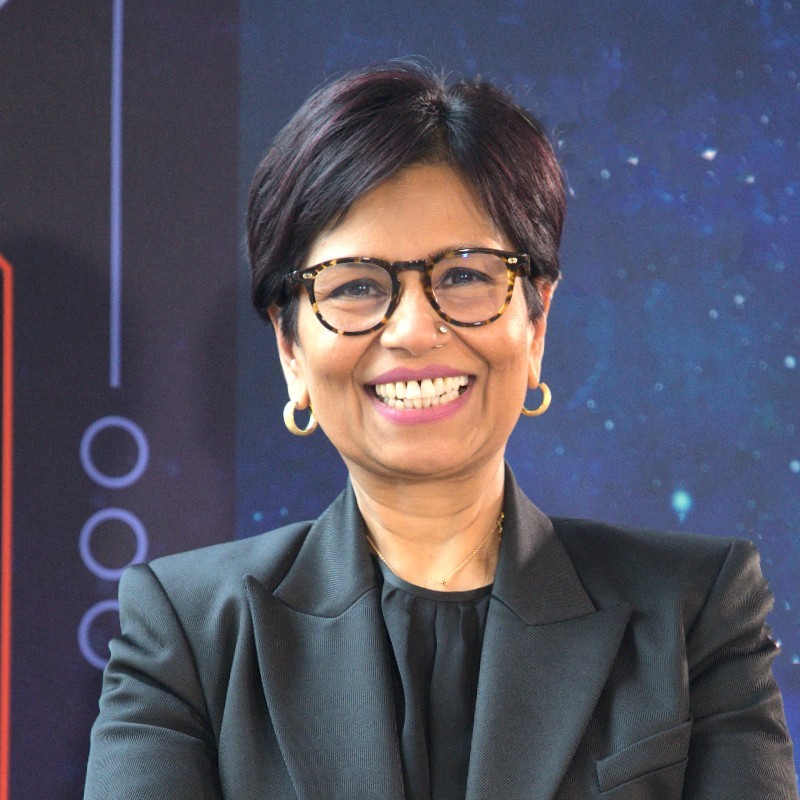
Tanuja Randery, Vice President, Managing Director of EMEA for AWS, discussed the growth of AI and innovation in Europe, highlighting the potential for economic value with AI technology deployment. She mentioned investments in European Sovereign Cloud and emphasized the importance of regulation, skills development, and engagement with small and medium businesses. The conversation also touched on the impact of generative AI on business transformation, productivity gains, and the startup ecosystem in Europe. Tanuja shared examples of AI deployment with companies...Read more
exploreKeep Exploring
What region is being referred to as a hub for AI and innovation and potentially has a 3.2 trillion Euro opportunity with the application of AI technology and investment in cloud and digital technologies?add
What are some of the potential impacts of generative AI on infrastructure productivity and sustainability?add
What are some challenges and considerations in navigating through regulatory environments that involve multiple governments, and how is international coordination important in addressing these issues?add
>> Hello, welcome to theCUBE's coverage here at re:Invent 2024. It's our 12th year in a row covering AWS's re:Invent. I'm John Furrier with theCUBE. David Vellante is here. The whole crew is here. We are on site. And Tanuja Randery is here. She's the vice president, managing director of EMEA, Europe Middle Eastern Africa for AWS. Tanuja, great to see you.
Tanuja Randery
>> Good to see you again.>> Been a while, but just getting started, day one. We're here in the press area. It's been a while. It's been a couple of years since on theCUBE, but we saw each other in London at a pub. Talking about the scene in Europe, obviously you're in London, but you've got EMEA. A lot of action, entrepreneurship, venture capital is popping, startups are happening, a lot of growth. And a lot of companies coming together but AI is very much a tailwind for everyone. So give us the update on what's going on in your world and your area.
Tanuja Randery
>> Now. Thank you, John. It's great to be here again and wonderful to be back at re.Invent of course, again. I mean, Europe is sitting on the brink of a very unprecedented opportunity I think. It's a phenomenal hub for AI and innovation. We did some research recently that shows that we could unlock approximately 600 billion euros of economic value just through the application of AI technology. And when you couple that with the total investment in cloud and digital technologies, that's almost a 3.2 trillion Euro opportunity for that region. And so super, super important for us to lean in. And we have been leaning in, you might've heard that we make quite a few investments lately into Europe in particular.>> Yeah. Put a plug real quick. You've list a few of them.
Tanuja Randery
>> Yeah. So very recently we announced the European Sovereign Cloud, which will be arriving next year, the end of 2025. Our first site is in Brandenburg, Germany. Why is that important, as increasing regulatory scrutiny as you know. But this gives the European organizations a base which is wholly located in Europe, plus operated independently from other regions. So that's just one of many.>> Yeah. A lot of infrastructure being laid down because of the unique requirements in the countries. I mean, the privacy, we've seen all the regulation, but now with generative AI, you're seeing opportunities, and I was talking to Matt Garman, all the execs at Amazon and other companies, whether it's Super computing event or other events. The recognition that GenAI going to give an opportunity for business transformation. Now, we love digital transformation, but it's digital technologies coming into the real world. So we're in a unique time in history. You put your consultant hat on, you'd be like, wow, I could do a lot here. There's a lot of action because people are rethinking of their business. There's an acceleration of value, not just pie in the sky. So value is there, it's accelerating, but this work's got to get done. And I know, you have a perspective on this. Share your view on this.
Tanuja Randery
>> Yeah. Look, you and I have been talking quite a bit about this idea of how is the C-suite leaning into this transformation. Because so far it's been a very technology centric discussion. And over the years we've been deepening our industry capability, as you know very well. And actually generative AI has won the hearts and minds of the C-suite. You've got boards and the CEOs coming to us and saying, I want to learn this myself. I want to deploy it. And in fact, the 600 billion euro number I mentioned to you is because we've seen an uptake of above 30% in Europe of AI technologies actually being used. And the public is also extremely positive about the impact on healthcare and of course on the climate as well. So those are something, I'll give you one wonderful example of a customer that is leaning into the business transformation you're talking about. So, you know Ryanair?>> Yeah.
Tanuja Randery
>> Hopefully you've flown Ryanair.>> Yes.
Tanuja Randery
>> Eddie Wilson, who's the CEO, we've been working super closely together with him. On the one hand, he's been deploying AI technologies to really drive customer experience. So when you get onto a Ryanair plane, they're the biggest sellers of ham and cheese sandwiches in the air by the way. I don't know if you knew that.>> We might have mentioned that one time.
Tanuja Randery
>> We might have. We built something called panini predictor, which allows Ryanair to ensure that they have enough ham and cheese sandwiches to service their customers, but not too much because that causes waste. So that's an example of AI deployed in the front, impacting waste, sustainability and customer experience. And now recently we've been working with them with Amazon Bedrock to make sure that they can actually give their crew access, very easy access to all of the regulations in all of the countries and cities that they're serving. So it saves the crew a bunch of time, because they can actually query the model that they've built. So that's a great experience.>> Well, it is an efficiency story, but you're also bringing up the other side of the coin there, which is productivity. And if you look at some of the use cases that we've been tracking on theCUBE is, and you're hitting on some of them, is that you have a unique environment because you have sovereignty issues in different countries and you guys are building infrastructure. But generative AI is going to be dealing with data, and so the intelligence around where the data, how it's used is going to be abstracted away, kind of what serverless has done with, on the serverless side, you're going to start to see this and inference engines come out. We're hearing that as going into the big keynote tomorrow, and Matt Garman talked about it.
So you have this new paradigm of efficiency technically at the infrastructure level where the software is going to get smarter. So as you lay out on infrastructure productivity, sustainability check because you can be smarter about how you're using the resource, but the productivity for the users are key. Now, my question in this for you is, Amazon is one of those companies that operates at such scale, that you can only do things to drive value to the ecosystem that other people can't. So this idea, the ecosystem is going to get the benefit as well. So productivity for the users and the ecosystem impact from the scale value. Talk about that dynamic.
Tanuja Randery
>> Yes. I love that. Thank you for bringing that up because I actually do think we have leaned into both the partner ecosystem. But what I'm super excited about is of course, the startup ecosystem. And that's very important for us as you know, in our DNA. So if you think about, again, back to Europe, I think why I'm so excited about this potential for Europe is, Europe does need those productivity improvements by the way. And it is also requiring the innovation side. So if you look at the startup ecosystem in Europe, we've got phenomenal things happening in France, as you know, with Hugging Face, with Mistral. You've probably heard of Poolside and all of the others that are doing great stuff in France. But then you have also an emerging cohort of startups that are starting to really dive deep, into things like healthcare as an example. So we invested 230 million in a generative AI accelerator to really encourage startups to innovate with us. And I was really excited. This recent cohort, we have 18 MER startups, and one of them is a company called Sagos. Do you know what they do? They are working on a model that really helps to address antibiotic-resistant bacteria. This is super important. And so they're one of the many startups that we're working with. So I think encouraging and fueling the startup ecosystem is super important for us because, that is what the enterprises need actually around the world, and this is what Europe has, and I think it's a phenomenal bed for us to be able to do something very special.>> Yeah. It's interesting because a lot of things are accelerating right now and things are getting faster. We're seeing product life cycles are faster, productivity gains, value creation, time to value is faster. It's almost as if the pace of play is faster for business, and some people aren't prepared for it. So as you look at the people trying to, well, fortunately, if they realize it, then they're going to fix it. If they don't, they're going to be extinct. But there could be an extinction event for the people who don't move. What are you seeing for people who are making the change. Say, hey, you know what? I see the world going faster. If I don't go faster, my competition will, or my customers will go somewhere else. What are the key drivers that are getting people moving faster? Because this business transformation is not going to be as long as the digital transformation wave. It's going to be faster.
Tanuja Randery
>> Yeah, it's going to be faster. And we've seen it already with the launch of generative AI and how fast it's actually reached this, that, incredible user base. If I could lean back a little bit on that, there is speed to want to make the change, and there's a huge amount of that actually happening, and people are actually experimenting a lot, but we are now actually seeing production use cases as well. On the other hand, there's three really big blockers, and I think that is what we need to go address together, public and private. So the first one is, we've already discussed as a regulatory environment. Look, we have been working very closely with regulators. We support regulation in the space. It's super important that you have a responsible AI ethos and philosophy, but also embedded in tools. But we also want regulation that's innovation friendly. And actually that is what businesses are asking for as well. And the second biggest one, John, we've talked about it again, is skills, skills, skills. We have a major digital skills issue actually, and we've been investing in skills. We've trained 31 million learners. The last time I spoke to you, I think we said we had a goal of hitting 29.>> And you hit it.
Tanuja Randery
>> We hit 31.>> Surpassed it.
Tanuja Randery
>> We hit it earlier. But we've also, in EMEA, we've actually educated 3.2 million learners, purely on all of these skills. And I think it's so critical because it democratizes access to the skill. It's no point this wonderful technology and then we leave people behind, we want to bring people into the digital economy. So, skills is the second one. Then I think the third one, which is quite unique to Europe as well, is small medium businesses versus enterprises. So what we've seen is adoption in small medium businesses is a bit lower than what we see in enterprises, through this research we've done. And I think engaging small medium businesses to really lean into this technology, is critical. So those are three things. While we're operating at speed, this is going to give you the extra tailwind if we address these three areas.>> It's funny, our research team, we were chatting about LLMs and SLMs. I think we were the first ones to actually bring up the word SLM years ago when we did the power law of the models, and we were joking, S doesn't stand for small, it stands for secure, small, sovereign, because you have different environments. And this is where I think you're in a unique position as a leader in this industry because you see things that are different than say in the US. You're seeing a lot of different pockets of customization. Every country has their own sovereign challenge. Also, they're closer to their customers. The mechanics of privacy and all the data sovereignty challenges, but you're running large-scale cloud. So how is that sovereign cloud progressing with your solution you talked about, and how do you navigate the public-private partnerships? Because a lot of the navigation through the regulatory has involved with multiple governments. So you're dealing with not one government, a lots of them.
Tanuja Randery
>> You touched on a really good point. I think it's very important that regulation has some sort of international coordination, really, really critical. So you don't end up with lots of different regulatory situations that people are trying to get their heads around. In fact, one of the other things we identified through this research is, people are hesitant sometimes to invest in the technology because they see legal uncertainty and compliance as a major issue. One of the areas we're particularly unique by the way in Europe, is language and culture. I think we have over 200 languages and culture, by the way, to deal with. And we've been working with large-language models in local languages. A great example is, the Slovak Model that we've been working on with the Kempelen Institute of Technologies. Really, really important. So I think taking the models, bring them into local language will also help us get more democratization of this technology broadly. Back to your core question about sovereignty and how we are working on this. We as you know, have regions that we've deployed around Europe, European Sovereign Cloud will then be a very unique solution, actually. It's got all of the advantages of the AWS Cloud, but located in Europe. And then of course, we like to bring the cloud to where our customers want it. So we have edge technologies like Outposts that we're working on very importantly, and local zones. I'm super excited. We recently announced the launch of our region in Saudi Arabia, which will be coming in about 18 months time. So very, very excited about that too, because that region is really looking to adopt this technology as well.>> You have a very cool job, you got a lot of to navigate through. And again, the standards are emerging, certainly on the AI side. So you got to balance the innovation equation with kind of the policy side of it and keep track of that, keep everyone safe. Tanuja, great to see you. Final word, what's up for you? What's your agenda for the show? What's new? What's the coolest thing you've done this year?
Tanuja Randery
>> Oh, my God. What's the coolest thing I've done this year? I think the coolest thing I've done this year is to just learn this new technology. I mean, we all need to be rewriting our jobs I think. I mean, I wake up every morning thinking, okay, what could Q do for me today, for example. And I think that's the coolest thing. The learning is phenomenal, and as long as you're learning, you're having fun. So yeah, an excited place.>> Okay. Well thanks for coming on theCUBE.
Tanuja Randery
>> Thank you.>> We're getting more, kicking off day one of four days of CUBE coverage here. I'm John Furrier, host of theCUBE. Thanks for watching.