We just sent you a verification email. Please verify your account to gain access to
Cloud AWS re:Invent Coverage. If you don’t think you received an email check your
spam folder.
In order to sign in, enter the email address you used to registered for the event. Once completed, you will receive an email with a verification link. Open this link to automatically sign into the site.
Register For Cloud AWS re:Invent Coverage
Please fill out the information below. You will recieve an email with a verification link confirming your registration. Click the link to automatically sign into the site.
You’re almost there!
We just sent you a verification email. Please click the verification button in the email. Once your email address is verified, you will have full access to all event content for Cloud AWS re:Invent Coverage.
I want my badge and interests to be visible to all attendees.
Checking this box will display your presense on the attendees list, view your profile and allow other attendees to contact you via 1-1 chat. Read the Privacy Policy. At any time, you can choose to disable this preference.
Select your Interests!
add
Upload your photo
Uploading..
OR
Connect via Twitter
Connect via Linkedin
EDIT PASSWORD
Share
Forgot Password
Almost there!
We just sent you a verification email. Please verify your account to gain access to
Cloud AWS re:Invent Coverage. If you don’t think you received an email check your
spam folder.
In order to sign in, enter the email address you used to registered for the event. Once completed, you will receive an email with a verification link. Open this link to automatically sign into the site.
Sign in to gain access to Cloud AWS re:Invent Coverage
Please sign in with LinkedIn to continue to Cloud AWS re:Invent Coverage. Signing in with LinkedIn ensures a professional environment.
At AWS re:Invent 2024 in Las Vegas, guests discuss the new Amazon Elastic VMware Service offering, allowing customers to run the VCF stack directly on AWS. This offering provides flexibility to run workloads on-premises or in the public cloud, simplifying the process for customers and offering license portability. The partnership between VMware and AWS enables customers to leverage various software capabilities. The EVS Service allows for automated provisioning, giving customers control over their environment. VMware expects growth in the number of cores unde...Read more
exploreKeep Exploring
What is the new offering announced by the speaker that allows customers to run the VCF stack directly on AWS within their own VPC?add
What is the current status of customer expansion and core growth for VCF licenses?add
What are the benefits for customers on the VMware side in terms of their bottom line?add
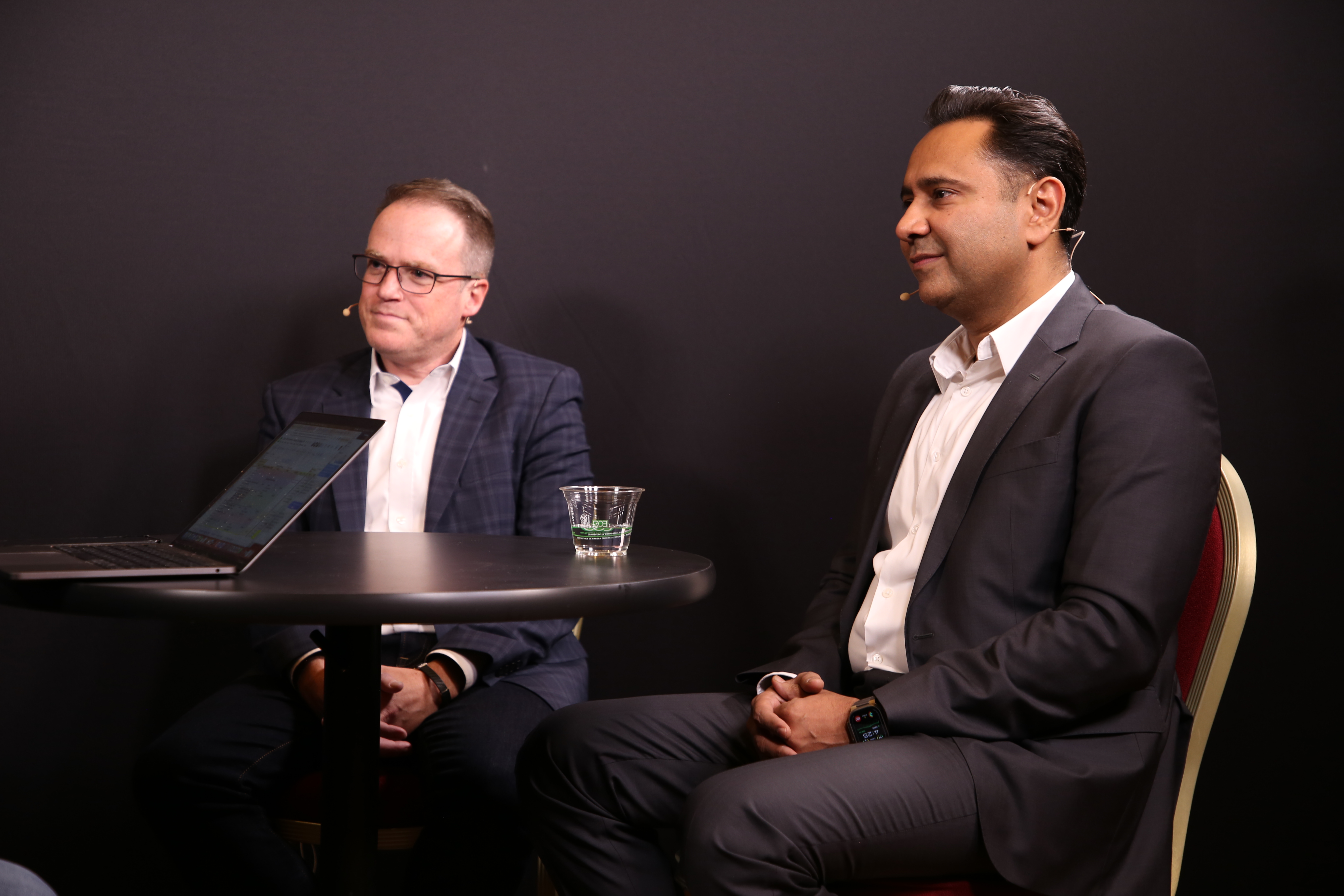
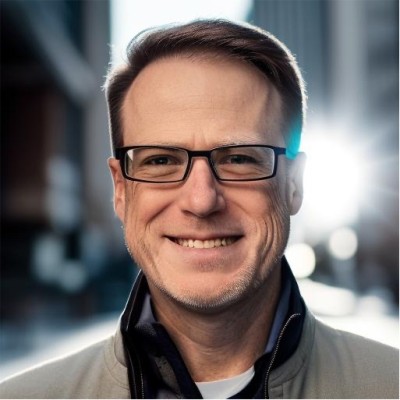
>> Welcome back to theCUBE everyone. We're here in Las Vegas for AWS re:Invent 2024. I'm John Furrier, host of theCUBE. As we're kicking off pre-day zero they call it before the big day tomorrow for the keynote, we've got all the news that's coming out. We got Steve Jones here, general manager of VMware, SAP at AWS. You're hitting all the big relationships.
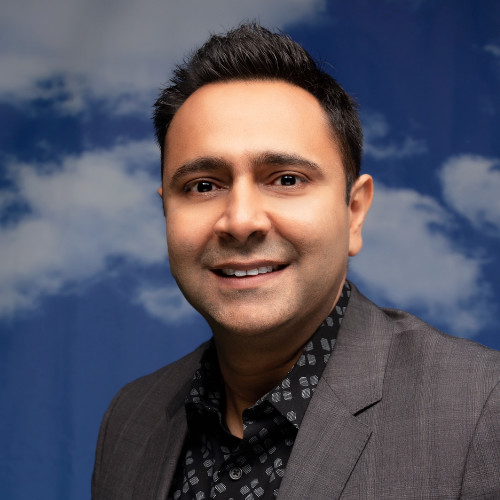
Of course, Ahmar Mohammad is the vice president of partners managed services solutions, VCF division for Broadcom, a mouthful there, but both CUBE alumni. Thanks for coming on. Love the news here and I want to get into it and say that I've always loved it. I was there in 2016 when VMware did the AWS deal, clarified things, but a lot has changed with AI coming on, people rebuilding. The new news is pretty hot. Let's just get into it. Ahmar, why don't you start with the news real quick?>> Actually, start with you.>> You wrote the blog post.
Steven Jones
>> I did and you mentioned 2016, right? We've had a long lasting relationship with VMware since 2016. We had the VMC VMware Cloud offering. Just a couple of days ago we announced a new offering, first party service on AWS called Amazon Elastic VMware Service. Effectively, what this is is a new offering that allows customers to run the VCF stack directly on AWS within their own VPC.>> It's called Elastic?
Steven Jones
>> Amazon Elastic VMware Service.>> That's my license from VCF, which we cover and explore. I can pour it over to, my understanding, to AWS and run EC2.
Steven Jones
>> That's exactly right.>> That's the service formula for the customer.
Steven Jones
>> That's right and do it within your own VPC. It's in a customer managed environment, which is a new thing, right?>> Steve, we've been talking about this for a while. The ecosystem at AWS is really heterogeneous at this point. If you look at your customers you manage with these bigger relationships, VMware, now Broadcom, SAP, others, the interoperability of customers behaviors is a heterogeneous environment. This is continuing to be that way more so now with the software being written that needs to run everywhere.
Steven Jones
>> It really is. Customers want to be able to leverage all of these different software capabilities side by side. Whether it's SAP or it's VMware or it's something they've natively built directly on AWS, they want to run it all together in the same location.>> I like this deal because to me this news is like I got the new VCF. By the way, the consolidation of the strategy into simplicity might be that Steve Jobs moment where he says, "All these machines get down to MacBook and then iPod and then the rest is history." VCF simplified a lot of that and changed the game a little bit. Now you get the license portability, which means simple package. Here's your cost. Go run it everywhere. This is like an example of that benefit.
Ahmar Mohammad
>> Absolutely, at VMware by Broadcom the strategy is very simple. We are a private cloud company, but we also believe in the model of you have customer choice. You can run that VCF-based private cloud on-prem in their own data center or be in a managed environment or in a public cloud environment like Amazon EVS. We believe in choice, allowing customer that flexibility to run that same stack on-prem or in the public cloud or combination of both in a hybrid environment. That's exactly what we are enabling. Now, as Steve talked about with a partnership goes back seven, eight years, when we first launched VMware Cloud on AWS Service that service is a first party VMware managed service. It's still around. It is a fully managed offering. For some customers, for their environment they prefer that fully managed environment, but for many other customers who prefer to manage their workloads on their own in a public cloud EVS is going to be a very, very good solution for them.>> It just makes the simplicity. It just makes things easier. Now let's get back to the original VMware on AWS. You had the VMC, VMware Cloud, on AWS, which is a managed service that you guys ran. That's still available.
Ahmar Mohammad
>> It's still available.>> What's still available? What's the old way, new way, current way?
Ahmar Mohammad
>> Don't think of it as an old or new way. It's different. One is a fully managed, what we call self-healing, fully resilient service that is available that is managed by a provider like VMware. For some customers who don't want to have to build their own IT operations and so on, that makes sense. For many customers who have capabilities and would like to manage their environment on their own, EVS Service allows them to do that, which is fully managed provisioning, automatic provisioning, but then hand the keys to the customer of the vCenter access so they can manage it on there.>> You're not shutting down that other thing. Both are going to stay around and be-
Ahmar Mohammad
>> Both of the services will stay around and we'll let the customer choose what works best for them.>> The alpha customers, I'd call them the alpha, the ones that have heavy VCF, they got fully staffed up. They would more appeal to the EC2 version?
Ahmar Mohammad
>> They would, absolutely may choose to use the EVS version.
Steven Jones
>> Think about if I've got a large staff of VMware experts, sometimes decades in the making, that know the tooling, know the environment, and are accustomed to running and operating this. That's the perfect customer or, for example, we're enabling partners. They'll bring their own managed services on top of this as well. Customers have relationships with all types of different partners. We think this is enabling customer choice.>> Absolutely.>> It's also good for you guys at Broadcom. I just got to say it because you guys had a heavy backlash for this whole thing, but it was not true. We did the research, theCUBE research. No one was really leaving VM. We wrote a blog post. Actually, VMware is winning. If you go to Perplexity and type is VMware winning, you'll see our report because Perplexity sucks in our content now. What we did is we looked at analysis and if you're running VMware, vSphere, and heavy duty plumbing, it's hard to change. Prices went up, but the total cost of ownership kicks in when new things come out. The strategy is clear. You're adding value in that part of the stack. This kind of makes it easier, no friction for the customer saying, "Hey, I'm going to do some stuff on EC2, maybe capacity blocks, maybe some inference down the road." That's going to be available through the AWS because that's what I'm building.
Steven Jones
>> That's right, side by side. Think of side by side with every other application you've got running in AWS.>> What's the internal conversations like? You guys are winning by our numbers. There are still people out there, but we're in a world where that argument, you might have talked about that before maybe, but the world is changing so fast.
If you look at what's just happened in the past six months or even since VMware Explorer Barcelona or VMware Explorer in North America, the GenAI has changed radically. Look at the anthropic relationship that you guys have with AWS just in general. The software being written now is expanding. It puts you guys in a good position to take advantage of that simplicity. What are the conversations like at VMware?
Ahmar Mohammad
>> It's actually a very exciting time. Obviously, as you remember, you were with us at Nexplore in Vegas. We announced the VCF 9.0. This is where we bring the whole entire stack as one product together sometime next year. The conversations internally are actually very exciting because we believe we are on that journey in really helping the customer implement these private cloud environments in a fully integrated fashion. We have not done over the years customer service. We let them become their own system and integrate. With VCF, we bring it all together so that customers don't have to stop monkeying around trying to bring the network and the storage and the compute all work together. It's already done for them. Then, you combine that with the flexibility to deploy it on prem or in a cloud of their choice, especially in VMware Cloud with EVS or VMware Cloud and AWS, it's a win-win for a customer.>> We literally take the VCF stack that he's just talked about and we automate the deployment for the customer. At the end of the day, we'll just turn over the keys to the customer and say, "Start deploying."
Steven Jones
>> Take me through the deployment. I say, "Okay, I'm going to do this. I love this. I'm running my mission critical workloads. My whole staff, we're building our own. I'm a perfect customer here. All right, I'm going to move to the cloud, do some cloud migration." What do I do?>> I have to say it's super simple, right? Effectively, what you do is you create an environment and the environment is effectively a simple workflow that you work through that says, "Okay, this is my VPC and you speak VPC. I've chosen the subnets that I can apply VLAN tags to," because we know that VMware loves to use VLANs. Then, you define effectively a host group, which again it's a cluster in VMware's terminology, and I hit deploy, right? Then, the whole thing orchestrates under the covers. It takes about a little less than three hours.
Steven Jones
>> It sounds like an agent to me. We're going to hear a lot of that tomorrow. I mean Matt's keynote did a preview. This is where the customers want to go, that automation. It makes VMware run better.>> Absolutely.>> It's like the core infrastructure to your customers. You continue to refactor that for their benefit.
Ahmar Mohammad
>> It goes into that TCO story that you were talking about. There are two areas. One is customers don't want to have to pay twice. I bought my VCF subscription. I'm moving to cloud or I'm also expanding my data center footprint with cloud. They don't have to buy another license. They already have that and they can move that workload as is to that public cloud. B, customers do prefer that choice and that automation that, hey, I want to be able to not monkey around with all of the plugging and configuring and all of that. Have that environment be provisioned for me. That's what EVS allows them to do, provision that environment, and then they can run their day two operations on their own.>> We talked to both your customers at AWS and VMware and sort of our surveys. The number one thing that they like about the cloud operational models coming out, which should be the computing and agents and all the cool infrastructure, is I want choice, customer choice. You guys talk about that with this deal. License portability comes out, makes the promise that you guys promised back there. You're delivering on that and the biggest challenge is I don't want to migrate a lot of stuff that's not of value. Value migrations, I'll look at doing some stuff to set up for this next wave. If I'm going to have challenges migrating, something, the juice isn't worth the squeeze, but there's other stuff to work on. There's better things to work on and it's not going to come in on the total cost of ownership. It's going to take five years to do something. Just leave it and make it better. That's my view.
Steven Jones
>> From an AWS perspective, we think there is value that is being left on the table. Based on the technology that we've been partnering together on, it will be an easy migration using HTX to extend the network and just migrate to VMs. Then, focus on what you want to differentiate on whether it's that agent or that next application.>> At the end of the day, the economics.
Ahmar Mohammad
>> The economics work for the customers because they don't have to refactor those application, which you were referring to as migrations. They can lift and shift as is to the EVS offering without having to figure out how to refactor it, without having to spend more money on those application. They can run as is and focus their dollars more toward innovation lik GenAI you were talking about.>> You know what I love about this re:Invent this year? Steve, you talked a little bit about it and VMware's roots to engineering culture. It's that Matt says, "Back to basics." If you look at the value of cloud originally and the value of VMware actually when it came out was it created value fast. You saw the alpha entrepreneurs rise out of that and top early adopter enterprises got into cloud. Early enterprises who did VMware, they're running major technology stacks right now and they've kind of won. We're in that same boat now where no matter what people say, the proof is going to be in what you do and what you build. Don't waste your time over here doing something that you could either automate away or just leave it. Build something new and better. We are in a step function change.>> That's totally right.>> It's a time to like, hey, those things we talked about a couple of years ago, we just leave that there and let's build a better thing here. That's what AI is promising. Do you guys see that same thing?
Steven Jones
>> I believe that's the case.>> I mean VMware, they're not moving out of their customer base. Customers aren't moving. In fact, you're going up. Our numbers show your growth.
Ahmar Mohammad
>> Yes, we are actually expanding our customers footprint. The number of cores that are under VCF now are exponentially growing. Our CEO disclosed on the last explore over 8 million cores are now under VCF licenses around the world and continue to grow, continue to grow. We see the footprint growing. We see the footprint across different clouds also are growing, including now with EVS. We are actually extremely excited about the new EVS offering with AWS because it's going to continue to expand the VCF footprint.>> Congratulations to you guys. I know you haven't had your next quarter, but from our research it looks like it's continuing to do well on the Broadcom strategy. It looks like it's got some legs to it, congratulations.>> Thank you.>> What do you want to say to folks out there that hear the news? Guys, close out the segment with an update. What can we expect? What happens next? It's the easy button deploy, push button deployment. What's up for you guys?
Steven Jones
>> I think the maybe three things I would say, it's going to be super simple, but very effective, right? Automated deployments, the ability to bring your own subscription, we will do license included in the future, but very easy to onboard. The fact that it's natively integrated into EC2, VPC just makes it a no-brainer when it comes to running workloads together. I think that's primarily the best points.>> More agility, I mean you get the value. You do more. On the VMware side, what's in it for the customer bottom line?
Ahmar Mohammad
>> Bottom line, choice and lower TCO, ability to make their own decision in terms of whether I want to run those workloads on-prem or do I want to run them in a hybrid or in a cloud environment? For us, as long as they're running on VCF, it doesn't matter where they run it and have the lower TCO because they don't have to worry about migration or refactoring. They can lift and shift those workloads to a cloud of their choice, especially when it comes EVS, our VMware Cloud AWS offering, or their on-prem data center.>> Thanks for coming on, guys. I appreciate you spending the early days of the day zero here of the event. Thanks for coming out.
Ahmar Mohammad
>> Always good to be here with you, John.>> More coverage, four days just getting started, the pregame warmup, but the news is hitting a lot of great stuff happening in the ecosystem. It's a connected ecosystem and again a lot of value to be created, again another re:Invent cycles here. It's theCUBE bringing you all the action. We'll be right back.