We just sent you a verification email. Please verify your account to gain access to
AWS Summit Washington, DC 2025. If you don’t think you received an email check your
spam folder.
In order to sign in, enter the email address you used to registered for the event. Once completed, you will receive an email with a verification link. Open this link to automatically sign into the site.
Register For AWS Summit Washington, DC 2025
Please fill out the information below. You will recieve an email with a verification link confirming your registration. Click the link to automatically sign into the site.
You’re almost there!
We just sent you a verification email. Please click the verification button in the email. Once your email address is verified, you will have full access to all event content for AWS Summit Washington, DC 2025.
I want my badge and interests to be visible to all attendees.
Checking this box will display your presense on the attendees list, view your profile and allow other attendees to contact you via 1-1 chat. Read the Privacy Policy. At any time, you can choose to disable this preference.
Select your Interests!
add
Upload your photo
Uploading..
OR
Connect via Twitter
Connect via Linkedin
EDIT PASSWORD
Share
Forgot Password
Almost there!
We just sent you a verification email. Please verify your account to gain access to
AWS Summit Washington, DC 2025. If you don’t think you received an email check your
spam folder.
In order to sign in, enter the email address you used to registered for the event. Once completed, you will receive an email with a verification link. Open this link to automatically sign into the site.
Sign in to gain access to AWS Summit Washington, DC 2025
Please sign in with LinkedIn to continue to AWS Summit Washington, DC 2025. Signing in with LinkedIn ensures a professional environment.
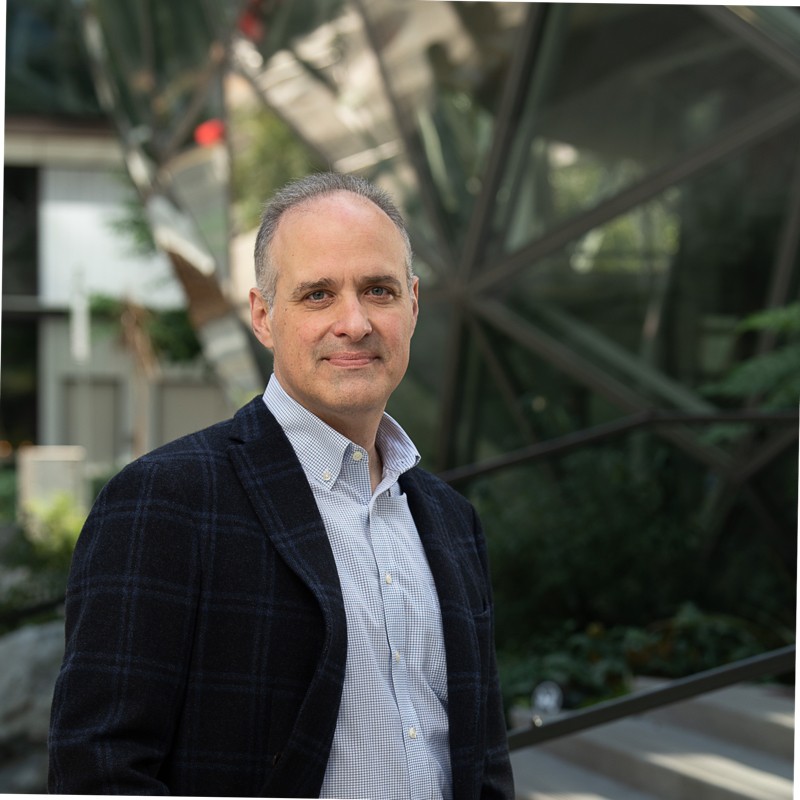
Steve Schmidt, senior vice president and chief security officer at Amazon.com Inc., joins theCUBE’s John Furrier and Scott Hebner for a timely conversation during the AWS Summit Washington, DC event. The discussion explores Amazon’s evolving approach to digital and physical security in an era increasingly shaped by artificial intelligence.
Schmidt outlines how Amazon integrates AI into its defense strategies, using agents to proactively test and reinforce security systems. He also discusses how AI is being deployed to safeguard customer data and impr...Read more
exploreKeep Exploring
What is the importance of considering physical security in addition to digital security, especially in a chief information security officer role?add
What are some examples of AI agents being used in both attack and defense roles in cybersecurity?add
>> Hello, I'm John Furrier. We are here on the show floor at AWS DC Summit, Public Sector Summit formerly. Steve Schmidt is here, SVP and Chief Security Officer at Amazon. Steve, great to see you. Thanks for joining. Scott and I are in theCUBE.
Steve Schmidt
>> see you.>> I know you've got a lot going on, you've got a lot of keynotes and meetings as Amazon, not just AWS Security Officer. You're blending physical and digital together.
Steve Schmidt
>> Sure.>> Threat intelligence is huge. The systems you built are in place and constantly being retooled and reinvented. What is the state of the physical AI... Physical and digital security piece for Amazon?
Steve Schmidt
>> Yeah, so a lot of people think about security, especially in a chief information security officer role as just that, information security. What they don't realize is, the physical world is as important. So for example, if I can get physical access to your laptop, it really doesn't matter a whole lot what kind of digital security you've got going on there. So you have to start at the physical layer, work all the way up to the information layer. In the AI space, same thing. Is that person coming into our buildings really who they say they are? Is the person interacting with the drivers who we ship packages to the person we expect them to be? How do we make sure that we're keeping our customers' data safe?>> One of the things people talk about, security products versus security systems. Amazon right now is transforming at such a pace with AI at such a large scale, you're overseeing all the security, how are you keeping that resilience bar high? What's your strategy? What do you do to make it all work? How do you keep pace? Or do you set the pace?
Steve Schmidt
>> What we do is, we set the pace based on what our customers need, and they don't often even know what they need, we have to come up with what's the right thing for them. The first thing that I do as a leader is I always ask the question, "Can AI do this? Should AI do this?" That's important for not only the systems that we build, and making sure that they're top-notch and can do what we need, but it's actually about retaining the really good staff who work with us, because they don't want to do the grunt work, they want to do the cool things, the differentiating things.
Scott Hebner
>> Yeah. So you've been using AI to transform your whole security postures?
Steve Schmidt
>> We have, yeah.
Scott Hebner
>> Can you just talk a little bit about how you've gone from AI that answers questions, generative, to the world of AI that can actually help make decisions and actually do things?
Steve Schmidt
>> A great example of that is AI agents which play both attack and defense. We've got AI agents internally that we've built which are like penetration testers, they try and break into systems. Which, by the way, is one of the best jobs in the whole company, you get to go break into-
Scott Hebner
>> It's like a video game.
Steve Schmidt
>> It's awesome. Right, it is. And when you think about it though, we build tools which can do this. We also build tools that are defenders, their job is to identify the attacks, and to extract from the attacks the signatures, which our systems can use to prevent access in the future. So what we measure now is, instead of situations where it used to take days, weeks, months to build new signatures for attacks, these agents can do it in minutes, and it's really transformative for our ability to defend systems. The key though is, you don't push those signatures into operation until a human checks them to make sure they're right.
Scott Hebner
>> Yeah. So how autonomous are they? There's always human in the loop, is that-
Steve Schmidt
>> There's a human in the loop for now. I think eventually, we'll get to the point where they're fully autonomous-
Scott Hebner
>> Fully trusted and they can-
Steve Schmidt
>> Yeah. And also there is a material difference with how autonomous they can be based on the workload. So for example, if I'm protecting your production website workload, I've got to be really, really careful. Whereas if I'm protecting the toy box that I use to mess around with things, I can have a lot more automation that just does things, because the cost of an error, so much lower.>> On the physical AI side, one of the big things is robotics.
Steve Schmidt
>> Yep.>> Okay, I missed the re:MARS conference, it was a one-and-done conference, people don't know that was a conference. A lot of physical security coming together with digital, what's the core problem there that you guys see? And then how are companies like the DOD and these agencies evolving, because they're not as fast as Amazon?
Steve Schmidt
>> So for us, it's about making sure the robots are safe around people. Anytime you have a large machine with a lot of power that's in close proximity to humans, you have to respect the human, you have to make sure that they're safe. They use AI models to make decisions. Are those AI models tuned effectively to make sure they say, "That's John. I'm not going to go there. I'm going to go over here." Scott, they may say, "Aim for him and go after them." But that's different. But in all seriousness, that's the safety first thing that you have to build into the models, which is very different than the AI model that you use to predict the sports scores for the major league playoffs.>> And the customers here in the public sector, and obviously in DC, the combination of public-private partnerships has been a theme for years. How fast are they moving? What's the progress bar look like? What's the pace of play for them?
Steve Schmidt
>> It depends on the individual agencies. Some of the agencies like CIA, for example, are super aggressive about adopting AI. Why? Because they have big piles of data that they have to be able to analyze and use effectively. And the best way to do that is using tooling. Tooling that presents information to people, allows them to make good decisions, make good judgments.>> I was talking to Swami at a HumanX conference, and I was just up in Seattle last week, the tooling and the integration with AI has become kind of a dream scenario, faster to build tools now, it's the hottest thing, code building. So code assisting move to code generation, that's accelerating tooling. How does that impact security? In what ways is this waived, because developers are involved, operations are involved, the impact of tooling and integration?
Steve Schmidt
>> It's actually super positive for security, because when we train the coding models internally, we train it on good code. Code we've tested, code we know is built well, so it tends to replicate that into the systems that are new, whereas a new software developer may make mistakes that we have to go fix or correct down the road. So it's not only more efficient than code production, the code tends to be more secure.
Scott Hebner
>> Well, to what degree are these agents thinking ahead and trying to identify threats that haven't materialized yet, but may come, versus... I can only imagine, at Amazon, just the sheer volumes of potential threats that come in.
Steve Schmidt
>> Right.
Scott Hebner
>> So I'm curious how you handle that volume. But also, how do you mine all that to really be almost proactive in thinking-
Steve Schmidt
>> Right....
Scott Hebner
>> of something that may not have happened yet, but could?
Steve Schmidt
>> Yeah, that's actually a really good path to go down. So for example, one of the things that we train the models to do is to recognize the decision processes that our adversaries use. So they'll say, "I'll try this. If that doesn't work, I'll try that. If that doesn't work, I'll try something else." So when we see the first action take place, the model can say, "The next step the adversary is going to take is this one, so put this block in place. The next one's here, put that block in place." It allows us to become more proactive.
Scott Hebner
>> Right.>> That's a good point, I want to just go one more step further. On the other side, on the bad side, the formation, I've heard terms minus zero days, where you can see the formation of the actors, and so you start to get much more insights into the next step, and then reason the things... How predictive is it getting on that front? Because if you can see that, then you can actually have law enforcement take them out. And I know this has been a big trend in the past two years, we're not just breaking up the hacker, but actually putting them away, because they just reconstitute another form.
Steve Schmidt
>> Right.>> Talk about this side of the business, because this is a new development. Do you agree?
Steve Schmidt
>> Yeah. There's got to be a deterrent to these adversaries, and that tends to be what you talked about, which is putting people in jail, or taking away money and things like that. How do you get there is about predicting the actions they're going to take in the future, getting law enforcement watching them so that they can get the evidence necessary to say, "Okay, yeah, this bad actor did these things, or was about to do these things." Which is the best place to be, as you pointed out. And take an action to prevent them from doing something.>> Is that happening more you think now?
Steve Schmidt
>> It is happening more now, and it happens because of two reasons. One is because we're getting better at predicting where the actor's going to go next. The second is because law enforcement is getting more sophisticated in their abilities to go after these people.
Scott Hebner
>> So how does this all enable the private sector to participate in all this intelligence?
Steve Schmidt
>> The private sector has always been one of the best intelligence producers there is-
Scott Hebner
>> Right....
Steve Schmidt
>> because we can see infrastructures that the government can't. We help protect all of our customers, wherever they are in the world, whereas law enforcement organizations can only see little tiny slivers of things. So when you look at the warnings that CISA puts out, as an example, they're almost always based on industry intelligence.
Scott Hebner
>> Yeah.>> Yeah. 10 years ago when I first interviewed you, you said, "We're secure because we have scale." That was when people didn't think Amazon was secure, you proved them wrong. Now the scale is even higher. What scale advantages do you have now would you say gives you that edge? Because obviously you're sharing intelligence with the government, vice versa, what's the scale advantage for Amazon?
Steve Schmidt
>> Scale advantage there is about finding those big actors very early in their process of attacking things. So for example, Volt Typhoon, the actors who were Chinese going after things like infrastructure, we saw them two years before they became public knowledge in the industry, because we've got that wide aperture of lots and lots of customers all around the world. And so taking that knowledge, distilling it down to things like, "Here's a specific tool that that actor uses." And then taking action against them.>> Critical infrastructures, you brought that up. Grid modernization is a big part of this conference for other reasons, we need power, but it's also been a target. How has the critical the government prepared? How are you involved in that? Obviously, got more regions going on everywhere, around all over the world.
Steve Schmidt
>> Right. Answering your question from the end first, our job there is to help the infrastructure providers secure themselves. It's to give them good foundations to build from. It's to give them tools to identify what they're doing well and where they need opportunities to improve. And advice, saying basically, "Here's how to build a secure system." Because let's face it, the little tiny water company that serves a small jurisdiction isn't going to have the super-sophisticated security professional. Even the monster electric companies around the U.S. East Coast, they don't necessarily have the skills that they need. So we have to work collaboratively to come up with the, "Here's how to be safe."
Scott Hebner
>> So you mentioned the smaller oil company, for example, do you envision someday you deploying agents that they then bring on, and then-
Steve Schmidt
>> Yes, I think you will absolutely see that-
Scott Hebner
>> Digital security agents there?...
Steve Schmidt
>> where you will see agents that take actions to protect systems based on intelligence that we feed them. So standardized agents in lots of places who can say, "All right, block this. Don't unblock that." Et cetera, fed by a set of sensor systems which gather broad intelligence from across the infrastructure. Our MadPot sensor system, which is Honeypot, thousands and thousands of them all around the world, building signatures, which then you can use as a customer to say, "I'm going to protect myself."
Scott Hebner
>> So they get their own digital labor to secure their business?
Steve Schmidt
>> Yeah.>> The MadPot's awesome, because you can also do the next best action for you on both sides. Will agents have SLAs?
Steve Schmidt
>> Agents are going to have to have SLAs. Do they have SLAs now? Oh, it depends. And I think, yes, they will have to have SLAs, because we will increasingly rely on them to do things for us that are mission-critical. It's got to have SLAs.>> Steve, it's always great to have you on theCUBE. Your super time is valuable and we appreciate you taking the time. Final question, what's the coolest thing you're working on right now that you can talk about?
Steve Schmidt
>> The coolest thing I'm working on right now is satellite systems. Love working on Kuiper, because I've never worked on satellite systems before. Whole different set of threats that you have to address, and a whole different set of adversaries, which, for a security person, it's a lot of fun.>> Well, satellites power drones, they power a lot of things. Thanks for coming on.
Steve Schmidt
>> Absolutely.>> Appreciate you.
Steve Schmidt
>> John, awesome. Thanks, Scott.
Scott Hebner
>> .>> Steve Schmidt here is in charge of all security at Amazon, Amazon , which is Amazon EWS. Again, the world physical and AI are coming together. First-party data, first-party intelligence, agents are coming, with SLAs probably in the future. Thanks for watching.