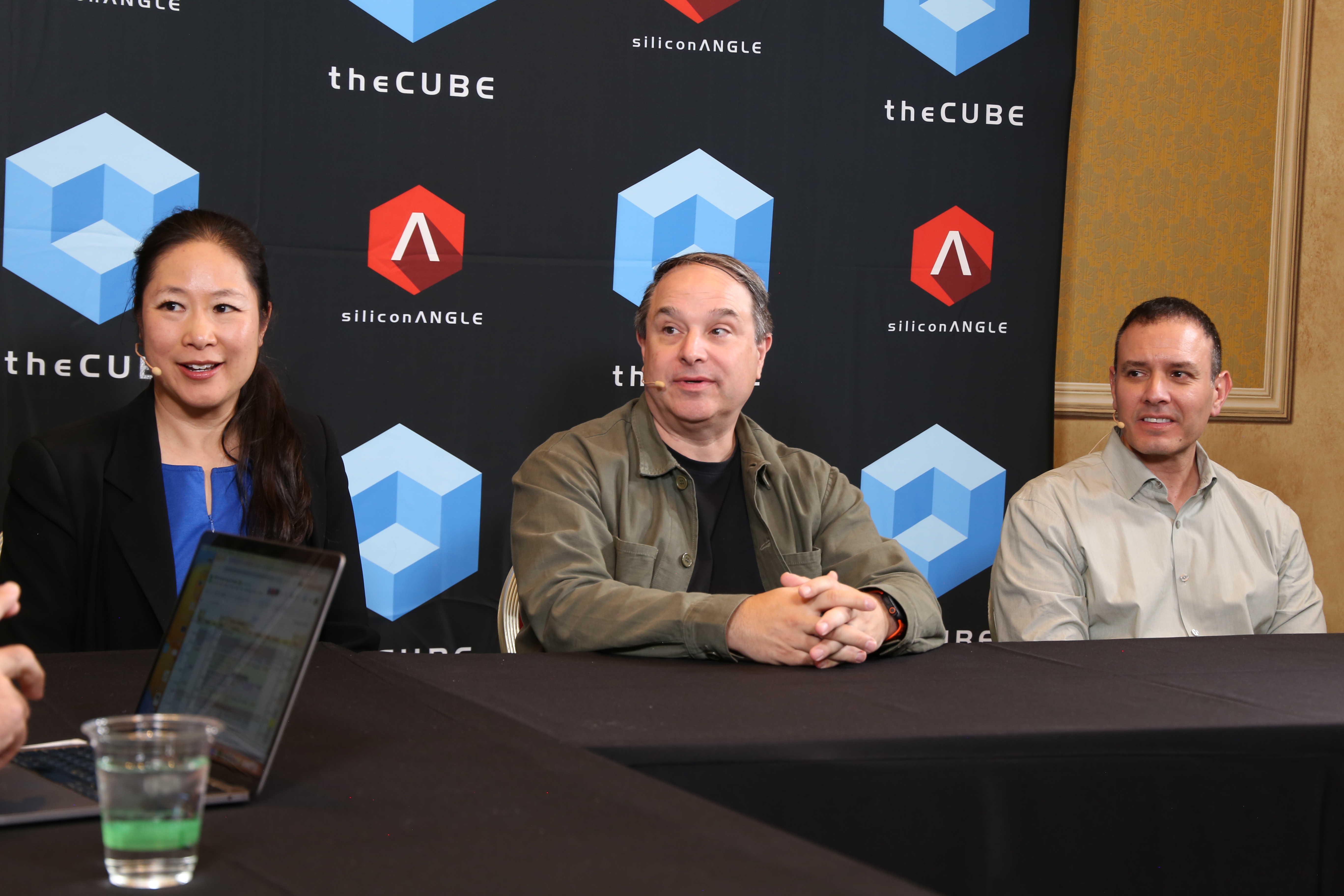
In this interview from AWS re:Invent 2025, Julia Chen, vice president of AWS partner core, Robert Occhialini, chief technology officer of the World Surf League, and Gabriel Romero, chief marketing officer of AllCloud, join theCUBE’s John Furrier to discuss the digital transformation of professional surfing. The conversation highlights how the WSL moved beyond simple scoring to capturing real-time biometric and performance data – such as speed, distance and heart rate – using Apple Watches and a robust AWS-powered pipeline. Occhialini details the evolution from a 2020 pilot to a 2026 roadmap that integrates this telemetry directly into live broadcasts and athlete training regimens, fundamentally changing how fans engage with the sport while providing surfers with granular performance insights.
The discussion delves into the technical architecture enabling this shift, with Romero explaining how AllCloud leveraged an AI-led strategy involving Amazon Kinesis for data ingestion, Amazon Redshift for centralized analytics and Amazon Bedrock to create instantaneous, queryable narratives for broadcasters. The group explores the complexity of synchronizing timestamped data across global time zones and the role of agentic AI in abstracting infrastructure complexity. Looking ahead, they touch on the potential for computer vision and advanced win-probability models to further enhance the viewer experience and safety protocols, showcasing a powerful use case of data transforming a traditionally analog sport.
Forgot Password
Almost there!
We just sent you a verification email. Please verify your account to gain access to
AWS Marketplace Newsroom . If you don’t think you received an email check your
spam folder.
In order to sign in, enter the email address you used to registered for the event. Once completed, you will receive an email with a verification link. Open the link to automatically sign into the site.
Register for AWS Marketplace Newsroom
Please fill out the information below. You will receive an email with a verification link confirming your registration. Click the link to automatically sign into the site.
You’re almost there!
We just sent you a verification email. Please click the verification button in the email. Once your email address is verified, you will have full access to all event content for AWS Marketplace Newsroom .
I want my badge and interests to be visible to all attendees.
Checking this box will display your presense on the attendees list, view your profile and allow other attendees to contact you via 1-1 chat. Read the Privacy Policy. At any time, you can choose to disable this preference.
Select your Interests!
add
Upload your photo
Uploading..
OR
Connect via Twitter
Connect via Linkedin
EDIT PASSWORD
Share
Forgot Password
Almost there!
We just sent you a verification email. Please verify your account to gain access to
AWS Marketplace Newsroom . If you don’t think you received an email check your
spam folder.
In order to sign in, enter the email address you used to registered for the event. Once completed, you will receive an email with a verification link. Open the link to automatically sign into the site.
Sign in to gain access to AWS Marketplace Newsroom
Please sign in with LinkedIn to continue to AWS Marketplace Newsroom . Signing in with LinkedIn ensures a professional environment.
Are you sure you want to remove access rights for this user?
Details
Manage Access
email address
Community Invitation
Julia Chen, AWS & Robert Occhialini, World Surf League & Gabriel Romero, AllCloud
In this interview from AWS re:Invent 2025, Julia Chen, vice president of AWS partner core, Robert Occhialini, chief technology officer of the World Surf League, and Gabriel Romero, chief marketing officer of AllCloud, join theCUBE’s John Furrier to discuss the digital transformation of professional surfing. The conversation highlights how the WSL moved beyond simple scoring to capturing real-time biometric and performance data – such as speed, distance and heart rate – using Apple Watches and a robust AWS-powered pipeline. Occhialini details the evolution from a 2020 pilot to a 2026 roadmap that integrates this telemetry directly into live broadcasts and athlete training regimens, fundamentally changing how fans engage with the sport while providing surfers with granular performance insights.
The discussion delves into the technical architecture enabling this shift, with Romero explaining how AllCloud leveraged an AI-led strategy involving Amazon Kinesis for data ingestion, Amazon Redshift for centralized analytics and Amazon Bedrock to create instantaneous, queryable narratives for broadcasters. The group explores the complexity of synchronizing timestamped data across global time zones and the role of agentic AI in abstracting infrastructure complexity. Looking ahead, they touch on the potential for computer vision and advanced win-probability models to further enhance the viewer experience and safety protocols, showcasing a powerful use case of data transforming a traditionally analog sport.
play_circle_outlineIntroduction of Julia Chen, VP of AWS partner Core, and key partners in innovation.
replyShare Clip
play_circle_outlineRevolutionizing Competitive Surfing: Real-Time Performance Tracking with Apple Watches and the World Surf League's Innovative Scoring System
replyShare Clip
play_circle_outlineTransforming Broadcasts and Fan Engagement: Leveraging Data Analytics and Vital Stats to Elevate Athlete Performance
replyShare Clip
play_circle_outlineCollaboration with All Cloud to process and analyze vast amounts of data efficiently.
Julia Chen, AWS & Robert Occhialini, World Surf League & Gabriel Romero, AllCloud
Julia Chen
VP Partner CoreAWS
Robert Occhialini
CTOWorld Surf League
Gabriel Romero
CMOAllCloud
In this interview from AWS re:Invent 2025, Julia Chen, vice president of AWS partner core, Robert Occhialini, chief technology officer of the World Surf League, and Gabriel Romero, chief marketing officer of AllCloud, join theCUBE’s John Furrier to discuss the digital transformation of professional surfing. The conversation highlights how the WSL moved beyond simple scoring to capturing real-time biometric and performance data – such as speed, distance and heart rate – using Apple Watches and a robust AWS-powered pipeline. Occhialini details the evolution fro...Read more
exploreKeep Exploring
What is a notable use case of data utilization in sports organizations?add
What was the development process and timeline for the Apple Watch app designed for competitive surfers?add
What new performance data is being collected for surfers and how might it impact the understanding of the sport?add
What project is being discussed and what technologies were utilized in its implementation?add
Julia Chen, AWS & Robert Occhialini, World Surf League & Gabriel Romero, AllCloud
search
John Furrier
>> Welcome back, everyone, to The Cube's live coverage of AWS re:Invent 2025. I'm John Furrier, host of The Cube. This is our 13th year at re:Invent. We've seen the evolution of AWS Cloud as they abstracted away servers and complexity around infrastructure. Now they're abstracting away the data and the work with agents. A new agentic era is upon us, and a lot of great use cases emerge. The power of the cloud, the power of AI and data are really driving. In this segment, we have a great use case of the World Surf League, who is using data in a really clever way. Julia Chen, VP of AWS partner Core, welcome to The Cube.
Julia Chen
>> Thank you so much.
John Furrier
>> Good to see you. This is your partner. It's a great story. I want to get into it. Robert, you're the CTO of the World Surf League, which I have fun while I wish I could be in that league. Gabriel, you're the CMO of All Cloud, partnering up with World Surf League. This is a really killer use case of it's fun, it's sporty, but it's also hardcore big data going on in an area that didn't have it. All my friends have the Garmin watches when they go kite surfing. Everyone's got the wearables. Take us through the situation. What are you guys doing? Where's the innovation? Take us through the innovation here.
Robert Occhialini
>> Sure. It started in 2020 when we identified that we could close a gap that existed in competitive surfing for the athletes by building an app that lived on an Apple Watch and gave them real-time information about the heat that they're in. And we thought it would launch pretty quickly, and like these things go, it took a couple years to get it exactly right. But we launched it at the beginning of 2023, where every surfer in our Championship Tour wore an Apple Watch during their heat and were getting a real-time scoreboard of information during the heat. You have to think about the fact that they're a couple hundred yards offshore and it's windy and sunny, and so it's really hard to get that scoring information and the heat clock and everything from the beach. And now they have it on their wrist.
John Furrier
>> Versus the old way. They're in the tower, binoculars on, they're looking at everything.
Robert Occhialini
>> There's LED boards and they're asking someone on the beach talking through a megaphone to give them the information, right? Like that, that situation. So we launched that in 2023 and it went really well. The surfers embraced it. But then we asked, "What else can we do with this? They're all wearing these wearables."
And that's really the story we're telling today, which is we started collecting all the data we could off the watches, and then through our partnership with All Cloud and AWS, went through the process of building a pipeline that processes all of that data, correlates that data with our scoring and judging information, and really creates sort of a finished product data that we can show to athletes, to fans, et cetera. And I'm really looking forward to the start of our 2026 season when we're going to do it.
John Furrier
>> So this year, so 2026, you're going to start rendering the data for broadcast, digital?
Robert Occhialini
>> In broadcast. In broadcast, in digital. I mean, most of our broadcasts are on digital stream.
John Furrier
>> Yeah, on streaming. Yeah.
Robert Occhialini
>> And then we're going to run a project to work with the athletes and deliver performance data to them so they can get better too.
John Furrier
>> You were mentioning before we were on camera about how golf has that tracing, and then you can see where all the balls went. Similar thing here with what you're getting now. So you're getting all the instrumentation off the speed. Take us through some of the key stats you're getting now with the capture.
Robert Occhialini
>> I think the key ones that stand out that didn't exist for surfing prior to this project are miles per hour, distance surfed, a correlation of those with heart rate, so when Barron took off, his heart rate was 181, and our ability to correlate those back to the actual scoring data about the heat. So, "Show me everybody that got an eight and what their heart rate was or where they took off." It's really data that didn't exist, and it could fundamentally change the way we understand the sport. And then the pathing data that you're talking about is also available. That's much harder to productize, right? It's so much coordinate data, but we'll get there.
John Furrier
>> So all the athletes these days, my observation, they're all kind of nerds. Stats in football, it's like they play the probabilities and all. They look at the data. Is there learnings coming out from the athletes? Because they're early adopters. They'll take any edge. What are they using the data for? What have been some of the observations on the learnings that they're taking in for their training or technique?
Robert Occhialini
>> So the first thing I would say is, this project, they've been involved every step of the way. Every piece of testing, every UI I've shown to athletes and gotten their feedback, and this processed data will be no different. So after each event and the early part of 2026, I'll be working with a small group of athletes. We'll look at the data that's coming out of the system, and we're going to cherry-pick what's useful for them and their coaches and then build a system to deliver that data at the end of each competition.
John Furrier
>> Do you guys track the wipeouts and the pressure and all that?
Robert Occhialini
>> Well, that's a great question because one of the big challenges here is the anomaly detection. Are they on the board? When did they fall off, right? And that's really where AWS and All Cloud kind of come into the picture in part. The ability to kind of look at those data points and say, "Oh, that person's on a jet ski. They're not actually surfing," is really important part of this, right?
John Furrier
>> Yeah.
Robert Occhialini
>> We have to be confident that if I'm showing you this person went 28.9 miles per hour, that that's actually what they did, right? So yes, we can tell if you wiped out. We probably are not going to show that, but-
John Furrier
>> But it's good from a safety standpoint. I mean, Julia, in the NFL, I remember when Andy was on stage with Roger Goodell a couple bunch of re:Invents ago, and one of their main partnerships that they did with AWS was for safety with all the instrumentation. Of course, we see it on TV all the time and all the probabilities. How does this tie together with All Cloud on the implementation? Take us through the AWS Cloud piece. Okay, he's got the data, he's got the surfers.
Julia Chen
>> Yes. Actually, that's more of your question, right, with All Cloud, huh?
Gabriel Romero
>> Sure, sure. Yes. I mean, part of it is, when we first started working with World Surf League, I think the team got really excited because they learned very quickly that this is not a data migration project. This is transformational. It has the possibility to be transformational for somebody, so they got really excited. And our team specializes in AI-led professional managed services. We've been doing so for years, so they're no stranger to having to use AI on AWS to come up with a new business challenge. So for World Surf League, as Robert mentioned, we used a number of technologies. We used Kinesis to pull the data from the wearables. We built a centralized analytics layer on Redshift, which enabled high-speed queries of things like the biometrics, like the scoring, for example. And then on Bedrock, we actually built a solution that is integrated with the structured data on Redshift, right? And so that's what allows the broadcasters to come in and say, "Okay." Pretty instantaneously, they can get access to their queries to this information so that they can then form that narrative to the end viewer and get that information out to them quickly. So I think that was really one of the game changers because they had the brilliant idea of using wearables and to pull this in.
John Furrier
>> Got it. And on the technical side, now that you have the partner, what's your linkage with Cloud? How do you guys interface with that?
Robert Occhialini
>> With All Cloud?
John Furrier
>> All Cloud, yeah.
Robert Occhialini
>> I mean, we've worked with them pretty consistently over the last 18 months, and it's a very collaborative partnership. It's not, "Here, give me an RFP, yield RFP." It's more, "What is the right next thing to do?" And they have an opinion and we have an opinion, and both of us are contributing to that.
John Furrier
>> Yeah, so they've been in it from day one, the ground floor?
Robert Occhialini
>> I mean, for the process data part, yes, absolutely.
John Furrier
>> What's been the big challenge that you've seen that you guys overcame? What was the one thing, or were there a few that... Because this is really a progressive project. It's not obvious.
Robert Occhialini
>> Right.
John Furrier
>> I mean, when you look at it, I'm sure when everyone sees it on TV, they say, "Okay, I get it. It's a great experience for the fans and the viewers," but it's not obvious. But then you say, "Oh, it is kind of obvious."
Robert Occhialini
>> There's lots of little things, I would say, is the right answer to that question, not one big one.
John Furrier
>> Yeah.
Robert Occhialini
>> And it's little things like the data coming off the watches has one timestamp, the data coming out of our scoring system has a different timestamp. The events are in 12 different time zones. Building a robust system that can process all the data and recognize all of those timestamps, deliver data that's in sync, is a non-trivial task. It really is. And that part of the project was a bit maddening. "What time zone is this event in? Oh, it was daylight savings."
There's lots of details under the covers. And there, it's like our collaboration with All Cloud and with AWS, there are basic technology components there that make things like that easier. And now that it's all working, the scoring data's pouring in, the watch data comes in at the end of each heat. We can talk about that if you want.
John Furrier
>> Yeah, let's definitely talk about it.
Robert Occhialini
>> And they're together. And we can correlate, this person surfed six waves, and here's what the scores look like and the heart rates and miles per hour.
John Furrier
>> Like I said, the analytics drive a lot of it. Has there been any movement in the sport on scoring based upon the new data? Are the surfers saying, "Hey, we should incorporate that"? They'll probably have some biases there.
Robert Occhialini
>> I think that's one area where we're particularly conservative because we are a judged sport. I don't think it's out of the question that we'll end up there at some point, but I think the places where we're starting are, to your earlier point, fan engagement and athlete performance.
John Furrier
>> Mm-hmm.
Robert Occhialini
>> And we certainly will give the judges access to this data, but I think we need to be very careful and conservative where judging is concerned.
John Furrier
>> Julia, talk about on your side. Obviously it's a great use case.
Julia Chen
>> Yes.
John Furrier
>> Great marketing opportunity too.
Julia Chen
>> Oh, my goodness. It's awesome.
John Furrier
>> So talk about how the partners, this is, again, part of the partner network, is a great use case.
Julia Chen
>> Yeah, absolutely. I mean, we love this. So first of all, when I heard I was going to get to do this segment, I was so excited. I'm a very, very, very amateur surfer, but a huge fan. And I think for me, it's exactly what we love to talk about, which is work back from the customer and the athlete in this case and the fans, right? So how do you bring this alive? So certainly from AWS, we've got Bedrock announcements and amazing things that are coming out, AgentCore, all these things. And I'm excited because all these new use cases that you guys are talking about will be enabled by create an agent, right? Now that the migration and the modernization have happened with All Cloud, we were able to move that stuff off of Excel files, off of wherever it was before. Now that it's in one place, you can put all the agents and all the agentic capability on top of it, and the sky's the limit or the ocean's the limit, however you want to put it, right?
Robert Occhialini
>> Absolutely.
Julia Chen
>> So it's really awesome. So as someone who works with partners day in and day out, this is an amazing story to be able to tell, which is to say, take this sport that historically has been, we were talking earlier, harder to access from a fan perspective, right? So again, I love surfing, but my experience of watching surfers is I have to sit on the beach-
John Furrier
>> Yeah, check it out.
Julia Chen
>> ... with the binoculars. And now it's changing the game because you can view it and see all the stats and all the things and get excited and really study it like you would some of these other sports that people watch in a stadium.
John Furrier
>> And of course, I would admit I'm a fan of Instagram Reels that have all the big surf. And of course, Mavericks is in California, big surf waves. On the partner side, talk about the partner side of Amazon. How are they helping you? Because this is a ambitious project. It's transformative.
Gabriel Romero
>> It is. And I don't know if we mentioned this, but I believe you're collecting 100 data points per second.
Robert Occhialini
>> Yeah.
Gabriel Romero
>> Is that correct? For thousands of waves around the globe, right? And so you're absolutely right, it's an ambitious project. That's part of the reason why we're so excited about it, I think. We pride ourselves on the fact that we're an all-in AWS partner.
Julia Chen
>> Yay.
John Furrier
>> Yay.
Julia Chen
>> Thank you.
Gabriel Romero
>> Sure. And like I said earlier, we specialize in AI-led professional managed services. So we're one of the first groups to have a dedicated AI team globally as an SI. And so as part of that, we have all the certifications and the badges and everything else to showcase our expertise, but it becomes kind of institutional knowledge in how to work with the AWS team on some things like this. We've done a lot of interesting innovative projects using AI on AWS, but this one's really special, like I said. So yes, we use some of the programs. It's not just some of the standard programs that you get access to, but knowing what teams to work with, knowing who to call in when we need a little bit deeper knowledge, right?
John Furrier
>> Now you got the Kiro agent, you got the DevOps agent.
Julia Chen
>> Oh, yes.
Gabriel Romero
>> Right.
John Furrier
>> And hopefully you can have your own engineer on call now.
Gabriel Romero
>> Right, right. Exactly. And then of course there's also programs that we get access to as a top partner with AWS. So that really helps as we want to move quickly because this was a very fast-moving project at the end as well.
John Furrier
>> Great.
Gabriel Romero
>> And so I think that institutional knowledge just kind of helps us move things along for the partner.
John Furrier
>> Yeah. It's a great example of real-life-story sports in surfing. Again, like I said, it's a great solution for the fan. I want to ask about the athletes. What's been some of the commentary, Robert, from the athletes? Obviously they're enthusiastic.
Robert Occhialini
>> Right.
John Furrier
>> Are they totally into it? Share some of the stories around the athletes' vibe on this.
Robert Occhialini
>> Yeah. I think what we all know about professional athletes is they will take anything that makes them better, gives them an advantage, right? And I think this is no different. I think it's very early days in terms of us giving them access, so I don't have a particular anecdote for the data part of it. But for the watch part of it, we've had athletes win heats when they thought they were ahead and then realized they were behind because they looked at their watch and took a wave.
John Furrier
>> Yeah. So it made real-time decision making-
Robert Occhialini
>> Correct.
John Furrier
>> ... based upon the data?
Robert Occhialini
>> Right. Yeah, I say to my team-
John Furrier
>> And the water.
Robert Occhialini
>> Yeah. I say to my team all the time, they're out there making hundred-thousand-dollar decisions with this software, so it has to be as good as we could possibly make it.
John Furrier
>> Yeah, then they could make good decision making. Talk about the broadcast. So I know you've got plans this year. Is there any thinking around how you're going to look at that? Has there been any kind of tests? Have you guys done mock-ups, doing some R&D on this? What's the view on how you're thinking about the broadcast experience?
Robert Occhialini
>> I'm laughing a little bit because literally the last two weeks have been meetings with mock-ups, my team working with our broadcast team to figure out how this is going to play out on broadcast. I think it's interesting to watch it progress. The first mock-ups were too information-dense. And it's got to be digestible in the moment, and our talent needs to be able to talk to it too, right? So there's a few different things in play there. And it's also got to be contextual, right?
John Furrier
>> Yeah. Yeah.
Robert Occhialini
>> It's got to make sense for the moment in the event or heat. So there's definitely things to learn there. Live sports and live sports broadcasting is its own thing.
John Furrier
>> The integration to the screen alone is the challenge, and graphics. But it's a big data opportunity. I mean, we see the NFL, Julia, on things like probability of if he'll make this wave. You have all kinds of historical... As you get more corpus of data, you can get more action.
Julia Chen
>> I know. I mean, it's so interesting. Even the physics of the waves, the shape of the waves, the speed of the waves, all that kind of stuff. It's so interesting.
Robert Occhialini
>> I really do want to do that win probability thing that you just alluded to. It's already on my list.
John Furrier
>> Yeah.
Robert Occhialini
>> I'm real enthusiastic about it, but that's another one where I think you've got to have a really robust data model and a corpus of data. And I'm sure with some of the new tools that AWS has announced, we'll be going with it.
John Furrier
>> I mean, I can imagine computer vision. I just interviewed the Just Walk Out team, and you can have computer vision augment the watch potentially with cameras. I mean, physical AI is coming fast.
Julia Chen
>> Yes.
John Furrier
>> I mean, it's so much fun to talk about, because you're just setting the groundwork for the sport, and that translates into fan experience, digital, social, all of those.
Robert Occhialini
>> I mean, I think the great thing about this year's project is it really lays the foundation for those future pieces, right? In the world pre this project, all the data was in different places, et cetera. And now if we do want to add computer vision, it can go on Redshift and it can go into the pipeline. And I think we've really set ourselves up, in conjunction with our partners, for the future.
John Furrier
>> Gabriel, get that tap on the AWS. I need some of that computer vision.
Gabriel Romero
>> Yeah, I'm loving it.
John Furrier
>> Just surf out.
Robert Occhialini
>> Just surf out. That's funny.
John Furrier
>> Yeah. I mean, the technology, if you look at some of the cutting edge computer vision, whether it's used for crime detection or other things, they can actually look at the surrounding area, ingest that in real time, and stitch that together with the wearable.
Julia Chen
>> Yeah.
John Furrier
>> I mean, that's possible. Well, thanks so much for coming on. Julia, great to see you. Thanks for sharing the use case.
Julia Chen
>> Great to see you too.
Robert Occhialini
>> Thanks.
John Furrier
>> A super cool environment. Again, I know all my surfer friends all love the wearables, because they want the stats.
Robert Occhialini
>> Right.
John Furrier
>> How far did I go? How's my heartbeat? So, they're into it, so good call. Thanks for coming on. Appreciate it.
Robert Occhialini
>> Thanks for having us.
Julia Chen
>> Thank you for having us.
John Furrier
>> I'm John Furrier with The Cube, here at re:Invent live. More coverage after this short break.









 John Furrier