We just sent you a verification email. Please verify your account to gain access to
AWS Marketplace Newsroom . If you don’t think you received an email check your
spam folder.
In order to sign in, enter the email address you used to registered for the event. Once completed, you will receive an email with a verification link. Open the link to automatically sign into the site.
Register for AWS Marketplace Newsroom
Please fill out the information below. You will receive an email with a verification link confirming your registration. Click the link to automatically sign into the site.
You’re almost there!
We just sent you a verification email. Please click the verification button in the email. Once your email address is verified, you will have full access to all event content for AWS Marketplace Newsroom .
I want my badge and interests to be visible to all attendees.
Checking this box will display your presense on the attendees list, view your profile and allow other attendees to contact you via 1-1 chat. Read the Privacy Policy. At any time, you can choose to disable this preference.
Select your Interests!
add
Upload your photo
Uploading..
OR
Connect via Twitter
Connect via Linkedin
EDIT PASSWORD
Share
Forgot Password
Almost there!
We just sent you a verification email. Please verify your account to gain access to
AWS Marketplace Newsroom . If you don’t think you received an email check your
spam folder.
In order to sign in, enter the email address you used to registered for the event. Once completed, you will receive an email with a verification link. Open the link to automatically sign into the site.
Sign in to gain access to AWS Marketplace Newsroom
Please sign in with LinkedIn to continue to AWS Marketplace Newsroom . Signing in with LinkedIn ensures a professional environment.
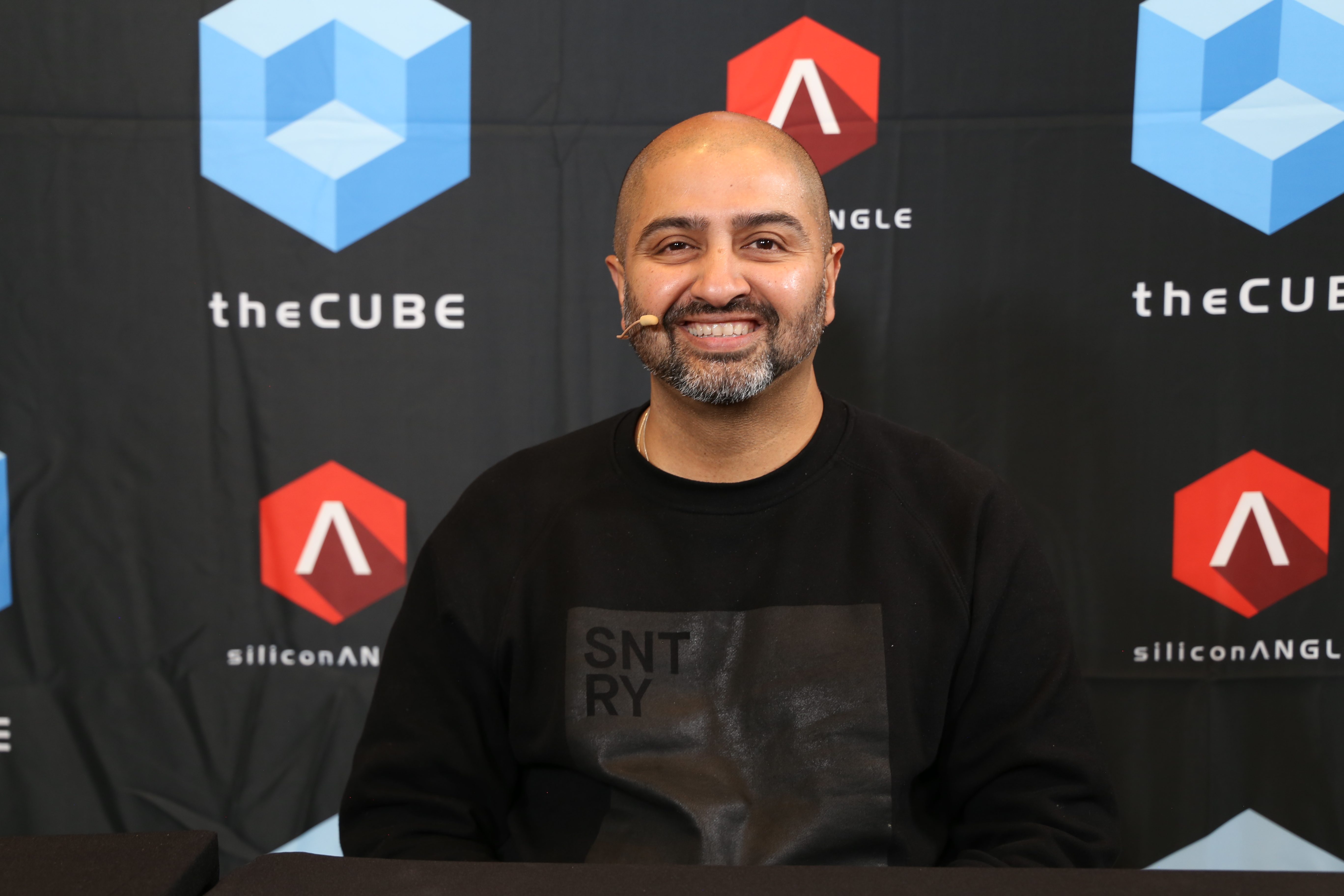
In this interview from AWS re:Invent, Milin Desai, chief executive officer of Sentry, joins theCUBE’s John Furrier to discuss the rapid evolution of AI agents and their role as the new infrastructure layer. Desai explains how Sentry has transitioned from a hot startup to an "escape velocity" enterprise, serving over 150,000 software teams, including major players like Anthropic and Disney+. The discussion centers on Sentry’s core value proposition: providing the deep context necessary to fix broken code faster. Desai reveals that by feeding production context...Read more
exploreKeep Exploring
What is the current status and atmosphere at AWS re:Invent, and who is hosting theCUBE's coverage?add
What does Sentry do to help developers when code breaks, and how does the new AI wave enhance its value proposition?add
What impact is the new era of AI tools having on software development workflows and team dynamics?add
What is the current hiring status and employee culture at the company mentioned?add
>> Welcome back, everyone, to theCUBE's live coverage here at AWS re:Invent. I'm John Furrier, host of theCUBE. It's our 13th year covering re:Invent. I think they had 14. I just got my badge of 10 years, a little pin, a little celebration swag here. Show's popping, 60,000 people, mass chaos. But the real story is agents are the new infrastructure, abstracting away all that complexity and work to provide new outcomes, but it's still a cloud game. It's not a pivot. Still a lot of cloud infrastructure under the covers. Milin Desai, CEO of Sentry, CUBE alumni going back to 2016. Great to see you. Thanks for coming on here at re:Invent. You guys are no longer a hot startup. You're like a full-blown escape velocity startup.
Milin Desai
>> Yes, we are.
John Furrier
>> Congratulations.
Milin Desai
>> Thank you. Thank you.
John Furrier
>> We knew you'd win.
Milin Desai
>> Thank you. Yes, it was 2020 when we last chatted. We were just saying, the days before COVID hit, kind of crazy. And it's great to be here as always.
John Furrier
>> Yeah. It's fun. The COVID, we learned a lot about people who were in the cloud took advantage of it. That same pattern is kind of hitting AI where if you're in AI early, there's really no room for fast followers because it's almost too fast. If you're not in the first wave, you could almost be left in the dust. So that seems to be the theme because of the velocity, the ability to replicate resources. With agents, you're starting to see now frontier agents, which is the big news, which basically says you can do longer tasks. A little bit more complex, but a lot of these tasks are either configurating things, writing code, testing thesis. So it's a little bit more reasoning into coding. This is going to be an impact your business significantly because there's going to be more code.
Milin Desai
>> Yes.
John Furrier
>> So talk about what you guys do first. I want to set the table for the folks who haven't seen the other interviews, what Sentry do, and then how this new AI wave plays into your value proposition.
Milin Desai
>> Yeah. So we focus on helping developers when code breaks. Whether it's an error, whether it's a slowdown. Now, whether it's an agent talking to a piece of your software, as long as it's code and it breaks in production, Sentry will tell you everything you need to know to fix it. And that was our magic, the context that we had from a stack trace to what we call breadcrumbs, the step the users took, the environment variables, everything you needed to know. And the beautiful thing about this new world of AI is that context that we collect, that largest production context helps you to fix it faster. And so code breaks, fix it faster. That's what Sentry does. And 150,000 odd software teams use us. And that's the story, and we're super excited about it.
John Furrier
>> I mean this is a tailwind for you because you guys cracked the code, the core problem. Code breaks, root cause analysis, and whatever it is, you guys get to it faster. Now agents can pick up the task. As more things happen, you can push that IP or the knowledge into any process.
Milin Desai
>> Yes, absolutely. And so as part of this, what we discovered was, as you said early on, we took this context, we fed it to LLMs. We found 95% root cause accuracy, right? Which is phenomenal. And that is because of the context. And now what we're doing is working with our partners like Cursor using their cloud agents, can you fix the code? So pull request is automatically generated using Claude Code or Cursor or pick your favorite agent. And that closed loop is basically turning what used to take like hours into minutes in terms of fixing it faster. So it's a great tailwind.
John Furrier
>> Yeah. No, I got to say, we were talking before we came on camera, the 10X engineer. Remember when that paper was written, that blog post, that was the big Silicon Valley one engineer is worth 10. And then Dave and I were riffing on theCUBE about the cloud being half a stack. And remember, before, the cloud was the full stack developer. And so you start to see these different metaphors. But talk about the impact of the developer because there's no more full stack, if you will, because now you have agents, you have intelligence like what you guys are doing with code fixing, where you now can have engineers engineering things, not just writing code. So you have kind of like a hardcore engineer, system architects, solution architect, or coder that's directing and watching everything. So it's a little bit different roles. So how is this new era, the one you got a tailwind into, changing the software team's work flow or work behavior?
Milin Desai
>> Yeah. It's fascinating, by the way, what's happening right now. It started with every individual developer working with their favorite AI tool, right? And I would say each one is using two or three of them right now. I have a subscription to Cursor or Claude and everything else in between, right? And so that's exciting. That's making what I'm calling every developer feel like a 10x developer in that regard. And you highlighted something very interesting. A backend engineer can now, with the assistance of these agents, do front end work, right? So even if you are not a full stack developer, you now have an assistant who can make you a full stack developer. So that's definitely exciting. But I feel like that's kind of phase one. You're just learning how to build new features and function. What we are starting to see is this opportunity, which is you write code, but after that, you have to do a whole set of things which is deploy, ship, monitor it. And this idea of shared context where your front-end team just shipped something, there was a bug, something like Sentry was able to root cause it, fix it. Another team is fixing a backend issue due to a slowdown. Again, that shared context allows you to then fix that. So I'm seeing this idea that we are looking at now where could we have this idea of a 10x software team where they're working off this shared reasoning platform and working on different aspects of code resulting in what I believe where the magic will happen, which is the 10X software team.
John Furrier
>> Talk about how you guys are using it internally. You mentioned like the developers, that's a feeding frenzy. Open source is booming, the tools are cool to play with, but then you got to start to settle into kind of your thing. And most successful companies like Amazon's a great ... Amazon Web Services is doing it, too; you guys are, too. They're using stuff internally first. Client Xero, they call them, dogfooding, whatever term is used. We use many terms. What have you guys done internally? What's the learnings? As you guys push the state of the art, because you're kind of in the root level of all the code, code fix, you got to know all the aspects of the code. That's what you guys do. What's the learnings from the internal work on the ?
Milin Desai
>> It's early. That's what I would say. It's still early. When you give it very, what I'm calling specific tasks, give it really good context, a lot of stuff can be done, but otherwise, you still need to guide and work around kind of AI and agents. So I think we are in the early innings of what you just said, longstanding task completing at the quality of production, I call it. So as an example, our CFO had a, he's a avid beer drinker, and he had an app where he was rating all the bears. He actually vibe coded an entire app around it and it works. It works. He's super happy with it.
I had to go investigate for my kids, the top basketball schools, D1, D2, D3, and recruiting. So you can build those kind of apps and even if the app is bloated, it's not perfect, the outcome is achieved. But for Sentry itself, an engineer working on Sentry, we still have to contextualize a lot of the fixes and the guidance that you said, the system design, the spec driven development. All of that is still in the beginning phases, I would call it, of the development journey.
John Furrier
>> So the holy grail is to have AI create bug-less code. Will we ever see that? It's like an SLA. Bug solved in less than a millisecond. Or, I mean there's almost the way you guys are going now, it's like almost like sci-fi. There's a bug and then it's like fixed.
Milin Desai
>> So that's where it gets interesting. I don't know if we will have perfect code, but what we are starting to do, and you will find this fascinating, which is not only ... We talked about the scenario where we find a bug in production and within minutes, there's a pull request, right? Perfect. We are also now, as you're submitting code in the pull requests, detecting bugs with AI. So preventing bugs before they get even shipped. So yes, there is a possibility that we will find enough things before they ship to production. So the things that you find in production are definitely smaller in nature. And so it is kind of getting a little crazy, but I don't know if we'll ever get to absolute perfect codes being shipped, but we all strive towards that.
John Furrier
>> I mean if you look at some of the stuff that NVIDIA is working on with simulation, you can almost imagine a world where it goes into a virtual simulator, and will run simulation on that. I mean that's possible.
Milin Desai
>> It is. And I think we are starting to see these browser agents which actually release code, they test the UX around it. So the possibility of finding issues before you ship is going to get better, it's going to get more automated, but in the history of time, we've seen that when you ship to production, you always find kind of those scenarios.
John Furrier
>> Yeah.
Milin Desai
>> This is why Sentry has been successful in what we do.
John Furrier
>> Software, it's always the second release you want to get, not the first one software. I just have to ask you about your business and Amazon Web Services news and all the announcements. How do you guys see this re:Invent? Does this change your perspective coming out of this week as you head back to California? What's the takeaway for you from re:Invent and how does that affect Sentry?
Milin Desai
>> We are just excited about what we are seeing in the marketplace around, as you said, the frontier models we continue to develop, but I think where agents go, the ability of agents to mature and kind of derive the outcomes that they could, we are excited about it. We believe agents are yet another kind of just an extension of your software app. Another workload, we monitor it perfectly today in terms of everything from the agent talking to different parts, the prompts, all of that is monitored via our capabilities. So the path of 2026 and the automation, the outcomes that these agents could derive is definitely very exciting.
John Furrier
>> We've been talking about observability a lot and how observabilities change as a category from a segment scope to much more of a bigger industry-wide aperture or landscape. When you look at things like the AI factory news, which we've been talking about in theCUBE, whether it's NVIDIA, and the folks looking at building large scale clusters, there's going to be small, little mini factories, like an enterprise might want to use say AWS mini factory for on prem and then use the cloud kind of in a hybrid distributing computing way and get the edge coming around the corner soon. So with that in mind, you're going to start to see these sovereign ... In fact, it's interesting. Matt Garman actually used the word sovereignty, sovereign cloud in his keynote. Not just as a geography thing, like most people think of sovereign cloud, they think the country will have that thing, but it's really custom. So you're seeing a trend towards custom. There's custom transform, there's custom models. You got Nova Forge, that's basically a custom model bringing your data. So you're going to see a lot of, I won't say one-offs, but yeah, they're all kind of one-offs. So that's going to put pressure on coding. So you got to build these glue layers. So again, back to kind of what you guys are doing, how do you see that market? Because to me, sovereign cloud is just private cloud, so you're going to have a lot of private clouds connected kind of out in the open. So it's multi-tenancy, but it's done in the public. So you have this kind of crossover between public-private domains. That's going to be a coding dream, but also potentially more bugs.
Milin Desai
>> Yes.
John Furrier
>> What's your reaction to that?
Milin Desai
>> The thing which it's almost kind of the element that is beneficial to us, more diversity. More diversity in clouds, types of clouds, types of frameworks, types of languages, types of interfaces. So it used to be, web, mobile, tvOS, now put an agent in there. It's all great for us because the more diverse that is, the more there is a need-
John Furrier
>> More code.
Milin Desai
>> More code. Right, exactly.
John Furrier
>> It's more code.
Milin Desai
>> And more the need of something like Sentry that can work across this broad framework of things. So it's definitely a benefit. I do see this desire to kind of have ... I'm going to call them siloed data layers or siloed clouds, as you call it, sovereign clouds, but that all plays to our advantage in regards to where we are. And we just see that as a great opportunity to further establish our unique position, which is it doesn't match matter what language, what framework, what cloud, Sentry got your back.
John Furrier
>> Yeah. And also the new trend that we're seeing is code auto generation on the fly. So generative coding is coming. That's going to be ... Who's going to QA that in real time?
Milin Desai
>> Absolutely. And QA it and how much can you QA till you put it in production in a real world and see latency issues and other things. That's where we kick in.
John Furrier
>> Great to have you on. Great to see you. You go back to 2016, I think your first time on theCUBE. Great to see you successful. Put a plug in for the company, some stats, how many people you have, funding levels, product traction. What, are you guys looking to hire? Put a plug in.
Milin Desai
>> Yeah, sure. Thank you for that. We are 400 strong. 150,000 software teams use us from the leading AI model companies out there like Anthropic, OpenAI and others to our customers like Disney+, so at any scale to the latest startup that comes out, uses Sentry and why? For the simple reason, when code breaks, the best signal of how to solve it is Sentry. And hopefully with AI, we can give you the closed loop now to deliver on that. So we are hiring. As always, we want great people at the company, and people is what makes Sentry great. So would love to have folks who are interested, join us.
John Furrier
>> And it's hard to get developer traction because they're tough customers. They want the best.
Milin Desai
>> Very tough. Hard audience to sell to.
John Furrier
>> They're a good audience. We love the developers. Thank you so much for coming. I appreciate it. Congratulations. Good to see you.
Milin Desai
>> Thank you.
John Furrier
>> All right, I'm John Furrier, theCUBE, here at re:Invent 2025. Stay tuned for more coverage after this short break.