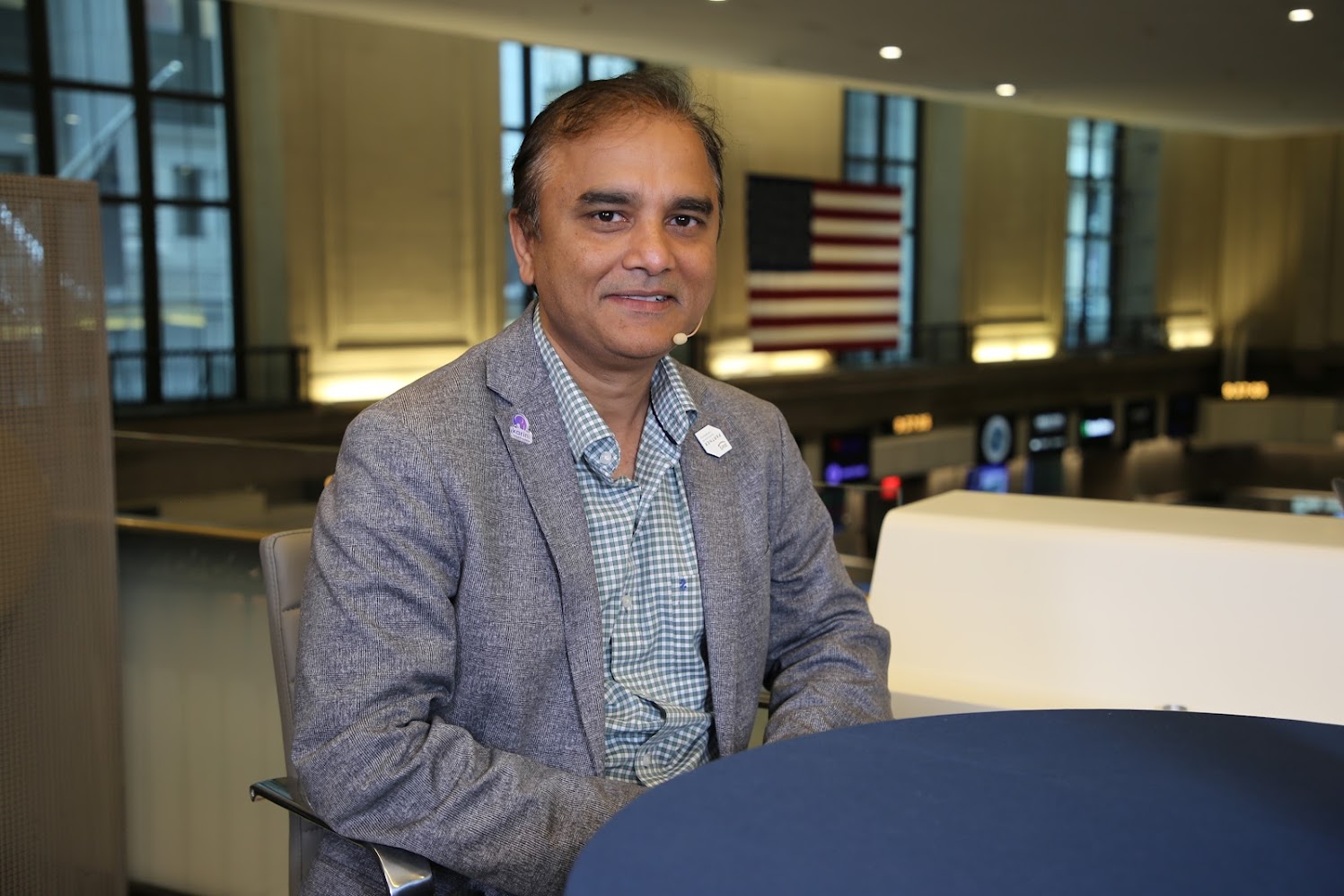
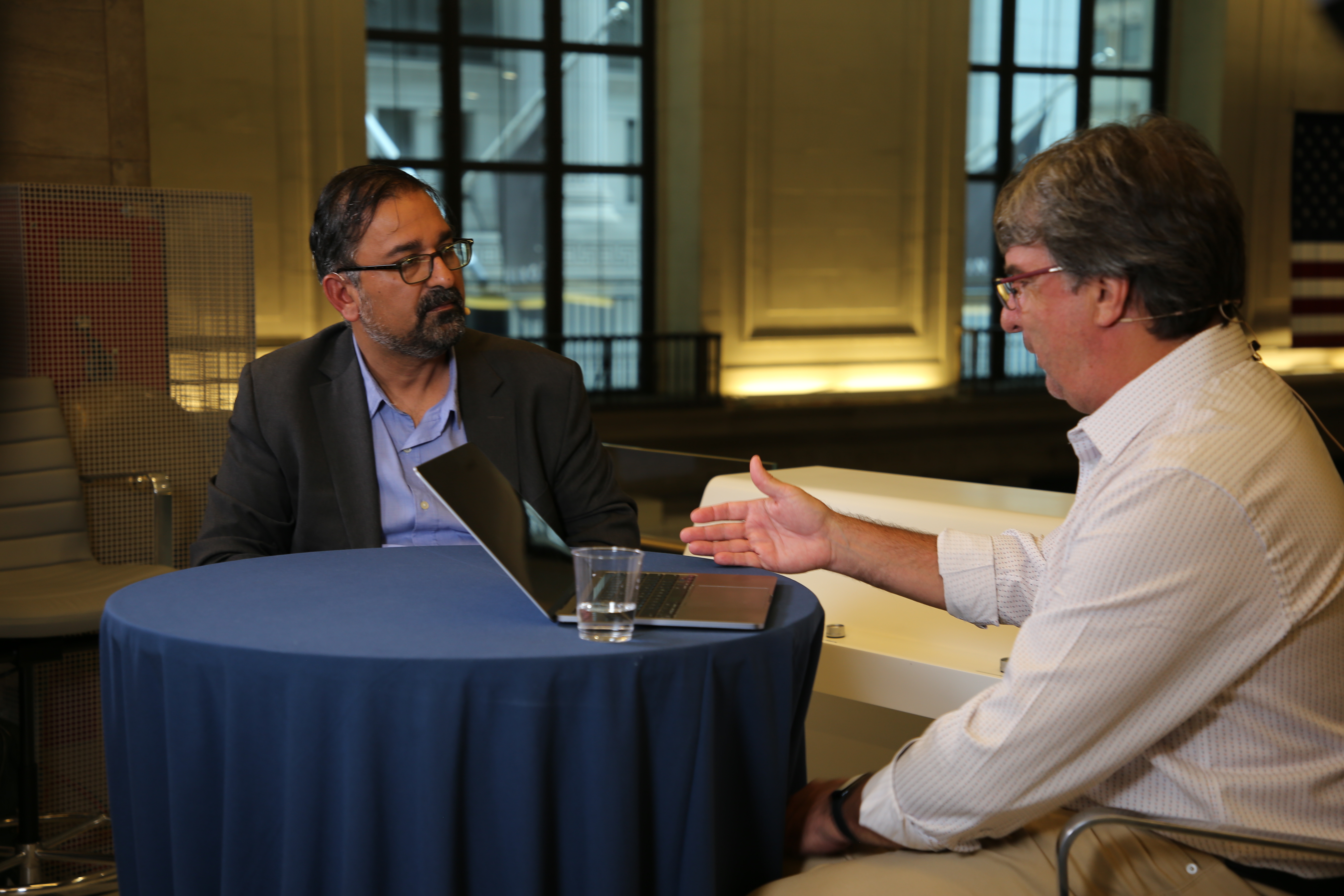
In this exclusive segment from theCUBE + NYSE Wired: AI + Cloud Leaders, Karini AI CEO and co-founder, Nitin Wagh, joins theCUBE’s John Furrier to break down how enterprises are accelerating generative AI deployment with Karini’s no-code, low-code platform. Drawing on his deep AWS and SageMaker experience, Wagh reveals how Karini is helping industrial, legal and engineering firms automate complex business workflows – delivering measurable outcomes like $1M+ in savings through ERP exception handling and agentic RFP response solutions.
Wagh outlines Karini’s product architecture, which integrates directly into a customer’s VPC to enable secure, private AI without the tradeoffs of traditional SaaS. He explains how Karini abstracts the complexity of Bedrock, SageMaker and tool orchestration into a deployable agentic platform that empowers business users to build and manage their own AI solutions – without code and without technical debt.
The conversation also explores the broader enterprise AI stack evolution and AWS momentum, including the role of AgentCore, the shift toward system-level design, and why Karini is doubling down on verticalized solutions like order-to-cash automation. With insights on prompt optimization, token cost control, fine-tuning best practices, and AWS-native observability, this interview offers a rare look inside how real companies are pushing GenAI into production at scale.
Forgot Password
Almost there!
We just sent you a verification email. Please verify your account to gain access to
AWS Mid-Year Leadership Summit 2025. If you don’t think you received an email check your
spam folder.
In order to sign in, enter the email address you used to registered for the event. Once completed, you will receive an email with a verification link. Open this link to automatically sign into the site.
Register For AWS Mid-Year Leadership Summit 2025
Please fill out the information below. You will recieve an email with a verification link confirming your registration. Click the link to automatically sign into the site.
You’re almost there!
We just sent you a verification email. Please click the verification button in the email. Once your email address is verified, you will have full access to all event content for AWS Mid-Year Leadership Summit 2025.
I want my badge and interests to be visible to all attendees.
Checking this box will display your presense on the attendees list, view your profile and allow other attendees to contact you via 1-1 chat. Read the Privacy Policy. At any time, you can choose to disable this preference.
Select your Interests!
add
Upload your photo
Uploading..
OR
Connect via Twitter
Connect via Linkedin
EDIT PASSWORD
Share
Forgot Password
Almost there!
We just sent you a verification email. Please verify your account to gain access to
AWS Mid-Year Leadership Summit 2025. If you don’t think you received an email check your
spam folder.
In order to sign in, enter the email address you used to registered for the event. Once completed, you will receive an email with a verification link. Open this link to automatically sign into the site.
Sign in to gain access to AWS Mid-Year Leadership Summit 2025
Please sign in with LinkedIn to continue to AWS Mid-Year Leadership Summit 2025. Signing in with LinkedIn ensures a professional environment.
Are you sure you want to remove access rights for this user?
Details
Manage Access
email address
Community Invitation
Nitin Wagh, Karini AI | AI + Cloud Leaders
In this exclusive segment from theCUBE + NYSE Wired: AI + Cloud Leaders, Karini AI CEO and co-founder, Nitin Wagh, joins theCUBE’s John Furrier to break down how enterprises are accelerating generative AI deployment with Karini’s no-code, low-code platform. Drawing on his deep AWS and SageMaker experience, Wagh reveals how Karini is helping industrial, legal and engineering firms automate complex business workflows – delivering measurable outcomes like $1M+ in savings through ERP exception handling and agentic RFP response solutions.
Wagh outlines Karini’s product architecture, which integrates directly into a customer’s VPC to enable secure, private AI without the tradeoffs of traditional SaaS. He explains how Karini abstracts the complexity of Bedrock, SageMaker and tool orchestration into a deployable agentic platform that empowers business users to build and manage their own AI solutions – without code and without technical debt.
The conversation also explores the broader enterprise AI stack evolution and AWS momentum, including the role of AgentCore, the shift toward system-level design, and why Karini is doubling down on verticalized solutions like order-to-cash automation. With insights on prompt optimization, token cost control, fine-tuning best practices, and AWS-native observability, this interview offers a rare look inside how real companies are pushing GenAI into production at scale.
In this exclusive segment from theCUBE + NYSE Wired: AI + Cloud Leaders, Karini AI CEO and co-founder, Nitin Wagh, joins theCUBE’s John Furrier to break down how enterprises are accelerating generative AI deployment with Karini’s no-code, low-code platform. Drawing on his deep AWS and SageMaker experience, Wagh reveals how Karini is helping industrial, legal and engineering firms automate complex business workflows – delivering measurable outcomes like $1M+ in savings through ERP exception handling and agentic RFP response solutions.
Wagh outlines Kari...Read more
exploreKeep Exploring
What is the mission and focus of the company mentioned in the text?add
What challenges do enterprises face when choosing between different technology vendors and solutions for their needs?add
What can you share about your experience and insights regarding the evolution of SageMaker and its relation to other components in the AI infrastructure stack?add
What was the motivation behind starting the company and the evolution of its focus on RAG and agents?add
What developments and agreements have occurred for the company in the first half of the year?add
>> Hello, welcome back to theCUBE
here at the New York Stock Exchange Cube Studio. Of course, Palo Alto and New
York connecting Wall Street and technology together,
part of the NYSC Wired. Nitin Wagh is here, he's the CEO and co-founder of Karini AI. We were just at the AWS Summit, we're back in our studio.
Nitin, thanks for coming in.
Nitin Wagh
>> Yeah, thanks for having me. >> Congratulations on the venture. Just talking about your history at AWS, Databricks now, this venture. You've got to look at the AI
wave right now, you've kind of seen it from the
inside, early days of AWS. Now you've got the Pin, big partner. Talk about the company. What do you do?
Nitin Wagh
>> Yeah, so Karini, our mission is to put generative in
production at enterprises. So to do so, what we do is,
we provide a no-code, low- code platform sort of abstraction on top of the AWS infrastructure. So not just IT, but also line-up business IT,
business experts can build, operate, and manage generative AI. And we focus on time to market. A lot of our customers are
from marketing department. I'm talking to lawyers,
I'm talking to HR experts. In my life, I was always
talking to data scientists, but with generative AI, guess what? We are talking to more domain experts and they are quite essential for successful generative AI projects. >> You're targeting real companies.
Nitin Wagh
>> We are targeting real-
- Average personas, a business person. So you're kind of hitting
that productivity business transformation use case.
Nitin Wagh
>> All of our projects are
about business productivity transformation, and they're mostly about business process automation. For example, some of the use
cases we are doing at Space- Lok, Southeast Texas,
which is a huge fluid parts manufacturing for
oil and gas, aerospace. So we are doing sort of
order-to-cash, ERP exception, business process automation. Customer said it saved them
a million dollars just with that multi-agentic workflow. At another company we are
working with, legal tech company, where we are doing legal research, precedent citation matching. Then with the engineering and construction company
who responds to thousands of RFPs per year, we are automating the RFP
response generation solution, which is a super hard use case. You can imagine writing an essay and it has to be perfect, it has to be a winning combination? Right, so- >> You don't want to miss
a zero on those bids.
Nitin Wagh
>> No way.
- Accuracy is key. Well, let's zoom out. What's the product? Explain
the product, how it's consumed. Obviously you're making it
simple and easy to use agents. Okay, is it an agent platform? Take me through how the
product is deployed. What is the key features?
Nitin Wagh
>> Yeah, yeah, definitely.
So if you think about an enterprise, today, there
are a lot of vendors. There are some vendors who
are really good at model serving, observability. Clouds themselves have their own offerings and native services, or there are agentic frameworks, these Lanch and Llama index. So there's just a lot of noise, but then these are siloed offerings. They're really good in themselves. So enterprises are then often
tasked, "Hey, do I go to a SAS and give my data to them? Or do I build an agentic platform? " This is a classic
chaos within enterprise, and they end up starting
to build a platform. And that takes millions of
dollars, many, many months. By the time they build
it, time has passed. >> It's out of spec.
- Yeah, it's like things have moved on, games have changed. So our value proposition is very simple. You deploy Karini AI, which
comes with all the capabilities, such as built-in observability,
agent building experience, tracking, FinOps element, knowledge base and knowledge graph creation. So all the quintessential
elements that makes up for the agentic platform within Karini, you deploy within your own VPC. So we are not selling a SAS. We have a SAS, but that's
good for demos in POC. Our model is we deploy in
customers' AWS account, in their VPC, so it can
be entirely air-gapped, and then we enable their
business users to build their own private AI. So that is where we- >> Are you guys only AWS?
Nitin Wagh
>> Currently we are only on AWS, but we built the platform on Kubernetes as a backend, so it can be- >> It can be multi-cloud. Yeah. So one of the customer's
cloud, they have another cloud, you can be on that?
Nitin Wagh
>> So currently our control
panel only runs on AWS, but then they can connect
to other model providers or other type of offerings. Let's say we have customers,
sometimes they want to use OpenAI or Azure OpenAI, they can
connect from our cloud. But again, we are- >> So you can play within
Bedrock and SageMaker, and the VPCs, air gap,
everything on Amazon. Great. But OpenAI is not in Bedrock. It's okay, that's just a call.
Nitin Wagh
>> Make an API call. We
also support Google Vertex. There are also private
providers like Fireworks. So I think we believe
in... We have XSS tier. So we believe in customer choice, so let the customer dictate. >> Talk about your background at AWS. We were talking before we
came on the podcast here, you were involved in SageMaker.
Nitin Wagh
>> Yes.
- Which has gone through a transformation. I kind of like what it is now. I call it the power
user, the advanced mode, but it really is tuning a lot
of the infrastructure piece underneath Bedrock. Then there's a Bedrock piece and AgentCore looked
really good yesterday, Kiro looks fantastic. What's the evolution of SageMaker
and how does that stack? Because a lot of companies are
coming out in this AI stack, I call, for lack of a better word, the infrastructure is great.
Nitin Wagh
>> Yeah.
- So you've got to tune that too. You've got to play with to
get that operating properly, and yet all these tools are coming out to manage things like tokens. So you're seeing a lot of customization with code generation around tools.
Nitin Wagh
>> Yes. - I was talking to
a customer who said, "Yeah, we're more excited less about agents. We love agents, but it's
the tooling that allows us to manage the token costs."
Nitin Wagh
>> Yeah. >> Why go to a token call when
you can build an abstraction in the LLM and manage non-related calls? Why would I call an LLM to do mass? Why waste tokens on that? So they're starting to get
more honed in on the design of the system on top of
Bedrock and then SageMaker. How do you see that? Because
I think that's a story that's not being told right now, where you've got SageMaker
tuning the infrastructure and then you've got the Bedrock side where the developers are managing how to configure the LLMs, whether
it's going external to an API or managing it within Bedrock. What's your reaction to
that? What do you see there?
Nitin Wagh
>> Yeah, yeah. So what we have seen is, when you start a use case,
again, these are the tools that you should use based on your use case and your problem you're trying to solve. There's no need to analyze,
parallelize too many, and typically when you
need fine-tuning, right? You'd never start with fine-tuning. If you start with fine-tuning,
you're making a mistake. When we start with our customers, we typically start with Bedrock. I mean, Karini platform,
you select a problem, write a prompt, write an agent, and then of course, as you said, tool ecosystem is very important. We always try to push down things, because I don't want LLM to do processing. LLMs are not built for
doing data crunching. For example, I don't want LLM to do knowledge graph, query execution. That is better done in Amazon Neptune. So we have actually built a tool that is a super tool, you can say. LLM creates a plan, "Hey,
extract from OpenSearch some of the records, go to knowledge graph, build this query, do the transformations. " All of that is happening in
tool, so you can free up LLM to just create a plan. >> So leverage the reasoning piece of-
Nitin Wagh
>> Reasoning piece rather than doing the heavy data crunching. So what we do is, to your other question, so we typically start
with Bedrock, with the on- demand model, and then
we sort of run the trial, typically take golden question,
answers from customers, and then we have a evaluation harness. And if you see that, all
the techniques, for example, we also have prompt optimization. So you can optimize the
problem for a particular task, find the model, write a combination, but sometimes you still
cannot get to your goal. You always have outlier edge cases, and that's when we definitely
talk about fine-tuning, and that's where we have
built the abstraction on top of SageMaker. You can fine-tune the model and then you register that model
into Bedrock for inference, because Bedrock is amazing
for inference, right? >> Yeah. - You don't have to
manage, you just import the model package and boom, you have an API that you can register from Karini and it just magically works. >> Yeah, it's having that AWS knowledge. It's almost like you're like
a product team inside AWS, but you don't work there anymore.
Nitin Wagh
>> Yes.
- I love this abstraction with SageMaker. So you're essentially
automating SageMaker to work with whatever is coming in off the top. You're basically building kind
of a runtime, your own kind. That's a bad word. Maybe more of an abstraction intelligence layer.
Nitin Wagh
>> Yeah, it's like a dev loop. We built a dev loop which
customers don't see. It's literally like,
"Hey, you want to sort of fine-tune a model? " We launch a job in
SageMaker. Because it's hard. Fine-tuning, while it's sounds simple, it's the whole developer loop. It's very time-consuming. I don't think it's hard,
it's time-consuming. All the pieces are there, but
we just want to make it faster so that time to market is easy. So you fine-tune a model,
we launch a job in SageMaker through API, and that
knowledge definitely helps. My co-founder, she's also from... Ex-AWS, she's an ML specialist. So it's a
lot of AWS knowledge. >> You have the working
knowledge of all the buttons and knobs to push in SageMaker. Again, I call SageMaker the power mode, it's like the advanced mode. Don't go in there unless
you know what you're doing. You'll blow something up, if you will. Okay, so I love that angle. So I want to ask you a
question since you're Amazonian, former Amazonian. We'll use Amazonian
speak for a minute here.
Nitin Wagh
>> Yes. - So you provide all
the undifferentiated heavy lifting around managing
Bedrock, SageMaker, AI infrastructure, which is
SageMaker interfaces into policy-based, whatever you want to do, managing the infrastructure
with the logic in the dev loop. So when you go to the customer, say an engineering company
who's just trying to win bids, they're like Excel users or using sheets, that's what they use.
Nitin Wagh
>> Yes.
- So you go to them and say, "Look, we've got you covered. Import your logic. " How are they interfacing
into your dev loop? So I mean, you're doing probably some services with them, right? So I'm imagining that's part
of the motion, is you kind of come in, you deploy,
but how do I leverage? Okay, here. Here's a spreadsheet, how do I inject my logic into the Bedrock?
Nitin Wagh
>> So yeah, I think it's a little nuanced question, how we get an answer. Bear with me. So typically what we do is, we understand the business problem and then map it out to a technical. What is the solution, right? AI. And we have an excellent
AI engineering team. We are not a services
company, a product company, but what we believe is, we want to make a customer successful. So we also, during our first
use case with the customer, we help them deploy that
and take it to production. Because only a successful
customer can get us to a next use case, right? So that's very important. So
we map that business use case to a technical sort of AI problem, and then we call it as a recipe. A recipe is like a canvas. Or you can say it's a workflow
under the hood, right? It's an agentic workflow. Okay, now user wants to ask
questions, so it's a chat. I want to send the API,
it's a web book type. >> Provisioning a workflow, basically.
Nitin Wagh
>> It's a workflow. It's a workflow. And a workflow can have
different types of node. It can have a prompt node, agent node, it can have a custom function. And then we map out that process, and then those users understand the process they may not understand. For example, in the
engineering company, they have historical responses,
they have bid data, they have resumes, and they have all the win
history, win-loss history. So all these things they
understand, so we just map that out on a recipe canvas,
and then we take that process. Okay, we get alignment,
and then we start building. And building is done, you
go to a prompt playground and build those individual
agents, test them, select the right model,
version control them and bring the real agents
back to the canvas and boom. >> I like how you said
you're not a services company, you're a product company. I love that. But again, Swami, when he gave his keynote yesterday, he had the big slide up there
that said service as software. That's essentially what you're doing. Your service is the software.
Nitin Wagh
>> Service is the software. >> So that's not software
as a service, that's SaaS. You have a SaaS demo platform, but that's just where the world is going. I mean, it looks like a
professional search. Yes. But you're not hired to be
a consultant, you're hired to essentially deploy agents. So you provision the
service as a product team.
Nitin Wagh
>> Totally. So I mean, of course
we are a product company. >> Of course. Yeah, yeah.
- A lot of people confuse us. So what we believe is we
want to partner with the SIs, system integrators, GSIs, and those partnerships are forming. Because I think their model
is also changing, right? They have to learn the new ways. So the traditional way, we
have actually done multiple projects where things have gone wrong with that traditional approach. And with our approach, things are faster, customer is a little bit enabled. So I think they have to also think about changing their model. Because with Karini, you don't have technical debt, there's nothing left. You can continue to iterate. A traditional approach, if you write code, it becomes a technical debt,
because soon it'll be outdated. For example, when MCP came
along in Jan, every customer of us is thinking about,
"Hey, what do we do? Should we get rid of
all the agent workflows? " I was like, "No, let's not do that. Let's understand, is it
really helpful for you to implement MCP? " And MCP had a lot of
security holes back then. So we took a very careful
approach where we said, "Okay, why don't we build an MCP registry where an administrator within
enterprise can only approve the tools or the servers, MCP
servers that are authorized, they're vetted and
validated security-wise." >> They're trusted. >> They're trusted, and
then you add them centrally and then let the builders have access. And as admin, you cannot control, "Oh, there's a security
vulnerability, I'm going to disable this and it's just-" >> It's a great protocol, but you have to take careful consideration for making it a node in the network.
Nitin Wagh
>> Because there's just so
many open source MCP tools, it's just tough to understand... It's like , so many models. Which model you can trust
to put in your enterprise? >> Yeah, I mean it's not technical debt, it's just bad design.
Nitin Wagh
>> Just bad.
- So technical debt is great, then you're talking about
that, but then the design side. All right, so I have
to ask you, this is one of the things we've been talking
about on theCUBE a lot, is that we're entering a systems revolution. Something that I've been saying for years. Now we're seeing it play
out at Summit, which is kind of like a mini re:Invent in my mind, because even though we're midpoint, kind of at the halfway point of the year, it feels like a lot has happened
in the first six months. And then they had significant news. I mean, Nova customization,
obviously AgentCore, even Jassy did a post
this morning on that. He did a little video. And then obviously you've
got the marketplace making a dedicated section for agents and tools. So that's significant. Over 100 people launching with it, that's pretty large
considering their last launch with SAS was only a handful. Chris Cruz and I talked
about that yesterday. So if I look at AgentCore,
the builders now have to be systems thinkers. What's your take on this?
Because I think this system mindset is an Amazonian
concept, distributed computing, old school computer science
principles are in play.
Nitin Wagh
>> Yeah, I mean AgentCore
is a brilliant idea. If you look at all those
cubes that are out there, that is actually a Karini platform. It's just that we have
an abstraction, no-code, low-code abstraction on
top of those AgentCore. So the beauty is, AWS always, I was part of the other side, so I
know AWS has thousands of engineers, they build beautiful things. Observability, for example,
we have our own observability where we package a data
warehouse under the hood and then sort of stream. So that's how customers get
FinOps and other things. Guess what? Now AWS has
observability, we may swap out that piece that AgentCore already provides because it's a siloed capability, which is really nice for someone like us. >> You get optionality.
- Yeah, we get optionality. >> Yeah.
- And then we can push down. For example, within Karini, we started with having our own OpenSearch
for vector database, but soon we realized, why manage OpenSearch when
Amazon has Amazon OpenSearch? So we sort of migrated all our customers to Amazon OpenSearch. So we will sort of start swapping out some of the components as they mature. It's very important that
these components are mature, because we have customers
in production, we want to have those mature components. >> You're essentially refreshing the stack and the capabilities
with best capable, best of breed in the platform.
Nitin Wagh
>> It's the platform. Because
it's all about skill, right? I mean, I know Amazon
is really good at scale. We have some scalable workload. For example, in legal tech,
working with a customer, they have three million precedents. So that's a lot of data. You're talking about probably 15, 20 days of processing time. I would rather outsource that to a managed service like AgentCore. >> Yeah, yeah. All right,
talk about the business. When you started the company, obviously you guys came together. What was the original
vision of the company, the origination, and where are you now? What has been the biggest change? Just the robustness of the
software. scalability, demand? From the origination point
to now, take us through that.
Nitin Wagh
>> Yeah, so when we started the
company, actually, Deepali, the co-founder, she started the
company, I joined her later, but the idea was she was one of the early engineers
in the machine running, she knew about Bedrock, but the idea was AWS is really
good at creating developer tools, but what if we
enable the business experts? And that was a missing gap. So the goal was, when we started, I think it was about RAG,
right? There were no agents. >> Exactly.
- We just build a really awesome, easy to use RAG you can build in 10 minutes. And customers just loved it. And then of course, agent came along and we quickly pivoted to agents, but we always kept our
theme as a platform. A lot of our other companies, they pivoted from different
businesses to platform, or platform to some other
business, vertical business. So we always kept our- >> Well, you still have the RAG now?
Nitin Wagh
>> We still have a RAG, but now it has changed into agentic RAG. >> I mean, it's really not a pivot. A pivot is a stop and turn. You guys just extended off to
agents because it's a natural-
Nitin Wagh
>> It's a natural . We started with RAG, we added agents, then we added knowledge graphs. And then I always believe
that AI is only as good as the data it can see. So RAG is always important. And then there are
different types of RAGs. There's a knowledge graph,
there's knowledge base. And we always believe that if you can industrialize
the system of record, which is your knowledge
graph or knowledge base, that is going to be phenomenal. So we have been working very
hard in engineering under the hood, because people see this
platform, they see it's like, okay, no-code, low-code canvas. I always tell our customer, "It's also a workflow under the hood because we also migrated from
sort of a siloed single load to distributed RAG. " We raise the best thing in
technology that can happen because I want to scale to
millions, millions of records. Customer, they should not be upper bound. >> Great to have you on and
I really appreciate you coming into our studio. I have to ask you, if you
had to describe the biggest surprises or activities that
have happened in the first half of the year, what would they be? What were some of the big
moments in this year that kind of changed the game, move the needle, if you will, or raise the bar? And then what's your
plan for the second half?
Nitin Wagh
>> Yeah. Is it for Karini? Or-
- Karini and just the industry and you guys. Both.
Nitin Wagh
>> Yeah, so I think with
Karini we are actually working with meaningful GenAI use
cases across the board with different domain experts,
variety of industry units. We're really good at manufacturing. We have actually captured and done all types of use
cases for manufacturing, automotive, and industrial, which is typically not a leading sector, but they're leading in GenAI. >> They got a lot of labeling.
- They've got a lot of labeling, a lot of the
data, machine data, a lot of manufacturing, unstructured data. What we call unstructured data. We are having amazing success there. So first half has been really good for us, because we do strategic
collaboration agreement with AWS, which unlocks a lot of doors
for us, co-marketing events. That's why probably I'm here.
We did GenAI competency. That was late last year. Then we just launched agent yesterday. We are right next to Anthropic
in terms of that slide, but we launched our first agent and we learned a lot about agent. We were on marketplace, but this is our first
on-demand agent where you understand billing,
metering, and all those things. Now we have all the
orchestration, we can build many more agents. So second half of the
year, what we are going to focus on is solutions. So for example, we have
this order-to-cash use case. Now, maybe we'll come up with
a solution for ERP exception as a whole so it can solve
procure-to-pay, order-to-cash, record-to-remit, all these problems. So we are going to focus a
lot on verticalized use cases, but we will still continue
to keep our platform theme. But it'll be a sort of application. >> You're going to continue to
get that horizontal use case of all GenAI wherever possible, and then start targeting the vertical apps or use cases where the
domain expertise are, where you can import or have the clients bring their workflows in?
Nitin Wagh
>> Yeah, we'll give them a starter pack and then we believe AI has to
be customized for their needs. Not every customer is same. If someone is telling you,
"Hey, I can just put one agent that will solve all world hunger, " it is not going to happen. You have to look at the data. Data has veracity, it has variety, so you have to customize that AI. >> Well, great to have
you on. Final question. What do you think about
the Summit this year? It was kind of a mini re:Invent.
I think that's my view. You probably agree with
that. Usually it's active anyway, it's a big event. It's freeing. And we're in
New York, everyone is here.
Nitin Wagh
>> Yeah.
- What's your takeaway?
Nitin Wagh
>> I've been attending, I've spoke at mini Summits, re:Invent. I think this is surreal,
because all the launches that I've seen yesterday,
and Swami was very energetic. Even Rohit, the Nova launch, I
was very excited about Nova's inference that is on-demand
with fine-tuned models. That has been a key
challenge for customers and I've been very vocal about that and they finally launched it. So we are going to use S2 for
index. I mean, that's huge. >> Yeah, it's huge.
- A customer who's processing three million indexes, why not
use S3? It's so cheap. >> It's so close to the story.
Nitin Wagh
>> All the launches are amazing.
I think this is more than re:Invent, I'm sure like- >> A lot of meat on the bone on this one. I mean, I've got to say, a very strong... I said to the AgentCore product lead, I said, "If this is the midpoint reveal... I mean, re:Invent, usually they
save the best for re:Invent. So if this is a teaser,
re:Invent is going to be massive.
Nitin Wagh
>> It's massive. I can't wait to see. >> Super intelligence
coming at the re:Invent.
Nitin Wagh
>> I'm sure they will
innovate a lot on Nova. I mean, a lot of the offerings, typically AWS does is like MVP, but it's a surprise that they
launched it as a GA offering. I was thinking it's preview, but it looks like everything
is GA, which is surprising. So they're moving very fast. >> Did you get access to some of the betas?
Nitin Wagh
>> Yeah, we got some access to the betas. Yeah, especially Nova, so... >> Well, then congratulations.
We'll keep following you and thanks for coming
in and congratulations. Thanks for coming on theCUBE. I'm John Furrier, we're here
in our New York Stock Exchange CUBE Studio, of course,
bringing all the action here with AWS Summit happening
this week in New York. And of course, this is our
media week, AI meets cloud. As GenAI starts to go
into production, starting to see real use cases and
visibility into the economics. The value extraction is
starting to be there. Obviously the value
creation is full throttle. Again, thanks for watching.
We'll be right back.