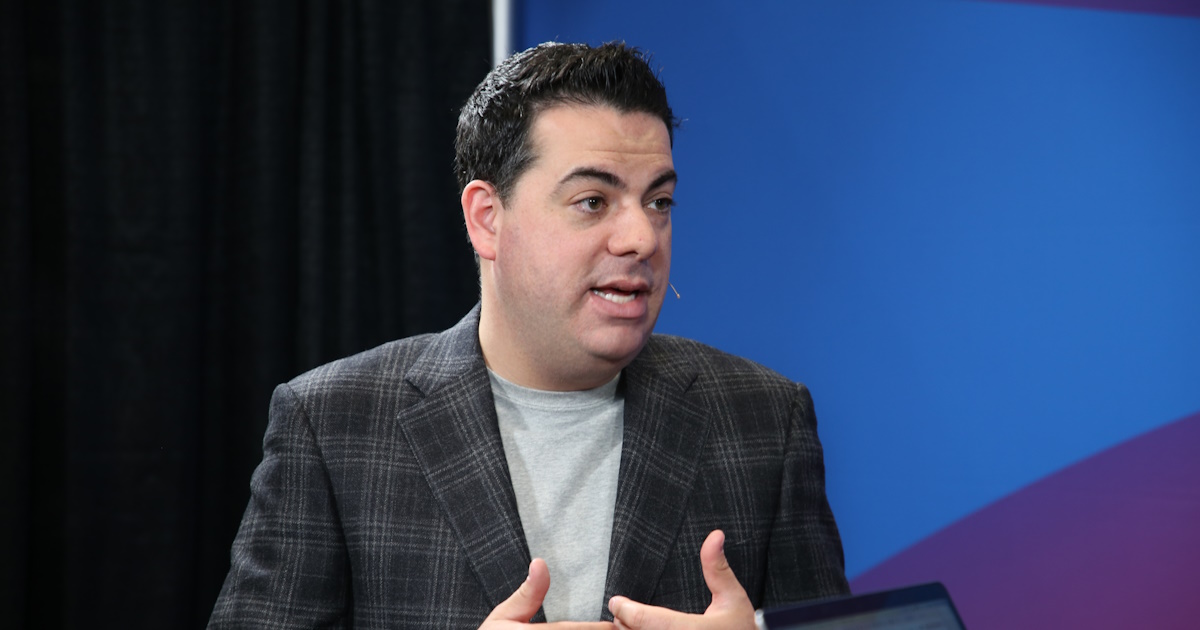
Daniel Bernard, chief business officer of CrowdStrike, joins John Furrier of SiliconANGLE Media, Inc. at the AWS Summit in New York City. The discussion highlights pivotal advancements in cloud computing, artificial intelligence, and cybersecurity, as well as the accelerating pace of innovation. Bernard's remarks focus on CrowdStrike's strategic achievements and the shifts occurring within the cybersecurity sector.
During the conversation, Bernard discusses their role at CrowdStrike, emphasizing the company’s commitment to innovating its AI Red Team services, available through the AWS Marketplace. They describe this initiative as a critical tool for businesses implementing artificial intelligence with a priority on security. Bernard notes the implications of AWS sales strategies on boosting enterprise visibility and integrating cybersecurity into more extensive technology ecosystems. Insights from theCUBE's research and analysts provide a backdrop for exploring evolving market dynamics.
Key takeaways include the significance of AI in cybersecurity and its role in expediting response times against threats, as detailed by Bernard. They emphasize the transition from traditional threat detection methods to those powered by AI, which provide a predictive edge in security operations. According to Bernard, integrating these AI tools allows companies to proactively address the rapidly advancing threat landscape. This shift, characterized as a technological transition towards supercomputing and AI for comprehensive security insights, shapes the current cybersecurity ecosystem.
Forgot Password
Almost there!
We just sent you a verification email. Please verify your account to gain access to
AWS Mid-Year Leadership Summit 2025. If you don’t think you received an email check your
spam folder.
In order to sign in, enter the email address you used to registered for the event. Once completed, you will receive an email with a verification link. Open this link to automatically sign into the site.
Register For AWS Mid-Year Leadership Summit 2025
Please fill out the information below. You will recieve an email with a verification link confirming your registration. Click the link to automatically sign into the site.
You’re almost there!
We just sent you a verification email. Please click the verification button in the email. Once your email address is verified, you will have full access to all event content for AWS Mid-Year Leadership Summit 2025.
I want my badge and interests to be visible to all attendees.
Checking this box will display your presense on the attendees list, view your profile and allow other attendees to contact you via 1-1 chat. Read the Privacy Policy. At any time, you can choose to disable this preference.
Select your Interests!
add
Upload your photo
Uploading..
OR
Connect via Twitter
Connect via Linkedin
EDIT PASSWORD
Share
Forgot Password
Almost there!
We just sent you a verification email. Please verify your account to gain access to
AWS Mid-Year Leadership Summit 2025. If you don’t think you received an email check your
spam folder.
In order to sign in, enter the email address you used to registered for the event. Once completed, you will receive an email with a verification link. Open this link to automatically sign into the site.
Sign in to gain access to AWS Mid-Year Leadership Summit 2025
Please sign in with LinkedIn to continue to AWS Mid-Year Leadership Summit 2025. Signing in with LinkedIn ensures a professional environment.
Are you sure you want to remove access rights for this user?
Details
Manage Access
email address
Community Invitation
Daniel Bernard, CrowdStrike | AWS Summit NYC 2025
Daniel Bernard, chief business officer of CrowdStrike, joins John Furrier of SiliconANGLE Media, Inc. at the AWS Summit in New York City. The discussion highlights pivotal advancements in cloud computing, artificial intelligence, and cybersecurity, as well as the accelerating pace of innovation. Bernard's remarks focus on CrowdStrike's strategic achievements and the shifts occurring within the cybersecurity sector.
During the conversation, Bernard discusses their role at CrowdStrike, emphasizing the company’s commitment to innovating its AI Red Team services, available through the AWS Marketplace. They describe this initiative as a critical tool for businesses implementing artificial intelligence with a priority on security. Bernard notes the implications of AWS sales strategies on boosting enterprise visibility and integrating cybersecurity into more extensive technology ecosystems. Insights from theCUBE's research and analysts provide a backdrop for exploring evolving market dynamics.
Key takeaways include the significance of AI in cybersecurity and its role in expediting response times against threats, as detailed by Bernard. They emphasize the transition from traditional threat detection methods to those powered by AI, which provide a predictive edge in security operations. According to Bernard, integrating these AI tools allows companies to proactively address the rapidly advancing threat landscape. This shift, characterized as a technological transition towards supercomputing and AI for comprehensive security insights, shapes the current cybersecurity ecosystem.
In this exclusive conversation from AWS Summit NYC, Daniel Bernard, Chief Business Officer at CrowdStrike, joins theCUBE’s John Furrier to unpack how CrowdStrike is shaping the future of cybersecurity through AI, agentic systems and cloud-first strategies. Bernard dives into CrowdStrike’s latest announcements, including the launch of their AI Red Team services and MCP server on AWS Marketplace, highlighting how the company is enabling secure, scalable AI adoption for enterprise customers.
The discussion explores how agentic workflows and bi-directional...Read more
exploreKeep Exploring
What are the implications of the MPC server in relation to customer communication and user experience in cybersecurity?add
What unique capabilities or developments does CrowdStrike offer in the field of cybersecurity?add
What concerns exist regarding the role of humans in an increasingly automated and data-driven environment, particularly in relation to decision-making?add
What is the relationship between CrowdStrike and AWS in terms of cybersecurity services and customer engagement?add
>> Welcome back, everyone, to theCUBE. We are here live on the show floor for AWS Reinvent Summit. I should say it feels like a reinvent, AWS Summit. As part of our AI Cloud Week, also doing interviews at our New York Stock Exchange new studio and the floor of the New York Stock Exchange, creating a week, really getting the top conversations around cloud, AI, security, everything going on in the ecosystem. The speed of velocity of innovation is crazy good. New products releasing here. Obviously the AI models. You got automation, code development, all making an impact. Daniel Bernard, chief business officer at CrowdStrike is joining me back on theCUBE multi-time CUBE alumni. Daniel, thanks for coming on. Good to see you again.
Daniel Bernard
>> Pleasure to be here. Good to be here in New York City with AWS.>> So I just fumbled the intro because I said re:Invent because it's on my mind. We were doing a halftime report we just published last week, full event. It feels like re:Invent, the full year that's just happened just the first six months, we're in the midpoint to re:Invent. It feels like this could be a re:Invent because there's a ton of news. The growth on the business side and the pace of play on AI is really forcing everyone's innovation strategies, but changing the game for the better for the existing stuff. Give us the update on the CrowdStrike. You guys are thundering away.
Daniel Bernard
>> Thundering away. Lots going on from an innovation perspective, from a go-to-market perspective. On the whole AWS thread, there was also re:Inforce, that was just a couple of weeks ago from a security perspective, and I think it's really exciting to see AWS leaning in to, not only helping customers adopt more AI, but do so in a secure way. So we're really proud today to announce a couple things. One is that our AI Red Team services are available via Marketplace. More and more CISOs, CIOs, CTOs, boards, CEOs are saying, "Go get AI adopted quick in the organization. We want to see the benefits, but what are the risks?" And so, that's a very important part of having AI be pervasive in the market, is having the necessary tooling and the necessary services around AI. And we lead the way as it relates to AI, Red Team services.>> Let's double click on that news. I think it's important. Explain why that's such a big deal in the marketplace. Obviously the procurement side, it's ease of consumption. We get that. Security products, it's not intuitive you're going to just put retail security products in a marketplace feature. That's a huge change. It shows that the point products in a platform can be added in. You're starting to see that. What's the impact to the marketplace?
Daniel Bernard
>> AWS has really remapped and revolutionized the go-to-market for companies and we were an early adopter embracing that. The way we've done it, first to give some context is, we go Marketplace, partner, customer. So our customers are buying through great partners, whether that's an SHI, a CDW, a Presidio, and consulting partners as well. And then they're doing that all through Marketplace. Marketplace makes our technology visible to a much broader audience, but it also gives us the customization through private offers to put custom-built materials together. So AWS is merchandising AI in a whole new way, starting here at the show with its own section in the Marketplace. We're making sure we're there with all the right technologies. And from a how does it impact our business perspective, we were the first cyber security ISP to cross a billion on AWS Marketplace. That was in '23, and then in the next year alone, we did over another billion in one year. So it's a substantial part of our business and we lead the way.>> The implications are huge. Congratulations. Talk about the impact of AI in security, because one of the things that's coming out of the news here is actually Kero code development. You got the Nova models, it's about customization, but the underlying story is that, with models and the tool chains, emerging set of tools is causing developers inside any vertical... And security is the hottest because it's got a lot of data, it's real time, security is to me the Petri dish of the future because it's showing everything. It is everything in play with security. So when you look at the AI innovation, you got to get it right. So it's the perfect place to look at what the future's going to look like.
Daniel Bernard
>> Sure. I think, one, cyber security is, in my opinion, the first enterprise software market that widespread adopted AI. And back in the day, it was really more machine learning. If you go back to the origin story of CrowdStrike, the whole world was using signature-based antivirus. It's not a word that is said very much. And that was all based on database known and seen before threats and attacks. And we changed the game in saying, "Let's actually predict an attack before it happens and ultimately be able to stop the breach with the platform using AI on the device to do it." So the amount of data that's in cyber security and the predictability of being able to understand a known bad makes it a very good application for AI. Now, a little more forward-looking in where we're going, everything is changing in terms of how an end user engages with technology. How many clicks? What do you actually do in a console? We were talking a little bit before, all of us, and cyber security is no different, are becoming prompt engineers and workflow engineers. Instead of having to do the work, agents will do the work for us. And so if I look at where we're going with the technology and what we're also releasing today in terms of our MCP server that we've also put on the marketplace, which we can get to next, the whole user experience and the speed is fundamentally changing for the better, which is a great thing from a protection perspective.>> Let's get to the agent thing with the MCP server. The implications of what that does, what does that enable? Because agents will be talking to the CrowdStrike agent. This is where innovation will happen. Talk about the implications of the MPC server aspect.
Daniel Bernard
>> Sure. It's two-way communication for a customer. You put the MCP server on top of your CrowdStrike instance, and now you have this two-way articulate communication of altering workflows, getting information. I think of it this way. To use Amazon language, back a number of years ago, Amazon did something really, really unique with Alexa. You ask Alexa a question, it gives you an answer. Our MCP server, on top of Falcon, is like real time reasoning insight. It's next gen Alexa, but for cyber security use cases in terms of not only giving you information but also taking action on your behalf. It's a little bit of the teaser I was saying before. It brings the user experience to a whole new level.>> You have your event coming up in September.
Daniel Bernard
>> We have Fal.con coming up. It's our global customer ecosystem event. It's becoming one of the largest events in cyber security.>> Nice little teaser there. Let's get into some of the use cases with customers. Obviously the impact on SOCs and SIMs workflows, one of the big themes here in the show and consistent at re:Inforce as well, but more here with the whole AI tooling, is that speed, compressed cycles, efficiency, clearly an area that is always on the radar in any workflow and security. Any updates on your end in terms of what's out there, what's changing, what's for the better?
Daniel Bernard
>> Well, the changing is that it's getting faster and faster and faster. We publish our global threat report, we call it GTR, the latest we saw is 51 seconds. You got some companies in cyber security saying it's days and weeks and hours. We're seeing the fastest breakout times now happening in under a minute. And what that tells us and what we see in the data is defenders aren't the only ones using AI. Adversaries are too. And so how do you fight AI? You need to have better AI to get even faster. So the arms race has become what used to be a hands-on keys race and a knowledge race, knowledge is still super important, but now it's an AI race. So cyber security has turned into an AI race.>> I just love how the Matrix and Star Trek and all the sci-fi references are coming in. Of course, everyone loves the Terminator reference, the machines taking over. But if you think about agents and the adversaries adopting AI actually does bring up, "Okay, what's this risk profile going to look like? What are the threat vectors? How should posture be? And then how do you defend and manage." That could be done with agents on agents. Why not?
Daniel Bernard
>> Sure. And every single agent needs protection. So if you look at the attack surface, it's on a exponential rise. If you look at the amount of data that's being produced in a day, let alone in an hour, it used to be what was produced in a year. And so, this is all both a gold rush for adversaries, but it's also the criticality of having cyber security that stops the breach has never been more profound.>> One of my favorite Star Wars movies was the Clone Wars and that scene where they're cloning the clones, AI, you can have a master agent. You're starting to see agents get authority. Evaluation is a big concern so we get into the weeds on agents and how they're made. There's a lot of data going into them. So having good agent DNA, lack of a better word, you have this ability to clone and have agents and you guys have a lot of data. I'm just curious, as you guys look at the horizon, is there theory and discussions internally saying, "How do we replicate the best of CrowdStrike tools and capabilities to have..."?
Daniel Bernard
>> John, watch the space. We'll see you at Fal.con. There's a lot going on in this space, but the success we're seeing with Charlotte and taking 40-hour work weeks into 10-minute days in terms of what the work... We still want people at the desk, but they can just do a hell of a lot more than they could before. And that's the power of it. You take people that needed to be educated in cyber for eight, 10 years to really understand a complex attack framework now being able to do it on the fly and be a prompt engineer. So there's so many good things that are coming out of the AI revolution that we find ourselves in. And the applicability in security is unbelievable, and that's what we're bringing to market.>> I was talking with Byron Cook yesterday who is a distinguished scientist at AWS. He was talking about the mathematics side of the proofs and the math behind, you mentioned, reminded me with this antivirus signature thing, they got the math down to the science now where the proofs are big into the mathematics or big into the AI. How is that going to come in from theory into practice? I can imagine that security, you're going to need to have a lot of that kind of tech. Is there anything you could share around how you guys are thinking about leveraging some of these math proofs and some of the algorithms coming out? Anything new on the horizon there?
Daniel Bernard
>> Well, I think what's unique about us is that we don't only stop breaches. We really understand where they come from, the attribution side of it. So the fact that we have people all around the world and agents now all around the world curating and understanding adversaries, then we name them, we publish research on them, and then when you watch congressional hearings or you watch the news, it's the names and the data that comes from CrowdStrike. That rich data set really is unique. That's one data set. The other one is the data set that we have from the crowd of our install base. So being able to bring those two pieces of critical information together, I think we're going to be able to predict the next campaign of attacks in a whole new way with the power of AI versus waiting and seeing them. We can know they're going to happen, who they're going to target before they even happen. That's where cybersecurity, it's becoming more and more proactive and predictive.>> I've been hearing terms like day minus zero, because you can actually look at formation and what's constituting a rally or momentum. This is what you're getting at here. This is some of the analytics.
Daniel Bernard
>> Exactly. The term in security was always a zero-day attack. We're going to even get further to the left of boom with these zero-day attacks to being able to actually predict the future. That's the power of AI. That's the power of agentic.>> I love that story and I'd love to get more content on that because I think this is where the power of the data, the IP that you guys have and the data, the workflows, customer data, when mixed properly, really is the perfect input.
Daniel Bernard
>> And it's really a flywheel. And what's so unique, there's a lot of vendors here on the floor and everyone's doing interesting things, but you can't buy the data. You either have it or you don't. Data modes are becoming more and more real and they're becoming wider, not narrower. And that's why we have the ability to do things that others don't just based on the position we have in the market, the innovation drumbeat, the technology that we have and the customers, the crowd.>> That's why I brought up that DNA of the agents because I think that's really going to be the secret. Because there'll be a lot of vanilla stuff out there. AI will generate stuff because generative generates, so what's the source?
Daniel Bernard
>> The data.>> The data. Got it.
Daniel Bernard
>> And everyone's going to have an agent and they're all going to sound great, "My agent's better than..." But then the proof's in the pudding. It's still back to our north star, which agent stops the breach?>> Jensen Huang got a lot of crap for saying that agent is going to be the HR department for IT at CES this year. I don't know if you saw that quote. And now that we're in the year, what I see where he was going with that was, evaluation is an HR function. How well you did, like your report card, "You're not proficient in your job," or, "You're doing meets and exceeds X. Superb." So when you start getting into evaluation, you can actually get into this. Databricks and Snowflake are working on this too. I talked to their chief scientists on this. They're like, "Look it, we go into the evaluation as pre-agents. We need to know what's going on before they deploy."
Daniel Bernard
>> I think where it all goes is, everyone's going to become a much better decision maker because the amount of data that a human can process is bounded. But when you bring in agentic capabilities around a human, we're able to get so much more specific and turn the milliseconds into sub-milliseconds and actually understand all these things going on. It's not just for cyber security. Like you said, it's also for HR and other functions. And so I think a lot of people are worried, what will the role of a human be in an agentic world?>> They have a significant role.
Daniel Bernard
>> Our role is about to get in some ways even more critical because we can make better decisions with better data and faster.>> It's going to change the game. Daniel, give us an update on the AWS security front. Obviously, you mentioned re:Inforced. Let's just tie that into this event here and put it into a mid-year review. AWS Security Group has a ton of stuff, incident response, all the way to stuff, what's the CrowdStrike relationship with AWS Security and Amazon at large?
Daniel Bernard
>> Whatever AWS does and whatever their customers do, we secure it. And so this has been a year of innovation and growth with AWS. You know about our Marketplace success. We're over 30 native integrations with AWS so that customers, no matter what they do, they can always secure with CrowdStrike, build and innovate with AWS, secure with CrowdStrike. You ask any AWS employee, "Talk about cybersecurity," and they're going to say CrowdStrike somewhere at the top of that list just because of what they're seeing from a customer's perspective. But specifically, you can deploy CrowdStrike Incident Response Services or talk to an expert directly in the AWS console. That's really cool. They've got over four million customers. It's unbelievable. And we're able to engage with more customers and help AWS customers that way. That was really a re:Inforce. And then here, we're part of their merchandising effort from an AI perspective with our AI Red Team Services in Marketplace. So as you buy Bedrock and as you also use any of the models... And that's one of the nice things about AWS, they don't force you into a certain model. You can choose whichever models you want. You can then have our team do the necessary Red Team services to make sure that the model's secure, that the agentic workflow you created is secure, that there's accurate and legitimately strong passwords and identity is secure. There's all sorts of interesting things going on in the market. And I'll just do a double click. Last week, we saw in the news, somebody created an agentic HR app and the password was able to be manipulated, and then all of a sudden you had this, it's a risk exposure. We want organizations to get AI, and it starts with having AI be secure. Every board and CEO is saying, "Go adopt AI now." But you got to do it the right way and make sure that you're doing it in a compliant way, but also in a way that protects your enterprise so that you don't have any of these oopsies in the news.>> Vibe coding has no underlying hooks, and this is why the Kero thing was interesting to me. They actually got a lot of that identity governance piece right inside that piece. So when you do vibe out, you actually have all the hooks-
Daniel Bernard
>> Exactly.>> And mechanics nailed down. Especially identity.
Daniel Bernard
>> Well, identity becomes even more critical because before you signed into your computer right here, and then that grew from you signing into your computer and then to SaaS apps. So your tabs were like... But now you're going to have 30 to 40 to 50 agents that work alongside you that are supposed to be you. But who knows what the hell happens when they're not you or somebody else is signing in your agents. So the identity attack surface is also in a state of evolution. The last thing is the MCP server that we talked about before in terms of the amount of engagement you can have and intelligence you can have from the Falcon platform.>> Daniel, as the chief business officer, you've got your hands full. One, the business is always rocking and rolling at high speeds, but this whole programming side of it is going to create an enablement market that you didn't usually see in cyber, where you have development going on on top of what you enable, these agents and MCP will enable your customers and Amazon's customers to say, "Hey, I actually want to code some stuff on top of CrowdStrike."
Daniel Bernard
>> Correct.>> That's not the way it used to be. There'd be a security rock star. You got to know all the details. Now, you're enabling essentially general purpose app dev, an agent dev market. That's new. What's your view on this? Can you share your thoughts, your vision of this?
Daniel Bernard
>> I really see this as, some have said we're in SAS 2.0 going to... This is SAS 3.0, and smart forward-looking SAS platforms that integrate AI into everything, or are AI native like we are from the start, really are going to be the winners because we're able to speak to a whole new audience that we weren't able to speak and that audience is going to demand and is demanding more, but they're also doing more. And that's what's so exciting. And this is also where you get to the difference of, who is a point product and who is a platform? The platform companies are able to emerge from this transformation that's happening in the market and put a whole set of new features in front of a customer. Because if you have... Like look at us, we have 30 modules, we have the right architecture to deliver that, there's 30 factorial things you can do with all the different elements and controls in the platform. And if you're a developer, this is like->> A dream.
Daniel Bernard
>> It's a game. It's fun.>> First of all, platforms have evidence. Ecosystem, robust and enablement, and developers are going to be the proxy for that.
Daniel Bernard
>> The ecosystem is just the multiplicative factor to everything I was saying before. So you look at what you can do with Falcon and when you plug it into Workday to make better, more secure people decisions. You look at what you can do with Falcon and ServiceNow to make better automation and overall IT management solution decisions. You look at what you can do with a Salesforce in terms of how you run your business. You look at even a Google Workspace, what you can do. Yes, I said Google in these hallowed halls. And then, of course, you come back home to what you can do with your cloud environment and where you build and develop and create with AWS. This is the superpower of the AI age.>> You've got a great job. Well, the technology transformation over a decade now on fire and blowing up big time with AI infrastructure, supercomputing capabilities, but the business model transformation is the big action. And so you got... Look at, people win in transitions. That's where the game changes.
Daniel Bernard
>> Yes. And our Falcon Flex licensing model takes customers on the transition. As of our last publicly released financials, we're over 800 customers that have adopted our Falcon Flex model. It's more than 3.4 billion in value. So the transition is where you can adopt a hell of a lot more quicker.>> Well, as the chief business officer in this transition, congratulations.
Daniel Bernard
>> Thanks.>> Thanks for coming on theCUBE. Again, CrowdStrike continuing to thunder away. Falcon Flex just one example. Again, we are in a business model transition. The technology transition has been happening and been going faster. Super computing for the masses with great agentic software, business logic and data modes. This is the new formula. This is the new business environment. Of course, theCUBE is doing its part transitioning with the best guests here in New York City. I'm John Furrier. Thanks for watching.