We just sent you a verification email. Please verify your account to gain access to
AWS Mid-Year Leadership Summit 2025. If you don’t think you received an email check your
spam folder.
In order to sign in, enter the email address you used to registered for the event. Once completed, you will receive an email with a verification link. Open this link to automatically sign into the site.
Register For AWS Mid-Year Leadership Summit 2025
Please fill out the information below. You will recieve an email with a verification link confirming your registration. Click the link to automatically sign into the site.
You’re almost there!
We just sent you a verification email. Please click the verification button in the email. Once your email address is verified, you will have full access to all event content for AWS Mid-Year Leadership Summit 2025.
I want my badge and interests to be visible to all attendees.
Checking this box will display your presense on the attendees list, view your profile and allow other attendees to contact you via 1-1 chat. Read the Privacy Policy. At any time, you can choose to disable this preference.
Select your Interests!
add
Upload your photo
Uploading..
OR
Connect via Twitter
Connect via Linkedin
EDIT PASSWORD
Share
Forgot Password
Almost there!
We just sent you a verification email. Please verify your account to gain access to
AWS Mid-Year Leadership Summit 2025. If you don’t think you received an email check your
spam folder.
In order to sign in, enter the email address you used to registered for the event. Once completed, you will receive an email with a verification link. Open this link to automatically sign into the site.
Sign in to gain access to AWS Mid-Year Leadership Summit 2025
Please sign in with LinkedIn to continue to AWS Mid-Year Leadership Summit 2025. Signing in with LinkedIn ensures a professional environment.
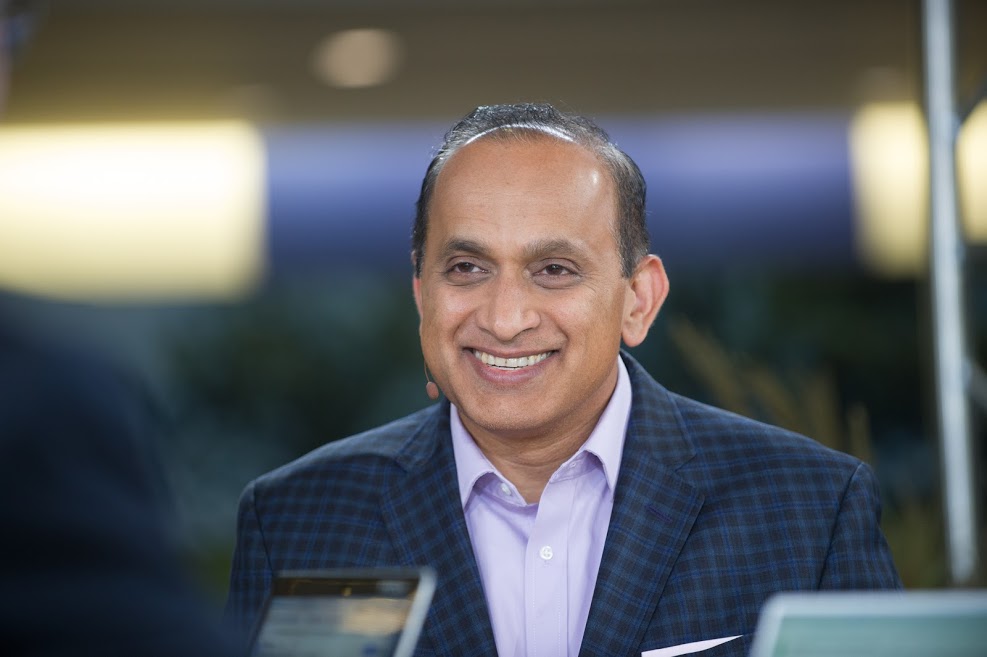
In this AWS Mid-Year Leadership Summit segment, theCUBE’s John Furrier sits down with Cohesity CEO, Sanjay Poonen, for a fast-paced halftime check on cloud, AI and cyber resilience. Poonen traces Cohesity’s rise after uniting with Veritas, citing 13 000 customers, 85 percent of the Fortune 100 and hundreds of exabytes of data secured across hybrid environments.
Digging into the “five S” pillars – speed, scale, security, simplicity and smarts – Poonen explains how FortKnox cyber vault on AWS delivers air-gapped recovery while opening protected dataset...Read more
exploreKeep Exploring
What is the purpose of the current gathering in the Palo Alto studios as it relates to AWS and the ecosystem leaders?add
What recent developments and achievements have been made by Cohesity in the data protection and security industry?add
What innovations did Cohesity introduce and how has the company evolved in relation to its customers and partnerships?add
What are the key aspects of the collaboration between the speaker's company and AWS, and what recognition did the company receive?add
What are the company's goals for revenue and their involvement with Amazon, particularly in relation to AWS re:Invent?add
>> Welcome back, everyone. We are here in our Palo Alto studios for the AWS and Ecosystem Leaders program. This is a halftime report to re:Invent basically with six months in since re:Invent and the ecosystem leaders are going to present their updates and also what's going on in the industry and what's the impact to the marketplace, their customers, the networks, their partners. Sanjay Poonen is here, CEO of Cohesity. Sanjay, great to see you. It feels like re:Invent could be tomorrow and it'd still be chock-full of news at AWS. And the AI and cloud market, on-prem's hot. Everything's distributed in computing and hybrid, as we had predicted, and you've talked about many times. Welcome to this halftime report.
Sanjay Poonen
>> Thank you, John. It's a pleasure to be with you. I've known you for many, many years. I don't know if it's a little known fact to maybe your audience, I was actually a keynote speaker at the very first re:Invent in 2012 or 2013, I can't remember which year it was, when I was SAP president and we announced HANA and ERP running AWS. There were only 2,000 people in the audience, so it's amazing how much re:Invent has become a big part of people's lives now, and I'm glad you're doing this halftime to re:Invent, very creative.>> Well, you're making history again, Sanjay. You're a pioneer. I love working with you. You've got great vision, great execution skills, great product knowledge. This halftime report really is based upon the demand, and this digital event that we're doing really is outside the scope of re:Invent as an event. But the industry has seen so much change in six months, there's so much update. So first, give us an update on Cohesity. What's going on with you guys? A lot's happened in the past six months. We've been covering robotics. We've been covering the chips, the software, the geography challenges. The whole market is really evolving very, very fast. The velocity of change is here. Change management . We see sovereign cloud. We see cyber resilience. All these things are now embedded into the conversations, which were once corner cases. I mean, you're talking about security posture. I got to recover. I need to secure the data, and I have to do it fast, and I have to do it at scale. Give us the update. What's happened with Cohesity in the past six months?
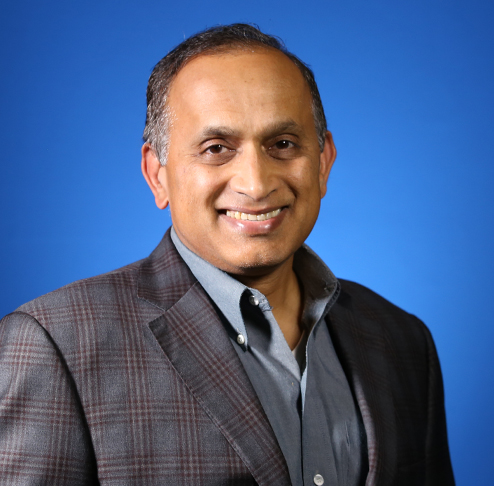
Sanjay Poonen
>> John, we last talked at RSA face-to-face, and then when we were at re:Invent, we had just announced the close of the transaction with Veritas, and we're now the leader in the data protection, data security industry, number one in market share. So we combined number seven, that was us, Cohesity, growing the fastest in the space with number two, that was the most profitable space and now have 13,000 customers in the new Cohesity focused very much on the biggest companies. We have 85% of the Fortune 100, 70% of the Global 100 and hundreds of exabytes now are on our platform, far bigger than most of our honorable competitors. And the key message is cyber resilience of data. You mentioned it pretty well. We are a security and an AI company around data. So think of us like a Snowflake meets CrowdStrike or a Databricks meets Palo Alto. There's a key part to our, one part of our DNA that's all about security of the data. I mean, I've been in the security industry for 15 years. I'm on the board of Snyk, drove a lot of the security investments at VMware, so that's been a lot of my life. And prior to that, I was analytics and what I would call modern day AI and SAP. So once the data's on a secure platform, we then ensure that we can allow AI tools, and that's a lot of where AWS and also partners like NVIDIA... By the way, both AWS and NVIDIA are investors in our company. So we work very closely with companies like Amazon. We'll cover that during this discussion in terms of what we're doing with them at the center of security and AI around data.>> The biggest message coming out of the execs, like Matt Garman and Milin and others, is that the services and the chips are getting faster. The tooling we're seeing with QuickSights of the world, you're seeing a lot more tooling and developer action. How are you navigating the complexity? Because you have a good eye for the strategy, the chessboard of the industry and also the products, how are you navigating the complexity for Cohesity and also how are you helping customers? Because the acceleration to agentic AI with GenAI and the analytic side is really going fast, and governance, security and cost controls are also a concern. You mentioned security and resilience on top of mind of all the enterprises. How are you navigating the complexity at Cohesity and how are you helping customers navigate?
Sanjay Poonen
>> Well, the fundamental innovation of Cohesity was about 12 years ago, Mohit, who was the founder of Nutanix, and prior to that wrote the Google file system, brought for the first time in the industry a zero trust security platform that could store data and recover it really fast. Our strength is no one beats at a speed of cyber recovery of that data. Separately it used to be separate platforms for data, like a data domain, and a separate backup product like a Veritas and backup. And we were the first to bring that to a hyperconverged, a zero trust next generation platform. Now, the bulk of our customers started running on-prem, but circa 2019 and 2020 I think was when Amazon put money in the companies before I came here to be CEO. I watched it when I was CEO of VMware, and I was fascinated as why Amazon picked Cohesity as the company to invest behind. And when I talked to Andy Jassy, who was at the time CEO of AWS, and Matt, they saw this company as having the best tech in this space. So we've always had that very special relationship with Amazon. We built that control plane and the first version of that hyperconverged stack running in Amazon, and we've kept a lot of that code with an AWS-first philosophy, and then just look to have more and more services that we've optimized for AWS, primarily around the data immutability, data protection. We work very closely with the backup team of AWS because there's good collaboration with their use cases. And over time it became both security and AI discussions with Bedrock and Q. Along the way we were very honored, John, to be named last year, at last re:Invent as the storage data protection vendor of the year. So we are the best that they see us in. We have about 13,000 customers. I'm going to guess 60, 70% have a lot of AWS in their workloads. They're often the workload we get asked to cover the first of any cloud because I think AWS's market share, AWS, Azure, Google typically in that order, and we just look to make sure we have the best coverage for as many workloads of AWS that customers want so people could have a hybrid and a multi-cloud strategy. So in many cases our customers may be running data protection, one pane of glass, the management control plane, for their on-prem workloads, maybe VMware or Oracle or NetApp workloads, and then they want that same pane of glass for EC2 and S3 and certain RDS workloads. So that's an example of how we play. Then once that data is in that, let's just say our storage format, you can then open that up to AI tools, maybe on-premise. It's the way we built our stack with a product called Gaia in close concert with NVIDIA. It might run an on-premise AI server powered by Dell or HPE, but in the cloud it may feed an AI framework like Bedrock or Amazon Q. So we're very open. At the end of the day, the powerful aspect of Cohesity is hundreds of exabytes of the world's data sit on our platform. The company that can read that format of data is only us, and we want to allow customers to first ensure that they know that data is safe from cyber attacks, especially ransomware, but could also be used as a vehicle for analytics and AI.>> I like how you mentioned the number of customers you have. I think we talked about that RSA. Cohesity and Veritas together really bring a lot to the table. You also talk about unification, a big theme in today's conversations because of the data unification. So a lot of customers are trying to align their business and technology strategies because the business model transformation from the data is just top line and bottom line results you can cut costs, but also and be more productive, but also is going to drive revenue. So how are you guys driving that culture internally at Cohesity and how does that translate into an operating model that your customers can get measurable business outcomes? Because I think once you set the table, you start to see Gen.AI go into high gear, what are some of those cultural tenets that you have and how is that translating into an operating model for you and your customers?
Sanjay Poonen
>> Well, I would say I borrow a lot of my thinking on culture from the leadership principles of Amazon when Jeff Bezos and now Andy writes in his shareholder newsletters. We call it three core engines that drive us. One is we really focus on employee engagement. It starts with satisfied employees either writing code or selling code that are engaged and really love this company. We start there. It always starts with employees. But then there are two engines that are very important, innovation, product innovation. We've got to make sure the customers know that our product in any area is 10X better than the competition, whether it's at speed of cyber recovery, or scale, being able to handle hundreds of exabytes of data or security or simplicity or smarts AI. Those are the five S's of our product innovation. But just as important is customer obsession, so product innovation on one side and customer obsession on the other side. As we brought these two cultures together in Veritas, what I've sought to do is tell people who've come from the Veritas side, for example, it doesn't matter that you've been around the industry longer, you have to now move at the speed of a $2 billion startup. That's where we are headed towards in revenue. And Cohesity may have had that speed, but we didn't have the scale that Veritas had. Veritas had the scale but needed some of the innovation speed that we had. So the good news is that we could bring that. I call it a cheetah and an elephant in one. There isn't an animal that's both of those, but if we can move fast and get the scale, that's always been like the, when you look at it, that's what Amazon's done. Well, right now AWS is a $120 billion plus business, but they're still thinking speed. If you look at the way Matt Garman's thinking, and he learned that from Andy, and who did Andy learn that from? Jeff Bezos. So you cannot rest on your laurels at all in this industry. You've got to constantly be asking yourself, what do you do with small, 10-person teams? What's fascinating me is the way Matt and Andy talk about these 10-person pizza size teams. How do you get them to innovate? The larger you get, the more likely you're not going to be innovating. So you've got to go back to first principles and create those small teams that are constantly innovating.>> One of the things I took away from my filming the executives at AWS was that we heard from the product updates, we heard from the culture, but reading between the lines, you hit on it. They're transforming at scale. They're using AI to build their own muscle internally. They're optimizing their product and operations to do that, and you're starting to see them eating their own dog food, drinking their own champagne. They're using it. So I have to ask you, how are you guys optimizing the products for customers at Cohesity? How are you leveraging AI to drive the product growth, product features, product operations so you can get the products out faster and also into the customers? And what are they doing with the products? What's the product update? Can you share any insight into what you're doing to go faster and scale with the products?
Sanjay Poonen
>> Well, we love the Amazon platform, AWS. We built our product to be first on AWS. We have to multi-cloud, so we certainly support and run on other platforms too. But we built an AWS-first mindset in the way in which we built many of our services. Our control plane runs there, and then we're constantly looking at ways by which we can optimize our cost by using as many AWS services as we can to reduce costs, but accelerate performance. And clearly the compute, storage, networking, security, data warehousing places are all pieces of what you would expect in our piece. But a few things that have been standing out. I'll give you one example in security. We built the world's first cyber vault in AWS called FortKnox. It's basically an air gap archive that's highly secure and can be disconnected from your network so that your first copy sits, for example on-prem, maybe on a Cohesity appliance. A second copy might sit in an archive that maybe ours or another storage. The third and final copy sits in an air gap in a separate location in Amazon. We were the first to do that. And of course, now we have FortKnox running in other clouds, which are truly multi-cloud. But that cyber vault now is the place where people are going to go to recover data, but it could also be a tremendous house of all of your historical information for analytics and AI purposes. Now, what we've done is many of our partners, you take another partner commonly between us and Amazon, a company called Levin and Levin. They're one of these very creative MSPs that has got a very good deal with Amazon on pricing and storage and S3. They're able to take that cyber vault and put it in their service provider cloud that can offer data center capacity. And now we have a service with Levin and Levin all built on us and Amazon for clean room recovery. So when something happens at a hospital or a bank, people want to rebuild what's called the minimum viable bank or minimum viable hospital. And these service providers are now all coming to us to build on their stack. Very often they have derivative relationships also with Amazon, and it's a beautiful three-way business. Same thing with security partners. We have a joint partnership where we get feeds from, for example, CrowdStrike or Zscaler or Mandiant. Many of these are joint partners of Amazon. And then finally, NVIDIA is the one that's really what I'm excited about because a lot of the AI pieces of it work, have to use both people's chips. It gives us the ability to run that platform. I mean, there are going to be AI use cases where people use the native GPU capabilities of Amazon, but NVIDIA also joined as an investor. So everything we're looking at are ways by which we can optimize for security AI services for this hybrid use case sitting on-prem or inside Amazon or one of the public clouds, and it's very exciting. The more that Matt and his team build out services we can build on, and then we continue to also work with the data protection team inside of Amazon, the backup team because there are use cases where we need to partner with them. So I'm actually sitting back whenever I talk to Matt or Dave Brown or even Andy, I just talk about the number of places where we see immense potential for our partnership with them.>> This past half year, and you're looking forward to re:Invent, a lot's going on with AWS. Just look at, I mean, it seems like every day they're announcing a $20 billion data center, a new update to one of the models. Bedrock has got great developer traction, SageMaker for under the hood, S3 Tables, going to be some big news around that coming soon. All this is impacting the old classic storage market, which now are called data platforms. Now you've got cyber resilience. So you have a lot of AWS customers out there. How are you empowering those AWS customers? Are there programs? Are there integrations? Are there go-to-market plays? That position, Cohesity in the front and center in these fast-growing verticals, look at healthcare, look at finance, look at retail automation and even cybersecurity where you play. I mean, every vertical is a customer. What are you doing with customers? Can you share some programs and integrations and go-to-market plays?
Sanjay Poonen
>> Yeah, very important. So the way we talk to our customers, we go by workloads. We ask them what are your on-premise workloads? And we typically see workloads in one of four types, compute-centric workloads, virtual machine and containers. Databases, and databases there are going to be many sub-areas on-premise, Oracle, SQL, but now we have MongoDB. They running both on-prem and the cloud. Storage-centric workloads, NAS workloads, , but then their cousins in the cloud like S3. And then SaaS applications like M365 or Google Workspace or Salesforce or what have you. And when you look at those workloads, there are appropriate cousins of them in the cloud. What's the cousin of VMware in AWS EC2? What's the cousin of database RBS and Aurora and maybe even a Snowflake running in there. What's the NAS equivalent of S3 and so on and so forth? What we do is we build native connectors to as many of these workloads for a multi-cloud world, on-prem, public cloud, and not just AWS, the other public clouds too. And you have now one pane of glass where you can see all of your workloads to ensure you've got every workload power. We call that the first step to cyber resilience. The second step we have is this entire topic of having a cyber wall. Then we build more and more threat-hunting capabilities and clean room tables. We're a step-three, step-four server, so we have an entire five-step cyber resilience framework that we share with customers that allows them to ensure that they're climbing up this ladder of an nirvana state ultimately of cyber resilience, and that's done very often with Amazon. Now, what a customer then decides somewhere along that way, John, is to transact that capability through the AWS marketplace. And one of the things we're also very excited about is the AWS marketplace. We have a lot of transactions that our customers want to buy from us through AWS, and we're good. It helps them retire some of their EVP spend. AWS likes that. So there's many, many dimensions of this. And then the final thing we also seek to do is with common partners. It's either a VAR, maybe like a WWT or an SHI or a Presidio, or an SI, like an Accenture or Deloitte or HCL or Wipro, TCPS, Infosys. So we're looking for many ways by which it's not just an Amazon Cohesity partnership, but some other three-way partnership with an ISV or an SI or VAR.>> Sanjay, you mentioned earlier around the unified single pane of glass. We see that trend obviously in the data world. We commented on that. When you start to look at the future, the product, the builders, the future state of the industry, I'm inspired by Andy Jassy's shareholder letter where he asked the question, why? These are big things about why. What are some of those next generation why questions that you're asking right now? Because the product builders are integrating Cohesity into the main stacks of generative AI, large-scale systems. The builders are going to be building these agentic systems and the future is unfolding. What are some of those next generation why questions that you're asking right now?
Sanjay Poonen
>> That's a great question, John. In fact, I would just encourage every one of your viewers and listeners to this to read every Amazon shareholder letter every year, whether it's the original ones from Jeff or the ones that Andy does. They're amazing. And yeah, I think the latest one, I think every CEO and entrepreneur should be asking the why questions, starting with problems they're facing. Maybe you're not innovating fast enough or you want to solve a particular customer, and there's usually at least five whys. Maybe there's more whys that get to the root cause. And that principle that Andy talked about isn't just new to Amazon. I mean, the Japanese have been talking about this in fishbone diagrams forever. This was the fundamental things that you did in quality. You asked five whys, and then you got to the root cause very quickly without assuming you have that answer after the first why. But in some cases, it's not just in problem solving or detecting a quality issue or wanting to go faster. It might be to innovate a new area. So maybe you're thinking, well, this is the status of how people solve that problem today, but why can't it be done a different way? And you keep asking the whys that get you to a new innovation. If you just asked the question about whys on a BlackBerry phone, you'd end up with a better BlackBerry phone and a better keyboard. Steve Jobs asked a different set of questions that end up with the iPhone. Okay, maybe people don't want to be typing anymore with this keyboard, but they care a lot more about a multimedia experiences that has photos and images and video and scrolling and zooming and pinching, and that led to the iPhone. So I think great leaders and entrepreneurs are asking why questions either to fix things that have gone wrong or to innovate new things that nobody else sees, and I find that to be incredibly fascinating. So I loved Andy Jassy's letter. I'm glad you brought it up. I sent him a note saying it, and I tweeted it out to the world because it's a great letter.>> It's a great letter. And so just on the Cohesity Veritas, because there's a of synergy coming together there, you're putting that together. Your customer base is over 10,000, I think you said 12,000 customers, plus. There's now the why, because there's also why Cohesity in Veritas. But also as cyber resilience becomes part of the resilience bar in the enterprise, you have a lot more different whys going on with the role of recovery, backup. It's not just small category. It's now integrated into the mainstream architecture. What is the why Cohesity and Veritas for the customer?
Sanjay Poonen
>> Quite frankly, John, as we brought these companies together, we had about 12 months to prepare, I went around asking our customers. I try to do about between 500 and 1,000 meetings with a customer every year. And if you actually divide the math of it, I've gotten better at doing 30-minute meetings with customers. I ask those questions of customers like, why do you pick us? And we heard five S's, speed, scale, security, simplicity and smarts. Smarts being a word for AI. I put them into five S's, and those were the five S's we were hearing as the reasons why customers were picking us. And it was very important because at the core of those why questions, in this particular case as relates to customers, the joint customer base comes differentiation. And then what we want to be able to build on that with our engineers is say, listen, we can't rest on our laurels. If those are the five, we've got to constantly be pushing the frontier of speed and scale for every new workload. Why are they only using Oracle and SQL when they may also thinking about a new database like MongoDB. Let's go and do that. So we announced this week the first company in the space to natively support MongoDB. We worked closely with Dev Ittycheria's team. As you know, they're a joint partner of AWS. We are now the best scalable SaaS solution for MongoDB. So I think this notion of asking why allows you to find new areas of innovation. If you're talking to customers, you're going to get really, really good insights. And I would always tell our engineers, don't settle for the current status quo as the right way to do things. Because when you ask those five whys, you're going to get perhaps a different answer than the current status quo of how we do things.>> Sanjay, great to have you on. You're a leader in the ecosystem, always have been. We've got six more months to re:Invent. What is your goals? A lot of business model transformations going on. You're a student of business history and future strategy. There's a lot going on. What's this 20-mile stare look like for you going into the second half of the year?
Sanjay Poonen
>> Well, I think for us we are trying to create from, we can see eyesight to a $2 billion company revenue. We want to get to 5 billion revenue, and we want do that with Amazon. AWS re-invent is often one of those Mecca events where, I don't know, 50,000, 75,000, whatever the numbers, 100,000 customers come and many CIOs both on the shop floor and the top floor. Top floor and shop floor is what I call them, working professionals, developers, and the CIOs show up there. So I always look at that. I mean, I've gone to practically every one, except for a few, in the last, whatever, 12, 13 years that Andy and Matt have done them. I look forward to taking this message. There may be some special things we can announce with Amazon that we're working on that I have to keep confidential, but we want to continue to do it. We were very honored last year that we were named Data Protection Vendor of the Year. We want to continue to earn that type of reputation from them, and then have many joint customers and partners that talk about Cohesity as the best in data protection because we are the market leader.>> Data protection is a hot category. Again, it's not just yesterday's model. It's got to protect from the adversary. Sanjay, great to have you on keynoting the halftime report to re:Invent. Thanks for coming on.
Sanjay Poonen
>> Thank you, John. Always a pleasure talking to you.>> Okay. I'm John Furrier here in the Palo Alto Studios for the AWS Ecosystem Leaders Halftime Report. Thanks for watching.