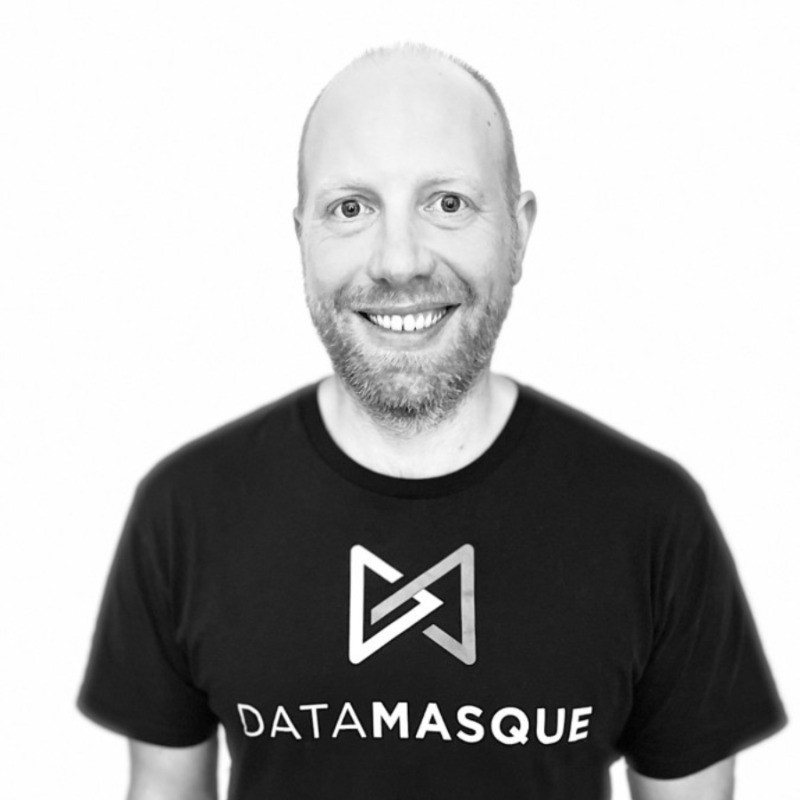
Grant de Leeuw, co-founder and Chief Executive Officer of DataMasque, joins us in this insightful episode filmed at the iconic New York Stock Exchange studio.
In this episode, John Furrier of theCUBE Research welcomes de Leeuw to discuss the nuances of synthetic data applications, particularly in AI model training and customer data management. Offering a unique perspective, de Leeuw elaborates on how DataMasque enables enterprises to harness customer data securely, emphasizing the importance of high-fidelity synthetic replicas in big data environments.
Key takeaways from this conversation include insights on DataMasque’s strategic partnership with AWS, which allows the company to scale from its New Zealand roots to a global market. De Leeuw identifies a trend in AI strategy, where many enterprises face data blockages and turn to synthetic data solutions. They assert that understanding existing data is crucial for unlocking the potential of AI and gaining a competitive edge.
Forgot Password
Almost there!
We just sent you a verification email. Please verify your account to gain access to
AWS Mid-Year Leadership Summit 2025. If you don’t think you received an email check your
spam folder.
In order to sign in, enter the email address you used to registered for the event. Once completed, you will receive an email with a verification link. Open this link to automatically sign into the site.
Register For AWS Mid-Year Leadership Summit 2025
Please fill out the information below. You will recieve an email with a verification link confirming your registration. Click the link to automatically sign into the site.
You’re almost there!
We just sent you a verification email. Please click the verification button in the email. Once your email address is verified, you will have full access to all event content for AWS Mid-Year Leadership Summit 2025.
I want my badge and interests to be visible to all attendees.
Checking this box will display your presense on the attendees list, view your profile and allow other attendees to contact you via 1-1 chat. Read the Privacy Policy. At any time, you can choose to disable this preference.
Select your Interests!
add
Upload your photo
Uploading..
OR
Connect via Twitter
Connect via Linkedin
EDIT PASSWORD
Share
Forgot Password
Almost there!
We just sent you a verification email. Please verify your account to gain access to
AWS Mid-Year Leadership Summit 2025. If you don’t think you received an email check your
spam folder.
In order to sign in, enter the email address you used to registered for the event. Once completed, you will receive an email with a verification link. Open this link to automatically sign into the site.
Sign in to gain access to AWS Mid-Year Leadership Summit 2025
Please sign in with LinkedIn to continue to AWS Mid-Year Leadership Summit 2025. Signing in with LinkedIn ensures a professional environment.
Are you sure you want to remove access rights for this user?
Details
Manage Access
email address
Community Invitation
Grant de Leeuw, DataMasque | AI + Cloud Leaders
In this AWS Mid-Year Leadership Summit interview, Rajiv Chopra, VP of Amazon Just Walk Out, joins theCUBE’s John Furrier to unpack the evolution and impact of computer vision in retail. Chopra shares how AWS has transformed the breakthrough technology behind Amazon Go into a scalable, edge-powered solution for partners across stadiums, hospitals, universities and airports. With over 250 deployments outside of Amazon properties, Just Walk Out is redefining how consumers shop by enabling fast, frictionless experiences without checkout lines.
Chopra details key benefits for retailers, from revenue growth to shrink reduction, and illustrates use cases across venues like Lumen Field, UC San Diego and Hudson News. He breaks down the technological architecture behind the scenes, including deep learning models, custom edge compute devices and cloud integration, and explains how Just Walk Out balances accuracy, performance and customer experience. The conversation also highlights the broader trend of digital-physical convergence and visual reasoning as a frontier for applied AI.
Watch to learn how AWS is turning real-world environments into intelligent, automated spaces – and how Just Walk Out is leading the charge in reimagining retail through innovation.
In this segment from theCUBE + NYSE Wired: AI + Cloud Leaders event, Grant de Leeuw, co-founder and CEO of DataMasque, joins theCUBE’s John Furrier to explore the evolving role of synthetic data in enterprise AI readiness. De Leeuw outlines how DataMasque helps large organizations overcome regulatory and security hurdles by generating high-fidelity, synthetically identical customer data – empowering safe AI experimentation and deployment without compromising privacy.
The conversation dives into DataMasque’s global startup journey, made possible by AWS ...Read more
exploreKeep Exploring
What is the main focus of the discussion regarding the use of agents and coding in production?add
What problem does the product solve and how does it operate?add
What are the deployment options and advantages of DataMasque compared to its competition?add
What plans or developments are in place regarding team expansion and product improvement?add
>> Welcome back everyone to
theCUBE here at our New York Stock Exchange studio on the East Coast. Obviously, this is where we have all the action on Wall Street. Of course, we've got Palo Alto Studio and Wall Street, connecting tech and
Silicon Valley together. Money tech culture, it's
the big focus right now, and the AWS Summit was this week. It's also theCUBE's Media
Week around cloud and AI. The top story is how these agents are going to be put to work. How code's getting into production. Obviously, automated
coding, you're starting to see all the kinds of
toolings, the governance, all these things that are
really hard to do in the cloud and on-prem actually for
distributed computing and hybrid cloud are all the key. And data is the key and we love synthetic data as it's used a lot in anything
from automotive, all kinds of scenarios, digital
twins, to also understanding how data can behave and be modeled. We've got a great guest,
Grant de Leeuw, co-founder and CEO of DataMasque here, all the way from New Zealand
in town for the AWS Summit. Grant, thanks you for
coming into the studio, your little New York Stock
Exchange center of capitalism.
Grant de Leeuw
>> Thanks, John. Great to be here. What an awesome site to get here behind the scenes at Stock Exchange. >> Thanks for coming in. Really great. Again, we're just continuing
our version of a digital twin, which is the event's over with AWS. We're continuing to, in
our studio, keep it going because the demand is so high
for AI, native AI capabilities because of the obvious business
reasons: reduces costs, save times, drives new revenue. Just multitude of benefits. But there's a lot of
action going on with a lot of the technical and business
model transformations. For example, do I have enough data? What do I do with my data? I got to understand it first and then figure out, "Okay,
once I know what it is, what's the architecture? " I'm on Amazon, I got VPCs,
do I create a horizontal? Which services do I turn on? How do I create a new platform to build it and then have vertical
domain expertise that scale? I mean, these are... I
mean, it sounds easy, but that's the core problem.
Grant de Leeuw
>> Yeah, absolutely. And doing
it in a safe and secure way. So obviously, AWS takes privacy and security extremely seriously and one of the challenges that
a lot of large enterprises and regulated industries
are struggling with is, how do we leverage the customer data in a safe and secure manner? >> Well, Grant, I'm glad you're here because not only is it ironic that you're in from New
Zealand, I know you're going to jump on a flight out later tomorrow or tonight, is that
you're a global startup. Most of the times the old
pattern was, "Oh, Silicon Valley, two guys in the garage,
two guys in the dorm room. Guy and a gal, they build this product. They grow, they get some funding. "
You guys are a global startup with AWS as a big partner. Take us through how you
guys are organized, one, and what you do because
we're in an era now where you don't have to have 200 people-
Grant de Leeuw
>> No.
- ... to have a global presence. You guys have global
presence here in the US and international, and
you're less than 30 people.
Grant de Leeuw
>> Yeah. So AWS has given us
the opportunity to be able to leverage marketplace globally and so small team in New Zealand, 5 million people. This always was going to
be global from day one. And so we've built the business that way. And so marketplace has allowed
us to be able to transact and find customers in places that we haven't had boots on the ground. So take the US as an example
where we're coming out to 12 months where we've put
our first person on the ground here, but we had some significant sales with large Fortune 100
customers here in New York when we had no people on the ground. >> Marketplace is a dream scenario. I mean, hey, the business just
is a cash register ringing, no sales reps.
Grant de Leeuw
>> Yeah, a hundred percent.
Yeah, because is... Yeah, it does reduce... But it allowed us to sort
of get the customers first before then building the team behind it. >> And so now you're
supporting more customers. So you've got a field presence.
>> A hundred percent, and it's too to better support the customers, to help out growth in market as well. Not all customers want to deal with someone on the other
side of the world, but- >> You don't actually want to be doing your Zooms at 3: 00 in the morning, right? I feel like.
Grant de Leeuw
>> I've done a few of those in my time and Americans love a
Friday afternoon meeting, which is Sunday morning my
time, but things you do. >> Yeah. So what do you guys do? Let's get into the product because one of the things I'm fascinated by is... besides the global startups
because I think that's going to be a playbook that's
going to continue, is that you're in a very
important area right now where you look at robotics, AI factories, or even kind of the physical AI world, synthetic data is being used a lot in many different use cases. Something that you guys specialize in.
Grant de Leeuw
>> Yes.
- Talk about what you do. What is the product and why does it exist? What problem are you solving?
Grant de Leeuw
>> Yeah, absolutely. So the
problem we're solving is where enterprises want to
leverage their customer data. So synthetic data is
great for model training and can be used, as
you're saying, for weights and biases around certain models. But often the real value is
actually in the customer data. But the challenge these
organizations have is store falls under the privacy, data
security, data sovereignty. And so do you really want
to be testing your AI agents or your LLM chatbot on real customer data? And so what DataMasque solves
for is we do a dark site deployment into the client's
private zone of their data. So we're not asking
them to send it outside of their secure zone and we will imitate their customer data
but create in a synthetic way. And so what that allows the organizations to do is actually create
synthetically identical customer data that they can then use
for development training, testing your AI agents
before you roll it out. >> Is it a complete replica of the data or is you masking out key privacy codes or other-
Grant de Leeuw
>> Yeah. So- >> How does that work?
- ... we will identify PII, health information, credit card information, and we'll make a recommendation as to how to protect that information. And then once that's been agreed and being signed off by the
customer, we will create that synthetically identical data where that sensitive data was. The rest of the data
is actually identical, and one of the key values
of DataMasque is the fact that we actually mask
down to a field level. So we're creating high
fidelity synthetic data. >> So you get the benefit of
that private information, but even if it was leaked
or anything, it's workable.
Grant de Leeuw
>> There's no data breaches,
there's no data sovereignty, but you get the edge cases and that's what's super important. >> Give an example of the
edge case. What would be-
Grant de Leeuw
>> Okay. Every enterprise has very messy
data. So it could be that... Date of births, first of the first 1900, how's an agent going to react
to that sort of information that's actually in the customer data set or two different types of addresses there that are conflicting. It's that messiness of the data that exists in every single enterprise that you actually need to test
and train these AI models on, and particularly AI agents so you actually understand
how they're going to behave. If you are trying to test on perfect data- >> No one's got perfect data. >> No one's got perfect... I mean- >> Data cleaning has been an
industry and everyone hates it, but you got to clean the data. You want clean data, that's the goal.
Grant de Leeuw
>> Yep. But as soon as you
connect your AI agents to your existing data
stores, it's not going to- >> Dirty data, dirty agents. I mean, bad agents, bad -
Grant de Leeuw
>> Bad data in, bad data out. >> So talk about the use case
again. So take me through. So the customers want
to get that data, want to train agents on it,
and the outcome is what? Smarter ages knowing how
to handle situations?
Grant de Leeuw
>> Yeah. Well, I mean, 70% of testing done for agents are still by humans. So people need to look at that data. So there's still privacy. The same problem exists now as you can't have your AI
engineers looking at customer data and you can't have agents
running on that data for the risk of what actually could occur. >> A lot of people I talk to, they... I ask them, "What's your data strategy? " These are very big companies and they have plenty of data departments. They got databases, they're well done. So when I ask them what their
AI innovation strategy is, the real candid answers,
if they're being honest and they are, they say,
"Honestly, we're just trying to figure out what we have, what do we do? " So it's not like they
have some prescription. "Yeah, RAG and search, that's easy."
Grant de Leeuw
>> Yeah. >> "I want to find something faster. " It's literally no-brainer.
But when you want to get a competitive advantage and get the value out of the data and unlock real value, the first step is, "What have we got? " Not what data types. It's,
"We don't know what to do."
Grant de Leeuw
>> What is the value in ? >> What is it that we could do
with it? Let's understand it.
Grant de Leeuw
>> Yeah. Exactly.
- That is where everyone is right now.
Grant de Leeuw
>> Yeah, a hundred percent. And so a lot of these models being trained
on all the public data that's out there or a
whole bunch of synthetic, the value is actually the
data behind the firewall. And as you say, there's some new use case. We are speaking with
some large retail banks and they have over a hundred AI use cases that they've lined up that
involve customer data. They're actually blocked because they don't know how to test it before they roll it out. >> Yeah. So they're stuck.
They're stuck, right.
Grant de Leeuw
>>
- You unlock there. You're like the airport,
TSA pre global entry.
Grant de Leeuw
>> Yeah.
- So give me some examples of some engagements you've had. You don't have to name names but just anonymize the customers, but what is some of the core examples? Can you share stories?
Grant de Leeuw
>> Yeah. Absolutely. So I mean, where we
started our business was before the AI wave, and so we were solving for predominantly dev
and test environments. So where organizations need
high quality synthetic data in their lower environments,
development testing. The idea being that you shouldn't be testing on customer data. So same applies for AI, and
you need that high fidelity. So you are introducing bugs during testing and development, not when you
roll it out to production. So we've done that for large enterprises. So yeah, Fortune 100 that's
based here in New York, very large payroll company, ADP, which is actually a case study. I can talk about that one. Employers and workers compensation, also a case study customer. So that's solving for- >> How are those engagements going? I mean, take me through a day
in the life, what happens? You engage with them
and do they participate?
Grant de Leeuw
>> Yeah. So they typically
have reached out to DataMasque or AWS saying, "We've got
this problem where we need... We've found sensitive data
in our lower environments. " There might've been some
sort of security issue and they're needing to
solve a problem around that. And so we are working
typically with AWS to deploy DataMasque into their
environment, do the scan, identify what's sensitive, and then we now then get
integrated into their data provisioning pipeline. So every time they're doing
a refresh, we are allowing that the DataMasque does
the de-identification, creates the synthetically identical data and then that's what's passed. >> So it's usually the first strike or the first opportunity,
is on some sort of event or identified security or
messy thing that's out there?
Grant de Leeuw
>> That's right. But where
that's changed in the last sort of three to six months is
organizations are blocked with some of their AI use cases because of the customer data element. So you can introduce ones to
write better code internally, take better meeting
notes, that's all fine, but when it's actually
involving customer data or actually interacting with the customer, significantly more. >> So either the security thing or they're actually leaning into a plan.
Grant de Leeuw
>> Yes.
- And they need to...
Grant de Leeuw
>> Or they're blocked.
- Or they're blocked.
Grant de Leeuw
>> They're just simply blocked.
The privacy team is saying, "No, you can't use customer data for this. The risk is too great. " Just straight synthetic data doesn't have the realism of the production customer data they need. >> So you're identifying a trend that right now if
someone wants to do stuff with the customer data,
most likely it'll be messy or blocked or some sort of challenge. And the answer is, "Just
synthetically create it and go there."
Grant de Leeuw
>> Exactly. Right. So- >> That's the playbook. >> That's the playbook.
So use your customer data to create synthetically
identical customer data, maintains relationships,
referential integrity, all the ugliness of your
production data is what it should- >> I mean, that's an industry trend.
Grant de Leeuw
>> Yes.
- That's the move. What about competition? You must have competition.
Grant de Leeuw
>> Oh, absolutely. So we've got- >> That's the market right there.
Grant de Leeuw
>> But I think the advantage
DataMasque has over our competition is the fact
that we've been designed for enterprise from day one. And so we are not SaaS,
we're not asking customers to send their customer data into our environment as an example. We're a dark site
deployment into their most- >> So you're flexible?
Grant de Leeuw
>> Yeah.
- You can go on-premise?
Grant de Leeuw
>> Correct. We can-
- In the cloud.
Grant de Leeuw
>> We can support mainframe
through to RDS databases and AWS. We support multiple different models from EKS and ECS deployments. We are very flexible on
that, but the idea... Because of the privilege we
have around where we deploy our agents is it allows us to create- >> How's it like working with Amazon? They obviously had Marketplace. I was a market-making opportunity for you. You got in the market, you got some sales. Now you got field developing, you engaging with their partner network. Is that kind of where you
guys are partner with them on?
Grant de Leeuw
>> Yes. So we drank the
Kool-Aid on the co-build, co- market, co-sell, and it's worked. So majority of our
customers have been inbound. As I was saying, they're
looking for a solution or AWS has recommended us into them. And marketplace has allowed
us to transact in some weird and wonderful places globally where we don't have a company presence, including the US as an example. We now have a bank account
and a presence here, but our first transactions were a hundred percent through Marketplace. >> Yeah. Yeah, that's a
dream scenario. Okay. What's one of your goals this year? Obviously, you're going to fly back to New Zealand, get the team there. Are you going to expand,
stay lean and mean? Are you guys very operationally leveraged perfectly or is there expansion?
Grant de Leeuw
>> There's expansion. There's
further development doing around unstructured data,
which we're super excited about and some customers are testing that now. We are building out the
team, the go-to-market team. So building that out here
in the US particularly. And then yeah, just again
doubling down on product. The AI agents particularly
gives us whole new opportunity around how to leverage DataMasque. >> The data cleanings could
be automated completely and simulations. What'd you think of the
event summit this year? It felt like a little mini reinvent, a lot of action. What was your takeaway?
Grant de Leeuw
>> Yeah, I've been to a few summits. This was number one and
genuine, the energy. I think, yeah, Swami's
announcements around AgentCore, I think they're smashing it at the moment. There was a real buzz around the place. >> If they're announcing this at summit-
Grant de Leeuw
>> Yeah, -
- ... re:Invent going-
Grant de Leeuw
>> Yeah. >> I mean, I can read Amazon like a book. They're not going to just
do this and then not have a-
Grant de Leeuw
>> Oh, no. >> They're not going to
lay an egg at re:Invent. They're not going to... If
this is what their pre-games-
Grant de Leeuw
>> Yeah, that's right. >> I mean-
- This was huge. >> This was halftime report. We called it on our program because so much has happened this year. It's like normally the
years are like awesome and re:Invent a slew of announcements and that sets the agenda
for the next year. I mean, basically I talked to Matt Garman about
this when I had him over. It's like a half a year feels like a year. More cut backs, ton of global
expansion, the regions. Sovereignty's coming up is a huge issue. Just how agents are coming
in changing the stack in the value creation, extraction equation. It's unbelievable.
Grant de Leeuw
>> They're moving faster. The pace that they're moving at is quite incredible for this. >> All right. So next
year when you're back in for summit, are you
going to be at re:Invent?
Grant de Leeuw
>> A hundred percent.
- Okay. We'll see you at re:Invent. So re:Invent, what do you think's going to happen in the second half of the year? What's your prediction
in terms of industry? What do you think's going to happen? You're going to be certainly
buzzing about agents, but knowing what coming
out of the summit, what are you seeing in the second
half? What's going to happen?
Grant de Leeuw
>> Look, I think we're going to- >> When we see each other at
re:Invent, having cocktails.
Grant de Leeuw
>> Yeah, we'll compare
notes, but I actually... I mean, it's almost like
LLM's an old world now. We've moving so fast now. I think what we're going to
start seeing is some epic use case of agents in market
that are operating and everyone has two or three
agents that are personally and at work that are just
enhancing the workforce. So I think everyone can 10X. >> Will the buzz of MCP be
better and bigger by re:Invent? Or is it going to that taper
down or that's going to be...
Grant de Leeuw
>> I mean-
- Or...
Grant de Leeuw
>> Yeah. A2A, I mean, I think- >> What do you like better? A2A or MCP?
Grant de Leeuw
>> MCP is what we've gone
for, is what we're using. But yeah, I mean, again, protocols change. >> It's not exactly the same. I mean, it's overlap between A2A and MCP.
Grant de Leeuw
>> Yeah, correct.
- But... >> So yeah, I think for us it's
the ability to give customers to swap out models that
they want to be using, which is why we've gone sort of MCP. And obviously, A2A is when we're going to be having these multiple
agents and conversing and working together and orchestrating. >> Well, the Linux Foundation
has this work cut out for it because when you have momentum
like MCP in these organic de facto protocol of group
decisions, which is essentially what happened, it's hard to
undo that, in my opinion. When you start to see
these protocols, I mean, look at TCP IP, that was never
supposed to happen that way. It's like, okay, that was in the '80s. That's where I grew up, our generation. So I liked that protocol by. I think Ethernet was
supposed to not be around.
Grant de Leeuw
>> Yeah. Still two guys-
- A zillion terabits per second coming soon. Well, Grant, great to have you on.
Grant de Leeuw
>> Thanks John.
- Excited. Congratulations. Thanks. Really appreciate it.
Grant de Leeuw
>> with you. Appreciate the- >> Here at our NYSE Studio, plus theCUBE, plus NYSE is the really the Wired community. Thanks for coming in.
Grant de Leeuw
>> Thanks John.
- Okay. More coverage here for the AI Cloud week. Of course, AWS had their big event this week in New York City. This is theCUBE. I'm
John Furrier, your host. Thanks for watching.