We just sent you a verification email. Please verify your account to gain access to
AWS Mid-Year Leadership Summit 2025. If you don’t think you received an email check your
spam folder.
In order to sign in, enter the email address you used to registered for the event. Once completed, you will receive an email with a verification link. Open this link to automatically sign into the site.
Register For AWS Mid-Year Leadership Summit 2025
Please fill out the information below. You will recieve an email with a verification link confirming your registration. Click the link to automatically sign into the site.
You’re almost there!
We just sent you a verification email. Please click the verification button in the email. Once your email address is verified, you will have full access to all event content for AWS Mid-Year Leadership Summit 2025.
I want my badge and interests to be visible to all attendees.
Checking this box will display your presense on the attendees list, view your profile and allow other attendees to contact you via 1-1 chat. Read the Privacy Policy. At any time, you can choose to disable this preference.
Select your Interests!
add
Upload your photo
Uploading..
OR
Connect via Twitter
Connect via Linkedin
EDIT PASSWORD
Share
Forgot Password
Almost there!
We just sent you a verification email. Please verify your account to gain access to
AWS Mid-Year Leadership Summit 2025. If you don’t think you received an email check your
spam folder.
In order to sign in, enter the email address you used to registered for the event. Once completed, you will receive an email with a verification link. Open this link to automatically sign into the site.
Sign in to gain access to AWS Mid-Year Leadership Summit 2025
Please sign in with LinkedIn to continue to AWS Mid-Year Leadership Summit 2025. Signing in with LinkedIn ensures a professional environment.
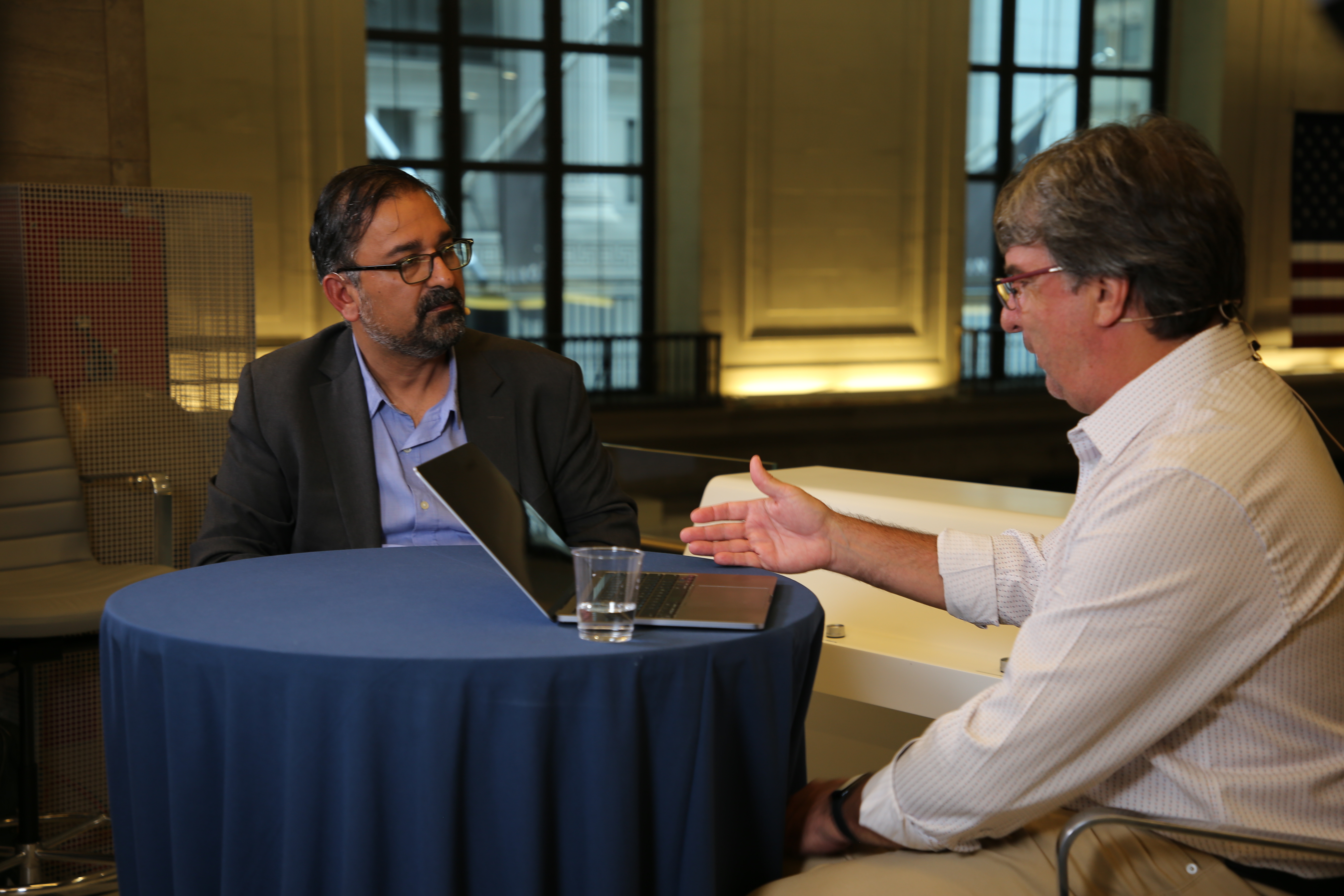
In this special segment from theCUBE + NYSE Wired: AI + Cloud Leaders event, Deepak Singh, VP of Developer and Agents Experiences at AWS, joins theCUBE’s John Furrier to unpack a pivotal moment in AI infrastructure evolution. Singh shares an inside look at Kiro, AWS’s new spec-driven development environment purpose-built for developers building with and for agents. From prototyping to production, Kiro enables collaborative agent-assisted software development, reshaping how developers and teams engage with AI.
The conversation also highlights AgentCor...Read more
exploreKeep Exploring
What are the ways developers can build applications using agents, especially as these agents become more advanced and incorporate specifications in their workflows?add
What did a beta user say about the product being discussed?add
What are the factors that influence the evolution of the features in tools like Kiro?add
What are the essential components and services needed for developers to build and run their own agents in a development environment?add
What advancements and trends have emerged in the field of agentic technology over the past year?add
What trends and developments are anticipated in the field of agent-based applications and software development?add
>> Welcome back, everyone, to theCUBE's special presentation here in our NYSE CUBE Studios. This is a part of theCUBE Palo Alto and Wall Street Connection, connecting tech in Silicon Valley and the West Coast, obviously with Wall Street. Deepak Singh, vice president of developer and agents experiences at AWS, CUBE alumni is here for exclusive coverage of the big news. He has got some big press conferences happening here, and of course, at AWS Summit where everyone gathers in New York one time a year, so the midpoint between re:Invent. It always is a great event. The Palo ecosystem news has been accelerating, obviously it feels like. Deepak, welcome to theCUBE. First of all, welcome to theCUBE. Good to see you.
Deepak Singh
>> Great to see you. Thanks for having me.>> Nice studio here. You've got the balcony. Look, it's more special this year at Summit than ever before, because at our halftime report with Matt Garman, I said, "Matt, it feels like the whole year happened already." So many news. New regions, everything is happening. It's like dog years on the internet. It feels like dog years when I went on the internet. AI, it feels like a decade.
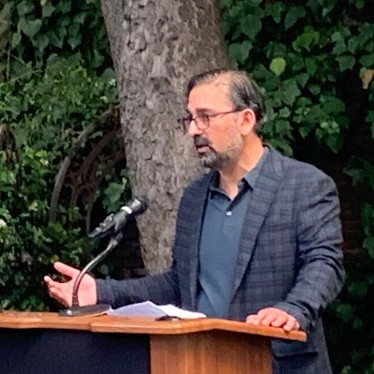
Deepak Singh
>> Yes.>> I mean, so much has changed. So give us the news. What are you working on here with the news? The big news is here. It's a big showcase for you. I saw the news on the developer agents. Matt Garmin announced that before the show.
Deepak Singh
>> Yesterday. Yeah.>> Is it Cairo or Kiro?
Deepak Singh
>> Kiro.>> Kiro. Okay, got that right. I've been calling it Cairo. I must've been getting it wrong. Kiro. It's not vibe coding, it's very spec-driven. Hooks are in there.
Deepak Singh
>> Yeah.>> Prototype to production.
Deepak Singh
>> Yeah, I mean so we started off by asking the question, how are developers going to build with agents, really as agents get more advanced and sophisticated? And as we started talking to our customers, they started seeing how developers have historically built our own, developers like to build. This whole idea of spec-driven development and specifications really started shining and we started testing this out with the customers and eventually what we ended up, so what people were doing was, they were handcrafting sort of these spec-type workflows within whatever they were doing. With Kiro, it's how you work. It's built into how Kiro works. So when you log into Kiro, it tells you basically, do you want to vibe code or do you want to build with specifications? And you can go back and forth. And even your specifications, you don't type them. You have the agent write them for you and you collaborate with the agent on figuring out, what should my requirements be? How should my application be structured? So as the application goes from your little fund prototype to a full application, it grows with you. And we're super excited. The customer response in the last 24 to 48 hours has been absolutely phenomenal and we'll see where this goes.>> So I talked to one of the beta users of that product and that person said to me it was a silent winner. And what he meant was it was a lot like Lambda. It seemed innocent, but until you see the impact of it, you can't imagine what you're doing not using it.
Deepak Singh
>> Yes.>> This is kind of where the developer track is going. You've been doing developer work for, I don't know how long at Amazon, even if I said I remember, but everything now about developers is just about software now, AI. It's a Lambda moment. And last year I think we featured the big blog post that was written last year highlighting the Lambda breakthrough. An accident by the way. Strands, Matt Garmin was raving about Strands, another accident.
Deepak Singh
>> Kiro is based on top of Strands.>> I mean, the magic right now for developers is all the time, because you don't know what you're going to get, but innovation is happening. Can you share your thoughts on that?
Deepak Singh
>> Yeah, so actually a lot of the features that we build and how they evolve are being directly driven by how developers and customers are using these tools. We have some ideas, we put them into the hands of customers. We did this with specifications early in the Kiro development process, and how they were using it was in some ways exactly how we expected it, but in some ways very different from how we expected. So the user experience that you have in the version of Kiro that we launched has evolved a lot from how it started. And that's basically, whether it's with Kiro, whether it's with the QCLI, which is also very popular with developers, they surprise us sometimes. Because guess what? Our customers, our developers are also learning how to use these tools, how to use agents, and we are learning with them and that leads to more robust software solutions, results in tools like Kiro that helps everyone be a better developer.>> All right. For the developers, what's in it for them? Obviously there's benefits. You mentioned some of them. Share with the developer community out there at large, industry as well, what is the news? Why is it important? What's in it for them?
Deepak Singh
>> Yeah, I think for developers there's two key pieces that we are going to be talking about here at the New York Summit. We obviously launched Kiro, which is a development environment meant for developers who want to build with agents for them to build robust software. But a lot of our developers, they want to build their own agents. They all want to run their own agents. So what do you need to do that? You need a runtime environment, you need a browser runtime, you need agent identity, you need agent telemetry, you need a code execution sandbox. There's all these capabilities that you need to build and run agents. And so, for them, at New York Summit we announced, what you're going to hear about a lot is Amazon Bedrock, AgentCore. And AgentCore is essentially a set of primitives and services that allows you to build with agents and run agents. It's all the things that over the last two years as we've been building our own agents, as the customers are building our own agents, we have learned that these are the things needed to build a successful agentic system. And that's what AgentCore is. In many ways you can think about it as everything, the tool belt, and the services that any individual or company needs to build a very successful agentic software platform.>> Yeah, one of the exciting things coming out of my conversation is this AI halftime report, that the ecosystem has been the tool chain side of it. Tools in general, you mentioned tool belt. Tooling is also becoming a core component. Used that word core, because it's AgentCore, you mentioned that, to offload the cost of using LL expensive tokens to do things that could be done in tools and with compute.
Deepak Singh
>> Yeah, there's two parts to it. One is maybe you offload some of the work to tools that already exist. You don't need to have the LLM go through that. Sometimes by accessing tools, agents' work gets simplified. But a really good use of tools is sometimes you want agents to not be non-deterministic. Sometimes the best thing an agent can do, and this is what modern LLMs allow you to do with tool calling, is I need to call an API that does X. In the past, some of these LLMs sometimes invent an API or try and guess what the API was and get it wrong. But now you can just call the API, which is available through an MCP server that you're making available as a tool to the agent. And that's radically changing some of these agentic architecture work and it's a great time to be part of this growth.>> So on AgentCore, I saw some threads around MCP, some say brittle security, but everything is brittle. You guys also announced, I saw Swami post this on LinkedIn and a blog about it, A2A. What's the difference between the two? Are they competing? I mean, Linux Foundation is looking at both. MCP seems to have a lot of traction, more than A2A. Is there a technical difference? Is one stateless and one has state? I mean, how should people think about what to bet on is more-
Deepak Singh
>> I wouldn't go that far. It's very, very early. Protocols, how these will evolve, it's too early to say, "Oh, this is the one to go." What we have observed is that for tool calling, MCP, everyone is rolling on MCP servers. It seems like that is going to become the most common way of doing it. A2A is for agent-to-agent communication. How does one agent communicate successfully with another? There's obviously going to be overlap as those things evolve. From our perspective, we are on the steering committees of both. We're part of the Linux Foundation announcement on A2A. We've been part of the MCP project for a while. In fact, Strands, which supports MCP already, now will support A2A and multi-agent architecture as well.>> Expand on Strands real quick, because it's a big hit that has come out of Amazon. Matt Garman, we had a good chat about it. It was an accident they built a tool for themselves internally.
Deepak Singh
>> Yeah, my team, actually. We built an agent framework to help us build agents. What Strands does is, in the early days the agent frameworks that had come up, LLMs were limited in what they could do. So those agents had to work around the limitations of all those LLMs. But now LLMs are very powerful. So what Strands does is, it actually relies on the underlying model to do a lot of things. It's what we call model-driven architectures. So what Strands will do is, it basically drives an agentic loop, which is constantly giving the right context and tools so that the agent can accomplish its goals. So we use Strands to build our own agents. Kiro, QCLI underneath the hood, they're all Strands. So yeah, so Strands has started off with its own tooling, then had MCP, and now supports multi-agent and A2A as well.>> You've got to say, your team has been quite busy. What's it been like? A quick sidebar here, what's it been like for you? Because this has been the most explosive Cambridge explosion of Renaissance, whatever you want to call it, for developers. I mean, AppDev was a nice little quarter of the industry, insourced, building applications. Now everything is impacted.
Deepak Singh
>> I speak a little bit from personal experience as well. I remember when EC2 came out in 2006, I think used it within two weeks of its launch and I remember realizing that this was going to change the world. And in fact->> It did. Yeah.
Deepak Singh
>> A year and a half later I joined AWS because it was very clear that EC2 and S3 were going to change the world. Agentic AI feels even bigger. It feels it is the biggest technology shift that we have seen since the start of the internet. It's going to change how we communicate with our software and our systems. It's going to change how we interact with the world around us and it's moving at a pace that I've never seen before. So it is a very exciting time to be a builder. I mean, I think I keep telling people, "I've not had this much fun in years being a builder. Because every time you think you know where the answer is, the world evolves.">> It's not boring.
Deepak Singh
>> And you have to continuously keep evolving with it.>> It's not boring either. Well, I want to bring back something you said earlier, because I liked when I asked you about Kiro, you said spec and then vibe coding, and I know you said customers are using it. And also, I will point out, because you just kind of mentioned it, you guys have been very leaning into developing, and plus the track record at Amazon in coding is really strong. You guys know what you're doing. You're working backwards, two pizza teams, well-documented from customers. So when you combine your dog food, drinking your own champagne, you guys are building your own AI muscles internally, writing a ton of code, using code assistants. So cool. I got confidence you know what you're doing there. What I'm more interested is how that translates to combine the customer working backwards process.
Deepak Singh
>> Yeah.>> You mentioned some surprises came out of that. Can you share more about that piece of it? Because that's the perfect, I would say go-to-market new thing I've ever seen in the industry, which is, "Hey, we have coding skills, we have product skills, product-led growth or whatever. Hey, customer, buy this, versus that's the old model." You guys now have this notion where it's like, you're not selling it, you're introducing it and we're getting looped back into requirements.
Deepak Singh
>> Yeah. So I mean, the feedback loop from customers is awesome. I mean, I'll actually talk about the QCLI a little bit because it has been out for a few months. With LLMs and foundation models and agents, sometimes the only way to figure out what's the right thing to do is to build it. And then of course, we do build our working backwards, go into our working backwards process, because we still want to work backwards from what customers are doing. But sometimes even for customers to think through what they want out of it, you have to put some things into their hands. And that's one of the most exciting things that happened in the last... Because this is evolving so quickly. We are able to build these things very quickly, get them into the hands of customers, and that's when they start giving us that feedback on how they would use it. That allowed us to go back and then get back to our working backwards process like, "This is exactly what we're going to build," knowing very well that in six months a new model will come out, the new protocol will come out, and the world is going to change again. But that's part of the fun of it.>> Is there a ceiling limit that requires human intervention right now that you're seeing hit? Obviously the Nova models are coming out as well. We're going to hear that big time. That's going to help more. So as more of these models come in, again, model diversity. Matt Garman said it two years ago, no, three years ago, well, all models should play well, hence Bedrock has been doing well. Is there a ceiling right now that all the sufficiency and speed, there's still kind of a human ceiling there or not? I mean, what's your reaction to that?
Deepak Singh
>> I think the way we think about this is, the way we work is changing as we speak. There's an example of Formula One where they built agents to do root cause analysis. This is a process that took them weeks, this telemetry from their vehicles. Now they have an AI agent that allows them to get this done 86% faster than they used to. Things that used to take a week now happen in a day. So they've significantly reduced the time that it does to do root cause analysis. So the question becomes, is now if you can move that quickly, where is the next bottleneck? Sometimes it's human, sometimes it's process. We are all learning. I do think, at least from my perspective, what agentic AI is doing is making us as practitioners significantly more effective, allowing us to do more complex and more. It's also lowered the barrier to entry, which allows people to get involved.>> So Deepak, so this news this week, what portion is your team? What parts is yours and what parts are intersecting into the other news?
Deepak Singh
>> I'll speak more broadly. Obviously Kiro came out of my team. That is where we spend our time. Strand has started in my organization. It's part of all agentic AI efforts that we have right now. And then what you're hearing about at the New York Summit is a combination of all the work that's happening across the agent AI organization at AWS. You've heard Swami and Matt talk about a lot and we'll continue chipping.>> I mean, the foundation news on Nova news is big.
Deepak Singh
>> That's right.>> That's strong. Customization has been a big thing. I've heard from some people prior to the event that the idea of using abstractions, a concept that you guys know very well at AWS, around LLMs, around tooling is a new kind of way, but kind of the game is still the same, right? What's the similarities between some of these new optimization techniques? mentioned this in my feature with him in Seattle a couple of weeks ago. What are some of the highlights that people can think about abstracting away? Because they don't want to pay too much for tokens they don't need.
Deepak Singh
>> Yeah, so I think this is where agents help a lot, because what builders are doing with agents is abstracting some of their thinking away from the end user. The end user is solving problems. The end user could be a developer, it could be a business analyst, it could be somebody shopping at a website. When you're building agents, you make decisions. Decisions could be, I'm going to use a different LLM for different parts of my app. It could be, "Here I'm not even going to use an LLM. I'm going to do a tool call." Those are decisions that the developer of the agent is making and the end user is just using it. So the ability to abstract some of this decision-making from the end user is a big part of how we think about things. And AgentCore, Kiro, the whole MCP ecosystem, Bedrock, which gives you access to different types of models, the work you're doing in Nova on customization, all of that play a role in that.>> I saw Jim Zemlin last week at the RSA Conference where we were both speaking. I did theCUBE there. The industry was there, so a good time. The summer Wimbledon was happening, a lot of action. The conversation we had was, I remember when KubeCon started, Kubernetes came out. You remember those days very well, we had many chats about it on theCUBE, actually. CNCF commercialized our Linux Foundation program, they created the CNCF, the cloud-native ecosystem was born at that point. Okay, look where we are today. The work that was done with Kubernetes set that DevOps, SecOps platform. It is app-dev as we know it. That's a core part of your team, the companies does. There's tons of developer activity, tons of builders. That's now going to be the foundational element for the next AI stack that's emerging that you guys are actively working on. So it seems like there's going to be another CNCF-like moment coming for MCP and A2A, because it's too important not to get... I think of almost two parts of the stack, the AI piece and then CNCF. You've got the cloud-native and then everything else. And everyone is rallied around Kubernetes and all those services around that. We need to see something similar at the top. What's your vision of that? Because-
Deepak Singh
>> I think it's too early. Mostly because, I mean that is very likely if you->> I'm just saying, let me rephrase, don't speculate on the link. They probably will do it. But more about developers, because they're having that similar... I'm seeing a similar pattern of, what do I rally around? MCP has been great for that. What else do you see? Because that's moving very, very fast.
Deepak Singh
>> Yeah. I'll actually go back to the start, to the internet, actually. This is more in tune with that. There'll be elements of CNCF, et cetera, but if you go back to the start of the internet, you started off with WWW and BITNET and all of these other things and eventually people realize that the properties of WWW is what went on in and HTTP is what we started building on. I think it could be MCP, it could be A2A. I think it's still early enough in this that some of these, what the world will look like in five years, I think it's premature to say this is how it's going to happen. I think a lot of it will happen organically because a lot of these things are->> Because MCP was pretty much organic.
Deepak Singh
>> Yeah, exactly.>> What is popping out that you like that's organic? You've got AgentCore that's going to create tooling. Is it the tooling side that's getting-
Deepak Singh
>> The way we think about things like AgentCore is, MCP is great, A2A is great, new things will come out, may come out. It is, how do you provide a standard set of services on top of that where you can go from like you went from HTTP one to two to three, it didn't matter, you had services that supported that. That's what we do. It shouldn't matter what the standards are of frameworks at any point in time. So AgentCore, for example, supports LangChain, CrewAI, Strands, this agent framework-agnostic. It's also LLM-agnostic, because the world is always changing. And at some point of time it'll get to a point where people will decide, "You know what? We need an IEPF-like set up starting-">> Right now we could use some standards because it gets people to go faster. All right, so I have to ask you, we're at the midpoint half-time report we did. Re:Invent is almost six months away. A little less now. A lot has happened. You covered some of the mega highlights on your team. Swami has been super busy. Mylan has got S3 tables booming. I'm sure we're going to hear a bunch of stuff there. Describe the first half of the year. How would you sum up the accomplishments, notable accomplishments that you can point to for you and AWS at large, and then how does that telegraph what's going into the re:Invent second half?
Deepak Singh
>> Yeah, I'll call it the year of agentic. If you look at Strands, you look at QCLI, you look at Kiro, you look at the work that has happened in Bedrock over the last... You look at MCP, you look at A2A, that has been the conversation. You look at the recent models that have come out, whether it's models like Nova, whether it's on a 37 and it's on a 40, this year is where you can truly say this is the year agentic became something that was not only a few people were doing it, it became mainstream. And I think over the next six months or year, making agents, how we all interact, as I said, not just with our tools, but also with the world around us, that's going to be where we are headed over the next few years.>> You mentioned glue earlier in our chat. The glue layer, I always love that term, because it's kind of like it doesn't really mean much. But glue is glue, there's actually meaning to that. How would you describe for the people watching, if I'm an app dev person, I'm a builder, what can I expect? How should I get my mindset? I'm an athlete, I want to get ready for the big game that's happening out in the arena. What's the takeaway from AgentCore? I said open core, AgentCore. How should I be rethinking my role? What should I be looking at? How should I pique my curiosity? How should I orientate?
Deepak Singh
>> I would say the easiest thing to do is to find a developer tool like Kiro or QCLI, pick up a framework like Strand and start building. AgentCore is only going to make that easier, because then we have a standard set of APIs that let you do that. There has never been a better time to be a builder.>> I was talking to a friend, we were at a master class, I want to get this little more advice here for young people, because careers are changing and if you're under 30, the job market is hot if you can just raise these tools. So you just nailed the developer side. Thank you very much. Let's go to the other side, and most people are coming out of college with some really good degrees from some universities. The old track was, "Be a product manager or go into banking or finance or specialty field." Those jobs are shrinking because of the good opportunities. And so, what's happening is, it's empowering agency and creative problem solving initiative. Or what's the principle for you guys at Amazon?
Deepak Singh
>> Invent and simplify is one, actually favorite one.>> IAS reaction.
Deepak Singh
>> Yeah. My favorite one is actually one we use for our principal engineering community, which is called illuminate and clarify.>> Illuminate and clarify.
Deepak Singh
>> Yeah. People have to get really good at it, because they're now working with an agent and you're giving it, you're helping it, you're clarifying for it.>> I remember when I first started coding, it's like you've got to write the code down to compile it. If you talked to it properly, it would run.
Deepak Singh
>> You would actually write a specification on paper.>> Yeah.
Deepak Singh
>> That's what Kiro does.>> Illuminate and amplify. Illuminate and-
Deepak Singh
>> Clarify.>> And clarify.
Deepak Singh
>> I love that one.>> I love IAS Reaction. You've got great principles. Okay, so for that generation, they're coming out, and this is specific, I've asked this question many times from my own family, friends and relatives, just strangers on the street, what do I do? Now, product management has accelerated too with agents, because now the tool is coming out for how to build a product. So how should someone think about being a product manager or getting into some of that business side that leans into engineering that were waterfall-based or agile-based? I mean, the method, things are in parallel now, they're happening all at once, you mentioned. So what's the role of that person? What should they study? The product guide?
Deepak Singh
>> I don't think you need to study anything differently. Study what you want. I actually think it's how you think. Embrace the tools. They're only going to get better. Every day you use a tool, it's probably the worst it's going to be. It's only going to get better. I came out of product management. I'll speak in terms of Kiro, but it applies to non-technical things also. The first thing that Kiro does is write a specification. The first thing in the specification is requirements. It's written with user stories, so the interaction between product manager and an engineer now can be done in code as opposed to starting a random PRD somewhere, et cetera. You can actually collaborate in different ways than you ever could. As long as you get comfortable knowing that, yes, it's different and it's okay, but you actually at the end of it going to be more effective and faster, people will be fine if these make you better.>> I think of this EC2 moment, a Lambda moment. I mean, obvious to us in the trenches and I think people are just going to be comfortable. Final question, looping back to what I asked earlier, second half of the year as we go to re:Invent, what's on your radar? What can we expect to see? I know you have to give away some of the re:Invent content.
Deepak Singh
>> But I'll talk pretty simply. I think you'll see more and more people building agents. Most agentic applications are single-agent applications. You'll start seeing much more multi-agent orchestration, multi-agent applications out there. From a software development side, you're going to see the spec-driven approach become much more. I think you'll see a ton of interesting innovation there. And I think what you'll also start seeing is people being more comfortable handing off tasks to an agent to do while they're doing other more creative things.>> I'm so excited for you, Deepak. I know how hard you work. Grateful for your effort. Love the Amazon, goodness comes out of it. But it's a capric explosion, it's an intersection of technology transformation, business transformation all happening at once.
Deepak Singh
>> Yep.>> It's a super special time. Thanks for coming on theCUBE.
Deepak Singh
>> No, thanks for having me. It's always exciting talking with you. These are exciting times.>> Deepak Singh and AWS, they're leaning in, building their AI muscle. They said they would, they are. They're bringing in customer feedback, new requirements coming in directly from customers. Vibe coding, vibe product, whatever you want to call it, is building a better product and the thing is happening so fast. Of course, theCUBE is doing its best part to bring that to you. I'm John Furrier, host of theCUBE. Thanks for watching.