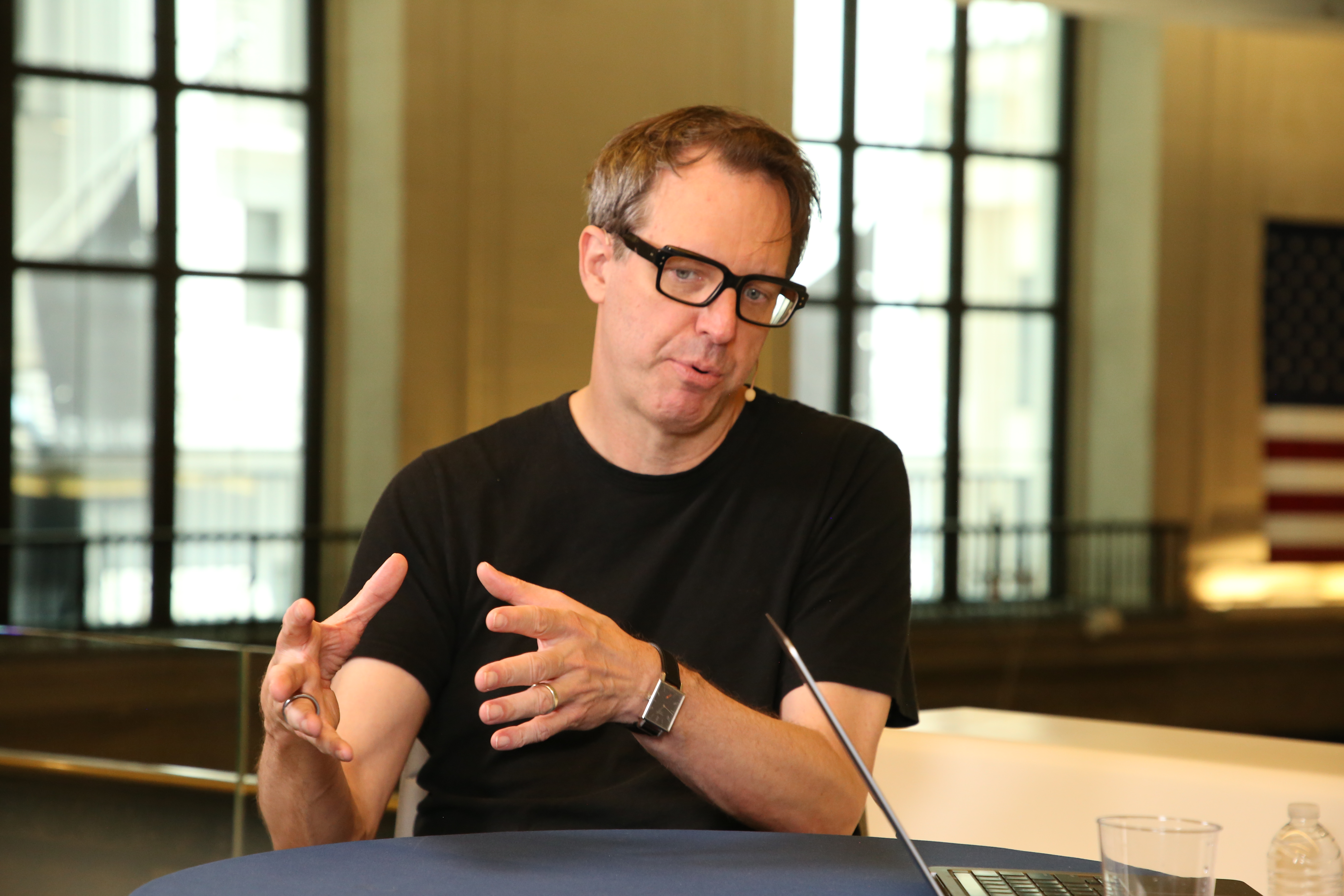
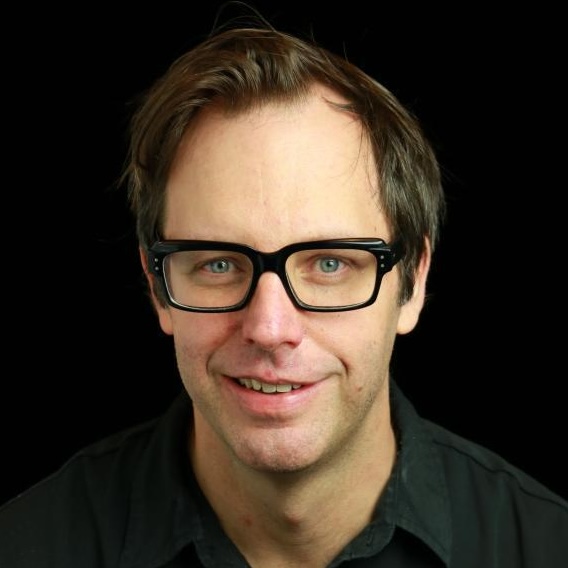
In this engaging episode, theCUBE interviews Byron Cook, senior principal applied scientist of AWS, during AI Cloud Week in New York City. Hosted by John Furrier of SiliconANGLE Media, Inc., the conversation delves into the latest developments and insights from AWS and its vibrant ecosystem during the AWS Summit.
Cook shares extensive expertise in automated reasoning and artificial intelligence, discussing the resurgence of neuro-symbolic AI and its potential within various industries. Highlighting a transition from blue-sky research to practical applications, Cook explores Amazon Web Services' innovative offerings such as IAM Access Analyzer and Bedrock Guardrails. The co-founder of SiliconANGLE Media guides the discourse, unearthing key insights into the evolving AI landscape.
The discussion offers valuable takeaways regarding AI's impact on research and industry standards. According to Cook, the integration of automated reasoning with generative AI provides new opportunities for correctness and compliance in technical domains. The analysts and guests underline the essential role of supercomputing and cloud technologies in democratizing and accelerating AI research.
Forgot Password
Almost there!
We just sent you a verification email. Please verify your account to gain access to
AWS Mid-Year Leadership Summit 2025. If you don’t think you received an email check your
spam folder.
In order to sign in, enter the email address you used to registered for the event. Once completed, you will receive an email with a verification link. Open this link to automatically sign into the site.
Register For AWS Mid-Year Leadership Summit 2025
Please fill out the information below. You will recieve an email with a verification link confirming your registration. Click the link to automatically sign into the site.
You’re almost there!
We just sent you a verification email. Please click the verification button in the email. Once your email address is verified, you will have full access to all event content for AWS Mid-Year Leadership Summit 2025.
I want my badge and interests to be visible to all attendees.
Checking this box will display your presense on the attendees list, view your profile and allow other attendees to contact you via 1-1 chat. Read the Privacy Policy. At any time, you can choose to disable this preference.
Select your Interests!
add
Upload your photo
Uploading..
OR
Connect via Twitter
Connect via Linkedin
EDIT PASSWORD
Share
Forgot Password
Almost there!
We just sent you a verification email. Please verify your account to gain access to
AWS Mid-Year Leadership Summit 2025. If you don’t think you received an email check your
spam folder.
In order to sign in, enter the email address you used to registered for the event. Once completed, you will receive an email with a verification link. Open this link to automatically sign into the site.
Sign in to gain access to AWS Mid-Year Leadership Summit 2025
Please sign in with LinkedIn to continue to AWS Mid-Year Leadership Summit 2025. Signing in with LinkedIn ensures a professional environment.
Are you sure you want to remove access rights for this user?
Details
Manage Access
email address
Community Invitation
Byron Cook, AWS | AI + Cloud Leaders
In this engaging episode, theCUBE interviews Byron Cook, senior principal applied scientist of AWS, during AI Cloud Week in New York City. Hosted by John Furrier of SiliconANGLE Media, Inc., the conversation delves into the latest developments and insights from AWS and its vibrant ecosystem during the AWS Summit.
Cook shares extensive expertise in automated reasoning and artificial intelligence, discussing the resurgence of neuro-symbolic AI and its potential within various industries. Highlighting a transition from blue-sky research to practical applications, Cook explores Amazon Web Services' innovative offerings such as IAM Access Analyzer and Bedrock Guardrails. The co-founder of SiliconANGLE Media guides the discourse, unearthing key insights into the evolving AI landscape.
The discussion offers valuable takeaways regarding AI's impact on research and industry standards. According to Cook, the integration of automated reasoning with generative AI provides new opportunities for correctness and compliance in technical domains. The analysts and guests underline the essential role of supercomputing and cloud technologies in democratizing and accelerating AI research.
Senior Principal Applied Scientist, Automated ReasoningAWS
In this segment from theCUBE + NYSE Wired: AI + Cloud Leaders event, Byron Cook, vice president and distinguished scientist at AWS, joins theCUBE’s John Furrier for a deep dive into the fast-evolving intersection of AI research and enterprise application. Cook shares how a once purely theoretical field – automated reasoning – is now at the core of some of AWS’s most practical innovations, from IAM Access Analyzer to the newest Bedrock Guardrails.
The conversation unpacks the resurgence of neuro-symbolic AI, the fusion of symbolic logic and machine lear...Read more
exploreKeep Exploring
What is the current state of artificial intelligence and its development over the decades?add
What has been the impact of the policy interpreter's correctness at AWS, particularly in relation to customer engagement and financial implications?add
What are the recent developments in automated reasoning checks and how do they aim to ensure accuracy in technical areas using generative AI?add
What impact has the cloud and supercomputing had on scientific disciplines and machine learning research?add
>> Welcome back everyone to theCUBE's coverage here of AI Cloud Week in New York City, part of the AWS, I call it the half-time report with all their ecosystem leaders. The AWS Summit in New York is really the gathering point, everyone's in town. The hot seat of New York. A lot of customers, but a lot of ecosystem players here. And of course, we'd like to get all the action, dive deep to find out what's happening, extract a signal from the noise. Byron Cook here, vice president, distinguished scientist at AWS. Welcome back again.
Byron Cook
>> Thank you. Yeah.>> A distinguished scientist. Welcome back.
Byron Cook
>> Thank you. Thank you very much.>> Everyone knows that means at Amazon, you can do whatever you want, which means play with all the best stuff, figuring the new stuff out. Okay, so my first question, Byron, since the last time we chatted at re:Inforce was, like today, in this world you're living in right now, this moment, how can you work on whatever you want when there's so much stuff happening, it's so fast. How do you orient yourself or it's just the speed of play, it's like a pro athlete who just gets used to the game. What's it like right now for you?
Byron Cook
>> I mean, what to work on is abundantly clear right now because... So in the 1950s, if you had asked people what is AI, they would've talked about my field, automated reasoning, and then they'd branched out, you had the Bayesian view, the statistical view, the tools combining together. And then those areas in the '60s and '70s sort of split off and went their own way, and you had machine learning, you have automated reasoning. But now with the investment and generative AI and agentic AI, there's a re-homing. Those areas are blurring back together into an area that's called neuro-symbolic AI, but it's very hot and a big opportunity for us.>> Neuro-symbolic. So again, people pick their camps, they hang out for a while, then now the world's happened, they come together. It's like going to college, different universities, and they come back into real world.
Byron Cook
>> Yeah, exactly. Yeah, Yeah, that's right.>> Is that smiling? Did I get the vibe right?
Byron Cook
>> Yeah, that's right. I mean->> It's the word new. Everyone's on the street, a hundred million dollars flying around, everyone's got so much money, but the collision is the intersection.
Byron Cook
>> It's amazing.>> Describe that collision because still a ton of research and now you've got practical productization and research, almost like two cats and dogs living together.
Byron Cook
>> Yeah, so there's various ways of combining the areas. So automated reasoning is the symbolic manipulation of, like you move symbols around and you deduce things that are true about the semantics that those formally represent. And you can do all kinds of things in combination with machine learning. So for example, you can use it to synthesize more data to train over, you can combine it with reinforcement learning, and then you can also sidecar tools out. So at our inference time or after inference, you can move the statements coming out of a language model, put them into logic and then prove or disprove the correctness of them. So we have some products that have been announced, some other stuff that's forthcoming, and then a whole bunch of science going on underneath the hood that's driving innovation.>> I have to ask this, since you're here, because you're a great guest for me to ask all these questions, always been pondering that's weird in my head. Everyone always says, we've been doing AI forever. It seems to be a cliche. First of all, everyone's an AI company now. So just so you know, in case you haven't read-
Byron Cook
>> Right, right, yeah, yeah.>> ... everyone's now an AI company. But there are folks who legitimately have been doing AI since the '80s and '90s. I remember when I was in college, AI was theoretical, just symbolic systems theory, basically theory. I mean if you wrote code, it was just basically a test, something random. But now everyone says, "Oh, I've been doing AI," and some people have. What does that mean when someone says, "I've been doing AI."
Byron Cook
>> So there have been a series of breakthroughs, and the last time I was here, we talked about them. So for example, the rise of propositional satisfiability solving, the rise of satisfiability and modular theory solving and then heuristics for resolving quantifiers and a bunch of things. So there have been... Back in the old days, it was just a theoretical concept. You could write little toy tools, but there have been this sort of explosion of very practical algorithms that make... We still believe that MP is not equal to P, but practically speaking, for many industrial applications, MP begins to feel like P, and those tools are out there and you can use them. And many of them were sequential in nature of the algorithms, but now with the cloud, the algorithms are becoming more distributed and that's really an explosion. So the tools are practical now, and you can put them together in ways that .>> Talk about the culture. I was talking to a friend, two things jumped out at me and I want to get your reaction. This is a collection of friends that have PhDs, so I'll just oversimplify it. Two thoughts came out. One was, it feels like the AI cultures are universities, that have different kind of tastes and vibes, some are this or that. And the other one said that when you look at the practicality of it, there's a real research versus how to productize. So the best talent is coming from research and researchers like to research, they don't like to actually... Hit the product roadmap. So there's conflict, not a conflict, but there's almost a transition. So some money's there and they're there.
Byron Cook
>> Yeah. So something... I mean, I came from the blue skies research world. I spent years not knowing even what a customer was.>> Welcome to Amazon.
Byron Cook
>> And then I joined Amazon. And the exciting thing that... I've been at Amazon for 10 years and what we began doing right away was applying it in very practical applications. And so there's a quote from Strachey who's a founder of computing, a contemporary volunteering who said that, "The division between theory and practice and computing is injurious to the field." That essentially theoreticians don't know what to work on and practitioners don't understand the foundations of what they're working on. And so something I was really excited about joining Amazon is that Amazon actually wanted to apply these tools for real. And so that gave us IAM Access Analyzer, S3 Block Public Access, VPC Reachability Analyzer, the proofs of our cryptography foundations, the proofs of the virtualization infrastructure, the proofs of the... We proved the correctness of the policy interpreter inside AWS with regards to the semantics in IAM Access Analyzer and a whole bunch of other applications. So I came to AWS to really apply it for real and to bring meaningful, improved->> How has that been? Do you feel good about that? I mean obviously you can see the impact.
Byron Cook
>> Oh, yeah. I mean it's tremendous. I mean a lot of customers have moved workload to AWS for it. So I'm often involved in discussions where zeros are being added to the check. So customers are trying to figure out where things are going, what AWS is doing, and that's where->> Customers are adding zeros to the check?
Byron Cook
>> There customers adding zeros to the check. And then the other thing that really surprised me early on was that customers really needed these tools themselves before doing deployments. And so that led to IAM Access Analyzer and VPC Reachability Analyzer. But the thing that's been amazing in the past couple of years is that many of those techniques, and we're now with automated reasoning checks and bedrock guardrails, we're using the very same tools we're using now to address incorrectness due to hallucinations.>> We do a crypto trailblazer series here and also in Palo Alto, we also do it on the road, and it's impacting more like financial systems, money and crypto blockchain. And a lot of the conversations that comes up around math and also about a lot of these systems, there's a lot of governance, there's a lot of muck and details around the system, and we're having a systems revolution on the cloud AI side, that you're in the middle of, that's why I wanted to ask you about some of the things you're working on because now the shortening between starting something and publishing production is tiny. So your messages of theory to practicality was just an environmental issue really. We have to put people in rooms to theorize and publish papers, commingle. You're like, "What's the customer? Now you work backwards, you're now in the middle of it. So now it's connecting those worlds.
Byron Cook
>> Things are moving very fast and the loops are very tight now.>> How should companies do this? Because one trend I'm seeing in my interviews and the research we're doing on theCUBE is customers that are doing well at AI are actually having internal research teams, not like a customer-centered competency thing, like political organizations, actually hardcore researchers to try to work with other researchers because they're AI-fying their products and they need to kind of bring that vibe in.
Byron Cook
>> I have a non-technical answer for you. The key is you have to bring in members of the scientific community to work in your organization and they don't really work for you. They work for the science space. So it's like bees in a beehive. So you're trying to pull the honey from the beehive, you're trying to keep the toxic materials away from them and you're trying to keep them happy. And so that kind of view that they're working for you but also working for that discipline. So in my mind, I work for the founders of my discipline that goes back 1,000 years.>> You want to contribute, but now you don't have to wait to write that academic paper, it's actually written for you. Agents will do that, or not that-
Byron Cook
>> Yeah, .>> That's an over-the-top statement, a little bit. I mean, look-
Byron Cook
>> We continue to use peer review to hold ourselves to a high bar in the scientific discipline. That remains a really important foundation and we->> So automated reasoning, symbolics, what do you call it, symbolics?
Byron Cook
>> Symbolic AI, formal verification, automated reasoning, it's all .>> So one big thing that's coming out of some of the AI conversations, and I'd love to get your help on this understanding and framing it is the notion of evaluation. Are tasks well formed? Tasks that aren't yet there, how do you train the trainer? Is there a compiler for the compiler? There's always going to be some delegation and trust. There's all kinds of things in science involved in making the software and maybe the agent needs to say, "Hey, you need to build your own Salesforce software player, but I can do it for you. Would you like that to happen?" These are things I would see happening.
Byron Cook
>> So in our field, we're lucky in that our field is the search for proofs of mathematical logic and the foundations of proof is sorted, settled, we know it. And we know when a proof is a proof because we have tools that the entire world's trusts and they're open source and they're simple and so the challenge is the very fast algorithmic search for those proofs. And the other challenge is figuring out what you want to prove. And so one of the really exciting things about the neuro-symbolic AI space is that always before, if you were trying to prove the correctness of a hypervisor or trying to prove the correctness of a policy interpreter was to figure out what it is you're trying to prove, but the AI tools now help you figure that out and then you can use model-based testing to convince yourself that the thing you're trying to prove is the right thing to prove and so that blurring of the lines is really exciting for our field.>> You know what's exciting, is that the old school, and I was brought in the industry for 10 years at IBM and HP, old school, their research was like applied research, go solve the world problems, cure cancer, solve the water table problem, whatever these big movie shots, Google calls them. Then you had applied R&D that was tied to the divisions and that was specifically green lit by the GM. We had to figure out a better processor for this or this software for that, the new stuff it seems to be not any of those.
Byron Cook
>> The way I see it is, the advice I got when I joined Amazon was to think about it as a moonshot ladder. So you definitely want to go for the big thing. And when you're talking to leaders of the... , I explained the big thing we're heading towards, but then along the way each thing I'm delivering is progressively rendering towards the Moonshot, but is delivering. And often when you talk to middle management types, they are scared off by the big thing because then they think, "Oh, you're going to go off forever and never deliver." And so you deliver something much smaller but is headed towards the bigger thing. And so the challenge for->> You story board it out.
Byron Cook
>> Yeah, that's right, and I->> it out, storyboard it out, whatever.
Byron Cook
>> And so the challenge for a distinguished scientist is to figure out how to get there, but navigate along the way.>> All right, so what are you working on right now? You're here in New York, you're on theCUBE. We were on theCUBE last night, Automated reasons, the baseline, you got all the news coming. We're seeing the agents, we're seeing AgentCore, S3 Vectors, these the terms I'm hearing, agent Marketplace, you got NVIDIA cranking out some great results. on the board. AWS has got great results.
Byron Cook
>> There's a bunch of things going on. So we announced automated reasoning checks and bedrock guardrails, and that is coming out soon and so we're using that with your early gated preview customers and we're getting really exciting results.>> What's the bottom line for customers on that one? Just to give them the confidence that a lot of these governance things are taking care of?
Byron Cook
>> So for technical areas like ticket returns policies, or Family Medical Leave Act or these kinds of areas where you have right or wrong answers and you're going to be using generative AI to generate the answers, you absolutely need them to be correct. How do we formalize it into mathematical logic the rules, a formula that represents all of the true and untrue statements in that domain? And then how do we sidecar that together with generative AI to help you remove your socio-technical mechanisms and allow use of GenAI instead.>> My brain is going to blow up. It's awesome. This year it feels like a full year has gone by. We're only the midpoint to re:Invent. And it feels like, I mean, Matt Garman's announced 10 million new regions, zillions of billions of dollars in CapEx spend, Deepak's hitting some great milestones with the automated coding, just overall AI goodness is happening. Scale up and scale out infrastructure's booming.
Byron Cook
>> So I mean, thank goodness, we, a bunch of years ago began doing proofs of our programs because that allows us now to use generative AI to optimize the code, rewrite the code, and then reestablish those invariants that we know we need to hold for reasons of security, for reasons of compliance, for reasons of privacy and so on.>> And these proofs, you said these are the mathematical proofs that are grounded and-
Byron Cook
>> Logic.>> ... locked and loaded. It's objective, there's no bias of any kind.
Byron Cook
>> That's right.>> It is black, and which math?
Byron Cook
>> Yeah, exactly.>> That's the line.
Byron Cook
>> Yeah, it doesn't get any more truthful.>> You can't hack math, or can you?
Byron Cook
>> What's that?>> You can't hack the math.
Byron Cook
>> No. Yeah, yeah.>> So it's objective.
Byron Cook
>> Yeah, that's right.>> You have those, those feed into the scale side of what agents can grow into.
Byron Cook
>> Because you can let the agents be creative and try things out and you have set semantic guardrails around what programs they can emit, which programs we will deploy and which we won't.>> We all imagine the future. We all watched Terminator, one of my favorite movies of all time. Of course, a big Star Trek fan. Everything in Star Trek will be invented sometime, maybe even the transporter. So sci-fi's here, we imagine the agents going crazy. We have movie about cars taking over, the Teslas. So as agents come, what are some of the things people should think about? It's like jumping out of an airplane, the parachute has to open. What do I got to do to prepare for the future? That's my question.
Byron Cook
>> So in the future, let's imagine we have cooperating agents acting on our behalf, making investment decisions, sending out emails, booking things on our behalf. And there are going to be certain things we want those agents to do and not to do. And the collection of those agents we want them to achieve of certain objectives, we want them to eventually reach those objectives and there's certain behaviors we don't want them to perform. So we don't want to go bankrupt while making our investment decisions. We don't want to send the money to certain places. And you have organizations that will have regulatory constraints, so like a commercial bank wing can't talk to the investment bank wing directly, and how do we let agents go be creative while holding them to account to make sure that they're not doing the things they shouldn't.>> So if you had to summarize or assess readiness, I mean I've said this on theCUBE many times, other people have commented those... Healthcare, they've been labeling data till they're blue in the face, because, look at it, that's had to do that for compliance. But now that's helpful, labeling and some of these industries have done all this data curation, metadata. I mean meta reasoning is a concept, right?
Byron Cook
>> So for me it's about flow. In that context, it's about flow of data. You can take a program, a program is essentially a formula and you can reason about how data would flow through that program. And then you can now deduce, "Oh, this information can't go there. This metadata is crucial, it's PII. We know it doesn't go to this place, thus it doesn't get leaked here, thus we don't train over it." And so from a sovereignty perspective, privacy perspective, regulatory perspective, it's a very exciting time and it really allows->> That's why AgentCore and some of these tools have to have these hardcore identity systems in there because you need to put almost a proof label on it like, "This is John, privacy on, risk off."
Byron Cook
>> Yeah. So then there's all kinds of identity questions and... yeah, I mean it's an exciting time.>> So I have to ask a personal question. You've been doing this fun job, how has the role of the Amazon Supercomputing cloud, because what you were seeing in the past five years, past three, hardcore, really a democratization of supercomputing. And this is lifting the entire research communities around the world in every sector in a major way.
Byron Cook
>> So I'm giving, there's a annual summer school for PhD students in the Alps that I'm teaching at next month. And the lectures that I'm giving are talking about how the cloud has brought a revolution to my scientific discipline, but also ML. So if you think about it GenAI is a paradigm shift from how ML researchers worked before because they were able to build these gigantic models and they only could do that because of the cloud. And in my discipline, it's the same. We used to shoehorn these algorithms into sequential microprocessors that were running on laptops or machines underneath your desk. But because we have these distributed systems, because we can store large amounts of data, it really changes the game about how you do reasoning. And so from my scientific discipline, that bit has flipped and all kinds of new open scientific challenges are already in the people's heads right now.>> So it's enabled an opportunity big time.
Byron Cook
>> Yeah.>> They've opened their mind to a bigger aperture. Where's this going to be, in the Alps?
Byron Cook
>> Yeah. Yeah, it's in Marktorberdorf, Germany, in Bavaria.>> Don't give away the location. So these are PhD students?
Byron Cook
>> Yeah. Yeah. So it is basically PhD students from each country come and there's eight professors that are brought in and then we lecture five lecturers each.>> Maybe we'll do a little sneak fly-by by theCUBE and check it out. Because right now the -
Byron Cook
>> I'm sure my scientific community would love if theCUBE came.>> I mean, hey, a free review. We have the data to see how someone does on theCUBE. No, seriously, all kidding aside, PhD students are the canary in the coal mine because they are the future. And are the talks you're giving there? Can you give us a little taste? .
Byron Cook
>> So I'm talking about distributed reasoning, how do you distribute to the search for proofs of mathematical logic? And then I am describing the underlying techniques of the automated reasoning checks in bedrock guardrails. I am talking about some new topics in persisting proofs. So you want to store a proof and now you want to repair a proof, how do you do that? And then because, my scientific discipline has always been obscure, small and there was really, when I started in my career, there was really no hope of commercial application, so I had assumed I would always just be in the research lab or the university. And so now this next generation where we need to help them prepare for success in ->> And it's attainable. You don't have to make a decision to not be doing what you want to do because it's an adjacency that's so close, you don't have to be indifferent to it.
Byron Cook
>> Yeah, that's right. Yeah. So I have some thoughts about big science, basically how do you do science in the big.>> Well, Byron, always a pleasure to having you on.
Byron Cook
>> Thank you.>> Love how you open up our aperture here in theCUBE. And we would love to go to the PhDs and we just need the PhD host. I didn't get a PhD, I probably could have but-
Byron Cook
>> You could still , by the way.>> ... but hey, I'm open. I'm curious.
Byron Cook
>> You can do a PhD.>> I'm curious. Thanks for coming on.
Byron Cook
>> All right, thank you. >> PhD curious, right here on theCUBE. I'm John Furrier here. We're at the AWS midpoint of the year. It's a halftime report. Of course, we're here in New York for the AWS Summit, theCUBE is doing its part to bring you all the content here at the New York Stock Exchange theCUBE's new home on the East coast, connecting Wall Street and Silicon Valley and Tech. Thanks for watching.