Exploring Digital Transformation in Sports: A Look at the Seattle Seahawks and AWS Collaboration
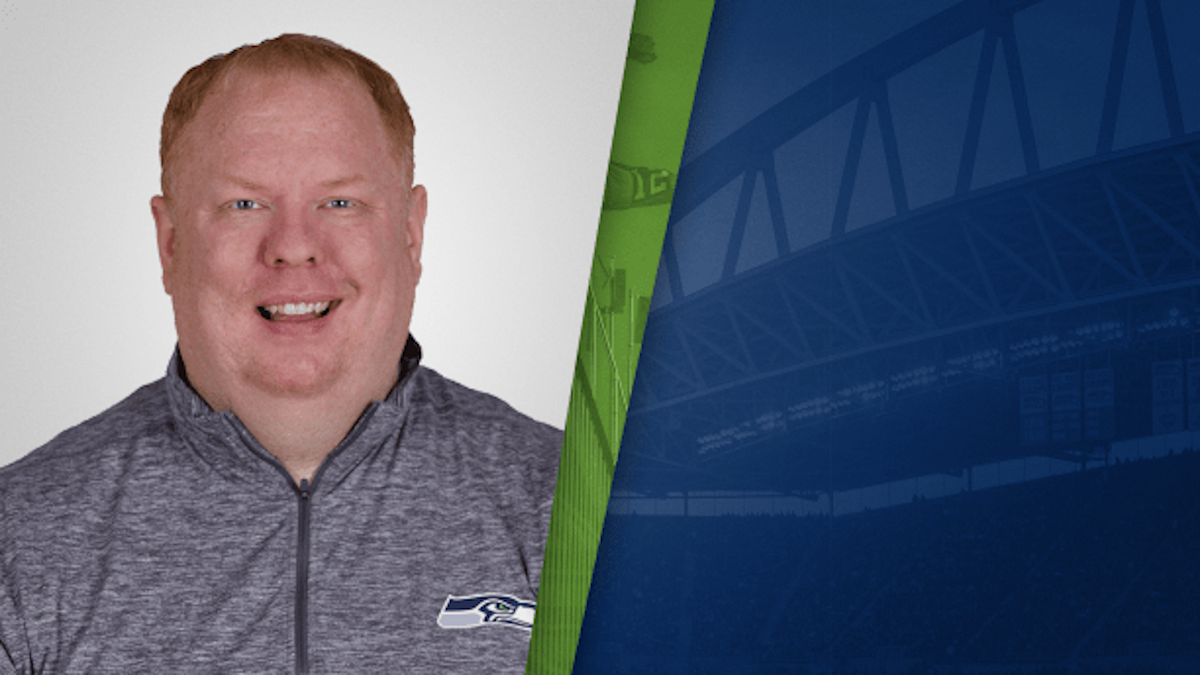
Kenton Olson, Vice President of Digital and Emerging Media at the Seattle Seahawks, sheds light on the innovative collaboration with Amazon Web Services, presented during the AWS Mid-Year Summit. This discussion revolves around the convergence of digital and physical experiences in the sports industry, focusing on the Seattle Seahawks' efforts to enhance fan engagement and operational efficiency through cloud solutions and artificial intelligence (AI).
In this insightful conversation, Olson shares extensive experience with the Seahawks, guiding their digital and emerging media strategies for nearly two decades. Hosted by theCUBE Research and its knowledgeable analysts, Olson delves into the dynamic role of digital media in sports, covering various aspects from content distribution to fan interaction. Olson highlights the powerful relationship with Amazon Web Services, which supports the team’s innovative pursuits in enhancing fan experiences through cutting-edge AI tools and cloud technology.
Significant takeaways from the dialogue include Olson's observations on the heightened role of AI in modernizing sports media landscapes. Utilizing Amazon Web Services solutions has not only enabled efficient content handling and faster distribution but has also fostered a more personalized and interactive fan experience. Additionally, the use of generative AI and predictive analytics presents a transformative opportunity for engaging with Seahawks enthusiasts worldwide, illustrating the intersection of technology and sports.
Forgot Password
Almost there!
We just sent you a verification email. Please verify your account to gain access to
AWS Mid-Year Leadership Summit 2025. If you don’t think you received an email check your
spam folder.
In order to sign in, enter the email address you used to registered for the event. Once completed, you will receive an email with a verification link. Open this link to automatically sign into the site.
Register For AWS Mid-Year Leadership Summit 2025
Please fill out the information below. You will recieve an email with a verification link confirming your registration. Click the link to automatically sign into the site.
You’re almost there!
We just sent you a verification email. Please click the verification button in the email. Once your email address is verified, you will have full access to all event content for AWS Mid-Year Leadership Summit 2025.
I want my badge and interests to be visible to all attendees.
Checking this box will display your presense on the attendees list, view your profile and allow other attendees to contact you via 1-1 chat. Read the Privacy Policy. At any time, you can choose to disable this preference.
Select your Interests!
add
Upload your photo
Uploading..
OR
Connect via Twitter
Connect via Linkedin
EDIT PASSWORD
Share
Forgot Password
Almost there!
We just sent you a verification email. Please verify your account to gain access to
AWS Mid-Year Leadership Summit 2025. If you don’t think you received an email check your
spam folder.
In order to sign in, enter the email address you used to registered for the event. Once completed, you will receive an email with a verification link. Open this link to automatically sign into the site.
Sign in to gain access to AWS Mid-Year Leadership Summit 2025
Please sign in with LinkedIn to continue to AWS Mid-Year Leadership Summit 2025. Signing in with LinkedIn ensures a professional environment.
Are you sure you want to remove access rights for this user?
Details
Manage Access
email address
Community Invitation
Kenton Olson, Seattle Seahawks
Exploring Digital Transformation in Sports: A Look at the Seattle Seahawks and AWS Collaboration
Kenton Olson, Vice President of Digital and Emerging Media at the Seattle Seahawks, sheds light on the innovative collaboration with Amazon Web Services, presented during the AWS Mid-Year Summit. This discussion revolves around the convergence of digital and physical experiences in the sports industry, focusing on the Seattle Seahawks' efforts to enhance fan engagement and operational efficiency through cloud solutions and artificial intelligence (AI).
In this insightful conversation, Olson shares extensive experience with the Seahawks, guiding their digital and emerging media strategies for nearly two decades. Hosted by theCUBE Research and its knowledgeable analysts, Olson delves into the dynamic role of digital media in sports, covering various aspects from content distribution to fan interaction. Olson highlights the powerful relationship with Amazon Web Services, which supports the team’s innovative pursuits in enhancing fan experiences through cutting-edge AI tools and cloud technology.
Significant takeaways from the dialogue include Olson's observations on the heightened role of AI in modernizing sports media landscapes. Utilizing Amazon Web Services solutions has not only enabled efficient content handling and faster distribution but has also fostered a more personalized and interactive fan experience. Additionally, the use of generative AI and predictive analytics presents a transformative opportunity for engaging with Seahawks enthusiasts worldwide, illustrating the intersection of technology and sports.
In this interview from the AWS Mid‑Year Leadership Summit, Kenton Olson, vice president of Digital and Emerging Media at the Seattle Seahawks, joins theCUBE’s John Furrier to reveal how a pro football franchise is turning AWS technology and generative AI into a competitive edge. Olson outlines his dual mandate to run digital content and digital products, explaining why a cloud‑first partnership with AWS is essential for serving fans across the website, mobile app and more than 80 social channels in near real time.
The discussion dives into a production...Read more
exploreKeep Exploring
What is the context of the event being discussed and who is the guest speaker?add
What is the role and responsibilities of the person overseeing digital teams with the Seahawks?add
What are the changes and developments in the organization and what objectives are being prioritized?add
What factors are considered when deciding on staffing and resource allocation in a business strategy analytics context?add
What are the plans for celebrating the 50th anniversary and sharing unique stories related to the legacy of the players?add
>> Hello, welcome to theCUBE here in Seattle at AWS's headquarters for our special halftime report to reinvent. Of course, it's halfway through the year, a lot of updates, a lot of AI news, a lot of AI infrastructure, faster chips, faster infrastructure, faster time to value. Kenton Olson is here from the Seattle Seahawks. Obviously this is a halftime report for the industry, but of course they have real halftimes in football. He's the VP of Digital and Emerging Media. Thanks for joining us today. Thanks for coming in.
Kenton Olson
>> Yeah, glad to be here. Excited.>> So obviously football and sports is great crossover to tech because there's a lot of comparisons between tech athletes, folks like Matt Garman and all the executives here working hard. They're tech athletes, they're pushing the tech envelope. But you're actually in the athletic sports with football, which we all love. You have a job where you have to run the digital media, which is transforming. AI is certainly driving that. So before we get into some of the things, talk about what you do over there. I know you guys have a relationship with AWS that's crossed the entire organization and your role. Talk about your role and the relationship with AWS.
Kenton Olson
>> Yeah, so I'll be entering my 19th season here with the Seahawks, and in my current iteration of my role, I oversee two different teams. One is our Digital Content team. That's the group that oversees producing and distributing all of our digital content. So that's across our website, across, for example, what's in our mobile app, as well as all of our social media channels. The second group I oversee is our Digital Products team. So that team oversees all of the digital products that we own and operate. So that's our website, our mobile app, email, SMS, marketing, paid social falls under that umbrella. So we're really excited to work with those teams, and a bunch of talented teammates of mine to figure out ways to distribute and connect to the team. As for AWS, they're our official cloud partner, and so we work with them regularly to figure out how do we innovate? How do we raise the game? How do we move things forward and making sure that we're using the most innovative tools we can to move things forward and help out our fans?>> Well, I'm glad you came in because one of the things we've been writing a lot about, doing a lot of video interviews around physical and digital AI, whether it's factories, or stadium, fan experience, you have a physical asset in the football game itself. You've got operations, you've got fan experience, player management, health and whatnot, all those things. We're living in a convergence of digital and physical. You oversee the consumption side of the fan experience, and every time there is game day here in Seattle, everyone's got their jersey on. The fan base is well-known, active, engaged. How do you handle that on your side? Because you have to serve up the digital content for the rabid fans that are the Seahawk fans, and they love the game, they love the team. You have a big job. Take us through what's it like right now with AI? How has your job changed? Let's go back a few years to now. What are some of the things that you're focused on and optimized for, because you have a high demand. Everyone's got their phones, everyone has their connected devices. They're either going to the game, or watching it on TV or having their companion app open. It's unreal, the consumption patterns these days. Talk about the things you're working on and what you're optimizing for.
Kenton Olson
>> Yeah, things have changed a lot. So I had an opportunity to start with the organization in 2007, and when I started, it was just a website and that's all it was. And I was lucky that came along, and the birth of social media and all that fun stuff has come along in my 19 years with the organization. In terms of how it's changed and what we're looking at, is there's always more, there's never less. Very few things look back at over time and say, "That thing has gone away." Things always come, and they always grow and they always build. Instagram for example, it started as, "Hey, here's a place to put photos." Now its, "Hey, here's a place to put photos. And by the way, there's like four or five ways to put video on that platform."
And so with all of that, with all of those growing platforms, we're constantly trying to figure out, "Hey, how can we distribute our content, reach the fans where they're at, and making sure we're optimizing for the various platforms as we move forward?" Again, when I first started, it was very much like, "Hey, let's publish a video." We'd upload the video, hit publish, and for the most part it was done. But now we're in a situation where we have to upload a video. It has to be tagged. You got to put the metadata on, you got to get a thumbnail for different platforms. You got to resize it to four or five different ways, and you got to put it on YouTube, and you got to put it on X, and you got to put it on Facebook, you got to put it on Instagram, you got to put it on TikTok. All of these things are there, and so it's really important for us to figure out how do we get to all those places, but making sure that we're being the most efficient we possibly can with our time. And so that was one of the projects we worked with AWS last year, was really to try to figure out how do we take that time from, our C-level studios produces a great video, how do we take the time from that video getting published to actually getting out to our fans and reducing that as much as we can? And how to really find enough time?>> That time scale is key, getting that out fast, real-time.
Kenton Olson
>> Yeah, yeah, real-time, and getting it in some cases out before other places, because sometimes we have exclusivity and sometimes we don't.>> And all the marketing circles over the past decade, especially digital marketing, you hear things like omnichannel and there's now new channels, there's a zillion channels, and you've got user generated content. That wave has been built upon. You have submissions, you have tagging, all these toil, lot of mundane tasks you got to grind through. How has Gen AI helped you? And how are you using it? What are some of the things you're doing that's a best practice or things you've learned from?
Kenton Olson
>> Yeah, so I'll talk specifically about the project we did last year, which was again that distribution process. We get this published video, how do we get it to all of these different places as much as we possibly can? So we progressed in a way where, again, the video's distributed, and from there it immediately goes through a pipeline that we built that's all based on AWS. So the video gets in there, it gets transcoded in different sizes, on MediaConvert. And then from there we really kick it over to Bedrock and say, "We need some information from this video. Give us a transcript if it's a video that's maybe an interview, so we can actually see and have someone go back, and be able to search what's in that."
So that way say 10 years from now, if someone's trying to figure out what was in that video, they can actually search and figure out what's in that video. We'll also take that and we'll provide summaries and different caption options for our actual publishing staff, so they're not having to maybe spend as much time coming up with the caption, come up with a couple of different options. The NFL has a Global Markets program, and we're really excited last year to add the DACH region, so Germany, Austria, and Switzerland to our mix to where we can market to. So we're also adding German translations as well to that. All these things that are happening automatically. All those videos go through all those different steps. They then get published out to those various platforms, all within a few minutes versus before, each video may take us an hour, in some cases, two hours to get through all those important tasks. But a lot of cooking of buttons and resizing.>> You upload it to AWS, it does all that in a pipeline on AWS and pops out in minutes?
Kenton Olson
>> More or less.>> More or less. But fast.
Kenton Olson
>> Yeah.>> Not hours.
Kenton Olson
>> Depends on how long the video is, but yeah, if it's a five-minute video, we will get it in 15 minutes across all of those places, versus before it would take us a solid hour to do some of that work.>> In the media business, which generally the legacy media, there's a lot of these manual workflows, so you have to add more people. As labor shortages, not shortages or just constraints, budgets or whatever. How are you optimizing some of those workflows that were once manual, now automated? Where do you focus your eye on to optimize? Is there a technique that you have or you guys have learned that says, "Hey, we kind of know where the hotspots are. Slow, slow here, or we might need to have a gap in the system, a gap in the labor?" What's the best practice there?
Kenton Olson
>> It starts with data. We have a really talented internal business strategy analytics team that we work really closely, and so we're able to sit with down with them, and we track everything that we do. And so we can see what's working, what's not working, understand which platforms maybe are growing, which ones maybe are contracting or not growing as fast. So we can make sure we're putting efforts in places that are going to give us the largest amount of output. And so with that, we're looking at staffing questions. We have to say, "We want to make sure we're staffing where we're kind of getting the biggest return on our time and return on our investment." And so what we'll do is we'll look at that and say, "Okay, hey, is that something that requires a person?" Or in some cases now we're looking at it and say, "Hey, can we use AI to enhance that product to not maybe require necessarily a new person, but say take someone existing, give them more time of their day back so he or she can go and spend time on something that maybe is a little bit more impactful for our metrics.">> One of the things about content is that there's a creative front end people. Human in the loop, whatever you want to call it. But it tends to be very much art and science to it as you know. What's been the feedback from the users, the people producing the content? And then you get the ops side, which is the back end. Did you guys have to build a process? Did you just go to Amazon, do they have a turnkey solution? Did they have to work with you on the requirements? So feedback from users, were they enhanced? What's their vibe? And then what's it like to go to Amazon and get it all set up?
Kenton Olson
>> So the feedback has generally been really positive. Obviously the people that are on the more, I would say publishing side, so their job is to distribute the content out. They like it because it's saving them time, allowing them to focus on things that are more impactful. On the creativity side, on the more creator side, I should say, there're similar, that there are certain tasks that even a creator has to do that maybe is not the most exciting thing in terms of resizing a video as an example, or adding a caption file or doing some of that stuff. A lot of these tools are able to help do that. The creators in our department are using more and more to help brainstorm ideas and come up with new iterations of ideas. We think sometimes it's a long season, long hours, you want some fresh perspectives. And so if they're sitting down trying to figure out a solution for a problem, they're able to say, "Let's use AI as a starting point to come up with ideas, determine what we want to do." I'm sure there's probably been a few cases where I could point to you that was very similar. Let's take that and implement that. But a lot of times it just gives us a really good starting point.>> Creative brainstorming.
Kenton Olson
>> Yeah, that's a huge piece of what we're doing, as well as just some of the other stuff such as, "Hey, how do we take a piece of tape that was from 1978, and how do we get that to look a little bit better?">> You mentioned before we came on camera, we were out in the hallway here in the AWS headquarters, we were talking about next gen stats, how the league has a feed. I'm just curious because I just love that. I just love that feature when I see it. I love stats. So I nerd out on the stats. That you had this idea of looking back at previous clips, and looking at Steve Largent for instance, and looking at what he would've been if he was in today's view. That's a cool idea. Did that come up from you guys? And then how did you attack that problem? How did you make that work? Or does it work? Take us, because that's a great example of how that would be fascinating for me as a user. Like, "Wow, hey, I'm a big fan of the history of it, but they didn't have the stats back then." So you're interpolating between old and new, but you got to use a feed, a data feed coming in. So there's all kinds of data sources. It brings up a whole other question of data.
Kenton Olson
>> Yeah, we're lucky that we'll be celebrating our 50th season in the National Football League this year, and so we spent a lot of time figuring out how do we celebrate that history. And one of the things that came up was we have all these tremendous athletes that played in the late seventies, eighties and nineties that we didn't have all those data points for. And so there's some questions to say, "Hey, how does JSN compare to Steve Largent? What do those look like? Are they as fast? What were the catch probabilities?" All that type of stuff. We obviously have plenty of data in JSM as the Next Gen stats been along, but we're in the process. Hopefully we'll be able to get it solved here soon to say, "How do we use some of the AWS tools and computer vision to look at a clip and say, look at this Steve Largent clip, deter from that using all the data points that we maybe have for that play. How does that compare to a current receiver, or a current player, or what was the catch probability for example, for a player that was in 1983 or whatever it is?" And so we're really excited about that. It's definitely not like there's this product off a shelf. We just pull it off and do it. It's definitely a little bit of an innovation and we're kind of experimenting, but we're really excited to see what we can pull off.>> I love some of the memes out there and we have a culture of memes, and I don't know if this was created by a fan or you guys, but there's a famous Largent clip that went around where he gets hit, and then he gets retribution.
Kenton Olson
>> Oh yeah.>> That's one of my favorites out there. But did that come from you guys? Or did that come from a user? And then how do you guys look at the relationship to the user base out there that has ideas? Because that's not obvious, but that went super viral.
Kenton Olson
>> Yeah, I'd venture to say if you walk down the street here in Seattle and you talk to any fan from the Seahawks from the 1980s on, that play is iconic in Seahawks history. So it wasn't necessarily that that's an unknown play.>> Wasn't an AI-generated.
Kenton Olson
>> Every person that was a fan of the Seahawks in that era knows what led up to the play, how it happened. It's just a cornerstone moment of our thing. So that's an example of that's just a play such as Beastquake. Very time Beastquake gets shared, everyone loves to share and loves to do. It's one of those plays. With that being said too, there's a lot of content over the years that we remind our staff internally, it is never been shared on the internet before. And so there's random clips from the locker room that happened back in the day that may have been on local TV back in 1984 or whatever it is, but they've just never been there. And so in some cases a fan is just really great and they'll share them, and we will definitely figure out how we can amplify that video, or how do we augment it with maybe better video or different angles.>> Is there a way to identify virality in football? Is there a zeitgeist that you guys follow at that level? How are you guys using data for fan experience? Is there some insight into some of the day in the life of how you guys operate?
Kenton Olson
>> Yeah, so we have a really strong, we capture data on everything that we do, and so we've got some great dashboards internally. We're able to monitor things day to day, week to week, month to month, even year over year as we move forward. But what I'm most proud of is the team I get to work with, they're looking at data video to video, and some of its intuitive in the sense that they'll post a video and they can just know within the first 10 minutes, is this going to get a million views? Is this not going to get a million views? But really for us, the things that we like to say is going into it and we just know it's probably a little less scientific, is number one is it unique? Is it something that maybe someone's never seen? So maybe the Steve Largent hit is something that no one's ever seen before. So in that case maybe it is. So is it unique? Is it different? Does it entertain? Does it actually provide some entertainment? And does it provide some emotional response? So is it something that makes you laugh? Something that pulls at your heartstrings? Something that makes you want to run through a brick wall because its so awesome. You mix as many of those as you possibly can, we tend to see we're going to be in a much better position to get a video that goes a little bit.>> Talk about the Amazon Web Services relationship. When you went to them to the workflow you had with the videos, what was that like? Was it, did you have that in mind? Did you say, "Hey, here's a workflow." Did they set that up for you? What was the engagement? Take us through a little bit of the mechanics.
Kenton Olson
>> Yeah, I think the thing that I'm always blown by about AWS is we'll think of something and we'll go to AWS and say, "We're thinking about this. Or there's this problem we want to solve." They're like, "Oh yeah, we've got all these products in the portfolio that can help solve that problem." So for us, it was going to, we work with the Pro Services team here with AWS to sit down and say, "Hey, how do we do what we're trying to accomplish?" They provided some solutions. We went back and forth, and they just took us and help us guide us in creating certain aspects. It was the first time at least our group had used Bedrock in that particular way, and so they were a huge help for lifting that piece of the puzzle, and implementing that and teaching us how to use that particular piece moving forward. But then they were able to build it into our existing pipeline, so it wasn't like we had to restart everything from scratch. We really just built upon what we had and improved it.>> Yeah, and you had the data. Were there any metrics that came out of this on the efficiency side that you saw? Can you share some impact results?
Kenton Olson
>> Yeah, the one project in particular I mentioned before, that publishing is really about the efficiency and saying how do we take that time in a process that took us about an hour? How did we get that as little as we possibly can? So we saw the process those an hour for a standard video, it's down to 15 minutes. That's about 45 minutes in savings. Then again, that person can go be creating other content, or maybe creating content or doing something that's potentially more useful for their time than clicking buttons, and typing and stuff.>> And you guys would have tons of data, a lot of video, a lot of archives. You almost got the Seattle Film Index basically for the Seahawks. How do you look at that? Because we all know NFL films, and they look grainy, but they all usually have that group. Do you guys look at from a historical perspective, you mentioned some of the large-end examples. How do you look at your archive? How are you thinking about that? Obviously merchandising stuff hasn't been seen before. What are the areas that you see as opportunities and as companies out there too, have media, they're becoming their own media companies. Digital media is not just a website, it's core operational infrastructure.
Kenton Olson
>> As I mentioned before, this is our 50th season, so we want to showcase as much of our history as we can. One of the most brilliant things the NFL has ever done was NFL Films, and so they have really high-quality. They've gone through and because a lot of its film, they've upgraded it to 4K, and have really high-quality stuff of the actual game. So every team can access that and work with films, and access that data. But every team has also captured their own stuff. So it could be a game, but there's stuff that happened behind the scenes, photos, videos, a lot of different content that maybe has never seen again, the internet before, seen the light of day. We're on the process right now where we're trying to say, "How do we digitize as much of that as we can?" And how do we use AI to say, "How do we make sure, not only do we digitize it."
But it doesn't really do us a lot of good if we just got this video file and industry bucket that just says 1984.mpg, something along those lines. How do we actually look at it and say, "Hey, what's in there? Who's in that video? What is it of?" So we're going back to search for it in our digital asset system so we can actually get there and be able to do more of those things. So we're doing that with video and then we're also doing that a lot with photography as well. We've had a lot of talented photographers that have a lot of stuff that are still on old-school film that again, need to be moved over.>> Then I got to ask you, because you've seen the waves, again, you've been in job for a long time, seen from the web now here to a real-time generative, process basically runtime asset assembly. You have all that in place. There's a lot of folks out there that are now coming and looking at their organizations. They could be in media or in an enterprise be like, "Hey, you know what? Our website isn't what people want to consume." They could be young, they could be experienced. What's your advice to folks out there to get started? How do they think about their business given that you've been through this phase and transformation, what's the best practice? What's the best advice you can share with a colleague that's watching, you're out there? Because this isn't clearly the modern era for consumption from the physical, whatever that physical asset is, could be an event that people have or their company. The media is their multi-channel interface, the users, what's your advice?
Kenton Olson
>> I guess it's a little different. So I'll look at it from a sports team lens. So if I was talking to someone I maybe knew that worked for a sports team, sports is really unique in the sense of bringing people together. If I took you to a game down the street at Lumen Field, this year when we scored a touchdown, you're high-fiving a huge group of people. Everyone from people working here at Amazon, to someone who works at the docks, to someone who maybe moved here from overseas. You're just looking at all these people are excited about the game and they're excited about the success, but what they want outside of the game are all a little bit different. What say an intern fresh out of college that joined an organization is looking for, and their content is much different than myself. So the challenge about sports is there's this piece that brings everyone together, but what they want outside of that's a little bit different. So it's really important for us when we kind of look at something, it's really difficult to try to create a piece of content that, this is going to cross all of those different groups they want. Making sure we think about it as a little bit more of a wider campaign to say, "Okay, hey, we're going to do something for whatever it is and say, how do we make sure we get some stuff for the people like myself, get something for younger age and kind of being able to be in a situation where we're customizing and personalizing the content as much as we possibly can for those users." It's hard because there's an infinite number of groups and people what they want, but we do use data to say what ultimately works the best.>> It's interesting, Gen AI, one of the big use cases besides all the manual labor, automation, the cool use of the data, is that people can get personalization experiences. So in a way, omnichannel goes away to all channels. So at any given time, a dock worker and a tech worker can customize their relationship with you. And is there thinking around that? How do you frame that in your mind, your teams? Because you have to be generative, because that's not a template for everybody. You can't take a template for one user demographic or another. It's got to be driven by the data that the users give.
Kenton Olson
>> Yeah, absolutely.>> How do you guys think about that?
Kenton Olson
>> Yeah, a really good example of that is the work that our products team does in our mobile app. I think there's obviously the different types of people, but our mobile app is used by the 60,000 plus sitting down the street at Lumen Field. But there's also people sitting in Stuttgart, Germany watching our games. What they want from the mobile app is very different. Person in Stuttgart doesn't really care about getting their hot dog or getting their beer at halftime. So showing that stuff in the app doesn't have any benefit for them. And so we've done a lot of work to make sure we're customizing the app, and the app personalizes itself as much as we possibly can to individual users and learn what they're doing. And so we've done a lot of tremendous stuff there to really move that forward. Just to have contextually to say, again, "Where are you? "What are you looking for at that particular moment? We're starting to implement more and working with AWS and other tools, we have to say, "Okay, what are the habits to make sure we're providing you the experience we want, to making sure that we're obsessing over what you want and not us guessing with that.">> Do you have to deal with compliance around league rules, around TV licensing? Because if I'm in a stadium and I have my app, I'd love to share a replay, or maybe stream a little bit of my on TikTok or Snap. I'm always was curious, since you're here, I might as well ask. I know the NFL has restrictions because it's got TV, big money there. But digital is different. Do you have a loophole? Is there rules of engagement?
Kenton Olson
>> Even us as a team, we've all watched an NFL game. It says you're watching a video on behalf of the National Football League. The best way I describe it to new people who joins our teams is when you're sitting in your seat in the game, the league owns all that footage. We have certain restrictions about what we can and can't do on game days. And the NFL's a great partner in the sense of they give us access to a lot, but there's just some restrictions about how much we can share and when we can share it. For example, we can do some various things in terms of replays in stadium that we can't necessarily show outside of the stadium. But the league allows us to say, "Hey, we want to make sure everyone's impacting the actual game itself as much as we can in stadium." So yeah, we do have certain rules and regulations, but for the most part, I think a normal fan probably wouldn't notice. I think the league is just a really good partner about making sure we can get what we need to get done and distribute as much as we want with our fans.>> I'm always curious about the throughput, how much networking, that's the connectivity. I'm always fascinated, because you got a lot of density. A lot of contention for those wireless access points, always fascinates me, the IoT aspect of it. One thing I'm curious about is that in the app, I'd love to get a selfie at the game and have the crowd meter, the noise meter, because you guys have a loud stadium. I'm sure the watches go off on the iWatches. Loud environment. What are some of the decibel levels that you guys see there? I'm just curious.
Kenton Olson
>> Oh, that's a great question. What we did learn, I don't remember our exact off the top of my head, what our highest decibel ever recorded was, but it was pretty high. What I did know was a couple of years ago, we actually looked at doing that exact feature of making sure, "Hey, you put your phone up and you can measure." The thing is we didn't realize that a microphone on the iPhone at least, has a sensitivity limit, and we passed that sensitivity limit. So it's like, "Yeah, that's cool, but we can't actually give a number." I want to say it was 105 decibels. It's been a couple of years. I can't remember the exact data, but we literally outpaced what the iPhone could actually measure now.>> So you can tell that the fans are hard of hearing when you're walking around in Seattle. No, you guys are well known, you broke the barrier basically there.
Kenton Olson
>> Yeah, I think our fans are tremendous, and just the fact of how they impact the game on a day-to-day basis of every time it's here in Lumen Field. I think everyone comes to Lumen Field, and they don't want to play the team on the field because they're hopefully being really physical and do what they need do. But then you got 69,000 people also right on top of you.>> Home field advantage is a great thing. Final question, just going forward, as you look at what's ahead of you, obviously halftime to reinvent. We'll see what comes out there and then beyond, obviously it's a nice wave, it's a real sweet spot for you because you've got the data, you've got the consumption layer for the franchise. What's your vision? What are you optimizing for? What's your goals?
Kenton Olson
>> Yeah, for the next season?>> Yeah, next season, coming into the next year.
Kenton Olson
>> Yeah, I think that the thing that's I'm going to say most forefront, there's two pieces in general. I think one is the 50th, and we have a lot of opportunities to really celebrate our legacy, and celebrate all the over 1,200 players that have come and played for us on the field. And so how we actually can work with them, and how we can tell those stories in unique ways. There are certain plays such as Beastquake for example, that's a play that everyone knows, and people can know what the outcome of the play was, it is not a surprise. Not that anyone doesn't want to watch it again, they always want to. But what is a different angle? And so for example, we found out where did that ball go? And it has a really unique story and we're going to tell that story throughout the course of this season. So how do we tell stuff in a different way? Some of it's just telling the story, but then it's also how do we use tools, technology, work with partners such as AWS to actually use technology to improve those particular pieces? I think the other piece for us is, again, rarely do things ever get taken back. We're constantly adding stuff. We have over, actually, I'll ask you this question. How many different output channels do you think that we have? So if you say all of our social media accounts and our websites, how many output channels do you think we have?>> On video feeds or just overall content?
Kenton Olson
>> Overall content. So social media channels?>> A couple dozen?
Kenton Olson
>> Yeah, a couple. So we're over 80, so we have over 80 different accounts.>> More than a couple dozen.
Kenton Olson
>> So we're concentrating on how do we kind of populate all of those different channels, and how to make sure we're producing content on a daily basis. Everything from obviously the team, we work with our dancers, and our mascot, and our stadium, and we have a fans account, we have a legends account, we have a community account. And then across all these different platforms, it's a lot. And so how do we just make sure we're in a position where our team can be really effective, not burning them out, to make sure that they're actually able to create the content we have. And so again, how do we use technologies and tools to be more creative, be more efficient, and raise the ?>> Scale up those stories. Get those stories out. No story is too small for digital.
Kenton Olson
>> Exactly. Absolutely.>> Thanks for coming on theCUBE. Appreciate the time. The fan experience. Digital culture is here. Again, the physical, digital worlds are coming together. Emerging media is upon us. 80 plus channels. That's just the beginning. I'm sure there'll be more personalization with Generative AI. A big part of just the operations and user experience as well. Thanks for watching. This is theCUBE.