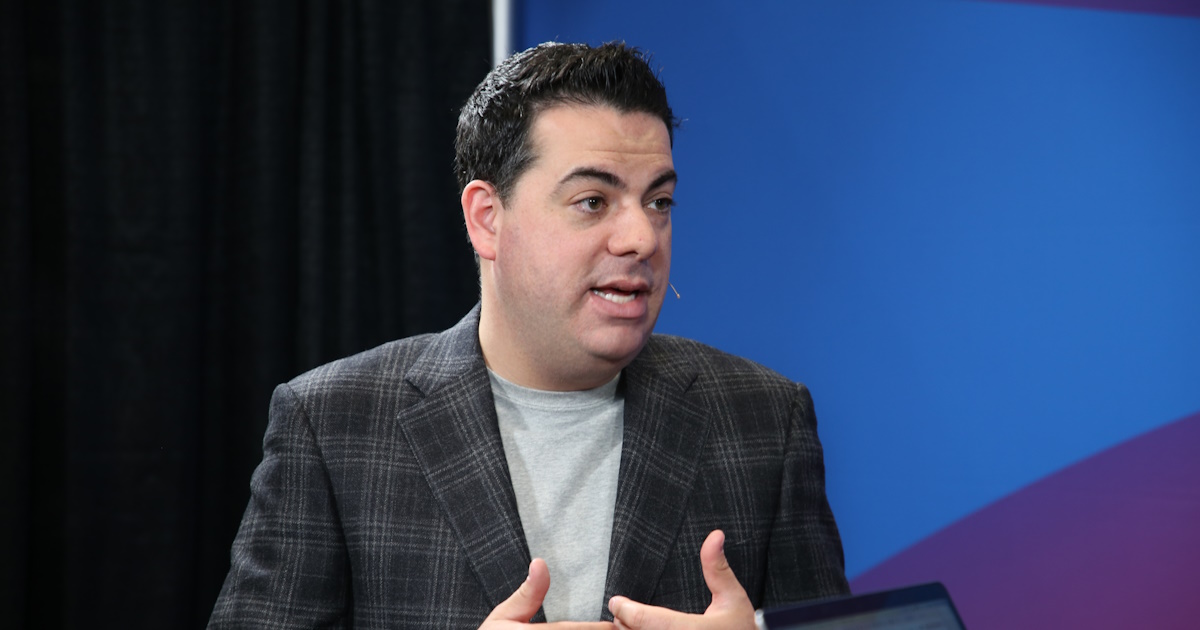
Daniel Bernard, chief business officer of CrowdStrike, joins John Furrier of SiliconANGLE Media, Inc. at the AWS Summit in New York City. The discussion highlights pivotal advancements in cloud computing, artificial intelligence, and cybersecurity, as well as the accelerating pace of innovation. Bernard's remarks focus on CrowdStrike's strategic achievements and the shifts occurring within the cybersecurity sector.
During the conversation, Bernard discusses their role at CrowdStrike, emphasizing the company’s commitment to innovating its AI Red Team services, available through the AWS Marketplace. They describe this initiative as a critical tool for businesses implementing artificial intelligence with a priority on security. Bernard notes the implications of AWS sales strategies on boosting enterprise visibility and integrating cybersecurity into more extensive technology ecosystems. Insights from theCUBE's research and analysts provide a backdrop for exploring evolving market dynamics.
Key takeaways include the significance of AI in cybersecurity and its role in expediting response times against threats, as detailed by Bernard. They emphasize the transition from traditional threat detection methods to those powered by AI, which provide a predictive edge in security operations. According to Bernard, integrating these AI tools allows companies to proactively address the rapidly advancing threat landscape. This shift, characterized as a technological transition towards supercomputing and AI for comprehensive security insights, shapes the current cybersecurity ecosystem.
Forgot Password
Almost there!
We just sent you a verification email. Please verify your account to gain access to
AWS Mid-Year Leadership Summit 2025. If you don’t think you received an email check your
spam folder.
In order to sign in, enter the email address you used to registered for the event. Once completed, you will receive an email with a verification link. Open this link to automatically sign into the site.
Register For AWS Mid-Year Leadership Summit 2025
Please fill out the information below. You will recieve an email with a verification link confirming your registration. Click the link to automatically sign into the site.
You’re almost there!
We just sent you a verification email. Please click the verification button in the email. Once your email address is verified, you will have full access to all event content for AWS Mid-Year Leadership Summit 2025.
I want my badge and interests to be visible to all attendees.
Checking this box will display your presense on the attendees list, view your profile and allow other attendees to contact you via 1-1 chat. Read the Privacy Policy. At any time, you can choose to disable this preference.
Select your Interests!
add
Upload your photo
Uploading..
OR
Connect via Twitter
Connect via Linkedin
EDIT PASSWORD
Share
Forgot Password
Almost there!
We just sent you a verification email. Please verify your account to gain access to
AWS Mid-Year Leadership Summit 2025. If you don’t think you received an email check your
spam folder.
In order to sign in, enter the email address you used to registered for the event. Once completed, you will receive an email with a verification link. Open this link to automatically sign into the site.
Sign in to gain access to AWS Mid-Year Leadership Summit 2025
Please sign in with LinkedIn to continue to AWS Mid-Year Leadership Summit 2025. Signing in with LinkedIn ensures a professional environment.
Are you sure you want to remove access rights for this user?
Details
Manage Access
email address
Community Invitation
Chris Grusz, Nick Otto & Siva Surendira | AWS Summit NYC 2025
Daniel Bernard, chief business officer of CrowdStrike, joins John Furrier of SiliconANGLE Media, Inc. at the AWS Summit in New York City. The discussion highlights pivotal advancements in cloud computing, artificial intelligence, and cybersecurity, as well as the accelerating pace of innovation. Bernard's remarks focus on CrowdStrike's strategic achievements and the shifts occurring within the cybersecurity sector.
During the conversation, Bernard discusses their role at CrowdStrike, emphasizing the company’s commitment to innovating its AI Red Team services, available through the AWS Marketplace. They describe this initiative as a critical tool for businesses implementing artificial intelligence with a priority on security. Bernard notes the implications of AWS sales strategies on boosting enterprise visibility and integrating cybersecurity into more extensive technology ecosystems. Insights from theCUBE's research and analysts provide a backdrop for exploring evolving market dynamics.
Key takeaways include the significance of AI in cybersecurity and its role in expediting response times against threats, as detailed by Bernard. They emphasize the transition from traditional threat detection methods to those powered by AI, which provide a predictive edge in security operations. According to Bernard, integrating these AI tools allows companies to proactively address the rapidly advancing threat landscape. This shift, characterized as a technological transition towards supercomputing and AI for comprehensive security insights, shapes the current cybersecurity ecosystem.
Chris Grusz, Nick Otto & Siva Surendira | AWS Summit NYC 2025
Chris Grusz
Managing Director, Technology PartnershipsAWS
Siva Surendira
CEOLyzr
Nick Otto
General ManagerIBM
In this special panel from AWS Summit NYC 2025, theCUBE’s John Furrier hosts Chris Grusz, Managing Director of Technology Partnerships for AWS, Nick Otto, General Manager at IBM, and Siva Surendira, CEO of Lyzr, to unpack the rise of agentic AI and the transformative launch of the AWS Agent and Tools Marketplace. The discussion explores how AWS, IBM and Lyzr are collaborating to shape the next generation of enterprise AI solutions through a trusted, scalable and skills-based approach.
Grusz shares exclusive insight into the agent marketplace’s rapid gr...Read more
exploreKeep Exploring
What noteworthy developments and announcements were made at AWS Summit 2025?add
What recent developments have occurred in the agent technology sector and who are the key participants involved?add
What are the key changes and developments in the ecosystem related to the agent marketplace and partnerships?add
What is the current state and evolution of partnerships and technology integration in the ecosystem related to Lyzr and its agents?add
What recent development has occurred related to the AWS marketplace and how does it compare to previous launches?add
Chris Grusz, Nick Otto & Siva Surendira | AWS Summit NYC 2025
search
>> Welcome back, everyone, to theCUBE. We are live here on the show floor of AWS Summit 2025. It feels like a little mini re:Invent as it's been only the midway halfway point to re:Invent, but so much has happened. The ecosystem is changing and of course the agent news coming out here is great. Nova model with customization. You got AgentCore, a whole nother platform. Of course Matt Garman, released earlier, Kero, which is a whole nother code development with all kinds of compliance. So you start to see the action and of course the marketplace having its own section for agent and tools, which ushers in the era of agent technology impacting how technologies consume, deploy and we think developed in the future. We've got a great panel here. A special panel configured on the pop-up CUBE. Chris Grusz, managing director for AWS. Thanks for coming on.
Chris Grusz
>> Thank you. It's always great to be on here.>> your panel.
Chris Grusz
>> Yup.>> You've got Nick from IBM .
Chris Grusz
>> Exactly, we've got some great bookends here. We've got IBM, one of our largest well-known technology partners, and we have Lyzr on the other side, one of our startups that was just participated in our agent marketplace launch that went out yesterday. So good set of partners to have a conversation today.>> Super game changer on you guys side on the agent marketplace because you're seeing for the first time age is not just having a feature in the listing, it's a whole category, which means it will be its own ecosystem. And this is really a key panel because you got partners like IBM growing with a great business model. Congratulations on all your success at IBM.>> Thank you.>> Really the best performance I think in company history, the way you guys gone with the product led growth. And of course the opportunities with models and startups at Lyzr. Guys, what is the changing ecosystem? Nick, we'll start with you because you're in the middle of it.>> Yup.>> And so it's not like yesterday's partnerships. They're evolving and accelerating in a whole other dimension where the technology and the integration is agentic and also different.
Chris Grusz
>> I think different is a very, very important word to use here because just this panel right here is a perfect example. We were just talking about, we launched some of the Lyzr agents back at IBM Think on IBM Orchestrate in our agent marketplace. You fast-forward to today, coming to life on the AWS agent marketplace. The work that we're doing to bring the IBM capabilities that have already been very active in AWS for a while, but I love this new agent flavor that we're putting on things to make it easier for clients to find the capabilities that they need. So we brought Watson Orchestrate into the new agent and tool section. We brought in Instana, we brought API Connect, really all of these tools that have been on AWS for a while, but how do I make sure that if I'm working on agents, I can find the stuff that I need as a customer? It drives a totally new type of need in terms of what are those deep technical partnerships? What are those routes to market partnerships that you have to figure out? It's a fun time.>> Steven, tell me about your company. Briefly explain what you do because I think this is a nice tie-in to this conversation.>> Lyzr is an enterprise agent platform with built-in responsibility guardrails, but what really happens on the platform is organizations are building skills. I'm talking about customer onboarding automation for banks, or an internal audit automation for banks, again are claims processing and insurance. We had a chief marketing officer of a Fortune 500 company reach out and said, "I have a ten-member marketing team and I would like to just use agents to improve the productivity of my whole team."
And fast-forward today, they have 18 marketing agents that's running on Lyzr and I mean, they're seeing 10X productivity as well. So what really our platform does is to allow organizations to build skills. And when more of these organizations build skills, we are able to take those skills to other organizations. And we work with IBM as an orchestrate partner because we are able to integrate with all the other agentic capabilities that IBM brings to the table. And AWS being our underlying infrastructure partner, we don't have to worry about uptime of->> You're exclusive with AWS?>> Yeah, from an infrastructure point of view, yeah. We don't have to worry about uptime of logs, we don't have to worry about uptime of memory. AWS takes care of that.>> Chris, this is like partner love fest here because this is the future. Because now you can have all kinds of services.
Chris Grusz
>> Yeah.>> The integration is not just peer to peer. You now have kind of an ecosystem threading together because now technology's infused in all aspects of the stack. Certainly at the infrastructure level, you guys are shining obviously on the compute, but it's the whole, I hate to say middleware, but there's a whole layer cake of action.
Chris Grusz
>> Oh, absolutely. And the multi-agent architectures are really becoming the more prevalent way on these things coming together, right? I think the first approach you saw in the industry was people were starting to build these monolithic agents that tried to do everything and the accuracy was not very good. Really, you had to be a prompt engineer to make it happen. The preferred architecture that is getting upwards of 60% better accuracy according to IEC, is these multi-agent networks where you'll have a coordinator working with multiple agents and they're all doing their individual tasks. You think about something like a loan origination system, you might have something doing that front end paperwork intake. You might have a second agent doing the credit check, a third agent doing references, and you can go right down that chain. That used to be human interaction. Now you have these virtual agents actually can effectively orchestrate that. And so that's becoming the dominant way and that's why we're really excited about the AWS marketplace launch that we just came out with yesterday for agents and tools. We launched with over 800 different partners. To put that in perspective, when we launched SaaS, we were really excited we had 50 launch partners. And we did the build for that marketplace, when we first did that about eight years ago, that was over a year in the making. We started this agent marketplace launch build effectively about four or five months ago. And so to have 800 launch partners is incredible. It's really becoming the preferred way that people want to start getting their technology and we're really excited about that.>> You know, IBM knows, I've been seeing trust network for a lot with theCUBE and how people are sourcing it. I think the trust network, how the way you guys vet the sellers also is a critical piece here. Can you guys talk about how the vetting... Because seeing a tsunami of agents coming potentially.>> Yes.
Chris Grusz
>> Yup.>> There's now a little bit of a trust factor, that might be a concern. Is it an opportunity? How should a customer think about, "Whoa, whoa, what's all going on here? How's it all wired up?">> No, I think you're spot on. It's a noisy space. I think that the 40X or 20X example you just walked through, that's with the vetting. If you were to take the vetting out of that, I mean, there's thousands and thousands and thousands of agents that would like to be a part of this exercise and be surfaced as an agent capability in the AWS agent and tool space. But as a customer, they're all overwhelmed. They're looking at all of these different people reaching out to them with lots of different capabilities. And any type of filter that we can put onto our customers, of course, making sure that the right things are surfaced to them to help solve their problems, it's all about making it easier for the customer and that's really why networks this are so important to us. Why we want to make sure the Lyzr agents are available through Watson Orchestrate. Why we want to make sure that we are playing a core role within the new AWS approach to agents. I think making that all easier for the customer is so important right now because everyone's overwhelmed.
Chris Grusz
>> Yeah, I couldn't agree more. The trust aspect is super important. And this goes back when we first launched Marketplace, every single machine image that we had in the catalog, we would first turn it on, we'd fire it up. We do just scan across it for malware before it ever got published. Because prior to our Marketplace, people were getting code off of Git repositories and it was kind of buyer beware, right? You didn't know what might be in that image. And so that goes to the DNA of how Marketplace was built is to have that trusted experience with the buyer and that fast forwards today what we're doing with our agents as well.
Chris Grusz
>> Sorry, to add to that point. We have so many agents coming out, how can enterprises choose these agents and what to go with? So the more CIOs that I speak to, I recommend them to follow the hire and fire approach that startups do. It suits perfectly for enterprises now because these are skills that you're really hiring, try them out and you'll be able to filter what really works for you. It might be a couple of agents from Lyzr, a couple of agents from LANKAR and so on. That's the best way to go about, because you're not choosing a CRM or an ERP, you're choosing skills for your organization.>> Yeah, that's a great point. Jensen Wong got into a lot of heat at CES this year when he said, "IT will be the HR department for agents." Now people freaked out on that because at that time the conversation was AI is going to replace humans. But if you think about what's happening in this conversation is agents have to be reviewed like an HR would oversee a performance review. Evaluation is a big topic that's going on. What's the task completion? These are metrics. If your job, if you don't complete the task, don't show up for work, you're fired, basically.
Chris Grusz
>> Yup. Exactly.>> To your point. So now this comes back down to, okay, I see where he is going with that. We have to have the evaluations, a lot of math involved. on your team, who does all these math proofs on AWS, there's now science involved in evaluation. It's not like there's a human checking boxes. There's real technology involved in agent evaluation prior to releasing it. I mean, what's your thoughts on all that?
Chris Grusz
>> Absolutely. The security piece is very important. If you look at, IDC has a study that shows the number of human agents compared to virtual agents today. And right now that number is about one to 80, in terms of how many systems have a human identity versus a system identity. That's predicted by 2028 to actually jump to one human to 2000.>> Oh, my goodness.
Chris Grusz
>> And so just the identity component is super important. That's one of the things we just announced today with AgentCore, Amazon AgentCore is that it's got this identity component in there. It'll work with our identity stuff, it'll work with third party components, but the ability to continually kind of interrogate, validate that agent so that it's a trusted agent in effect, is really critical to these networks that are coming in place. Because if it ever gets taken over, you need to be able to quickly identify that and remediate that. Otherwise, you're going to have a bad actor in that agentic key.>> That's a great point. That brings up another topic I want to drill into if we can, is that one, the whole vibe coding points to basically trial ballooning things or trying things and that one of the big things in the marketplace is trying. So vibe coding is great, you can prototype something, but let's make it to production. What you guys are doing with AgentCore and the tools is you can actually prompt it and actually attain some facts on is it doable? So now in the marketplace, I would envision the day where free trials turn into, "Let's run it for six months." Time to value. You're saying your time to value is fast? Let's put that in the SLA. So question, is that a vibe coding, telegraphing service levels? And two, will agents have SLAs?
Chris Grusz
>> Yeah.>> SLAs. Yeah. I'll give a practical example, right?>> He's like, "No."
Chris Grusz
>> I can take that one, too. .>> I want to give a slightly different picture of this. You mentioned about metrics and SLAs, which are fantastic when you're thinking about a marketing agent or a sales agent. One of our customers, the largest hospital chain in Netherlands, they're building a reasoning agent for ICU cardiology department on AWS, by the way. And they want the agent to collect symptoms from the customer, rather from the patient, by asking questions and diagnose what's going on. And here we are not talking about SLAs and metrics anymore. You're talking about signs, absolute signs, the chief surgeon has to validate if the agent is doing the right job. And over a period of time, they want the agents to do most of the diagnosis, but we are so early at this point in time, they're looking beyond metrics and SLAs. They are looking at can the agent reason pretty well because it's a very critical function. So yeah, it's a combination. There are scenarios where it can->> But there's functional descriptions, can we get it done? But at some point, if they're going to be evaluated, and I'm in a marketplace that is essentially consumption-based as transactions happening, I would envision that SLAs might be on there. Hey, train them didn't work as fast. I don't want the... Agent go watch that.
Chris Grusz
>> Oh, yeah. I think that's definitely kind of on the roadmap in terms of where these agents are going and that kind of behavior you're talking about where people are spinning up multiple products, evaluating, spinning out as they don't want and then moving forward. That has been a pretty common pattern and a big value add for our marketplace. And so we've seen that behavior. We saw that with omnis, we see that with SaaS, we saw it with containers. We'll even see with professional services, we'll see people go and actually search different professional services types. And so there's no reason to believe that that won't occur with these agentic solutions as well.>> Yeah. You used the word skills, which I like a lot, and you talked about this ecosystem of agents. I think the more that we slice these skills up, the more that this becomes possible to figure out what are the SLAs accomplished with doing this slice? Because as you get bigger and bigger, more challenging agents, obviously, how exactly do you manage that? What are the SLAs that go with it as we slice things? And that's where I think the tool aspect of what you guys announced yesterday is really important. And we are bringing tools there too. Instana from an observability perspective is not necessarily a huge agent. people are going to go drive, but it's how do I wrap observability around whatever the agents are doing? When we look at the API Connect offering that we brought, it's because agents need to talk to each other, need agents to work with other agents, and back to the skills that notion or the ecosystem of agents, I think the more that slicing happens, the more it's going to help our customers achieve what they want and the more we can wrap things like SLAs around it.>> Well, the good news is the ecosystem's responding, great numbers on the launch. If you compare it to SaaS, it'll probably be a step function multiplier on growth. But I think it's an evolution to your point, Nick, because task completion, if you fall out to the next progression, once you can quantify the value, it's going to get priced. So that's just the value extraction piece doesn't kick in. I guess what I'm saying is, if we're in value creation mode now, once extraction happens, quantification valuation, pricing, SLAs, they're coming.>> They are coming.
Chris Grusz
>> That's what's so exciting to me about the agent phase that we're in right now. If you rewind a year ago, two years ago, it was all about generative AI. Let's go get the right model, let's do some insightful things. Now agent's all about the activity and the value that comes from it, which gets us far closer to being able to quantify these things.
Chris Grusz
>> Yeah, absolutely. And that's like when we look at our marketplace, the marketplace that we announced yesterday is not just strictly agents. What we actually do is we break that down to five different categories. There are the strict agents like here's an agent from Accenture to do procurement transformation. But then there's agentic tools and these are tools that complement those agents. We see a number of our services partners providing services around agents. We see agent frameworks, Lyzr being a great examples. And then the final one is we still see SaaS applications that are embedding agentic functions inside their application. So if you think about just something as basic as a chat bot within a CRM system. And so we start to break down the agentic storyline into those five buckets and then provide those technologies to those customers in a very searchable format. They want to look for MCP-based agents, just A to A, you can do that .>> That's a great call out. In fact, for this event, we had a digital event. Matt Garman was the keynote. I asked him directly this question. It's kind of a trick question, but I think he had a home run. Obviously I agreed with him after I said, "Is SaaS being replaced by agentic?" And he said, "No, it's an evolution."
Chris Grusz
>> It is.>> And I agree with him on that because it's an abstraction on top of, with hooks if needed. And so that kind of points to the fact that it's not a replacement, it's just the next evolution.
Chris Grusz
>> And I 100% agree with that. I mean, if you look at when people have said that, there's a lot of popular articles out there. And the way I interpret it is that the interface is changing. Right now your interface might no longer be a web browser that you're manually in and searching for, "What's my opportunity log or who should I call or what's my financial ledger look like?" You're interfacing with that same information, but now it's via an agent. And so I think that's the transformation where people say, "Is SaaS dying?" The interface that we're interacting with might be changing->> salacious headlines just to get clicks.
Chris Grusz
>> Yeah.>> Everything has to die, but it's long-live SaaS. SaaS is dead, long-live SaaS.
Chris Grusz
>> I wouldn't say SaaS is dying.>> Yeah. It's not die.>> But SaaS has to get it really right, to be honest. Because there are frameworks like us and organizations can literally build whatever they want from a combination point of view. I won't name, but one of the largest chip manufacturing company in the world just moved to Lyzr yesterday. It's a massive deal that we won and we are trying to get them on AWS also, by the way. But long story short, they went to a specialized customer service, a customer support SaaS platform. And to your point, they didn't see the ROI. They were spending more on the software rather than spending on people. And they realized that, "Okay, I can build something on Lyzr with Amazon models and I can actually reduce the cost by 10X." Customers are already seeing the ROI from a very->> I think the key word is software, because SaaS was loaded in the cloud, put in the app store, hosted on AWS. Software as a service, service as software, as Swami says. At the end of the day, it's software. And in fact, I think the future of the marketplace, my crazy vision is that if I am paying too much for software there, I'll go to the marketplace and say, "Build me an alternative."
Chris Grusz
>> Exactly. Yeah.>> Right.>> I think agents are going to get super intelligent where they'll be able to go into the marketplace kind of a->> a little bit of the offerings, yeah.>> ... AgentCore meets Kero going, "Hey, build me that app and do it with open source software.">> Exactly.>> And guess what? The agents from Accenture or Deloitte or Caylent comes in. I mean, you'll see that.>> Yup.
Chris Grusz
>> Oh, and it's already happening. That's the other thing that we announced is that with AWS Marketplace, we're actually now incorporating our own generative AI functions into our marketplace. So the search capabilities is a good example. That search as of this week is now actually powered by a Nova model behind the scenes. So now you can do a much better natural language search in AWS Marketplace. And then if you have a very complicated question, like how do I do price optimization for my listing? We can actually handle that through that search interface. We're actually using Anthropic behind the scenes for those more complicated type of questions. So it's a multi-modal approach, but that world is ->> Basically, the marketplace is now going to replace the AWS Console.
Chris Grusz
>> I wouldn't go that far. The filters .>> Breaking news. Console is being sunsetted by-
Chris Grusz
>> No, you're going to see that kind of built into all the search capabilities.>> No, but kidding aside, I do think the interface, I mean if you look at all the top people using the marketplace from the data we are getting on theCUBE research side is that the demographics of the users are especially people who were born in the Apple Store generation, right?
Chris Grusz
>> Yup.>> I'm sure you got similar stats. They just want stuff to work. So the more this gets smarter behind the scenes, I think the use case is, show me the work, show me the stats and analytics. How's the security posture? I got RedHat in there. Okay. How that's tied in. So I think a lot of things are going to be super integrated under the covers.>> And does it work with all my other investments? The Lyzr point is spot on. We need to make sure that if I'm putting this in for this slice, does it work with everything that's tangential to that? So it's spot on.>> Well, you guys are great and I'd love to do a whole segment on this again if we had more time. I guess, Chris, summarize the game changing aspect of agents. I mean, Andy Jassy says AI is going to be the most transformative thing. He said more than cloud when I saw him last at the NYC. For him to say that, that's pretty significant, like, "Cloud, cloud, cloud." But for him to say that, that's great and then obviously Matt's a more bullish too.
Chris Grusz
>> Yeah, absolutely. I mean, I've been with AWS Marketplace now for 10 years. This is arguably the biggest launch we've ever had. So if I look back at all the different tier one feature launches that we've had in terms of launch partners, this launch dwarfs all of them. And that's usually a good validation of the adoption going out there because if the technical community, the Lyzrs and the IBMs of the world are saying, "Yes, we want to do that," it's validation that that's what customers want to do. And so we couldn't be more excited about this launch. We're excited to have both of these partners in that launch and there's just a lot of good stuff to come.>> Nick, give the IBM perspective. Because following your growth, and I'm because Arvin's been turning around for years and more of a trajectory increase. You guys are flipped your business model, 70% product, 30% services, that's changed over the past few years. So you are product-led growth, this is part of your strategy. How is the new marketplace going to impact IBM and what's your vision on that?>> Yeah, I mean I think to your point, Arvin's strategy has been really clear since he became CEO, and it's got three components, hybrid cloud, AI, and ecosystem first. I think what we're seeing in this discussion right now is really that third coming to life, which it has been for a while, but that next phase, I think agents is just exploding the need for ecosystem first to make sure that everything we're building works well with everything everyone else is building, make sure it's available where customers are consuming things and make sure it could run wherever clients want to run it. So it's an exciting time.>> Great. Great job. Close us out.>> Yeah, I think, so we are flying closer to the sun because we want customers to pay us.>> Startups. .>> Yeah, so startups. And we've been lucky, in the last 20 weeks we had 21,000 builders. We went to 2 million ARR in like 20 weeks actually. So good thing is agents skills are getting better by the day. Thanks to newer models, thanks to ecosystem, we are able to plug in with various other systems and improve. And agent skills will replace a lot of human skills, so human skills will now get augmented to next level. So we are now in the place of controlling agents, reviewing agents, let agents do the boring work.>> See, flying close to the sun, actually has a good payback.
Chris Grusz
>> If you can handle the heat.>> Slingshot effect.>> Yeah.>> Escape velocity.>> Yeah, hope exactly.>> Thanks for coming on. Gentlemen, thanks. Great to have you on. As always, Chris, congratulations on the launch and to the team.
Chris Grusz
>> Thank you.>> Appreciate you coming on. All right. The marketplace really is a sign of the integration around how agents are going to transform the business models, not just technology, but the business model innovation. Again, we're in a really transform state. I'm John Furrier, host of theCUBE. Thanks for watching.