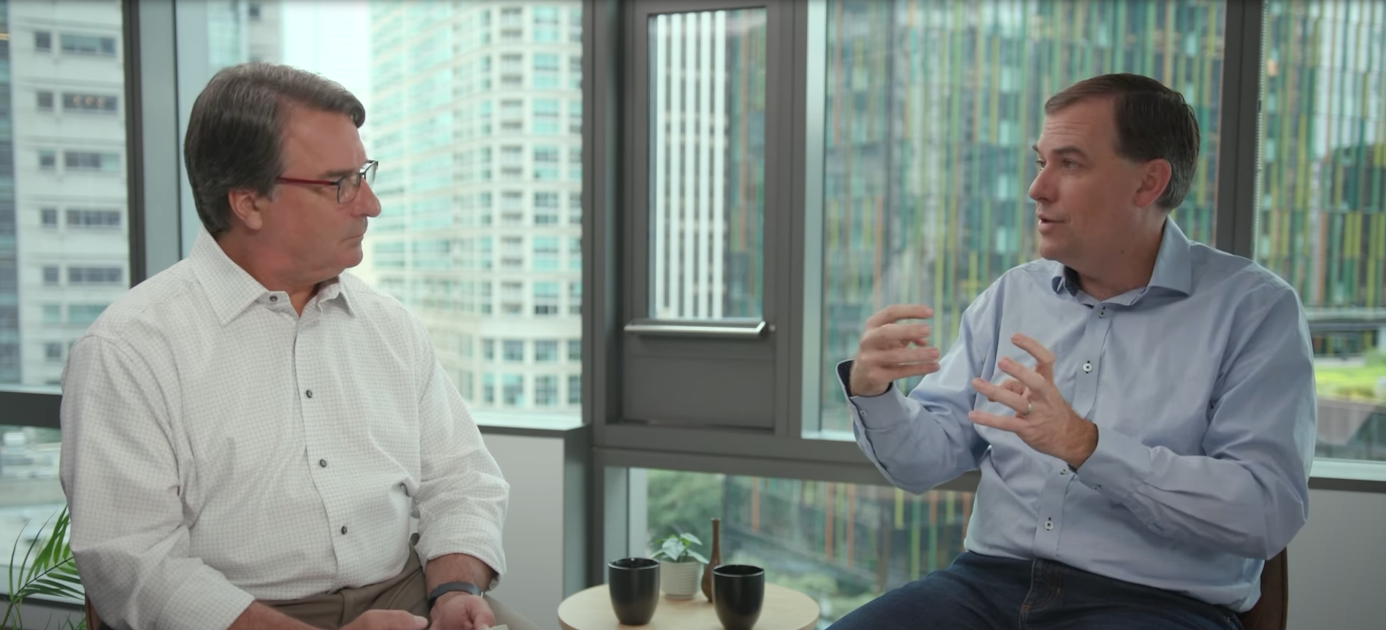
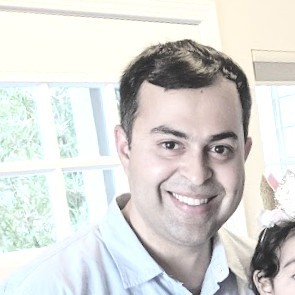
Ankur Mehrotra, director and general manager of Amazon SageMaker at Amazon Web Services (AWS), joins industry leaders at the 2025 AWS Summit in New York City, held at the Javits Center. This annual gathering brings together AWS customers, partners and practitioners to explore the latest advancements in cloud technology, with a particular focus on AI developments.
In this insightful session hosted by John Furrier of SiliconANGLE Media Inc. on theCUBE, Mehrotra shares their extensive expertise and discusses fundamental trends shaping AI and cloud computing. The conversation highlights Amazon SageMaker’s pivotal role in advancing AI, emphasizing model customization, the democratization of generative AI access, and AWS's innovative approach to customer-centric development.
Key takeaways from the conversation include Mehrotra's discussion on upcoming model customization capabilities within Amazon SageMaker AI. Mehrotra explains how these enhancements empower organizations to efficiently tailor AI models for specific business needs. The dialogue also addresses the critical role of tools and infrastructure such as SageMaker and DeepSeek-R1 in enhancing the functionality and scalability of AI applications.
Forgot Password
Almost there!
We just sent you a verification email. Please verify your account to gain access to
AWS Mid-Year Leadership Summit 2025. If you don’t think you received an email check your
spam folder.
In order to sign in, enter the email address you used to registered for the event. Once completed, you will receive an email with a verification link. Open this link to automatically sign into the site.
Register For AWS Mid-Year Leadership Summit 2025
Please fill out the information below. You will recieve an email with a verification link confirming your registration. Click the link to automatically sign into the site.
You’re almost there!
We just sent you a verification email. Please click the verification button in the email. Once your email address is verified, you will have full access to all event content for AWS Mid-Year Leadership Summit 2025.
I want my badge and interests to be visible to all attendees.
Checking this box will display your presense on the attendees list, view your profile and allow other attendees to contact you via 1-1 chat. Read the Privacy Policy. At any time, you can choose to disable this preference.
Select your Interests!
add
Upload your photo
Uploading..
OR
Connect via Twitter
Connect via Linkedin
EDIT PASSWORD
Share
Forgot Password
Almost there!
We just sent you a verification email. Please verify your account to gain access to
AWS Mid-Year Leadership Summit 2025. If you don’t think you received an email check your
spam folder.
In order to sign in, enter the email address you used to registered for the event. Once completed, you will receive an email with a verification link. Open this link to automatically sign into the site.
Sign in to gain access to AWS Mid-Year Leadership Summit 2025
Please sign in with LinkedIn to continue to AWS Mid-Year Leadership Summit 2025. Signing in with LinkedIn ensures a professional environment.
Are you sure you want to remove access rights for this user?
Details
Manage Access
email address
Community Invitation
Ankur Mehrotra, AWS | AWS Summit NYC 2025
In this AWS Mid-Year Leadership Summit interview, Rajiv Chopra, VP of Amazon Just Walk Out, joins theCUBE’s John Furrier to unpack the evolution and impact of computer vision in retail. Chopra shares how AWS has transformed the breakthrough technology behind Amazon Go into a scalable, edge-powered solution for partners across stadiums, hospitals, universities and airports. With over 250 deployments outside of Amazon properties, Just Walk Out is redefining how consumers shop by enabling fast, frictionless experiences without checkout lines.
Chopra details key benefits for retailers, from revenue growth to shrink reduction, and illustrates use cases across venues like Lumen Field, UC San Diego and Hudson News. He breaks down the technological architecture behind the scenes, including deep learning models, custom edge compute devices and cloud integration, and explains how Just Walk Out balances accuracy, performance and customer experience. The conversation also highlights the broader trend of digital-physical convergence and visual reasoning as a frontier for applied AI.
Watch to learn how AWS is turning real-world environments into intelligent, automated spaces – and how Just Walk Out is leading the charge in reimagining retail through innovation.
play_circle_outlineCustomers are innovating with AI, moving beyond experimentation to production at scale.
replyShare Clip
play_circle_outlineEnhancing Brand Experiences: Ankur Mehrotra Unveils SageMaker Updates and New Nova Model Customization Capabilities for Unique Business Applications
replyShare Clip
play_circle_outlineContinuous pre-training and reinforcement learning enhance model customization for specific tasks.
replyShare Clip
play_circle_outlineHyperPod offers scalable AI development, aiding model customization and deployment efficiency.
In this conversation at AWS Summit NYC, Ankur Mehrotra, General Manager of Amazon SageMaker AI for AWS, joins theCUBE’s John Furrier to unpack how AWS is accelerating innovation in generative and agentic AI. Mehrotra shares exclusive updates on SageMaker's expanding role in enterprise AI, including new Nova model customization capabilities, enhanced observability via SageMaker HyperPod, and strategic integrations with Bedrock AgentCore. These advances are helping customers move beyond experimentation into production-scale deployments that reflect their brand,...Read more
exploreKeep Exploring
What is the current state of customer adoption and implementation of AI technologies?add
What are the key features and announcements related to SageMaker in the context of AI model customization?add
What are the key features and enhancements introduced in the model customization capabilities for Amazon Nova on SageMaker AI?add
What is SageMaker HyperPod and what advantages does it offer for AI development?add
>> Welcome back everyone to The Cube here on the ground floor at AWS Summit in New York City, the Javits. This is the annual event that Amazon has. It's a free conference with all the hands-on practitioners. Everyone comes in town for this week. We're also doing a media week. AI meets cloud at our NYSE studio as part of the AWS activation here. Again, everyone comes in town. It's an end-user event, but they got a lot of customers here in New York. A lot of partners. It feels like re:Invent. Our next guess is Ankur Mehrotra, who will be the GM of SageMaker and SageMaker AI. Felt like we were at re:Invent last night. Ankur, great to see you.
Ankur Mehrotra
>> Good to see you too, John. Good to talk to you again.>> Thank you for coming on. I just had a little deja vu. I felt like I was at re:Invent because I'm talking about re:Invent. It feels like this event is like a little mini re:Invent because the first half of the year was highly accelerated at many levels. One, the massive transformation of AWS itself since re:Invent at the scale of the size of the company, shipping products, working with the customers, pretty impressive. You guys aren't saying it. That's my takeaway from being in Seattle in June talking about all the leadership. It's pretty impressive. I just want to give you props on that. And then the second thing, the code shipping coming out of the company, the customer activity, what they're doing is pretty phenomenal. It feels like a full year just got compressed.
Ankur Mehrotra
>> Absolutely.>> I feel like a half a year.
Ankur Mehrotra
>> I think this whole space is moving so fast. AI itself is moving so fast. There are new technologies and new advancements happening every day, and our customers are now ready to go. They're past the phase where they were only doing experiments with Gen AI and now a lot of our customers have AI-based products running in production at scale. They're also looking to innovate quickly and maximize business value. At AWS, we are focused on working backwards from the needs. And I think our teams are looking->> They're shipping a lot of product. And let's get into the SageMaker update because at re:Invent, you laid out a really good narrative. Folks watching out there, check out that video from re:Invent and it really clarified the role that SageMaker plays for the advanced user, Bedrock, really more developer. What's the news? What's the SageMaker AI story? Can you share the news you're breaking here? Swami gave the big talk and showed the custom Nova models. Obviously, SageMaker is a little under the hood advanced mode. I call advanced. That's my word, not yours, but it's where the power users go.
Ankur Mehrotra
>> Absolutely. SageMaker is a service where you come to build, train, deploy and manage, organize AI models. And it's now used by hundreds of thousands of AWS customers. The service has really grown since its inception in 2017. And we've got a number of announcements today and then there are a few capabilities that we announced last week as well.>> What's the highlights? Give the top highlights.
Ankur Mehrotra
>> First, what we are announcing today is new Nova model customization capabilities. What we are really seeing is that as access to different Gen AI models is being democratized, organizations are thinking about, "Well, how can I further differentiate myself? How can I create more unique experiences that help my business stand out?" One of the ways they're looking to do that is by taking their proprietary data and then customizing these AI models for their use case, for their brand voice, for the experience that they want to create for their users. And customizing these models with your own proprietary data is really about helping the model learn new information, learn how to perform new tasks or understand the really spirit of your brand and the life and guidelines more. And what's interesting is that models, as they're learning or you think of the model training process, models learn different skills at different phases in that learning process. In the pre-training stage, they learn more about grammar and syntax and then the post-training, they learn how to understand->> It's like going to school.
Ankur Mehrotra
>> It's like going to school. Exactly.>> They learn the ABCs, I put sentences together. Next thing you know, you're having a conversation.
Ankur Mehrotra
>> Exactly. Just like in different grades, you learn different things. The same is true for models as well. We know that there are different techniques and different tools and capabilities that customers need to be able to add specific new skills or knowledge or data to the model. What we are doing with announcing today is a comprehensive set of model customization capabilities for Amazon Nova on SageMaker AI. And this includes the ability to do continuous pre-training of Nova models to do fine-tuning both the lighter weight, lower based fine-tuning to full model fine-tuning, as well as a reinforcement learning based model customization. As you may remember, reinforcement learning more recently has become->> Human input has been great.
Ankur Mehrotra
>> And from human input, from AI model feedback as well. It's becoming->> And evaluation has become a huge discussion. I was just at the Data Direct event and Snowflake and some of the best agent work coming out is the homework you do on the front end, the work preparing the agent, evaluations, the number one thing, not just evaluation like is it a good agent? There's mathematics behind all this.
Ankur Mehrotra
>> Absolutely.>> There's a lot of science behind setting the table for this.
Ankur Mehrotra
>> Earlier, before pre-Gen AI, the models used to be classification models are regression models that are predicting numbers. And in that case, evaluating model was as simple as looking at, "Hey, what's the accuracy? What's the Delta Precision recall or MAPE metrics?" And now with the Gen AI models, because they're generating content, the dimensions of evaluation are much broader. You have to look at the friendliness of the tone of the chatbot or whether the content->> In all evolutions, even sentiment analysis, happy, sad, there's no real context in between but as you get granular.
Ankur Mehrotra
>> More granular.>> This is where you start to see the value of AI talk about this because this is where the top conversations we're having around this is that first of all, it's great to be right. We published the first power law three years ago saying there'd be a power law of models. Matt Garment was on the record three years ago saying, "No. Multiple models will rule the world. No one model." You guys got it right. We got it right in The Cube on that one. Great. Pat ourselves on the back. The issue now is it's about token management. The best people I talk to are using AI to build tool chains. Tooling is now the new thing. MCP server is obviously one example of some success, but the ability to have tooling to manage the models, so you can use your tokens for re-abstractions that matter, not waste tokens on simple things. Is this normal? Is this happening?
Ankur Mehrotra
>> I think just the->> Or am I wrong? Are you getting it right?
Ankur Mehrotra
>> I think the marriage between tools and models is best seen in the case of agentic AI where now models are going from just being able to answer questions or find information or just write code or generate content to be able to execute tasks end to end by being able to plan and reason and execute. And for that execution, these systems, these agent systems need to be able to talk to different tools. And that's where also protocols like MCP come in where you can define->> Is SageMaker going to be the place where I go to do that or is that a different level?
Ankur Mehrotra
>> I think it's going to be a mix of different services for different needs. When you are trying to customize these models to do for your own business use case using your data, I think SageMaker is the place to go. When you're trying to, let's say, build an agent using some of these models->> That's on the other side.
Ankur Mehrotra
>> And that's where for that announcing Bedrock AgentCore today.>> AgentCore will do some of the things I'm talking about.
Ankur Mehrotra
>> Exactly.>> We're handling more of the infrastructure tuning. Is that right?
Ankur Mehrotra
>> Infrastructure, more tuning of models, and then when you want to use models or build agents or workflows around them, that's where you can use Bedrock.>> The order of operations from a stack standpoint is SageMaker and infrastructure managed for training, things that are-
Ankur Mehrotra
>> Building customizing models, deploying models.>> And then the developer use cases sit inside the Bedrock layer?
Ankur Mehrotra
>> Exactly. For building Gen AI workflows or building agents. What AgentCore does, and to give you an analogy, if let's say you're building a new software application, new product, if you're building it when you're it on a cloud like AWS, you would expect certain primitives or core services to be available to you so that you can build that application quickly such as compute, storage, and things like that. And similarly, we know that in the future, there're going to be a lot of agents out there doing work, executing different types of tasks, so we've thought about, "Okay, if someone needs to build an agent, what are the right primitives, modules and tools they're going to need to be able to build an agent faster?" And that's what AgentCore solves.>> Got it. And then HyperPod is where the people are using it now. That's the big news too.
Ankur Mehrotra
>> SageMaker HyperPod is being quite successful in the sense that it's the easiest way for you to run your AI development tasks on accelerated compute. And some of our top customers have built and customized their models on HyperPod because of the flexibility and the scalability it provides, including Luma AI that have built their video models on HyperPod, WriterAI or Perplexity. They also do a lot of that AI development on HyperPod as well. Last week we announced new capabilities that worked with HyperPod. First we announced HyperPod Observability and the problem it solves is that today when you're doing AI development, let's say you're training or fine-tuning model or you're deploying a model, your tech stack is sort of a layered cake. At the top, it's the code that you've written. Then there's some ML frameworks like PyTorch. Underneath that, there's the compute layer, then there's the networking layer, then there's the hardware like GPUs. And if let's say when I'm trying to execute a task, if something is not happening as per my expectation, I don't know how to troubleshoot it because there's so many layers in the stack. This new observability capability listens to signals from across the stack and gives you a correlated and unified view at one place helping you being able to find new opportunities for optimizing your models or for troubleshooting any issues that you may be facing from days to minutes.>> Talk about the use cases. I think this is where SageMaker is... Maybe I was a little bit too aggressive to call it the power users because there's probably more than super nerds that go in there, play around.
Ankur Mehrotra
>> I would say that if you are->> How would you describe it?
Ankur Mehrotra
>> If you are doing things that change the model. Let's say if you're preparing data to build a model or you're building a new model or you're customizing a model.>> You're handling the crown jewels, basically you're the high end.
Ankur Mehrotra
>> It's your model development tool kit in some sense.>> This isn't the developer, "Hey, let's build a vibe code." No, no, no. You're tuning the system and basically you're at the system architecture.
Ankur Mehrotra
>> Exactly.>> What is the most popular use case of SageMaker AI right now? What are people gravitating to the most?
Ankur Mehrotra
>> I think the use case where we see a lot of growing adoption is in model customization. And it goes back to the earlier point that I made is that businesses are now, now that->> What problem are they solving with that? What? They have too many models or are they trying to connect them?
Ankur Mehrotra
>> The problem they're trying to solve is that now that models are easily available and a lot of customers have business just models running in production, as a next step, businesses are thinking about, "How do I differentiate myself? How do I create a more unique experience that embodies my business, my values, et cetera?">> They're putting their data to work basically.
Ankur Mehrotra
>> Exactly. How can I use my data? I can take a generic model that everybody has access to, but how can I take my data to create something unique by tweaking or customizing that model? Model customization is become->> That's where the innovation is. It's also cost efficiency too, right?
Ankur Mehrotra
>> Exactly. Absolutely.>> There's also a huge financial side.
Ankur Mehrotra
>> Absolutely. Because there may be a genetic model that may be good at 10 different things, but for your use case, you may need a model that does one thing really well. You could use different model customization techniques. For example, today in the Nova customization capabilities that we are announcing, we're launching new model distillation capabilities for Nova as well, where you can take a Nova model and create a smaller model that's good at specific tasks and that can run much more efficiently at lower cost.>> This is what I love about the market because there's no one answer now. Beauty's in the eye of the beholder as the saying goes. A customer might say, "I want this feature to be our differentiator. Do we have the capabilities to do that?" Well, agents can help you do that too. And then you say, "Okay, can we do it?" If they do it, you just double down on it. Then the next question comes up is scale. Then Bedrock can handle some of those things. That's where I was confused. The tooling around the coding of token utilization is a Bedrock issue. You're getting down into how do I put my data to work inside the AI infrastructure, which is essentially a super computer at this point, which chips go with this? Which do I use that?
Ankur Mehrotra
>> How do I take my data?>> It's like pairing wine with...
Ankur Mehrotra
>> Exactly. How do I build models that are more customized to my use.>> I got to ask a question. I got it. I put it together a little slow today. Now what about the customers? I just don't see the profile of the customer. Everyone wants to solve that problem. They sometimes don't even know what their data is. So what's the makeup of the person that should be running this? Let's just say I'm an organization, I'm in charge, who on my team is the guy or gal and are they raising their hand or are they just a pie torch person? Who's the steward that's going to go in there and be the tuner? That's a key position. Back in the old days, DBA ran everything, right?
Ankur Mehrotra
>> Sure.>> That's a bad analogy, but the point is this is a critical role.
Ankur Mehrotra
>> For sure.>> Who does it? Does this person?
Ankur Mehrotra
>> Until now, it has mostly been data scientists and ML engineers, so those who know how models work, who understand concepts of fine-tuning and models, data, et cetera.>> A strategist could be in there too. You need a business strategist. Competitive strategy.
Ankur Mehrotra
>> And now what we see is as overall software development is becoming more accessible through these white coding tools or agentic AI-based coding tools, the AI development is a subset of that. That as well we think->> It's not clear. It sounds like you don't really have a direct clarity. Today it's the engineer tuning, but it could be me strategist.
Ankur Mehrotra
>> I think that's already happening. For example, SageMaker also offers a tool called SageMaker Canvas where without writing any code, you can go and build a model or customize an existing Gen AI model with your data. And if you know your data but you've never coded and you don't want to code, you can still code your UI interface.>> You can basically vibe code it.
Ankur Mehrotra
>> Exactly. And then through white coding, now that the natural language is becoming the next AI programming language.>> Vibe coding is maybe falling out of fashion, but essentially prompting it to say, "Hey, you've got AI on your side. We'll help you figure out what that could be."
Ankur Mehrotra
>> Exactly. And also agentic AI-based software development is now ramping up quickly and we announced Kiro a few days ago. I'm sure you heard.>> Kiro's great. It's got AI to help you figure out what's doable.
Ankur Mehrotra
>> Exactly.>> They solved the evaluation problem at the developer level.
Ankur Mehrotra
>> Exactly. With agentic AI, now we have systems that use Genium models that can actually think, plan, and reason and to execute tasks and software development or model customization as we were talking about is part of that. I do think that the personas, to your point, that are doing these tasks are just going to broaden.>> I think ultimately it's building an agent model. I was just joking with the CrowdStrike guy earlier because I'm a huge Star Trek and Star Wars fan and Matrix all apply into the sci-fi. The Clone Wars is one of my favorite Star Wars where they clone the best fighter and agents you can clone, you can actually create a DNA persona to be a steward once you track in what you're tuning and react to upgrade to Nova or, "Hey, I maybe want to use Anthropic. I might want to mix and match my models, which is one of the things I liked out of the Bedrock use cases that you don't have to lean on Nova, but if you want some Nova customization, you can."
Ankur Mehrotra
>> You can. Exactly.>> What's next for you? How's business? You're the general manager, you got a P&L. How's sales?
Ankur Mehrotra
>> Business's been great. I think customers keep us busy and we are very excited.>> What's your favorite customer success story?
Ankur Mehrotra
>> Well, there are a number of them. I think I just mentioned Luma and Perplexity. I think they're doing great. Perplexity is doing amazing work with creating new Gen AI based search experience. A lot of their technology's been built on->> I love the vision of having a Bloomberg terminal open source. I love that. Especially open source. Bloomberg's proprietary by the way.
Ankur Mehrotra
>> Exactly.>> No comment. Ankur, great to see you. What's next for you? What are you doing for re:Invent? I'm not going to reveal anything, but what's your focus for the second half? You got the news, going to bring that to market. What's your focus?
Ankur Mehrotra
>> I think you're going to see more and more capabilities for helping customers move faster with doing everything with Gen AI models, from customizing them to easily being able to deploy them, optimize them, optimize their performance, and really help our customers. Now that customers are past that EOC proof of concept and experimentation stage, it's really about helping customers maximize the value that they're getting out of GNI so our investments are really going to be focused on that.>> SageMaker safe to say that's where the power users are. That's my word. You agree with that?
Ankur Mehrotra
>> Yeah. I think that has been the case, but I think I would say as the tools are getting easier to use, they're getting more inaccessible as well, even the type of developers that are now coming and->> It's funny. All those words are the same because I was mentioning you've a lot of tuning of models, customization. Also, there's customization of Bedrock too, so you're always turning knobs with agents. You're always switching things around and checking things out. That's called configuration. There's configurations.
Ankur Mehrotra
>> I think at every layer, even at the agent layer, there's going to be the need for tweaking different things. And the way we like to build our services is that you can come in and out of the box, get stuff done but if you want to then unpack and tweak different knobs to further optimize performance or customize something you can, we provide an easy path.>> And I think the customers at the end of the day get from all this really good custom software services tailored for their business. You could have a nice tailored suit if you wanted to.
Ankur Mehrotra
>> With enterprise-grade scalability, security, and privacy.>> Take those pants out a little bit. We can customize it. Ankur, thanks for coming on The Cube. Appreciate that.
Ankur Mehrotra
>> Thank you.>> We're all the action here. We're customizing our content for you. Of course, we've got our cubeai.com, check it out and all the action. This week in New York City, we are having a media week, AI and video cloud service opportunities here at the NYSC and here at the Summit for AWS. Thanks for watching.