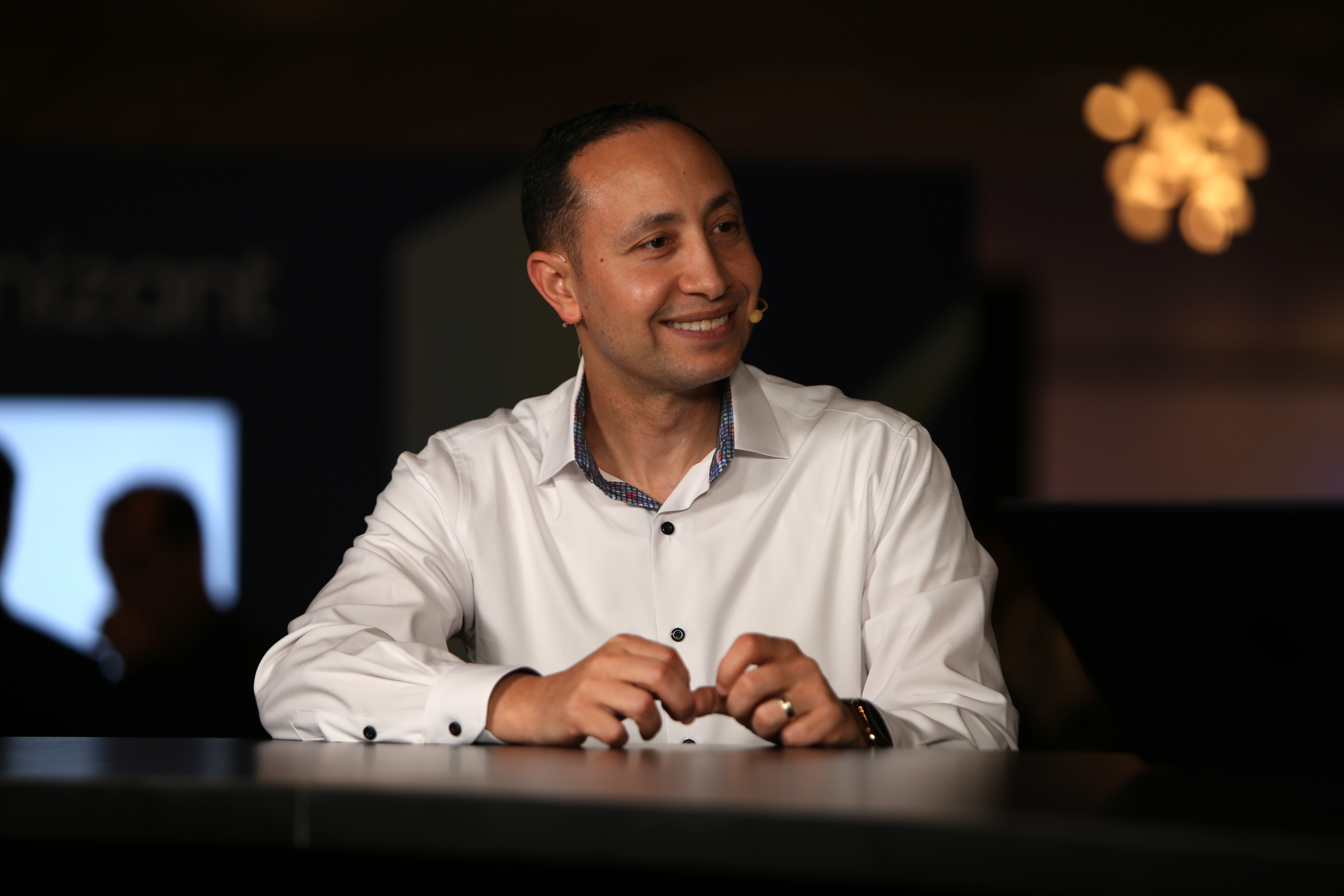
In this interview from Appian World 2026, Medhat Galal, senior vice president of engineering at Appian, joins theCUBE's Dave Vellante and co-host Alison Kosik to discuss why moving up the abstraction ladder — from raw code generation to governed process automation — is the key to operationalizing AI in the enterprise. Galal draws a sharp distinction between "vibe coding" — prompting AI to generate functional-looking applications — and the rigor required to run systems at scale, noting that AI-generated code rarely reaches production without accumulating security gaps, model drift and an unending maintenance burden. He frames Appian's platform around four human holdouts — intent, review, judgment and taste — arguing that this layer abstracts away technical toil while preserving accountability at every decision point.
The conversation also explores how Appian is embracing open architecture, including MCP support announced at the conference, without sacrificing competitive advantage. Galal explains that the platform's moat lies in the governance, security and orchestration layers built over decades — capabilities that no open integration point will expose or erode. He details how AI is reshaping his engineering organization internally, enabling product managers to rapidly prototype ideas at near-zero cost and freeing engineers to focus on higher-order work. From the principle that AI governance must keep humans accountable for every consequential decision to the belief that AI will not replace engineers but will replace those who fail to adapt, Galal provides a clear-eyed roadmap for balancing rapid innovation with the operational control that enterprise deployments demand.
Forgot Password
Almost there!
We just sent you a verification email. Please verify your account to gain access to
Appian World 2026. If you don’t think you received an email check your
spam folder.
In order to sign in, enter the email address you used to registered for the event. Once completed, you will receive an email with a verification link. Open the link to automatically sign into the site.
Register for Appian World 2026
Please fill out the information below. You will receive an email with a verification link confirming your registration. Click the link to automatically sign into the site.
You’re almost there!
We just sent you a verification email. Please click the verification button in the email. Once your email address is verified, you will have full access to all event content for Appian World 2026.
I want my badge and interests to be visible to all attendees.
Checking this box will display your presense on the attendees list, view your profile and allow other attendees to contact you via 1-1 chat. Read the Privacy Policy. At any time, you can choose to disable this preference.
Select your Interests!
add
Upload your photo
Uploading..
OR
Connect via Twitter
Connect via Linkedin
EDIT PASSWORD
Share
Forgot Password
Almost there!
We just sent you a verification email. Please verify your account to gain access to
Appian World 2026. If you don’t think you received an email check your
spam folder.
In order to sign in, enter the email address you used to registered for the event. Once completed, you will receive an email with a verification link. Open the link to automatically sign into the site.
Sign in to gain access to Appian World 2026
Please sign in with LinkedIn to continue to Appian World 2026. Signing in with LinkedIn ensures a professional environment.
Are you sure you want to remove access rights for this user?
Details
Manage Access
email address
Community Invitation
Medhat Galal, Appian
Medhat Galal of Appian joins Alison Kosik of theCUBE Research and Dave Vellante of theCUBE Research to examine how artificial intelligence shapes enterprise application development at Appian World 2026. Galal discusses the limits of vibe coding, the value of moving up the abstraction ladder and how Appian leverages process and data foundations to integrate guarded agent-based AI into real-world workflows. They highlight the importance of governance and orchestration for production-grade systems.
Galal emphasizes the persistent gap between prototype AI-generated code and secure and reliable production systems, and the necessity of human intent, review, judgment and taste. They outline Appian's focus on governance, data-driven orchestration, open integrations and agent-to-agent protocols as practical measures to reduce technical debt while preserving control and enterprise-grade security. The hosts reinforce these points and explore implications for low-code process automation and enterprise AI adoption.
In this interview from Appian World 2026, Medhat Galal, senior vice president of engineering at Appian, joins theCUBE's Dave Vellante and co-host Alison Kosik to discuss why moving up the abstraction ladder — from raw code generation to governed process automation — is the key to operationalizing AI in the enterprise. Galal draws a sharp distinction between "vibe coding" — prompting AI to generate functional-looking applications — and the rigor required to run systems at scale, noting that AI-generated code rarely reaches production without accumulating secur...Read more
>> Welcome back to Appian World 26. We are streaming live in Orlando. I'm Alison Kosik alongside Dave Vellante and things are hopping here at the conference.
Dave Vellante
>> Yeah, they are. We're going to lose our voice by day three.
Alison Kosik
>> I know. We're screaming. So if it sounds loud, just bear with us. I want to bring in our next guest, Medhat Galal. He's the Senior Vice President of Engineering at Appian. Welcome to theCUBE.
Medhat Galal
>> Thank you for having me.
Alison Kosik
>> Let's start talking about the excitement of AI, AI generating code, and your focus on enterprise grade systems. What's the gap between code creation and building something that actually runs the business?
Medhat Galal
>> Safety and reliability and the results that could be achieved with AI seems to still be elusive. So we build systems that are designed to be reliable and help businesses achieve those results. That's our entire focus. In everything that we build, we think about those two things.
Dave Vellante
>> So you'll love this. I just went to Grok and I said, "Grok, vibe code me a clone of Appian software." And it wrote all this Python stuff.
Medhat Galal
>> Yep.
Dave Vellante
>> And I said, "Will this work?" It said, "No, not even close."
Medhat Galal
>> No, I love that. There's a huge distance. I mean, vibe coding is extremely impressive. I tinker with it and as a recovering vibe coder myself-
Alison Kosik
>> First, describe what vibe coding is.
Medhat Galal
>> Well, vibe coding is the essential element of just chatting with AI to build an application, to build a website, to build a small widget. iPhone, you can do really amazing things, but just chatting with AI without having the technical grounding or expertise to do it. But that's just the issue.
Dave Vellante
>> I'm feeling it. I'm feeling it. That's what vibe coding is.
Medhat Galal
>> That's right. It's a lot of vibes.
Dave Vellante
>> And then it writes the code. Look, it's amazing how much code it writes.
Medhat Galal
>> Yeah, I know. I know.
Dave Vellante
>> Does it work? No, of course, it doesn't work.
Medhat Galal
>> Even an expert sometimes can be deceived into thinking that that code alone is sufficient to build an enterprise grade application.
Dave Vellante
>> Now, at the same time, if it's used properly, it's going to be incredibly powerful for a developer who knows what they're doing.
Medhat Galal
>> In the hands of the right professionals, in the hands and the guardrails of the right software, it's a very, very powerful tool. I had a focus in my master's thesis in AI, and I couldn't have told you 20 years ago, we would be here today. So it's incredibly enlightening to see that we can do this, but it has to be in the hands of the right people that they understand, what could it do and what are the limitations?
Dave Vellante
>> Well, that's interesting. You got your master's in...
Medhat Galal
>> Computer science. AI, focus on AI.
Dave Vellante
>> Which was kind of during the AI winter, right?
Medhat Galal
>> It was.
Dave Vellante
>> Right?
Medhat Galal
>> Yeah.
Dave Vellante
>> I mean, so that was fairly prescient of you. So you must be super excited to see what's happening now.
Medhat Galal
>> Very. Tell you the truth, it's not like I had the foresight. I just was a big game geek back in the day, Age of Empires. It allowed you to build AI agents like, "Oh, that sounds cool. I'm going to do that." Not out of some foresight.
Dave Vellante
>> So when the papers came out on transformers and the whole diffusion model thing, were you paying attention or were you too heads down? I mean, what'd you think about that? You were like, "Wow, finally it's here?"
Medhat Galal
>> I thought it was a good peek into the future, but even back in 2016 and 2018 era when those technologies and those papers came out, I don't think anybody would have anticipated what happened in 2022 and beyond. It was certainly starting to look like it could be very beneficial for business, for commerce sites, recommender systems. It was great. But I don't think anybody saw where we are.
Alison Kosik
>> Could we talk about the hype versus the reality? Organizations, they're using Claude to generate apps. Elon is buying Cursor. What are the real benefits and where does this approach break down in enterprise environments?
Medhat Galal
>> The hype versus reality, I mean, Gartner and Forrester and MIT have all shown research just in 2025 and 2026 that vibe coding and/or even spec driven development, another more constrained way to think about software design, has not yielded any reasonable or tangible results in sophisticated software for the enterprise. They never go to production. It looks great and then they run into one problem after the other. If they can make it functional, they can't make it secure. When they make it secure and the model changes underneath you, then it changes all over again and then you're back in maintenance mode. So you end up being a big maintainer of AI systems instead of building the application.
Dave Vellante
>> So I took us off-topic with my Grok joke, but I'm glad you responded to that. But the whole theme here is moving up the abstraction ladder, which is really interesting. We were talking to Matt earlier just about Appian's role. So what does that mean? I mean, our whole industry is abstraction layers from virtualization, cloud, and now AI is allowing us to do things much more simply and much more powerfully. What do you guys mean when you talk about moving up the abstraction ladder?
Medhat Galal
>> It's a great question. I love that you asked that question. There's a large distance from compute, just compute and storage, all the way to just writing Java code or Python code that you got from Grok. Now, you still have to put that code together to deal with data, to deal with authentication or authorization that users can't take their identities. To make two systems talk together, integration is another abstraction layer above them. Then you have to go into orchestration and business rules. How do you codify these? Then you have to talk about the user interface. How are you going to build those? All of these are different abstraction layers. In most cases, you can do this with high code that'll take you a very long time and you'll make a lot of mistakes along the way. Now, Appian has guard-railed that entire process from having the intent and the ability to review. I tend to think these are like the four holdouts for human beings intent, review, judgment, and taste. Appian is all about those four stages. You can declare the intent, whether it's a UI, a business decision, a workflow, or a data model. We simplify it so that a normal mere mortal can reason about it from first principles very easily. You can review it to understand it as opposed to looking at a `long list of Python code that doesn't make any sense. You get to make the decision, you reserve the right as a human being responsible to make a decision. And then you get to add your taste. Organization A is different than B. We live at that layer because everything below that is just toiled.
Dave Vellante
>> And that conversational capability is relatively new, but the foundation was there.
Medhat Galal
>> That's correct.
Dave Vellante
>> I wonder if you could describe how you built upon that foundation. What did that take? What was the engineering effort to do that?
Medhat Galal
>> So Appian has had its greatest foundations in process and data. The two strongest pillars that any organization needs. Everything you do inside our organization, including two people just trying to solve a simple problem, is a process if they have to do it more than once. Now, in order to do that, you need data. So Appian has catered for the last couple of decades. How do we make it easier for people to describe a process visually? They can see it, they can understand it, they can change it, they can describe it, no problem. And then data became the next blocker. For that process to work, you need to see data in motion. So we gave them that data capability. All we did over the last few years is, well, since process can control bots, orchestrate human tasks, orchestrate UI that you get to see, why don't we put AI in agents just in the small box we need it to be? Not we, but the organization. And that's what we did.
Dave Vellante
>> Okay. So you didn't have to re-architect the system for AI, but you had to build in, I don't know, they call them harnesses and scaffolding. Can you describe what that's like?
Medhat Galal
>> We didn't have to build the core pillars that have been known to be Appian's strong suit in the market for the last couple of decades. We built the AI layer that allow those parts of the system to interact fluidly and fluently with that system, to provide the guardrails, the constraints. You often hear about AI rules and skills. We made it such a fluid system to guardrail AI in the constraint system that we built. So inside of a process, if you have a little box that's supposed to do something, what are the inputs and outputs you need to manage for AI to do the job just in that moment, then no more? So we had to build that scaffolding.
Alison Kosik
>> There are some concerns that AI can become a rabbit hole, accelerating development, but also accelerating technical debt and IT sprawl. What are your thoughts about that?
Medhat Galal
>> I have a lot of strong thoughts about this because, as I mentioned earlier, as a recovering vibe coder, actually, my wife is like, "Are you going to stop coding on AI two o'clock in the morning?" It's a very challenging endeavor. I'm a software engineer by trade, even though I manage a large contingent of Appian engineers, and it's one of the hardest things I had to do. It was very exciting at the very beginning, just seeing something pop on screen very quickly, but I found myself spending more time correcting the mistakes of AI once I got a stable system. To get started, it's amazing. Screen splash and things happen, but then the nuance of how rigorous the system needs to be started to have this long tail of problems that I'm spending more time just correcting it all the time. These are the kind of things I wanted to prevent when we built a process and a data system, because I wanted organizations to just don't deal with the data problems. Let me just deal with it. One last statement I want to make, one of my favorite T-shirts Appian has ever had is, "I write code so you don't have to," because it's a really hard job. AI is just as hard.
Dave Vellante
>> So you guys are supporting MCP. Things happening so fast. You saw the open moment. I was reading about Project Conway the other day. I don't know if you're familiar with that.
Medhat Galal
>> Yeah.
Dave Vellante
>> Quite interesting. Anthropic, grabbing its little pieces. What are you doing with MCP? How does that help? Where do you see it going in terms of your architecture?
Medhat Galal
>> Again, it may sound cliche, but since I joined the company 21 years ago, Appian has lived on certain specific principles and ethics of how to build software to benefit our customers. These principles actually make their way into the architecture. And I promise I have a point to make. Everything we build in Appian is designed to be a good enterprise citizen. I never want to create a walled garden. You want to bring a different system for authentication. I'll allow you to talk to it with ease, input and output. No problem. You want to integrate with a different system, I'll do that. You want to integrate with a different data system, we do that. We gave AI the same treatment. You want MCPs for your agents to talk to Appian capabilities? We exposed it. That's an announcement we're making this conference. You want other agents to talk to Appian agents. We're going to use agent-to-agent protocol to do the same thing. It's all about openness. It's all about choice.
Dave Vellante
>> Okay. Well, the obvious VC follow up question is, okay, but how do you protect your IP? What's your moat? What's your value add that you protect? Which, by the way, the entries and exits into your system have to be about choice and openness. But then tell us about how you create that moat, that unique advantage for Appian.
Medhat Galal
>> Our unique advantage has been in the data and a process system and a governance and security that we afford to AI that is very hard to replicate. Being open and being protected at the same time are not at odds with each other. So that entire layer of governance, that entire layer of security, that entire layer of orchestration and data is something no one will be able to replicate easily at all. And that's where my agents run. But I will let you interact with my agents and those agents will use those app-ing capabilities in my platform.
Dave Vellante
>> So as we move up the abstraction ladder, you guys talk about orchestration.
Medhat Galal
>> Right.
Dave Vellante
>> That's the new control plane for your customers? Is that how they should be thinking about it?
Medhat Galal
>> That's how they should be thinking about. Ultimately, how humans interact with systems comes down to the few important touch points. Before, document extraction required a lot of humans to open a PDF document, then open a different screen, and then copy and paste, copy and paste, swivel chair. And AI can do that, but the decisioning process of the information on that page, we'll reserve that to the human. So Appian abstracts the toil away without removing the responsibility. I often say, "You can't put AI in jail." So we give you that control, we give you that governance to be accountable and responsible while AI takes away the things that prevented you from doing business as fast as you want to.
Dave Vellante
>> As a head of engineering, how has AI affected your team? How are you using AI internally to write code, to test code, to ideate? How are you using it? And how has it changed over the last couple of years?
Medhat Galal
>> Greatly, and to varying degrees. So the early adopters were vibe coders. So I was like, "Oh my God, I can build a screen. I don't have to talk to engineering anymore." Product manager specifically is like, "Oh, I can build the whole thing." And then they come to grips with the reality of what I found out four months later. But it helped in that regard because they can figure out how to build the right product, which is an immense responsibility for product managers. We love the fact that our product managers can now just think about an idea and immediately, without having to coordinate with capacity or people, I can just build it. It's not important. It's just throw away a prototype. I can just visualize the right product I need to build for my customers. They can do 15 prototypes in the same window that it would have taken us, I don't know, two months. For our typical engineers, things that took them time, industrialized code reviews, industrialized quality assurance, we can bring AI in that moment to help them do the things like writing the Python code, which they can read and the small or in the large. It allowed our engineers to experiment with areas of infrastructure that it's not really that important for them to do, but AI can do really, really well. So it changed all of these. It's also changing the culture.
Dave Vellante
>> So does the PRD become a vibe coded prototype?
Medhat Galal
>> Up to a point. Until you have to ship it. Then we have to put our engineering weight and our rigor into it.
Dave Vellante
>> But the requirements ...
Medhat Galal
>> 100%.
Dave Vellante
>> ... now becomes...
Medhat Galal
>> It becomes a source of truth.
Dave Vellante
>> ... a demo, essentially. And then the product manager can say, "I don't like this workflow or the way it works. So let me just change this, change that."
Medhat Galal
>> Just throw it out. It became cheap to think about an idea as opposed to let's spend meetings and time thinking about which ideas should we carry forward, because the expense is so great. With the ability to build prototypes very quickly, the cost of software nearly became zero. You've just enabled a whole bunch of people that otherwise have to say, "I got 100 ideas, I got to pick one." Now you can pick all 100.
Dave Vellante
>> How does it or does it? And if so, how does it change the type of technical talent that you want on your team? Are you looking for different skill sets? Are you asking your team to rethink what they get good at? How do you think about that?
Medhat Galal
>> So the latter, I feel I have a responsibility as a manager of managers of people. I got to protect them from what's to come because I feel like it's a huge wave. Actually, Matt, our CEO, said that phrase eloquently. "When a typhoon comes, you want to be behind the wave, not on the shore." So I am working with my engineers to prepare them in that regard. He's like, "Don't think about what your job is. Just think about what it could possibly be and adapt. Because AI is not going to replace humans. Still have to have taste. It's going to replace the person who's not using it effectively." So there's a bit of a mindset change and a lot of risk taking to do experimentation. I'm just encouraging that just there are no wrong here. Since we're not shipping that software, just keep iterating. You'll find the next best thing to do. But don't think about your role today. "I'm a software engineer. That's all I do." It's okay to have a product mindset as an engineer. Do that. A product manager, it's okay to play a little bit of an engineer. Do that. The lines are blurred and that's what I'm encouraging.
Dave Vellante
>> I think that's the right way to look at it, Alison. AI is not going to replace your job, but somebody who knows how to use AI is the one who's going to replace you.
Medhat Galal
>> Right on point.
Alison Kosik
>> Right. Thanks so much for coming on theCUBE and talking about this great topic.
Medhat Galal
>> It was a pleasure.
Alison Kosik
>> We appreciate it.
Dave Vellante
>> Yeah. Great kickoff for CUBE After Dark, Alison. It was great working with you tonight.
Medhat Galal
>> Thank you.
Alison Kosik
>> Same here.
Dave Vellante
>> Look forward to the next few days.
Medhat Galal
>> Thank you.
Alison Kosik
>> Absolutely. And it's really getting started here. You've been watching theCUBE, the leader in live technology coverage. Thanks for watching.









 Alison Kosik
 Dave Vellante