In this interview from Appian World 2026, Marc Wilson, chief executive ambassador of Appian, joins theCUBE's Dave Vellante and co-host Alison Kosik to discuss why enterprises racing to adopt AI risk missing the deeper strategic opportunity: closing the white space between departmental processes. Wilson draws on Appian's founding in 1999 amid dot-com exuberance to frame a cautionary parallel to today's AI cycle. He argues that the rush toward tactical AI gains mirrors past hype with RPA and IoT — technologies layered onto broken processes rather than fixing them. The real strategic challenge, he contends, is the accumulated white space between departments: the unmanaged handoffs and disconnected systems that prevent organizations from running truly end-to-end, mission-critical processes.
The conversation also explores how Wilson positions AI as a complementary technology within a broader process orchestration layer — one that accelerates document ingestion, improves classification and expedites task routing, but cannot on its own reveal where collaboration breaks down across an organization. Real-world examples bring the argument to life: an Asia Pacific insurer using Appian's document center to streamline broker and underwriting workflows, realizing tens of millions of dollars in revenue gains and higher customer retention in just the first phase; and a large hospital system that redeployed registered nurses from administrative intake duties to direct patient care by automating front-door processes. Wilson also notes that many customers are now entering a second or third round of Appian deployments, folding AI in as a targeted accelerant rather than a wholesale replacement. From the convergence of bottom-up demand and top-down strategic pressure to the long-term vision of a digital twin that anticipates rather than merely records enterprise state, Wilson makes the case that process orchestration — not AI alone — is the essential foundation for measurable business outcomes.
Forgot Password
Almost there!
We just sent you a verification email. Please verify your account to gain access to
Appian World 2026. If you don’t think you received an email check your
spam folder.
In order to sign in, enter the email address you used to registered for the event. Once completed, you will receive an email with a verification link. Open the link to automatically sign into the site.
Register for Appian World 2026
Please fill out the information below. You will receive an email with a verification link confirming your registration. Click the link to automatically sign into the site.
You’re almost there!
We just sent you a verification email. Please click the verification button in the email. Once your email address is verified, you will have full access to all event content for Appian World 2026.
I want my badge and interests to be visible to all attendees.
Checking this box will display your presense on the attendees list, view your profile and allow other attendees to contact you via 1-1 chat. Read the Privacy Policy. At any time, you can choose to disable this preference.
Select your Interests!
add
Upload your photo
Uploading..
OR
Connect via Twitter
Connect via Linkedin
EDIT PASSWORD
Share
Forgot Password
Almost there!
We just sent you a verification email. Please verify your account to gain access to
Appian World 2026. If you don’t think you received an email check your
spam folder.
In order to sign in, enter the email address you used to registered for the event. Once completed, you will receive an email with a verification link. Open the link to automatically sign into the site.
Sign in to gain access to Appian World 2026
Please sign in with LinkedIn to continue to Appian World 2026. Signing in with LinkedIn ensures a professional environment.
Are you sure you want to remove access rights for this user?
Details
Manage Access
email address
Community Invitation
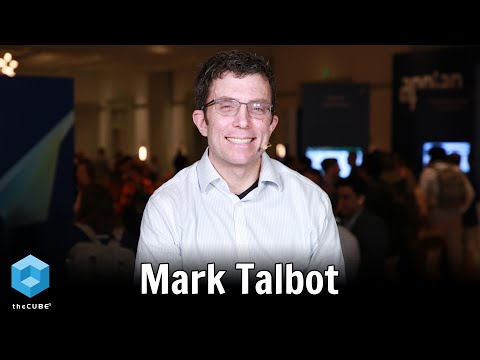
Marc Wilson, Appian
Dave Vellante and Alison Kosik sit down with Marc Wilson, Chief Executive Ambassador & Founder, Appian, at Appian World 2026 at the JW Marriott Orlando, Grande Lakes in Orlando, FL.
In this interview from Appian World 2026, Marc Wilson, chief executive ambassador of Appian, joins theCUBE's Dave Vellante and co-host Alison Kosik to discuss why enterprises racing to adopt AI risk missing the deeper strategic opportunity: closing the white space between departmental processes. Wilson draws on Appian's founding in 1999 amid dot-com exuberance to frame a cautionary parallel to today's AI cycle. He argues that the rush toward tactical AI gains mirrors past hype with RPA and IoT — technologies layered onto broken processes rather than fixing th...Read more
>> Welcome back to Appian World '26. We're streaming live in Orlando. I'm Alison Kosik alongside Dave Vellante, and we're about to talk about how the real value in AI isn't just in the tools, it's how well those tools are connected with customers as well.
Dave Vellante
>> Yeah. Everybody wants to just jump in and start playing with AI and doing things, but we want to step back and talk a little strategy.
Alison Kosik
>> Let's do that with Marc Wilson, the Chief Executive Ambassador and Founder of Appian. Welcome to theCUBE.
Marc Wilson
>> Thank you. Glad to be here.
Alison Kosik
>> So I want to talk about the founder part of your title here for a minute, if you don't mind. What need did you see in the world that led you to create Appian?
Marc Wilson
>> Well, the four of us started Appian in 1999. And if you go back in time, 1999 was a special year. It was a year when we were convinced as an economy that we'd never have a recession again, that the dotcom bubble was still growing in its large grandeur. And the idea was you could take some money, sell paperclips on the internet, go public in three weeks and retire. So we started the company in the midst of that irrational exuberance. But we decided to do some things a little bit differently. We wanted to see first and foremost, could we work together? We knew ultimately we wanted to get into the software space. So for us, it was a question of, what software area could we get into, but first and foremost, could we work together? And over the course of the next two to three years, we found that we could work together, still on speaking terms with my fellow three founders, all still here at Appian. And we were able to find some areas of the market that we thought were sorely... There were big gaps, and that's how we got to where we are today.
Alison Kosik
>> And what were those big gaps?
Marc Wilson
>> Well, it started out really with the idea that people were starving for an opportunity to get access to data and information and to collaborate with one another. And the first products that we built were around that notion. The idea that we could do mass collaboration at scale amongst people with documents, with information. And then ultimately that gave way to the vision that the path that we started down around process being the key.
Dave Vellante
>> And you remember well that the buzzword phrase back then was paradigm shift when you started the company?
Marc Wilson
>> Uh-huh.
Dave Vellante
>> And we all kind of expected it. We sort of bought into it. I'm not sure we went to a paradigm shift until we got cloud and mobile and social and big data. I don't know if you agree with that, but are we, in your mind, on the precipice of another paradigm shift, or is that overstated?
Marc Wilson
>> I think there's no question we're on the precipice of a paradigm shift because I think people see the opportunity and the capabilities that AI can bring. It's fundamentally different than many things that we've seen. However, I do think that there are a lot of warning signs that come with that as well. I feel that we've seen aspects of the same rodeo again, and again, and again. And every three or four or five years, we see it come up in different ways, shape, and forms. And AI is no different. Sometimes people race ahead. And I think we're in a little bit of that mode of racing ahead right now, and need to be a little bit more sober with our thoughts about the value that we're getting out of AI.
Alison Kosik
>> I was going to ask, is that the only warning sign that you see or are there others?
Marc Wilson
>> Oh, I think there are others, too. I mean, it's... Again, every warning sign that I see also has its positive sides to it, too. So we've seen a lot of... Just like we're seeing with AI right now, everybody feels that they can go off and build everything that they possibly could want just simply by speaking it out loud and it will come into existence, which is great. I mean, from that kind of approach comes an enormous amount of innovation. But we've been here before, too. Seven, eight years ago was the beginning of the robotic process automation phase where everyone thought that would be the solution to everything. What it turned into really was a collection of band-aids on a lot of bad processes. We saw that a few years before that with IoT would revolutionize everything because we'd be flooded with data and we'd know everything. Cloud had aspects of that as well. And we've seen it in different tools and different approaches where a lot of power was put into individual's hands and AI is like that today. So there are warning signs there, but again, there are a lot of positives with that, too.
Dave Vellante
>> So the organizational paradigm is you have departments and a lot of times as hierarchies, increasingly there's flatter organizations, but nonetheless, you've still got departments. Those departments each have their own data mart, data warehouse, BI tools, whatever it is, but they've got their own data, and we've built systems around that, processes around that. Do you see that dissolving, and should that be sort of a North Star part of the strategy?
Marc Wilson
>> Well, I think that not only do each one of those departments have their own data, they have their own processes too. And I would take it a step further and say that the thing that has developed over the technology span that we've seen in the last 30 years has been the just massive, massive growth in white space that exists between different departments, different people within departments and different organizations. And I think that fundamentally is the problem that almost every organization faces when they look at ways that they can improve the efficiency and effectiveness of what they do and do for me is a code word for process. So I think that that needs to be slain, that dragon needs to be slain. My concern is that the exuberance that we've embraced AI with has focused primarily on the tactical benefits that AI will give us. So it's again, getting down to the individual level, the personal level, personal productivity level, or even the department level, and it's not focused on those white space problems. It's not focused on what I think is the strategic problem that most organizations face, and that is, how do they manage their end-to-end processes, their mission-critical processes? How do I get a product that I'm selling from the thought and the whiteboard stage ultimately to where I'm selling it to a customer? There's an awful lot of systems in the middle. And if you were going to do that based on the last 30 years, an awful lot of white space. And right now a lot of our focus isn't on fixing that white space, but Appian thinks that we can focus on that white space.
Dave Vellante
>> Well, you're thinking like a systems thinker.
Marc Wilson
>> Yeah.
Dave Vellante
>> Okay. So let me put out a North Star, see if it resonates, and then we can work backwards from that. So the North Star that we like to envision is this digital representation of an enterprise, a digital twin, if you will where you're not speaking in things that databases understand, rows and columns and strings, you're talking about people, places, things, and processes in essentially a real-time state of the enterprise. And you're able to respond, anticipate. We're pretty good at what happened. We're okay at why it happened. We're really bad at what's going to happen and what should we do next. And that's the sort of strategic vision that we have for the promise of AI, which data warehouses didn't live up to, data marts, data warehouses, big data, cloud, haven't lived up to that. Is that North Star viable? Is there a better target that we should be shooting at? What are your thoughts?
Marc Wilson
>> Well, I think that North Star has to be there as the North Star for organizations because that is, to use a different cliche, the holy grail of how you improve things. And I got to tell you, I don't think AI is uniquely situated to solve that problem in any way, shape or form. In fact, I think it's maybe contributing with the enthusiasm that's out there to deflecting from that
Dave Vellante
>> It's a blocker, oh, no.
Marc Wilson
>> But when you think about AI, I think it's important to distinguish two groups of AI capabilities when we get into this question. There is an ongoing and growing market for AI capabilities in the construction of applications, the speed with which things get developed. And that's happening and that's great. That is not necessarily something that's focused on that white space problem. That's just, how can I build something faster? The AI that focuses or will get to more of the white space problem or the strategic problem is, how can I make my processes faster? How can I make human performance or the end state deliverable more efficient and more effective? That's more of the North Star point, the direction that AI is pointing at. But I view AI in that context as a complimentary technology, not as the technology. AI is going to fit in when I want to speed the ingestion of a document, when I want to improve the classification of something, when I want to expedite the routing of a particular task to the next person in the process. It's not going to help me realize that, "Well, John has something now, Sally's going to get it next and John and Sally aren't talking to one another." How do I bridge that gap, or do I even know that that gap exists? And that's where that sort of structure, that orchestration layer to tie things together, to give a top down view of where things are is really necessary.
Dave Vellante
>> So we heard this morning in the keynote that, I think it was from the Matt that was talking about the Harvard Business Review study that we've seen the same thing in our data, in our research, very few organizations are focused on revenue generating activities from AI. It seems like that should be part of the strategic plan. How can I leverage intelligence that's now becoming plentiful to change my business, to maybe rethink the economics of my business? We think that software like marginal economics should translate to virtually all businesses in some senses if they rethink their business. Are you having those types of conversations with customers?
Marc Wilson
>> Oh, daily I'm having those conversations. And in fact, I think they go hand-in-hand with the white space point. One of our customers in the Asia Pacific region, one of the larger insurers in that space has leveraged Appian's doc center capability in order to more rapidly process broker documents that are coming through processes. And it's part of their overall initiative to get rid of the white space in the broker aspects and in the underwriting aspects of their business. And not only were they able to improve the efficiency and the flow of getting customers onboarded, they were able to see positive revenue implications for moving faster, higher retention of customers, the ability to billing them faster through processes on the order of tens of millions of dollars, just really in the first phase of the transformation effort that they started. And I think that, as Matt mentioned this morning, is an underappreciated aspect of what AI can and should do. People are obviously focused on cost reduction capabilities, but revenue acclimation or being able to get more revenue out of what you're working on by doing things faster, more efficiently, more effective, increasing customer satisfaction, all of these are the kinds of conversations that we're having today.
Dave Vellante
>> I like to frame it, and a lot of times people don't like this, but I like to frame it as scaling with less labor or even sometimes scaling without labor. That doesn't mean we're going to need less jobs necessarily. I don't want to sort of rat hole on that whole topic. We can if you like. But the possibility of doing whatever, however many X, 5X with my existing staff, redeploying that staff to 10X my company, that to me is actually quite exciting.
Marc Wilson
>> Oh, it's wonderful. Let me give you an example that I think is a really good one because I think everybody can relate to it. We work with a hospital system, a rather large hospital system, and their systems were so messed up when they would check people into the hospital, the experience that many of us unfortunately have been through through the times, that they had to put registered nurses at the check-in stations to deal with issues that would come up in merely, for lack of a better way of putting it, onboarding someone to walk in the door to the hospital, things that should be administrative in nature, whether it's the documents or the questions that people are going through. And by improving that process on the front end and leveraging capabilities for document ingestion and quite frankly, just making the process easier to understand, they're able to redeploy nurses from being people who intake folks at the front door to people who are walking the halls and able to spend time with patients to help administer care better. I mean, those are great examples, but we see that in every industry, as you said, being able to redeploy resources to better things for humans to be doing than "wasting their time with officialdom."
Dave Vellante
>> That example you gave is very wasteful. It's a brute force approach that doesn't add tons of value. We see it in our business. We're largely a services business with a lot of paper cuts. And so, you'd love to eliminate those and so we could scale more. And we have all this data that's just there. It's just this rich capability that we could transform and syndicate in some way, shape or form. And so like you said, every single business has this opportunity, they just got to imagine it.
Marc Wilson
>> Exactly.
Alison Kosik
>> And so much of it is what they just don't know what the capabilities are, and that's where managing customer relations really comes into play, the ambassador part of your title.
Marc Wilson
>> It does. And that's probably the most enjoyable part is being able to dive strategically into a business, not getting wrapped up in the weeds of a particular issue that comes out, but dealing with the big issues. My favorite question to ask of executives is, "What is your strategic goal? What are you trying to do?"
And some companies, like we talked to pharmaceutical companies, one of my favorite quotes is, "We want to use Appian to help us get drugs to market faster, because every day we get a drug out there faster, it's going to be better for our patients, better for our customers that are out there."
We have other customers who are like, "Look, we want to make our customers happier." And a lot of times we're dealing with a situation where they're starting out with, just as you said, they don't even have the data. They might know when they started something and when they ended something, so they know it's bad, but they don't know what the instrumentation is in the middle, what the telemetry is in the middle, why did it go bad? Where were the handoffs that broke down? So able to take on those bigger mission-critical initiatives and iteratively work through it and see iterative improvements in the metrics that matter to those organizations is great. And one of the things we're starting to see now, too, is that second run through. Pfizer mentioned that a little bit this morning, but we see this with other customers where they had an original application built on Appian. They saw tremendous benefits two, three, four, five years ago, and now they're able to go in through a second or third round, look at AI as a complimentary technology to really push the metrics that matter to them from a strategic perspective to improve.
Dave Vellante
>> Where are you most optimistic in terms of the catalyst for this transformation? Is it top down, the board, CEOs, founders, is it bottom up, kind of combination, middle out? Where do you see the catalyst for transformation?
Marc Wilson
>> So I want to take it back to the beginning of the conversation and say that we're entering a point right now where I see the catalyst for the first time coming from both ends of the spectrum, where you have the bottoms up excited because they feel that they have a lot more power and are demanding a lot more power in the applications that are being delivered. I have a running joke where most people that work around technology in the business side think technology is something done to them and they have a lot more optimistic flavor about how AI can help them. And on the flip side, from the top down, you have some misguided statements like we need to go do AI as if that will magically solve a problem, but you have people who are thinking about from a top down, "Look, I really can get efficiency gains here." And sometimes that means revenue, sometimes that means cost efficiency, sometimes that means happier customers, but both of them are coming at the same time. And I think that we're entering a phase where there are much higher expectations of technology and vendors like Appian are going to be expected to deliver this kind of strategic value to customers. And we're just excited to be able to be ahead of the curve in doing that already.
Alison Kosik
>> All right. Fantastic conversation. Great to get to know you a little more as well. Congratulations on being one of the founders of the company. Really appreciate your time. And you've been watching theCUBE, the leader in live technology coverage. We'll be right back.








 Alison Kosik
 Dave Vellante