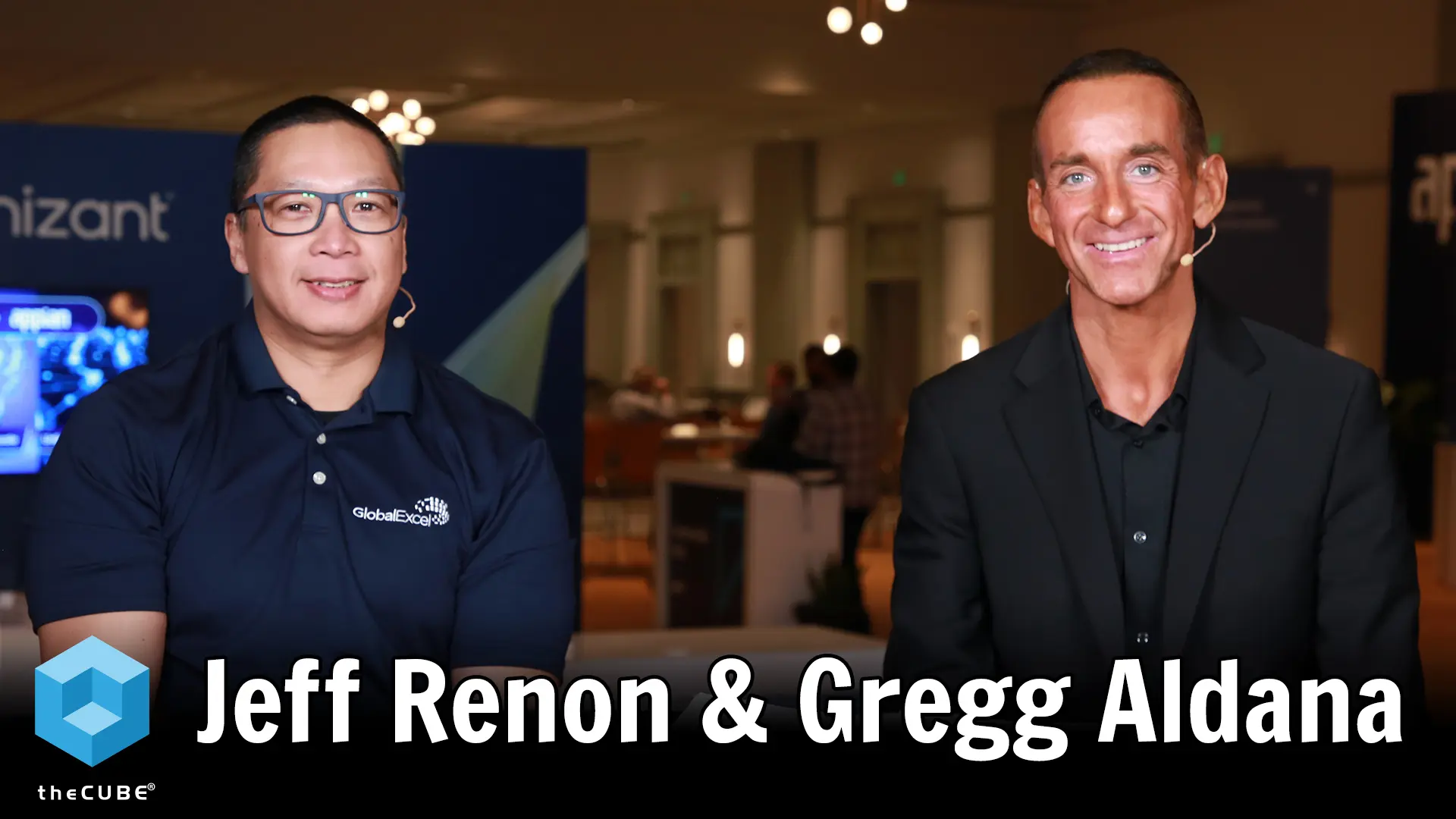
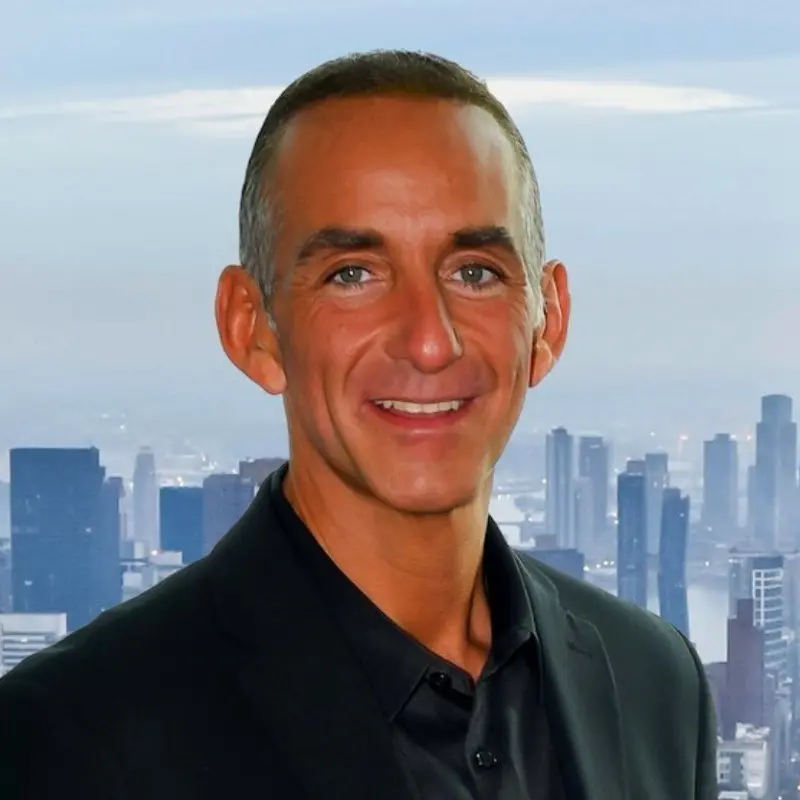
In this interview from Appian World 2026, Gregg Aldana, vice president of solutions consulting at Appian, joins Kathy Malsch, senior director of the Center for Digital Technology at Pfizer, and Aynn Furie, vice president of enterprise travel, meetings and healthcare engagement at Pfizer, to talk with theCUBE's Dave Vellante about how a process-first approach to AI is transforming compliance and operations in a highly regulated industry. What began as a compliance exercise to manage anti-corruption policy has evolved into a model for operational efficiency, with Furie explaining how automation now handles routine data processing while human teams focus on exceptions and compliance risks. Malsch underscores that automating existing workflows without first questioning their necessity only produces faster inefficiency — Pfizer's breakthrough came from challenging long-held conventions, eliminating unnecessary data collection and redesigning processes before introducing any AI.
The conversation also explores the human side of AI adoption, where Aldana and Furie argue that change management is as critical as the technology itself. Furie details Pfizer's multi-channel communication strategy — spanning demos, text messaging and leadership endorsement — to reach employees in the ways they prefer. Aldana, drawing on conversations with roughly 200 CIOs annually, notes that the most successful rollouts connect directly to employees' specific pain points, making adoption feel like relief rather than disruption. Malsch adds that data-driven usage metrics broken down by country team create healthy internal competition that accelerates uptake. From turning compliance guardrails into a business accelerator to building a workforce that anticipates each new AI enhancement, the panel illustrates how enterprise AI success depends as much on organizational culture as on technical architecture.
Forgot Password
Almost there!
We just sent you a verification email. Please verify your account to gain access to
Appian World 2026. If you don’t think you received an email check your
spam folder.
In order to sign in, enter the email address you used to registered for the event. Once completed, you will receive an email with a verification link. Open the link to automatically sign into the site.
Register for Appian World 2026
Please fill out the information below. You will receive an email with a verification link confirming your registration. Click the link to automatically sign into the site.
You’re almost there!
We just sent you a verification email. Please click the verification button in the email. Once your email address is verified, you will have full access to all event content for Appian World 2026.
I want my badge and interests to be visible to all attendees.
Checking this box will display your presense on the attendees list, view your profile and allow other attendees to contact you via 1-1 chat. Read the Privacy Policy. At any time, you can choose to disable this preference.
Select your Interests!
add
Upload your photo
Uploading..
OR
Connect via Twitter
Connect via Linkedin
EDIT PASSWORD
Share
Forgot Password
Almost there!
We just sent you a verification email. Please verify your account to gain access to
Appian World 2026. If you don’t think you received an email check your
spam folder.
In order to sign in, enter the email address you used to registered for the event. Once completed, you will receive an email with a verification link. Open the link to automatically sign into the site.
Sign in to gain access to Appian World 2026
Please sign in with LinkedIn to continue to Appian World 2026. Signing in with LinkedIn ensures a professional environment.
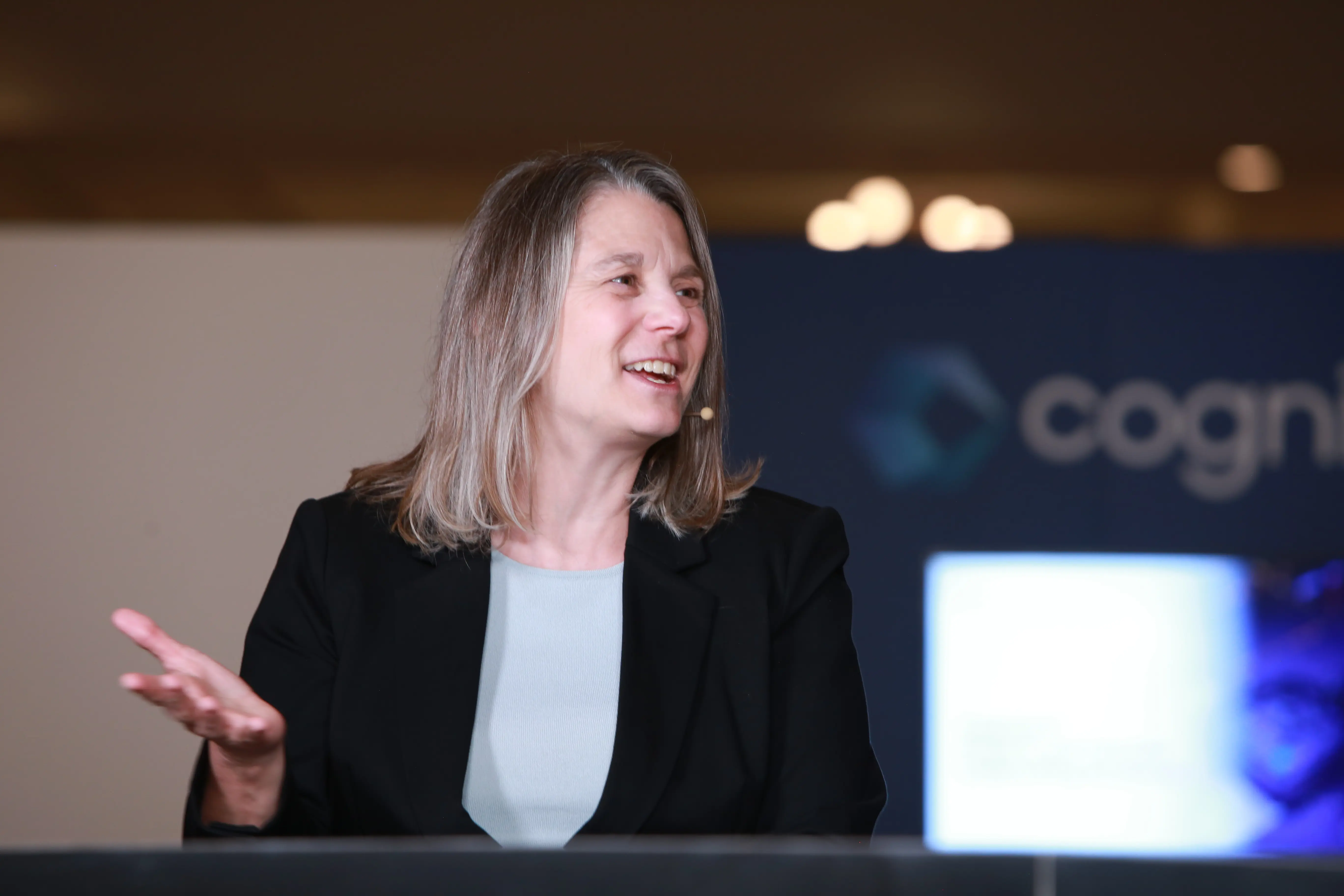
Dave Vellante sits down with Kathy Malsch, Sr. Director, Creation Center Lead, Digital & Technology, Pfizer, Aynn Furie, VP, Meetings, External Engagements, & Travel, Pfizer, & Gregg Aldana, VP, Head of Global Solutions Consulting, Appian, at Appian World 2026 at the JW Marriott Orlando, Grande Lakes, in Orlando, FL.
Sr. Director, Creation Center Lead, Digital & TechnologyPfizer
In this interview from Appian World 2026, Gregg Aldana, vice president of solutions consulting at Appian, joins Kathy Malsch, senior director of the Center for Digital Technology at Pfizer, and Aynn Furie, vice president of enterprise travel, meetings and healthcare engagement at Pfizer, to talk with theCUBE's Dave Vellante about how a process-first approach to AI is transforming compliance and operations in a highly regulated industry. What began as a compliance exercise to manage anti-corruption policy has evolved into a model for operational efficiency, wi...Read more
>> Hi everybody. Welcome back to Orlando, Florida. You're watching TheCube's live coverage of Appian World 2026. We're here at the JW Marriott and my name is Dave Vellante. I'm here with my temporary co-host, Greg Aldana, who's vice president, head of global solutions consulting at Appian. And we're joined by two guests from Pfizer who are up on the keynote today. Aynn Furie, who's the VP of meetings, external engagements, and travel. I think Aynn, you said EE and T, if I got that right, which is kind of cool.
Aynn Furie
>> Meet, like M-E-E-T.
Dave Vellante
>> Oh, M-E-E and T. Ah, meetings. Okay. I left the meet out.
Aynn Furie
>> That's it.
Dave Vellante
>> Okay, great. We're going to get into the meat of the conversation shortly. And Kathy Malsch, who is the senior director for the creation center lead of that department, for digital technology at Pfizer. Folks, welcome to theCube. Great to see you all. We're going to talk about AI orchestration, architecting the future in a highly regulated industry. You guys kicked off your session with a very goosebumpy video, with Al Pacino from a famous scene of that football movie, which was amazing. We fight for every inch. You had presumably, I think it was cancer patients fighting for their lives, literally. And then, showed this amazing outcome. Congratulations on that video. It was awesome.
Aynn Furie
>> Thank you.
Dave Vellante
>> How did you guys come together? Let's kick it off, Gregg.
Gregg Aldana
>> Yeah. Well, I think what happened was is Pfizer and Abbvie and first got together several years ago and we really helped them leverage AI to manage their anti-corruption policy of compliance, and going out and really helping the reps spend a lot less time in the field with the paperwork around compliance and really get to focus on the work of spending more time with doctors. Where do you remember our journey beginning?
Aynn Furie
>> Well, for us, it really began with... We started as a compliance exercise. Our goal was to build a process from end to end that was compliant. And what happened is once it evolved, we realized the efficiencies that could come out of using the right automation. So now we have less about the compliance because the controls are there, but more about the efficiencies that the system can bring in and where the technologies can take us so that we can go faster, that we can do things more accurately, and deliver a better product.
Dave Vellante
>> Yeah. I know from my own experience, you guys take this stuff seriously. I used to spend a lot of time in Groton with the legal department, but the whole idea was, once you get that compliance right, it actually can be a business accelerator, not a blocker. And so many organizations, I don't think, have that right, because they start with, okay, we're going to go charge. And then it's like, hold on, we got to make sure this is secure and compliant. You guys are able to work through that. Maybe explain that philosophy.
Kathy Malsch
>> Well, I think some of it really had to do with the partnership. I mean, I think a lot of people get the no, right? Legal, no, compliant. No. I think there's actually a Meghan Trainor song like that, right? No, no.
Dave Vellante
>> Department of No.
Kathy Malsch
>> Yeah, exactly. Exactly.
Dave Vellante
>> .
Kathy Malsch
>> But I think to that point when we really stopped and listened to kind of like every voice, like everyone who helped create that solution, listen to their different perspectives. We challenged convictions and things that have been placed for years. I remember talking to Aynn and I'm like, "Aynn, does this data even really matter? Why do we collect this?"
And we went back and talked with legal and compliance. So not only did we look at AI and how that could help, but really we took a step back and said, "Do we really need all of this?" And I think that's what's important, because if you just automate what you already have, all you have is faster inefficiency. So I really think it was that partnership of looking at the process first, then bringing in automation, and then bringing in AI.
Aynn Furie
>> It's very helpful the way we did it with Appian too, because as you review it, you clean things up. So, as we built any of our sprints that we would build any of the new enhancements on, it gave us that opportunity to say, "Why are we doing this? Do we really need that or is the control someplace else?"
Dave Vellante
>> Yeah. Kathy, I always call it paving the cow path. You don't want to do that. What's the point? But just being compliant is only part of the equation. You also, in your business, you have to be highly accurate.
Aynn Furie
>> Yeah.
Dave Vellante
>> So what does that mean to you? How have you used AI? Has it helped you be more accurate?
Aynn Furie
>> Yeah. We started out with a lot of manual. We have a lot of people that are looking at the data. And what we're finding is, is that we can use the people to do the exception work and that leverage the technology to do the simple stuff so that it can go through. And what we're finding is, we can do things a lot faster and now we can focus our time on where we have those exceptions or those compliance risks to spend more time on those transactions.
Gregg Aldana
>> Dave, that's really where we're seeing a lot of our customers like Pfizer and the regulated markets really changing their business model. Like they mentioned, kind of rethinking things and being very disruptive to be quite honest. And there's always been a lot of fear of that. But what we're seeing that is probably one of the most beneficial uses of AI to be able to go back and reexamine why are we doing something like this? And you're seeing, a lot of people are very scared that AI is going to take their jobs away from them and they won't need me anymore. But what you see with Pfizer and we're seeing with a lot of healthcare customers, is that their jobs are actually getting better because they're spending much more time on the impactful work that they got into this industry for, and they're not losing their job. Their job's actually becoming much more fulfilling and more impactful. And so we're seeing that the more competitive companies in this space really are following a very similar paradigm to Pfizer. It's remarkable.
Aynn Furie
>> It's a great point, because that's what we're telling in our business case was that we believe that a marketer should spend time doing marketing content. A field force should be focused on the customer, that they shouldn't be doing data entry. And so, everything that we're doing here to automate it is helping people spend more time in their core responsibilities.
Dave Vellante
>> There's a startup book that I read one time, it's called Getting to Aha.
Gregg Aldana
>> Yes.
Dave Vellante
>> Was there an aha moment for Pfizer, when it came to AI?
Aynn Furie
>> Yes. I think it was... When we put business cases together, we tried to explain what they were going to get, but it's usually about, how is that going to be? How long is it going to be?
And the aha moment for me, was when Appian was able to work with us to build a proof of concept that they could touch and feel, it was a game changer. Because you went from people not even paying attention, saying, "Okay, it's another business case," to looking up and saying, "This is amazing. When can we get this?"
And so, that was the aha moment is that they could touch it and feel it, and that made it a very easy slam dunk for the business case.
Dave Vellante
>> What were some of the milestones on this journey? I think about the early days of generative AI, and it was a thousand use cases. Okay, now we have to prioritize them. Now we have to identify which ones are the high value ones. Now we have to get a rag-based chatbot going. Oh, that's really cool, isn't it? Yeah. What are you going to do with it? Eh. And so now we're into... It's a reasoning and agentic. So maybe you could talk to some of the technical milestones.
Kathy Malsch
>> And I think what the important thing is, everybody's like AI, AI, AI, right? But I think one of the things we did was, there still is a place for just good old-fashioned automation, right?
Dave Vellante
>> Yes.
Kathy Malsch
>> So really taking that time to say, if it's repeatable, if it's something we can do quickly, we did some functionality, where at a single click you can upload hundreds and thousands of attendees. You're like, okay, that's not glamorous. I don't need AI to reason, but it saves 35% of the time of doing manual entries when you have a thousand people attending a conference like this, right? To them thinking about, well, where should we put the AI? And one of the big things for us is every time we do a transaction, there has to be a business rationale, right? And that's very important, because we're just not getting together for the sake of getting together, right? There's a real business purpose. What are we trying to do? Educate or teach about our products. So having AI be able to craft that rationale, and make sure it's staying to Pfizer policy, right? Making sure word choice, words matter. So when we really thought about prioritizing, it was those things that are most important that we get right 100%, right? Versus, where's 70% okay? Where's 80% okay? So we went kind of like rationale was one of the things I can think of, that doesn't sound like a big thing, but it locks us in the process. If we can't get past that, we can't even get to the other information.
Gregg Aldana
>> I think what's really interesting about your journey is that a lot of companies are realizing they don't know their process as well as they thought they did. And so, this journey of going through and deciding where should you embed AI, I mean, your point is we're 100% on the money there that not everything needs to be an AI agent. There's this preponderance, especially we want to use agents everywhere. Sometimes it's just good to automate something and using the agent where you need to escalate that decision, or you actually need some intelligence about the process. But I think the biggest thing that we're seeing is that a lot of healthcare companies are learning a lot more about their process. Why are we doing this? Because we've always done it this way? We don't need to do it this way. So they're getting more intelligence from actually looking at the process itself and they're becoming much more intelligent about the way they do business. It's a great story.
Aynn Furie
>> And the data's really helped us, because what we've been trying to do is go back and say, where are we investing so much time and effort? And those are the areas that we're partnering with Appian to say, how can we do this more efficiently?
Dave Vellante
>> I was speaking to the CIO of Dunkin' Brands on the Cube one day. And I said, "As a technology manager, your job is to get technology out there, get it adopted." He said, "Dave, I'm in the change management business." That is everything to me. If I can't help the organization through those changes, that doesn't matter what technology we build, that's not going to get adopted, not going to get absorbed. So what has been, I mean, you're still on the journey, what's the change management journey like?
Aynn Furie
>> Yeah. Well, we've learned, very quickly, that you have functionality is critical, but the second most critical thing is the change management. That, from everything from ensuring that leadership, that you have leadership endorsement on the project to making sure that you have a robust communication plan that you're on your roadmap, and that you're having advisors or a voice of the end users throughout the entire process. I mean, it is so critical that, I tell people we can't communicate enough. Over communicating is the expectation here. And we also learned that some people don't read very well, so you can't just send emails because they may not read it. So what we've learned is you have to be creative in doing demos, showing some of the capabilities, texting or messaging people in different ways, so that everybody's able to receive it in the way that they want to.
Gregg Aldana
>> I want to underscore Aynn's point here, because I probably meet with about 200 CIOs a year, different industries, different countries. And what Aynn just pointed out is probably the single most important thing in rolling out AI at any company. CIOs are becoming like CMOs nowadays. People are not just going to use the new system because you told them to. You've almost have to show them what's in it for them.
Aynn Furie
>> Totally.
Gregg Aldana
>> And what I've seen the most successful CIOs, they connect these micro moments of pain. Every employee at every company, I'm sure all of us included, have something painful about our jobs we wish we did not have to do. And if you can connect with those moments of pain, in a text message, or in a movie trail, or a demo, if you will, people will start to bind... They almost look forward to the new system. "Oh, I don't have to do that anymore."
Aynn Furie
>> Exactly.
Gregg Aldana
>> The problem is not technology, the problem is communication. So I'm so glad you brought that up.
Aynn Furie
>> But I liked what you said, because it's the key also is you have to fix a problem that's a very sore point for people.
Gregg Aldana
>> Yes.
Aynn Furie
>> And if you fix that, then they trust it. And then when you bring out the next enhancement, they're looking forward to it.
Dave Vellante
>> As an analyst in this community, we often give this trivial advice of, you have to have top down management buy-in. It's true, by the way. But you also have to have bottom up.
Gregg Aldana
>> Yes, you do.
Dave Vellante
>> You've got to solve a problem. And then that's why, your point about when can we get this, is how the magic happens, isn't it?
Kathy Malsch
>> Totally. I do think you need it in both directions though, because we have observed in some places, right? We have our champions, we have our folks that help with user acceptance testing. But you have some of those folks that still aren't going to use it, right?
Dave Vellante
>> Yeah.
Kathy Malsch
>> And this is where we get the data now and Aynn can go and meet with the country president. And when they say, "Well, my team says this doesn't work." We said, "Here's all the logs, here's all the feedback. Oh, and by the way, your folks are only using it 17% of the time." And then when they find out the next door country president's team is using it 80% of the time, it's amazing, I think really needing to have both of them, at the right time to compliment each other.
Gregg Aldana
>> Well, I think that's another way that a lot of companies are getting this adoption. They're gamifying it. Different countries, different divisions against, and everybody, when those compliance reports come out with the adoption, we're seeing that a lot of VPs, not at all, look at my area, my area. So it's that added pressure. But I think your point about that they're looking forward to the next version, I relate that. I'm a big movie buff, and it's almost like that movie trailer. I love the movie so much. I can't wait for the sequel and I'm waiting for that next AI generation to come through. That's great.
Dave Vellante
>> Nothing like a little healthy competition, is there? Folks, thanks so much for coming on theCUBE, and really appreciate the story and congratulations on the keynote this morning.
Aynn Furie
>> Thank you. Take care.
Gregg Aldana
>> Thank you so much.
Aynn Furie
>> All right. Take care.
Dave Vellante
>> All right thank you for watching. Keep it right there. This is Dave Vellante. Alison Cusick is also here. This is the Cube's coverage, a live coverage in Orlando, Florida, Appian World 2026. We'll be right back ready for this short break.








 Dave Vellante