In this interview from Appian World 2026, Tom Cavanaugh, vice president of platform management at AARP, joins Jake Rank, vice president of product management at Appian, to talk with theCUBE's Dave Vellante and co-host Alison Kosik about embedding AI into enterprise workflows through process-centric automation. Cavanaugh describes AARP's initial challenge: a manual invoice-approval process spanning dozens of employees that introduced both efficiency and auditability risks. By deploying Appian to match invoices against contracts and purchase orders, the organization produced fully auditable outputs while reclaiming hours across more than 40 staff. Rank explains why this outcome is a model for enterprise AI adoption — not distributing tools broadly and hoping for results, but embedding AI at specific points in a defined process where its scope is constrained and its value is measurable.
The conversation also explores the dual nature of modernization: building new application layers on top of legacy systems to unlock existing data while forcing organizations to question processes that have gone unexamined for decades. Rank details how Appian Composer accelerates this cycle by letting business stakeholders visualize and validate workflows before AI generates the build, codifying years of implementation experience from highly regulated industries into repeatable, consistent results. Cavanaugh adds that once a team sees automation working in plain language, adoption resistance drops and the appetite for solving adjacent problems grows quickly. Both guests agree that agentic AI, despite its transformative potential, still requires strong data and process foundations to function reliably. From automating a single approval workflow to grounding enterprise AI agents in trustworthy process logic, the discussion illustrates how organizations like AARP can scale automation systematically and direct the savings toward their core mission.
Forgot Password
Almost there!
We just sent you a verification email. Please verify your account to gain access to
Appian World 2026. If you don’t think you received an email check your
spam folder.
In order to sign in, enter the email address you used to registered for the event. Once completed, you will receive an email with a verification link. Open the link to automatically sign into the site.
Register for Appian World 2026
Please fill out the information below. You will receive an email with a verification link confirming your registration. Click the link to automatically sign into the site.
You’re almost there!
We just sent you a verification email. Please click the verification button in the email. Once your email address is verified, you will have full access to all event content for Appian World 2026.
I want my badge and interests to be visible to all attendees.
Checking this box will display your presense on the attendees list, view your profile and allow other attendees to contact you via 1-1 chat. Read the Privacy Policy. At any time, you can choose to disable this preference.
Select your Interests!
add
Upload your photo
Uploading..
OR
Connect via Twitter
Connect via Linkedin
EDIT PASSWORD
Share
Forgot Password
Almost there!
We just sent you a verification email. Please verify your account to gain access to
Appian World 2026. If you don’t think you received an email check your
spam folder.
In order to sign in, enter the email address you used to registered for the event. Once completed, you will receive an email with a verification link. Open the link to automatically sign into the site.
Sign in to gain access to Appian World 2026
Please sign in with LinkedIn to continue to Appian World 2026. Signing in with LinkedIn ensures a professional environment.
Are you sure you want to remove access rights for this user?
Details
Manage Access
email address
Community Invitation
Tom Cavanaugh, AARP & Jake Rank, Appian
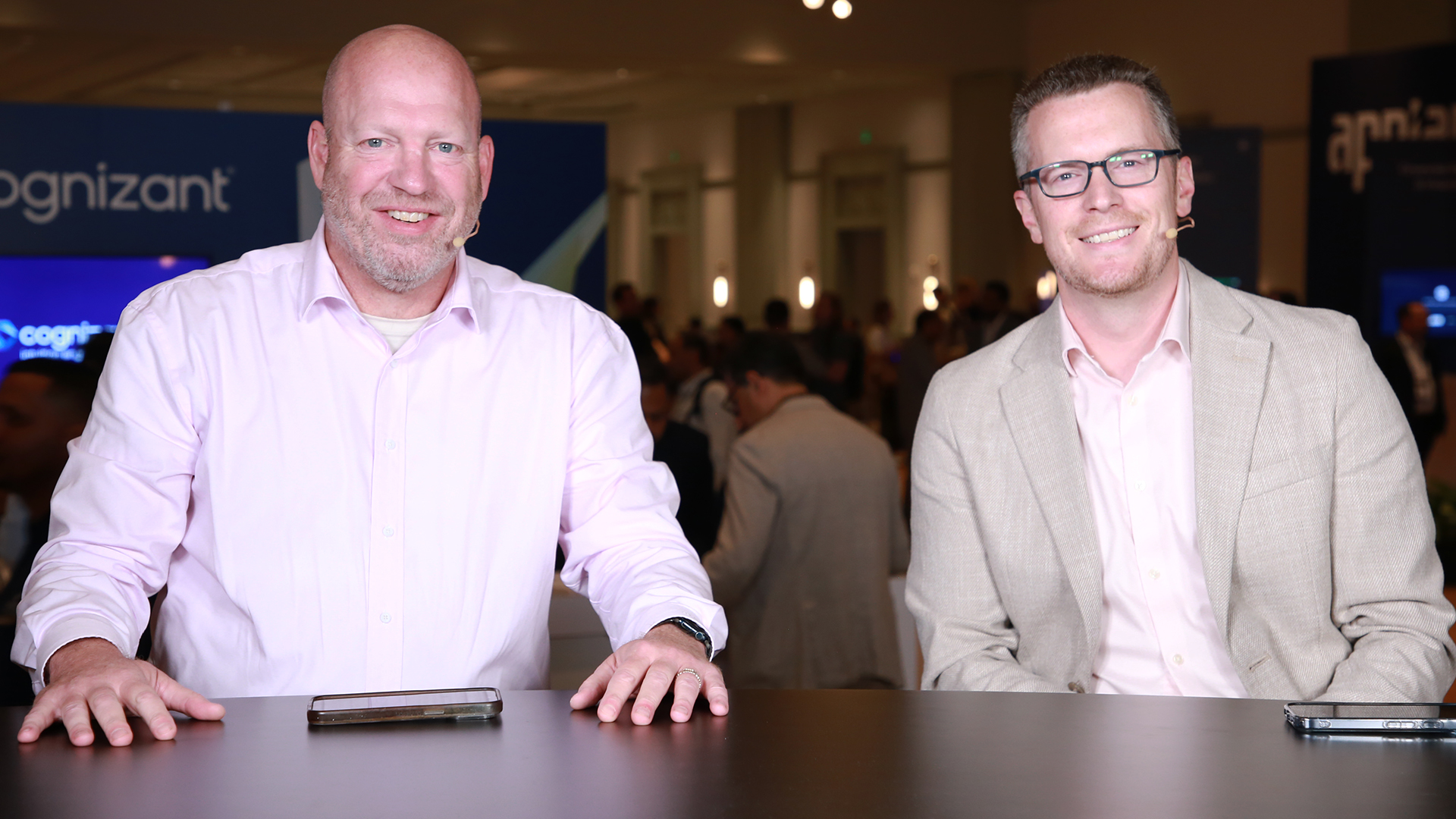
Dave Vellante and Alison Kosik sit down with Tom Cavanaugh, Vice President, Platform Management, ARP & Jake Rank, VP, Product Management, Appian, at Appian World 2026 at the JW Marriott Orlando, Grande Lakes in Orlando, FL.
In this interview from Appian World 2026, Tom Cavanaugh, vice president of platform management at AARP, joins Jake Rank, vice president of product management at Appian, to talk with theCUBE's Dave Vellante and co-host Alison Kosik about embedding AI into enterprise workflows through process-centric automation. Cavanaugh describes AARP's initial challenge: a manual invoice-approval process spanning dozens of employees that introduced both efficiency and auditability risks. By deploying Appian to match invoices against contracts and purchase orders, the organiz...Read more
>> Welcome back to Appian World 26. We are streaming live here in Orlando. I'm Alison Kosik alongside Dave Vellante, and we're about to talk about another powerful partnership.
Dave Vellante
>> Yeah, modernization is a big theme here. What does that mean? What does it imply? How do we do it right?
Alison Kosik
>> Yeah. All right. I'm going to bring in our guests. We've got Jake Rank, the vice president of product management with Appian. Welcome to theCUBE.
Jake Rank
>> Thank you.
Alison Kosik
>> And Tom Cavanaugh, vice president of platforms with AARP. Welcome to theCUBE as well.
Tom Cavanaugh
>> Thank you.
Alison Kosik
>> Tom, I'm going to start with you. Give us a quick overview of AARP's mission, and what challenges led you to partner with Appian.
Tom Cavanaugh
>> Sure. So primarily what we're focused on is adults over 50, and the problems that they face in America. So my job is to support our mission generally. And the best ways I can do that is to make sure that we have the most efficient organization that we have, that every dollar that we're going to spend is going to our members, and the Americans who need it.
Alison Kosik
>> And so what was the problem that Appian solved for you?
Tom Cavanaugh
>> So the problem that we were working on, it's pretty pedestrian really. It was just approving invoices against contracts and POs, but it was a manual process and it kind of cuts across the association. So there's a lot of people who have to do it. And it's not something that you want to do poorly because it's involving sending money out. So in order to fix that problem, both for security, continuity... I lost my train of thought, sorry. Anyways, so bottom line is, it compares those documents together, right? And what it does is it produces a document at the end that you can audit. So an auditor can come in and make sure that what you did was right and that you can approve a payment, in simplest terms.
Dave Vellante
>> So in high level terms, what are the drivers in your business right now? I mean, believe it or not, I'm over 50. You guys keep sending me stuff. I haven't pulled the trigger yet, but I'm like, wow, that looks like a pretty good deal. Oh, I can get insurance too. Wow, I can package that up. I'm like, it's starting to get attractive.
Tom Cavanaugh
>> Sure.
Dave Vellante
>> You got my attention. So what are some of the drivers in your business?
Tom Cavanaugh
>> So, I'm actually not on that side of the business, but I'll answer the best way I can as the IT guy in the room, right?
Dave Vellante
>> Yeah, cool.
Tom Cavanaugh
>> I mean, primarily, I think healthcare is one of the biggest ones. We're actively involved in healthcare. As Americans age and aging in place, social isolation, there's a number of topics that hit elderly Americans that we're trying to help on. So we have a whole set of technologies that we do that are separate from what I do, that address those issues.
Dave Vellante
>> So, but you said you're in IT, but you do support that or you support a different part of the organization?
Tom Cavanaugh
>> I support it all generally, but I'm down a layer in the platform space. So what I'm doing is supporting the support team. So things like infrastructure, network, those kinds of the things are the things that I'm supporting, and then an application like Appian.
Dave Vellante
>> And as an application team, obviously, and just you're supporting the infrastructure of these, but the business must be pounding on you guys.
Tom Cavanaugh
>> It is.
Dave Vellante
>> All the time.
Tom Cavanaugh
>> We need this, we need that. Don't do this.
Dave Vellante
>> All the Time.
Tom Cavanaugh
>> When can I get it?
Dave Vellante
>> All the time.
Tom Cavanaugh
>> And so, one of the beauties of this tool is that I can sit in front of a business partner and say, "What is the problem that you're having?" I can show them on a screen, not talk to them, not distract them away from what we're doing, but actively show them what works. And so this tool that we did the first time I saw that, which was the Composer application, right, you can actually visualize the workflow. You're not coding, right? No one's going to sit down on a keyboard and figure this out. Now we're going to help them do that. But once they get over that initial hurdle of, oh, I can see what the problem is and I can see how this can help, you have a start.
Dave Vellante
>> Okay. So Jake, you probably hear this a lot. We saw some Composer discussion in the keynotes today. What's your take on this opportunity, opportunities like this? Where do things like Composer fit?
Jake Rank
>> Yeah. Well, I mean, Tom described some of the process challenges that they're having, especially around documents. And you might describe it as maybe mundane, but I mean, I think honestly, the business impact and the potential opportunity there isn't really that mundane.
Dave Vellante
>> Money's not mundane.
Jake Rank
>> Right, exactly. All those things, we want to sell more, we want to save more, we want to do more with our businesses no matter what the organization or what the mission really is. So, what we see is that organizations, and especially like IT, like by Tom, at the platform level, is held back because they might be dealing with outdated systems or they might be dealing with systems that can't get the job done and don't meet the business's needs. So when Appian comes in, we can do that modernization. We can look into the existing systems, take those requirements, pull them into Appian using Appian Composer. And then, really, really important, not just go straight to building, but first let business have their say, let them review what we've built, let them see the screens and get a feel so that they're very comfortable with what they've actually going to, what they're going to get on the other side. And now with confidence, they can go and let AI build that out at speed. So it's really changing the way that you can modernize. It's doing it with confidence. It's making it so that folks like Tom can satisfy the business in more ways.
Alison Kosik
>> We keep hearing that AI needs process. So why is that especially critical for organizations like AARP?
Jake Rank
>> Yeah. Well, I'll give my answer and maybe you can see how it is in practice.
Dave Vellante
>> Sure.
Jake Rank
>> So when you have AI, one option is, "Hey, let's just give everybody in the organization some AI tools and hope for the best." And there are maybe some roles for that, personal productivity, like writing my email. Okay, there's some really good stuff about that. It's not really structured. It's hard to measure. You don't know what value you're really going to get. Whereas, when you look at a process oriented problem, you want a process oriented solution. So you can take that challenge and apply AI in a very specific place in the process. You're constraining the role that AI has, which means it's not going to go rogue. You can tune AI to be doing exactly what it needs to do, bring the right data, bring the right task information, all in the right moment. And that's how you can get real value out of AI because you're not letting it just run off and do anything. You're giving it a specific task and all the tools that it needs to get that job done.
Dave Vellante
>> So help us understand this term, modernization, and how that manifests itself to a user and kind of the plumbing underneath, if you will. So obviously the UI, everybody sees it and touches it. It doesn't look like when I pay my taxes at my beach house, it looks like the website was built in 1996. You know what I mean? You always know, "Oh, wow. I've given my credit card to this." Scary. Okay. So that's one aspect of modernization, but some of the things that Jake was mentioning in terms of the speed, the efficiency. So connect those dots for us, if you can. What does modernization look like?
Tom Cavanaugh
>> So I'll try to take a crack at that. There's two parts of this. Number one, you're comment on the legacy systems that many people have. Many companies have those. Us included. We have many modern ones. We have some that are not so modern. One of the things that these tools allow you to do is extract data or processes in a way that you couldn't otherwise directly from the tool. So you're basically building a new tool on top of the tool using the data that it currently contains. So that's one part of modernization. The second part is, by doing this, it forces you as a business to look at the processes that you currently have. Do these meet the needs? Are we still operating like it's 1982? I mean, there's things that you can do that, decisions that you would make today, but you probably worked at a place where you say, "Well, why are you doing that thing?" And the person's going to say, "Well, we've always done it that way."
Alison Kosik
>> Oh my God, I hate that answer, painfully.
Tom Cavanaugh
>> That's right. And it really irks me when I hear it because I'm like, "You know there's a better way to do this. It'd make your life a whole lot simpler." But convincing people of that is often a challenge. And I view this very much as a people problem, right? Not that they're the problem, but people have emotions. This is not just a scientific experiment, right? It's people saying, "I constructed this thing. I'm afraid of what's going to happen next."
Dave Vellante
>> And I'm busy. Don't make me...
Tom Cavanaugh
>> All that same stuff. That's right.
Jake Rank
>> I mean, time is always an important resource. And so being able to get more time, more output per time is always going to be really important too. So any use of AI, as long as it's safe and you can rely on it for these mission-critical processes is going to help you get more done.
Dave Vellante
>> So the high impact pieces of modernization, yeah, there's the UI and the UX, and that's important, but it's also the overall experience, the feel, the affinity that you build with a user and a customer.
Tom Cavanaugh
>> That's right. And I view a lot of these things, that I work on anyways, they're very user-centric. We start with a person. How is this going to impact this person's life? So with this particular tool that we're building, it started with my EA, my executive administrator saying, "I have to do this job and it's terrible." It's very hard to do. I only do it a part of the time. And then you look at it and go, "Yes, that's bad. Oh, by the way, 40 other people have the same problem across the company."
So I'm not just solving it for one person, I'm solving it at scale across the board. Now, does it save all the time? No. But if it saves her an hour or five hours a week, you multiply that by 40 people, times days in a week, do the math, it adds up.
Dave Vellante
>> How much of that is art versus science? I feel like every time I get a new smartphone download, I'm like, "Why'd they do it this way?" And then over time I'm like, "Oh wow, this is really good." It's like art and science combined.
Jake Rank
>> Sure. I mean, one of the things we're trying to do is make it a little bit more science than art because science is more repeatable. So we've taken all the knowledge that we have from all the years of doing Appian implementations for customers in highly regulated industries and across different verticals. Baking that knowledge into Appian is what really makes Appian Composer so capable of producing good results very quickly. We've already gone through so many iterations of seeing how it should be done, how it shouldn't be done, taking that knowledge, now we can apply it with AI faster. So you're getting a more consistent experience. And honestly, as technology evolves, as new things become possible, those will all become part of the package because our platform is another one of those things, it always stays current with the latest technology, whether that was RPA, six years ago, or whether it's AI in the last few years, we're continuously evolving, but the platform, Tom's in charge of a platform, it's going to always stay modern, always stay current.
Dave Vellante
>> How do you measure success? What does that look like?
Tom Cavanaugh
>> There's a lot of ways to do it. I mean, most people would measure it in money. And I mean that. You can look at your bottom line and say, how much am I saving on doing these things? And typically before you even go do work like this, you're going to do an ROI on it, out of the gate, to understand that. But that's not the only consequence. There are other things like I mentioned auditability, right? You're saving costs on that side too. If you're producing a product that is 100% correct all the time, that audit's going to be pretty straightforward. And it's not going to cost you as much money and there's nothing for you to cure. So I would say those are the two primary ones.
Alison Kosik
>> Jake, looking ahead, where do you see the biggest opportunity for AARP?
Jake Rank
>> Well, I think that they've gotten a very good start. And so, I think you've found the pattern that works because you've applied AI to a specific task and you've seen how you can get ROI out of that task. And now you can just look across the rest of the process and say, where are the other things that you can kind of go and attack? And each time you're building that business case, figuring out what the right technology, whether it's AI or actually maybe not AI, but applying the right technologies to solve each of those problems. And like you said, measuring the outcome, right? Knowing that each project is delivering positive ROI so that it's just fueling for the next project.
Alison Kosik
>> And Tom, what do you see as the next opportunity to modernize, or make AARP more AI driven?
Tom Cavanaugh
>> So I see a lot, right? And to your point, we now establish a pattern and it's something that is visible to a lot of people. I think it opens their eyes to the possibilities. All of a sudden, what was scary before or an unknown, now they look at it and go, "Well, that makes sense." And I can see what it's doing in natural language at the end, so it doesn't feel so foreign to people. And all of a sudden they're going to be more willing to come forward and say, "Help me go do this thing." And to your point, this is a box right now, right? You're solving this particular problem, but there are problems on other sides of this as well, and now you can connect them. So that, what's started here is manual, goes through here, automation, manual at the backend, automation, automation, automation, and so on and so forth. And it kind of grows out.
Dave Vellante
>> You've been in IT for a while. You got some battle scars, a little scar tissue, as you say. A lot of successes. I'm sure they, not 100%, like all of us. Remember we went from on prem software exclusively, to the cloud.
Tom Cavanaugh
>> Yes.
Dave Vellante
>> Everything changed. The operating model, the technology model, the business model, the pricing, everything changed. It seems like that's happening again. The operating model, as you get AI becomes more ubiquitous, you get things like Composer, people can start vibe coding. The business can start to really visualize what they want. Maybe it reduces the back and forth, but that whole operating model changes. Obviously the technology models are changing. Maybe the business model too. How much time do you spend thinking about that? Is it just... I mean, I know you got tactical problems to solve every day, but stepping back, we're going through a sea change in technology and business. How do you think that affects you specifically, and just generally businesses?
Tom Cavanaugh
>> That's a tough question. I'll answer it as best I can. And yes, I do think a lot about it, because I'm both a technologist and that's part of my job. I'm also a dad. I have friends. I'm a human, right? All these very basic things. So I look at it from that level as well. What is the impact to my children? What are their careers going to look like? To your point, I think this is not just a technology thing, it's a social thing. It's going to impact us all. How does it change? I think part of it... I guess what I'm specifically seeing right now is, in the past, I think you would pick a path that you were going to get educated in. You would do that thing and pretty much do it forever. You're vertically aligned to do a thing. I think the skillsets that people are going to have to have are what we would call T or M or however you do it, where you're going to have to know a lot of different things, you're going to have to have depth and breadth. I have a degree in classical languages, so Latin and Greek. You would ask, how is that informative at all? But those foundational parts, right? When you understand language, when you understand philosophy, when you understand thought, these are all the same things. So I just think it's going to require people to broaden their horizons a little bit.
Dave Vellante
>> Well, you're probably pretty good at math too.
Tom Cavanaugh
>> I'm not bad at it.
Dave Vellante
>> Yeah. Right? I mean, there's a synergy there.
Jake Rank
>> Yeah. I mean, that's the wide-ranging impacts. I try generally not to make predictions more than six months out at this point, because everything's changing so fast. And it is one of my jobs also to make sure we're staying ahead to do that research and try to predict where the ball is going to go. I think that I see business having more control because there's going to be an expectation of more value. There's going to be an expectation that everything can move faster, that things can be delivered faster, and that's going to be a competitive advantage for the companies that can take advantage of that. And I think building on a platform that has the ability to move fast is a big win for AARP and every other customer, for sure.
Dave Vellante
>> I'll make a prediction. I'm an analyst. We do that, safe. And I wonder if you guys can sort of stress test this. So years ago, I think it was Mark Andreessen said, oh, software's eating the world, every company's going to become a software company. It actually wasn't true. The SaaS affected IT departments for sure, and SaaS vendors, software vendors, for sure. Now you're seeing the market confused. "Oh, SaaS is bad." Companies with great cash flow and annual recurring revenue. "Oh, that's bad," somehow. So you're seeing the SaaS apocalypse, so called SaaS apocalypse. My premise is that every company will become software-like, software company. Services that you provide today will be delivered through software and software like marginal economics will accrue to firms, more and more firms. Software companies, SaaS companies who can provide process knowledge and determinism are going to become actually more valuable, because when you combine that with generative, generative AI generates content, it's not trusted, has to be trusted. So to me, both of those are profound, in that your companies like AARP can become significantly more profitable and more efficient and grow their markets, maybe even to the point more like tech companies where winner takes most. I don't know. I won't go that far. And SaaS companies, some are going to be in real trouble. SaaS companies who have the ability to address process change and have process knowledge, application logic, are going to become more valuable over time. That's my prediction, kind of a long-winded one. What do you think? I mean, it's somewhat self-serving, but gameplay that with me, if you would, your thoughts, Tom. No, please, please go ahead, Jake.
Jake Rank
>> I mean, I think first of all, agentic is a huge transformation. The application of AI using Agentic means is going to change a lot, but what it's not going to change is that everything still needs data, and still needs some deterministic tools. So even an agent is only as good as the data that you give it. It's only as good as the tools and the process that you give it. So Appian always has a role, because we provide really, really strong foundations of data and process, and it grounds agents, and that's not going to go away. In fact, it's going to become only more important, as I think more and more people realize that you can't just let agents out in the wild. You have to ground them in data, you have to ground them in process. And having a platform where you can build your tools and give them to agents, is going to be an incredibly powerful thing now and into the future.
Tom Cavanaugh
>> I'll just follow the thought. So the way I look at that is, to your point, I was trying to say this earlier, which is as business evolves, to your point, they're going to have to use more and more software to deliver the things that they do. What that means is that all the people that are traditionally business people, who don't like IT, by the way, have to become partially IT people and vice versa. IT people have to move to the business and they have to move in as well. That's number one. Now, how does it change sort of the delivery model of what you do? Again, we're in charge of taking care of senior Americans, so we have a physical manual presence in every state. So part of that will not ever go away. What my hope is, is that as we grow more efficiently internally, we have more money to spend on those services that are outbound.
Dave Vellante
>> Yeah. And I think that... I guess the other prediction I would make is that... I mean, obviously technology spending has grown over the last 20, 30, 50 years. I think it's going to grow as a percentage of revenue. It's probably been, maybe hovering in the four to 5% of organizational revenue for years, but I think it's going to grow quite dramatically as we start to spend on intelligence, and find new ways to apply that and drive new services. And that's going to drive new revenue and that creates a flywheel effect for all companies. So I think every firm has to think about what that means, ours included. What does that mean? How can you take advantage of this? And even go back to these, what business are we in? But it sets forth these great opportunities and then tie it into a company that understands process and has a strong foundation there. Are you having these conversations with your customers, or are they more tactical?
Jake Rank
>> No. I mean, definitely having high level conversations. And I think to your point, I mean, yes, there may be more spend, but you've got to spend it on the right things. You want to make sure that the money that you're spending is being spent well, it's being spent on a system that's returning value, that's giving you the best ROI. And again, having the right data, having the right foundations is the one that's going to get you there. When everybody's out there pitching their latest agent, not everybody has those foundations. Not everybody has that experience working in the kind of ecosystems of regulated ecosystems, healthcare, financial services, government. We have, at Appian, we've done that for years, and so now we're bringing the new technologies to bear and making it very effective.
Dave Vellante
>> Well, I'm sort of laying out, okay, this is where we're going. You're here. How do I get from point A to point B? What are the steps you've got to take? Things like data fabric, help you get there, because I don't have to move the data around, wrangle it, spend 80% of my time munging data. It's there. You're helping harmonize it. You're never done in the technology world.
Jake Rank
>> No, no.
Dave Vellante
>> But we can kind of see, Allison and I over the last couple of days, kind of see where this company's going and the potential that you guys have. It's kind of exciting.
Jake Rank
>> Well, we're very excited, of course.
Tom Cavanaugh
>> I'm excited as well.
Alison Kosik
>> Thanks so much for coming on theCUBE. Great conversation.
Jake Rank
>> Thank you guys.
Tom Cavanaugh
>> Thank you guys.
Alison Kosik
>> And you're watching theCUBE, leader in live technology coverage and enterprise tech analysis. We'll be right back.











 Alison Kosik
 Dave Vellante