In this interview from Appian World 2026, Medhat Galal, senior vice president of engineering at Appian, joins theCUBE's Dave Vellante and co-host Alison Kosik to discuss what it takes to move beyond AI code generation and build reliable, enterprise-grade applications. Galal draws a sharp distinction between "vibe coding" and the rigorous discipline required for highly regulated environments. He explains how Appian's platform treats every piece of AI-generated code as guilty until proven innocent, with multiple independent validation checkpoints — human and system-bound — spanning the full development lifecycle. Applying Eliyahu Goldratt's Theory of Constraints, he frames the management challenge as continuously identifying bottlenecks across the entire system, not just compressing a single step, to optimize end-to-end throughput.
The conversation also explores how customer conversations at Appian World have shifted from "how do I apply AI?" to "how do I stay competitive and cut costs?" Galal notes that legacy systems once considered too time-consuming to modernize are now viable targets, with AI capable of compressing those timelines to as little as 25% of their former duration. He weighs in on the OpenClaw movement, crediting its creator for democratizing agentic loops and opening autonomous AI workflows to non-technical users — while cautioning that serious business processes demand the governance and accountability a purpose-built process platform provides. From breathing new life into decades-old systems to enabling enterprise-grade agentic workflows, Galal provides a roadmap for how organizations can harness AI without sacrificing the rigor that regulated industries require.
Forgot Password
Almost there!
We just sent you a verification email. Please verify your account to gain access to
Appian World 2026. If you don’t think you received an email check your
spam folder.
In order to sign in, enter the email address you used to registered for the event. Once completed, you will receive an email with a verification link. Open the link to automatically sign into the site.
Register for Appian World 2026
Please fill out the information below. You will receive an email with a verification link confirming your registration. Click the link to automatically sign into the site.
You’re almost there!
We just sent you a verification email. Please click the verification button in the email. Once your email address is verified, you will have full access to all event content for Appian World 2026.
I want my badge and interests to be visible to all attendees.
Checking this box will display your presense on the attendees list, view your profile and allow other attendees to contact you via 1-1 chat. Read the Privacy Policy. At any time, you can choose to disable this preference.
Select your Interests!
add
Upload your photo
Uploading..
OR
Connect via Twitter
Connect via Linkedin
EDIT PASSWORD
Share
Forgot Password
Almost there!
We just sent you a verification email. Please verify your account to gain access to
Appian World 2026. If you don’t think you received an email check your
spam folder.
In order to sign in, enter the email address you used to registered for the event. Once completed, you will receive an email with a verification link. Open the link to automatically sign into the site.
Sign in to gain access to Appian World 2026
Please sign in with LinkedIn to continue to Appian World 2026. Signing in with LinkedIn ensures a professional environment.
Are you sure you want to remove access rights for this user?
Details
Manage Access
email address
Community Invitation
Medhat Galal, Appian
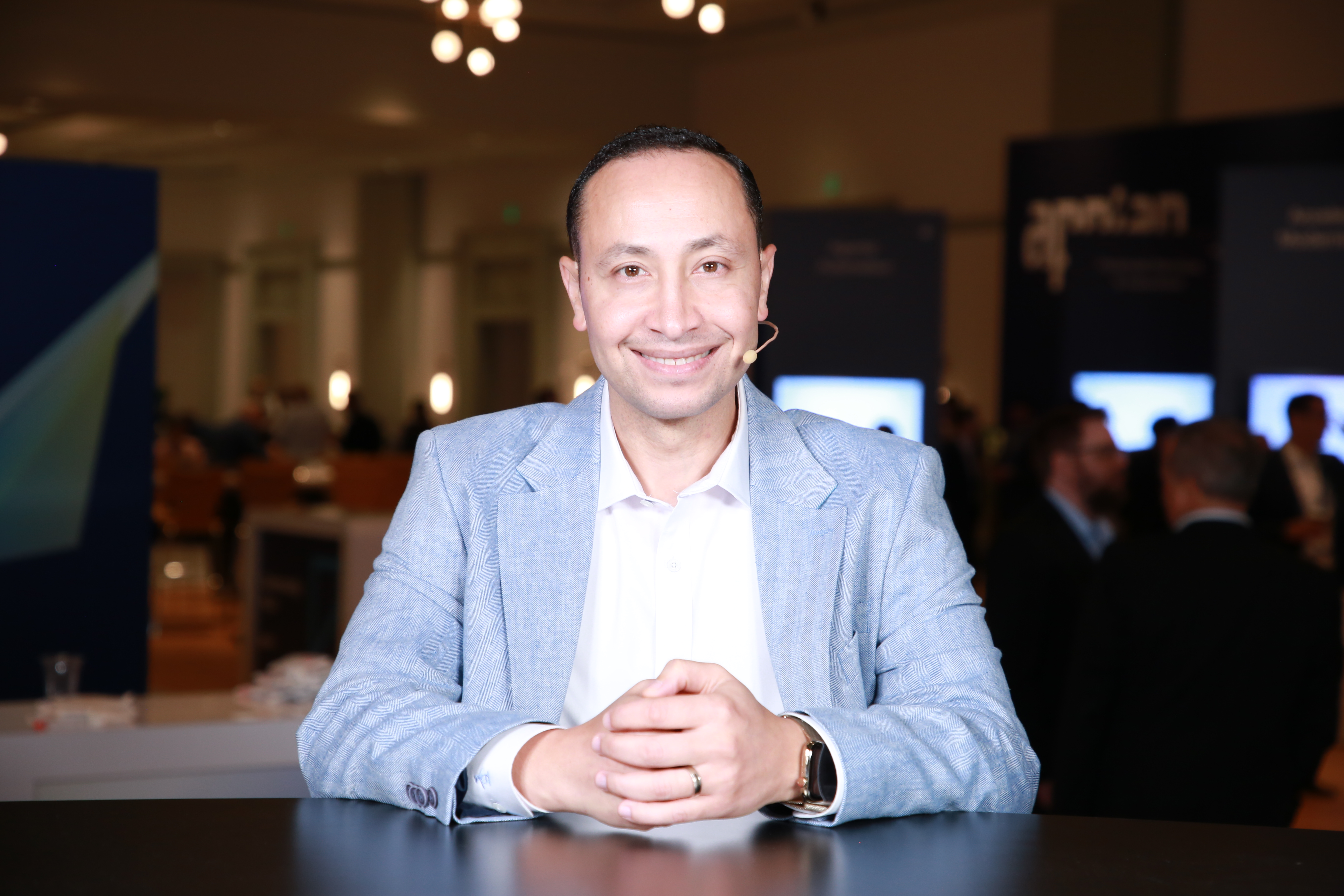
Dave Vellante and Alison Kosik sit down with Medhat Galal, SVP Engineering, Appian, at Appian World 2026 at the JW Marriott Orlando, Grande Lakes, in Orlando, FL.
In this interview from Appian World 2026, Medhat Galal, senior vice president of engineering at Appian, joins theCUBE's Dave Vellante and co-host Alison Kosik to discuss what it takes to move beyond AI code generation and build reliable, enterprise-grade applications. Galal draws a sharp distinction between "vibe coding" and the rigorous discipline required for highly regulated environments. He explains how Appian's platform treats every piece of AI-generated code as guilty until proven innocent, with multiple independent validation checkpoints — human and sy...Read more
>> Welcome back to Appian World '26. We are streaming live right here in Orlando. I'm Alison Kosik here with Dave Vellante, and we're about to talk about beyond AI co-generation, what it takes to really build enterprise grade applications.
Dave Vellante
>> Yeah, we heard about Composer in the keynote today. I vibe coded my Appian clone yesterday. Didn't work.
Alison Kosik
>> That was a funny moment.
Dave Vellante
>> We're going to dig into some of that.
Alison Kosik
>> Let's do that. We're bringing back Medhat Galal, the Senior Vice President of Engineering at Appian. Welcome back to theCUBE.
Medhat Galal
>> Thank you for having me.
Alison Kosik
>> So you've had some time to experience the conference this year. What kind of conversations are you having?
Medhat Galal
>> I think the excitement I'm hearing in the conference about the advancement of AI and how it could help both on the application generation side, as well as the automation side. They're really inspiring to see that we as a company are in lockstep with what our partners, our customers are seeing. It just resonated with me very much. Just being in lockstep has been great.
Dave Vellante
>> I snapshotted all Matt's slides from the keynote today and he had that pyramid with the arrow talking about the nines. You got to have ... The more nines you have, the more value there is. Vibe coding is good. We were joking about it before, but it's good when you don't need a lot of nines, like two nines. 99% accuracy. I'm not sure my vibe coding is even that accurate, but let's say 80, 90% accuracy. But you guys are up that value chain. That's your first principle, I guess, is you want to help those organizations that have very strict edicts, very high reliability requirements. So what does it take to develop applications like that?
Medhat Galal
>> Hard work. Yeah. It takes the right level of rigor from the platform itself, as well as the components that we put into it, to make sure that every step from that, the Python replica that you created yesterday, all the way to an actual highly regulated platform that our customers want to use, every step has to be intercepted. It has to be tested. It has to be evaluated. And that's the difference on that pyramid from being just in a vibe coding space to get to the five lines. We test every step from declaring intent all the way until the final result, and then we expose it to the user, which is the demo that we had on stage today.
Dave Vellante
>> One of the things I was just writing about, what struck me is that I think it was Matt describing that your system will pause and transparently expose to the human what it's about to do, as opposed to just spitting out a bunch of code and then saying, "All right, here, figure it out. " Or even worse, asking the AI that just wrote it to test it. Oh yeah, it's great. And so explain that philosophy. Where did that come from? How does that work? What kind of requirements does that put on the user? What's the skill level of the user? That's like eight questions. Pick one that you can answer.
Medhat Galal
>> I'll start with the skill level, because ultimately our users are subject matter experts in the respective industries. They can't be bothered with how do you prompt AI the right way to get the right behaviors. I do that for them. But ultimately, also because they're responsible for process, I got to give them the right decision points to make that decision, not allow the AI to be too generous with these decisions. Where we actually expose that decision is when we catch the AI attempting to do something bad and we expose that to the user to make a decision. Do you want to proceed or not? So we're relying on that human loop to make that decision on the large and on the small. So if you're breaking down a major operation in Appian, a major process, we're breaking down the tasks and you get to make a decision on the task list or just one task. I don't want to expose that to you with ease, without sophistication, so that you understand exactly what decision you could make that would be right for your organization.
Dave Vellante
>> As someone who runs a substantial engineering team, the whole bro-mag today, well, code is just a commodity now. Generating code is essentially free. I wonder if you could give us your point of view on that. Is it the case where that's sort of always been the case? It's just required a lot of human labor to write code, but that's not really where the value was. The value was elsewhere, the ability to actually get work done, or is there a fundamental shift? I guess there is a fundamental shift, but is there a shift in the value proposition or is it still sort of up that chain? Can you comment?
Medhat Galal
>> So I'll answer that question in two ways. The first one is, and I borrowed this quote today and I think it's a great one. So, "Code is cheap. Mistakes are expensive." We deployed our human capital, software engineers, product managers, quality engineers, to where it's the most expensive and the most opportunistic problems to solve that were worth to expand that level of effort. Now that we've made one of 16, 20 boxes required to build enterprise software cheaper, just to code, it doesn't mean you have to do any less of a rigorous process for the rest of it. You have to think about building the right product. That doesn't take away the product manager's job. Maybe they can think about 15 products. Same thing with the quality. AI wrote a bunch of code. Someone needs to validate that and it can be just another AI doing that. We need that human in the loop. So for our engineering process, the things where AI can be deployed well, we've maximally applied that. For the things that require that human rigor, we deployed our people to do that.
Dave Vellante
>> What's your philosophy toward validating that code? I mean, I know I've talked to some developers that use the same tool that wrote the code to test the code and validate the code. Others who are specialized in just the latter say, no, no, you have to have sort of an independent AI evaluate the code. How do you think about it? How does Appian approach it?
Medhat Galal
>> We have an independent verification, whether it's a human bound or system bound. In software engineering, there's everything from the quality people themselves. Obviously there's the software engineers between themselves. They write the code, they validate the code, but there is a functional validation step that is human bound, even if they're using code to automate it. Independently, there is a pipeline later that tests the full system together, not just the thing that we just built in the environment and its element, if you will. So there are multiple checks and balances as that piece of code makes its way to production. And the idea of those pipelines and the systems and the people is they treat this as a foreign virus, if you will, until proven otherwise. So literally a piece of code is guilty until proven innocence and it goes out. That's the philosophy.
Dave Vellante
>> When you think about the end to end cycle of development, okay, let's assume some portion of that is being compressed. I think about that, I forget the name of the book, but there's a book that describes like a manufacturing operation. It's like the system. I forget the exact name. You know which one I'm talking about, right? And it has all these different piece parts. But the basic premise was if you only optimize one part related to process, if you only optimize one step of the process, you're just pushing the work downstream and you're not necessarily optimizing end to end. Thinking about that, how do you avoid that in your world where you can optimize the system, not just compressing the generation of code cycle, but you want to affect the entire life cycle?
Medhat Galal
>> Yeah. I'm a huge fan of that book. The name of the book is The Theory of Constraint by Eliyahu Goldratt.
Dave Vellante
>> Ah, yes, yes. Thank you. Thank you.
Medhat Galal
>> And it talks about optimizing the system. Edward Deming did the same thing. Edward Deming was a big system thinker across the board. I'm a huge fan of that is like, you need to find the bottleneck. The bottleneck very soon is going to be the amount of code generated that cannot be consumed by human beings, but the next bottleneck is going to be the code review. So what do you do there? I'm a firm believer is like you find a constraint, you subordinate the constraint, but optimize the system, not the step. Because otherwise in that book they talk about the inventory pile up. I will have a whole pile of untested code. So I got to find, my next bottleneck is how do I speed up the code review process? Once I get that so I can match the speed of code generation, I'm going to find the next bottleneck and the next bottleneck. So that becomes the management job of figuring out what's the bottleneck that I have and optimize that.
Dave Vellante
>> It's kind of Amdahl's law applied to coding.
Medhat Galal
>> That's right. 100%.
Dave Vellante
>> So I'm curious, your dev community, I see some T-shirts around here and some signs. So tell me about the dev community. What was the genesis of that? How long has it been around? What involvement does your engineering team have with that community?
Medhat Galal
>> Well, Appian builds an automation platform to benefit our customers for those highly regulated processes that you want to build. But in order to get there, that language, that design language is something we had to build over the years. Initially started with the process, then we wanted to add data, business rules, and so much more. These became the design language that narrowed the choices and hence the possibility of mistakes to build those robust systems. Our developer community helps us build using that design language, that which the customer intends to build with process. There are only few options when you're dealing with data, that theory constraint again. There are only so many mistakes you can make. We try to teach them the best practice, how to optimize the use of Appian and how to use the tool effectively to build the best process possible that the customer wants with the least cost and the least number of error. What we gave them today is a way to basically 10X that productivity, even though the design language was productive already against high code. One is just, I understand you, we don't want you to click too much around to configure the process. Let's give you something much more productive. So applying the same technique for them too.
Dave Vellante
>> Oh, interesting. So you're not going down cul-de-sacs, coming back, going in, coming back, which gets really frustrating and just time-consuming.
Medhat Galal
>> It is. It is.
Dave Vellante
>> So we talked to you yesterday, Medhat. You've had some time to chat with your customers. What have they been telling you? What are they asking you for? What kind of questions are you getting from them?
Medhat Galal
>> So not just yesterday, I'm going to reflect back on the conversations I'm having with the customer since Sunday. We've been here a little earlier than the conference start. Not sure you had the DEFCON. We had our developer community come in. They got into some healthy competitions, but the set of questions they were asking, they were asking about openness. They were asking about MCPs. They're asking about, is there something better to build Appian applications faster than that we see where the technology is going clot code? And my answer to them until it's like, no, I'm going to give you a little bit of an answer right now, but please don't take my surprise until Tuesday because I got all the answers for you. Today I could see that a lot of them, I'm texting basis with them. They were like, "Oh my God, you just nailed that one and you nailed that one too." It's like just what the chef asked. So they're very excited just to see throughout the conference that the things they're thinking about and the things that we're thinking about are in lockstep was just incredible.
Dave Vellante
>> Well, I mean, they have to make bets, right?
Medhat Galal
>> Yeah.
Dave Vellante
>> And so it's interesting, right? I mean, if they go down a one way door, as Amazon likes to call it, that could be a disaster for their business. So you have to sort of ... We've heard from some of your customers, they trust you. So that's good. You've earned the trust and then you have to show them the roadmap to maintain that, especially in this disruptive world. And that's kind of what you did this morning in the keynote.
Medhat Galal
>> 100%. And it's been the conversation I've been having ... Early it's like, how do I apply AI? I didn't know the use cases. That was like yesteryear. But the last three months, all on their mind is like, how do I stay competitive in my industry and how are you going to help me do that? How do I reduce my cost and get faster, better, cheaper results? And I shared a lot of what our upcoming plans were all the way leading to their conference. We continue to do that as well. We're going to be open and transparent with our customers. But the number one message I tell all of them, and I've known many of them for a decade or more, is like, bet on us. We're here for the future. We got your back. We know that you need to compete in your industries and we will build the best platform that will capitalize on that amazing technology to get you to things you need to do faster, better, and cheaper. That's what we're here for.
Dave Vellante
>> I mean, you're right. People talk about, "Oh, we moved from experimentation to beyond that, into production." And you're right, at the beginning of this wave here, it was always giving you use cases, thousands of use cases, and then it became, whoa, whoa, we have to go through a prioritization exercise.
Medhat Galal
>> That's right.
Dave Vellante
>> Then it became, okay, which ones do we actually go for? People are getting smart about this.
Medhat Galal
>> They are. Just as we talked about, code is cheap and mistakes are expensive. They're going through that exercise. One of the slides that I knew that would be on their mind, I'm looking at 20 year old technology. The people that build it actually is not around, so we don't have the requirements. I was like, "I feel your pain, but the last thing you want is throw a bazooka at it called AI and then think it's just going to modernize it." Like you need rigor, but now we just made it really, really cheaper to do that from a time perspective because it's always about time. I have limited number of resources, limited budget. Your backlog just shrunk. Let's bring AI into that. We can maybe shrink it by half the time or even 25% of the time it would have taken, which in yesteryear you would have ruled out the possibility of even looking at that system. I am telling them today, you can look at these systems again.
Alison Kosik
>> Looking ahead a few years, what does enterprise software look like in an AI first world? What will fundamentally change?
Medhat Galal
>> I think the rules that allow people to put themselves in a company, for what a company does, exists for business viability, doing certain things in an industry in pharma or financial services, that's not going to change. And hence the rules that we hold each other to account are not going to change. I think the future of software is going to be healthy and so far that we're enabling the accountability and the responsibility and the ethical use of software. Even AI at the end of the day is a piece of software. If we enable that to be the mechanism, the robust way to allow businesses to be assured in how they deploy software, it's going to be a great future for everybody. Software companies and customers alike.
Dave Vellante
>> What do you make of this headless trend? And how do you see that playing out like headless software where you don't necessarily have to go through the application? What does that mean to you guys?
Medhat Galal
>> I don't think we're going to make, as Appian, as a company, we're going to make any prediction about where the software is going to be. We obviously have open use cases where people want to use their favorite AI assistant, voice enabled. We have even customers that have used Appian to power the information system to go on HUD displays in a car. Like to me, that last mile can be something we enable our customers to do. Hence, we give them such a UI flexible capabilities. We give them mobile, we give them web. The next interface layer could be whatever they want. I'm just going to keep my standards and my eyes open to make sure that if they want to deploy in a different mechanism, Appian will be behind the scenes to enable that to happen. We already
Dave Vellante
>> Do. What do you make of the OpenClaw moment? We were at GCT a couple of weeks afterwards and it was like OpenClaw crazy. And then you hear people say, "We use Claude and it does a lot of the things that OpenClaw will do. It's a lot safer." What do you make of that whole movement? Are you guys using things like OpenClaw? Do you advise customers to play around with it?
Medhat Galal
>> I mean, I advise customers to maybe experiment on a small, as they would with vibe coding, but I wouldn't advise anyone to put any serious business process on that. I mean, clearly even NVIDIA had to build their own variant because security and sand-boxing, that's just what they did in GTC. I mean, the essential idea is really sound. I think you're going to see a lot of implementations and manifestations of that loop. I mean, ultimately OpenClaw is just a rough loop really behind the scenes, like give me a task, find the next task, give me a task, find the next task. We hope to implement a more robust version of that. That's what we showed with our agents today, break down the task, take the next logical tip, take down the task. So there is a variant element that businesses are going to need. What articles have been published today, curated articles, find the summaries, help me write the blog. There's a whole chain reaction they want to do. It's a process. We hope they look at us as the alternative for enterprise grade operations.
Dave Vellante
>> So that's interesting the way you described OpenClaw because I'm not qualified to evaluate what Peter Steinberger did, but when you see something like that, I mean, it was obviously novel. It hadn't been done really before in that type of way that was presented as simply as it was. But as a technologist, you look at that and go, "Oh, okay. We could do that too, I presume." This is a world we live in. It's like the NFL. I don't mean to call you copycats, but it's a copycat league, meaning, okay, somebody puts an idea out there, it's all of a sudden not a secret anymore and it's open source and you can go look and inspect the code. So did that influence software development in any way? And if so, how?
Medhat Galal
>> I'm not here to take away anything as far as what OpenClaw did.
Dave Vellante
>> Of course not. No, amazing.
Medhat Galal
>> Democratized access to a process that many people were kind of obscure. A lot of the technologists, including AI experts, have kind of been thinking about that looping system where there's a problem, break down the problem, come up with a plan, continuing, keep going, just burn tokens and do it again. A lot of people have been struggling with that. I think the magical moment for Open Clause that they actually made it work. A lot of us were trying, and if you got AI, even Anthropic, they were saying like, "We got the thing to code for 48 hours and then it stops." But you notice all of these stories are like, and then it stops. That was the magic is they figured out a way how to just keep it going, create the scheduling. And a lot of people ended up borrowing, there's a schedule, there's an automation, but the loop variant in there, I think was understood by people. The magnificence of Open Clause that it opened the eyes for a lot of other people who otherwise wouldn't have touched that software. Your average consumer, especially non-technical people, are now dabbling with agentic loops. And that to me was the inspiring moment that there is something here that all of us should learn from.
Dave Vellante
>> Wow. Okay. So the concept was well understood, but the implementation was the challenge. Actually credit to Peter for-
Medhat Galal
>> I think Peter, yeah, Peter just really unlocked, just he found that one last combination lock and it was like, oh.
Dave Vellante
>> And then OpenAI makes the acquisition, right? And then they buy Tech Bro podcast. It's like, I don't fully get that one. I get the former. I'm not sure I get the latter. Anyway.
Alison Kosik
>> They're no CUBE.
Dave Vellante
>> They're no CUBE. If they're worth 200 million, what are we worth?
Alison Kosik
>> All right. We're so glad that you can stop by again at theCUBE. Fantastic conversation. Thanks for being on the show.
Medhat Galal
>> Always a pleasure.
Alison Kosik
>> And you're watching theCUBE, the leader in high-tech enterprise analysis and live coverage. We're going to be right back.










 Alison Kosik
 Dave Vellante