In this interview from Appian World 2026, Jake Sloan, vice president of global insurance at Appian, joins theCUBE's Dave Vellante and co-host Alison Kosik to discuss how AI-powered process automation is helping a 300-year-old insurance industry move from pilot to production at unprecedented speed. Sloan outlines the pressures reshaping global insurance across property and casualty, life and healthcare payers — rising storm frequency, geopolitical volatility and fraud are forcing carriers to become genuinely agile. He details how Appian's Connected Underwriting capability embeds AI directly into underwriting and claims intake workflows, enabling risk triage, document ingestion and next-best-action recommendations — all governed by regulatory guardrails aligned to underwriting manuals and market conditions.
The conversation also explores how organizations risk automating tasks in isolation without reimagining the end-to-end process. Sloan argues that true modernization in insurance and healthcare requires embedding AI inside a holistic process platform, not treating it as a point solution for member onboarding or prior authorization workflows. He shares a compelling use case from Australia, where an agentic voice agent integrated with Appian proactively notifies and prepares communities ahead of flood events — demonstrating how AI can amplify human empathy and accelerate recovery at scale. Looking ahead, Sloan points to an accelerating global regulatory environment — including the NAIC model bulletin, the EU AI Act and Australia's CPS 230 — as both a constraint and a catalyst for broader adoption. From helping regulators adopt the same tools they oversee to scaling proven pilots into enterprise-wide production deployments, he outlines why a process-centric approach to AI is the foundation for sustainable transformation across insurance and healthcare.
Forgot Password
Almost there!
We just sent you a verification email. Please verify your account to gain access to
Appian World 2026. If you don’t think you received an email check your
spam folder.
In order to sign in, enter the email address you used to registered for the event. Once completed, you will receive an email with a verification link. Open the link to automatically sign into the site.
Register for Appian World 2026
Please fill out the information below. You will receive an email with a verification link confirming your registration. Click the link to automatically sign into the site.
You’re almost there!
We just sent you a verification email. Please click the verification button in the email. Once your email address is verified, you will have full access to all event content for Appian World 2026.
I want my badge and interests to be visible to all attendees.
Checking this box will display your presense on the attendees list, view your profile and allow other attendees to contact you via 1-1 chat. Read the Privacy Policy. At any time, you can choose to disable this preference.
Select your Interests!
add
Upload your photo
Uploading..
OR
Connect via Twitter
Connect via Linkedin
EDIT PASSWORD
Share
Forgot Password
Almost there!
We just sent you a verification email. Please verify your account to gain access to
Appian World 2026. If you don’t think you received an email check your
spam folder.
In order to sign in, enter the email address you used to registered for the event. Once completed, you will receive an email with a verification link. Open the link to automatically sign into the site.
Sign in to gain access to Appian World 2026
Please sign in with LinkedIn to continue to Appian World 2026. Signing in with LinkedIn ensures a professional environment.
Are you sure you want to remove access rights for this user?
Details
Manage Access
email address
Community Invitation
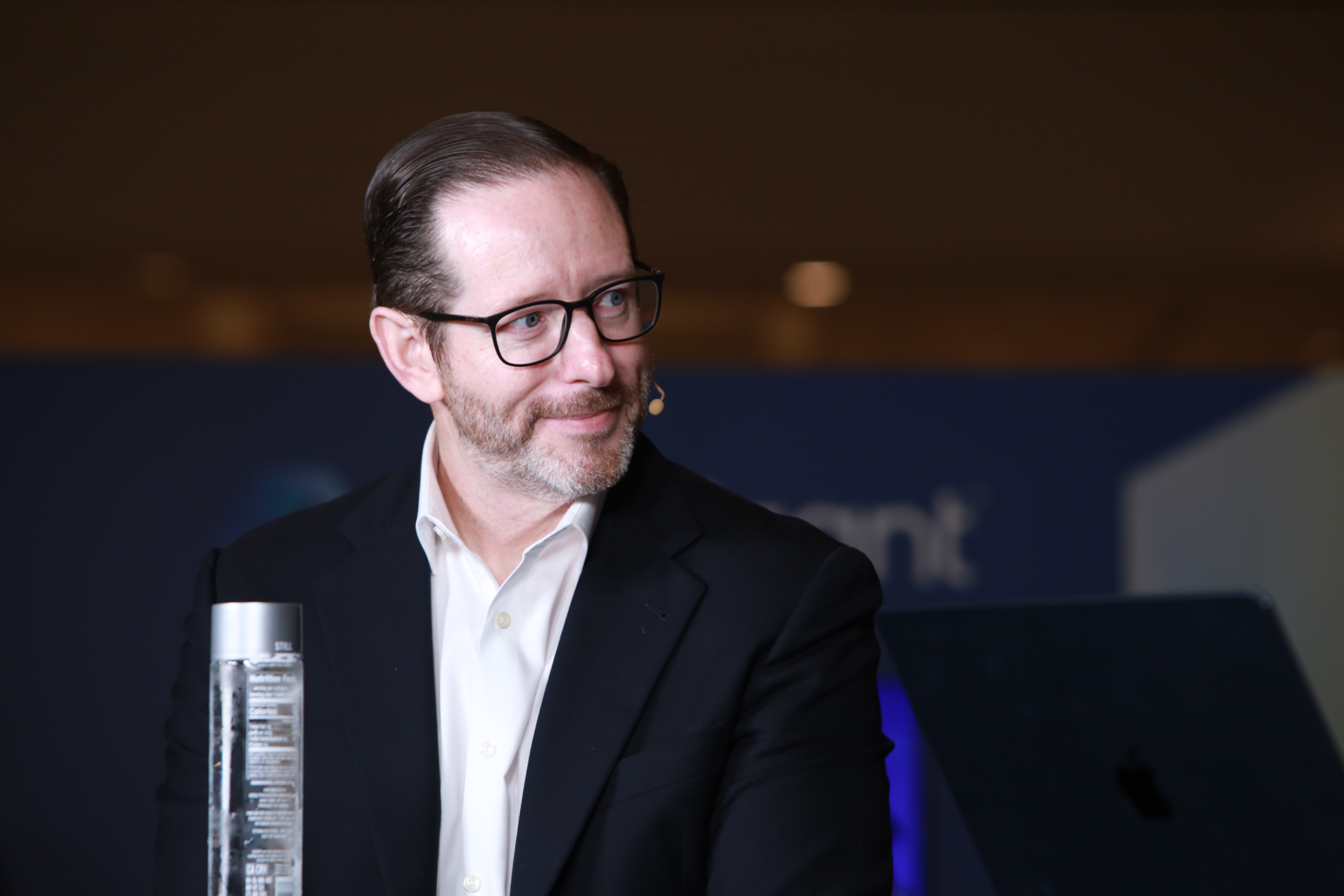
Jake Sloan, Appian
This session at Appian World 2026 examines modernization across the insurance and healthcare payer sectors, focusing on artificial intelligence, AI, including AI-driven underwriting, claims orchestration and pilot-to-production strategies. The conversation highlights orchestration layers for workflow automation, agentic AI use cases, regulatory compliance, cloud integration and claims automation to accelerate digital transformation and improve operational resilience.
Jake Sloan of Appian is industry vice president for insurance and healthcare payers and outlines pressures facing life insurers, property and casualty insurers and healthcare payers. Sloan details Appian's connected underwriting and claims capabilities, agentic AI use cases and how an orchestration layer helps accelerate pilot-to-production deployments across global operating theaters. They emphasize the need to balance rapid AI-driven innovation with regulatory guardrails and explain how an orchestration layer enables governed and faster deployment of underwriting and claims workflows so insurers scale responsibly. Analysts highlight practical risks around scale and data privacy and stress the importance of partnering with core administration systems and cloud providers to preserve agility and compliance.
play_circle_outlineMarrying Probabilistic AI with Deterministic Governance and Regulatory Guardrails: Appian Orchestration for Agile Legacy Core Systems
Industry Vice President, Insurance and Healthcare PayersAppian
In this interview from Appian World 2026, Jake Sloan, vice president of global insurance at Appian, joins theCUBE's Dave Vellante and co-host Alison Kosik to discuss how AI-powered process automation is helping a 300-year-old insurance industry move from pilot to production at unprecedented speed. Sloan outlines the pressures reshaping global insurance across property and casualty, life and healthcare payers — rising storm frequency, geopolitical volatility and fraud are forcing carriers to become genuinely agile. He details how Appian's Connected Underwritin...Read more
>> Welcome back to Appian World 26. We are streaming live from Orlando. I'm Alison Kosik alongside Dave Vellante, and we're about to dig in to a couple of industries that are really ripe for modernization, insurance, and healthcare, right?
Dave Vellante
>> Yes. We can all relate to the insurance industry, right? I mean, whether it's car insurance, home insurance, health insurance, right? Everybody pays for insurance, right?
Alison Kosik
>> Yeah. Let's dig into the conversation. I'm going to bring in Jake Sloan. He's the industry vice president of insurance and healthcare with Appian. Welcome to The Cube.
Jake Sloan
>> Thanks, Alison. Great to be here.
Alison Kosik
>> So these are two areas that you wanted to highlight today, and that really are really great examples of needing a technological makeover, I would assume.
Jake Sloan
>> Yes, yes. No, it's a great example. The industry itself, 300 years old, right? And when you think about all of the different ebbs and flows it's had over that time, one of the most profound changes in the speed that we're seeing right now with all the capability that both the industry has been receiving, as well as what we've been releasing as a firm and the willingness from insurers that have that conservative nature, which is what we want in our insurers, yet the ability this year in particular to really go from pilot to production, we're just seeing it at an unprecedented pace, which has been great.
Alison Kosik
>> Yeah.
Dave Vellante
>> What are the dynamics going on in the industry? What are the drivers? Do you serve property and casualty, life, the whole gamut? Give us the update on sort of the industry sort of dynamics right now.
Jake Sloan
>> That's right. So we serve our life insurance, property and casualty, non-life general insurance, as well as healthcare payers globally. We have three operating theaters between Europe, North America, and the Asia Pacific. And if you see any headline, you see that weather events and storm frequency and storm severity, it just continues to rise. So global insurers, broadly speaking, are balancing both the act of truly trying to understand the weather, having the actuarial function, as well as then the incredible claims moment of truth when that promise of a intangible piece of paper comes to life. So we're very proud to work with our underwriting communities, with our claims communities, as well as all the different facets of insurance with your onboarding agents, with your onboarding brokers and working them through the lifecycles to bring innovation there.
Dave Vellante
>> Would any company insure an oil tanker right now? You don't have to answer that.
Jake Sloan
>> We'll let that one for another day.
Dave Vellante
>> That's crazy. Well, the point is things change so fast.
Jake Sloan
>> They do.
Dave Vellante
>> In that business. I mean, we've seen weather events, then that trickles through the entire industry. It changes the sort of algorithms for underwriting. It changes the pricing algorithms. And so-
Jake Sloan
>> That's right.
Dave Vellante
>> They've got to be ... You think of insurance as sort of this old, like you say, 300 year old stayed business, but they've actually increasingly got to be agile.
Jake Sloan
>> Absolutely.
Dave Vellante
>> How does AI help with that?
Jake Sloan
>> It's been incredible that way. So when we look at what the functions, if we separate, say the job description of what the individuals and the insurance is doing, as well as the knowledge, the functions largely remain the same, whether it be an actuary, a claims examiner, an underwriter, yet the knowledge ramp, just as you said, whether it be geopolitical, whether it be weather, is constantly evolving and changing. Fraud in particular has been incredible that way. So being able to take the capabilities that AI can bring to these functions, yet put them inside of a process. So for instance, on the underwriting side, we've prebuilt what we call Appian's connected underwriting capability. That's a prebuilt solution that intakes, underwrites, it triages the risk that's coming in. We do the similar approach on the claim side to accelerate the intake, the alliance of that first notice of loss. And AI is critical to be able to help us understand document ingestion. What's the intent? What's the capability of that? Understanding whether the next best action is aligned to their risk tolerance, so their underwriting manuals. And so those are just two low hanging examples that we've been very successful with. In fact, we're the highest rated from the underwriting workbench perspective in the latest Everest report.
Dave Vellante
>> So those two products, the underwriting and the claims, you're bringing in a non-deterministic, probabilistic technology, agent technologies.
Jake Sloan
>> That's right.
Dave Vellante
>> You're lending that with the governance or architecting it with the governance that you're known for.
Jake Sloan
>> It's that sweet spot of, I want to go fast. However, I have these guardrails called regulation that I have to operate within. So it may be sometimes on the deterministic side, whether we're looking at some traditional instruments like the OFAC list, or if we're looking at KYC traditional financial service instruments, on whether or not they can be paid for a claim. We're also looking at some of the probabilistic aspects of, as insurers look to either expand capacity or release if they're tightening it, if we're in a hardened market, if they're releasing it, if we're growing, those are some of the rules at the micro level that the industry has really aspired to. And when we look at large core admin systems, they have their place in insurance, both on the life and the property casualty side, yet they're not built for that kind of speed and that kind of agility. So that's where having an orchestration layer and the agility layer that is Appian to surround all of the ability of CRM or of core admin has really been this incredible combination.
Dave Vellante
>> Are they changing? Is it changing the way in which users interact with the system? Are they interacting in human language? I wonder if you could describe that experience.
Jake Sloan
>> Yeah. Well, let me be clear. I still don't see anybody that looks to interact with their insurer. However, when they do, they want an incredible experience that they have in their digital life, whether it be any big box retail or any kind of a progressive, low effort, high reward kind of experience. And so for us, when we talk about true agentic capability, we've seen more interest in the last six months related to Agentic Voice, for instance. We were just on with a webinar with our colleagues in Australia last week and our partners at AWS where we were talking about a true proactive agentic capability where a large flood that may take several days to go from say a high mountainside down to the low now has an agentic voice agent integrated with Appian to proactively notify the community, practically fortify the community. And that's just an example where tech is truly creating just this incredible capacity for human empathy and for recovery at the community level, all coming together with all the rigid hard tech on the backside.
Alison Kosik
>> What do you see are the biggest challenges in healthcare and in the insurance industries in becoming more modern in-
Jake Sloan
>> Yes.
Alison Kosik
>> Obviously you talk about regulation, there's privacy, there's cybersecurity. I mean, right at the gamut.
Jake Sloan
>> Yeah, that's a great question. A, it's the volume. When we're talking about the size of these systems and the tens of millions of members that are using them, secondly, you want to iterate fast yet you don't want to end up on the front page of one of these publications that your bot just made a bad decision. So it's understanding how you can have the best of both, where you can configure and go fast while also having the guardrails and then being able to put it back into a process. We see so many proofs of concept or so many ideas around AI that is a task automation. It accelerates the task at the moment, but not the totality of the opportunity, whether that be member onboarding, whether that be looking at prior auth and some of the different healthcare processes. And so being able to balance both is key.
Dave Vellante
>> Yeah. I call that paving the cow path. You're just kind of automating a process there.
Jake Sloan
>> Exactly. Yeah, you are. And one of my favorite books you may appreciate is "Sacred Cows Make the Best Hamburgers," where you're talking about how you have those old stereotypes and you've really got to break your thinking and do new things.
Dave Vellante
>> How do you see ... I mean, a lot of times I feel like the insurance industry, because they have to, takes a brute force approach to underwriting. They say, "Well, we had a lot of hurricanes in Florida last year, so everybody's prices are going up and then that's going to ripple through the system." Two part questions. One is, will AI help us sort of anticipate, like in the Northeast, you can go on an oil plan, even though you're not paying for oil in the summer, you're smoothing out the pain.
Jake Sloan
>> That's right.
Dave Vellante
>> As opposed to paying thousands of dollars a month in January. So can AI help sort of anticipate that and then maybe kind of spread the blame a little bit more evenly? Are you seeing any progress there?
Alison Kosik
>> Wait, are you asking AI to predict the future with weather?
Jake Sloan
>> Yeah.
Alison Kosik
>> Okay. Obviously that's part of it. So yeah.
Jake Sloan
>> No, certainly. Well, and this is the fun fact. The industry has been using AI models say on the actuary side. When you're talking about say the storm frequency, we're here in Florida. And so when we think about the bad rap that sometimes the industry is receiving, we'll defend it vigorously because there's a lot of incredible execution and calculation. However, there's also, look, if you have a coastal property, you don't want that property to go up at the commensurate of risk that it would need to garner for that premium, and that's the part that's been difficult. So AI is helping us as it relates to some of the micro placement capabilities, the product configuration capabilities, as it relates to other parts, whether it be the Northeast and some of the different capabilities there. It certainly plays a part, yet are we outpacing one aspect at the expense of the other? So if the actuaries can create these incredible models, but we can't run them through the core admin systems and the policy admin systems that are creating that. And that's where this good middle ground has come from us, from a product configuration. Some of our partners here this week with Insurmo and others that have been really key for us to find that middle ground, because the other side of this is you could have text crawl at unprecedented rate. And so we're also looking to keep the guardrails on the text crawl and help keep the stack lean while also bringing innovation inside of it.
Dave Vellante
>> We're getting the xylophone keynote warning.
Jake Sloan
>> I thought that was just my earpiece.
Dave Vellante
>> I wanted to-
Alison Kosik
>> You better know we're going to be involved in some sort of musical.
Dave Vellante
>> I know, right? But one last question, if I could. If we're back here in 2027 at Appian World, what do you want to be able to say that you can't say today?
Jake Sloan
>> Well, I can say it today. I would say more scale on the pilot to production. We have, again, going back to what we just discussed as far as the conservative nature of insurance, we're seeing more and more companies embrace, whether it be AI policies that are starting to change. We didn't talk about it as much here, but the regulation in the US, for instance, the NAIC model bulletin or the EUAI Act and APRA and CPS 230 in Australia, all of those are now accelerating as well. So I'd like to be back here next year talking about how we're keeping pace with regulation or pushing more through to have the protections, the guardrails we need, while we're also seeing the benefit of adoption from all of our Appian customer base. That's been incredible.
Dave Vellante
>> And you'll be able to keep up with regulations presumably better today than you maybe were 10 years ago.
Jake Sloan
>> Absolutely. And in fact, we're working with the regulators, giving them some of these same tools because if you see it through their eyes, it's not that they're intentionally trying to be slow. They're also trying to figure out how they adapt it, adopt it, and put it across in practical application.
Dave Vellante
>> Yeah. They don't want to be blockers.
Jake Sloan
>> That's right. Yeah. No, they're doing great that way.
Alison Kosik
>> Well, thanks so much for stopping by The Cube.
Jake Sloan
>> Thank you.
Alison Kosik
>> Great conversation. Enjoyed your expertise.
Jake Sloan
>> Thank you so much.
Alison Kosik
>> And you're watching The Cube, the leader in live technology coverage. We'll be right back.










 Alison Kosik
 Dave Vellante