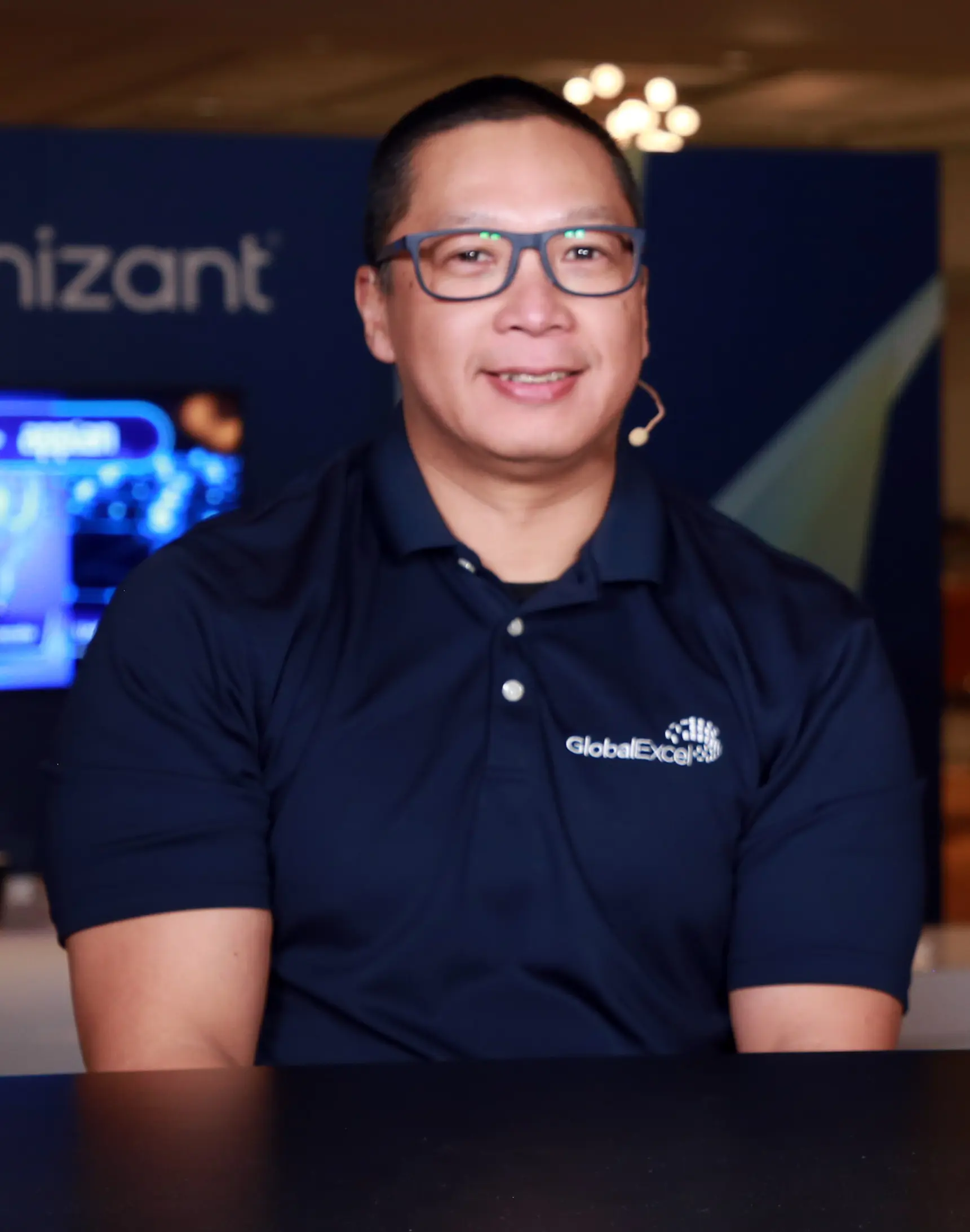
In this interview from Appian World 2026, Jeff Renon, director of information systems at Global Excel Management, joins Gregg Aldana, vice president of solutions consulting at Appian, to talk with theCUBE's Dave Vellante and co-host Alison Kosik about how process-centric AI is transforming claims management and operational efficiency in global healthcare administration. Renon describes Global Excel Management's core mandate — accelerating the speed at which claims are adjudicated and information reaches customers across its network of 2,500 employees operating in nine countries. Aldana explains how Appian distinguishes itself by embedding AI directly into process workflows rather than layering it on from the outside, enabling organizations to move from experimentation to production at a pace that generates measurable returns almost immediately.
The conversation also explores how the regulated nature of healthcare demands that AI operate within auditable, inspectable frameworks rather than as a black box. Aldana details how every AI agent deployed on Appian must follow defined, governable steps — a critical requirement in environments subject to healthcare compliance rules. The discussion then shifts to a broader competitive argument: rather than using AI to cut headcount, the most aggressive companies are deploying it to double output with the same teams. Renon and Aldana also highlight how adaptability speed — the ability to integrate a new LLM or capability as soon as it emerges — is becoming as important a benchmark metric for CFOs as raw cost savings. From reducing behavioral health claim onboarding from six months to six days to warning that AI will produce market winners and losers faster than any previous technology wave, the discussion makes a compelling case for why process-first AI adoption is the defining competitive differentiator of this era.
Forgot Password
Almost there!
We just sent you a verification email. Please verify your account to gain access to
Appian World 2026. If you don’t think you received an email check your
spam folder.
In order to sign in, enter the email address you used to registered for the event. Once completed, you will receive an email with a verification link. Open the link to automatically sign into the site.
Register for Appian World 2026
Please fill out the information below. You will receive an email with a verification link confirming your registration. Click the link to automatically sign into the site.
You’re almost there!
We just sent you a verification email. Please click the verification button in the email. Once your email address is verified, you will have full access to all event content for Appian World 2026.
I want my badge and interests to be visible to all attendees.
Checking this box will display your presense on the attendees list, view your profile and allow other attendees to contact you via 1-1 chat. Read the Privacy Policy. At any time, you can choose to disable this preference.
Select your Interests!
add
Upload your photo
Uploading..
OR
Connect via Twitter
Connect via Linkedin
EDIT PASSWORD
Share
Forgot Password
Almost there!
We just sent you a verification email. Please verify your account to gain access to
Appian World 2026. If you don’t think you received an email check your
spam folder.
In order to sign in, enter the email address you used to registered for the event. Once completed, you will receive an email with a verification link. Open the link to automatically sign into the site.
Sign in to gain access to Appian World 2026
Please sign in with LinkedIn to continue to Appian World 2026. Signing in with LinkedIn ensures a professional environment.
Are you sure you want to remove access rights for this user?
Details
Manage Access
email address
Community Invitation
Jeff Renon, Global Excel Management & Gregg Aldana, Appian
Dave Vellante & Alison Kosik sit down with Jeff Renon, Director, Information System, Global Excel Management & Gregg Aldana, VP, Head of Global Solutions Consulting, Appian, at Appian World 2026 at the JW Marriott Orlando, Grande Lakes in Orlando, FL.
Jeff Renon, Global Excel Management & Gregg Aldana, Appian
Jeff Renon
Director - Information SystemsGlobal Excel Management
Gregg Aldana
VP Solutions ConsultingAppian
In this interview from Appian World 2026, Jeff Renon, director of information systems at Global Excel Management, joins Gregg Aldana, vice president of solutions consulting at Appian, to talk with theCUBE's Dave Vellante and co-host Alison Kosik about how process-centric AI is transforming claims management and operational efficiency in global healthcare administration. Renon describes Global Excel Management's core mandate — accelerating the speed at which claims are adjudicated and information reaches customers across its network of 2,500 employees operatin...Read more
Jeff Renon, Global Excel Management & Gregg Aldana, Appian
search
Alison Kosik
>> Welcome back to Appian World 26. We're streaming live here in Orlando. I'm Alison Kosik joined alongside by Dave Vellante. We're about to talk about scaling AI-driven efficiency in global healthcare operations.
Dave Vellante
>> Yeah, we're deep into day two. We had some great customer stories and looking forward to this one.
Alison Kosik
>> Yeah, let's bring him in right now. We've got Gregg Aldana. He's the vice president head of Global Solutions Consulting with Appian. Welcome to The Cube again.
Gregg Aldana
>> Thanks for having us, Alison.
Alison Kosik
>> And we've got Jeff Renon, Director Information Systems with Global Excel Management. Welcome to The Cube as well.
Jeff Renon
>> Thank you very much.
Alison Kosik
>> So Jeff, I'm going to start with you. I'm curious what the core problem was that you set out to solve, and how did your approach evolve as you introduced more automation, more AI?
Jeff Renon
>> Good question. So basically, at a very high level, we wanted to be able to track or be able to get information to our customers and to our employees faster. And to be able to ultimately pay-claim faster is really our ultimate challenge or goal.
Alison Kosik
>> And where did your partnership with Appian step in for that?
Jeff Renon
>> Yeah. So, during the whole process, we started, basically took a step back of looking at our whole process and saying, "How do we want to solve that problem?" And we wanted to know how do we get our data faster, better. So we kind of took a step back and said, "How do we get data from our customers first? And then how do we get that information into our employees' hands faster?" So basically, we built our front end tools through Appian, through portal, so that we can ingest the data better and faster, and expose that to our employees better.
Alison Kosik
>> And Gregg, this was right up Appian's alley, right?
Gregg Aldana
>> Oh, it was right in our wheelhouse. And I think one of the unique things about Appian is that how quickly you can go from experimentation or a proof of concept into production. And a lot of that has to do with not just using AI, but the platform is very cohesive. And where a lot of platforms will piece together in both AI and from the outside, with Appian, we're betting it right in the middle. So, let us help Regeneron get there a lot faster.
Dave Vellante
>> Jeff, can you tell us more about global excel management? You're based in Canada, you're an international administrator.
Jeff Renon
>> Yes.
Dave Vellante
>> Third party administrator. Tell us more about your business.
Jeff Renon
>> Yeah. Basically, we're based out of Canada. We're a global provider of medical assistance, claims assistance, and also cost containment. Our headquarters is in Quebec, but we have offices in nine different countries. Globally, we have 2,500 employees servicing members, our client members in 90 different countries.
Dave Vellante
>> Okay. So it's about cost efficiency.
Jeff Renon
>> 100%.
Dave Vellante
>> You're helping your clients manage risk.
Jeff Renon
>> Correct.
Dave Vellante
>> Service claims.
Jeff Renon
>> Yes.
Dave Vellante
>> Okay. So what are the real drivers in your business today? What's driving the decision-making around where you put your resources?
Jeff Renon
>> The biggest one is speed. Nowadays, everyone wants everything now. They want their claim paid yesterday.
Dave Vellante
>> It's the millennials.
Jeff Renon
>> Everything is a now.
Dave Vellante
>> How can we not respond?
Gregg Aldana
>> We're a very impatient culture.
Jeff Renon
>> For sure. And that's kind of where we want to go. Ultimately, like I said, how do we pay our claims are faster. And that's really where we've been kind of looking at our whole process and saying, what are our challenges? We knew we had challenges. We knew we had things that we need to fix, but obviously at the end of the day, we had to focus on something and that's kind of how we want to look forward for that.
Dave Vellante
>> And Alison, I presume as well, I mean, when you're adjudicating claims, you don't want to go back and forth, back and forth. I mean, that's costly. You want to get it right the first time. Explain it. If the customer has to take a haircut, you explain why. If not, if you're rejecting it, you want to explain why. Maybe there's an escalation process, but you want to make that as efficient as possible.
Alison Kosik
>> And streamline, exactly.
Jeff Renon
>> Absolutely. And really give them enough information. So what happens is we don't want them to be reaching out to us. We want to give that information as quickly for them so that they're not calling us every other day asking them, "Where's my claim?" And that type of thing. So we want to make sure that we alleviate that issue.
Dave Vellante
>> So, in the early days of generative AI, and Gregg, I wonder if you could chime in this as well.
Gregg Aldana
>> Sure.
Dave Vellante
>> We saw a lot of people, because it was so experimental, stealing from other budgets to fund their AI. And then it's become more obvious where the value is, but I wonder if you could sort of take us through the journey post the AI heard around the world.
Gregg Aldana
>> Sure. Yeah.
Dave Vellante
>> How you guys have worked together? What's some of the successes that you've had? And how you guys have succeeded together?
Gregg Aldana
>> I tell you, the partnership with Appian and GM has really been phenomenal. And it's kind of a blueprint that we're seeing over and over again. The technology can solve some of these problems so quickly that it's actually generating the return on investment that pays for a lot of these projects. So that need for speed, that translates into real dollars. When we can adjudicate a claim, or you can actually address a customer's concern that much quicker, that's more revenue. These things are actually paying for itself. And so there's a willingness, well, what else can we do? And so we're seeing these projects go from idea into production faster than we would've ever imagined before. So it's really been a great partnership, but what we're also seeing is that it's not just enough, like the traditional ROI, like time savings, cost savings, those are great drivers, but expectations are changing. Jeff talked about people are getting impatient, they want things faster. And with ChatGPT, things have not slowed down. How quickly a company can adapt to those changes is now becoming some of the benchmark metrics here. How quickly when a new system comes out or a new LLM or a new finding, can we actually implement that change? That is just as important to a CFO than just the raw cost dollar savings.
Alison Kosik
>> Why is process so important in healthcare environments, and process also including cybersecurity as well?
Gregg Aldana
>> Well, I mean, it's a regulated environment. And there are specific rules that have to be followed. And I think one of the things that was a great match between Appian and GM here was the fact that anything that you do on Appian can be audited by a third party. And you're not just using AI in isolation, or AI is a black box where we don't know what it's doing. It's AI being given a set of very defined regulated processes that can be inspected, so that if we roll out an AI agent, there are very specific steps that it has to follow. There are government rules, there are healthcare rules. So that's why it's very critical that you're very strategic about where we place AI inside these healthcare processes.
Dave Vellante
>> Back in the day, when the IT department was lucky enough to implement something that saved the company money, because they had an idea, or maybe they're talking to the business, and it was successful, the next year your budget still got cut by 5%, do more with less. What Craig was just saying is essentially some of these AI projects are paying for themselves. Is there a gain sharing? Are you able to reinvest that?
Jeff Renon
>> Oh, absolutely. That's one of the things that we are trying to do, is look at the data efficiency, where else can we take that money, and focus it on other projects that, in turn is gosh, you're going to save money as well, right? So, for sure. But also like you're saying, it's always do more with less, right?
Gregg Aldana
>> Wait, I'm going to challenge that, Jeff, because a lot of customers are not saying do more with less, they're saying do more with more. And so a lot of companies aren't just saying, "Hey, I don't need as many people to do what I used to be able to do. I can do more." It's like, "Well, wait a second, with the same number of people, I can double my output now." And so that's where we're seeing a lot of competitive companies really take a different mindset, like bust out of the common way of just cutting.
Dave Vellante
>> Because one of the things I've noticed, it's not a broad trend yet, but I've seen it more and more where the CFO is taking more of an operational role. I mean, Scarpelli kind of was like this, right?
Gregg Aldana
>> Yes. Our old firm from ServiceNow.
Dave Vellante
>> And so they had a much more of a go to-market and a growth mindset.
Gregg Aldana
>> Yes.
Dave Vellante
>> And so it was a good balance where the capital allocation, wow, if I can invest a dollar in technology and get back four, I'm going to invest $4 and get back 16.
Gregg Aldana
>> Well, I mean, we saw the journey of a lot of these tech companies over the last 10 years, and hyper growth is a term we all saw. Well, AI is making hyper growth available to a lot more industries now, not just the tech industry to grow, like you said, double every so many months. What are you seeing the impact of that?
Jeff Renon
>> Really, it's kind of hard to say at this point. There's so much going on. The curve, the AI curve, again, one of the questions is like, where are you in your AI journey, right? That goalpost changes almost every day, right? From three years ago, if you saw us three years ago to we are now, pretty substantial growth to where we are. But if you look at what AI is three years ago to today, and then where we are today with AI, we're still on that up slope, because that goalpost of like AI is moving all the time, all the time.
Dave Vellante
>> We're all used to S-curves. We learned about them in school, and we've sort of experienced them every new technology wave, whatever it was, cloud, internet, mobile, social, big data, PCs, it was kind of an S-curve. Erik Brynjolfsson, the economist, he was now at Stanford, he was at MIT when we first interviewed him on The Cube. I think that's probably a step-up maybe. I don't know. We're East Coast, so I like East Coast AI. Anyway.
Jeff Renon
>> East Coast AI.
Dave Vellante
>> There you go. I'm around with that.
Jeff Renon
>> That's right.
Dave Vellante
>> He has this concept of a J-curve, which is kind of a steeper up, which I don't know, it's kind of a weird question. Does it feel like a historical S-curve, or does it feel like more of a... Well, it seems like it's all over the place curve.
Jeff Renon
>> It's almost like a straight... The way the industry is going, it's almost an exponential exponential curve, right? Not even a curve. It seems like there's no top at this point, right? It's just a straight lineup.
Gregg Aldana
>> What I'm finding is a lot of companies are... I don't think they have a handle on how quickly things are going to escalate, and how fast. And the companies, like Global Excellence here, they're responding very quickly or going to be much more competitive. I think you're going to see winners and losers a lot more quicker than you used to be able to see them. You will see companies disappear in months, and you'll see new companies emerge out of nowhere. It's just so fast nowadays. We've never seen anything like this.
Alison Kosik
>> Jeff, what does success look like to you for your company in the next couple of years?
Jeff Renon
>> That's a good question. Right now, I think our success point is making sure that obviously our clients are happy, right? And again, we get more business in there so that we can process more claims. Really at the end of the day, that's kind of what our goal is, is to be able to process claims faster, and make all our customers happy.
Dave Vellante
>> And sorry, I apologize for not knowing that you might have said this before, you're a global organization?
Jeff Renon
>> Correct. Yes.
Dave Vellante
>> Okay. And you service plenty of Canadian constituents, right?
Jeff Renon
>> Correct. Yes. We have a large book of business in Canada.
Dave Vellante
>> How would you describe the Canadian healthcare system? Thumbs up? People like it? People happy? Thumbs down?
Jeff Renon
>> Oh, good question.
Dave Vellante
>> Yeah, we hear all this debate in the US.
Jeff Renon
>> Okay. I'm born and raised in Canada, and that's all I know. Is it great to walk into a hospital and not have to worry about a million-dollar bill? Great. But is it not good that you're sitting in a hospital waiting room for 11 hours? Not so good. They call it free, but is it really free? Time is not free, right?
Alison Kosik
>> I like that honesty.
Jeff Renon
>> That's kind of where I see it, where it's... You can walk into anywhere and get the service that you need. It might take six months to get it, but you'll get it.
Alison Kosik
>> That's deflect from what we're talking about. Let me ask this. You guys are some of the smartest people about this. Do you see an AI fixed to this? Do you see a technological fix to that problem that you're just talking about?
Jeff Renon
>> No, because at that point, unless you're going to see an AI, you're going to type in your problem and AI is going to spit out a prescription, to me, it's more about the resources available.
Gregg Aldana
>> Well, I was going to say, I have a little bit of a different take. I work with a lot of healthcare providers, and we even saw it today with the claim autism. I mean, they reduce the amount of onboarding time from six months to six days. And so I agree with you in terms of time is of the essence. I was traveling back from a conference in Australia a few months ago and I got an appendicitis on the flight back. And so I got rushed to a hospital in San Francisco, and I was literally in surgery within four hours. Now, I have private healthcare insurance, so maybe that might have escalated it, but time was of the essence. I was going to have something that would burst. I couldn't wait two days. So we're seeing a lot of the paperwork and a lot of the manual processes around getting access to healthcare being addressed rapidly with AI. I mean, if you look at an example like that, a claim autism, in behavioral medicine, there's really no standard way to document a diagnosis. It is the perfect use case for AI helping you, because you could have one diagnosis documented a hundred different ways, an AI agent can always deal with that in a very quickly way. People will spend weeks trying to sift through that.
Dave Vellante
>> Well, and the reason I ask that loaded question is because the promise of AI is it's going to help with these really big, chewy problems: healthcare, climate, energy, on and on and on. And so I'd like to probe on, okay, what does that actually look like on a practical and day-by-day basis? How do we get from here to there? And companies like yours are actually doing the hard work. So, we appreciate that. And boy, that's not a good time to get appendicitis.
Gregg Aldana
>> The longest flight possible, Sydney to SFO, the 14-hour flight, I'm sure many of us have been on that, one hour into the flight, got the pain. And boy, oh boy, I got to the hospital very, very quickly. Thank you for that. But I really see AI addressing a lot of these problems and getting people access to healthcare. I mean, even if you look at their situation here, moving from just automating to now being a little more predictive?
Jeff Renon
>> Oh, 100%. Oh, for sure. There's always a space for that. But when you're talking about the healthcare, 100% lower the question on that side of it. When you're talking about... To me, I don't have anything to compare it to. I see all the other, how the US healthcare is compared to what we have, it's like pros and cons on both.
Dave Vellante
>> Is there a tiered system? Can you get access to more expensive healthcare?
Jeff Renon
>> That's the one thing that they are trying to talk about. Can they privatize some of these things? I live in Windsor, so basically a border town from right across from Detroit.
Gregg Aldana
>> Michigan, yeah, yeah.
Jeff Renon
>> So really at the end of the day, we have a lot of people that if they can't seek healthcare in Canada because they say they could get it, but say it's a six-month wait time, they go over and pay, they go over the border to pay.
Alison Kosik
>> Yeah.
Gregg Aldana
>> Interesting. Wow.
Alison Kosik
>> I heard about that.
Jeff Renon
>> Because they feel their need is more.
Dave Vellante
>> That's ironic. I have friends who did LASIK surgery in Canada because they thought it was better and cheaper.
Jeff Renon
>> Oh, wow, really?
Dave Vellante
>> So who knows? It goes both ways. Well, guys, thank you. This was fascinating.
Alison Kosik
>> Great conversation. Thank you.
Gregg Aldana
>> This was great. I think we went in a lot of different areas.
Dave Vellante
>> Absolutely.
Alison Kosik
>> And that's how you find answers, right?
Dave Vellante
>> Welcome to The Cube.
Alison Kosik
>> Yeah. Thanks for being on The Cube. And you've been watching The Cube, the leader in high-tech enterprise analytics and live tech coverage. We'll be right back.






 Alison Kosik
 Dave Vellante