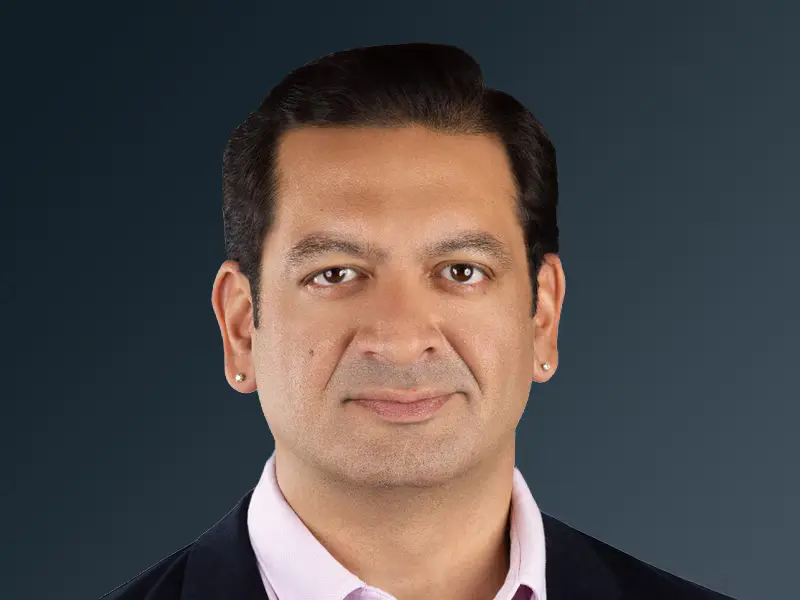
This discussion examines advancing artificial intelligence on the client, focusing on agentic PCs, tokenomics and endpoint infrastructure. Rahul Tikoo of AMD, senior vice president and general manager, client, appears at AMD Advancing AI 2026 to explain AMD's strategy for bringing agentic AI to endpoints. Tikoo outlines product platforms such as Ryzen AI Halo, Strix and Gorgon Halo and software initiatives including Lemonade, Access and Skills. They describe developer workflows, CIO priorities and practical use cases for running local large language models, LLMs and agent harnesses on PCs.
Key takeaways include that agentic AI moves to the client to reduce cloud token costs and improve latency and privacy, according to Tikoo. Tikoo highlights Ryzen AI Halo's 128 GB unified memory and local LLM capability, semantic routing to decide cloud versus local inference and secure sandboxing and governance. They note this shift reshapes PC economics by turning endpoints into value generators and accelerates refresh cycles, with direct implications for endpoint infrastructure and enterprise AI strategy.
This conversation provides practical guidance for developers and IT leaders on implementing local inference, managing tokenomics and deploying secure agent harnesses on edge devices. It informs decisions for PC manufacturers, software ecosystem partners and enterprise IT regarding refresh planning, governance and performance optimization.
Forgot Password
Almost there!
We just sent you a verification email. Please verify your account to gain access to
Advancing AI 2026. If you don’t think you received an email check your
spam folder.
In order to sign in, enter the email address you used to registered for the event. Once completed, you will receive an email with a verification link. Open the link to automatically sign into the site.
Register for Advancing AI 2026
Please fill out the information below. You will receive an email with a verification link confirming your registration. Click the link to automatically sign into the site.
You’re almost there!
We just sent you a verification email. Please click the verification button in the email. Once your email address is verified, you will have full access to all event content for Advancing AI 2026.
I want my badge and interests to be visible to all attendees.
Checking this box will display your presense on the attendees list, view your profile and allow other attendees to contact you via 1-1 chat. Read the Privacy Policy. At any time, you can choose to disable this preference.
Select your Interests!
add
Upload your photo
Uploading..
OR
Connect via Twitter
Connect via Linkedin
EDIT PASSWORD
Share
Forgot Password
Almost there!
We just sent you a verification email. Please verify your account to gain access to
Advancing AI 2026. If you don’t think you received an email check your
spam folder.
In order to sign in, enter the email address you used to registered for the event. Once completed, you will receive an email with a verification link. Open the link to automatically sign into the site.
Sign in to gain access to Advancing AI 2026
Please sign in with LinkedIn to continue to Advancing AI 2026. Signing in with LinkedIn ensures a professional environment.
Are you sure you want to remove access rights for this user?
Details
Manage Access
email address
Community Invitation
Rahul Tikoo, AMD
In this interview from AMD Advancing AI (San Francisco) 2026, Rahul Tikoo, senior vice president and general manager of the Client Business Unit at Advanced Micro Devices Inc., joins theCUBE's Dave Vellante and John Furrier to discuss how agentic AI is transforming the PC from a cost item into a value-generating node in enterprise infrastructure. Tikoo explains why the "killer app" for AI turned out to be agentic workflows rather than chatbots, describing how reasoning agents multiply productivity far beyond simple assistants. He details the Ryzen AI Halo platform, built on the Ryzen AI Max+ processor with 128 gigs of unified memory, which lets large language models run locally rather than burning cloud tokens.
The conversation also explores AMD's push to simplify the software stitching this all together, including a semantic router that decides in real time whether workloads run locally or in the cloud. Tikoo highlights new tools such as Access for sandboxing agents and Skills for automating agent setup, both aimed at giving CIOs governance, observability and security over agentic deployments. He notes that agentic PCs are driving faster refresh cycles across the 2 billion-device PC market as machines become always-on desk-side servers running dozens of agents. From Microsoft partnerships around the Agentic OS to AMD's end-to-end reach across CPUs, GPUs, NPUs and the open ROCm ecosystem, Tikoo makes the case for why AMD's full-stack, open approach gives enterprises a genuine alternative for scaling AI from cloud to endpoint.
play_circle_outlineAgentic AI shifting from cloud to client devices (PCs) enabling autonomous personal agents
replyShare Clip
play_circle_outlineUse cases: small businesses and developers running back-office agents, sandbox experimentation
replyShare Clip
play_circle_outlineAMD Ryzen AI Max Enables Frontier-Quality Local Inference of 9B–24B LLMs, Slashing Tokenomics and Cloud Costs
replyShare Clip
play_circle_outlineSemantic Router: Securely Orchestrating Agent Workloads Between Cloud LLMs and Local PCs with Identity, Sandboxing, Observability, and Governance
replyShare Clip
play_circle_outlineLemonade: Local LLM Platform with ROCm/Open Tools, Microsoft & ISV Partnerships, and Cross‑Harness Skills
In this interview from AMD Advancing AI (San Francisco) 2026, Rahul Tikoo, senior vice president and general manager of the Client Business Unit at Advanced Micro Devices Inc., joins theCUBE's Dave Vellante and John Furrier to discuss how agentic AI is transforming the PC from a cost item into a value-generating node in enterprise infrastructure. Tikoo explains why the "killer app" for AI turned out to be agentic workflows rather than chatbots, describing how reasoning agents multiply productivity far beyond simple assistants. He details the Ryzen AI Halo pla...Read more
exploreKeep Exploring
What is the "killer app" for AI?add
How are AI agents and natural-language interfaces changing how people use software and businesses operate, and what would the required device/product (form factor, components, and cost/cost-management considerations) to enable these agentic-AI use cases look like?add
How can organizations reduce cloud token costs for Agentic AI, and how do agentic PCs (e.g., the Ryzen AI Halo) enable running large language models on endpoints as part of a hybrid AI infrastructure?add
How are the software, routing, and governance mechanisms being simplified to manage agentic workflows—deciding between cloud and local LLMs, providing secure sandboxes and policy control, and handling security, observability, and cost/token management—when scaling from small teams to thousands of enterprise seats?add
How will you support agentic functionality across Windows and open-source ecosystems?add
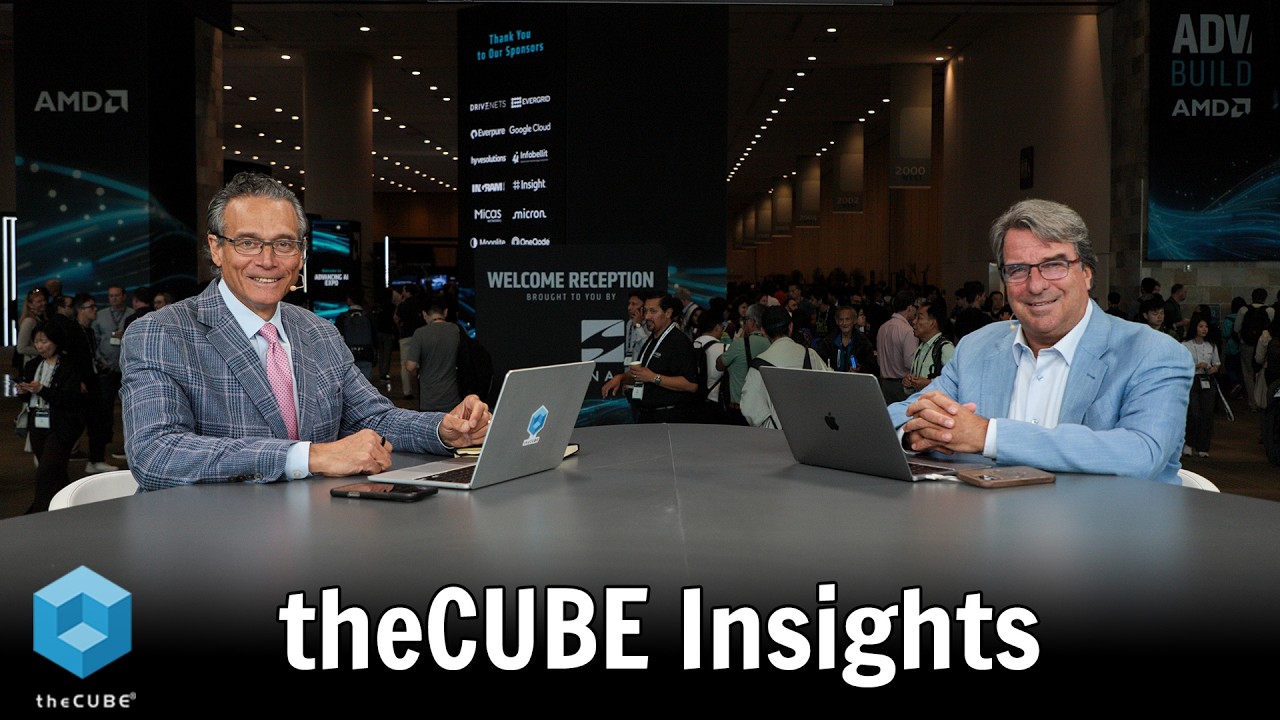
>> Thank you. Thank you. Welcome back to theCUBE live in San Francisco, California for AMD's Advancing AI event. It's where all the AMD leaders are gathering, the industry leaders as well as practitioners and technologists. It's a free event, sold out, 14 ,000 people, packed house. I'm John Furrier with Dave Vellante, my co -host. Rahul Tikoo is here, Senior Vice President, General Manager of the Client Business at AMD. I never thought I'd say this early, but as we predicted, AI is coming to the client side, which is your devices, but also they got super servers, Helios, powering everything in between. Rahul, thanks for coming on theCUBE.
Rahul Tikoo
>> Thank you, thank you for having me.Good to see you guys.
Dave Vellante
>> So I love this idea of having my own AI PC that can do stuff. We've done interviews where autonomous vehicles are now becoming personal. So the personal computer, client, devices are connecting to intelligence. And developers and end users will get value out of that. That's a big driver. Give us an update on current situation with why this is happening, and then what's going on with the product.
Rahul Tikoo
>> Yeah, so I think if you look at the last three years, we're sort of in this age of chatbots or AI assistants. And so everyone that was using a PC was using some sort of an AI assistant and that could get you 10, 20, 30 % more productive. What's happened and a lot of people would ask me, hey, what's the killer app? I don't know what the killer app for AI is. And I think what's happened is the killer app now is agentic AI. And so when you think about agentic, what's happening is people are going from assistants to fully reasoning autonomous agents that work on your behalf, right? And so the productivity of 10, 20, 30 % because of the assistance is now becoming a force multiplier of 10x, 100x. And so now you can imagine a software developer that has an army of agents working for them and creating code, right? That's the world we're entering into and PCs are becoming a very important part of that world.
Dave Vellante
>> Yeah, we had a comment on one of my posts on LinkedIn. we brought it up all day today, that the human empowerment has gone supernova with AI. And things like the graphical user interface, Windows, Office interfaces, are changing to natural language.
Rahul Tikoo
>> Yeah, yeah.
Dave Vellante
>> So that changes what used to be, load Excel, type in data, create a macro, build a graph, import it to PowerPoint. So that goes away.
Rahul Tikoo
>> Yeah, absolutely.
Dave Vellante
>> Now we're in, hey, just run the numbers for the quarter and give me a graph.
Rahul Tikoo
>> Yeah, absolutely. That's AI. AI agents are so smart now that with natural English language, anyone can be a programmer, right? You could be a one-person company. I'll give you a quick example. Working with small businesses, right? And there are small businesses that are doctor's offices, that are marketing firms, that are law firms. they don't need to learn AI, they just need to learn how to use these agents to be able to run their back offices. And they're very quickly able to do that and scale their businesses.
Dave Vellante
>> I want to dig into now the use case for what you're going to be doing for business. When OpenClaw was getting going, when the whole thing went viral, the guy wrote a blog post, how did he do it? Oh, I got a Mac mini, and then I just connected all this, went wild and did all those cool things that everyone made a meme out of and that exploded into a major viral revolution of developers. And when asked, he's I just said Mac mini because that was the cheapest thing I could get. But the point was that was the device that enabled it. Okay, so to connect the dots now, that's actually a market.
Dave Vellante
>> Yes.
Dave Vellante
>> So what does that box, that device look like? Obviously small form factor for personal use, but what's in it, what are the requirements, what makes it now acceptable and sustainable to provide value because this is what people are doing. They want to get those tokens, they want to play. They want to tinker around, experiment, create value.
Rahul Tikoo
>> So I'll give you a couple of examples in the dialogue and then we can talk about the product. When I meet with the CIOs, everyone is sort of looking at the cost of agentic AI, especially from a cloud use case perspective, and they're realizing it's a very big P &L item, right? And so from that perspective, tokenomics has really become an important consideration for C -suites on how to deploy agentic AI. And so when you think about agentic PCs and the stuff that we're working on, that's become an important strategic node for the CIOs in a hybrid AI infrastructure. So, of course, they're going to still have cloud. Of course, they're going to still have private infrastructure. but they're now seriously looking at agentic PCs as an extension of that such that they can save on the token costs while keeping security, privacy, latency, all of those considerations paramount. And so what sort of enables that? So we launched this product called the Ryzen AI Halo.
Dave Vellante
>> Beautiful.
Rahul Tikoo
>> Right, and this Ryzen AI Halo is driven by the Ryzen AI Max processor, which is 16 cores, which is 128 gigs of unified GPU, CPU memory, and so now if you look at large language models, things that used to run in the frontier now can run on the end points. Nine billion parameter models, or 24 billion parameter models are becoming as good a quality as some of these frontier models. So that is enabling us to now be able to run these models on the Ryzen AI Halo box with 128 gigs of memory and be able to have an agent harness running on it and do whatever workflow you have using agents.
Dave Vellante
>> So this to me sounds like a developer opportunity because what you just laid out to me, what I heard was, hey, don't go to the cloud and burn tokens and blow the budget. You want to build and build something, you're playing with it. Here's your sandbox, go play. And by the way, the CIO loves it because let chaos reign and then, okay, I'll fund it. So this is an operational thing. So is that how you're seeing it? Am I getting this right? Because I see multiple things, cost, creativity, but also budget.
Rahul Tikoo
>> Yes, I...
Rahul Tikoo
>> Here's your sandbox, show me what you got.
Rahul Tikoo
>> Here's your paintbrush. Yeah, absolutely. You could start your work on the endpoint or you could deploy your workload at the endpoint. When you think about deploying the workload at the endpoint, endpoint is probably going to be the best place in terms of inferencing because the data resides at the endpoint, right? So when you think about security and privacy, especially in regulated markets and regulated industries, that's paramount. When you think about latency, how quickly you are able to get responses back, there are certain things that you want to be speedy. And so that happens at the endpoint. And then of course we talked about costs and that is an important consideration.
Dave Vellante
>> So it's beyond developer. It's basically what you're saying is that if I'm an end user, I can have an agent running on my, with a harness, pre -processing and doing things on my behalf, and then I can interface that from wherever.
Dave Vellante
>> Absolutely.
Dave Vellante
>> Well, big picture here. So on average, organizations globally spend about 4 % of their revenue on IT. That number we've predicted is going to explode. It's going to increase to, let's call it 10 % by mid next decade. And that's going to be through spending capex to become token generators or go to the cloud APIs. Either way, they're going to be scaling with less labor than they would have historically. The other point is the last sustained productivity boom that we had was in the 90s, which was a bottoms up PC productivity boom. You were there, you were selling those things, I don't know if you guys both remember that. The AI wave started with the CEO saying, thou shalt do AI. And now, I wrote a piece a couple months ago called Personal Agents Light the Fuse. And that's what's happening now. It's just bottom up. And ultimately, hopefully, it's all going to come together and that's when you're going to start to see these individual silos of productivity come together for corporate productivity. So how do you see that playing out, Rahul, with the CIOs that you talk to? Are they thinking about that?
Dave Vellante
>> Yeah, I think -
Dave Vellante
>> Because you don't want silos of intelligence, you want that to be a shared corporate capability.
Rahul Tikoo
>> Yeah, I think one of the big things that we are hearing from the CIOs is, hey, I get it, I get the concepts, I understand tokenomics, I'm struggling with it, how can AMD help me with this, right? And so I think if you think about AMD as an end -to -end silicon provider, going from cloud to data center to the endpoint to the edge, we provide that entire stack. Now what we're trying to work on is making the software pieces that stitch it all together much simpler. So what by that is if you look at what we're announcing at Advancing AI, we've now built a semantic router. And what that means is this router can look at your agentic workflow and decide in the moment whether things need to go to a cloud LLM or they need to go to a local PC. So an end customer or an IT shop doesn't have to worry about it, it's just taken care of. The other thing is, you talked about Claude and how Claude came about, but again, it had some security challenges, right?
Rahul Tikoo
>> Nightmare.
Rahul Tikoo
>> And so what we have done is now create a secure sandbox in which your agentic harness can reside and be controlled with policies. And so when you think about doing this in a one person or a five person small business, versus now scaling it to thousands of seats in IT, it's very different. So what you have to do there is, you have to have the IT infrastructure around, being able to observe what the agents are doing, being able to govern them with policies, having the right security infrastructure, making sure that the agents are sticking to your corporation security policies, being able to manage the tokenomics of, hey, this agent has gone rogue and they're spending a lot of money on things that we don't think need to go to the cloud and managing that locally. All of those are considerations that a CIO or an IT decision maker has, and we can help them in that area.
Dave Vellante
>> This is a double bottom line opportunity because the end user wins, because imagine their future. I got agents working on my behalf while I'm playing golf, checking my email, pinging me when they need me. But the operational side is efficiency, distributed computing. Remember the old grid computing, P2P days? using resource locally. That's an opportunity for the infrastructure as it gets smarter. You guys think about that? Is that part of this, spread the love around in terms of resource loading or resource management?
Rahul Tikoo
>> Yeah, I think if I take a step back, an end user wants to be able to use these tools. Because these tools give them infinite productivity, right? 10x, 100x, we talked about that. they don't need to worry about the security, the policy, that's where the IT infrastructure comes in. So we got to make this so simple that you and I can use it on a day -to -day basis and not have to think about what's happening in the background. So that's where the routing and all of the infrastructure. Identity, governance. Software, investments, partnerships with Microsoft, partnerships with other ISVs comes in. So we're trying to solve that for the CIOs while we're also working with ISVs and we're working with the end customers in developing use cases for this technology.
Dave Vellante
>> This is what's fascinating to me. In the internet, we saw the Amazons and the eBays come about. And then in the cloud, it was SaaS companies like Workday and ServiceNow. Yeah, I'd say Salesforce, even though they kind of started the whole SaaS thing. And what's going to be fascinating to see is what happens here because this wave is going to be driven by the client because you're going to put this capability in individual's hands and they're going to work, like you said, on weekends when they're on the golf course, they're going to be saying, okay, go, approve, approve, approve, you see people walking around San Francisco like this, they don't want to close their laptop because it's running an agentic job, right? And so this is the ultimate innovator's dilemma, will the large corporations who are now facing that dilemma, the CIO saying, okay, we're going hard after agents, and the CFO says, wow, this is expensive, let's dial that down a little bit. No more open token bar, let's hand out drink tickets. Meanwhile, you got these AI-native startups that are going to come out of the woodwork and it's going to be fascinating to see, but my prediction is it's happening from the bottom up and it's going to happen on the client. Yeah, but the idea of an agent computer though, what Rahul's getting at, I want to explore is, when you nail the governance and identity, I could actually collaborate with each of you with my agent, my machine. I can set up delegation, authority. That could be managed by the agent. But this brings us to the... It's a security nightmare waiting to happen, but that's okay.
Rahul Tikoo
>> We'll get over that.
Dave Vellante
>> Observability comes in. If you nail the observability and the mechanics around harness, that's collaboration. So my question, Rahul, is this, if that predicted future happens, which I think it will, it's plausible, quickly, you got to have an ecosystem. So the question for you is, as you lead the group, ecosystem relationships aren't just partner deals or API deals, what are you looking at from a partnership standpoint, because that flourishes with an ecosystem.
Rahul Tikoo
>> Yes, absolutely.
Dave Vellante
>> Because the more people that make it smarter, you're going to have intelligence in the network on the double bottom line, the users win, of course, but the IT and network compute optimization, intelligent layer could be totally optimized.
Dave Vellante
>> Yeah, absolutely.
Dave Vellante
>> You got to do that with the ecosystem.
Rahul Tikoo
>> Yeah, absolutely. Absolutely, and so I think there's two answers to that question. There's the Windows ecosystem, and we're partnered very closely with Microsoft in enabling this, and through all of the news that they have around agentic OS and the work that they're doing, we're going to enable that this year with them. So that's good. And then on the open ecosystem side, we're working closely on ROCm and creating open tools through Lemonade. So the semantic routing that I talked about, that's a part of Lemonade. Lemonade is also the server that we use for local LLM servers, so you can get all of the optimized local large or small language models from us on Lemonade. We've also enabled sandboxing with this product that we just announced called Axis, and that's your sandbox for the agents. We also announced skills, so skills is literally whether you go to any agentic harness, Claude, Cursor, whatever it is, you can tell it that I want you to set up an agent for me to do X and it's going to set it up for you. You don't need to go through the exercise of figuring out five pages of how to set various things up. Because again, in the end, we want to make it easy.
Dave Vellante
>> This is huge, right, what you're talking about. Because I don't want to have to hire a bunch of forward deployed engineers to come into my organization to make it happen, it's got to be simple. AI is complex to a lot of people, and simplifying it to actually bring it through the enterprise is, so the things that you're talking about now, Rahul, are real progress to simplify and democratize AI and adoption.
Rahul Tikoo
>> That's right, and I think that's what I hear the most from CIOs is we are bought in, we understand the token cost. There's lots of news cycle out there that you can listen what people are struggling with this and so help me simplify it such that I can deploy the right PC in my AI infrastructure. And that actually makes two interesting things happen in the PC world. One is the PC economics change, right? No longer is a PC a cost item, it's a value generator for the organization just like data centers are, right? So now that value equation has changed for the PC. We've become a very important part of that infrastructure. The second thing that happens is it drives a much faster refresh of a two billion device PC market.
Rahul Tikoo
>> Yeah.
Rahul Tikoo
>> Right, so when you think about how many PCs are out there that are five years old, there's a lot of them out there.
Rahul Tikoo
>> Yeah.
Rahul Tikoo
>> And they need to be updated.
Dave Vellante
>> You guys remember, back in the PC era, every time a new generation processor came out, you had to have it, you wanted to buy it right away. Oh. And you'd happily pay three, four thousand dollars for a new PC because it was driving your productivity. Well, if AI nails the user value, that's one thing. But what I'm getting at, which is great, but my point earlier was that, if you look at the most viral thing in the 90s, early 2000s, was P2P, music stealing, music sharing.
Rahul Tikoo
>> Yeah, yeah, yeah, yeah.
Dave Vellante
>> That was peer-to-peer. That was leveraging people's computers. I just tap his computer, I get his music, I would opt in. Now that's a little bit random, but my point is, when you get that kind of connection, you can put it in channels and say, Oh, Dave's not at his desk. He's got an agent saying, use my compute.
Rahul Tikoo
>> Yeah, and I think that's also happening, right? Not only are you going to have agents on your PC that you carry around. You gave the example of people walking around San Francisco. you can have a desk side. Take the Ryzen AI Halo machine. It could be running 24 -7 on your desk, running tens of agents on your behalf, and you're just querying into it.
Dave Vellante
>> And you're generating tokens essentially for the electricity that it takes to run it. But you're not paying through the cloud API.
Rahul Tikoo
>> You're using your phone.
Dave Vellante
>> You don't have compute. You're talking to a web app. By the way, I was at the airport with my phone doing some Replit in Paris waiting for my flight, and I actually had it open.
Dave Vellante
>> Yeah, well you have to.
Dave Vellante
>> I was on the Wi-Fi, to your point. This is where I could have stayed in. You're afraid to close it. You don't want to close it.
Rahul Tikoo
>> No, it's totally true.
Dave Vellante
>> But what we're getting at is that my PC can be the key server. It's a server, basically.
Rahul Tikoo
>> And you'll gladly pay up for that. Call it a PC. That's where it becomes a value play, not a cost play.
Dave Vellante
>> So it's not just a, first of all, the refresh cycle was elongating, as we know. Because, I can live with this. Now it's going to be, I need to have the latest and greatest because it's driving productivity and revenue. It's funny. The servers are now the PC. So you build the hyperscale. Helios, now you've got desktop servers.
Rahul Tikoo
>> And by the way, the other interesting thing that I see in this market is, so I live in a neighborhood. there's a lot of small businesses, right? It's a grassroots, you were saying this, right? Bottoms up. People are wanting the technology, and so my neighborhood conversations aren't, hey, whose cat or whose dog or who pooped in my yard? It's all around, hey, this new agent harness came up, does someone know how to use it? And they're doing webinars teaching each other how to do it.
Dave Vellante
>> Yes, yes.There's a lot of adult educated people and young kids are all okay, I don't really know the ins and outs of a data center, but I love this AI stuff. Because they get value. This is a user interface change. And again, that's going to drive you guys to make servers for your desktop, basically. Call it a PC, it's a personal computer.
Rahul Tikoo
>> It's an exciting time to be in the PC industry.
Dave Vellante
>> What's your focus now? What's on your to-do list? Obviously it's a great opportunity for you and AMD and all that compute coming down to your area for empowering people. What's your focus now? What are you optimizing for? What's your goals?
Rahul Tikoo
>> I think there's a couple of things. Number one, agentic PCs are super critical. We're going to continue investing in that roadmap. We announced Strix Halo last year, beginning of last year. We have like 35 plus products out in the market. We announced Gorgon Halo, which is the next generation, 192 gigs of local memory, even bigger models or even bigger agent swarms that can run on it. That got announced in May. That'll come to market in the September timeframe. We already have about 22 different products lined up to launch with that. We're already working on the next generation of this, right? So this is a product line that we're going to continue investing in. It's a category we created, we'll continue investing in it. Second most important thing from us is getting the software right. It's going to be around orchestration, it's going to be around security, it's going to be around observability. and not just doing the software, but also getting the ISV partnerships that come along with the key leaders in this space. Microsoft is one example of that. You'll hear some more examples tomorrow in our keynote with key partnerships that we're bringing. Developers are a big part of the equation. Because you got to go enable the developers. we are working with a lot of developers here. And so how do we very quickly get to millions of developers developing on our platform, such that all of these experiences can get lit up for the end user.
Dave Vellante
>> I'll give one more final word here to close this out because I want you to take a moment to explain this. I was talking to someone last week, they're AMD, I'm going to the AMD event. AMD, they just make PCs. A lot of people don't understand the unfair advantage AMD has with its ecosystem. with Microsoft, with all the suppliers. And how does that ecosystem experience translate to today's execution for you?
Rahul Tikoo
>> I think there's a couple things that people don't understand. AMD is truly one of the very few companies that can go end to end in the infrastructure, whether it is CPUs, GPUs, NPUs, whether it is cloud, data center, endpoint edge.
Rahul Tikoo
>> Robotics.
Rahul Tikoo
>> Every industry, we're stitching it all together, and the beauty of it is, it's an open ecosystem, which is very rich, very vibrant, lot of development happening in that open ecosystem, and people are looking for choice and a player like that to partner with.
Dave Vellante
>> Would you agree that people are building systems now, not just point products? People are building solutions now that go end to end.
Rahul Tikoo
>> Got it, yeah. I don't just think about the PC anymore, I think about how does my PC fit in this infrastructure, and how do I make it easy for the CIO to be able to run from cloud to endpoint?
Dave Vellante
>> Well, the first, layup for you to win the market, is just go to the CIO and say, I can take the token tax and budget off the table. Buy these machines, of course they got to buy them. Very well, thank you so much for coming on.
Rahul Tikoo
>> Thank you, appreciate it, thank you.
Dave Vellante
>> Again, the desktop, the personal computers change the definition of what that means. As AI creates more agency and empowers users, that's going to force everything to change. That's the action behind the AI infrastructure build up. AI is now infrastructure. We're doing our part here in theCUBE. I'm John Furrier with Dave Vellante. Thanks for watching. From the biggest stories to the most complex.