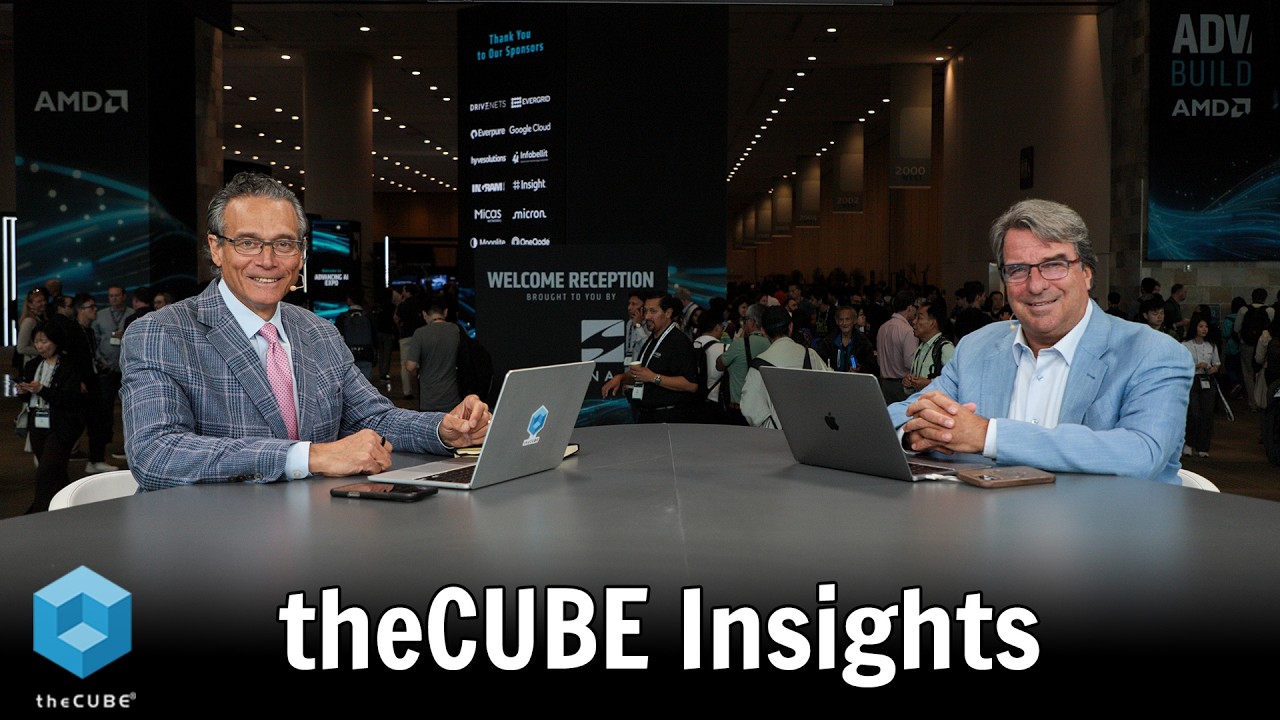
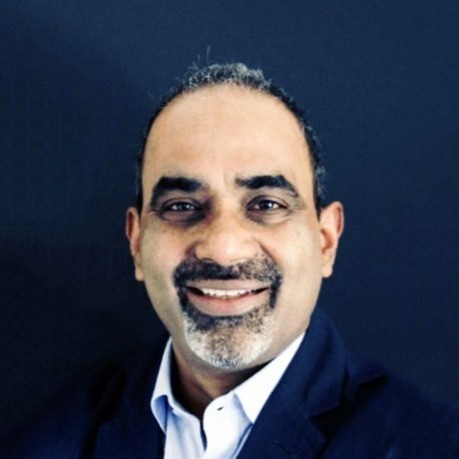
In this theCUBE segment at AMD Advancing AI 2026, Sarbjeet Johal of Stackpane joins hosts Dave Vellante of theCUBE and Bob O'Donnell of theCUBE to analyze AMD's keynote and its implications for artificial intelligence. Johal evaluates Helios rack systems, EPYC processors, MI455X accelerators, ROCm.ai tooling and partnerships with OpenAI, Anthropic and Cerebras. They frame the technical roadmap, developer ecosystem readiness and AMD's positioning versus NVIDIA in AI infrastructure.
Key takeaways highlight AMD presenting a full-system strategy that positions the company as a credible competitor to NVIDIA. Vellante emphasizes Helios readiness and pricing implications. Johal notes ROCm.ai and partner support reduce the CUDA advantage, improving software portability and developer momentum. Analysts identify developer tooling gaps and the rise of hybrid and distributed AI deployment models as practical factors for enterprises evaluating performance, portability and total cost of ownership and cost per token.
The discussion provides practical guidance for enterprises evaluating data center and edge AI deployments, including factors to consider for accelerators, processors and developer tooling. Topics include Helios rack systems, EPYC processors, MI455X accelerators, ROCm.ai tooling and ecosystem partnerships that influence performance, scalability and cost per token.
Forgot Password
Almost there!
We just sent you a verification email. Please verify your account to gain access to
Advancing AI 2026. If you don’t think you received an email check your
spam folder.
In order to sign in, enter the email address you used to registered for the event. Once completed, you will receive an email with a verification link. Open the link to automatically sign into the site.
Register for Advancing AI 2026
Please fill out the information below. You will receive an email with a verification link confirming your registration. Click the link to automatically sign into the site.
You’re almost there!
We just sent you a verification email. Please click the verification button in the email. Once your email address is verified, you will have full access to all event content for Advancing AI 2026.
I want my badge and interests to be visible to all attendees.
Checking this box will display your presense on the attendees list, view your profile and allow other attendees to contact you via 1-1 chat. Read the Privacy Policy. At any time, you can choose to disable this preference.
Select your Interests!
add
Upload your photo
Uploading..
OR
Connect via Twitter
Connect via Linkedin
EDIT PASSWORD
Share
Forgot Password
Almost there!
We just sent you a verification email. Please verify your account to gain access to
Advancing AI 2026. If you don’t think you received an email check your
spam folder.
In order to sign in, enter the email address you used to registered for the event. Once completed, you will receive an email with a verification link. Open the link to automatically sign into the site.
Sign in to gain access to Advancing AI 2026
Please sign in with LinkedIn to continue to Advancing AI 2026. Signing in with LinkedIn ensures a professional environment.
Are you sure you want to remove access rights for this user?
Details
Manage Access
email address
Community Invitation
theCUBE Insights Day 2
In this theCUBE segment at AMD Advancing AI 2026, Sarbjeet Johal of Stackpane joins hosts Dave Vellante of theCUBE and Bob O'Donnell of theCUBE to analyze AMD's keynote and its implications for artificial intelligence. Johal evaluates Helios rack systems, EPYC processors, MI455X accelerators, ROCm.ai tooling and partnerships with OpenAI, Anthropic and Cerebras. They frame the technical roadmap, developer ecosystem readiness and AMD's positioning versus NVIDIA in AI infrastructure.
Key takeaways highlight AMD presenting a full-system strategy that positions the company as a credible competitor to NVIDIA. Vellante emphasizes Helios readiness and pricing implications. Johal notes ROCm.ai and partner support reduce the CUDA advantage, improving software portability and developer momentum. Analysts identify developer tooling gaps and the rise of hybrid and distributed AI deployment models as practical factors for enterprises evaluating performance, portability and total cost of ownership and cost per token.
The discussion provides practical guidance for enterprises evaluating data center and edge AI deployments, including factors to consider for accelerators, processors and developer tooling. Topics include Helios rack systems, EPYC processors, MI455X accelerators, ROCm.ai tooling and ecosystem partnerships that influence performance, scalability and cost per token.
play_circle_outlineAI Accelerators $1.4T by 2030, CPUs $200B — AMD Ramps Developer Advocacy Hiring to Challenge NVIDIA
replyShare Clip
play_circle_outlineAMD’s Helios, ROCm.ai and major partnerships position AMD as indispensable platform challenger to NVIDIA; experts call for independent benchmarks
replyShare Clip
play_circle_outlineEPYC CPU and MI455X microprocessor product announcements and roadmap
replyShare Clip
play_circle_outlineIndustry demand for supplier diversity; hyperscalers pursuing in-house chips
replyShare Clip
play_circle_outlineExtreme co-design debate: NVIDIA internal model versus AMD's ecosystem co-innovation
replyShare Clip
play_circle_outlineAMD pricing strategy, lower margins, and price-per-token competitiveness
replyShare Clip
play_circle_outlineBridging x86 and New CPUs: Smart NICs, Orchestration, and Hybrid On‑Prem/Distributed AI Token Acceleration for Client and Server
>> Hi everybody, welcome back to theCUBE's live coverage of AMD Advancing AI 2026. We're here in Moscone West. We're wrapping up two days of wall -to -wall coverage. It's been amazing. We heard Lisa Su this morning just lay down the gauntlet, really going after NVIDIA, claiming significant performance advantages. We're seeing the transformation of AMD from a chip company who competed very effectively with Intel in the x86 market, now going headlong into the AI space. Sarbjeet Johal is here, he's the principal at Stackpane. Bob O'Donnell, my co -host for many segments today, thank you so much.
Dave Vellante
>> Yeah, you're welcome.
Dave Vellante
>> Way to bring the analysis and great questions. Principal at TECHnalysis, awesome, both of you, great guests, really appreciate you coming on.
Dave Vellante
>> Absolutely. Absolutely.
Dave Vellante
>> Sarbjeet, we'll give you the mic. What have you learned with your report? I see you got your reporter's notebook.
Sarbjeet Johal
>> Yes, always.
Dave Vellante
>> What's the big takeaway?
Sarbjeet Johal
>> Always, I writing with my hand, even though I'm reading it online, as well as listening to the keynote and all that. When I write, I remember it more. So, they covered mainly high -level three things at the keynote, right? That one was the Helios, right? So, that's the accelerators, right? That's where they're going to compete with NVIDIA. And the number two was microprocessors, or CPUs. That was a big announcement. And Lisa said that the market is 8x bigger than what she thought last time, right? 200 billion versus 25 billion. And she also bumped up the Helios, or the accelerators number, to 3x, from 500 billion to, I think, 1 .4 trillion by 2030. Both numbers are for 2030.
Sarbjeet Johal
>> Which might be low.
Sarbjeet Johal
>> Oh, yeah, yes. But having said that, they actually are, as you said, competing, going to compete with number one player, which is NVIDIA, and then the third thing was the partnerships from the main keynote stage. The OpenAI, Anthropic was there, and the third interesting one was Cerebras, right? So Cerebras is partnering with AMD. That was an interesting one. So I think they are trying to cover all the bases. They are a little behind, we know that. This is their GTC, this event is their GTC equivalent, right? So we can see this year it's a little more.
Dave Vellante
>> That's an interesting way to look at it.
Sarbjeet Johal
>> Yeah. It's about right. Yeah, but it's much smaller. Of course they are a little behind. And on the developer side, actually they are right behind you, actually. when I'm looking at that developer area, they actually just started hiring people about nine to 12 months ago for that function. Developer advocates, developer advocacy, they need to do that for their software stack, which competes with CUDA, right? So all in all, they are a little behind, but they are trying to, fire on all cylinders, and it's very inspiring story, if you will. As I told you before we started rolling the cameras, I have a one -liner for today.
Dave Vellante
>> What's the one -liner?
Sarbjeet Johal
>> Competition. Competition is good for the game.
Dave Vellante
>> Yes, it is.
Sarbjeet Johal
>> So competition is good for customers, for partners, for the ecosystem, for technology itself, and for regulators as well. They don't have to worry too much about breaking a company apart or something that if somebody else is coming along to compete.
Dave Vellante
>> Well, Bob, Intel didn't stay paranoid and they paid the price. I think NVIDIA is paranoid, and so it's a whole different ballgame here. There wasn't tons of news at this event. There was the Anthropic News, the ROCm AI, you called it out as one of the more interesting things, some physical AI stuff, Sarbjeet, you talked about Cerebras, but it was more about really unveiling the strategy of a full system player, bringing together what it's done with, obviously EPYC and Instinct and Xilinx and Pensando, and now ZT Systems and Helios, and laying that out and saying, okay, we're ready to compete. Right. So what's your takeaway?
Sarbjeet Johal
>> Look, my takeaway is, this event makes them a serious, real competitor, finally. And I say that only because the whole world has moved to this notion of rack-based computing. And look, Jensen was the one that kind of created this and drove it, but people have latched onto that as being the way this has to happen. And so at this event last year, which I was also at, NVIDIA, or excuse me, AMD talked about Helios. They described what they were going to do, but this year they're okay, we did it, it's done, it's ready to go. And so it gives an air of legitimacy to all the things that they've been doing. they are an amazing engineering company and what was fascinating about this, a number of the people that came on stage talked about it, they're this was a hardcore tech crowd. people were into the nuts and bolts of all the details. It was a bunch of engineers talking to engineers. And AMD has always been good at that. But this pulled together all the pieces that they've slowly but surely been getting together. I remember when they bought ATI, which was the GPU company that they bought.
Dave Vellante
>> Got it all started.
Sarbjeet Johal
>> Yeah, it did. A long, long time ago. And then, of course, they added in Xilinx for FPGAs, and then they added ZT Systems, and they've added other pieces. But now they have all the pieces in place, and they come out with this story that's very compelling, but not only just for now, but then they laid out the roadmap and timeline for the future. So all of a sudden, I feel they are a serious player in the race. I think people see it that way. And the trick for them now is to move beyond just being the alternative to being a leading player. Because being an alternative is fine, but you really want to be something that's driving a compelling need for that solution. And to their engineering credit, I think they did that because they talked about, look, not only do we have this system, but we can beat the competition by 20 % overall on this. And we can, we have other metrics showing that they were up to or beating it. And then the ROCm AI thing, as I mentioned before, is also huge because the other challenge that has allowed NVIDIA to basically own 95 % of the market up till now is what they call the CUDA moat. That is all the software written in CUDA. Well with ROCm AI they're hey, why don't we use AI to allow GPU programs to be rewritten from CUDA into ROCm format. And that's exactly what they're doing. So that as well as things what OpenAI has done with Triton, other higher level frameworks, all of that is starting to make that moat become less of a factor. All of which is to say that that opportunity for AMD I think is huge and the fact that they had Anthropic and OpenAI and then Microsoft announcements earlier in the week. All of that points to the fact that the biggest players in the world see them as becoming a viable alternative. I think they did a really nice job of telling that story today.
Dave Vellante
>> Well, the premise I put forth this weekend was that AMD doesn't have to take out NVIDIA, it just has to be an indispensable, the indispensable second AI platform. Based on Lisa Su's keynote, she rejected that premise. Right. And basically said, screw that, we want to be the leading AI platform. and we have the highest performance now. I pushed Soni Jiandani, and some others on the benchmarks. The benchmarks, of course, are coming from NVIDIA's published results. And then they're running their own internal benchmarks and comparing them. Okay, we'll see. Yeah, exactly. We want to see some independent benchmarks. We want to see what the workloads are. I have no doubt that there's going to be a response from NVIDIA. But let's dig into the CUDA moat. because I was talking to Sid Nag the other day, through text, and he said, listen Dave, the CUDA moat, any computer science graduate student can basically write that software especially today with all the coding agents. And my response was, okay yeah, maybe that's not the moat in and of itself, but the moat is the libraries around it, the ecosystem, making it simple within these specialized domains to sort of adopt AI. It's kind of the iPhone versus Android thing that we've talked about in the past. But Bob, you've laid out that, okay, that moat is maybe not as stable as we thought. If I could say it that way, do you have thoughts on that? How stable is that moat? How deep is it? Is it running out of water? Is there a little bridge now that you can cross?
Sarbjeet Johal
>> Not any time soon.
Dave Vellante
>> How big is that bridge?
Sarbjeet Johal
>> Not any time soon. Sid is right on one front, software is software, you can ask AI to write it, but 18 years is 18 years, right? So they started the CUDA libraries 18 years ago. 18 years of richness, you can't compete with that in one or two years, right? That's one thing. The second, libraries are rich. Developers live and die by the libraries. Libs are developer's best friend. Languages are very simple constructs, right? Less than 200 fixed keywords in any programming language, but then the rest of it is libraries, right? And then there's APIs, which you write, or your partners write, or somebody else, third party writes and you use that. So, APIs, Libs, and then language. That's the whole enchilada developers live by, and they are rich in that, in the library area. But now, let's talk about what other part of the CUDA moat is. Because CUDA is built to be used with NVIDIA hardware only, so they get the total juice out of the hardware. Because software and hardware are this, right? So as compared to the open source, which AMD is betting on, that can be used with AMD's chips or anybody else's chips, right? So it's not that much tied to AMD's chips, right? At this point. So, NVIDIA gets around 93 to 94 % of utilization from their accelerators, right, GPUs.
Dave Vellante
>> Well, it depends who's using them, right?
Sarbjeet Johal
>> Yeah, yeah.
Dave Vellante
>> the hyperscalers and the Neo clouds can get that. That's the up to.
Sarbjeet Johal
>> Up to 94. Fair enough, okay. But I don't think AMD can get up to 94 with the software stack they have, but I would love to hear from them. Well, just to play devil's advocate for a little bit, even though they're open source, the ROCm stuff still is optimized for their hardware. So the approach they take is open source for the tools, but it's still optimized for the hardware. Now, you bring up a great question, how efficient can they, how efficiently can they use those CPUs and GPUs, absolutely, and all of those things I'm sure are going to improve over time. The question at a certain point becomes not the actual numbers, but, hey, are we at a good enough level? And if you've got people Anthropic saying, hey, we were able to port our stuff from NVIDIA over to AMD over the weekend, right? One engineer over the weekend did a lot of the basic, basic code work to bring it over. Again, depends on what they are doing. Yeah, I know, but so again, I think the options are becoming more interesting.
Dave Vellante
>> Well, and we can learn from Huawei. Right, you think about Huawei and how they're succeeding, but when the Chinese government basically, and the US government frankly, cut NVIDIA out of China, NVIDIA had 90 % market share in China, a combination of the AI diffusion laws, which were put in place, and then China's response, NVIDIA's got what, no market share anymore. Point being, you had a viable alternative that was good enough, maybe not equal to NVIDIA, and they've taken off, and clearly, Chinese AI is world class. But the other thing I want to say is the 18 years. The remarkable thing to me is that they've taken CPU, GPU networking rack software with ROCm, and they've compressed an 18 year advantage and squished it down into five years through R &D, acquisitions, and obviously ecosystem development. That's impressive orchestration by Lisa Su, who has a very high say-do ratio to use a Tom Sweet term.
Sarbjeet Johal
>> Yeah, no, for sure. And the other thing, there were a couple surprises to me in the keynote. Obviously Helios we knew about, they already announced it. Everybody knew they would do a timeline extension, that was fine. A lot of the details on both EPYC Venice as well as MI455X had already been talked about. But then when you had Cerebras come out, it was whoa! That was not something I think a lot of people expected. Now, that's not a huge market yet.
Dave Vellante
>> Oh, but they're ticking the Groq box.
Sarbjeet Johal
>> Yeah, absolutely. It's ticking all the boxes. That's the thing, they're ticking the boxes. And then the other one that really shocked me, was Cisco. To have Jeetu come out, I was whoa!
Sarbjeet Johal
>> Desktop side.
Sarbjeet Johal
>> Yeah, and that notion of being able to manage this whole new fleet of devices, because remember, NVIDIA right now they're making a small play into desktop with their GB10 boxes, the DGX Spark, and other companies are selling those.
Dave Vellante
>> Small but formidable.
Sarbjeet Johal
>> They are, and then of course AMD has had some of theirs. Actually, AMD was first. AMD had a product that, now it was not optimized for AI in the way that DGX Spark was, but now they're going to introduce another one. But that idea of them creating client-based token generation tools, which clearly is possible, and they're working forward on that, and then bringing in Cisco to help with the management and the tokenomics management is really kind of clever because it shows, hey, we're able to work with other partners to work together on an aspect of the story that's just starting to be figured out. So again, they're thinking ahead and trying to address concerns before they become issues.
Dave Vellante
>> And Sarbjeet, to your point on competition, to Bob's point, the entire industry wants an alternative. Yeah, they do. Getting Jeetu here and Anthropic and OpenAI and Meta, et cetera, et cetera, et cetera, the industry wants it. And Dell and HP, of course, and the hyperscalers as well, the industry wants that competition. I call it the Amdahl coffee cup. Back in the day, the mainframe days, IBM was the dominant player. The head of IT, the IT department would get an Amdahl coffee cup that the Amdahl rep, Amdahl made plug compatible mainframes. A better price. IBM rep would come in, the guy would be drinking coffee out of the Amdahl cup to get a better discount. If nothing else, to have negotiating leverage, start doing business with somebody else, right?
Sarbjeet Johal
>> And a second source. There's all kinds of reasons why it's important to have it. Again, competition is good for the game. Yeah, the supply line is good, right? So the supplier diversity has been a hallmark of any business which is being run at scale. And that's why actually the hyperscalers came up with their own chips as well. Like hey, I can't just rely on one vendor, right? So that was one of the reasons, right? And they have been cooking their own stuff. and we're not talking about Google's TPUs, for some reason here, but we should. They were, during earnings call yesterday, they were kind of wishy-washy a little bit, will they sell the TPU to third parties, or whether they will do rack scale systems around that, and they didn't say no to it, so they may jump into the market. And their backlog includes the TPU numbers as well, actually, which they're not slowing down on TPU side, so they will be a good, formidable player in this race as well. Yeah, the other thing that I think is interesting, and AMD talked about it, we've seen a couple others start to talk about it, and that is this notion of what I call hybrid AI, others have called distributed AI, whatever it is, and that is, how do I take these agentic workloads or these AI workloads and break them up in a way that makes economic sense? And I thought Jack Huynh, who runs the PC group, or client group, and robotics, made some really good points. Because at the end of the day, if I can do some of this work either on the client device or in a local instance of an AMD -based server, which Dell, HPE, Lenovo, they're all selling, Cisco as well actually, and they're selling crazy because companies are trying to figure out how to do that. AMD also addressed that with their PCIe plug -in card because a lot of enterprises don't have liquid -cooled data centers. The only way they can bring AI acceleration is with these good old plug -in cards, right? But, so, what's interesting there is a lot of enterprises are used to buying from AMD or Intel for their own data center infrastructure. They didn't really buy from NVIDIA before, right? NVIDIA was never a supplier to the enterprise. So one of the things I'm curious to see is as companies start to deploy more AI on -prem, does that give AMD an advantage?
Sarbjeet Johal
>> That's a good point.
Sarbjeet Johal
>> Because it's a known quantity to these folks, and I think that could be, it'll be interesting to see. It's a mid -range solution, which is whereas NVIDIA, it's either rack scale or on your desktop, nothing in between.
Dave Vellante
>> I want to come back to that.I want to dig into a couple of things here. One is this notion of extreme co-design. We've been poking at that today. NVIDIA, extreme co-design to them, my take on this is they designed it internally with their extreme co-design philosophy, and then bring it out to the ecosystem and kind of dictate how you plug into it. They don't when I say that, but it's kind of my sense of it. When I first heard extreme co-design, I thought it meant with the ecosystem. No, their definition is internal. It's not, right. Here it's external. AMD is totally different. They gave several examples. They can't do it with hundreds of providers or partners, but with Meta and what they're doing with OCP, very clearly. That's an example. I had a video session with Gilad Shainer, Bob Laliberte and I, I think it was last week, and he was saying, look, if you don't do extreme co-design, he didn't say this, but we do, was his implication, you can't keep pace, you can't get, you can't keep up. The cadence, annual cadence. The curve on price performance and token costs. Yeah. If you do what these guys are doing, he didn't mention AMD by name, he called it a server farm. And I said, well, what's the difference between a server farm and an extreme co-design? And essentially he's saying, ours is better, it's going to be better performance. But then, Lisa comes up with these benchmarks that suggest their version of extreme co-design or co -innovation, they call it, aka server farm, is actually competitive, or even maybe better. So, NVIDIA has to respond to that. They can't let that slide.
Sarbjeet Johal
>> And they will. Again, we have to bear in mind that the numbers that Lisa threw out at the beginning are so staggering. $1 .4 trillion. that's just mind blowing kind of numbers to think about that. Which means we're going to see a lot of, this is definitely a rising tide raises all boats kind of a story. again, as long as something doesn't fall through the middle, right? There is that big fear, what if this stuff doesn't start paying off? I don't see that being a big concern because even if it's nothing but software development, the increases that people are getting from that are staggering. And again, day to day workers are already doing it. It just feels we're in a good spot, but everybody's so afraid to feel good about the way things are moving, they're getting paranoid.
Dave Vellante
>> I agree with that, which is why I was so surprised that Lisa was so aggressive, because I've never seen her.
Dave Vellante
>> Right, they've been very conservative.
Dave Vellante
>> Never seen them call out NVIDIA the way they did today. So that was interesting, and again, my premise is they don't have to, they just have to be the indispensable second AI platform. I think they see it differently. But certainly, the other point is, you're right. NVIDIA speaks vision, accelerated computing, a whole new paradigm, and AMD speaks enterprise.
Sarbjeet Johal
>> Well, and AMD also speaks tech. The difference is Jensen's incredibly good at building that big picture vision. Right. And Lisa's incredibly good at what she does as well, but AMD comes across as much more of an engineering -focused company, and NVIDIA is kind of this big vision kind of storytelling. And I think there was some crossover there, I think we saw AMD start to do some of that, but those roots of the engineering details, I said, all the guests who came out, oh, this is so great, man, I'm with all the hardware -loving nerds here, and these are my people. I think both are important. Storytelling is important, right, it's MySpace versus Facebook, they killed, they did have pretty good technology, MySpace had better technology, you could customize anything, but people don't want that sometimes, people want abstraction, they want simple to use stuff, and time to market is very important, right? They don't have time to rack and stack for four months, versus, okay, you're up and running in two weeks. There are many aspects to rolling out systems, right? And at the end of the day, economics matters, right? And AMD's pricing is 30 to 50% cheaper, I'm seeing online, and they haven't said that it's cheaper.
Dave Vellante
>> Well, their margins, their gross margins, what, 50, 55 % versus 75 to 80%.
Sarbjeet Johal
>> 75 plus, right.
Dave Vellante
>> There you go, they're eating the margin on that.
Sarbjeet Johal
>> Yeah, they're going to eat their margin. we know that from Economics 101, your margin is my opportunity. Right?
Dave Vellante
>> He just said that in my ear, right? Jeff Bezos line. Although Andy Jassy says he's not sure Jeff Bezos said that, but as far as we're concerned he said it.
Sarbjeet Johal
>> Everybody knows that. Anybody can say that. So they are playing into that, and they're going to take some sort of, they're going to give you, pass on some savings to you, and then give you little, maybe little sub-par performance by cutting 30 to 50 % price, but at the end of the day, the price per token matters, right? So hopefully people will nibble on their technology more.
Dave Vellante
>> I have another, go ahead Bob, I have another topic I want to ask you guys.
Sarbjeet Johal
>> Yeah, no, well the other thing is, one other, and this is a minor detail, but kind of reflects that engineering side of things. It may have been in actually one of the analyst sessions and not the keynote, but there was some discussion about how the ZT Systems influence helped them with their robustness of the rack design, because they talked about how interchangeable these things are, basically which says, hey, we know some of these things are going to break down, but we're prepared for that, and this is how we're going to deal with it. And you never hear that kind of story from the other guys, right? It's just presumed that it's always going to work, and yet we all know the stories of melting GPUs and other things that were an issue, right? But that engineering focus theoretically means potentially more reliability or more robustness over time, and that factors into TCO equations. So we're not going to know, frankly, for a couple years, how all this plays out. But that kind of thinking, I think, also reflects more the AMD mindset.
Dave Vellante
>> So the thing, excellent points, by the way, and I think they are going to have some of those challenges. I'm sure they went to school on, watching a putt, they went to school on what NVIDIA had to face with the GB200 racks. I want to ask you about the x86 bridge, because I think there's an interesting dynamic here, where if you believe that accelerated computing is the future, and that more investment is going to be put into accelerated computing than general purpose computing, we're already seeing that. You've seen that in IBM results. You certainly see that when you talk to CIOs and organizations, they're trying to figure, the SaaS apocalypse, some of the, market got some of that right. Okay, will the traditional general purpose functions that live inside the x86, whether it's IO, memory management, et cetera, be ultimately absorbed into the AI factory? I think much of it may be. and what's the bridge there? AMD is actually in a really good position to be that bridge. Now, NVIDIA has the deal with Intel where they're doing the hybrid system. So I think they see that. They want to have that hedge. But I think AMD's being very aggressive about this. So we're all in on x86. We love x86. Our ecosystem doesn't want to see x86 die, even though, in technology.
Sarbjeet Johal
>> Well, look, it's the x86 moat. Just there's a CUDA moat, there's an x86 moat as well. Let's be honest. And those things, I think, continue to exist. And yet, there have been a ton of rumors about AMD doing Arm, right? Doing some sort of Arm processor. And then you've got custom Arm chips from all the other players as well. All of this plays into the discussion. But I don't know. I do feel x86 continues to play a role. The IO side may end up going to the smart NICs and other types of processors.
Dave Vellante
>> Yeah, clearly it is.
Sarbjeet Johal
>> And x86 just does what it does. Again, it's hard to predict.
Dave Vellante
>> But ultimately it comes down to, well, you know how ISVs ported to Graviton.
Dave Vellante
>> Right.
Dave Vellante
>> Will ISVs ultimately port to accelerated computing? CUDA, ROCm?
Sarbjeet Johal
>> A bunch of them have.
Dave Vellante
>> Wouldn't you if you were an emerging startup?
Sarbjeet Johal
>> Now it's more and more you're just going to have an AI agent do that work for you. That's the amazing thing about this stuff. It's all of a sudden worries about different platforms I think start to get less important.
Dave Vellante
>> But the point is that agent doing that work, I agree with you, but that is going to be ultimately the best price performance and lowest cost per token, lowest cost per token per watt, is going to live on accelerated computing. Probably liquid -cooled accelerated computing, which brings in, will enterprises actually refactor their data centers because the cost of doing so is outweighed by the benefits.
Sarbjeet Johal
>> Well, and again, this is where I think the distributed hybrid AI model comes in because if I can start to do, if I can reduce how much I have to, generate tokens in the cloud in the liquid -cooled stuff, and I can do some of it in my air -cooled.
Dave Vellante
>> Yeah, be my own token generator.
Sarbjeet Johal
>> And on my own device and generate my own tokens because the bigger model, the A, as was pointed out today, the smaller models are getting much more capable and the ability to run frontier models locally is starting to become a thing. And I think we're going to see more of that.
Dave Vellante
>> Well, and I think you're going to see some licensing terms and changes. They have to, right? If the LLMs are a race to the bottom, well, they need to move up the stack. I got to go, but give me your last thoughts.
Sarbjeet Johal
>> Yeah, actually, to answer your question, we will be building, I don't want to call it hybrid, but composite applications. Means the old constructs will live along with the new ones, for two reasons. One, there's so much legacy. World spends four trillion dollars a year on all tech and big part is going into software as well. So there's accumulated for over, let's say last 20 years or so, right? The shelf life of systems of record is more than 15 years, we know that, and then middle systems have a little less shelf life. On average, eight to 10 years shelf life of any software out there. So that stuff is sitting there. There'll be a lot of tool calling, which we are doing right now. That's number one reason, because of the legacy, we will be still using x86, right? The number two reason is this, that not everything can be done, even if we had the fresh green field, everything, right? We can't use AI for everything. We have to orchestrate, we have to distribute jobs. That's done by the CPU, not GPU. GPU?
Dave Vellante
>> Well, but that doesn't mean it's going to be done by x86, Grace is a CPU, it's not x86.
Dave Vellante
>> Yes.
Dave Vellante
>> So that's where it gets interesting. I'll tell you, CIO said to me the other day, I think, he goes, I can't guarantee it, but I think I just signed my last ERP license. We'll see, we'll see. Alright guys, sorry I got to run. I want to check with our CEO. Great, great segment. I think the hero segment, Andrew, this was the top segment of the day, guys. Really appreciate it. Bob, thanks for co -hosting with me today.
Sarbjeet Johal
>> Absolutely, man, happy, thanks for having me.
Dave Vellante
>> TECHnalysis, Stackpane, Sarbjeet, always with the Reporters Notebook, love it. And thanks for watching theCUBE. theCUBE, that's a wrap, two days of Advancing AI, AMD. Thank you to AMD for this great set, awesome location, great ecosystem. Check out SiliconANGLE.com, all the news, all the articles. Check out theCUBE.net, that's where all these videos are going to be on demand. theCUBEResearch.com and theCUBEai.com. Check it out, ask what happened, what are the top takeaways from Advancing AI? Thanks for watching. This is Dave Vellante. Thanks to the team, great job. We'll see you next time.
>> Hi everybody, welcome back to theCUBE's live coverage of AMD Advancing AI 2026. We're here in Moscone West. We're wrapping up two days of wall -to -wall coverage. It's been amazing. We heard Lisa Su this morning just lay down the gauntlet, really going after NVIDIA, claiming significant performance advantages. We're seeing the transformation of AMD from a chip company who competed very effectively with Intel in the x86 market, now going headlong into the AI space. Sarbjeet Johal is here, he's the principal at Stackpane. Bob O'Donnell, my co -host for many segments today, thank you so much.
Dave Vellante
>> Yeah, you're welcome.
Dave Vellante
>> Way to bring the analysis and great questions. Principal at TECHnalysis, awesome, both of you, great guests, really appreciate you coming on.
Dave Vellante
>> Absolutely. Absolutely.
Dave Vellante
>> Sarbjeet, we'll give you the mic. What have you learned with your report? I see you got your reporter's notebook.
Sarbjeet Johal
>> Yes, always.
Dave Vellante
>> What's the big takeaway?
Sarbjeet Johal
>> Always, I writing with my hand, even though I'm reading it online, as well as listening to the keynote and all that. When I write, I remember it more. So, they covered mainly high -level three things at the keynote, right? That one was the Helios, right? So, that's the accelerators, right? That's where they're going to compete with NVIDIA. And the number two was microprocessors, or CPUs. That was a big announcement. And Lisa said that the market is 8x bigger than what she thought last time, right? 200 billion versus 25 billion. And she also bumped up the Helios, or the accelerators number, to 3x, from 500 billion to, I think, 1 .4 trillion by 2030. Both numbers are for 2030.
Sarbjeet Johal
>> Which might be low.
Sarbjeet Johal
>> Oh, yeah, yes. But having said that, they actually are, as you said, competing, going to compete with number one player, which is NVIDIA, and then the third thing was the partnerships from the main keynote stage. The OpenAI, Anthropic was there, and the third interesting one was Cerebras, right? So Cerebras is partnering with AMD. That was an interesting one. So I think they are trying to cover all the bases. They are a little behind, we know that. This is their GTC, this event is their GTC equivalent, right? So we can see this year it's a little more.
Dave Vellante
>> That's an interesting way to look at it.
Sarbjeet Johal
>> Yeah. It's about right. Yeah, but it's much smaller. Of course they are a little behind. And on the developer side, actually they are right behind you, actually. when I'm looking at that developer area, they actually just started hiring people about nine to 12 months ago for that function. Developer advocates, developer advocacy, they need to do that for their software stack, which competes with CUDA, right? So all in all, they are a little behind, but they are trying to, fire on all cylinders, and it's very inspiring story, if you will. As I told you before we started rolling the cameras, I have a one -liner for today.
Dave Vellante
>> What's the one -liner?
Sarbjeet Johal
>> Competition. Competition is good for the game.
Dave Vellante
>> Yes, it is.
Sarbjeet Johal
>> So competition is good for customers, for partners, for the ecosystem, for technology itself, and for regulators as well. They don't have to worry too much about breaking a company apart or something that if somebody else is coming along to compete.
Dave Vellante
>> Well, Bob, Intel didn't stay paranoid and they paid the price. I think NVIDIA is paranoid, and so it's a whole different ballgame here. There wasn't tons of news at this event. There was the Anthropic News, the ROCm AI, you called it out as one of the more interesting things, some physical AI stuff, Sarbjeet, you talked about Cerebras, but it was more about really unveiling the strategy of a full system player, bringing together what it's done with, obviously EPYC and Instinct and Xilinx and Pensando, and now ZT Systems and Helios, and laying that out and saying, okay, we're ready to compete. Right. So what's your takeaway?
Sarbjeet Johal
>> Look, my takeaway is, this event makes them a serious, real competitor, finally. And I say that only because the whole world has moved to this notion of rack-based computing. And look, Jensen was the one that kind of created this and drove it, but people have latched onto that as being the way this has to happen. And so at this event last year, which I was also at, NVIDIA, or excuse me, AMD talked about Helios. They described what they were going to do, but this year they're okay, we did it, it's done, it's ready to go. And so it gives an air of legitimacy to all the things that they've been doing. they are an amazing engineering company and what was fascinating about this, a number of the people that came on stage talked about it, they're this was a hardcore tech crowd. people were into the nuts and bolts of all the details. It was a bunch of engineers talking to engineers. And AMD has always been good at that. But this pulled together all the pieces that they've slowly but surely been getting together. I remember when they bought ATI, which was the GPU company that they bought.
Dave Vellante
>> Got it all started.
Sarbjeet Johal
>> Yeah, it did. A long, long time ago. And then, of course, they added in Xilinx for FPGAs, and then they added ZT Systems, and they've added other pieces. But now they have all the pieces in place, and they come out with this story that's very compelling, but not only just for now, but then they laid out the roadmap and timeline for the future. So all of a sudden, I feel they are a serious player in the race. I think people see it that way. And the trick for them now is to move beyond just being the alternative to being a leading player. Because being an alternative is fine, but you really want to be something that's driving a compelling need for that solution. And to their engineering credit, I think they did that because they talked about, look, not only do we have this system, but we can beat the competition by 20 % overall on this. And we can, we have other metrics showing that they were up to or beating it. And then the ROCm AI thing, as I mentioned before, is also huge because the other challenge that has allowed NVIDIA to basically own 95 % of the market up till now is what they call the CUDA moat. That is all the software written in CUDA. Well with ROCm AI they're hey, why don't we use AI to allow GPU programs to be rewritten from CUDA into ROCm format. And that's exactly what they're doing. So that as well as things what OpenAI has done with Triton, other higher level frameworks, all of that is starting to make that moat become less of a factor. All of which is to say that that opportunity for AMD I think is huge and the fact that they had Anthropic and OpenAI and then Microsoft announcements earlier in the week. All of that points to the fact that the biggest players in the world see them as becoming a viable alternative. I think they did a really nice job of telling that story today.
Dave Vellante
>> Well, the premise I put forth this weekend was that AMD doesn't have to take out NVIDIA, it just has to be an indispensable, the indispensable second AI platform. Based on Lisa Su's keynote, she rejected that premise. Right. And basically said, screw that, we want to be the leading AI platform. and we have the highest performance now. I pushed Soni Jiandani, and some others on the benchmarks. The benchmarks, of course, are coming from NVIDIA's published results. And then they're running their own internal benchmarks and comparing them. Okay, we'll see. Yeah, exactly. We want to see some independent benchmarks. We want to see what the workloads are. I have no doubt that there's going to be a response from NVIDIA. But let's dig into the CUDA moat. because I was talking to Sid Nag the other day, through text, and he said, listen Dave, the CUDA moat, any computer science graduate student can basically write that software especially today with all the coding agents. And my response was, okay yeah, maybe that's not the moat in and of itself, but the moat is the libraries around it, the ecosystem, making it simple within these specialized domains to sort of adopt AI. It's kind of the iPhone versus Android thing that we've talked about in the past. But Bob, you've laid out that, okay, that moat is maybe not as stable as we thought. If I could say it that way, do you have thoughts on that? How stable is that moat? How deep is it? Is it running out of water? Is there a little bridge now that you can cross?
Sarbjeet Johal
>> Not any time soon.
Dave Vellante
>> How big is that bridge?
Sarbjeet Johal
>> Not any time soon. Sid is right on one front, software is software, you can ask AI to write it, but 18 years is 18 years, right? So they started the CUDA libraries 18 years ago. 18 years of richness, you can't compete with that in one or two years, right? That's one thing. The second, libraries are rich. Developers live and die by the libraries. Libs are developer's best friend. Languages are very simple constructs, right? Less than 200 fixed keywords in any programming language, but then the rest of it is libraries, right? And then there's APIs, which you write, or your partners write, or somebody else, third party writes and you use that. So, APIs, Libs, and then language. That's the whole enchilada developers live by, and they are rich in that, in the library area. But now, let's talk about what other part of the CUDA moat is. Because CUDA is built to be used with NVIDIA hardware only, so they get the total juice out of the hardware. Because software and hardware are this, right? So as compared to the open source, which AMD is betting on, that can be used with AMD's chips or anybody else's chips, right? So it's not that much tied to AMD's chips, right? At this point. So, NVIDIA gets around 93 to 94 % of utilization from their accelerators, right, GPUs.
Dave Vellante
>> Well, it depends who's using them, right?
Sarbjeet Johal
>> Yeah, yeah.
Dave Vellante
>> the hyperscalers and the Neo clouds can get that. That's the up to.
Sarbjeet Johal
>> Up to 94. Fair enough, okay. But I don't think AMD can get up to 94 with the software stack they have, but I would love to hear from them. Well, just to play devil's advocate for a little bit, even though they're open source, the ROCm stuff still is optimized for their hardware. So the approach they take is open source for the tools, but it's still optimized for the hardware. Now, you bring up a great question, how efficient can they, how efficiently can they use those CPUs and GPUs, absolutely, and all of those things I'm sure are going to improve over time. The question at a certain point becomes not the actual numbers, but, hey, are we at a good enough level? And if you've got people Anthropic saying, hey, we were able to port our stuff from NVIDIA over to AMD over the weekend, right? One engineer over the weekend did a lot of the basic, basic code work to bring it over. Again, depends on what they are doing. Yeah, I know, but so again, I think the options are becoming more interesting.
Dave Vellante
>> Well, and we can learn from Huawei. Right, you think about Huawei and how they're succeeding, but when the Chinese government basically, and the US government frankly, cut NVIDIA out of China, NVIDIA had 90 % market share in China, a combination of the AI diffusion laws, which were put in place, and then China's response, NVIDIA's got what, no market share anymore. Point being, you had a viable alternative that was good enough, maybe not equal to NVIDIA, and they've taken off, and clearly, Chinese AI is world class. But the other thing I want to say is the 18 years. The remarkable thing to me is that they've taken CPU, GPU networking rack software with ROCm, and they've compressed an 18 year advantage and squished it down into five years through R &D, acquisitions, and obviously ecosystem development. That's impressive orchestration by Lisa Su, who has a very high say-do ratio to use a Tom Sweet term.
Sarbjeet Johal
>> Yeah, no, for sure. And the other thing, there were a couple surprises to me in the keynote. Obviously Helios we knew about, they already announced it. Everybody knew they would do a timeline extension, that was fine. A lot of the details on both EPYC Venice as well as MI455X had already been talked about. But then when you had Cerebras come out, it was whoa! That was not something I think a lot of people expected. Now, that's not a huge market yet.
Dave Vellante
>> Oh, but they're ticking the Groq box.
Sarbjeet Johal
>> Yeah, absolutely. It's ticking all the boxes. That's the thing, they're ticking the boxes. And then the other one that really shocked me, was Cisco. To have Jeetu come out, I was whoa!
Sarbjeet Johal
>> Desktop side.
Sarbjeet Johal
>> Yeah, and that notion of being able to manage this whole new fleet of devices, because remember, NVIDIA right now they're making a small play into desktop with their GB10 boxes, the DGX Spark, and other companies are selling those.
Dave Vellante
>> Small but formidable.
Sarbjeet Johal
>> They are, and then of course AMD has had some of theirs. Actually, AMD was first. AMD had a product that, now it was not optimized for AI in the way that DGX Spark was, but now they're going to introduce another one. But that idea of them creating client-based token generation tools, which clearly is possible, and they're working forward on that, and then bringing in Cisco to help with the management and the tokenomics management is really kind of clever because it shows, hey, we're able to work with other partners to work together on an aspect of the story that's just starting to be figured out. So again, they're thinking ahead and trying to address concerns before they become issues.
Dave Vellante
>> And Sarbjeet, to your point on competition, to Bob's point, the entire industry wants an alternative. Yeah, they do. Getting Jeetu here and Anthropic and OpenAI and Meta, et cetera, et cetera, et cetera, the industry wants it. And Dell and HP, of course, and the hyperscalers as well, the industry wants that competition. I call it the Amdahl coffee cup. Back in the day, the mainframe days, IBM was the dominant player. The head of IT, the IT department would get an Amdahl coffee cup that the Amdahl rep, Amdahl made plug compatible mainframes. A better price. IBM rep would come in, the guy would be drinking coffee out of the Amdahl cup to get a better discount. If nothing else, to have negotiating leverage, start doing business with somebody else, right?
Sarbjeet Johal
>> And a second source. There's all kinds of reasons why it's important to have it. Again, competition is good for the game. Yeah, the supply line is good, right? So the supplier diversity has been a hallmark of any business which is being run at scale. And that's why actually the hyperscalers came up with their own chips as well. Like hey, I can't just rely on one vendor, right? So that was one of the reasons, right? And they have been cooking their own stuff. and we're not talking about Google's TPUs, for some reason here, but we should. They were, during earnings call yesterday, they were kind of wishy-washy a little bit, will they sell the TPU to third parties, or whether they will do rack scale systems around that, and they didn't say no to it, so they may jump into the market. And their backlog includes the TPU numbers as well, actually, which they're not slowing down on TPU side, so they will be a good, formidable player in this race as well. Yeah, the other thing that I think is interesting, and AMD talked about it, we've seen a couple others start to talk about it, and that is this notion of what I call hybrid AI, others have called distributed AI, whatever it is, and that is, how do I take these agentic workloads or these AI workloads and break them up in a way that makes economic sense? And I thought Jack Huynh, who runs the PC group, or client group, and robotics, made some really good points. Because at the end of the day, if I can do some of this work either on the client device or in a local instance of an AMD -based server, which Dell, HPE, Lenovo, they're all selling, Cisco as well actually, and they're selling crazy because companies are trying to figure out how to do that. AMD also addressed that with their PCIe plug -in card because a lot of enterprises don't have liquid -cooled data centers. The only way they can bring AI acceleration is with these good old plug -in cards, right? But, so, what's interesting there is a lot of enterprises are used to buying from AMD or Intel for their own data center infrastructure. They didn't really buy from NVIDIA before, right? NVIDIA was never a supplier to the enterprise. So one of the things I'm curious to see is as companies start to deploy more AI on -prem, does that give AMD an advantage?
Sarbjeet Johal
>> That's a good point.
Sarbjeet Johal
>> Because it's a known quantity to these folks, and I think that could be, it'll be interesting to see. It's a mid -range solution, which is whereas NVIDIA, it's either rack scale or on your desktop, nothing in between.
Dave Vellante
>> I want to come back to that.I want to dig into a couple of things here. One is this notion of extreme co-design. We've been poking at that today. NVIDIA, extreme co-design to them, my take on this is they designed it internally with their extreme co-design philosophy, and then bring it out to the ecosystem and kind of dictate how you plug into it. They don't when I say that, but it's kind of my sense of it. When I first heard extreme co-design, I thought it meant with the ecosystem. No, their definition is internal. It's not, right. Here it's external. AMD is totally different. They gave several examples. They can't do it with hundreds of providers or partners, but with Meta and what they're doing with OCP, very clearly. That's an example. I had a video session with Gilad Shainer, Bob Laliberte and I, I think it was last week, and he was saying, look, if you don't do extreme co-design, he didn't say this, but we do, was his implication, you can't keep pace, you can't get, you can't keep up. The cadence, annual cadence. The curve on price performance and token costs. Yeah. If you do what these guys are doing, he didn't mention AMD by name, he called it a server farm. And I said, well, what's the difference between a server farm and an extreme co-design? And essentially he's saying, ours is better, it's going to be better performance. But then, Lisa comes up with these benchmarks that suggest their version of extreme co-design or co -innovation, they call it, aka server farm, is actually competitive, or even maybe better. So, NVIDIA has to respond to that. They can't let that slide.
Sarbjeet Johal
>> And they will. Again, we have to bear in mind that the numbers that Lisa threw out at the beginning are so staggering. $1 .4 trillion. that's just mind blowing kind of numbers to think about that. Which means we're going to see a lot of, this is definitely a rising tide raises all boats kind of a story. again, as long as something doesn't fall through the middle, right? There is that big fear, what if this stuff doesn't start paying off? I don't see that being a big concern because even if it's nothing but software development, the increases that people are getting from that are staggering. And again, day to day workers are already doing it. It just feels we're in a good spot, but everybody's so afraid to feel good about the way things are moving, they're getting paranoid.
Dave Vellante
>> I agree with that, which is why I was so surprised that Lisa was so aggressive, because I've never seen her.
Dave Vellante
>> Right, they've been very conservative.
Dave Vellante
>> Never seen them call out NVIDIA the way they did today. So that was interesting, and again, my premise is they don't have to, they just have to be the indispensable second AI platform. I think they see it differently. But certainly, the other point is, you're right. NVIDIA speaks vision, accelerated computing, a whole new paradigm, and AMD speaks enterprise.
Sarbjeet Johal
>> Well, and AMD also speaks tech. The difference is Jensen's incredibly good at building that big picture vision. Right. And Lisa's incredibly good at what she does as well, but AMD comes across as much more of an engineering -focused company, and NVIDIA is kind of this big vision kind of storytelling. And I think there was some crossover there, I think we saw AMD start to do some of that, but those roots of the engineering details, I said, all the guests who came out, oh, this is so great, man, I'm with all the hardware -loving nerds here, and these are my people. I think both are important. Storytelling is important, right, it's MySpace versus Facebook, they killed, they did have pretty good technology, MySpace had better technology, you could customize anything, but people don't want that sometimes, people want abstraction, they want simple to use stuff, and time to market is very important, right? They don't have time to rack and stack for four months, versus, okay, you're up and running in two weeks. There are many aspects to rolling out systems, right? And at the end of the day, economics matters, right? And AMD's pricing is 30 to 50% cheaper, I'm seeing online, and they haven't said that it's cheaper.
Dave Vellante
>> Well, their margins, their gross margins, what, 50, 55 % versus 75 to 80%.
Sarbjeet Johal
>> 75 plus, right.
Dave Vellante
>> There you go, they're eating the margin on that.
Sarbjeet Johal
>> Yeah, they're going to eat their margin. we know that from Economics 101, your margin is my opportunity. Right?
Dave Vellante
>> He just said that in my ear, right? Jeff Bezos line. Although Andy Jassy says he's not sure Jeff Bezos said that, but as far as we're concerned he said it.
Sarbjeet Johal
>> Everybody knows that. Anybody can say that. So they are playing into that, and they're going to take some sort of, they're going to give you, pass on some savings to you, and then give you little, maybe little sub-par performance by cutting 30 to 50 % price, but at the end of the day, the price per token matters, right? So hopefully people will nibble on their technology more.
Dave Vellante
>> I have another, go ahead Bob, I have another topic I want to ask you guys.
Sarbjeet Johal
>> Yeah, no, well the other thing is, one other, and this is a minor detail, but kind of reflects that engineering side of things. It may have been in actually one of the analyst sessions and not the keynote, but there was some discussion about how the ZT Systems influence helped them with their robustness of the rack design, because they talked about how interchangeable these things are, basically which says, hey, we know some of these things are going to break down, but we're prepared for that, and this is how we're going to deal with it. And you never hear that kind of story from the other guys, right? It's just presumed that it's always going to work, and yet we all know the stories of melting GPUs and other things that were an issue, right? But that engineering focus theoretically means potentially more reliability or more robustness over time, and that factors into TCO equations. So we're not going to know, frankly, for a couple years, how all this plays out. But that kind of thinking, I think, also reflects more the AMD mindset.
Dave Vellante
>> So the thing, excellent points, by the way, and I think they are going to have some of those challenges. I'm sure they went to school on, watching a putt, they went to school on what NVIDIA had to face with the GB200 racks. I want to ask you about the x86 bridge, because I think there's an interesting dynamic here, where if you believe that accelerated computing is the future, and that more investment is going to be put into accelerated computing than general purpose computing, we're already seeing that. You've seen that in IBM results. You certainly see that when you talk to CIOs and organizations, they're trying to figure, the SaaS apocalypse, some of the, market got some of that right. Okay, will the traditional general purpose functions that live inside the x86, whether it's IO, memory management, et cetera, be ultimately absorbed into the AI factory? I think much of it may be. and what's the bridge there? AMD is actually in a really good position to be that bridge. Now, NVIDIA has the deal with Intel where they're doing the hybrid system. So I think they see that. They want to have that hedge. But I think AMD's being very aggressive about this. So we're all in on x86. We love x86. Our ecosystem doesn't want to see x86 die, even though, in technology.
Sarbjeet Johal
>> Well, look, it's the x86 moat. Just there's a CUDA moat, there's an x86 moat as well. Let's be honest. And those things, I think, continue to exist. And yet, there have been a ton of rumors about AMD doing Arm, right? Doing some sort of Arm processor. And then you've got custom Arm chips from all the other players as well. All of this plays into the discussion. But I don't know. I do feel x86 continues to play a role. The IO side may end up going to the smart NICs and other types of processors.
Dave Vellante
>> Yeah, clearly it is.
Sarbjeet Johal
>> And x86 just does what it does. Again, it's hard to predict.
Dave Vellante
>> But ultimately it comes down to, well, you know how ISVs ported to Graviton.
Dave Vellante
>> Right.
Dave Vellante
>> Will ISVs ultimately port to accelerated computing? CUDA, ROCm?
Sarbjeet Johal
>> A bunch of them have.
Dave Vellante
>> Wouldn't you if you were an emerging startup?
Sarbjeet Johal
>> Now it's more and more you're just going to have an AI agent do that work for you. That's the amazing thing about this stuff. It's all of a sudden worries about different platforms I think start to get less important.
Dave Vellante
>> But the point is that agent doing that work, I agree with you, but that is going to be ultimately the best price performance and lowest cost per token, lowest cost per token per watt, is going to live on accelerated computing. Probably liquid -cooled accelerated computing, which brings in, will enterprises actually refactor their data centers because the cost of doing so is outweighed by the benefits.
Sarbjeet Johal
>> Well, and again, this is where I think the distributed hybrid AI model comes in because if I can start to do, if I can reduce how much I have to, generate tokens in the cloud in the liquid -cooled stuff, and I can do some of it in my air -cooled.
Dave Vellante
>> Yeah, be my own token generator.
Sarbjeet Johal
>> And on my own device and generate my own tokens because the bigger model, the A, as was pointed out today, the smaller models are getting much more capable and the ability to run frontier models locally is starting to become a thing. And I think we're going to see more of that.
Dave Vellante
>> Well, and I think you're going to see some licensing terms and changes. They have to, right? If the LLMs are a race to the bottom, well, they need to move up the stack. I got to go, but give me your last thoughts.
Sarbjeet Johal
>> Yeah, actually, to answer your question, we will be building, I don't want to call it hybrid, but composite applications. Means the old constructs will live along with the new ones, for two reasons. One, there's so much legacy. World spends four trillion dollars a year on all tech and big part is going into software as well. So there's accumulated for over, let's say last 20 years or so, right? The shelf life of systems of record is more than 15 years, we know that, and then middle systems have a little less shelf life. On average, eight to 10 years shelf life of any software out there. So that stuff is sitting there. There'll be a lot of tool calling, which we are doing right now. That's number one reason, because of the legacy, we will be still using x86, right? The number two reason is this, that not everything can be done, even if we had the fresh green field, everything, right? We can't use AI for everything. We have to orchestrate, we have to distribute jobs. That's done by the CPU, not GPU. GPU?
Dave Vellante
>> Well, but that doesn't mean it's going to be done by x86, Grace is a CPU, it's not x86.
Dave Vellante
>> Yes.
Dave Vellante
>> So that's where it gets interesting. I'll tell you, CIO said to me the other day, I think, he goes, I can't guarantee it, but I think I just signed my last ERP license. We'll see, we'll see. Alright guys, sorry I got to run. I want to check with our CEO. Great, great segment. I think the hero segment, Andrew, this was the top segment of the day, guys. Really appreciate it. Bob, thanks for co -hosting with me today.
Sarbjeet Johal
>> Absolutely, man, happy, thanks for having me.
Dave Vellante
>> TECHnalysis, Stackpane, Sarbjeet, always with the Reporters Notebook, love it. And thanks for watching theCUBE. theCUBE, that's a wrap, two days of Advancing AI, AMD. Thank you to AMD for this great set, awesome location, great ecosystem. Check out SiliconANGLE.com, all the news, all the articles. Check out theCUBE.net, that's where all these videos are going to be on demand. theCUBEResearch.com and theCUBEai.com. Check it out, ask what happened, what are the top takeaways from Advancing AI? Thanks for watching. This is Dave Vellante. Thanks to the team, great job. We'll see you next time.