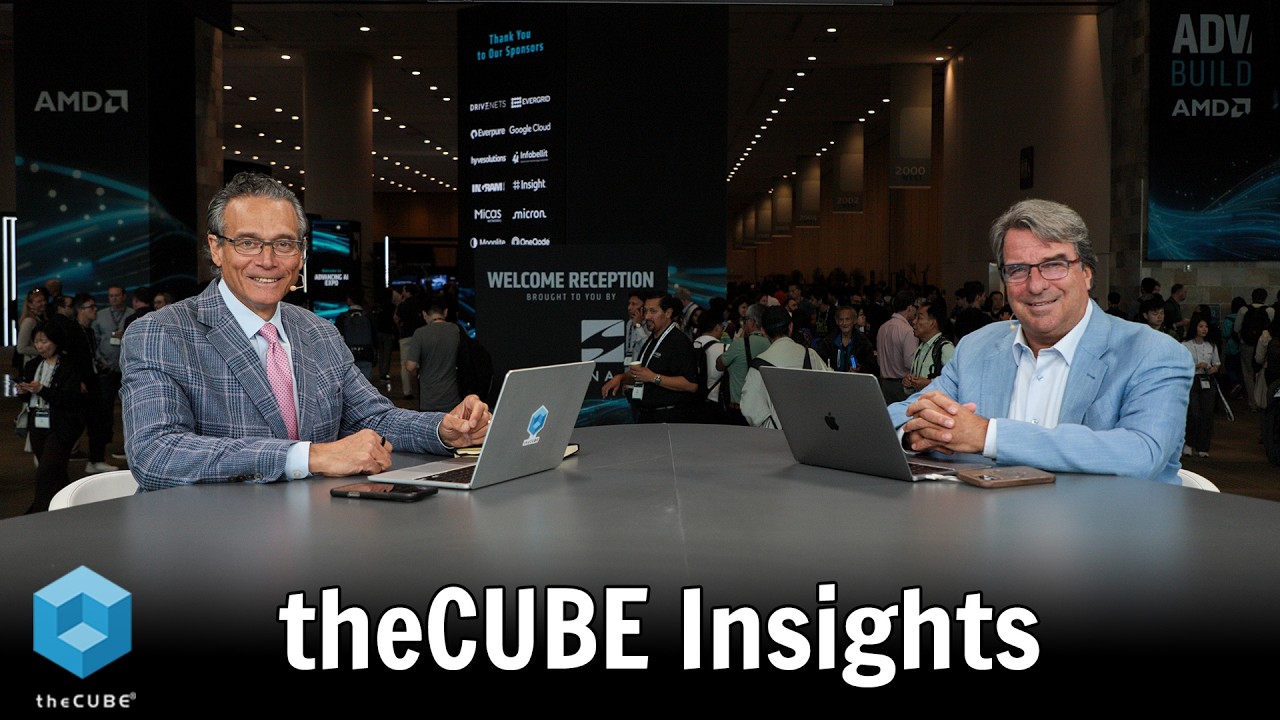
This theCUBE Research interview features hosts John Furrier of theCUBE Research and Dave Vellante of theCUBE Research. Guests include Tarkan Maner of Nutanix, president and chief commercial officer, and Suresh Andani of AMD, chief corporate vice president, compute and enterprise artificial intelligence. Maner emphasizes the need for an end-to-end control plane and lifecycle management to scale agentic AI; they highlight cost control, security and forward-deployed engineering. Andani stresses leveraging CPUs and GPUs and hybrid deployment models to balance data sovereignty, latency and economics; they underscore the requirement for integrated compute, storage and middleware from edge to data center to deliver enterprise-grade AI.
The conversation addresses hybrid cloud architectures, agentic compute and the operational challenges of moving pilots into production. Analysts present the TIME framework, which stands for tolerate invest migrate eliminate, and prioritize rapid operationalization and governance as critical next steps. The discussion also considers implications for EPYC processors and Instinct accelerators and the factors to consider when designing enterprise AI infrastructure.
Forgot Password
Almost there!
We just sent you a verification email. Please verify your account to gain access to
Advancing AI 2026. If you don’t think you received an email check your
spam folder.
In order to sign in, enter the email address you used to registered for the event. Once completed, you will receive an email with a verification link. Open the link to automatically sign into the site.
Register for Advancing AI 2026
Please fill out the information below. You will receive an email with a verification link confirming your registration. Click the link to automatically sign into the site.
You’re almost there!
We just sent you a verification email. Please click the verification button in the email. Once your email address is verified, you will have full access to all event content for Advancing AI 2026.
I want my badge and interests to be visible to all attendees.
Checking this box will display your presense on the attendees list, view your profile and allow other attendees to contact you via 1-1 chat. Read the Privacy Policy. At any time, you can choose to disable this preference.
Select your Interests!
add
Upload your photo
Uploading..
OR
Connect via Twitter
Connect via Linkedin
EDIT PASSWORD
Share
Forgot Password
Almost there!
We just sent you a verification email. Please verify your account to gain access to
Advancing AI 2026. If you don’t think you received an email check your
spam folder.
In order to sign in, enter the email address you used to registered for the event. Once completed, you will receive an email with a verification link. Open the link to automatically sign into the site.
Sign in to gain access to Advancing AI 2026
Please sign in with LinkedIn to continue to Advancing AI 2026. Signing in with LinkedIn ensures a professional environment.
Are you sure you want to remove access rights for this user?
Details
Manage Access
email address
Community Invitation
Tarkan Maner, Nutanix & Suresh Andani, AMD
This theCUBE Research interview features hosts John Furrier of theCUBE Research and Dave Vellante of theCUBE Research. Guests include Tarkan Maner of Nutanix, president and chief commercial officer, and Suresh Andani of AMD, chief corporate vice president, compute and enterprise artificial intelligence. Maner emphasizes the need for an end-to-end control plane and lifecycle management to scale agentic AI; they highlight cost control, security and forward-deployed engineering. Andani stresses leveraging CPUs and GPUs and hybrid deployment models to balance data sovereignty, latency and economics; they underscore the requirement for integrated compute, storage and middleware from edge to data center to deliver enterprise-grade AI.
The conversation addresses hybrid cloud architectures, agentic compute and the operational challenges of moving pilots into production. Analysts present the TIME framework, which stands for tolerate invest migrate eliminate, and prioritize rapid operationalization and governance as critical next steps. The discussion also considers implications for EPYC processors and Instinct accelerators and the factors to consider when designing enterprise AI infrastructure.
>> Welcome back to theCUBE's live coverage here in San Francisco, California for AMD Advancing AI event, a global event where all the top AMD and industry leaders are gathering. It's also a free event. A lot of practitioners and technologists here checking out the future of the AI industry as the roads are paved and the concrete's being poured for the next generation. We're here covering. I'm John Furrier, host of theCUBE with Dave Vellante, my co-host. We have two great guests here, both CUBE alumni, Tarkan Maner, president and CCO of Nutanix. Tarkan, great to see you. And Suresh Andani, Chief Corporate Vice President, Compute and Enterprise AI. Great to see you again. Guys, this is a partnership. Nutanix and AMD, I think, symbolizes the collaboration, the ecosystem. Build great silicon, build great software, stand up pilots, get them into production, and get the value from injecting intelligence into the enterprise. This is what the holy grail has been for the past 18 months in the enterprise. Dave and I have been tracking it. Massive enthusiasm, but you start to see the confidence come back. Agents are here, but it wasn't a banner year for massive production workloads, some production workloads, but not the floodgates. So the question is, what's next? Where do you guys see the progress? Tarkan and Suresh, share your opinions of where we are in the market.
Suresh Andani
>> Yeah.
Tarkan Maner
>> So AMD conference, you start.
Suresh Andani
>> Should I start?
John Furrier
>> Okay, go ahead.
Suresh Andani
>> Yeah, this partnership, we have been partners for many, many years now on CPUs. And we are extending that partnership now to more AI workloads on the GPUs. The problem a lot of these enterprises face always is, it's easy to do pilots. It's easy to really go run a model and get your tokens per second or whatever, right? But when you're really scaling to production, they need somebody who understands enterprise software, who understands what are the needs for governance, security, fleet management, reliability, 9, 5 nines, all that stuff, right? So for us to really scale our end enterprises from pilot to production, we as AMD can do it alone. We rely heavily on our partners. Nutanix, one of our leading partners for both CPU stack and GPU stack, now AI stack. And the key value over here is we bring the best silicon, the best platforms. But really our partnership with Nutanix brings the whole AI stack, software stack on top of it.
John Furrier
>> And you've been on— talked to us on theCUBE before at your event, also another event. A couple of things also happened. The velocity of training and inference has popped on the screen big time and the agents are leading into physical AI. So the entire computing paradigm has evolved. That's also created some operational challenges, value rescoping. What's your take on this? Because people are starting to get lines of sight into the economics now, not just the benchmarks.
Tarkan Maner
>> 100%. You're just spot on. And as you heard from Suresh, I just want to start with this. First of all, thank you, John and Dave, for inviting us. Love your show. You guys are the best in the business. And also with Suresh, as he mentioned, I'm going to say this. Some people do some great CPUs, some people do great GPUs, but there is one company doing both of them equally super well. So that's why we love the AMD partnership, their investment into Nutanix, $250 million investment we announced a few months ago. Basically, the entire market is shifting in a big way. But remember, the backdrop is also important. Massive migrations from legacy systems to new systems, 200 million cores changing hands in the next 18 months from legacy VMs into new type of VM, open source Kubernetes environments, Windows 10 to Windows 11 migration, security, and now on top of the AI, the migration with agentic AI into physical AI. So we're seeing from our customers, John, many of our enterprise customers, we have about 30,000 enterprise customers, they're all building agents, There's an agentic relation. Lifecycle management is super hard from security to manageability to availability to reliability, provisioning and cost control. So we believe Nutanix is a beautiful software-based control point for agent lifecycle management. Working very closely with AMD, we're looking forward to taking the opportunity in a big way.
John Furrier
>> I love the agentic relation comment. Dave and I have been talking on theCUBE Pod about agents for a while. In fact, we have our own AI models, you guys both know. I asked it to go review what I've been talking about for the past year. The number one thing that came up, and I want to get both your thoughts on this, was, in all theCUBE conversations, the operating model and computer science came in, those were the two themes that I talk a lot about. But this is really what we're getting at here. The operating model of the enterprise has changed significantly. You touched on some of it. I want you guys to explain for the folks watching that are in the enterprise, What is the operating model people are moving to where you see success, not just the pilots, production, but what is the now thought process at the senior C-suite that trickles down to the folks running Kubernetes? Because you really got a hybrid cloud environment, but then you got data center footprints evolving both in size and diversity. You got supply chain challenges, but then they just want to run their business and get value, create value, which AI does 100%.
Tarkan Maner
>> Maybe a good segue for a customer example. I just met a Fortune 100 customer, a big customer, and they're moving in big ways into a new agentic model. As a matter of fact, they're retiring some of their logistics applications, ERP applications, writing their own agents against their own data because they own the data. They don't need yet another software application to manage the data. They're building their own agents and they're doing this on AMD Nutanix infrastructure. One key thing for them is cost control. They need a gateway to manage lifecycle and cost control of those agents because it's not just one, there are hundreds of agents they're building out for their supply chain. And guess what? They're going to use these agents not as part of their IT, but part of their operational technologies to run the business as OT. And also they're thinking to sell these agents to their supply chain partners as a solution. Guess what? All of a sudden you're not just part of an IT infrastructure, you're helping the customer build their OT, their business line into the future. And you need to manage the security, you need to manage the cost control, security management, lifecycle, provision these things for every single business process they have. So your opportunity is huge. Do you want to add to that?
Suresh Andani
>> No, yeah, you said it very well, Tarkan. I think the only thing I would add to that is in addition to all of that, we talked earlier, right? These enterprises are also going to run in a hybrid distributed fashion. They're going to run some workloads on-prem, some at the edge, some in the cloud. They need that control plane, whether it's your standard general compute workloads or now more popular AI workloads across their deployments. And that's where it's essential, that whole lifecycle management, single pane of glass, that software layer that they are used to seeing and trust. That's where I think our partnership goes a long way.
Dave Vellante
>> Tarkan, it's funny you say that. Earlier, I was talking to a CIO the other day who said, I can't promise you, but I think I just signed my last ERP License agreements. we'll see if he can adhere to it. But we probably first had you on about 15 years ago here at VMworld.
Tarkan Maner
>> Correct.
Dave Vellante
>> And you were holding, the year after we first met you, you held your CIO event. You're the CXO alphabet. CIO, CEO, CRO, CDO, now you're talking to the Chief AI Officer. Who are you talking to these days? What's on their mind? What are they telling you? What's keeping them up at night?
Tarkan Maner
>> Yeah, I'll be straight with you. You're going to hear a lot of stuff from different vendors. Increasingly, I'm talking to CFOs and the boards. Every board I talk to, and this Fortune company, Fortune 100 company, we were having a meeting with the board members, not necessarily with the CIO, because board members, the CEO and the board wants cost control and take advantage of this opportunity in AI while cutting the cost on all fronts and get more agile because their legacy infrastructure has to be upgraded. They're going through this formula called TIME. Technologies that we're going to tolerate, T. Technologies that we're going to invest in, I. Technologies they're going to migrate, M. And technologies they're going to eliminate, E. TIME. They're spending 100% of their time on that TIME model. Where are we going to migrate? Where are we going to eliminate? Where are we going to invest and what are we going to be tolerating for a while until we get the next business model? So now the discussion is with the CFO, with the board, with the chairwoman, with the chairman, and they're trying to cut data centers. They're trying to go to the cloud. They can't go to cloud fully because there's regulation, there's data gravity, sovereignty, cybersecurity issues. They want to go hybrid. While they're doing all these migrations, they want to take advantage of the agents.
John Furrier
>> And AI.
Tarkan Maner
>> So that's the conversation right now. Complete OPEX, CAPEX strategy conversation, not an IT conversation. And last point, how can we turn all of these things into an operational technology that we can actually sell it and monetize those? Incredible change. Fourth Industrial Revolution since 1776 with the steam engine. I am psyched. The opportunity is huge.
Suresh Andani
>> Yeah. And maybe if I can add to that, right, when I'm talking to a lot of CIOs, there's 3 concerns. One is, am I running most cost efficiently? Second, do I have to go learn a whole new stack? Third, can I run it in the infrastructure that I already own? When I'm talking to the line of business GMs, they're like, hey, can I build my agents and get to production in 90 days versus 18 months? Is my data protected? Is my data getting out there, right? And security, sovereignty, we talked about that, right? So really all that boils down to is there are workloads for cost reasons, for sovereignty reasons, for control reasons, you will have to run on-prem. And there are workloads bursty workloads that you can go put it in the cloud, right? To control all of that stuff, we really need an end-to-end solution, what I call from infrastructure to agent. That's what we are building together.
Dave Vellante
>> So you think about that TIME model, which is a sort of modern version of a classic application portfolio assessment. With the added dimension of a new operating model and a new revenue model, do they have to build their own sovereign AI stack to affect that?
Tarkan Maner
>> Depending on the industry, I'm spending a lot of time with banking and healthcare lately because of the HIPAA and banking regulations around the world and because of the sovereign issues, geopolitical, so countries are obviously going through a lot of change in different parts of the world. A lot of global companies now have to think through all the political changes as well. The sovereign data gravity is becoming a huge issue. I just got back from Japan and second largest IT market in the world. If you put China aside for a second after the US, guess what? They're behind on AI and they're putting huge amount of investment into their global brands, making sure they take care of this sovereign issue internally, but they'll still be relevant globally. So, having said all this, I see the opportunity in a big way across the ecosystem. That's what also you talked about. In the AMD layer cake, so to speak, you have this, GPU, CPU ecosystem with Instinct and EPYC platform. On top of that, it's storage, network, compute, with Nutanix middleware software as the control point with agents on top. We have a beautiful model as two companies controlling the entire ecosystem to deliver that a value through both enterprises themselves. Depending on the vertical industry, sometimes we're going to see those enterprises buying from a new cloud as a service provider. They're not going to do the investment themselves because the cost models are difficult, at least for now. That's why we have also a service provider model, a new cloud model together to make sure customers have both flexible options. Do something internal, on-prem if they need to, also get some software as a service from their vendor.
Dave Vellante
>> Having made many trips to Japan, I have no doubt they were asking you a lot of really interesting questions, picking your Silicon Valley brain.
Tarkan Maner
>> Yeah, 100%. Actually, Suresh and the team are coming with us in the next couple of months, we have a lot of trips in Japan. The opportunity in each of these countries is huge. I see some countries are behind on this and need to move faster and they need the IP from Silicon Valley to get there.
John Furrier
>> Chuck, when you talk about the TIME formula, tolerate, invest, migrate, and eliminate, I think about the computer industry. If you look at what AMD has been involved in as well as all these semiconductors, it came from, sir, PCs. Okay, before that, minicomputers, but mainly PCs. If you think about the historic nature of work, the GUI, graphical user interface, that's all based on text documents, file network retrieval. The human interface is no longer GUI based. It's going to be AI based. So all the work value that enterprise is going to have to do to retrofit just to get ready for the next business model is completely different. And it's not about SQL databases. It's more the data lake and then pipelining data. So this user behavior expectation has to render into a new front end. We're already seeing— I'm usually using voice on the chat side already. I talk to my AI. What's the weather going to be like? Tell me the Odyssey movie I'm going to go see. What's the history again? What should I pay attention to? So, all these new experiences have nothing to do with the old Alan Kay, Xerox PARC evolution. We're almost at a complete transfer over.
Tarkan Maner
>> 100%.
John Furrier
>> Share your thoughts, guys, because this changes your job because you have to think about compute differently.
Suresh Andani
>> Yeah.
John Furrier
>> Because the artifacts and the objects and the content, the data has to be manipulated and managed to provide work.
Tarkan Maner
>> 100%.
Suresh Andani
>> Yeah. I used to use WhatsApp just to chat with friends. Now I'm using WhatsApp to launch agents. Yeah, it's a whole new paradigm, right? I'm using WhatsApp to launch not just my personal agents, but to really launch jobs that can go and do work stuff for me back at my office computer. So it's completely— the user interface has changed. It's all natural language processing. You're using your day-to-day social networking to really go do all of these things. It's a completely different paradigm. What that means for us is we need to be able to service all the way from AI PCs where you're running your agents into data centers, into cloud. So in order to do that, we got to not just think about chips and hardware. We need to really think about user interfaces, how we are enabling them, how we are validating those for enterprise use cases. That's completely changing.
John Furrier
>> As you say, that's the agentic compute concept. you're basically thinking about, okay, it's not the models, it's the system it fits into. Yeah, WhatsApp happens to be right there. You're using it today. It could be something else tomorrow, maybe Telegram or another app or maybe your own app you build. enterprises are dealing with this consumerization wave at this level. Human involvement in work has changed 100%.
Tarkan Maner
>> And also, John, to your point and what Suresh just said, Every enterprise in every vertical industry and every geo, as you all know well, it has its own unique differences. I was spending some time with a children's hospital, pediatric hospital with cancer research in Ohio. CIO, the entire board is involved and they're working on all these AI transformations. But at the same time, they have to deal with their cybersecurity. They have to deal with Epic and their patient life cycle, care management issues. They have to deal with HIPAA as they're bringing new nurses, new RNs, and new PAs. They need to train them. And they have so many other issues economically they have to deal with. Sometimes in Silicon Valley, we're tone deaf. We're thinking all of these things are going to happen buying GPUs. Guess what? Buying just a GPU and another server is not going to solve the problem. You have to think about this completely end to end with the context of the vertical industry you're dealing with, with the regulation you're dealing with, and with the use cases and the user profiles you're dealing
John Furrier
>> with.And work backwards from
Tarkan Maner
>> the—
Suresh Andani
>> 100%All right.
John Furrier
>> The next level is what does it take to get that done requirements-wise? What's changed in your worlds from pre-AI to, hey, I just got to get the system to fit into it. What does it do to latency? What does it do for compute? How do you build different silicon? What's around it? How do you operate it?
Suresh Andani
>> Yeah, so it's different.
Dave Vellante
>> Yeah.
Suresh Andani
>> So now AI is not just a data center thing, right? AI is now from your IoT devices to your PCs, to your edge computers, your desktops, to your data center, to the cloud. Each layer, each tier has a different requirement of what needs to go from a compute standpoint. We are the providers of compute. It's completely changed how we are building CPUs and NPUs and GPUs for an AI PC, what token routing we are enabling there. So you can run most of the jobs that you can run there and only escape to the data center for jobs that you really— now you get into the next tier of data center chipsets and compute we are providing. Now that also changes completely because now finally you have to escape if needed to the cloud, right? So it completely changes how we are thinking about compute from edge to data center to cloud in a totally hybrid fashion. And it's not just the chips, right?
John Furrier
>> I talked about software and networking to make it all work.
Suresh Andani
>> That is huge, right? sometimes it's like, oh, you just need to go build the right chips. But unless you have the right software layer that sits on top of it, nothing's going to work.
Dave Vellante
>> And Tarkan, John's point about the new work surface is right on. it's completely changing the whole AI software stack. You're not just talking to CIOs anymore. You're talking to boards of directors and CEOs. What is the dream? That you're selling them. What are you selling today that you weren't selling, to John's question, previously?
Tarkan Maner
>> No, very good question. Look, Dave, you're just spot on. the dream is the key word because some of these things are going to take more time. Yeah. In the context of everything, the customers are trying to figure out, do we intimately understand the use cases and user profiles they have today versus where they need to get to? So there's a different workforce. I'll tell you, I was spending some time with a bank. I spent time with some of their young engineers. The stuff they're talking about, I'll tell you, I'll be honest, our sales force would not understand. So we have to enable faster knowledge transfer, faster, and speed is everything. Customer partner intimacy, offering differentiation, operational excellence are not anymore just could-haves or should-haves. They are table stakes. Now it's all about speed. How can you move so fast, understand every customer you have as an enterprise in the specific geo, in a specific vertical, in a specific segment, and deliver contextual value to them in terms of outcomes? So to deliver that, you need to have a complete end-to-end ecosystem supporting you. No one vendor, even $5 trillion companies, can do that. You have to have an ecosystem. That's the reason we love this partnership with AMD and Nutanix. Tying in our storage portfolio, networking portfolio, compute portfolio partners to this with an end-to-end channel ecosystem. Because at the end of the day, there is a local partner understanding the customer needs who understands healthcare or banking in that city in Ohio better than anybody else here.
John Furrier
>> That is the number one value that I've been extracting out of all theCUBE conversations and theCUBE Pod we've been having with Dave is that the number one value people get out of AI is the fact that it pulls agility to the user, they get the ability to be democratized in the sense of getting access. But when you have agility that gets pulled to the user, to the surface area, you have that system of agility in play, not control or surveillance agility. So all the successful AI is like, okay, how do I put the goodness in the hands of the person, the domain expert, the doctor, the practitioner, and the backend learns from the reasoning traces of those human interactions, which drives more compute and storage and network. If you're a cloud service, you're just locking people in 100%.
Suresh Andani
>> But we're not, we're selling this to CIOs and line of business GMs. But really the end consumers are like, if it's a hospital, it's your medical practitioners, your nurses who are using your Epic Systems, right? So we need to go deliver those user experiences. Versus, hey, I can run a Llama 70B model at these tokens per second speeds, right?
Tarkan Maner
>> And it doesn't matter.
Dave Vellante
>> Well, and the promise has got to be better patient outcomes.
Suresh Andani
>> Yeah.
Dave Vellante
>> everybody's frustratedwith the healthcare system, and that's where you hear so much negativity around AI. I'm an optimist. I know most of us here are, to see that outcome. And I think the world is going to say, oh wow, this is actually more good than it is bad.
Tarkan Maner
>> I'll give you one example. You're spot on. At one account I was on the East Coast. I'm in Pennsylvania. This is a small regional bank and small meaning that's still sizable. And they brought in a bunch of GPUs and the CIO told me, hey, we bought a bunch of stuff, our team did, and I don't know what to do with them. They're still in receiving. We don't know what to do because I don't have talent. I don't have people locally here to even set them and stack them into a system to deliver what we need. We don't even know what we need. So I think we need to step back a little bit and understand exactly what these customers, enterprise, are going through with the issues they're dealing with today from their virtualization environment to their security environment, the things they need to deliver for their use cases. You mentioned ERP earlier. They have all these systems built in. Going back in time, what are we going to tolerate? What are we going to invest in? What are we going to migrate? What are we going to eliminate? And based on those business decisions with the board, with the CEO, with the CFO, have a plan and then decide, is this an internal deployment? Is this maybe with a service partner on NeoCloud working with AMD and Nutanix together to deliver something super unique for that specific use case? Might be Epic, might be a cash management system. Again, you have to be really planned for this. One little thing I'm going to add to this. I think people matter more than ever. I know people freaked out. I'm going to lose my job. AI is going to replace everything. Guess what? We need smart people to do this analysis. We need smart people to do the right planning.
John Furrier
>> That's why I run the operations and they're on the operation.
Tarkan Maner
>> And that's why I'm bringing in talent to Nutanix and AMD is doing this in a big way, bringing experts from the industry. We're bringing people who understand that specific vertical industry inside and out, the business processes, the pitfalls, so they can come up with the right software, right hardware solutions to deliver to the customer based on the need they have.
Suresh Andani
>> And that's a very key point, bringing thought leaders of what needs to be done, the dream, the vision that we need to create for those verticals. But what we are also investing as part of the partnership is how do you go put together a team of forward deployed engineers, FDEs, to go sit inside the enterprises and understand the real problems and provide a full end-to-end solution. So that is something we work a lot on product side and what stack we need to build. That's all table stakes. It's all important, by the way. But really to customize that to a specific use case industry requires forward deployed engineers from both our sides to go sit.
John Furrier
>> You got to get that infrastructure to have the agility. I wrote a post, I got a comment. I want to get both of your reactions. Paul Appleby, Silicon Valley guy. He said the line that stood out to me was the unit of innovation. So I wrote the unit of innovation It's no longer the chip, it's the system. That was my quote. His comment was, I believe the same is true for operations. The next competitive advantage won't come from simply building AI infrastructure. It belongs to the organizations that can operate AI systems most effectively.
Tarkan Maner
>> 100%.
John Furrier
>> Because that's what you're getting into. You got the bat, you get the product, get it into operations to get that value of agentic AI to the user. That's where the jobs are going to be. So you're operating a lot of network. You've got AMD partnership. What does that look like? This is the most important conversation we're seeing right now. It's like, I want to put stuff into production, then what happens next? The endgame is the value of agentic AI for the user. What is the operational efficiency playbook?
Tarkan Maner
>> 100%. I'll give you an example on this one. we're working with a company called Bedrock Robotics. They're taking the agentic AI into robotics now, physical AI. They are basically turning old-school excavators from Caterpillar, Komatsu, Volvo into a robotic system with a simple software hardware implementation, working with GPU, CPU vendors AMD, and putting an enclosure with some cameras, and all of a sudden you have a Caterpillar excavator turned into a robotic system without requiring a driver, working only 6 hours a day without all the insurance costs. Now you have a robot built based on the infrastructure you already have. I truly believe in the next 3 to 5 years we're gonna find ways to get more investment, more outcome out of the things we already invested in with smart technologies this, rather than creating a bunch of new robots. We have all the infrastructure in place that you can leverage, the Waymo cars. The automobile is already there. How can we get more out of it with, a little bit more investment in terms of software and hardware? I'm seeing this happening in certain industries. I think it's going to impact certain regulatory, high-regulation industries in a big way. And we're looking forward to doing more of these things together with AMD.
Dave Vellante
>> And the ROIC on that incremental investment is Enormous leverage.
Tarkan Maner
>> Incredible.
Dave Vellante
>> You already got the payback on what's there and you're going to add a little bit on top and it's going to 10x it.
Tarkan Maner
>> And guess what? AMD and Nutanix are, we partner with companies Caterpillar and Komatsu and Volvo and John Deere. These are our ecosystem partners. We've done a lot of work with them in the past in IT. Now we're discussing what's next around OT.
John Furrier
>> Now that they got the big investment in the partnership with AMD, what's the next step on the plan? What's the focus? What are you guys looking to accomplish?
Suresh Andani
>> Yeah, so again, getting into the enterprise, we have a long-drawn partnership on driving, virtualization and hyperconverged workloads. When I go step into an enterprise now, most of the conversations are around AI. So next step in the partnership, we are working on the products. We have various CPUs, GPUs in different form factors available. We are working, the engineering teams are working hard and they're making great progress in getting the full new product. So that's that. But again, where Tarkan and I talk a lot more is now how do you take these two enterprises? Talk a little bit about how we are going to enterprise customers worldwide. What is the joint solution architecture team we want to put together? Really the investment both parties have made on the product. How do we really go, for lack of better words, monetize that, but also help the end customers go from pilot to production, right?
John Furrier
>> And more agents, no hallucination. More agents, no hallucination.
Suresh Andani
>> Look, the operationalized piece was the main thing that you mentioned earlier, John. How do you really go operationalize the stack we are building together and help customers within 90 days Go.
John Furrier
>> So turn up the enterprise game big time.
Tarkan Maner
>> Big time. And also key points which I love about AMD, with Lisa, with Dan, with Suresh, what they focus on, leverage the past investment. The goal is not, hey, let's go sell a bunch of new stuff to the customer. You talked about they were here. How can we get more outcomes with the investment they made already? That's why people sometimes forget about it. A lot of applications for AI still do not leverage GPUs. They need CPUs. CPUs are so important for customers right now, especially for the agent platforms. And who does a better job with both CPUs and GPUs at the same time? That's why we bet on the partnership in a big way with AMD. We've seen huge opportunities there.
John Furrier
>> We'll be following it very closely. Again, we're in the beginning of the AI infrastructure build-out continuing to go on. Again, operational efficiency, getting that up and running in steady state, getting that agility to the users. The human interface has changed significantly. GUIs are gone. Now we've got AI. Guys, thanks so much. Suresh, thanks for sharing the updates. Tarkan, great to see you again.
Dave Vellante
>> And thanks, you guys.
John Furrier
>> Congratulations on the partnership.
Suresh Andani
>> Thank you, John. Thank you, Dave. Thanks for having us.
John Furrier
>> I'm John Furrier with Dave Vellante. Back with more live coverage here in San Francisco. AMD Advancing AI. We'll be right back.
>> Welcome back to theCUBE's live coverage here in San Francisco, California for AMD Advancing AI event, a global event where all the top AMD and industry leaders are gathering. It's also a free event. A lot of practitioners and technologists here checking out the future of the AI industry as the roads are paved and the concrete's being poured for the next generation. We're here covering. I'm John Furrier, host of theCUBE with Dave Vellante, my co-host. We have two great guests here, both CUBE alumni, Tarkan Maner, president and CCO of Nutanix. Tarkan, great to see you. And Suresh Andani, Chief Corporate Vice President, Compute and Enterprise AI. Great to see you again. Guys, this is a partnership. Nutanix and AMD, I think, symbolizes the collaboration, the ecosystem. Build great silicon, build great software, stand up pilots, get them into production, and get the value from injecting intelligence into the enterprise. This is what the holy grail has been for the past 18 months in the enterprise. Dave and I have been tracking it. Massive enthusiasm, but you start to see the confidence come back. Agents are here, but it wasn't a banner year for massive production workloads, some production workloads, but not the floodgates. So the question is, what's next? Where do you guys see the progress? Tarkan and Suresh, share your opinions of where we are in the market.
Suresh Andani
>> Yeah.
Tarkan Maner
>> So AMD conference, you start.
Suresh Andani
>> Should I start?
John Furrier
>> Okay, go ahead.
Suresh Andani
>> Yeah, this partnership, we have been partners for many, many years now on CPUs. And we are extending that partnership now to more AI workloads on the GPUs. The problem a lot of these enterprises face always is, it's easy to do pilots. It's easy to really go run a model and get your tokens per second or whatever, right? But when you're really scaling to production, they need somebody who understands enterprise software, who understands what are the needs for governance, security, fleet management, reliability, 9, 5 nines, all that stuff, right? So for us to really scale our end enterprises from pilot to production, we as AMD can do it alone. We rely heavily on our partners. Nutanix, one of our leading partners for both CPU stack and GPU stack, now AI stack. And the key value over here is we bring the best silicon, the best platforms. But really our partnership with Nutanix brings the whole AI stack, software stack on top of it.
John Furrier
>> And you've been on— talked to us on theCUBE before at your event, also another event. A couple of things also happened. The velocity of training and inference has popped on the screen big time and the agents are leading into physical AI. So the entire computing paradigm has evolved. That's also created some operational challenges, value rescoping. What's your take on this? Because people are starting to get lines of sight into the economics now, not just the benchmarks.
Tarkan Maner
>> 100%. You're just spot on. And as you heard from Suresh, I just want to start with this. First of all, thank you, John and Dave, for inviting us. Love your show. You guys are the best in the business. And also with Suresh, as he mentioned, I'm going to say this. Some people do some great CPUs, some people do great GPUs, but there is one company doing both of them equally super well. So that's why we love the AMD partnership, their investment into Nutanix, $250 million investment we announced a few months ago. Basically, the entire market is shifting in a big way. But remember, the backdrop is also important. Massive migrations from legacy systems to new systems, 200 million cores changing hands in the next 18 months from legacy VMs into new type of VM, open source Kubernetes environments, Windows 10 to Windows 11 migration, security, and now on top of the AI, the migration with agentic AI into physical AI. So we're seeing from our customers, John, many of our enterprise customers, we have about 30,000 enterprise customers, they're all building agents, There's an agentic relation. Lifecycle management is super hard from security to manageability to availability to reliability, provisioning and cost control. So we believe Nutanix is a beautiful software-based control point for agent lifecycle management. Working very closely with AMD, we're looking forward to taking the opportunity in a big way.
John Furrier
>> I love the agentic relation comment. Dave and I have been talking on theCUBE Pod about agents for a while. In fact, we have our own AI models, you guys both know. I asked it to go review what I've been talking about for the past year. The number one thing that came up, and I want to get both your thoughts on this, was, in all theCUBE conversations, the operating model and computer science came in, those were the two themes that I talk a lot about. But this is really what we're getting at here. The operating model of the enterprise has changed significantly. You touched on some of it. I want you guys to explain for the folks watching that are in the enterprise, What is the operating model people are moving to where you see success, not just the pilots, production, but what is the now thought process at the senior C-suite that trickles down to the folks running Kubernetes? Because you really got a hybrid cloud environment, but then you got data center footprints evolving both in size and diversity. You got supply chain challenges, but then they just want to run their business and get value, create value, which AI does 100%.
Tarkan Maner
>> Maybe a good segue for a customer example. I just met a Fortune 100 customer, a big customer, and they're moving in big ways into a new agentic model. As a matter of fact, they're retiring some of their logistics applications, ERP applications, writing their own agents against their own data because they own the data. They don't need yet another software application to manage the data. They're building their own agents and they're doing this on AMD Nutanix infrastructure. One key thing for them is cost control. They need a gateway to manage lifecycle and cost control of those agents because it's not just one, there are hundreds of agents they're building out for their supply chain. And guess what? They're going to use these agents not as part of their IT, but part of their operational technologies to run the business as OT. And also they're thinking to sell these agents to their supply chain partners as a solution. Guess what? All of a sudden you're not just part of an IT infrastructure, you're helping the customer build their OT, their business line into the future. And you need to manage the security, you need to manage the cost control, security management, lifecycle, provision these things for every single business process they have. So your opportunity is huge. Do you want to add to that?
Suresh Andani
>> No, yeah, you said it very well, Tarkan. I think the only thing I would add to that is in addition to all of that, we talked earlier, right? These enterprises are also going to run in a hybrid distributed fashion. They're going to run some workloads on-prem, some at the edge, some in the cloud. They need that control plane, whether it's your standard general compute workloads or now more popular AI workloads across their deployments. And that's where it's essential, that whole lifecycle management, single pane of glass, that software layer that they are used to seeing and trust. That's where I think our partnership goes a long way.
Dave Vellante
>> Tarkan, it's funny you say that. Earlier, I was talking to a CIO the other day who said, I can't promise you, but I think I just signed my last ERP License agreements. we'll see if he can adhere to it. But we probably first had you on about 15 years ago here at VMworld.
Tarkan Maner
>> Correct.
Dave Vellante
>> And you were holding, the year after we first met you, you held your CIO event. You're the CXO alphabet. CIO, CEO, CRO, CDO, now you're talking to the Chief AI Officer. Who are you talking to these days? What's on their mind? What are they telling you? What's keeping them up at night?
Tarkan Maner
>> Yeah, I'll be straight with you. You're going to hear a lot of stuff from different vendors. Increasingly, I'm talking to CFOs and the boards. Every board I talk to, and this Fortune company, Fortune 100 company, we were having a meeting with the board members, not necessarily with the CIO, because board members, the CEO and the board wants cost control and take advantage of this opportunity in AI while cutting the cost on all fronts and get more agile because their legacy infrastructure has to be upgraded. They're going through this formula called TIME. Technologies that we're going to tolerate, T. Technologies that we're going to invest in, I. Technologies they're going to migrate, M. And technologies they're going to eliminate, E. TIME. They're spending 100% of their time on that TIME model. Where are we going to migrate? Where are we going to eliminate? Where are we going to invest and what are we going to be tolerating for a while until we get the next business model? So now the discussion is with the CFO, with the board, with the chairwoman, with the chairman, and they're trying to cut data centers. They're trying to go to the cloud. They can't go to cloud fully because there's regulation, there's data gravity, sovereignty, cybersecurity issues. They want to go hybrid. While they're doing all these migrations, they want to take advantage of the agents.
John Furrier
>> And AI.
Tarkan Maner
>> So that's the conversation right now. Complete OPEX, CAPEX strategy conversation, not an IT conversation. And last point, how can we turn all of these things into an operational technology that we can actually sell it and monetize those? Incredible change. Fourth Industrial Revolution since 1776 with the steam engine. I am psyched. The opportunity is huge.
Suresh Andani
>> Yeah. And maybe if I can add to that, right, when I'm talking to a lot of CIOs, there's 3 concerns. One is, am I running most cost efficiently? Second, do I have to go learn a whole new stack? Third, can I run it in the infrastructure that I already own? When I'm talking to the line of business GMs, they're like, hey, can I build my agents and get to production in 90 days versus 18 months? Is my data protected? Is my data getting out there, right? And security, sovereignty, we talked about that, right? So really all that boils down to is there are workloads for cost reasons, for sovereignty reasons, for control reasons, you will have to run on-prem. And there are workloads bursty workloads that you can go put it in the cloud, right? To control all of that stuff, we really need an end-to-end solution, what I call from infrastructure to agent. That's what we are building together.
Dave Vellante
>> So you think about that TIME model, which is a sort of modern version of a classic application portfolio assessment. With the added dimension of a new operating model and a new revenue model, do they have to build their own sovereign AI stack to affect that?
Tarkan Maner
>> Depending on the industry, I'm spending a lot of time with banking and healthcare lately because of the HIPAA and banking regulations around the world and because of the sovereign issues, geopolitical, so countries are obviously going through a lot of change in different parts of the world. A lot of global companies now have to think through all the political changes as well. The sovereign data gravity is becoming a huge issue. I just got back from Japan and second largest IT market in the world. If you put China aside for a second after the US, guess what? They're behind on AI and they're putting huge amount of investment into their global brands, making sure they take care of this sovereign issue internally, but they'll still be relevant globally. So, having said all this, I see the opportunity in a big way across the ecosystem. That's what also you talked about. In the AMD layer cake, so to speak, you have this, GPU, CPU ecosystem with Instinct and EPYC platform. On top of that, it's storage, network, compute, with Nutanix middleware software as the control point with agents on top. We have a beautiful model as two companies controlling the entire ecosystem to deliver that a value through both enterprises themselves. Depending on the vertical industry, sometimes we're going to see those enterprises buying from a new cloud as a service provider. They're not going to do the investment themselves because the cost models are difficult, at least for now. That's why we have also a service provider model, a new cloud model together to make sure customers have both flexible options. Do something internal, on-prem if they need to, also get some software as a service from their vendor.
Dave Vellante
>> Having made many trips to Japan, I have no doubt they were asking you a lot of really interesting questions, picking your Silicon Valley brain.
Tarkan Maner
>> Yeah, 100%. Actually, Suresh and the team are coming with us in the next couple of months, we have a lot of trips in Japan. The opportunity in each of these countries is huge. I see some countries are behind on this and need to move faster and they need the IP from Silicon Valley to get there.
John Furrier
>> Chuck, when you talk about the TIME formula, tolerate, invest, migrate, and eliminate, I think about the computer industry. If you look at what AMD has been involved in as well as all these semiconductors, it came from, sir, PCs. Okay, before that, minicomputers, but mainly PCs. If you think about the historic nature of work, the GUI, graphical user interface, that's all based on text documents, file network retrieval. The human interface is no longer GUI based. It's going to be AI based. So all the work value that enterprise is going to have to do to retrofit just to get ready for the next business model is completely different. And it's not about SQL databases. It's more the data lake and then pipelining data. So this user behavior expectation has to render into a new front end. We're already seeing— I'm usually using voice on the chat side already. I talk to my AI. What's the weather going to be like? Tell me the Odyssey movie I'm going to go see. What's the history again? What should I pay attention to? So, all these new experiences have nothing to do with the old Alan Kay, Xerox PARC evolution. We're almost at a complete transfer over.
Tarkan Maner
>> 100%.
John Furrier
>> Share your thoughts, guys, because this changes your job because you have to think about compute differently.
Suresh Andani
>> Yeah.
John Furrier
>> Because the artifacts and the objects and the content, the data has to be manipulated and managed to provide work.
Tarkan Maner
>> 100%.
Suresh Andani
>> Yeah. I used to use WhatsApp just to chat with friends. Now I'm using WhatsApp to launch agents. Yeah, it's a whole new paradigm, right? I'm using WhatsApp to launch not just my personal agents, but to really launch jobs that can go and do work stuff for me back at my office computer. So it's completely— the user interface has changed. It's all natural language processing. You're using your day-to-day social networking to really go do all of these things. It's a completely different paradigm. What that means for us is we need to be able to service all the way from AI PCs where you're running your agents into data centers, into cloud. So in order to do that, we got to not just think about chips and hardware. We need to really think about user interfaces, how we are enabling them, how we are validating those for enterprise use cases. That's completely changing.
John Furrier
>> As you say, that's the agentic compute concept. you're basically thinking about, okay, it's not the models, it's the system it fits into. Yeah, WhatsApp happens to be right there. You're using it today. It could be something else tomorrow, maybe Telegram or another app or maybe your own app you build. enterprises are dealing with this consumerization wave at this level. Human involvement in work has changed 100%.
Tarkan Maner
>> And also, John, to your point and what Suresh just said, Every enterprise in every vertical industry and every geo, as you all know well, it has its own unique differences. I was spending some time with a children's hospital, pediatric hospital with cancer research in Ohio. CIO, the entire board is involved and they're working on all these AI transformations. But at the same time, they have to deal with their cybersecurity. They have to deal with Epic and their patient life cycle, care management issues. They have to deal with HIPAA as they're bringing new nurses, new RNs, and new PAs. They need to train them. And they have so many other issues economically they have to deal with. Sometimes in Silicon Valley, we're tone deaf. We're thinking all of these things are going to happen buying GPUs. Guess what? Buying just a GPU and another server is not going to solve the problem. You have to think about this completely end to end with the context of the vertical industry you're dealing with, with the regulation you're dealing with, and with the use cases and the user profiles you're dealing
John Furrier
>> with.And work backwards from
Tarkan Maner
>> the—
Suresh Andani
>> 100%All right.
John Furrier
>> The next level is what does it take to get that done requirements-wise? What's changed in your worlds from pre-AI to, hey, I just got to get the system to fit into it. What does it do to latency? What does it do for compute? How do you build different silicon? What's around it? How do you operate it?
Suresh Andani
>> Yeah, so it's different.
Dave Vellante
>> Yeah.
Suresh Andani
>> So now AI is not just a data center thing, right? AI is now from your IoT devices to your PCs, to your edge computers, your desktops, to your data center, to the cloud. Each layer, each tier has a different requirement of what needs to go from a compute standpoint. We are the providers of compute. It's completely changed how we are building CPUs and NPUs and GPUs for an AI PC, what token routing we are enabling there. So you can run most of the jobs that you can run there and only escape to the data center for jobs that you really— now you get into the next tier of data center chipsets and compute we are providing. Now that also changes completely because now finally you have to escape if needed to the cloud, right? So it completely changes how we are thinking about compute from edge to data center to cloud in a totally hybrid fashion. And it's not just the chips, right?
John Furrier
>> I talked about software and networking to make it all work.
Suresh Andani
>> That is huge, right? sometimes it's like, oh, you just need to go build the right chips. But unless you have the right software layer that sits on top of it, nothing's going to work.
Dave Vellante
>> And Tarkan, John's point about the new work surface is right on. it's completely changing the whole AI software stack. You're not just talking to CIOs anymore. You're talking to boards of directors and CEOs. What is the dream? That you're selling them. What are you selling today that you weren't selling, to John's question, previously?
Tarkan Maner
>> No, very good question. Look, Dave, you're just spot on. the dream is the key word because some of these things are going to take more time. Yeah. In the context of everything, the customers are trying to figure out, do we intimately understand the use cases and user profiles they have today versus where they need to get to? So there's a different workforce. I'll tell you, I was spending some time with a bank. I spent time with some of their young engineers. The stuff they're talking about, I'll tell you, I'll be honest, our sales force would not understand. So we have to enable faster knowledge transfer, faster, and speed is everything. Customer partner intimacy, offering differentiation, operational excellence are not anymore just could-haves or should-haves. They are table stakes. Now it's all about speed. How can you move so fast, understand every customer you have as an enterprise in the specific geo, in a specific vertical, in a specific segment, and deliver contextual value to them in terms of outcomes? So to deliver that, you need to have a complete end-to-end ecosystem supporting you. No one vendor, even $5 trillion companies, can do that. You have to have an ecosystem. That's the reason we love this partnership with AMD and Nutanix. Tying in our storage portfolio, networking portfolio, compute portfolio partners to this with an end-to-end channel ecosystem. Because at the end of the day, there is a local partner understanding the customer needs who understands healthcare or banking in that city in Ohio better than anybody else here.
John Furrier
>> That is the number one value that I've been extracting out of all theCUBE conversations and theCUBE Pod we've been having with Dave is that the number one value people get out of AI is the fact that it pulls agility to the user, they get the ability to be democratized in the sense of getting access. But when you have agility that gets pulled to the user, to the surface area, you have that system of agility in play, not control or surveillance agility. So all the successful AI is like, okay, how do I put the goodness in the hands of the person, the domain expert, the doctor, the practitioner, and the backend learns from the reasoning traces of those human interactions, which drives more compute and storage and network. If you're a cloud service, you're just locking people in 100%.
Suresh Andani
>> But we're not, we're selling this to CIOs and line of business GMs. But really the end consumers are like, if it's a hospital, it's your medical practitioners, your nurses who are using your Epic Systems, right? So we need to go deliver those user experiences. Versus, hey, I can run a Llama 70B model at these tokens per second speeds, right?
Tarkan Maner
>> And it doesn't matter.
Dave Vellante
>> Well, and the promise has got to be better patient outcomes.
Suresh Andani
>> Yeah.
Dave Vellante
>> everybody's frustratedwith the healthcare system, and that's where you hear so much negativity around AI. I'm an optimist. I know most of us here are, to see that outcome. And I think the world is going to say, oh wow, this is actually more good than it is bad.
Tarkan Maner
>> I'll give you one example. You're spot on. At one account I was on the East Coast. I'm in Pennsylvania. This is a small regional bank and small meaning that's still sizable. And they brought in a bunch of GPUs and the CIO told me, hey, we bought a bunch of stuff, our team did, and I don't know what to do with them. They're still in receiving. We don't know what to do because I don't have talent. I don't have people locally here to even set them and stack them into a system to deliver what we need. We don't even know what we need. So I think we need to step back a little bit and understand exactly what these customers, enterprise, are going through with the issues they're dealing with today from their virtualization environment to their security environment, the things they need to deliver for their use cases. You mentioned ERP earlier. They have all these systems built in. Going back in time, what are we going to tolerate? What are we going to invest in? What are we going to migrate? What are we going to eliminate? And based on those business decisions with the board, with the CEO, with the CFO, have a plan and then decide, is this an internal deployment? Is this maybe with a service partner on NeoCloud working with AMD and Nutanix together to deliver something super unique for that specific use case? Might be Epic, might be a cash management system. Again, you have to be really planned for this. One little thing I'm going to add to this. I think people matter more than ever. I know people freaked out. I'm going to lose my job. AI is going to replace everything. Guess what? We need smart people to do this analysis. We need smart people to do the right planning.
John Furrier
>> That's why I run the operations and they're on the operation.
Tarkan Maner
>> And that's why I'm bringing in talent to Nutanix and AMD is doing this in a big way, bringing experts from the industry. We're bringing people who understand that specific vertical industry inside and out, the business processes, the pitfalls, so they can come up with the right software, right hardware solutions to deliver to the customer based on the need they have.
Suresh Andani
>> And that's a very key point, bringing thought leaders of what needs to be done, the dream, the vision that we need to create for those verticals. But what we are also investing as part of the partnership is how do you go put together a team of forward deployed engineers, FDEs, to go sit inside the enterprises and understand the real problems and provide a full end-to-end solution. So that is something we work a lot on product side and what stack we need to build. That's all table stakes. It's all important, by the way. But really to customize that to a specific use case industry requires forward deployed engineers from both our sides to go sit.
John Furrier
>> You got to get that infrastructure to have the agility. I wrote a post, I got a comment. I want to get both of your reactions. Paul Appleby, Silicon Valley guy. He said the line that stood out to me was the unit of innovation. So I wrote the unit of innovation It's no longer the chip, it's the system. That was my quote. His comment was, I believe the same is true for operations. The next competitive advantage won't come from simply building AI infrastructure. It belongs to the organizations that can operate AI systems most effectively.
Tarkan Maner
>> 100%.
John Furrier
>> Because that's what you're getting into. You got the bat, you get the product, get it into operations to get that value of agentic AI to the user. That's where the jobs are going to be. So you're operating a lot of network. You've got AMD partnership. What does that look like? This is the most important conversation we're seeing right now. It's like, I want to put stuff into production, then what happens next? The endgame is the value of agentic AI for the user. What is the operational efficiency playbook?
Tarkan Maner
>> 100%. I'll give you an example on this one. we're working with a company called Bedrock Robotics. They're taking the agentic AI into robotics now, physical AI. They are basically turning old-school excavators from Caterpillar, Komatsu, Volvo into a robotic system with a simple software hardware implementation, working with GPU, CPU vendors AMD, and putting an enclosure with some cameras, and all of a sudden you have a Caterpillar excavator turned into a robotic system without requiring a driver, working only 6 hours a day without all the insurance costs. Now you have a robot built based on the infrastructure you already have. I truly believe in the next 3 to 5 years we're gonna find ways to get more investment, more outcome out of the things we already invested in with smart technologies this, rather than creating a bunch of new robots. We have all the infrastructure in place that you can leverage, the Waymo cars. The automobile is already there. How can we get more out of it with, a little bit more investment in terms of software and hardware? I'm seeing this happening in certain industries. I think it's going to impact certain regulatory, high-regulation industries in a big way. And we're looking forward to doing more of these things together with AMD.
Dave Vellante
>> And the ROIC on that incremental investment is Enormous leverage.
Tarkan Maner
>> Incredible.
Dave Vellante
>> You already got the payback on what's there and you're going to add a little bit on top and it's going to 10x it.
Tarkan Maner
>> And guess what? AMD and Nutanix are, we partner with companies Caterpillar and Komatsu and Volvo and John Deere. These are our ecosystem partners. We've done a lot of work with them in the past in IT. Now we're discussing what's next around OT.
John Furrier
>> Now that they got the big investment in the partnership with AMD, what's the next step on the plan? What's the focus? What are you guys looking to accomplish?
Suresh Andani
>> Yeah, so again, getting into the enterprise, we have a long-drawn partnership on driving, virtualization and hyperconverged workloads. When I go step into an enterprise now, most of the conversations are around AI. So next step in the partnership, we are working on the products. We have various CPUs, GPUs in different form factors available. We are working, the engineering teams are working hard and they're making great progress in getting the full new product. So that's that. But again, where Tarkan and I talk a lot more is now how do you take these two enterprises? Talk a little bit about how we are going to enterprise customers worldwide. What is the joint solution architecture team we want to put together? Really the investment both parties have made on the product. How do we really go, for lack of better words, monetize that, but also help the end customers go from pilot to production, right?
John Furrier
>> And more agents, no hallucination. More agents, no hallucination.
Suresh Andani
>> Look, the operationalized piece was the main thing that you mentioned earlier, John. How do you really go operationalize the stack we are building together and help customers within 90 days Go.
John Furrier
>> So turn up the enterprise game big time.
Tarkan Maner
>> Big time. And also key points which I love about AMD, with Lisa, with Dan, with Suresh, what they focus on, leverage the past investment. The goal is not, hey, let's go sell a bunch of new stuff to the customer. You talked about they were here. How can we get more outcomes with the investment they made already? That's why people sometimes forget about it. A lot of applications for AI still do not leverage GPUs. They need CPUs. CPUs are so important for customers right now, especially for the agent platforms. And who does a better job with both CPUs and GPUs at the same time? That's why we bet on the partnership in a big way with AMD. We've seen huge opportunities there.
John Furrier
>> We'll be following it very closely. Again, we're in the beginning of the AI infrastructure build-out continuing to go on. Again, operational efficiency, getting that up and running in steady state, getting that agility to the users. The human interface has changed significantly. GUIs are gone. Now we've got AI. Guys, thanks so much. Suresh, thanks for sharing the updates. Tarkan, great to see you again.
Dave Vellante
>> And thanks, you guys.
John Furrier
>> Congratulations on the partnership.
Suresh Andani
>> Thank you, John. Thank you, Dave. Thanks for having us.
John Furrier
>> I'm John Furrier with Dave Vellante. Back with more live coverage here in San Francisco. AMD Advancing AI. We'll be right back.