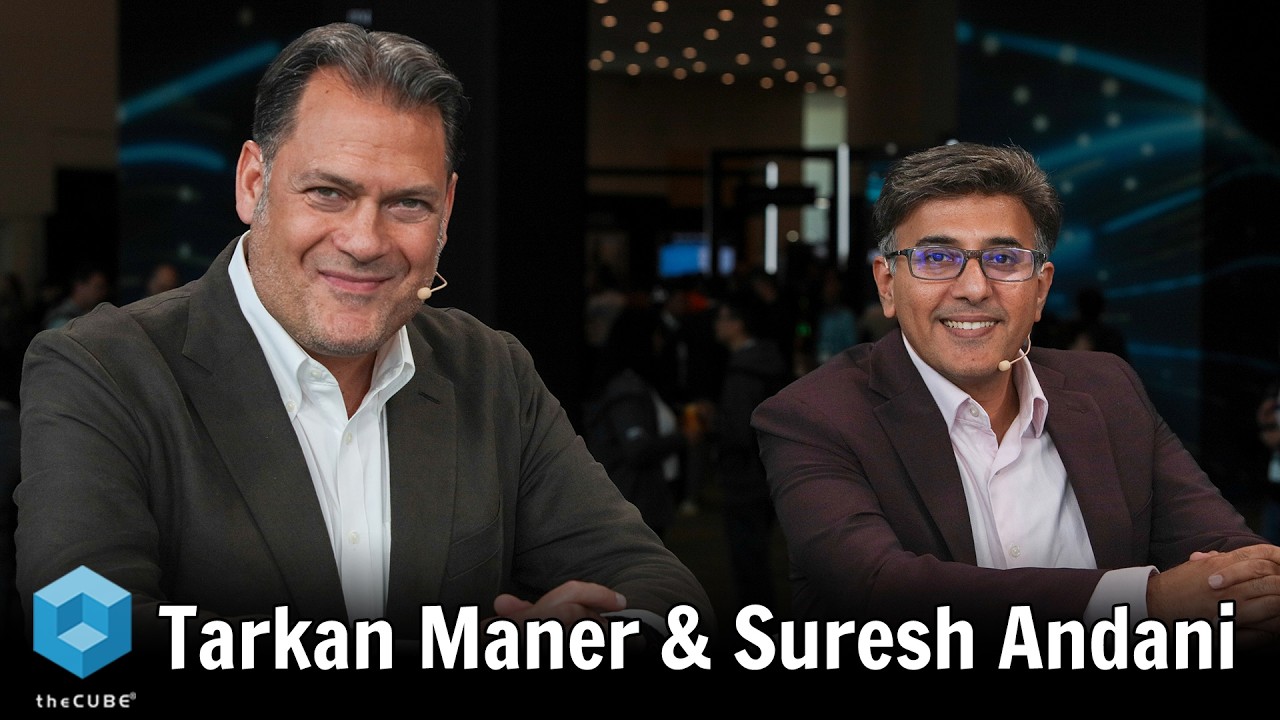
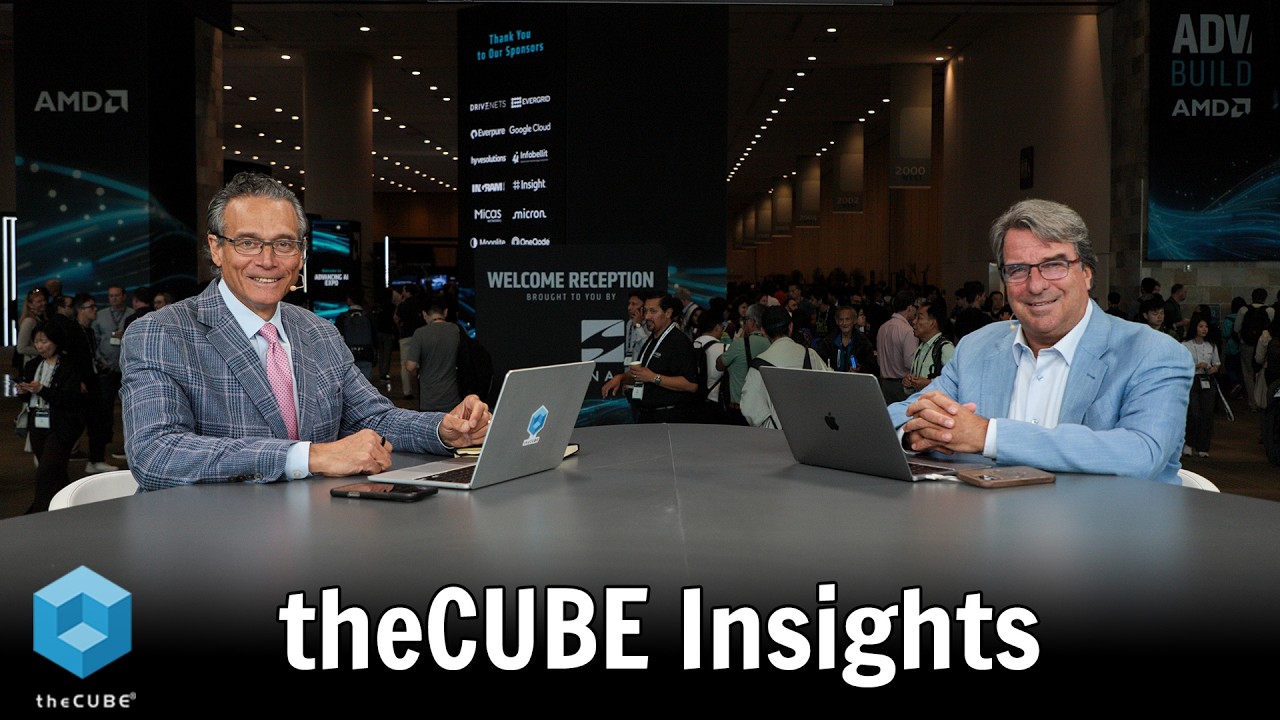
In this interview from AMD Advancing AI 2026 in San Francisco, Suresh Andani, corporate vice president of compute and enterprise AI at AMD, joins theCUBE's Dave Vellante and John Furrier to discuss the shift from raw hardware specs to outcome-based economics in enterprise AI deployment. Andani explains how enterprises are moving beyond frontier-only strategies toward hybrid architectures that route tasks between frontier APIs and on-premises open-weight models based on token economics, security and data sovereignty. He unveils AMD's newly launched MI350P GPU, a PCIe-form-factor, HBM-class card built for existing air-cooled data centers under 30 kilowatts. It supports models up to 260 billion parameters and more than 1,000 concurrent users, giving enterprises and edge deployments a path to run agentic workloads without a full infrastructure overhaul.
The conversation also explores why open-weight models are becoming central to enterprise control, letting CIOs avoid vendor lock-in and tune infrastructure to their own workflows rather than depend solely on proprietary frontier models. Andani frames AMD's role as a full-stack provider spanning silicon, platforms and ISV partnerships with companies including Nutanix, enabling enterprises to build, buy or fully own their agent tech stacks. He details how connecting siloed systems like ERP, CRM and ITSM through self-built agents reduces hallucination and strengthens data sovereignty across an organization. Citing early customer data showing payback periods as short as six months for enterprises processing a billion tokens daily, Andani makes the case that agentic AI is finally moving out of the pilot phase. From token routing on Ryzen AI PCs to escalating workloads into data-center-scale infrastructure, he outlines a roadmap for enterprises to become their own token generators rather than remaining token consumers.
Forgot Password
Almost there!
We just sent you a verification email. Please verify your account to gain access to
AMD Advancing AI 2026. If you don’t think you received an email check your
spam folder.
In order to sign in, enter the email address you used to registered for the event. Once completed, you will receive an email with a verification link. Open the link to automatically sign into the site.
Register for Advancing AI 2026
Please fill out the information below. You will receive an email with a verification link confirming your registration. Click the link to automatically sign into the site.
You’re almost there!
We just sent you a verification email. Please click the verification button in the email. Once your email address is verified, you will have full access to all event content for Advancing AI 2026.
I want my badge and interests to be visible to all attendees.
Checking this box will display your presense on the attendees list, view your profile and allow other attendees to contact you via 1-1 chat. Read the Privacy Policy. At any time, you can choose to disable this preference.
Select your Interests!
add
Upload your photo
Uploading..
OR
Connect via Twitter
Connect via Linkedin
EDIT PASSWORD
Share
Forgot Password
Almost there!
We just sent you a verification email. Please verify your account to gain access to
AMD Advancing AI 2026. If you don’t think you received an email check your
spam folder.
In order to sign in, enter the email address you used to registered for the event. Once completed, you will receive an email with a verification link. Open the link to automatically sign into the site.
Sign in to gain access to AMD Advancing AI 2026
Please sign in with LinkedIn to continue to AMD Advancing AI 2026. Signing in with LinkedIn ensures a professional environment.
Are you sure you want to remove access rights for this user?
Details
Manage Access
email address
Community Invitation
Suresh Andani, AMD
In this interview from AMD Advancing AI 2026 in San Francisco, Suresh Andani, corporate vice president of compute and enterprise AI at AMD, joins theCUBE's Dave Vellante and John Furrier to discuss the shift from raw hardware specs to outcome-based economics in enterprise AI deployment. Andani explains how enterprises are moving beyond frontier-only strategies toward hybrid architectures that route tasks between frontier APIs and on-premises open-weight models based on token economics, security and data sovereignty. He unveils AMD's newly launched MI350P GPU, a PCIe-form-factor, HBM-class card built for existing air-cooled data centers under 30 kilowatts. It supports models up to 260 billion parameters and more than 1,000 concurrent users, giving enterprises and edge deployments a path to run agentic workloads without a full infrastructure overhaul.
The conversation also explores why open-weight models are becoming central to enterprise control, letting CIOs avoid vendor lock-in and tune infrastructure to their own workflows rather than depend solely on proprietary frontier models. Andani frames AMD's role as a full-stack provider spanning silicon, platforms and ISV partnerships with companies including Nutanix, enabling enterprises to build, buy or fully own their agent tech stacks. He details how connecting siloed systems like ERP, CRM and ITSM through self-built agents reduces hallucination and strengthens data sovereignty across an organization. Citing early customer data showing payback periods as short as six months for enterprises processing a billion tokens daily, Andani makes the case that agentic AI is finally moving out of the pilot phase. From token routing on Ryzen AI PCs to escalating workloads into data-center-scale infrastructure, he outlines a roadmap for enterprises to become their own token generators rather than remaining token consumers.