We just sent you a verification email. Please verify your account to gain access to
SC24. If you don’t think you received an email check your
spam folder.
In order to sign in, enter the email address you used to registered for the event. Once completed, you will receive an email with a verification link. Open this link to automatically sign into the site.
Register For SC24
Please fill out the information below. You will recieve an email with a verification link confirming your registration. Click the link to automatically sign into the site.
You’re almost there!
We just sent you a verification email. Please click the verification button in the email. Once your email address is verified, you will have full access to all event content for SC24.
I want my badge and interests to be visible to all attendees.
Checking this box will display your presense on the attendees list, view your profile and allow other attendees to contact you via 1-1 chat. Read the Privacy Policy. At any time, you can choose to disable this preference.
Select your Interests!
add
Upload your photo
Uploading..
OR
Connect via Twitter
Connect via Linkedin
EDIT PASSWORD
Share
Forgot Password
Almost there!
We just sent you a verification email. Please verify your account to gain access to
SC24. If you don’t think you received an email check your
spam folder.
In order to sign in, enter the email address you used to registered for the event. Once completed, you will receive an email with a verification link. Open this link to automatically sign into the site.
Sign in to gain access to SC24
Please sign in with LinkedIn to continue to SC24. Signing in with LinkedIn ensures a professional environment.
The Supercomputing 24 event in Atlanta is focusing on AI infrastructure and how data centers need to evolve to handle new workloads. Scott Bils, Dell's VP of professional services, discusses challenges organizations face with energy costs, AI workloads, and sustainability pressures. Strategies for improving sustainability include power and cooling management, advanced technologies, and optimized layouts. Dell's professional services help develop sustainability strategies, implement solutions, and track progress with KPI metrics. They also assist with regulato...Read more
exploreKeep Exploring
What is SC24 and how is it evolving to accommodate both supercomputing and AI infrastructure?add
What are some of the key challenges organizations face in their data centers related to rising energy costs, growing energy demands for AI workloads, and increased regulatory pressure for sustainability?add
What are some of the most effective strategies for improving sustainability in data centers, including intelligent power and cooling management, advanced cooling technologies, and optimized layouts?add
What are some key considerations for companies looking to improve energy efficiency in their data center designs and optimize their energy costs over time?add
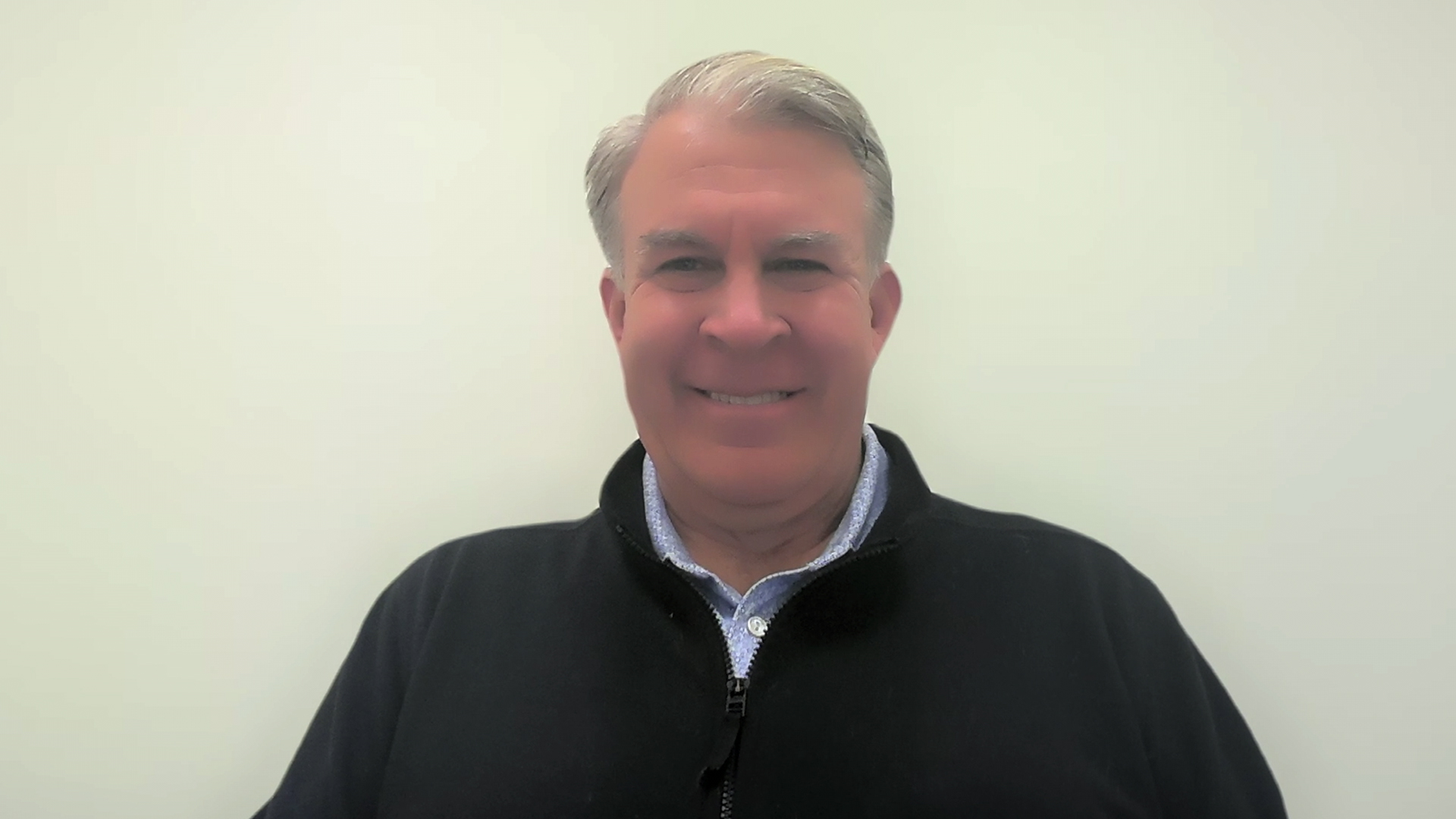
>> (music)>> Hello, and welcome to theCUBE's coverage of Supercomputing 24, where we are live on the floor in Atlanta with even more coverage coming from theCUBE Studios. We got an overflow set of days here. Supercomputing 24 or SC24 is now more than just about supercomputing for HPC, again, the high performance computing, but it's really an AI infrastructure show as well. And today, we're going to dive into some more discussion about how data centers need to evolve to handle sustainability of power and cooling for these new workloads. AI is really power and cooling hungry, as we're hearing in the news every day. So, right now I'm joined by Scott Bils, who's the VP of professional services with Dell. Welcome on board, Scott. This is near and dear to my heart talking about this, so glad to have you on board.
Scott Bils
>> Yeah, no, excited to talk about it, and excited about the announcements we made this week around our new professional services to help customers with the sustainability and AI challenge.
Scott Bils
>> Yeah, I was going to say, let's jump into that, because what are some of the key challenges that you see organizations facing in their data centers, as rising energy costs, growing energy demands for AI workloads? They're getting hungrier and hungrier, and increased regulatory pressure for sustainability, especially in the EU. And I think we'll see that in the US coming very soon.
Scott Bils
>> Yeah, no, totally agree. And look, when you take a look at your typical data center, 40% to 60% of the operating costs is driven by energy costs. And a lot of the factors that drive prices there are beyond our customer's control: geopolitical factors, factors around infrastructure, brittleness and stability. And they have to control what they can control from an energy and sustainability standpoint. The challenge with the power issue is even more magnified with AI and the increased power consumption that GPUs drive over CPUs. And they're really looking to understand, how do we improve the PUE, the power usage effectiveness, of our infrastructure and data center and meet broader sustainability goals as well, in response to stakeholders and shareholders.
Scott Bils
>> Yeah, I love it. And I think we were talking just a couple weeks ago, but how many teraflops per watt and stuff like that, and getting into actually understanding how effective it is. Is actually being tracked a lot, and there'll be a lot of talk about that at SC24 this week, I'm sure. What are some of the most effective strategies for improving sustainability in data centers, such as intelligent power and cooling management, advanced cooling technologies, and optimized layouts? And obviously, with all the talk in the past couple of weeks has been around renewable energies, and even depending on your view on nuclear, nuclear could be renewable, depending on how you look at it. It's definitely less carbon, but how do you see, and what are the most effective types of strategies you're seeing?
Scott Bils
>> Yeah, I think a lot of the levers you mentioned are spot on, but I think a lot of customers that we're talking with, the first step for them is to understand their current performance and PUE, which I mentioned before, which is the ratio of your overall energy consumption over how much of that is being consumed by the underlying IT infrastructure, storage, compute and networking. And you want that ratio to be close to one as possible. A lot of organizations are finding that they're not where they want to be in terms of industry best practices. And all of the areas you mentioned before around cooling, data center design, hot cold lighting, those are all elements that customers can go work to drive PUE down and drive the energy efficiency of their data center. But the first step is to understand where you're at today, have a goal for where you want to be in terms of your sustainability goals, and then start to work some of those design and operational levers to get to the North Star.
Scott Bils
>> Yeah, no, I think, again, this is, like I said, near and dear to my heart, because we all live on the same planet, and you're trying to figure out how do we make this place last as long as possible for the next generation? And when you look at this, really it is about how we can be more effective. Are you seeing organizations really looking to you because they find that they have challenges? Like Virginia, for instance, has no more power for data centers. Are they looking to you guys to help them understand how to get the PUE, I guess you could say, more effective? So, in their existing data centers, and planning for new data centers maybe that have AI, or how they fit AI into that?
Scott Bils
>> Yeah, no, it is that whole set of related issues that we're helping customers with our sustainability services in particular. It's to help them develop an overall strategy and roadmap. And the thing I'll kind of tie back to before that is critical is having a reporting and KPI metrics portfolio that you're tracking and managing, both to ensure that you're driving the outcomes you want, but also that you're effectively reporting progress out to your stakeholders. But we do help with those upfront services to help customers develop an overall sustainability strategy. Then a set of implementation services to help them make it real, and work with them in terms of implementing a lot of the recommendations, the options. And then an ongoing set of subscription advisory services, where we come in on an ongoing basis to help make sure that they continue to stay on their sustainability track that they're looking to drive.
Scott Bils
>> I think that's the key, right? It's not just a one and done type of thing, because the workloads are going to... So, how do you see, and how does somebody start to engage from... Again, you guys just announced the Dell Services for Sustainable Data Centers, that new kind of track in there. How do people engage with you and where do they get started?
Scott Bils
>> A lot of times it's either with a initial workshop that we'll have with them, accelerator workshop to talk at a high level around some of the dimensions here and how to get stakeholder alignment around that, or it's engaging around our pro-consulted advisory engagement. And we have multiple durations of flavors of that, depending on how deep the customer wants to go. But it's really focused on three things, helping them understand where they sit today from a sustainability metrics standpoint, their North Star goal, where do they want to get to? What's their to be? And then, helping develop a kind of strategic plan and implementation plan with major milestones that help ensure that they make progress, as well as a centralized reporting mechanism to make sure that you're able to communicate the progress you are making, in terms of sustainability goals. And that could be power, or energy consumption, or other metrics as well.
Scott Bils
>> Yeah, because you're talking about the KPIs, and a lot of organizations, if they're in Europe, there's a wrath of government regulations going on over there around sustainability. And you even have some of the sustainability reporting starting to happen here in the U.S., with the SEC and looking at some other regulations. If you're in California or Virginia, there's some stuff there going on as well, particularly in California, where it's going to be required. How are you seeing... Are you helping, as part of this, helping them get their KPIs in order and helping them understand-
Scott Bils
>> Absolutely.>> Yeah.
Scott Bils
>> Yeah. There's two pieces of that. One is identifying what are the right KPIs that they want to track and measure progress against, and then helping them create the reporting mechanism, the centralized reporting across all of the different metrics so they're able to easily view that, communicate that out, report that out to external stakeholders.
Scott Bils
>> Yeah, because I would assume that that's a big piece of it, because I mean, having worked with multiple different organizations, and had discussions with them about this, that actually, they're looking at it as, "Hey, we have to report out, because even though we're in the U.S., we have subsidiaries that are in the UK, or they're in the EU, or somewhere else where they have to." And it's got to be a challenge, because these organizations are worldwide, but you guys have that perspective across all of these things and all of those different regulations.
Scott Bils
>> Yeah, absolutely. It's a big opportunity. A big opportunity for us to help our customers, because we do have that global view. Our customers are largely global. We have the perspectives across global markets and can help bring to bear global best practices, but also in the context of local regulation, local compliance, and local requirements around sustainability.
Scott Bils
>> And I think that the power and cooling aspect of it as well. I was just talking to an organization that actually runs a major data center in Singapore, and with Singapore, you're going to the government to get more power and stuff. Do you see organizations that are running into these localized things, where they're like, "Hey, we have to do more with less, because there's no way the Singaporean government..." Or, "We don't want to go build our own solar farm, because we're not one of the hyperscalers."
That has to be some of the questions you guys get asked and some of the designs they ask for.
Scott Bils
>> Yeah, no, absolutely. I think part of the push around sustainability is being good global citizens and stewards of resources, but, to your point, locally, there is going to be a big push for organizations, enterprises, to do more with less in terms of energy. And that gets really down to a lot of the elements we're talking here around data center design cooling, for example, GPUs taking advantage of our new liquid cool options and architectures in the data center. But big part of this is going to be being more energy efficient with what you have, given the advent acceleration in AI adoption.
Scott Bils
>> Yeah. And it's not like Dell is... This is not the first rodeo with liquid cooling. I mean, you guys have been in liquid cooling for quite a while. You have a lot of patents in this space. And the direct-to-chip stuff I got to see was awesome. And I know there's even more being announced this week around that, and it's just amazing what you can do. Even hearing the story about one massive data center that's using gray water as part of their liquid cooling thing, where you guys really helped them understand what the art of possible was with liquid cooling as well.
Scott Bils
>> Yeah, yeah. No, I agree. It is exciting. We're super excited about the new servers we're bringing to market around that. I think that's going to be a big opportunity for customers that are challenged. The energy and power front, leveraging that in their design, and how they're thinking about data centers is going to be really, really important as they think about AI and scaling operations in the future.
Scott Bils
>> Yeah. No, so people are looking at this and go, "Okay, so what does it cost?" So, I think getting to what are the cost savings, sustainability improvements, and expert support that customers will gain by engaging with Dell in this way. What are some of those outcomes that you look and help that organizations get by engaging with you guys?
Scott Bils
>> Yeah, a lot of it is around that improved energy efficiency, getting more from less, from their data center design, making sure that their positioned, not just in terms of consumption today, but going forward, ensuring from a design standpoint they're leveraging best practices to ensure that their energy costs are optimized over time. And then, I think communicating the broader sets of benefits around sustainability to different local reporting regimes or organizations is a critical part to it as well. But I think a lot of the kind of ROI is really around the data center, energy levers that we pull with design cooling, thinking through the right options there, and how to think about your data center going forward.
Scott Bils
>> So, I'll ask this because there's going to be a lot of noise around SC24, and we like to try to get above that. How does Dell really differentiate the services it's offering in the sustainability space? Given you have a comprehensive set of services and packages, but you also have some strategic partnerships and you're really looking to help them with really results driven outcomes, how do you see yourselves differentiating?
Scott Bils
>> Well, I think it's a couple of pieces. One is, you have the work we do with third-party partners around data center design and making sure that that's optimized, but then also the close relationship that we have with our partners over in the ISG side of the house here on the AI hardware and infrastructure side, working with them closely to make sure that, as we think about what we're talking to customers about, that we're kind of leveraging the best of what Dell is bringing to market in terms of liquid cool technology, data center design, making sure that we're leveraging the expertise we have internally here at Dell, from a hardware standpoint, and bringing it to bear for customers.
Scott Bils
>> Yeah, no, again, I look at it and I think one of the leaders on the power side that you're working with is Schneider Electric as well, and a number of those. How is it working with those industry leaders who see it a little bit... They're off. You got to work kind of hand in hand, because you're building the stuff that's consuming the power. They're doing a lot of the PDUs, and being able to help with the power distribution, and things of that nature, and the metering and stuff. How does that work?
Scott Bils
>> Yeah, it's great. Look, we've worked with Schneider for years, so a lot of our relationships on the professional services side are partners we've engaged with and leveraged for topics and areas prior to AI, Gen AI. It's been the latest area, obviously, that we're deeply involved and engaged with them around, but it's been a working relationship we've had for a while. Look, we partner with third-party service providers all the time in the services that we deliver our customers to ensure we're delivering kind of the best IP, industry best practices. So, it's a great collaboration. Certainly, you'll see that growing and expanding in the future. But it's something where we have a strong foundation, having worked with Schneider and our other partners in the past around other data center-related topics.
Scott Bils
>> Yeah, no, I think it's key, because I don't think there's any... I mean, I would love to say there's one company that can solve everything, but I think you guys with the professional services, bringing the right companies to bear the right technology from ISG and being partnered with them, that's a winning combination. But, for the last word, organizations that want to dive a little bit deeper, kind of where should they go, what should they check out to get a little more information?
Scott Bils
>> Yeah, I would encourage everyone to go check out a new blog we're posting this week in conjunction with S24 announcing kind of our newest set of sustainability services. It's a blog by Matt Liebowitz, who's one of our services portfolio leaders around multi-cloud and data center, and has some great thoughts and additional detail on some of the things that we've talked about today around our portfolio.
Scott Bils
>> That's great. I think everybody always wants to get a little bit deeper in the tech and understand. And this is such a hot topic, not to put a pun on heating and cooling, but it's really, it's key. So, I want to thank you for coming on board today and helping us unpack this. I think there's going to be just so much discussion of it this week, and I think you guys are doing a great job over there. So, thank you.
Scott Bils
>> Yeah, thanks. Enjoyed the conversation.
Scott Bils
>> And thank you for watching this segment, live from the floor of SC24 in theCUBE Studios where I'm at. Stay tuned for more SC24 on theCUBE, the leader in tech news and analysis.>> (music)