We just sent you a verification email. Please verify your account to gain access to
SC24. If you don’t think you received an email check your
spam folder.
In order to sign in, enter the email address you used to registered for the event. Once completed, you will receive an email with a verification link. Open this link to automatically sign into the site.
Register For SC24
Please fill out the information below. You will recieve an email with a verification link confirming your registration. Click the link to automatically sign into the site.
You’re almost there!
We just sent you a verification email. Please click the verification button in the email. Once your email address is verified, you will have full access to all event content for SC24.
I want my badge and interests to be visible to all attendees.
Checking this box will display your presense on the attendees list, view your profile and allow other attendees to contact you via 1-1 chat. Read the Privacy Policy. At any time, you can choose to disable this preference.
Select your Interests!
add
Upload your photo
Uploading..
OR
Connect via Twitter
Connect via Linkedin
EDIT PASSWORD
Share
Forgot Password
Almost there!
We just sent you a verification email. Please verify your account to gain access to
SC24. If you don’t think you received an email check your
spam folder.
In order to sign in, enter the email address you used to registered for the event. Once completed, you will receive an email with a verification link. Open this link to automatically sign into the site.
Sign in to gain access to SC24
Please sign in with LinkedIn to continue to SC24. Signing in with LinkedIn ensures a professional environment.
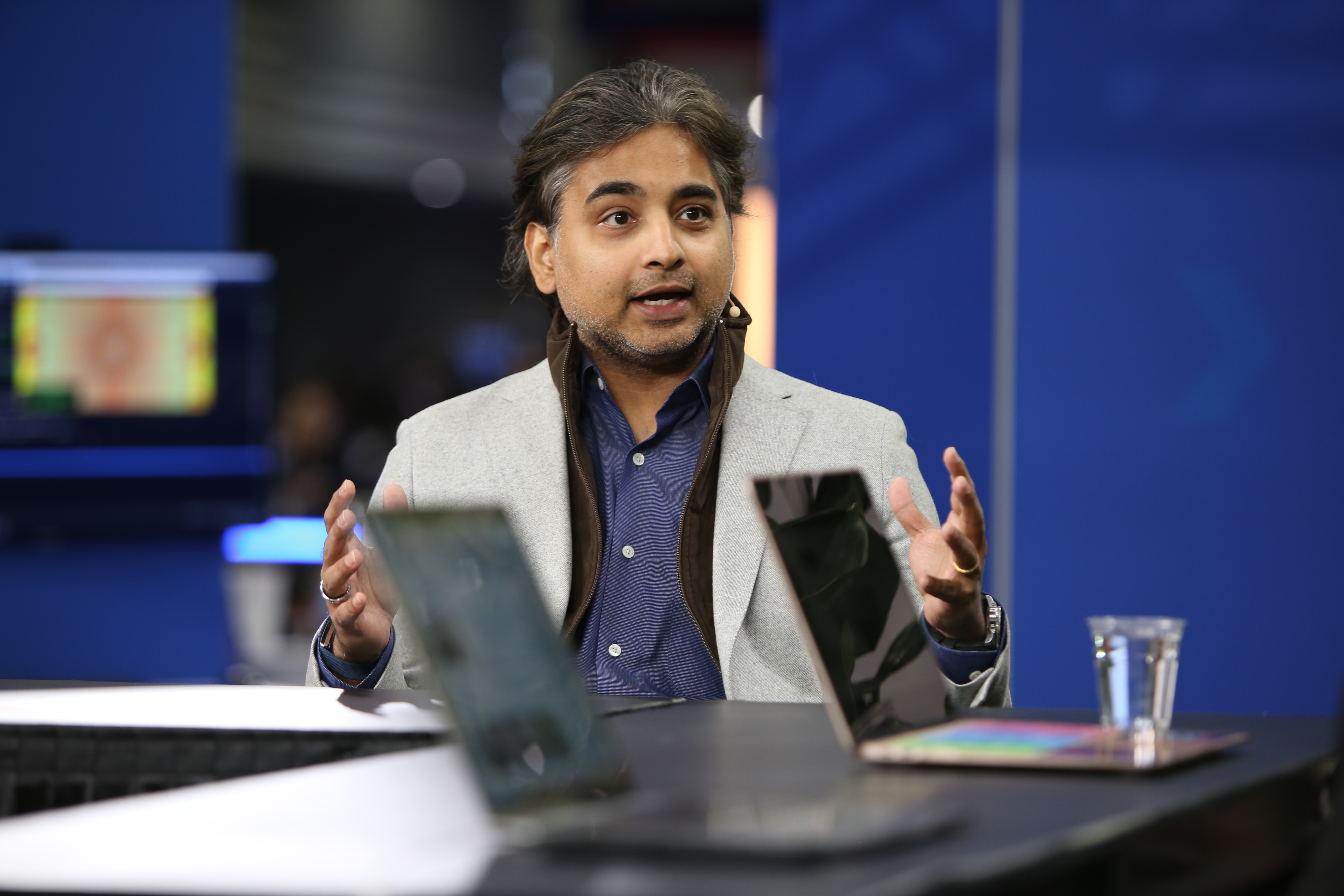
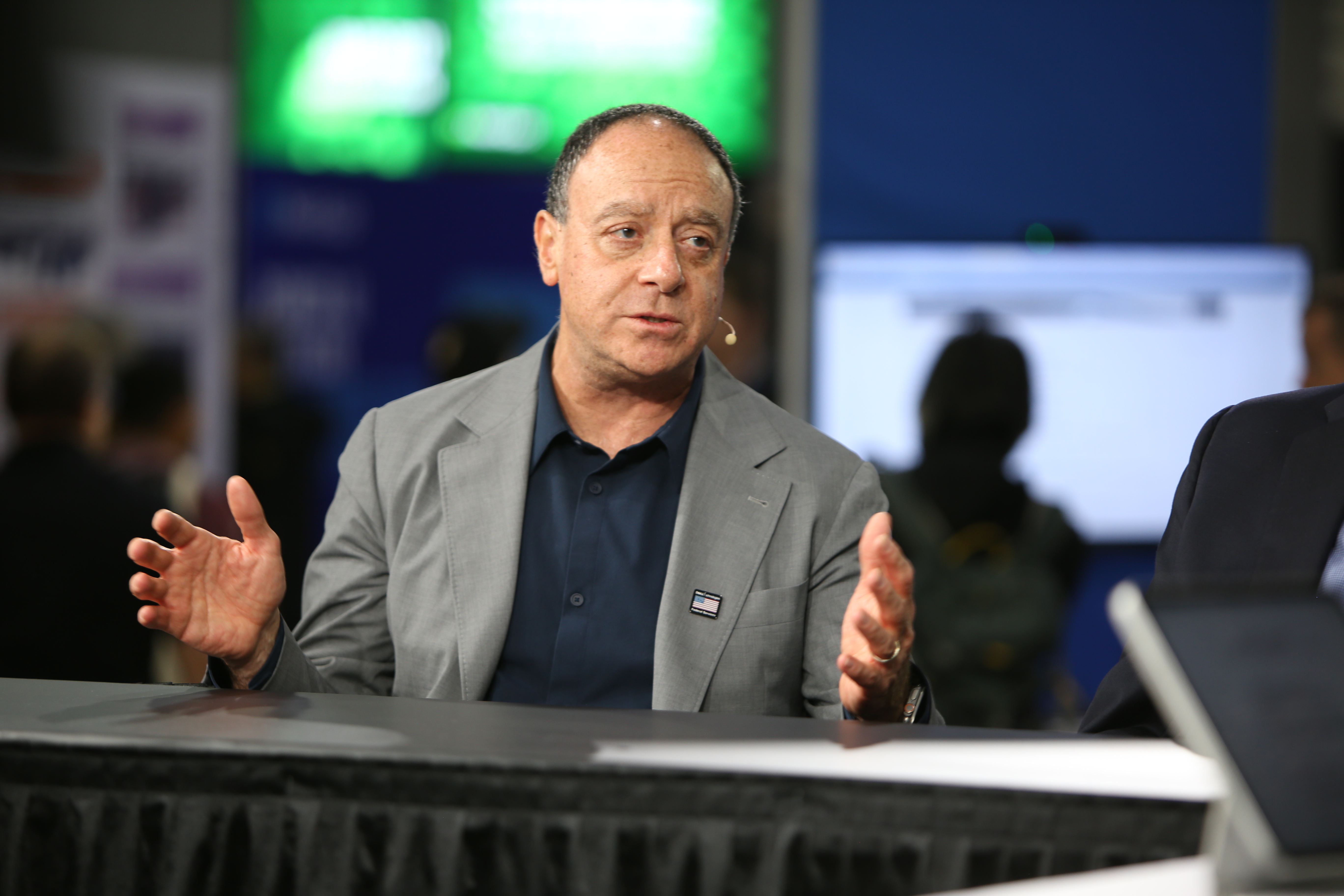
Nerd fam is in Atlanta, Georgia for SuperComputing 2024 with Savannah Peterson and John Furrier. High-performance computing is crucial for AI, and storage is evolving. DDN is a leader in this space, focusing on efficiency and scalability in data centers, especially for AI and high-performance computing. The partnership between DDN and NVIDIA is strong, accelerating AI processes, reducing costs, and improving efficiency. The data intelligence platform is key for AI success, enabling customers to leverage GPUs effectively. Examples like drug discovery and genom...Read more
exploreKeep Exploring
What has been the focus of SuperComputing 2024?add
What is the impact of DDN's technology on high performance computing and data center efficiency, specifically in relation to powering AI applications?add
What is the importance of data intelligence in relation to artificial intelligence, and how does it impact business outcomes?add
What benefits does DDN have from their long-standing partnership with NVIDIA?add
>> Good afternoon, nerd fam, and welcome back to Atlanta, Georgia. We are here coming to the conclusion of day three of our three days of coverage at SuperComputing 2024. My name's Savannah Peterson, here with my fellow nerd, John Furrier.>> Yes. Of course.
Savannah Peterson
>> We've had some really excellent conversations this week.>> This has been an AI show, because high-performance computing is the AI engine. That's the clusters we've been talking about, and AI doesn't work without data, and so the whole storage industry's been upside down and growing and changing. It's a whole other S-curve opportunity because the data stores somewhere. It's different storage patterns, but it's still stored. So this next segment will be, again, very much compelling.
Savannah Peterson
>> Very cool. Jyoti, thank you so much for taking the time to come hang out with us.>> Hey, thank you for having me.>> Good to see you.>> Always great to be back on theCUBE.
Savannah Peterson
>> I know. I was going to say you're a VIP OG. You've been on the show many times over the years.>> I like that.
Savannah Peterson
>> Very impressive. Obviously, this is going to be your best segment yet.>> Always->> We'll do our best.
Savannah Peterson
>> Continuous improvement.>> No pressure.
Savannah Peterson
>> How's the week been for you?>> It's been great. It's a great event for us. DDN's been the leader in high-performance computing for a long, long time. These are mostly our existing customers. It's rare for a CMO like me to come into a show where everybody's an existing customer. Usually it seems-
Savannah Peterson
>> That's got to feel kind of nice. Talk about mission accomplished on that front.>> Exactly, exactly. There's also a little bit of pressure to ensure that if they get the right experience, the messaging and all of that good stuff, but yeah, this is our wheelhouse. We love high-performance computing. We love the fact that it's moving into the world of AI, those customers, and we're there to partner with them on that journey.
Savannah Peterson
>> It's so much in your wheelhouse that you won an award yesterday.
Savannah Peterson
>> Yes, for the 14th time in a row, I think, if I remember correct.
Savannah Peterson
>> Casual flex.
Savannah Peterson
>> Yes. Yes.
Savannah Peterson
>> And this was the best HPC storage product, correct?
Savannah Peterson
>> Correct, correct.
Savannah Peterson
>> Congratulations.
Savannah Peterson
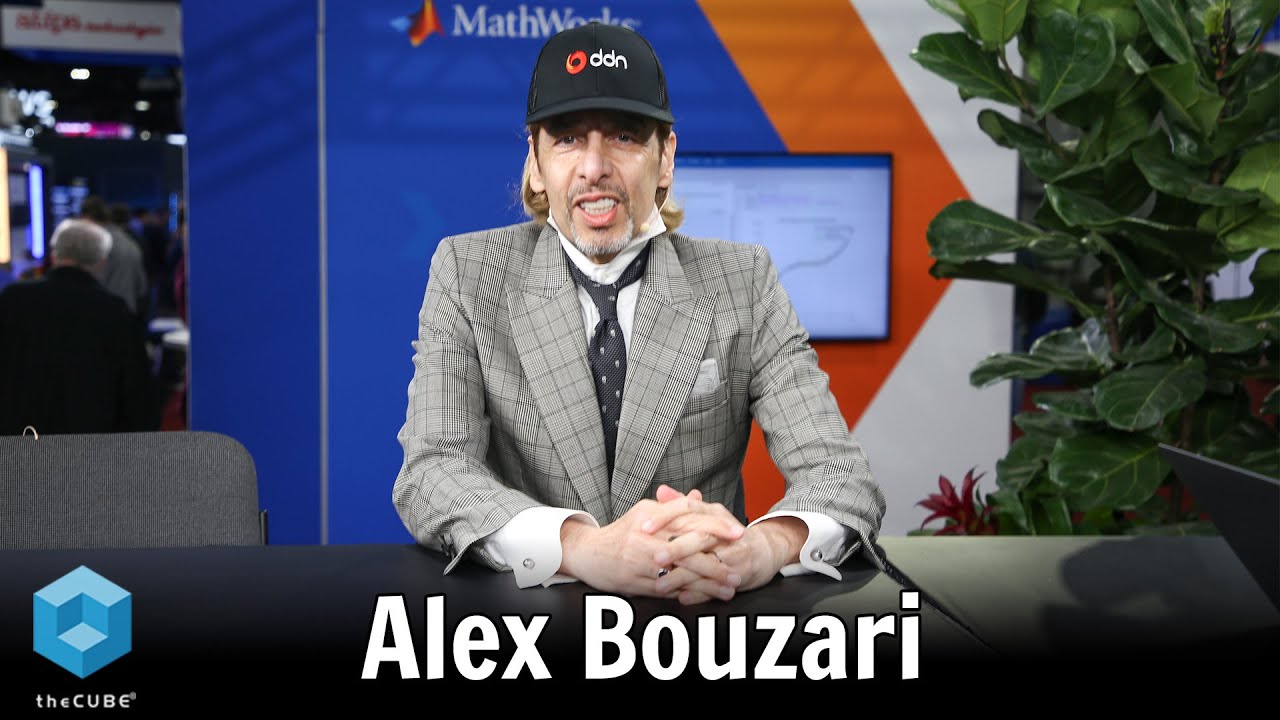
>> Thank you. Thank you. Thank you. Credit to the team. I can't take any credit for it. The engineering team, the founders that have built what is a phenomenal product that performs at scale in the largest AI and high-performance computing environments in the world.>> Alex was on earlier in the session here in the queue with the show, and we talked about this in the engineering show. This is about proof is in the pudding. Sizzle, not important. They want to see the steak, and you guys deliver on that. We also talked about where you guys are engineering with customers. The three areas, space in the data center, power and cooling and price performance.>> Correct.>> All the energy, all the wood is behind those three arrows. And then so now, how do you get that out there? You have customers, but you're jumping on another S-curve. So now your job is to ride that S-curve and communicate that to the customers. Take us through the mindset, because one, you got to keep your eye on the game, engineering the solutions, but you're knocking down big customers. What's the plan?
Savannah Peterson
>> Yeah, so that's a loaded question, so I'll try to unpack that. Right? So we'll start with our roots. Our roots are obviously in high performance computing, which is in the data center, and what matters in the data center? Power, space cooling, that sort of stuff. With AI, as you know, let's be honest, there's not enough power in the world to power all the AI that the world requires. We're hoping that the infrastructure gets more efficient overall, et cetera. But what we do at DDN is we try to get your GPUs to perform 10X more efficiently. That means they consume a lot less power. We also ensure that the data center is shrunk by at least 5 to 10X in terms of space because we're in the largest data centers in the world. For example, at xAI, which is the largest AI super factory in the world that's in Memphis, and we've been able to the 100,000 GPU and growing to 200,000 in short order, we've been able to help them accomplish this massive effort and shrink down their data center space as well as their power requirements and help them accelerate their AI outcomes within that data center.
Savannah Peterson
>> Which is literally what everyone wants.
Savannah Peterson
>> Exactly. And when you do it at scale, you can take that blueprint and apply it to a 5,000 GPU environment, a 10,000 GPU environment or 100,000 GPU environment. So, that is in-the-stack, in-the-data-center value proposition, but that's just in the training aspect of AI. There's a whole other bottle of wax around above the stack, which is the LLM and RAG inferencing. That's where we're moving, where we're trying to partner with NVIDIA and their microservices, NIMs and NeMo, Triton Drive. We're integrating all of our data infrastructure into their NIMs so that we enable our customers to build these applications faster without spending the crazy amount of money that they think they need to spend.>> Our CUBE research team has been looking at some trends, and I want to get your reaction to some of our observations we're going to start digging in around. So this generation that we're on, you mentioned some of the scale things, is that we're at a new era. We've never seen this before, where if you're operating at scale, you're seeing problems that no one else is seeing because you're at a scale level. You're in rarefied air in a way, and so you see AWS, NVIDIA, DDN, that's a huge competitive advantage. Okay. So what do you see there? How are you taking that down? Because now it's hard to replicate. It's almost a barrier to entry, again from a competitive standpoint. So, I can see that being kind of benefit to you guys, but what are you seeing at scale now? Because the apps are coming, the new software's going to be rewritten. We haven't even seen the new set of software coming on top of this. Certainly the first wave is old algorithms, which transformer equals this and some cool stuff's happening. A lot of physical work being done on the footprints, but the software side's going to explode. So, what have you guys seen at scale? More so, do you agree with that statement and two, if you agree, what do you see?
Savannah Peterson
>> Yeah, I do agree with that statement with a short caveat. Not everything is either a tops-down or a bottoms-up approach. What I mean by that is some people think we need to start at the AI factory and data center level and move up into the application layer. Some people think, "I don't care about the infrastructure. I'm going to take GPU as a service from a cloud provider. I'm just going to go build my application, so I don't really care what's happening behind the seats."

So for us at DDN, the challenge is to cater to both those outcomes by working with both the NVIDIA cloud providers, the hyperscalers, et cetera, as well as NVIDIA themselves. Let's be honest, 90-plus percent of the AI market is driven by NVIDIA. They're the gravitational force and we're the planets and the satellites spinning around them. So we just need to ensure that the above-the-stack integrations, and the below-the-stack efficiencies that we drive are fully integrated. Also, John, I mean, you talked about software applications being built. These software applications don't necessarily care about what's under the covers. They just want business outcomes. So when they speak to someone who's got a HPC heritage or a storage heritage, data heritage, they're like, "I don't get the connection. So what is it that you guys do for me again? I just build my applications over using AWS's tools or GCP or OCI or whatever." So, what we've got to convey to them is how important and efficient high-performance data infrastructure is for AI for, their applications to succeed. I'll give you one example. Read and write performance, basic stuff. Traditional data infrastructures and storage companies focus on read. Let us read the information from storage. It's sitting there, read, read, read. AI is all about write performance. It's writing, it's checkpointing nonstop. If your infrastructure, your data infrastructure is not supporting that, your data intelligence layer is not supporting that, it's going to fail. It's a lot of money wasted, a lot of GPU cycles wasted. So that's essentially the message we're trying to get up into the upper end of the stack.
Savannah Peterson
>> And a lot of value not realized. I think that's such a good point. Speaking of solar systems and galaxies and things rolling around, NASA is one of the companies that trusts you. I'm curious what customer examples, and this is me asking you both as someone running marketing, but also just as a human being, because you get to see some really interesting use cases of AI at scale. What are some of your favorite examples that you've gotten to see within your own community?>> Wow, there are so many. It's kind of hard to pick one or two, but let's start with the one that anybody, the common person out there can understand. So drug discovery. Just think about that. In my lifetime, drug discovery has been about an eight to 10 year process, brand new drug discovery.
Savannah Peterson
>> And it takes $2 billion per drug that gets over the line with the FDA.>> That's one of the more reasonable ones. It's like 5 to $6 billion total sometimes. Okay.
Savannah Peterson
>> Oh, God. Yeah. I think that's the average.
Savannah Peterson
>> And this is more so for rare genetic diseases. The common ones, everybody's in because it affects the general population, but the rare genetic diseases that have a thousand kids, et cetera, it takes a long time. Those kids are not kids anymore by the time those drugs come out into the market. So what we're doing now is accelerating the process from eight to 10 years to a year or less. It's life-changing because of AI, because how much-
Savannah Peterson
>> That's not just life-changing, that's life-saving in some cases.>> Life-saving. Exactly. So, I love those type of case studies, the genomics research case studies where you can sequence a DNA in no time compared to the months or weeks that was earlier, right? I think we're going to get rare insights into human genomic research in the next two to three years that will blow our minds with the promise of, you'll get to know everything about yourself with a drop of blood I think will become true in the next five years, I think. So I think that's one use case that I really love.>> I mean, you're talking about targeted at scale use cases.>> Absolutely.>> That's something that they couldn't do before because it was too hard. Not enough compute or too much dollars to stand up.
Savannah Peterson
>> It's all, the entire stack. Not enough compute, networking couldn't handle it. Data infrastructure was read-intensive and the data warehousing tools that are there were built for structured data. This is all unstructured data mostly. So you need a data infrastructure that can handle massive amounts of unstructured data, videos, imaging, these complex 3D models. Quickly analyze it and put out results.>> You guys have done the work. We've got the story from the CEO. We can see what you guys have done. Been following DDN for a while. The three areas you're working on. Take this to the customer. What is the customer conversations as you talk to them? Okay, I got needs, different approaches that you mentioned. What are they looking for? And when they look at the data platform, because now you have other people saying, "We have the best data." Everyone has the best data platform here. So get into the specifics. Is it rights? Is it just viability? Is it all NVIDIA? What about other things? Take us through the customer conversations.
Savannah Peterson
>> Wow, I'm getting a lot of loaded questions today.
Savannah Peterson
>> Welcome to theCUBE.>> You know theCUBE. He was on in 2016 at the EMSC World.
Savannah Peterson
>> Like I said, he's the VIP OG.>> Yeah, he knows.>> So, DDN has the data intelligence platform, and you and Alex had this banter about is it artificial intelligence or is it data intelligence, right? So artificial intelligence has synthetic data, but that's still data. So it's still data intelligence in our opinion. End of the day, without data, there is no artificial intelligence or organic or real intelligence. It's all about the data infrastructure. So, how do we play? End of the day, John and Savannah, it's about business outcomes.
Savannah Peterson
>> Absolutely.>> All the massive billions of dollars that are being pumped into AI is about how can it accelerate my business outcomes. I started my career writing terrible Cobalt code on mainframes.
Savannah Peterson
>> Bless you for that.>> Thank you. Thank you. Some of that code still runs. So we took the compute power of mainframes, et cetera, and the PC world brought it to our computers, our Macs and our PCs. I think AI, what AI is going to do is high-performance computing, and the supercomputers are now going to be at home because of that, right? But how do you derive business outcomes from it? So our value proposition at DDN is to connect the dots from the data center all the way up to your LLMs, inferences and your microservices. Accelerate that 10X. Save you a lot of money in trying to run that, right? There is a scarcity of GPUs. Let's not hide that. It's not easily available. People want to drive business outcomes quickly. So, you got to extract as much as you can with your existing GPUs, whether it's as a service or if you own them, it doesn't matter. We help with that, right? We help with ensuring that your inferences are super efficient, super specific, and you don't end up wasting a lot of GPU cycles when you're inferencing. So, that's our value proposition in a short nutshell.>> And you're a companion to the NVIDIA. Talk about the relationship between their penetration and what you guys are coming in from a growth perspective. You mentioned that, before we came on camera, that that is a tailwind for you. Talk about that. It's an important dynamic.>> Oh, absolutely. So NVIDIA and DDN have been partners for eight years now. So even before NVIDIA was as well known-
Savannah Peterson
>> Even before it was super cool to be partners with NVIDIA?>> I think they were always super cool. The world got to know about that-
Savannah Peterson
>> They were super cool to us nerds.>> Right.
Savannah Peterson
>> Yes. I don't know that my mom would've known the name NVIDIA eight years ago, but just throwing that out there, not that she's not->> Exactly. So, we've been building reference architectures with them for a very long time. We're tried and tested with the NVIDIA infrastructure and ecosystem for a very long time. In fact, NVIDIA uses us. There is no bigger testament than NVIDIA using us in their SuperPODs, in their biggest AI factories that they're building, DDN is the de facto standard data intelligence platform for them. So, we take that blueprint and we offer it up to our customers saying, who better than NVIDIA to tell you how you have to deploy your AI efficiently? So that's our big advantage with NVIDIA. Also, NVIDIA is in the mindset of Jensen Huang, right? He's super methodical. He's a technologist. They're a technology first company, so is DDN, so it just jives really well. It's technologist to technologists who work together for a very long time in the HPC business, seeing the hard times and the good times, and now taking advantage of this huge AI wave that's happening.>> Awesome.
Savannah Peterson
>> That's very cool. I noticed that you took a little time off recently to be a dad.>> Yes, I did.
Savannah Peterson
>> Which is very cool. Nice to see that and congrats on the little one.
Savannah Peterson
>> Thank you. Thank you.
Savannah Peterson
>> What do you hope 20 years from now, all this hard work you're putting in and all these partnerships does for your child?
Savannah Peterson
>> Wow, that's a great question and an important question that we all have to answer in the world of AI, right?>> Yeah.>> Whilst there is all these great benefits we talk about with AI, we have to watch out for how it can be misused towards the future of our children as well. So there is that element to it. But having said that, what I will tell my kid, my son is listen, prompt engineering is the future. My dad told me coding is the future. I became a computer scientist. Even though I'm a CMO, I'm a computer science. I wrote code and that.
Savannah Peterson
>> Look at you.>> It forms a logical way to think about things, and you get that analytical aspect in your head. Prompt engineering is the future. So any kids watching, thinking about what I want to do and how I'm going to embrace AI and use it to my advantage, learn how to prompt engineer, how to use AI to your advantage so you can affect how the world changes in the future. You can affect how AI behaves by behaving well with it.>> And the productivity gains from the prompting will give the intellectual capital, it scales your mind basically, and your ability to execute.>> Exactly. There's this fear that a lot of jobs will be lost. Look, let's be honest, there will be a few of the basic level jobs that will be lost, of course, but what happens is, it's servitude. You want to up-level the labor force to do something more meaningful for the world. We believe, I should say, I believe that eventually, I don't know how many number of years, but eventually most of us will not have to work because AI is running most of the jobs for us. We're essentially doing what we love day to day.
Savannah Peterson
>> I'm here for it.>> Because AI, the governments are running it or whoever is running it for you, and most of the day-to-day chores and things that take up a lot of our time that we don't really enjoy, will just be moved out to robotics and AI so we can actually do what we love every day.
Savannah Peterson
>> Yeah. Create, play, spend time with our families. So many things there. All right, last question for you, Jyoti. That was a wonderful answer by the way. When we're hanging out next year, which I think might not even be all the way at SuperComputing, I think it'll be a little bit sooner than that if everything goes well, what do you hope to be able to say then that you can't yet say today?>> I'd love to say how some of our initial large-scale deployments are now driving those business outcomes I spoke of. Because at the end of the day, any technological wave or investment in technology is about business outcomes. If it's not driving those outcomes, then it has failed, right?>> Yeah.
Savannah Peterson
>> Yes.>> So we are looking forward to seeing some of the use cases that I wasn't able to talk about today because it's all still happening in the back end, come to fruition and we're able to put out stats in healthcare and manufacturing, in how autonomous driving has changed 5X, manufacturing has improved 10X. Give you real data points in various industries and bring AI to the mainstream enterprise next year. So, that's my hope.>> Awesome.
Savannah Peterson
>> We're going to keep making it real. Jyoti, we cannot wait to have that conversation with you ASAP and highlight some of those customer stories that you're having. Thanks so much for coming to hang out with us today.>> No, thank you for having me. It's always great to be on theCUBE.
Savannah Peterson
>> It's a pleasure.>> It's the best place to be, podcast.>> It is fun. 15 years.
Savannah Peterson
>> . Y'all are that first ->> He's an OG, OG on theCUBE. 2016.
Savannah Peterson
>> Yes, and thank you, John. This has been another fantastic event.>> Yeah, a phenomenal event. TheCUBE team has been phenomenal. Production's awesome. been phenomenal.
Savannah Peterson
>> Oh, yeah. Shout out to Brendan, Andrew, Tony, Alex and Frank Say there. We also had Dave Vellante on the show with us all week. It's been an absolutely->> Kristen Nicole was here....
Savannah Peterson
>> seamless broadcast. Oh, yeah. We had the VIP show up of Kristen. We really had the dream team down here in Atlanta. It's been super fun. Also fun to be close to my namesake. Most importantly, thank all of you for tuning in wherever you might be around the world. We've been hanging out here in Atlanta, Georgia at SuperComputing 2024. My name's Savannah Peterson. You're watching theCUBE, the leading source for enterprise tech news.