We just sent you a verification email. Please verify your account to gain access to
SC24. If you don’t think you received an email check your
spam folder.
In order to sign in, enter the email address you used to registered for the event. Once completed, you will receive an email with a verification link. Open this link to automatically sign into the site.
Register For SC24
Please fill out the information below. You will recieve an email with a verification link confirming your registration. Click the link to automatically sign into the site.
You’re almost there!
We just sent you a verification email. Please click the verification button in the email. Once your email address is verified, you will have full access to all event content for SC24.
I want my badge and interests to be visible to all attendees.
Checking this box will display your presense on the attendees list, view your profile and allow other attendees to contact you via 1-1 chat. Read the Privacy Policy. At any time, you can choose to disable this preference.
Select your Interests!
add
Upload your photo
Uploading..
OR
Connect via Twitter
Connect via Linkedin
EDIT PASSWORD
Share
Forgot Password
Almost there!
We just sent you a verification email. Please verify your account to gain access to
SC24. If you don’t think you received an email check your
spam folder.
In order to sign in, enter the email address you used to registered for the event. Once completed, you will receive an email with a verification link. Open this link to automatically sign into the site.
Sign in to gain access to SC24
Please sign in with LinkedIn to continue to SC24. Signing in with LinkedIn ensures a professional environment.
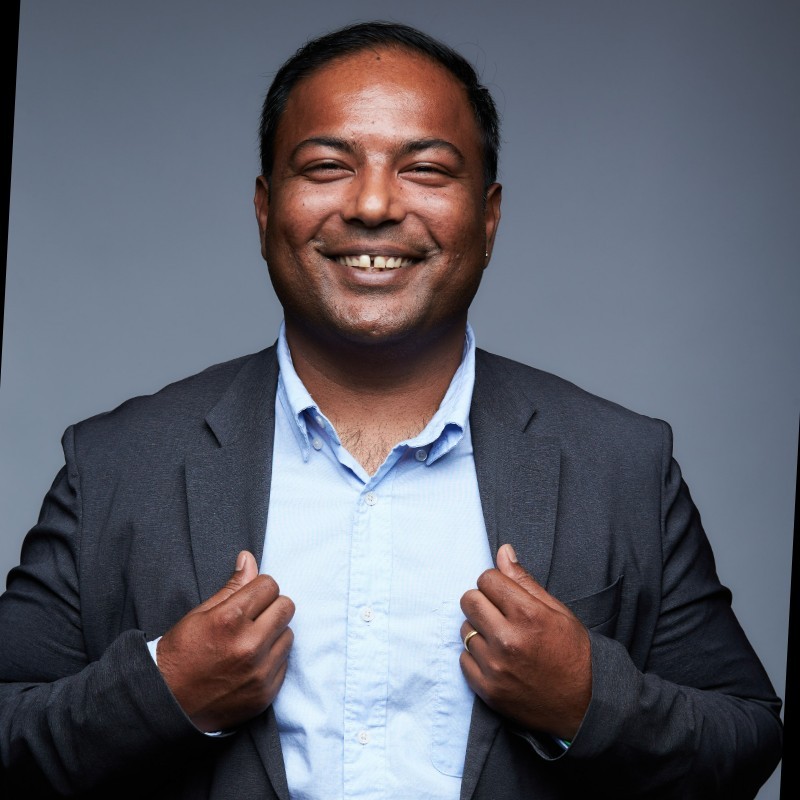
VP, Al Ecosystem, Solutions & Market EnablementSolidigm
Coverage of SuperComputing 2024 in Atlanta is in full swing. Avi from Solidigm discusses their new product, a high-density SSD with 122.22 terabytes on a single U.2 form factor. This SSD is a game-changer in terms of performance and efficiency for AI applications. Solidigm's technology provides a 4X density improvement and a 10X bandwidth improvement compared to standard QLC drives. They work closely with partners to meet specific needs and are at the forefront of innovation in the evolving SSD market.
exploreKeep Exploring
What is the storage capacity of the world's highest dense SSD on a single form factor launched by Solidigm?add
What are some of the advancements in storage technology within the past 15 years?add
What are the benefits of Solidigm's technology compared to a standard QLC drive and how does Solidigm differentiate itself in the market?add
>> Welcome back, everybody, to the live coverage here of theCUBE. We are in Atlanta for SuperComputing 2024, SC24. I'm John Furrier, host of theCUBE, with Dave Vellante, my co-host for this event, with Savannah Peterson. Kristen Nicole is here as well. The whole team is pumping at full blanket coverage. Dave's also my co-host on theCUBE Pod every Friday. Check it out. We got Avi on the set here . Good to have you on. Good to see you.
Avi Shetty
>> Thank you.>> You were jumping on the same red-eye flight from California. We're die-hards. We're taking that red-eye to Atlanta. And also your company's been doing extremely well. You guys were at the NYSE recently for an event on the product launch. You got some product there. Let's get into the product quickly. Was this what was the new product?
Avi Shetty
>> Yes. Thank you, Dave. Thank you, John, for having me.
Dave Vellante
>> Hey, Avi.
Avi Shetty
>> And I'm representing Solidigm and we are proud. We launched this last week. This is the world's highest dense SSD on a single form factor. It's 122.22 terabytes on a single U.2 form factor. You pair eight of these and you get a one petabyte on a single one U rack.
Dave Vellante
>> This is insane. That is amazing. I mean, we all remember, not everybody, but we remember the days of 10 megabyte spinning disk drives. 122 megabytes.
Dave Vellante
>> That a 10 meg drive in the old days.
Dave Vellante
>> The original PCs, wow. 122.88 terabytes.
Dave Vellante
>> Terabytes, yes.
Dave Vellante
>> T.
Avi Shetty
>> Terabytes. We are not even talking old age. My first SSD, I was at Intel at that time. It was a 32 gigabyte SLC SATA solution. And just in the span of 15 years, you've seen the storage ecosystem evolve and push the bandwidth envelope where this is 122 terabytes on a PCIe Gen 4 and on a 3D NAND, which the internet technology here is a 192 layer 3D NAND technology. And within it, it's got 48 NAND sites, and each NAND site has 16 die stacks. So that's how you get it all in a small U.2 form factor.
Dave Vellante
>> It's amazing. So in the days of spinning disks, spinning disks are still around, but that's what powered everything. You could never do this with spinning disk. But you would go through a protocol like SATA or SCSI, it was very chatty and it didn't matter because, even though this disk was spinning fast, it was spinning slow compared to electronic speed. So you could do a bunch of stuff in between and clean up things. And now with PCIe, you've got essentially atomic rights to the NAND, right?
Avi Shetty
>> I used to run client before I joined data center, and you switch on, you press your power on button, go grab a coffee, and you're back. And the drive's still running and getting your boot screen, right?
Dave Vellante
>> Right.
Avi Shetty
>> But with an SSD, you just don't have that. It's all responsive.
Dave Vellante
>> So I want to get into how you're supporting AI, but before we do, can you give us the basics on Solidigm's technology? My understanding is it's more efficient than the standard run-of-the-mill QLC. What are you guys doing there to enable that?
Dave Vellante
>> Before you go that, please, I want to get...
Dave Vellante
>> I'm going right to the weeds. So sorry about that.>> No, no. I want to get things explained, but I want first for the audience that doesn't know, explain Solidigm as an independent company. It came out of Intel. Just quickly set the context for how it originated because it's a story of innovation in a way that came out of Intel and there's a parent company. Explain how you guys started and then we'll get to the product.
Avi Shetty
>> Sure. Solidigm is a independent, 100% fully-owned subsidiary of SK Hynix. We are ex-Intel. So the Intel storage division, which made Intel SSDs for enterprise and client was spun off and we created Solidigm. So even though Solidigm's a relatively new company, we formed in December of '21, but our legacy spans decades. We have the Intel innovation and the architecture, and come SK Hynix, who has manufacturing prowess, combining both of those has given us a fundamental foundational differentiation against the rest of the ecosystem. With SK Hynix, we have all the manufacturing fab capacity as well as the fab know-how. And with us, we've made SSDs since it was formed.>> I want to just set the context because there's a trajectory of economies of scale coming from Intel, the legacy, and the DNA, innovation, and now it's a whole nother ballgame. So, okay, back to your question.
Dave Vellante
>> Yeah, okay. So Intel decides to be the best at business. Okay, great. It's not the core competency. You guys pick it up. This is all you do. You eat, drink, sleep, storage.>> We love storage too.
Avi Shetty
>> We are a fully integrated enterprise storage provider. We make our own NAND. And you talked about how does Solidigm differentiate itself against a generic QLC drive, the rest of the market's taken literally six, seven years since our first QLC SSDs came out.
Dave Vellante
>> Right.
Avi Shetty
>> So Solidigm were the first in the industry to come out with a QLC solution back in 2018. And that was on a 64 layer 3D NAND solution. And since then, this is our fourth incarnation. This is on a 192 layer, our fourth generation QLC, and every generation we've learned to work with our partners, help optimize our firmware, our media characteristics to now where we believe and with our customers this solution, even though it's a QLC solution, performs as well as a TLC.>> Yeah, I want to get into this because one of the things we've been talking about on theCUBE and you know, you saw my blog post, Welcome the Generative AI Era, we're here, it's finally happened, the old chapter is over, but all that innovation goes forward, but the design of the new systems are happening. And so GPU utilization is a huge deal. We've all been on ChatGPT, we've seen where you get all these prompts and then you forget a few days and then you got to go back. I want to get back to that thread where it says little memory invoked or whatever. That's actually GPUs recalculating. So having a really good form factor can create a offload GPU. This is where people are starting to think, "I don't need to just buy GPUs. I've got to make them smarter." So having this form , am I getting this right that this is where this goes?

Avi Shetty
>> Oh, yeah. So let's talk about how storage fits into the AI pipeline and what inefficiencies it helps solve. Unfortunately, today, 80% to 85% of data centers still are on a hard drive. And with hard drives, we talked about it being very, very slow, not having enough bandwidth as well.
Dave Vellante
>> And that's a capacity metric?
Avi Shetty
>> So the sweet spot hard drive density point is roughly 20 to 25 terabytes. You can't go bigger than that. You have one odd hard drives which are bigger, but the sweet spot density across the market is 24 terabytes. We are talking a 4X density improvement. We are talking a 10X bandwidth improvement. I don't even know the metric, maybe it's in 5000X latency improvement.
Dave Vellante
>> At least.
Avi Shetty
>> Or more. And when it comes to random IOPS, we measure performance in the SSD world with IOPS, a typical hard drive is in the order of 1000 or maybe 2000 IOPS per second. And we are talking a million IOPS here, which are extremely critical for all the different phases of an AI pipeline. You're talking ingest where high sequential bandwidth is required, training, which is hand data sets where a high volume of random access is required. And when it comes to inferencing, check-pointing, and then eventually archiving, you have benefits across the pipeline, which an SSD can solve. And a high density one has a better TCO angle. I do want to talk about power. Power is something which we don't think about as a primary value prop, but having SSDs replace hard drives allows a data center to reduce 30% of power, which would've otherwise now go to a GPU.
Dave Vellante
>> So when you talk TCO, you're talking relative to spinning disk.
Dave Vellante
>> Yes.
Dave Vellante
>> I mean, in 2009, theCUBE research, formerly Wikibon, said, "All-Flash Data Center is coming." We predicted the end of high spin speed spinning disk. It was an oxymoron. I would have to say it, I'm somewhat surprised that there hasn't been a bigger crossover. And part of that is supply, prices have stayed up, I understand that, but I still think there's a lot of misperception in the marketplace. Raw capacity is a lot different than usable capacity.
Dave Vellante
>> Yes.
Dave Vellante
>> And to your point about power, when you really look at the TCO and you look at what you can do with sharing data and so many other factors, it seems to me a no-brainer. But at the end of the day, somebody's still got to write the check, but it's coming. I mean, if Jensen's right and this multi-trillion dollar accelerated data center is coming, there's going to be a big transformation, that has to be part of it.
Dave Vellante
>> Yeah.
Avi Shetty
>> It has to be. NVIDIA is a strong partner with us, and we love the whole AI wave because essentially what it's showing is the distribution of performance between a hard drive or legacy storage solution versus these compact, high-dense, flash-based solutions, you just can't do those workloads in hard drive anymore. The whole purpose of the AI data centers is to keep GPU efficiency high, high in the regions of 80% to 90%. If you use a hard drive, you're not keeping those GPUs efficient. Your investments right now are focused on GPUs, HBM, and you want to maximize those investments which come in with superior, low latency, high bandwidth storage solutions.>> Power, energy, footprint. I mean, form factor, you put that into a camera on a light post, you have the data volume to support it.
Avi Shetty
>> Correct.>> I mean, you put them two together, even better, right?
Avi Shetty
>> I was just talking to an architect on the show floor and he was talking about, "Hey, can you find out if you have a eight carrier U.2?" Because he wants to carry one petabyte with him. You put in his backpack. Even in today's world, when you talk one petabyte, you're talking data center, rack. I can stack eight of these and make a petabyte. That's the beauty of technology here.>> Imagine having a petabyte in your pocket.
Avi Shetty
>> I don't know what I'll store, but yeah, okay.
Dave Vellante
>> Everything.>> Look, this is obviously a game changer. For all of us that had PCs, that was essentially the hard drive.
Avi Shetty
>> Yes.>> This is now terabytes, and now they're being used. I'm curious on what you're seeing in terms of your customers. Who are you selling to? Do you have two sides of your business? Is there a channel? What does your partnership ecosystem look like? Take us through where it starts and where it ends on your relationships with the ecosystem.
Avi Shetty
>> Yeah. We've been a leader of storage solution offering across the traditional data center portfolio, and now we have a full portfolio of products for AI needs. And our customer base spans worldwide customers. We work with all hyperscalers, tier one, tier two, tier three CSPs. We have channel and a broad channel ecosystem. We have AI innovator spaces, which you talked about traditional versus new. And the AI guys know the TCO. They're like, "Hey, give me the densest drive." All they want is more density in one U, one unit, because they know about the TCO. They know about the power savings. They know about the cooling advantages which one unit has versus 10. So essentially we work all the OEMs. We have a lot of partners on the floor here. We supply and partner with all of them. Not just from a sales standpoint, we work with them. We've worked with them over the last decade where their learnings, their validation, all of those are ingrained in our product development. So we know what they want and as a result, produce what they want.>> I wish we had more time. We'll do a deep dive certainly in our studios or at the NYSE next time we're there. We're going to be there in the 10th. You definitely should swing by. But I want to ask you one final question before we go.
Avi Shetty
>> Sure.>> I'm starting to see a line of sight into a category that no one's talking about in the mainstream. You have the hyperscalers. They, of course, don't buy that in bulk truckloads or whatever loads. Enterprise, certainly data center, refresh, re-architect, re-system. But I see a whole energy brewing around what used to be build your own PC white boxes, because these new systems are going to have to be built on-prem and the integrators that are out there that were usually do in the blocking and tackling, I see as huge opportunities not to build white boxes, but to build super servers.
Avi Shetty
>> Correct.>> Super clusters.
Avi Shetty
>> Yes.>> This is a clustered system. What's your take on that? Do you see any movement there? Does that have energy? Is that real?
Avi Shetty
>> Oh, it is. We have a huge customer base, which is deploying data centers at the edge, is what we call it. Whether it's on-prem->> They're building their own?
Avi Shetty
>> Building their own or partnering with the OEMs here, but we claim to provide the densest storage they could have on the edge, whether they're building on their own or .>> These integrators, I think there's a huge opportunity there.
Avi Shetty
>> Absolutely.>> I mean, it's a new breed of solution providers that were traditionally assembling that .
Avi Shetty
>> OEM.>> Yeah, I think they're huge.
Avi Shetty
>> We're now actually providing the systems.>> Yeah, big opportunity. Avi, let's leave it there. We got to run to a panel, but hey, great to see you. Thanks for coming on.
Dave Vellante
>> Thanks, Avi. Great to have you on.>> Looking good today. You got some sleep. We've got two more days of wall-to-wall coverage here on theCUBE live here in Atlanta. I'm John Furrier with Dave Vellante. And remember, check out our CUBE Pod every Friday end of the day where we break down what's going on, on theCUBE. We'll be right back.