We just sent you a verification email. Please verify your account to gain access to
SC24. If you don’t think you received an email check your
spam folder.
In order to sign in, enter the email address you used to registered for the event. Once completed, you will receive an email with a verification link. Open this link to automatically sign into the site.
Register For SC24
Please fill out the information below. You will recieve an email with a verification link confirming your registration. Click the link to automatically sign into the site.
You’re almost there!
We just sent you a verification email. Please click the verification button in the email. Once your email address is verified, you will have full access to all event content for SC24.
I want my badge and interests to be visible to all attendees.
Checking this box will display your presense on the attendees list, view your profile and allow other attendees to contact you via 1-1 chat. Read the Privacy Policy. At any time, you can choose to disable this preference.
Select your Interests!
add
Upload your photo
Uploading..
OR
Connect via Twitter
Connect via Linkedin
EDIT PASSWORD
Share
Forgot Password
Almost there!
We just sent you a verification email. Please verify your account to gain access to
SC24. If you don’t think you received an email check your
spam folder.
In order to sign in, enter the email address you used to registered for the event. Once completed, you will receive an email with a verification link. Open this link to automatically sign into the site.
Sign in to gain access to SC24
Please sign in with LinkedIn to continue to SC24. Signing in with LinkedIn ensures a professional environment.
Jon Stevens, HotAisle & Saurabh Kapoor, Dell Technologies
Jon Stevens
CEOHot Aisle Inc.
Saurabh Kapoor
Director Product Management, AI NetworkingDell Networking
Midway through day two of SuperComputing 2024, Jon shares his background in founding companies and working with Open Source technology. He discusses his experience in Bitcoin and Litecoin mining, and the transition to focusing on AI with AMD hardware. Partnering with Dell, Jon deployed 16 servers with 128 GPUs in tier five data center.
Saurabh from Dell highlights the company's goal of simplifying AI infrastructure consumption with custom solutions and partnerships with Nvidia, AMD, and Intel. The focus is on offering choice and flexibility in GPU te...Read more
exploreKeep Exploring
What is Dell's approach to simplifying AI infrastructure consumption and providing custom AI solutions for customers through their AI factory concept?add
What is the approach to deploying compute hardware for a company that values flexibility and choice among different vendors and platforms?add
What are some of the key focus areas for optimizing power capabilities and bringing innovation in the field of computer technology?add
What is the focus for the future in terms of enterprise traction and collaborations with hardware companies?add
What are the benefits and advantages of the unique offering provided by this company compared to hyperscalers and smaller cloud service providers?add
Jon Stevens, HotAisle & Saurabh Kapoor, Dell Technologies
search
Savannah Peterson
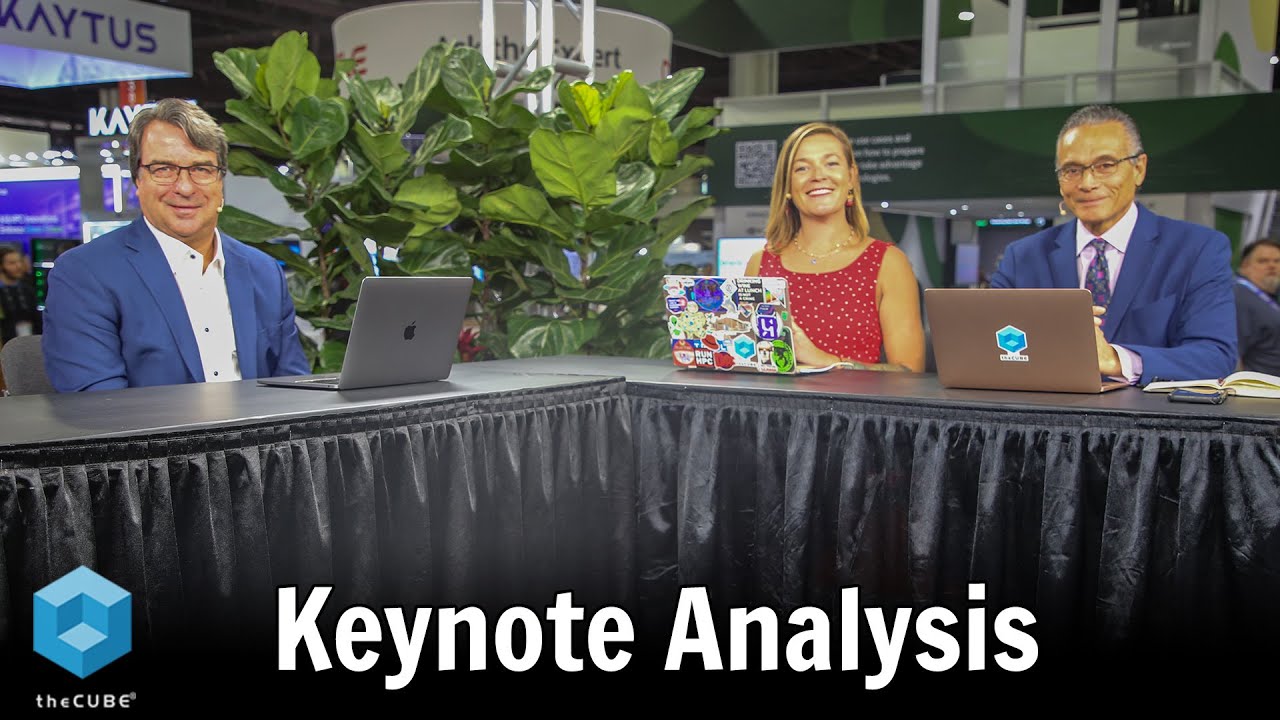
>> Good morning CUBE community and welcome back to Atlanta, Georgia. We are here midway through day two of SuperComputing 2024. My name is Savannah Peterson. Delighted to be joined by Dave Vellante. Dave, this is now the second day of your first SuperComputing. What's your hot take?
Dave Vellante
>> Well, I love this session, this season. It's GTC, but it's the open ecosystem.
Savannah Peterson
>> It is.
Dave Vellante
>> That's really what it is here. And the innovation's just through the roof. I mean, I'm loving it. I'm loving the networking conversations. The liquid cooling. SuperComputing goes mainstream.
Savannah Peterson
>> Innit, I know, it's happening. HPC is cool.
Dave Vellante
>> See -
Savannah Peterson
>> We're hip. Nerds are hip all of a sudden.
Dave Vellante
>> It is serious nerddom here.
Savannah Peterson
>> Yeah.
Dave Vellante
>> I love it. I absolutely love it.
Savannah Peterson
>> It is. And speaking of two very well-spoken, fabulous nerds. Saurabh and Jon, thank you so much for joining us today.
Jon Stevens
>> Thank you for having me.
Saurabh Kapoor
>> Good to be here. Thank you.
Savannah Peterson
>> Your energy is awesome. You're both smiling. It means you're having fun. Jon, I'm going to open up with you just in case folks aren't familiar with your incredible background at Hot Aisle. Give us a little bit of an intro. Give us the pitch.
Jon Stevens
>> Yeah, so I started on the internet very, very early in 1991. Didn't even know anybody else with an email address at that point.
Savannah Peterson
>> What a time. That is crazy. What an interesting time.
Jon Stevens
>> Yeah, interesting time, exactly. So basically started founding companies when I was 20. It started growing businesses, entrepreneurship. Really rode the whole kind of early internet wave. Did a lot of work with Open Source. Basically co-founded Java at Apache, which started the whole Java on their server ecosystem.
Savannah Peterson
>> Amazing.
Jon Stevens
>> So that was all kind of me doing a lot of work with a very small community of people at the time that grew to be very big. And so from there, started mining Bitcoin in 2013. Did Litecoin in Vietnam in 2018, and just continued that career. And then I think there was a big crypto crash 2018/2019.
Savannah Peterson
>> We remember the winter, yes.
Jon Stevens
>> It was like a big winter.
Dave Vellante
>> Take a breath, take a breath.
Savannah Peterson
>> Yeah, yeah.
Dave Vellante
>> It's all good fun.
Jon Stevens
>> So these guys reached out to me and they're like, "Well, we're going to do an Ethereum mining operation." I was like, "Well, I've never really done much with GPUs before, but I can figure it out." So worked on that and we grew it to 150,000 AMD GPUs across seven data centers in the United States. So it was a big, huge operation.
Savannah Peterson
>> I was just going to say, that's not a small app.
Jon Stevens
>> Yeah. Yeah. We did it all through COVID. We dealt with all the supply chain issues, couldn't get switches, couldn't get equipment shipped all over the world. And this was actually working with all AMD GPUs, which gave me that insight into the fact that their hardware is actually really good. So when Ethereum switched from proof-of-work to proof-of-stake, all GPU mining pretty much stopped in a heartbeat. It was like all of a sudden this business was gone. But that's good because the energy usage for Ethereum just dropped to zero. It became proof-of-stake. And so that gave me the idea. I was looking around at what to do next. The idea with that was, hey AMD is not really paying attention to this AI thing. And this is a year and a half ago. Lisa wasn't even talking about it in public. It was just like a distant memory or I don't know what was going on. So eventually AMD started to talk about it, Lisa, around October, November of last year, really started to dive deep into AI. They released the MI300X product in December of last year. We were one of the first companies to go out and buy it in January of this year. We deployed a very small installation of it as a test, and then we proved that the model worked, and we proved... We got a customer onto it. So we're like, okay, well, let's go deploy more. So in September of this year, we just deployed... Well, we partnered with Dell, so I did a whole bunch of work in between that. But we ended up partnering with Dell and we deployed 16 servers, which is 128 GPUs far cry from the 150,000 that I did before, but we got to crawl, walk, run. And so now that we've deployed this, we did it into a tier five data center, switch.com best data center in the United States. This is where CoreWeave has a huge amount of-
Dave Vellante
>> In Nevada, right, is that-
Jon Stevens
>> They're all over the US.
Dave Vellante
>> Right.
Jon Stevens
>> So they have locations all over the US. Ours is in Grand Rapids, Michigan, which is all 100% green power. And so-
Savannah Peterson
>> Oh, I didn't realize that. That's awesome.
Jon Stevens
>> So that's a core tenant of what I am doing. Even our Ethereum mining operation was all on green power as well, so it wasn't like we were completely destroyed-
Savannah Peterson
>> So, yeah.
Jon Stevens
>> It's always been a very strong focus of mine, is to be sustainable. So we're doing something that really nobody else is doing today, which is focusing on AMD compute. So we want to be that voice of alternative compute for AI as a whole, because if this is as transformative of a technology as the internet was in 1991 and watching that growth, I think that having alternative solutions out there for people to use is really important for the whole safety and growth of AI as a whole. If we're putting this on all of our devices, we need to have alternatives. We can't just have AI controlled by one company.
Dave Vellante
>> Everybody wants that. Obviously Dell's pretty much... Micro-scalers are building their own.
Jon Stevens
>> Yeah, exactly.
Dave Vellante
>> What's Dell's perspective on this, Saurabh? I mean, I think even Jensen would say this is a good thing. Right? What's your perspective?
Saurabh Kapoor
>> The story around AI that Dell has built is the Dell AI factory and the goal and objective is to simplify AI infrastructure consumption across the board. So our focus spans across building custom AI solutions so that the customers can move fast and put a validated ecosystem around it from compute, storage and networking to deliver an end promise. Deliver an end promise that meets the performance capabilities that they need to support those AI workloads, retraining, fine-tuning, inferencing. So irrespective, it's a GPU farm and AI factory, which is building AI trainings to all the way enterprises using inferencing workloads on the ecosystems. We provide all of that. So we simplify that across the board. And the AI factory idea is to offer choice, choice of GPU technologies, a partnership with Nvidia, AMD, and Intel.
Jon Stevens
>> They should all exist.
Savannah Peterson
>> Yeah. Well, and to your point earlier about decentralization-
Jon Stevens
>> Exactly....
Savannah Peterson
>> better optionality is better for everybody. Better solutions, more efficiency, less waste of power, higher ROI, shorter time of value. I can go on and on. We totally agree. Let's put it that way.
Saurabh Kapoor
>> An open future, open is the future. I mean, innovation and collaboration, you create that ecosystem and let everybody contribute and build on it.
Dave Vellante
>> So Jon, you're building supercomputers. It says on your website you offer remote access to Dell, PowerEdge, XE9680 with eight MI300X.
Jon Stevens
>> Yeah.
Dave Vellante
>> What does that mean, remote access, are you basically building a cloud?
Jon Stevens
>> Yeah. So we basically are the CapEx and OpEx for anybody who wants to deploy, compute themselves, but they don't know how to. So we can go out, buy the servers, deploy them, get them up and running, and give them access to it as if they own the machine themselves. So a lot of this technology is so new and novel, you need to be able to have very low level access into the whole machines. This is something that Hyperscalers can't provide today. They have to service a wide number of customers. They can't have people tweaking the BIOS on the machine. So we allow that, and that's a unique perspective that really I don't see anybody else in the space providing today.
Dave Vellante
>> Yeah, and things like Lambda-
Jon Stevens
>> It sets us apart....
Dave Vellante
>> it takes you further away from the runtime but so I'm looking at the specs. You've got Intel CPUs either 52 or 32 cores, and you've got AMD, MI300X. And then you got high bandwidth memory. You got two terabytes of RAM, 122 terabytes of disk. You're using Broadcom-
Jon Stevens
>> Through their networks, yeah....
Dave Vellante
>> it's Rocky and six X per Rack PDUs, and that's the package. And I can some flexibility in there and you guys help me provision that, set it up and it's mine.
Jon Stevens
>> Yes. So we never wanted to give our customers an excuse not to use us.
Dave Vellante
>> Okay.
Savannah Peterson
>> I mean, great business model there, I will say, wise, it's like you've started a few companies. Yeah.
Jon Stevens
>> It's all all that... Sorry.
Savannah Peterson
>> We'll get you some waters. No, don't worry about it.
Dave Vellante
>> Okay. And it's interesting-
Jon Stevens
>> It's best in class. It's the best of the best.
Dave Vellante
>> Yeah. If we get some water up here, it'd be great. Dell used to have, I wouldn't consider this necessarily an OEM business and you, it's different. But Dell used to have this separate OEM business, but the whole nature of this business is changing. You're providing this core infrastructure, making it simpler for folks like Jon to add significant value, not value-added... You remember the old fire days?
Savannah Peterson
>> Oh my goodness.
Dave Vellante
>> You'd buy a VAX.
Jon Stevens
>> Yeah. Yeah. Yeah.
Dave Vellante
>> Code on top of it. You guys don't know what VAX is, you young people.
Jon Stevens
>> How are you guys.
Savannah Peterson
>> Some of us nerds. Some of us nerds.
Dave Vellante
>> So this is a different business for you guys, isn't it? Maybe you could explain that a little.
Saurabh Kapoor
>> Yeah. I mean, it's all about building the partnerships, the right partnerships for future, right? I mean, you look at AI, there was... Looking at billions of devices now, interconnected, traffic light adjusting dynamically with the traffic flow and things like that. So the AI thing is real now. It's out there and you're building infrastructures that are going to be fundable to build blocks for the future as well as things evolve. So every ecosystem, the end consumer from enterprises like healthcare and financial services, AI is going to expand very quickly over the next few months and years. So we're building infrastructures that are going to support the future and that building the right technologies from the right GPU to right nicks, storage and networking irrespective of what path you want to takes the AI Factory notion is to set up that framework and enable that choice and flexibility. On top of that, there's a vision we are following where you're not bringing your data to AI, you're bringing AI to data because it's also about keeping the security frameworks around it, making sure the data is safe, and Enterprises don't have to put the customer data on cloud, you're able to build infrastructure and use those custom models in-house to fine-tune and enter.
Savannah Peterson
>> It's meeting that data where it is. Also meaning your customer or your Edge device. I just want to sit on your AI factory for a second. You actually brought the factory here. It's behind us on the show, which is very fun.
Jon Stevens
>> It's super cool.
Savannah Peterson
>> There's so many cool use cases. I went and played around yesterday. I'll actually drop a video about that later this afternoon. I love the way that we're having this conversation because often we end up talking exclusively about hyperscalers. Exclusively, about very large companies, very large applications, the biggest models possible, but what you're saying is there's an opportunity for everyone to access your supercomputers.
Jon Stevens
>> Exactly it. Democratize, compute.
Savannah Peterson
>> Yeah. So give me some examples of some of the use cases or workloads that you're seeing or the interests you're finding right out the bat.
Jon Stevens
>> Of course. So we've got high performance. I mean, we've got basically all high performance that compute applications, so computational fluid dynamics, high frequency trading, and of course everything about inference and training.
Dave Vellante
>> It's interesting to me, Jon, because your obviously somebody that's been pretty successful in trend spotting over the years-
Savannah Peterson
>> I would say that's a fair assessment, Dave, given what you just shared with us. Yes....
Dave Vellante
>> early crypto, et cetera. And you're betting your business on an alternative to Nvidia, not, hey, we offer AMD, Intel, Nvidia, AMD. No, you're saying, I'm betting on the alternative. Can you explain the rationale and you're thinking behind that, and so why you feel that's the right approach?
Jon Stevens
>> So Nvidia's done a fantastic job. They are number one for a reason, and their hardware and software is unparalleled. But in the grander scheme of AI and the safety of AI, we talk about sovereign AI quite a bit. The source of the data that we're putting into AI affects what comes out. At the end of the day it comes all the way down to the hardware. We need to have multiple solutions available for people. Even for my company, I'm more than happy to deploy anybody's compute. I'm not tied to a single vendor. I'll deploy Nvidia, I'll deploy IBM, I'll deploy AMD, like Dell. I'll work with any vendor out there to deploy the compute that our customers are asking for. Our customers, these CIOs, CTOs, CEOs, these Fortune 500, they are putting all their eggs in one basket today, and no company ever does that. They always source from multiple vendors. And so I want to provide that alternative viewpoint where they can come to me and bring it, whatever workloads they want and whatever software they want, and have their systems work across multiple platforms. My background is working with Java quite a bit, and it used to be write once, run anywhere, right?
Savannah Peterson
>> Right. Right.
Jon Stevens
>> That was like the whole thing about that.
Savannah Peterson
>> Quite literally, this-
Jon Stevens
>> Now today, we're writing our code once and it only runs on one system. So what I've done is I've actually partnered with somebody who has built a solution that enables CUDA code to run natively on AMD hardware, and that's coming.
Savannah Peterson
>> That's cool.
Jon Stevens
>> That's huge.
Savannah Peterson
>> That's a little sneak peek you just gave us there.
Jon Stevens
>> Because
Dave Vellante
>> I was going to ask you about that. Okay. Well, how do you deal with that whole software stack and all that? The ecosystem.
Savannah Peterson
>> Took the thought right out of my noggin.
Jon Stevens
>> This is at the compiler level. So right now, AMD has a fantastic solution for modifying the source code, but developers don't really want to use that. They just want their code to run anywhere without modifying it. So this solution actually, at the compiler level, enables the code to run on AMD. And in some cases it can even run better on AMD and be more optimized on AMD than on Nvidia. So that enabling of different technologies to work together and enabling the developer experience to be better is huge. This is game-changing, and I feel like I'm the only person today that really is seeing this, right?
Dave Vellante
>> First-
Jon Stevens
>> Because we're surrounded by one company, which is great. Again, no shade thrown, but we do need to have those alternatives.
Saurabh Kapoor
>> I think multi-vendors are a future. I mean the guys, the infrastructure, the technologies that we did, an end state of performance and deliver, the platform for those use cases, it works fine across the board. And Jon took the road on "less traveled" and they've gone about building their infrastructure from the MI300 to bringing the Broadcom Power Switch, know Tomahawk 4, Tomahawk 5, powered by Sonic software for open network, the cloud. Build open architectures that provides unprecedented flexibility and agility. So you really unlock the stack and allow that room for innovation and collaboration.
Jon Stevens
>> That's exactly it. It's all about collaboration. It's all about working together, Open Source, that's my background.
Dave Vellante
>> Of course. But it needs someone like you to simplify that to customers.
Jon Stevens
>> That's exactly right.
Dave Vellante
>> The hyperscalers have been... Originally the hyperscalers-
Savannah Peterson
>> And decide which components are going to optimize that especially given your background too. I mean, there's a lot of decisions in that tree when you're thinking about how to build a super computer.
Jon Stevens
>> You know we still have to put Dell on this. We work very closely with Dell, Broadcom, AMD, all these companies, all these big companies to build the best solutions for customers.
Dave Vellante
>> But you still have to abstract that complexity like you have with CUDA.
Jon Stevens
>> Exactly.
Dave Vellante
>> Okay. Here's the question. The world is multi-vendor, but multi-vendor means complexity. So you're taking on that abstraction layer, if you will. Is there other IP, other software to minimize that complexity?
Jon Stevens
>> Yeah, so we as a company, I've made the choice. I'm a software engineer for 30 years. I've made the choice for this business to focus primarily on the hardware. The hardware side of it is so hard, and so what we're doing for the software side of things, hardware's hard, right, software is easy.
Savannah Peterson
>> Yeah, I was just going to say .
Jon Stevens
>> Cheesy, cheesy, cheesy.
Savannah Peterson
>> That's so true.
Jon Stevens
>> But true.
Savannah Peterson
>> So true.
Jon Stevens
>> So we're partnering with any number of software firms, and this allows us to work with their customers to onboard their customers onto our platform. And so we will never compete with any of these software vendors. So we can have competing software vendors on our platform, and it works perfectly.
Dave Vellante
>> But in a way, you're competing with the hyperscalers, you're competing with the CoreWeaves of the world, in a way.
Jon Stevens
>> I don't think so. Actually-
Dave Vellante
>> Explain, if you will.
Jon Stevens
>> I want to come back on that one. I don't see this as competition with CoreWeave or any of the hyperscalers. We're very niche focused. We're very much of the Ferrari dealer, so we've got-
Savannah Peterson
>> I like that....
Jon Stevens
>> like that Ferrari garage. We've partnered with the best vendor like Dell, and we're the best data center, and we're doing this white-glove hands-on service where we're really listening to what our customers want and focusing on that. I don't need to grow to be a hyperscaler, I don't need to be... CoreWeave is doing an amazing job. I'm very good friends with them. They're again, just like with Nvidia, doing amazing work. It's unparalleled in this industry. But I think that there is a niche business for being this alternative and being this source for people who are excited about deploying a supercomputer but don't know how to do it. A lot of these businesses, they want to own their data. They want to have it in their own data centers. We can help them with that, with our partnership with Dell, and we have a blueprint on how to deploy this stuff, how to build it.
Dave Vellante
>> So you're not competing, per se, you're creating at the very tip of the pyramid.
Jon Stevens
>> Yeah, exactly. We're very niche focused. It's very white-glove service.
Dave Vellante
>> Well, if you're going to have a niche you want to dominate that.
Savannah Peterson
>> White-glove, super computing is a pretty dreamy business model in general. What's next from the collaboration between the two of you?
Saurabh Kapoor
>> I think we just got started now.
Savannah Peterson
>> Yeah, that's the vibe, I'm getting. So I'm curious to see-
Saurabh Kapoor
>> You guys have all been evolving very quickly. You're seeing the use cases expand to every possible domain, every possible enterprise. So we're just getting started on the journey here. Got the infrastructure set out, we're working to get the customers on. Then there's so much innovation to add to the stack from automation, to observability, to better analytics and running predictive technologies. There's so much coming with our partners like AMD, working on the next-gen technologies. With Broadcom, we're looking at the next-gen speeds and feeds. We have 800 gig 5 out, a few months back. We're already talking about 1.6 terabytes now. And then Sonic is growing quickly. Lot of routing and load balancing, condition avoidance capabilities coming. So I think the show is just get started.
Dave Vellante
>> And keeping up with that pace of innovation that's getting out of the hardware. It's not gone in the days of, that's about 286, 386, 486, you can plan. And now it's just like, whoa, one after the
Jon Stevens
>> Is to follow AMD's roadmap. As soon as AMD releases one of these products.... In the past, they've only really worked at the HPC, El Capitan, Frontier, these big super computers. Developers didn't have access to it. It's a very limited group of people who could get access to this very specialized compute. Now, if I can do the same thing and give access to more developers. More developers, it creates a flywheel. The more developers need more hardware, we buy more hardware, deploy it, and we just grow with revenue and grow with developer demand. I think that the community... Just, again, it's just a focus on growing kind of crawl, walk, run, and get there.
Savannah Peterson
>> And being adaptable. You put your head in the sand in thinking that you've got the solution for the next 15 years. We've got the solution for today. And I know the Factory has the exact same mentality. We all are trying to find the best things. One of the coolest parts about where I think we are as a high curve writers, wave writers I should say, is we're at such a moment of collaboration versus the siloed competition we've seen in other sectors or other eras of this type of development at this scale. So it's a thrilling time. I have one final question for you, because we have just torn through this exciting interview in the best way. We were definitely in our Ferrari, in terms of speed on this one. When we are here... I know we're veterans of the show. When we are here this time next year in St. Louis, what do you hope to be able to say then that you can't yet say today? And I know you gave me a little bit of a tease, but it could be a use case. It could be something exciting about the partnership or the democratization.
Saurabh Kapoor
>> Yeah. Yeah. I'll be much faster AI, that's a promise. I mean, we are seeing so much innovation happen. You're seeing liquid cooling as the next era of conversation. Last year, we're talking about computers start. AI is a new technology influencing, and today we have AI the product called use cases, talking about liquid cooling, talking about rack solutions. Nvidia, we just announced the 9712s, packaging, everything. There's 72 GPUs in a rack. I mean, how impressive is that? I think a big focus area is going to be optimizing the power capabilities. I think that's going to be key.
Savannah Peterson
>> Totally agree with you.
Saurabh Kapoor
>> And make it as dense as possible, to bring as much innovation as possible. I think those going to be key, important things. And then we want to see more enterprise traction. I think we've got lot of good traction going on, so hopefully next year I get to be on stage with Jon and we talk about real enterprises deploying and using infrastructures and how magic
Savannah Peterson
>> Yeah, I can't wait to hear some of those examples.
Jon Stevens
>> It's so awesome. It's been such a pleasure with him. The thing that I think that we're going to focus on is just continuously releasing whatever's latest and greatest, working with Dell, working with AMD, working with Broadcom to continuously make this latest and greatest hardware available to developers, to anyone, and support them with that. And I think that that's a really cool mission and goal for us that nobody else is doing right now. The hyperscalers, they're just throwing it over the wall. Smaller cloud service providers are competing against each other, but we're really trying to stand out as being that unique offering where we are, from the BIOS level, all the way up, software, everything just growing.
Dave Vellante
>> The hyperscalers have their $100 billion businesses and they're locked into that.
Jon Stevens
>> They're locked in. They're doing great.
Dave Vellante
>> They're going to take it to 300 billion. Yeah, we're good.
Jon Stevens
>> And thank you. Because the-
Dave Vellante
>> Absolutely....
Jon Stevens
>> more they grow, the more that I grow, the more that people need this stuff.
Dave Vellante
>> So I'm stoked to see the CUDA compatibility mode running.
Jon Stevens
>> Me too.
Dave Vellante
>> Volume on that is exciting. Congratulations.
Jon Stevens
>> Yeah, that'll make a big debt. Thanks though.
Savannah Peterson
>> Yeah. Well, you've certainly sold us and convinced us that this is a-
Jon Stevens
>> Awesome....
Savannah Peterson
>> need and an offering and a partnership really that's helping propel the future and provide access. Saurabh. Jon, thank you so much for taking the time today.
Saurabh Kapoor
>> Great desk, great to be here.
Savannah Peterson
>> So nice. I'm inspired. I feel smarter, and I appreciate that. Dave, always a really to sit next to you on the desk-
Dave Vellante
>> Thank you Savannah....
Savannah Peterson
>> and always fantastic to have all of you tuning in wherever you might be today. We're here in Atlanta, Georgia at SuperComputing 2024. My name's Savannah Peterson. You're watching theCUBE, the leading source for enterprise tech news.>> You ready?