We just sent you a verification email. Please verify your account to gain access to
SC24. If you don’t think you received an email check your
spam folder.
In order to sign in, enter the email address you used to registered for the event. Once completed, you will receive an email with a verification link. Open this link to automatically sign into the site.
Register For SC24
Please fill out the information below. You will recieve an email with a verification link confirming your registration. Click the link to automatically sign into the site.
You’re almost there!
We just sent you a verification email. Please click the verification button in the email. Once your email address is verified, you will have full access to all event content for SC24.
I want my badge and interests to be visible to all attendees.
Checking this box will display your presense on the attendees list, view your profile and allow other attendees to contact you via 1-1 chat. Read the Privacy Policy. At any time, you can choose to disable this preference.
Select your Interests!
add
Upload your photo
Uploading..
OR
Connect via Twitter
Connect via Linkedin
EDIT PASSWORD
Share
Forgot Password
Almost there!
We just sent you a verification email. Please verify your account to gain access to
SC24. If you don’t think you received an email check your
spam folder.
In order to sign in, enter the email address you used to registered for the event. Once completed, you will receive an email with a verification link. Open this link to automatically sign into the site.
Sign in to gain access to SC24
Please sign in with LinkedIn to continue to SC24. Signing in with LinkedIn ensures a professional environment.
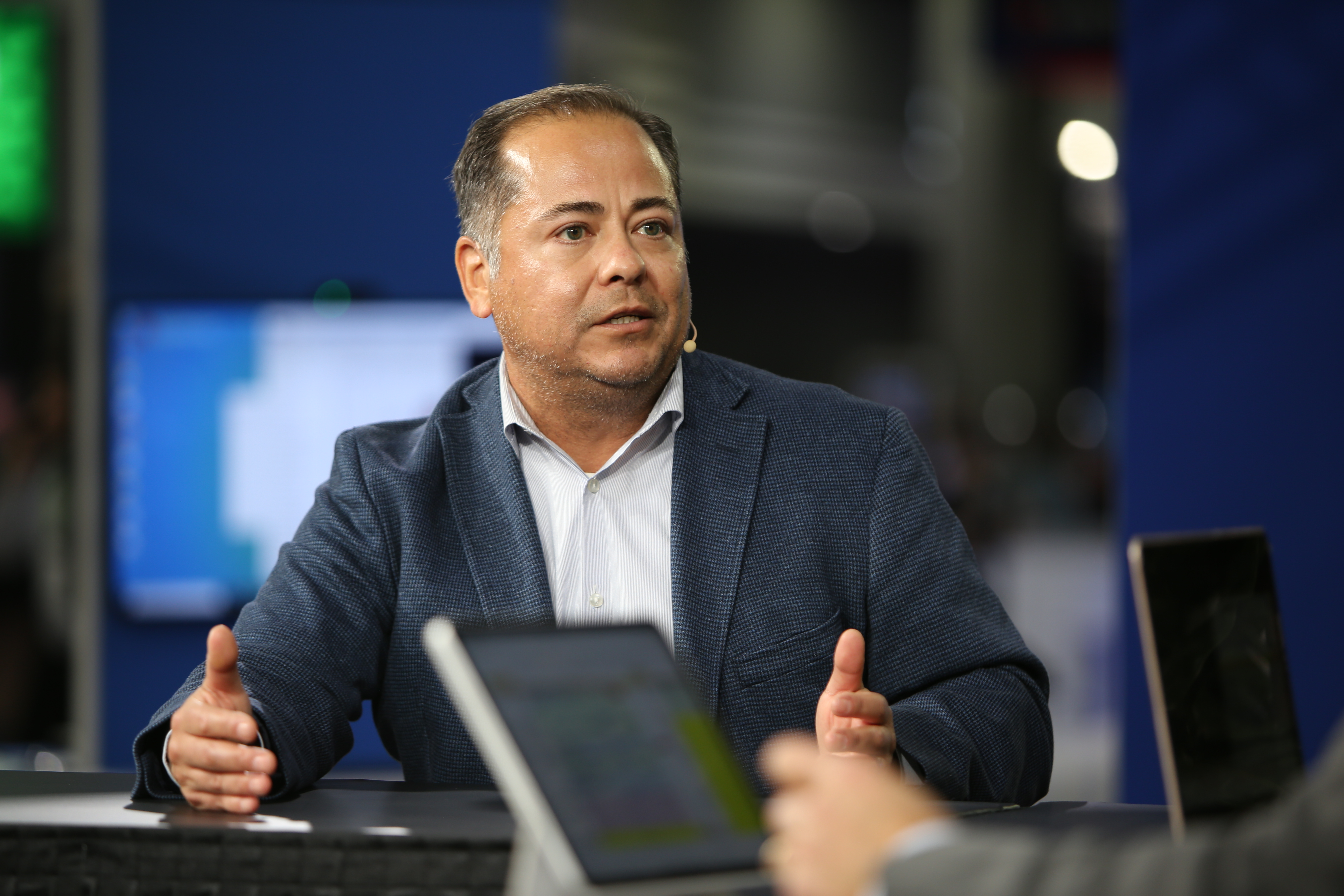
Alex Bouzari, co-founder and CEO of DDN, discussed the transformation in the industry towards AI and data intelligence. DDN's technology enables the growth of AI across industries. The company's evolution from high-performance computing to AI has positioned them as a key player in the industry. They have focused on customer delight and stayed private to better serve their customers and focus on growth facilitated by AI. DDN's investments in technology aim to optimize performance, reduce data center space and power requirements, and accelerate access to data a...Read more
exploreKeep Exploring
What is the significance of the inflection point in the computer storage revolution and the impact of AI on various industries?add
What was the catalyst for DDN's pivot into enabling AI technologies?add
What technology has DDN developed that allows data intelligence to be analyzed, processed, and delivered anywhere with flexibility and adaptability?add
What are some reasons for developers needing to optimize performance in the stack of data centers and the cloud?add
What are some of the current discussions happening with customers in AI technology?add
>> (music)>> Welcome back, everyone, to theCUBE's live coverage here in Atlanta, Georgia. Supercomputing SC24. I'm John Furrier, host of theCUBE with Dave Vellante, my co-host. Of course, we also host theCUBE Pod every Friday. Check it out. Subscribe. It's the number one enterprise podcast. Today we're talking about Supercomputing, superclusters, superstorage, supernetworking. The world is going Supernova. Of course, theCUBE has got it. And the people powering this revolution are here at theCUBE. DDN. Alex Bouzari is the co-founder and CEO of DDN. Welcome back to theCUBE. Looking good as usual.
Alex Bouzari
>> John. Thank you. Great to be here with you. Really appreciate the opportunity.>> So, everyone right now is rushing hard. They're recognizing the end of the era of the old era. In comes the new era. New architectures are changing. Transformers really brought the old AI algorithms to modern era. Now, we're in new architectures and now new software, kind of post-modern era AI, if you want to call it that, is coming on. You're starting to see the scale kick in. Everyone's trying to figure out how to power the Gen AI workloads and soon to be Agentic, the compute, the data. At the end of the day, the data has to be stored somewhere. Your legendary status at DDN, your company you founded, continue to run, give us the update on where you guys are on this. You're here at the big show. GTC, supercomputing-
Alex Bouzari
>> Yeah.>> Big booths, big business. What's up?
Alex Bouzari
>> So, lots of really interesting things, John. I mean, as you said, the industry is completely transforming. I mean, what used to be high-performance computing limited to a small set of customers, government agencies, industries and so on, has now blossomed and broadened. And it's all about AI. And what is AI, but data intelligence? That's what we like to call it. It's not artificial intelligence, it's data intelligence. You have to be able to ingest the data, images, audio, text, video, from lots of different sources. You have to be able to analyze it, process it, gain insight from it, and then deliver that insight to organizations who will then benefit from it. And we are at the core of it. We are the data intelligence platform that propels the growth of AI across industries and marketing.>> And you've ridden the wave of storage and through me, every major inflection point. Before we get into some of the things you're doing now from a value creation perspective, share your personal observation of this inflection, what I call the end of the era, enter the new era of clustered systems. I just wrote a blog post on that yesterday. We are in a whole other era that's going to change the data center, the edge-
Alex Bouzari
>> Right.>> Scope the magnitude of this point in history in this computer storage revolution.
Alex Bouzari
>> Sure. So I really think that the inflection point is one of orders of magnitude. This is no longer two times, five times, 10 times. It's a global pivot of the economy in all of its aspects, every industry, everything we do at work, everything we do at play, health, security, governments, everything is pivoting and being enabled by AI. And in order to do that, you have to deal with massive data sets. And you have to be able to not just monetize for industries, but you have to be able to gain insight. Scientific discoveries getting propelled by that. So, it's orders of magnitude. And what is changing, it's the game is no longer happening inside the stack. It's no longer about processing and networking and storage. It's all about the data. And the data resides above the stack. The AI frameworks, the large language model, Gen AI, inference, it's above the stack. So, the enablement needs to come above the stack. And that's the technology that we've developed, which is being utilized by many of the largest organizations in the world, just to leverage the capabilities of AI. It's global and it's happening like a tidal wave, as you know.>> Yeah. And by the way, the economic piece, I know Dave's going to jump in a second here, but this productivity is the killer app, because the labor changes, the economics change, productivity gains, will have the significant impact on the economic aspect of it.
Alex Bouzari
>> Yes, yes, yes.>> I mean, cloud was great labor change. TEDx engineer, go to the cloud. Okay, I get that. But now with Gen AI, is everything X.
Alex Bouzari
>> This is a whole other level, because what AI is doing is it's giving us superpowers. No matter what you do, your capabilities are getting amplified. If you're an engineer, you can now write code so much faster, so much better. You can get to that point, where the capabilities are getting pulled into the technology much, much faster. So, it's supercharging all of us. It's supercharging marketing. It's supercharging your business. Every business, anything that has to do with data, with content is getting supercharged. And that is just incredible. I cannot think of a better time to be in technology than now, I think.>> We agree. Yes, yes. Yes. I want to comment on a couple of things. I like how you term data intelligence, because there really isn't anything artificial about it.

Alex Bouzari
>> Absolutely. It's real synthetic data. Why do they call it AI? It's not AI. It's DI. It's data intelligence.>> No, I like that. Gen DI. And I think the story of DDN is remarkable. We've known you guys for a long time. In fact, we used to have a DDN system. I don't know if we still have it. We had a DDN in the first... I was story with SATA drives. Heavy as hell. You dug into your architecture and it was very novel, and you guys were the gold standard in what was considered a niche that is now collided with this multi-trillion dollar economy.
Alex Bouzari
>> Yes.>> So how has your company evolved? How is your product set evolving? And bring us into 2024 and beyond?
Alex Bouzari
>> Sure. So, again, the foundation for AI, we believe, is in high-performance computing, because in high-performance computing, you have to solve problems at massive scale. So, you have to develop technology that maximizes efficiency at massive scale in the data center. Well, AI is simply that, magnified and distributed. I mean, if you look at the leaders in the space, we all came from high-performance computing and video. Started out in high-performance computing. And the technology that they developed over decades, then pivoted into enabling AI. Same thing with DDN. We started in high-performance computing. We were powering 60 out of the 100 fastest supercomputers in the world. And it just so happens that that technology, the millions of lines of code that we wrote for high-performance computing, was a natural segue into AI. And the way all of that happened is eight years ago, NVIDIA tapped us on the shoulder and said, "Hey DDN, we want to stand up a super pod. We want to demonstrate the capabilities of NVIDIA and GPUs."
And we've looked at every storage technology out there. We don't see anything that can do it as well as you. So, we became part of NVIDIA's super pod. Eight years later, we're the only technology that is being used internally by NVIDIA, or the only data intelligence platform. The only data source technology used by NVIDIA internally. I mean, that speaks volumes. So, that started us on that path. And then lots of things followed. Hundreds and hundreds of very large-scale deployments across customers. But, the enabler was the pivot from high-performance computing into AI.>> That was 2016. And so you did that deep integration in the middle of last decade.
Alex Bouzari
>> Absolutely.>> And now you're harvesting that in the AI era.
Alex Bouzari
>> Totally. It takes time. There are no miracles, right? You have to develop the technology. It takes a long time to develop. You have to solve all of the corner cases. It's not just about, "Oh, I have this great technology, which on paper works." Well, no, it has to work in the real world. And we learned those lessons with high-performance computing. We did all of those very large-scale deployments, learned all the lessons of networking challenges, and compute challenges, and GPU and so on. We solved all those problems, and now it's applicable to AI.
Dave Vellante
>> That's Jassy's law, right? New compression algorithm for experience, and it applies at times 10 here.>> Well, the Jassy law about compression algorithm for experience is definitely in case. Now, the new thing we're seeing in the market is at-scale experience.
Alex Bouzari
>> Yes.>> AWS and NVIDIA have shown that. That's why NVIDIA is building their own machines, by the way, is everyone else is. When you hit scale, you see things that you can solve problems for that no one else sees.
Alex Bouzari
>> Absolutely.>> And you've experienced that with NVIDIA. So, I want to ask you first of all, what are some of those problems that scale do you see that you guys have solved? And then two, what other collaborations besides NVIDIA that match that kind of scale magnitude that you're working with?
Alex Bouzari
>> Sure. So the challenges are two-fold. I mean, if you ask people who are doing large scale AI deployments, "What are the problems you're faced with?" They will tell you three things, all of them. Lack of availability of GPUs. We cannot get enough GPUs from NVIDIA.>> Space.
Alex Bouzari
>> Not enough data center space. There just isn't enough data center space out there, and not enough power. And so the problems you have to solve in the data center are, deliver better efficiency out of the GPUs. So, we've written hundreds of thousands of lines of code to solve that particular problem. How do we make the NVIDIA GPUs perform better, add more efficiency, and all the time, no idle time? That's what you want to do. So, we solved that problem. Data center space. We have shrunk the square footage, the footprint required in a data center to deliver a certain level of performance for AI by a factor of 10. And we've shrunk power consumption by a factor of 10. That's in the data center. Then you have above the stack. So, all of this is great and wonderful. You are improving efficiency, but, you need to make the models run far more efficiently. The large language models and Gen AI. We have solved that problem with additional code that we've written to make those things go much, much faster. Who is doing things at the scale of NVIDIA right now? While we have one customer, XAI, a hundred thousand GPUs.
What are the infrastructure that is enabling and facilitating what they do? And they are doing things at absolutely massive scale. So, we have NVIDIA on the one hand, massive scale running at what I call unreasonable velocity. You have XAI and Elon on the other side, massive scale, running at unreasonable velocity. And we are the enabler of both sides of this. So, everything else becomes far easier. So, when you're solving the problem.>> So, Elon is challenging Jassy's law, right? With unreasonable velocity?
Alex Bouzari
>> Absolutely. Absolutely. It is unreasonable velocity. I mean, look, Elon built that massive data center in a tenth of the time that the best high performance computing data centers were being built, because he said, just like Jensen did at NVIDIA, "I'm going to tear up everything I know. I have this much time to do it. How do I do it? Out of the box thinking." That's how Elon has done it. That's how Jensen and NVIDIA are. That's how we try to do it.>> Out of the box thinking. That is awesome. I would also add that we're seeing systems thinking come into place, a systems problem now, opportunity.
Alex Bouzari
>> Yeah.>> It's not like maybe the old ways, design thinking, iterate. Everybody has a fashionable way, but legitimately, we're in a systems revolution. So, I have to ask you, in these use cases you're seeing, in the customers, the platforms you're working with, how would you describe the disruptive enabler? And I use the word disruptive enabler because it's disruptive. Something's going to be disrupted, but it's enabling something. That's the Gen AI productivity things you mentioned earlier. What is the core disruptive enabler for this wave that you're seeing, and how are you guys tying into it?
Alex Bouzari
>> Sure. So, again, think of it as the problem that AI is solving is it's accelerating time to insight. It's giving better insight into things. Again, it doesn't matter if it's scientific discovery or a pivot in business enablement for a certain industry. Well, all of that is, at one end of it, you have the data coming in. At the other end, you have the insight coming out. That has to be a distributed model. It has to be on-premise in data centers. It has to be in the cloud. It has to be multi-cloud. And the data can reside anywhere and everywhere, and it will change at the snap of a finger. It will move from being on-prem to being in the cloud. It'll move from being in this cloud to being in that cloud. So, what is required technologically, in order to disrupt and accelerate, is you need technologies that are flexible enough to operate at massive scale in a highly distributed manner and adapt to the needs of the software suites at the AI frameworks that are the enablers of all this. That is the disruption. It is no longer the segmentation of there is the compute, there is the network, there is the->> Static thinking.
Alex Bouzari
>> Absolutely not. It's out of the box. Connect the dots differently. Run at unreasonable velocity and course correct as you go.>> Yeah. It's interesting. We're seeing problems come up now that... You hit the core problems. I agree there. But it's interesting. Some of the conversations we're having on theCUBE is like, resource allocation, cost optimization. Now, we're in the weeds of some of the tactical things that go on around, "Okay, this dynamic environment," for example, customization's huge. I got a model. I want to route the right model, data to the right. So, you're getting into networking is changing.
Alex Bouzari
>> Yes, yes, yes.>> So, this is the holy Trinity: compute, storage and networking of computers.
Alex Bouzari
>> Absolutely.>> And so everything's now dynamic, customizable, scalable, and distributed. This is the new era.
Alex Bouzari
>> It is. And it's all about flexibility. So, the technology needs to adapt, absorb and amplify flexibility, in the data center, in the cloud. That's what we spend more than a decade perfecting, technology, which takes data intelligence, and delivers it, analyzes it, processes it, anywhere and changing at the snap of a finger, because the world is continuously evolving. It's all about insight. You have to curate the content, you have to ingest it, you have to train it, and you have to deliberate. And it's constantly changing. And that's the technology that DDN has developed.>> You mentioned insights. I think one of the things we're we're seeing is value coming out of this Gen AI model, whether you're talking about HPC now with AI enablement, digital twins, whatever you're talking about, whatever apps, it's insight and action are the two words that pop out.
Alex Bouzari
>> Yeah.>> Intentional, insight and action. That seems to be a flavor.
Alex Bouzari
>> Totally. And it's an iterative process. And the iterations are unpredictable, which, again, takes us back to the flexibility. You need an infrastructure which is infinitely flexible, because the needs are consistently evolving. The insight that you're gaining today might take you in a completely different direction. While that completely different direction might require a different makeup, it might be more cloud-centric. You have to shift and pivot instantly from training your model to inference and Gen AI. And so, flexibility. It's all about flexibility at massive scale and delivering efficiency at massive scale.>> So you are such a contrarian. You have stayed private. It's just remarkable.
Alex Bouzari
>> Yes.>> I'm curious as to how you think about your business now, because you're on an entirely... You just jumped an S-curve to a new level.
Alex Bouzari
>> Yes.>> How are you thinking about the future of DDN?
Alex Bouzari
>> So I mean, it's very simple. What we've always focused on is customer delight. What do we need to do in order to delight our customers? And so what we've found in public companies, in many cases, is, well, you have to cater to the needs of your shareholders, and your investors, and also your customers. We've decided to stay razor sharp-focused on catering to the needs of our customers. I think it's served our customers better than if we had the distractions of quarterly earnings, and some of the issues that public companies have to deal with. We will do whatever is best for our customers. We are at a point where our business is booming, exploding. I mean, AI has taken us to a whole other level of growth. That growth is being facilitated. I mean, Jensen told us several months ago, he said, "Do not go public. It's the wrong thing to do. Stay private. You will take care of your customers much better if you stay a private company." But again, it's what is best for our customers. Customer delight is the only thing that matters to us. And, it's being enablers in AI as best as we can.>> Yeah, you would certainly help a lot of people who would love to participate in the upside going public, being the other hand of that story. But I won't go there because-
Alex Bouzari
>> You know there's a lot of interest. And we always say, "What value can you bring to our customers?" And it's difficult. It's a very difficult thing. Again, customer, customer, customer. As you well know, it is all about the customer.
Dave Vellante
>> You're not capital constrained. I mean, it's not a problem for DDN.
Alex Bouzari
>> No. We're not like->> You don't need the cash to raise money. You got the-
Alex Bouzari
>> We don't need the cash. We don't need to build massive infrastructures and data centers.>> Let's talk about your investment strategy. Obviously the growth strategies on the S-curve. Dave pointed that out. That's great call out. One of the things that we're seeing, and I want to get your reaction to this, is that, in this new AI era, there's almost been a shift in the developer community around how they look at the stack. You're seeing the best value extractors and creators in the entrepreneurial circles going down to the hardware ISV layers emerging. Usually it goes, "Hey, we'll play in the abstraction layers and builds on top of cloud, whether you're a snowflake or data person of the world." Okay, they're out there. But all the best AI developers are going down to the kernel and the hardware level. They're going in the wrong direction by conventional standards.
Alex Bouzari
>> Yes, yes.>> Why? Because performance is there. It reminds me of the old days of memory management or disk and memory, and then flash came along. So, there's always constraints to optimize around, but you're seeing an ecosystem develop of ISVs. Not like old school chip developers. We're talking about classic software development.
Alex Bouzari
>> Yeah, yeah, yeah.>> They're going down there. So, I'm sure you agree. I'd love to get your thoughts on that and whether you agree or disagree. If you agree, that creates an ecosystem for you, probably, that's not the old DDN, where you have to have a connected ecosystem. So, growth strategy, role of the developer, role of the hardware, and what does your ecosystem look like? Partnerships probably are booming. I know it's a different kind of technical question, but what's your thoughts?
Alex Bouzari
>> Okay, so as far as the ecosystem goes, as you pointed out, it's really the optimization inside the stack. So, we're increasingly interacting with organizations who are part of the stack. The stack that we're talking about in the data center, data center and cloud, and how do we deliver and build a flexible infrastructure that makes that happen. So, we're investing very heavily in that, in being enablers to other participants in the stack. How do we make the large language models, the AI frameworks and Gen AI run more efficiently? How do we shrink the data center space requirement? How do we shrink the power footprint requirements? So, a lot of investments in that area and tying into, as you said, the ecosystems and the ISPs and so on and so forth. But there's equal value in operating above the stack. We've been doing that for several years now. It's been propelled by NVIDIA who said, "Well, the NIMS microservice capabilities, well, how can we add value into that?" So, we're deeply tied into the NIMS and NVIDIA. Nimo. How do we deliver better frameworks that are flexible? We're tied into that. KV value stores, vector databases, object stores. So, we're investing very, very heavily into R&D that addresses those requirements. So our investments, it's always been that invest into technology. Delight your customers by asking where the pain points are, where the challenges are, connect the dots.>> Yeah.
Alex Bouzari
>> And then invest, invest, invest in R&D. We've always been an engineering company at heart, just like NVIDIA, just like Elon's companies are. We are an engineering company. So, our investments are in that and continuing to broaden our footprint.>> And your value add is acceleration, and really efficiency.
Alex Bouzari
>> It's acceleration efficiency, reducing the footprint in the data center and in the cloud, accelerating the access and the insight of data and content above the stack. So, we're connecting the above the stack to the inside the stack. And that's what data intelligence is.>> And you believe that developers are going closer to the hardware?
Alex Bouzari
>> Definitely.>> A hundred percent? Okay.
Alex Bouzari
>> Definitely. Because, I mean, simply because the shortage of data center space, power requirements, and GPUs means you have to optimize in the stack.>> Squeeze the juice out of every performance possible.
Alex Bouzari
>> You have to. You need to get those GPUs running at a hundred percent utilization.>> Absolutely.
Alex Bouzari
>> But, you also need to enable above the stack. Many of the discussions we're having with our customers who are in AI is, how do we give you an order of magnitude better performance out of your analytics layer?>> If you're technical, it's party time up and down the stack in technology. Every theater, so to speak, is on fire from an innovation standpoint.
Alex Bouzari
>> I mean, look, the omniverse, digital twins, these are huge enablers, huge pivots of the global economy. AI factories, sovereign AI. We're involved in so many massive projects. I mean, 10,000 GPUs is tables... I mean, we're in projects which are hundreds of thousands of GPUs. It's massive scale, because the enablement is at the level of the global economy.>> Well, we love it.
Dave Vellante
>> And a million GPU Clusters are coming.
Alex Bouzari
>> They're coming. Absolutely. They are coming.>> Yeah, well, we love the digital twin concept. We're going to have a digital twin of this event. Look for the studios out there. If you're watching. Alex, always a pleasure to have you on the-
Alex Bouzari
>> Yeah.>> It's a master class, it's a good riff session. And of course, getting that signal on what's happening. Thanks for coming on today.
Dave Vellante
>> Congratulations.
Alex Bouzari
>> Thank you very much. Really, really appreciate it.>> Okay. I'm John Furrier with Dave Vellante. Bringing you all the action here at Atlanta, livestreaming on theCUBE.net. Thanks for watching. We'll see you next time.